
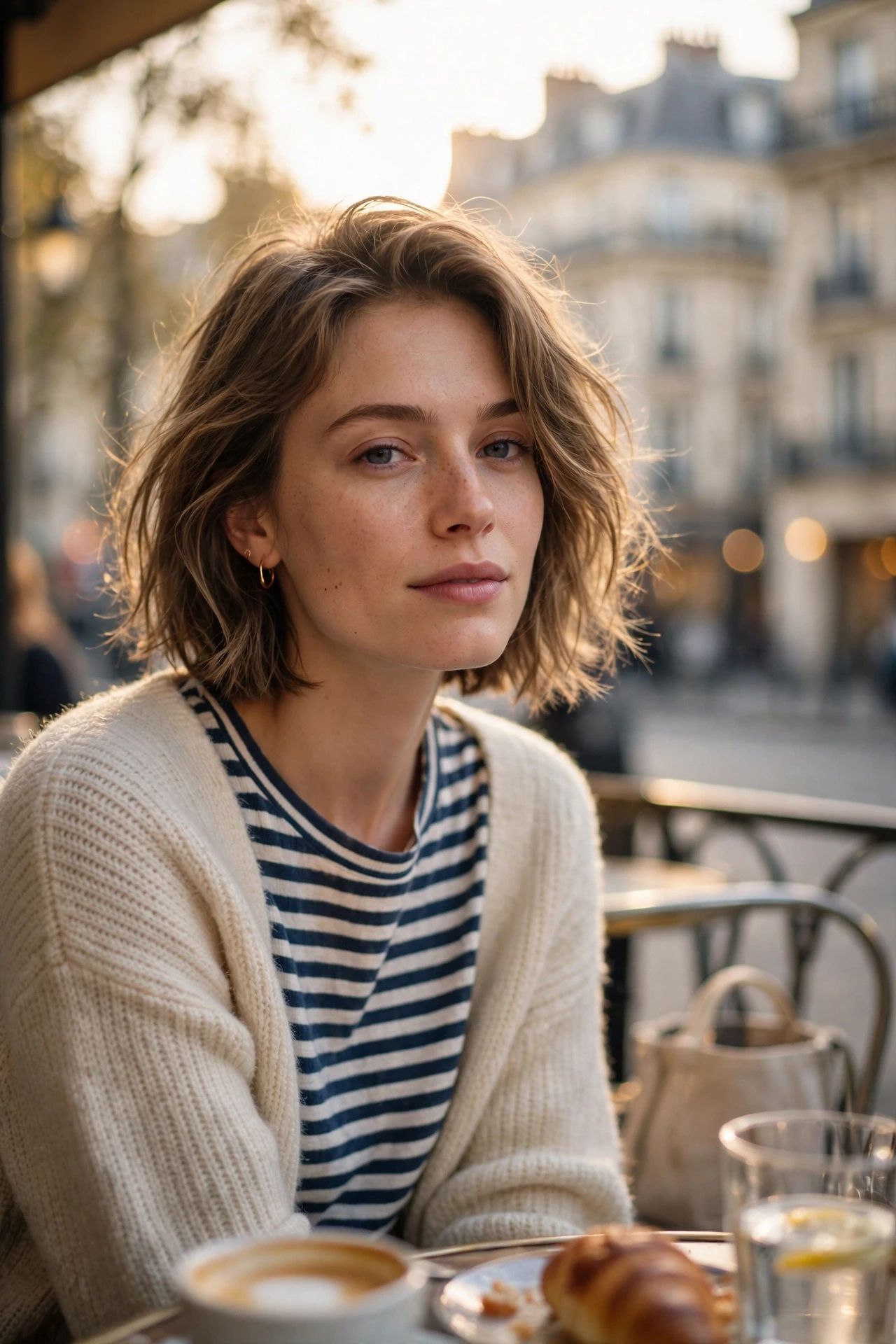
There is a woman at a café on Rue de Bretagne right now, espresso going cold in front of her, hair falling exactly where it feels like falling. She did nothing to it this morning. Truly nothing. And she still looks like the most interesting person on the street. That, right there, is the parisian bob doing its quiet work. Curious what the classic cut looks like in all its forms? Browse this roundup of French bob ideas on Byrdie before your appointment.
It is not really about the scissors. Every bob has scissors. The parisian bob is a philosophy wearing a haircut: the belief that trying too hard is the least chic thing a person can do. Where the classic french bob is the bolder, graphic sibling with its sharp fringe and statement energy, the Parisian version whispers. It is longer, softer, lived in. Think Jane Birkin with an espresso instead of a vintage poster.
In this guide you will find twenty ways to wear it, from beret-season texture to the sleek after-dark version, mixed with the actual mindset rules Parisian women follow. The ones nobody writes down. The ones that make the whole thing work.
If you want the full technical breakdown of the cut itself, start with our complete french bob haircut guide. It covers lengths, face shapes and exactly what to ask your stylist. This article is about something else: the attitude, the styling habits and the street-style looks that make a bob read unmistakably Parisian.
20 Parisian Bob Styles and Secrets for 2026
1. The Effortless Morning Wave
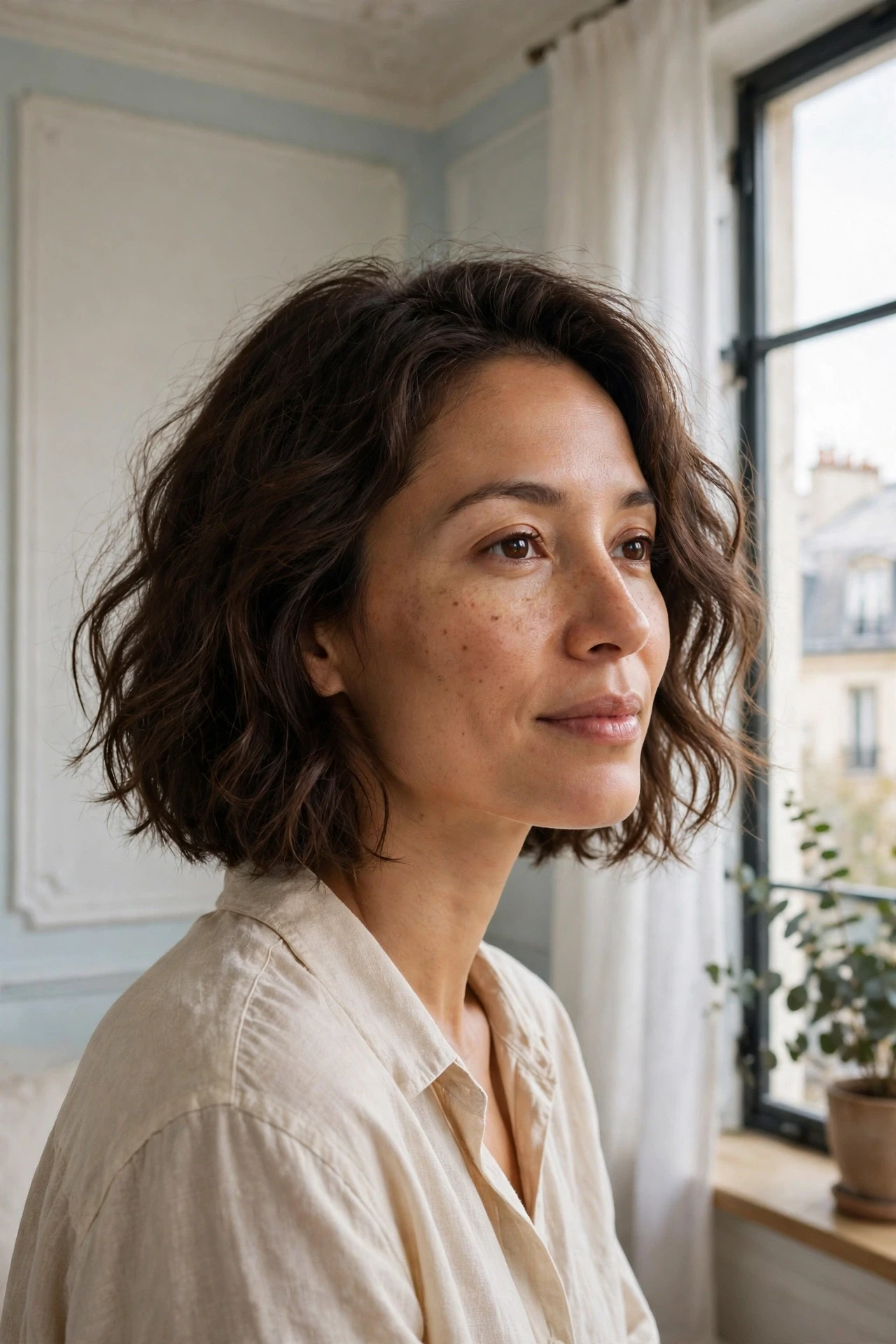
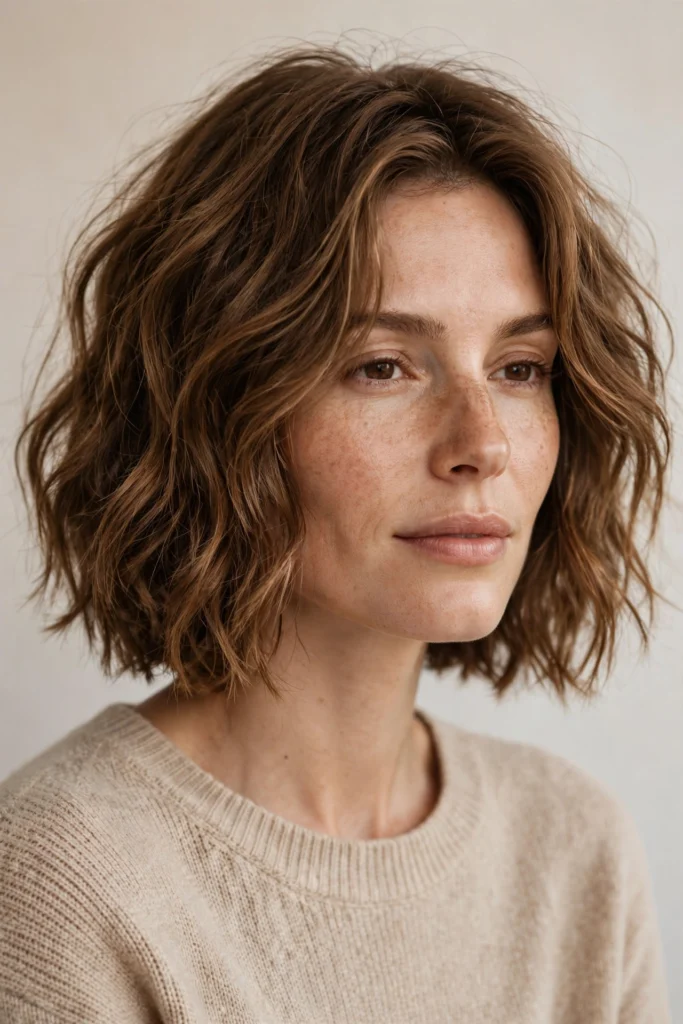
This is the signature. The wave that looks like you slept on it, because you probably did. Chin length or just below, ends that bend wherever they please, and a texture that says the night before was more interesting than the morning.
The trick is doing less than you think you should. A little texturizing spray on damp hair, a scrunch, and then you walk away. Parisian women trust the air to finish the job. If you want the full routine broken down step by step, our how to style a french bob guide walks through it.
Resist the urge to even it out. The uneven bits are the whole point. Symmetry is for architecture, not hair.
2. The Beret-Ready Bob
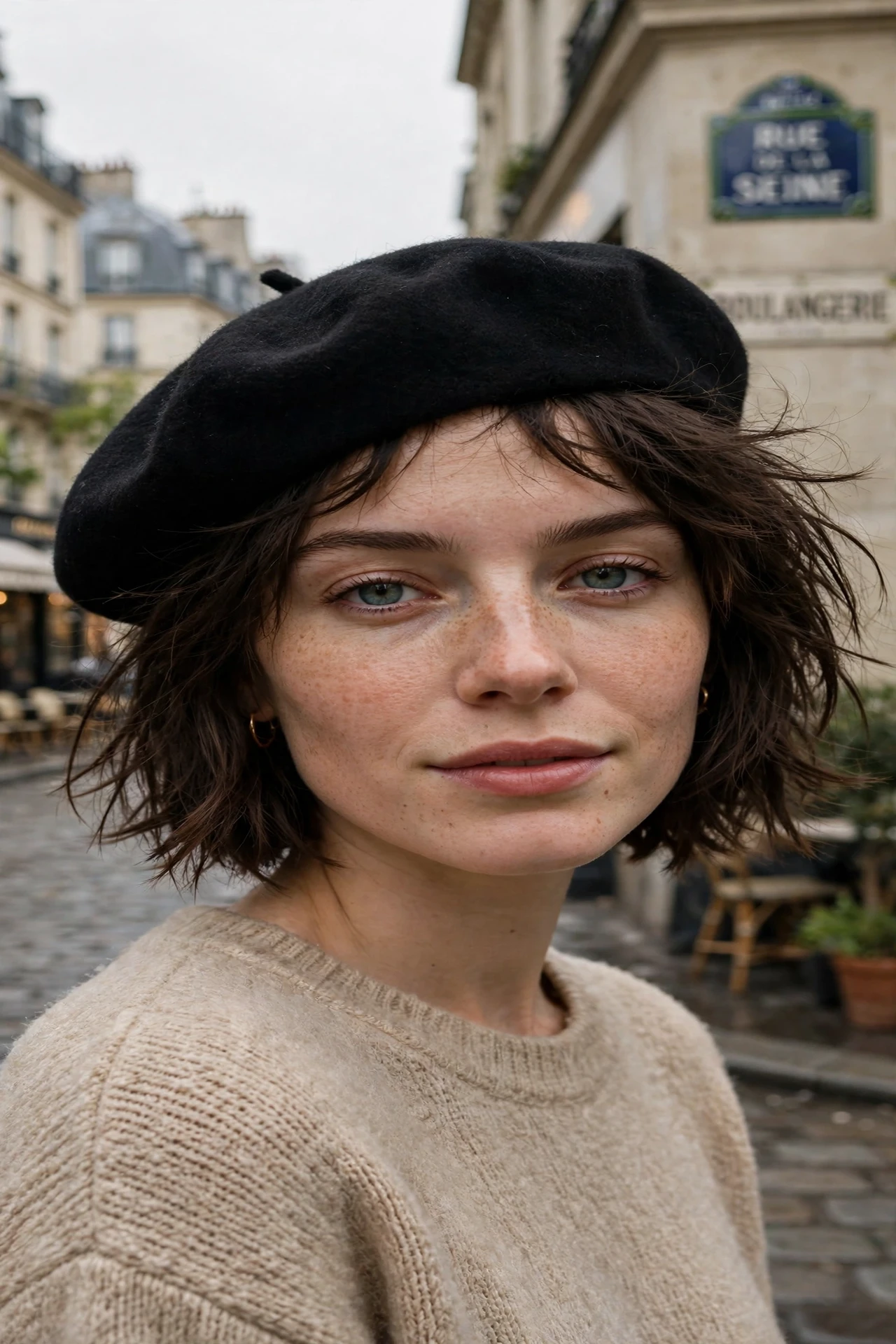
A beret and a bob were made for each other, and October through March is their season. The Parisian trick is placement: the beret sits tilted, never centered like a helmet, with the bob’s texture spilling out underneath.
Keep the ends piecey so they peek out from under the wool. A little dry texturizing spray at the roots stops the hat from flattening everything into submission. When the beret comes off at the café, the slight lift it leaves behind is honestly better than a blowout.
Choose a bob with soft, feathered ends for this one. Blunt edges fight the beret; soft edges flirt with it.
3. The Café Terrace Chin-Skimmer
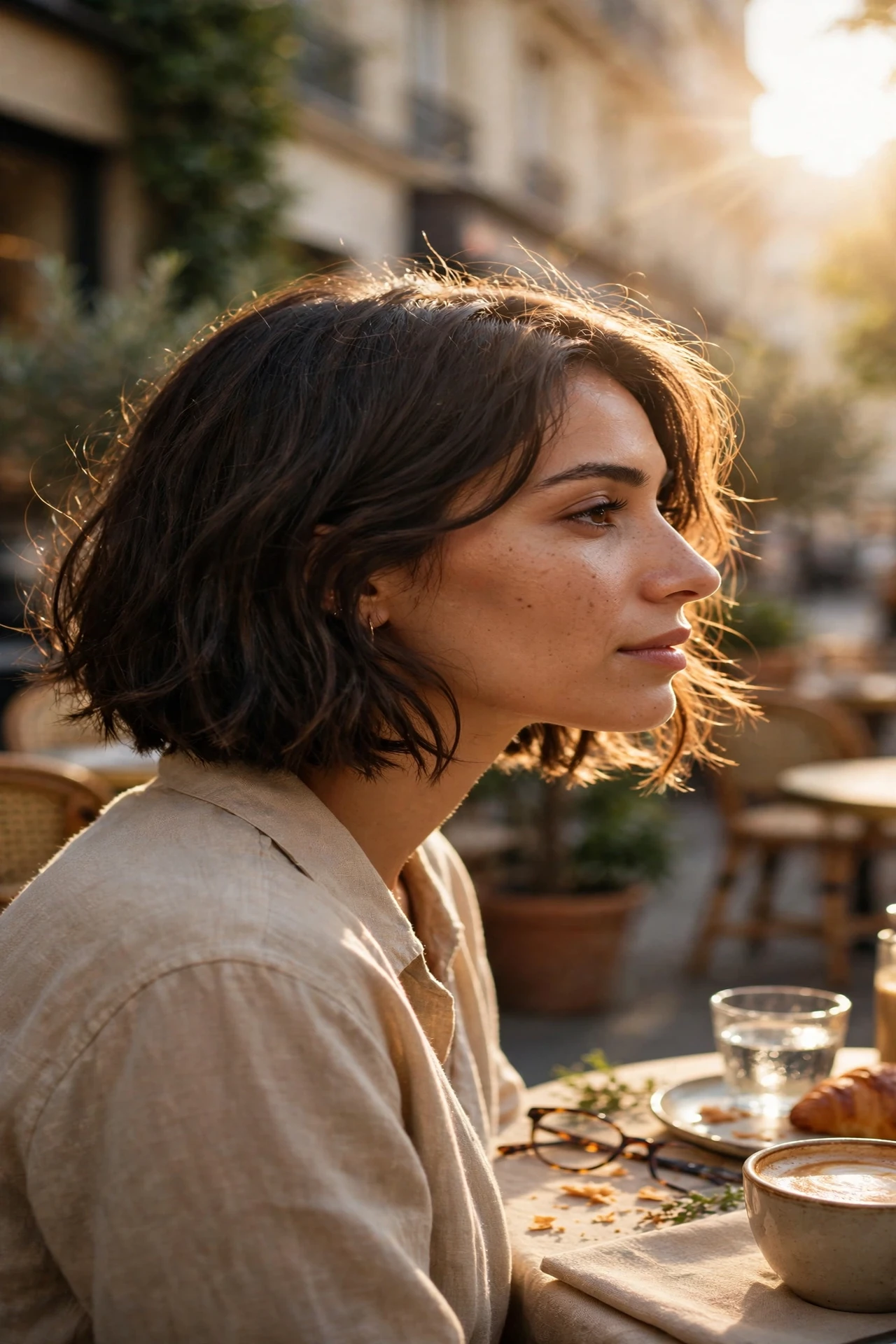
This is the length that launched a thousand Pinterest boards: skimming the chin, swinging free, catching the light when you turn your head. It frames the jawline without shouting about it.
What makes it Parisian rather than just short is the finish. No glassy flat-iron shine here. The ends are air dried, maybe bent once with a straightener if the morning was unkind, and left to move. Wind is a styling tool in Paris. Let it work.
It suits oval and heart faces beautifully, and the softness around the jaw keeps it from reading severe.
4. Second-Day Chic
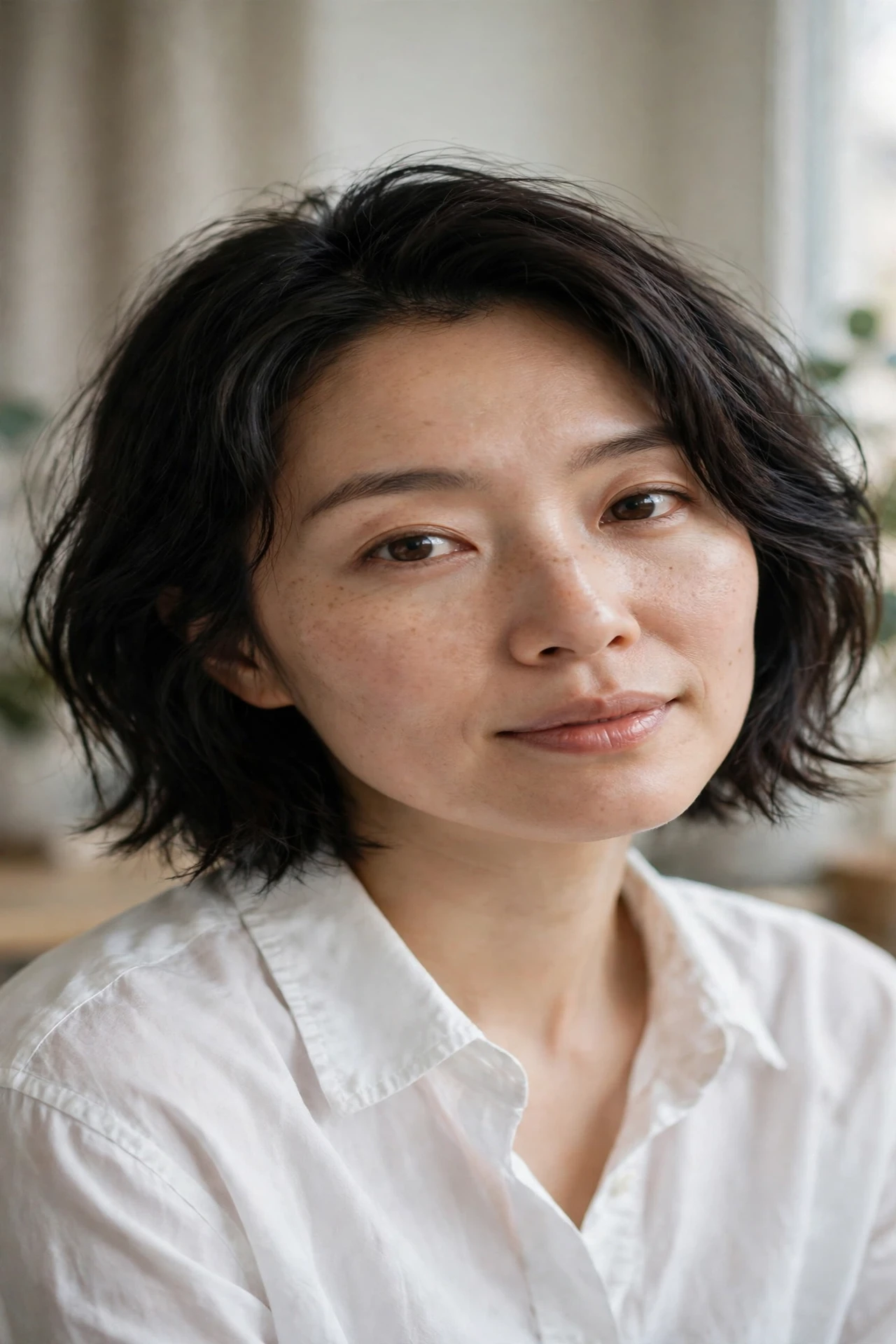
Here is a secret nobody in the hair industry wants to admit: the parisian bob looks better on day two. Freshly washed hair is too slippery, too obedient. Day two has memory. It has opinions. It holds a bend.
Parisian women plan around this. Wash in the evening, sleep on it damp-ish, wake up to texture that no product can fake. A spritz of dry shampoo at the roots if needed, a shake, and out the door.
If your hair is very fine and day two falls flat, a light texturizing powder at the crown brings it back. The goal is always the same: hair that looks lived in, not styled.
5. The Parisian Bob 5-Minute Rule
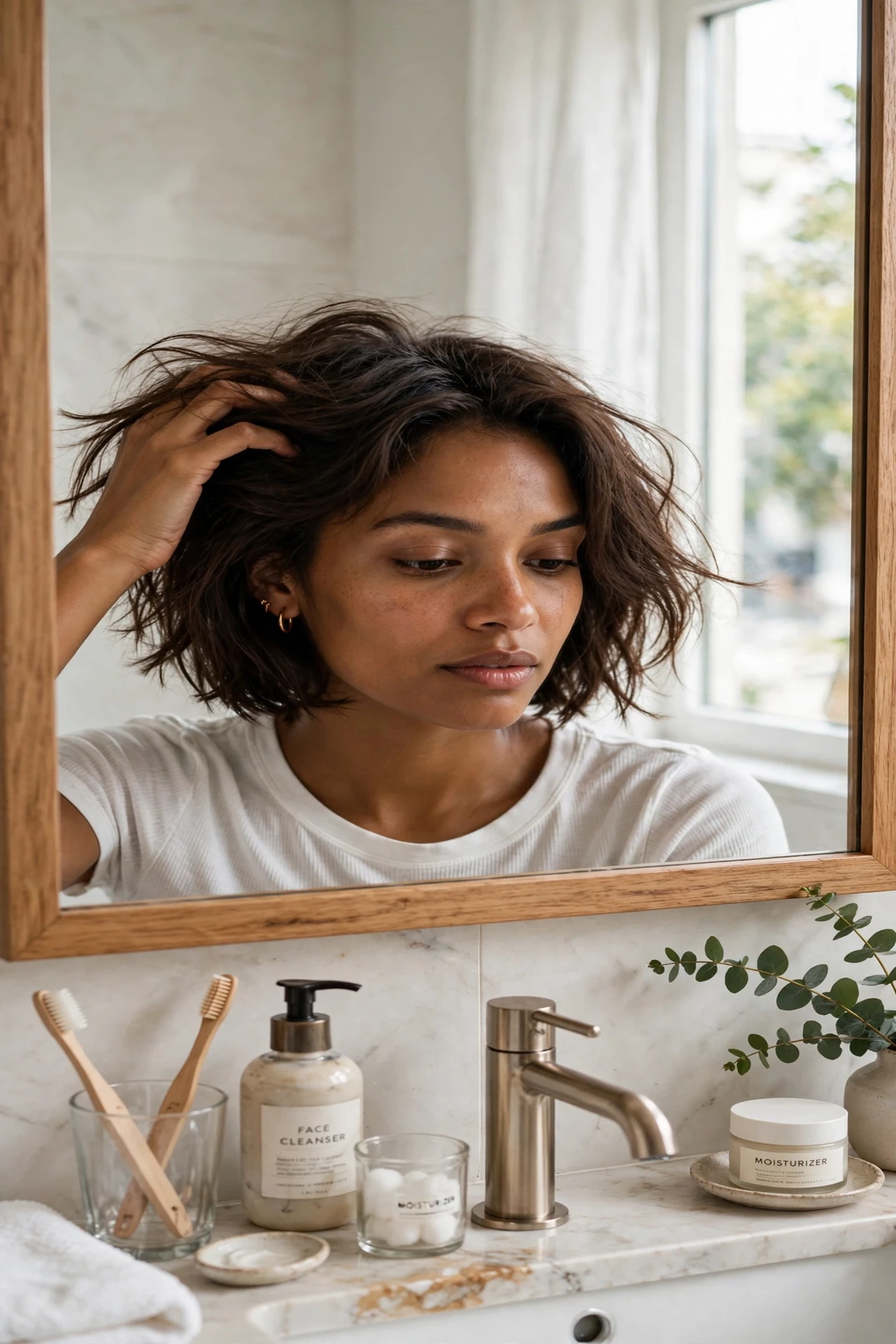
Ask a Parisian woman how long she spends on her hair and she will laugh. The unwritten rule: if it takes more than five minutes, it is not a parisian bob anymore. It is a project.
Five minutes covers a lot when the cut is right. Refresh the roots, bend two or three pieces around your face, tuck one side, done. The cut does the heavy lifting so your morning does not have to.
This is also the best test before you commit. If a style needs thirty minutes and three hot tools to look right, it will never survive your real life. The Parisian bob was designed for real life.
6. Why Parisians Skip the Blowout
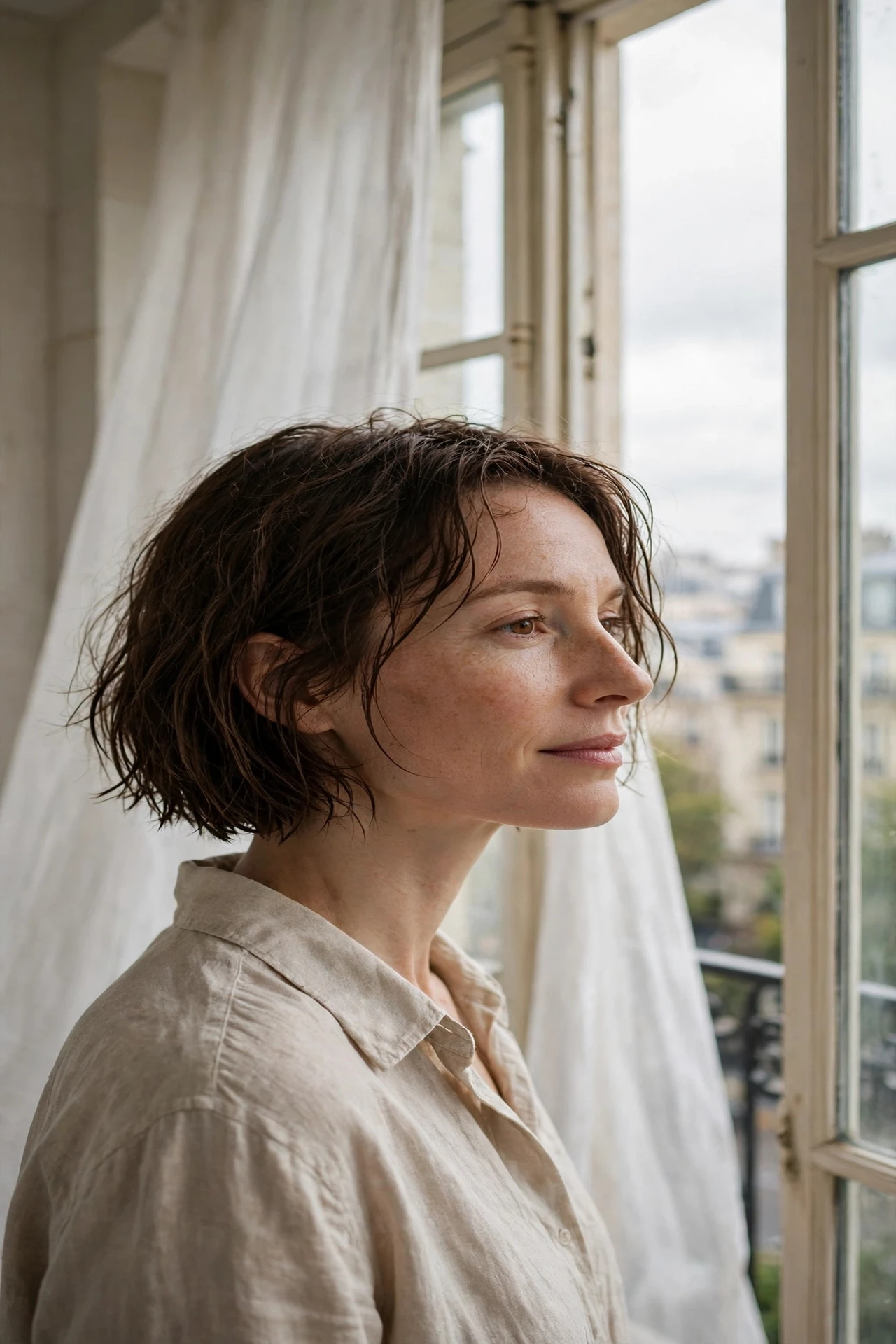
Walk past a Parisian salon on a Saturday and you will notice something: nobody is getting a bouncy blowout. The blowout is an American export, and Paris never really imported it. The local finish is air dried, always.
Heat makes hair look finished. Air drying leaves it looking like hair. That difference is the entire Parisian aesthetic in one sentence. A pea-sized amount of styling cream on damp ends, then errands, then life.
It is also kinder to your hair, which means fewer trims and healthier ends. The low-maintenance reputation of this cut is not marketing. It is just what happens when you stop fighting your texture.
7. The Deep Side Part Switch
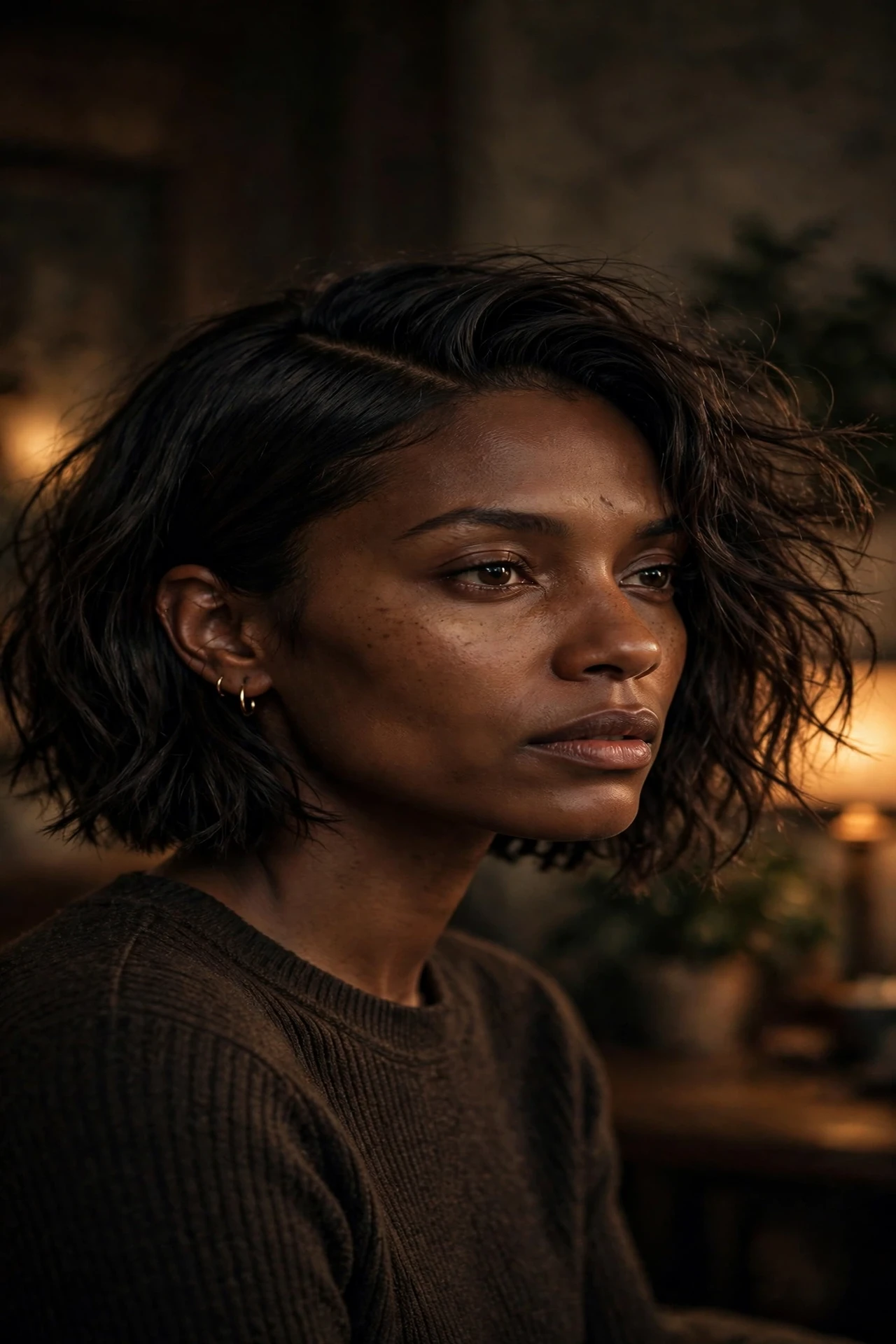
Here is the cheapest transformation in all of hairstyling: move your part. A deep side part takes the same bob from casual to cinematic in about four seconds, and Parisian women use it like a wardrobe change.
The trick is committing to it. A hesitant, wandering part looks accidental. A deep, deliberate sweep looks like a decision. Pair it with a tucked side (more on that below) and you have evening hair without touching a hot tool.
This works on every version of the cut, with or without bangs. When in doubt about styling, change the part first and see if you still have a problem. Usually you do not.
8. The Tousled Curtain Fringe

Not everyone wants a full straight-across fringe, and Paris agrees with you. The curtain fringe is the softer answer: bangs that part in the middle and melt into the sides of the bob like they were always meant to be there.
It gives you the face-framing magic of bangs without the forehead commitment. Growing it out is painless because it was already halfway to being layers. On mornings when it misbehaves, a quick twist with your fingers and a bobby pin buys you a day.
This is the most forgiving fringe in the bob family. It flatters round faces, softens square jawlines, and looks better slightly messy than it ever looks perfect.
9. Messy Parisian Mornings Done Right
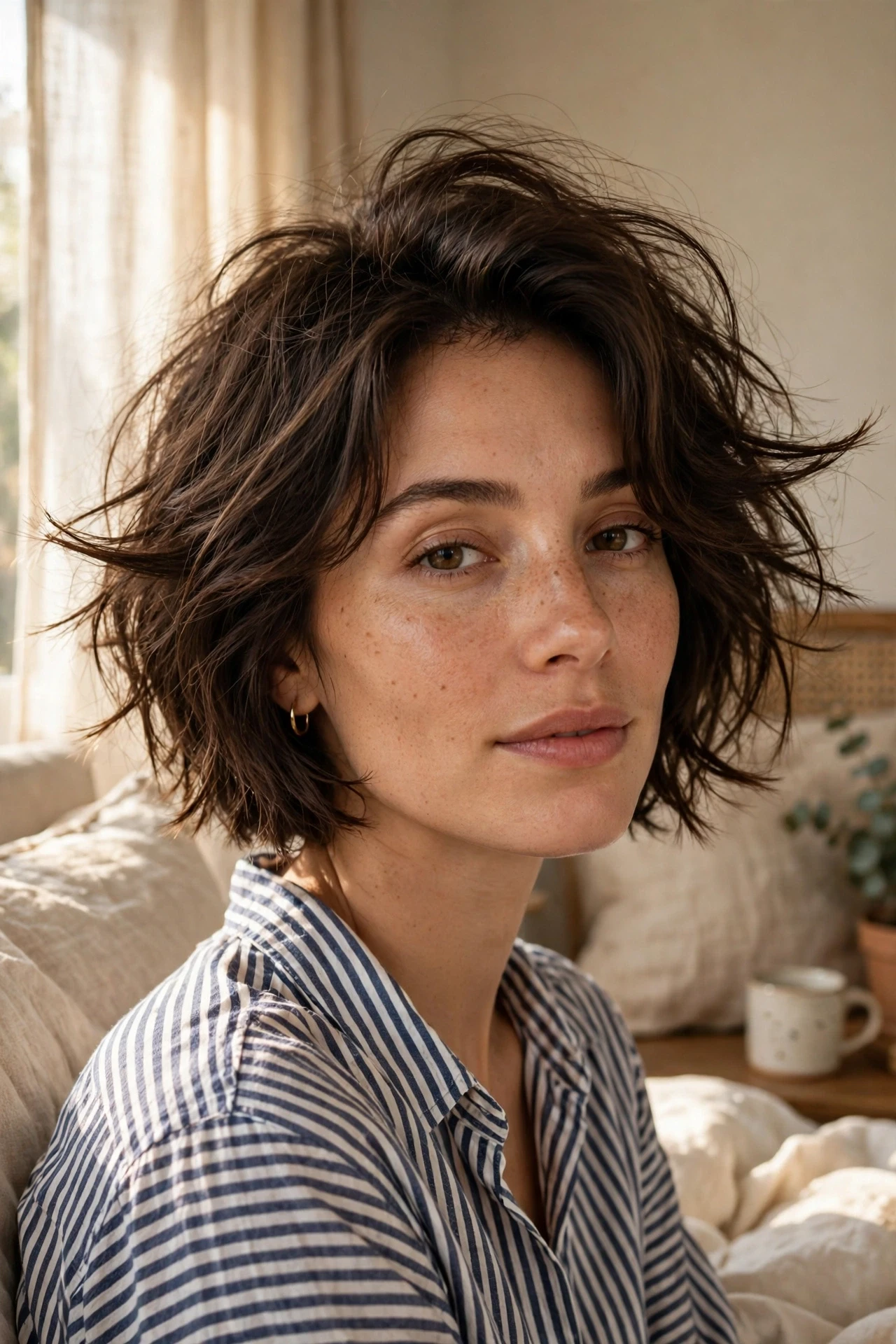
There is bedhead, and then there is Parisian bedhead, and the difference is intention hiding inside the chaos. The real version has volume at the crown, bends in the mid-lengths, and ends that kick out in interesting directions. The fake version just looks like you forgot.
To land on the right side of that line, sleep with your hair loosely twisted or in a low, loose bun. In the morning, shake it out instead of brushing it. Brushing is what turns charming texture into a fuzzy triangle.
A tiny bit of pomade on the very ends separates the pieces so the mess reads as texture rather than neglect. That is the whole technique. The French have a word for this balance, and it is the entire point of the cut.
10. The Sleek Parisian Night Out
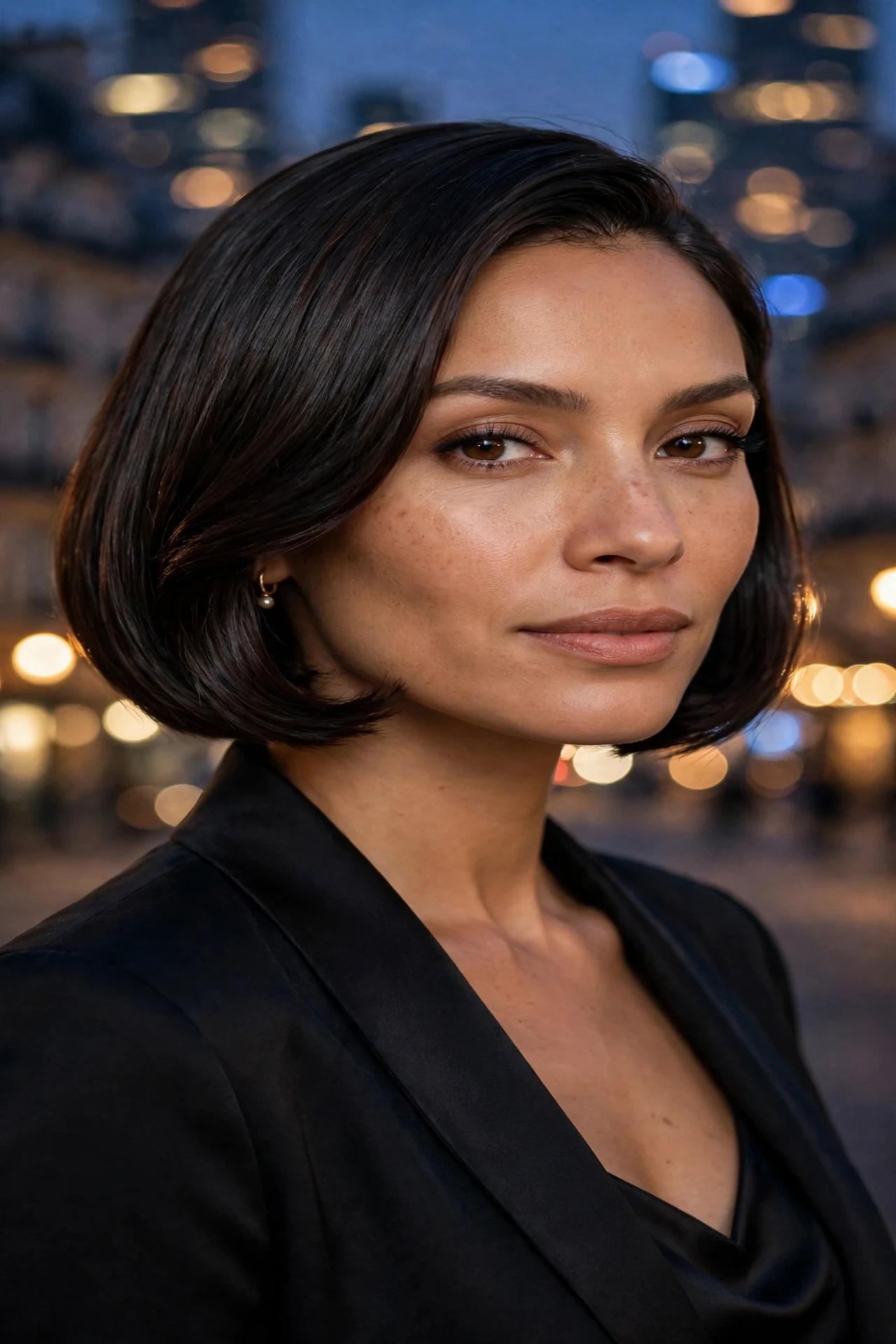
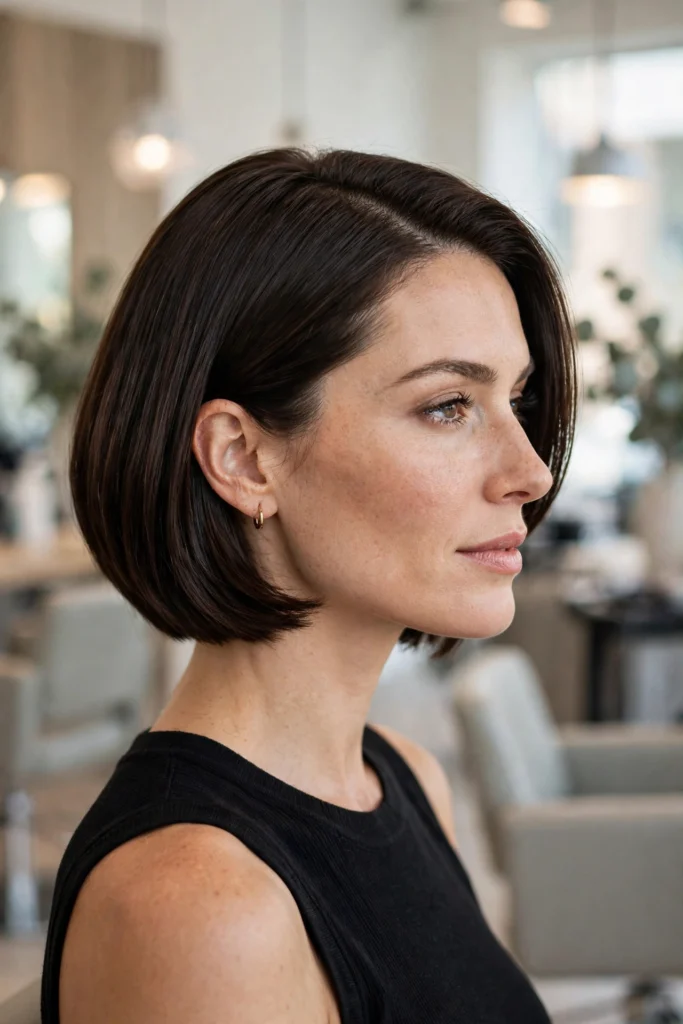
Even Parisian women dress it up sometimes. The evening version keeps the same cut but trades air-dried texture for a smooth, glossy finish: flat ironed once through, ends tucked under just slightly, everything sitting close and deliberate.
The Parisian part is the restraint. It is sleek, not shellacked. One pass with the iron, a drop of serum, and stop. The second pass is where sleek turns stiff, and stiff is never the goal.
Pair it with a strong lip and simple earrings and you are done. The hair stays quiet so the rest of you can be loud. That contrast is very Paris.
11. Ask Your Stylist for Flou
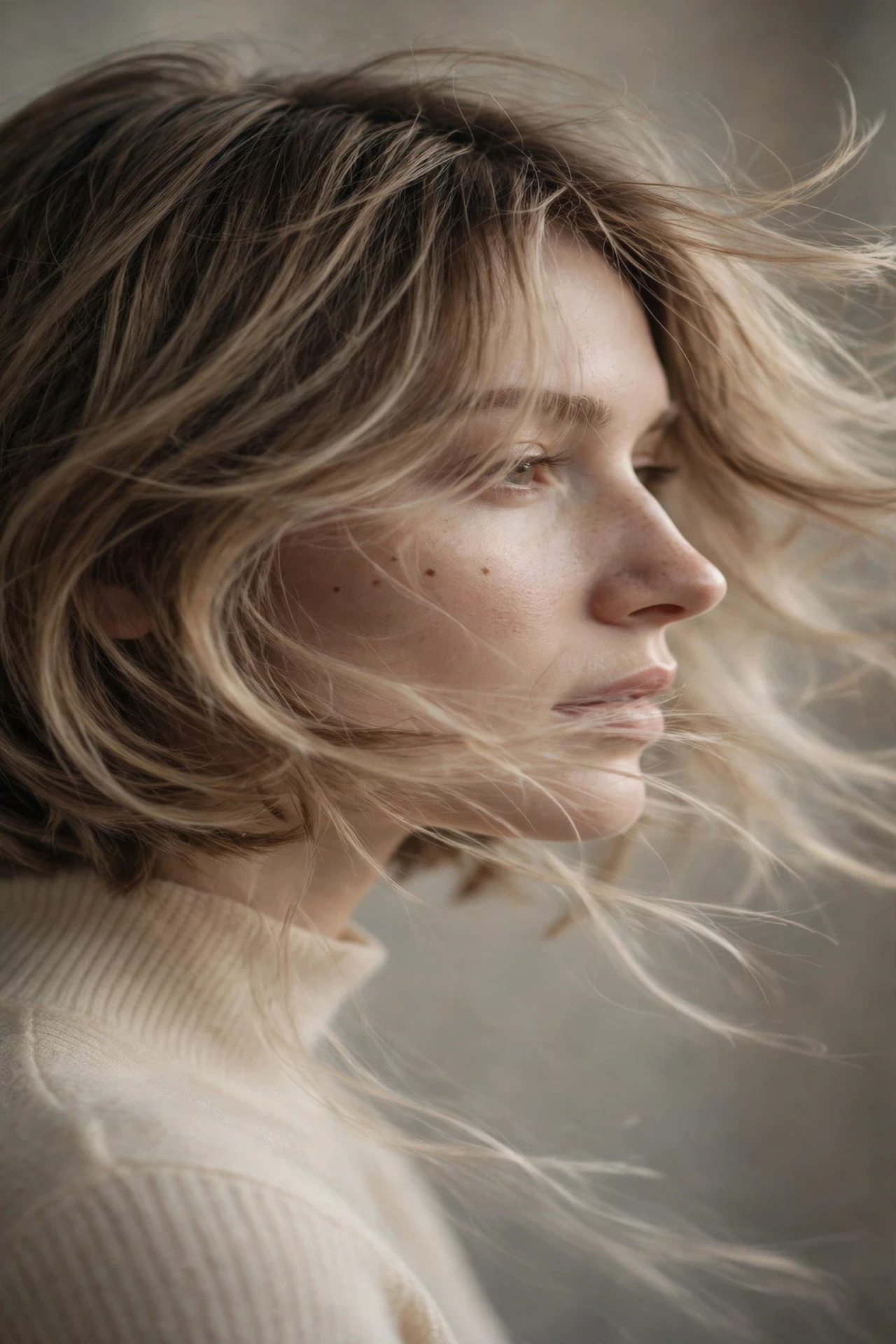
If you want to sound like you know things at the salon, learn one French word: flou. It means blurred, soft, out of focus, and it is exactly what you want from your layers. Ask for a dégradé flou, a soft graduation, and watch your stylist nod with respect.
Flou layers are cut so the transitions disappear. No visible steps, no chunky pieces, just hair that moves like water. This is what separates a Parisian bob from a choppy bob with an identity crisis.
Bring photos, but also bring words. Tell your stylist you want it to look unstyled when it is styled. That sentence communicates more than ten reference pictures. For more on what to request, see our breakdown of what is a french bob.
12. The One-Side Tuck
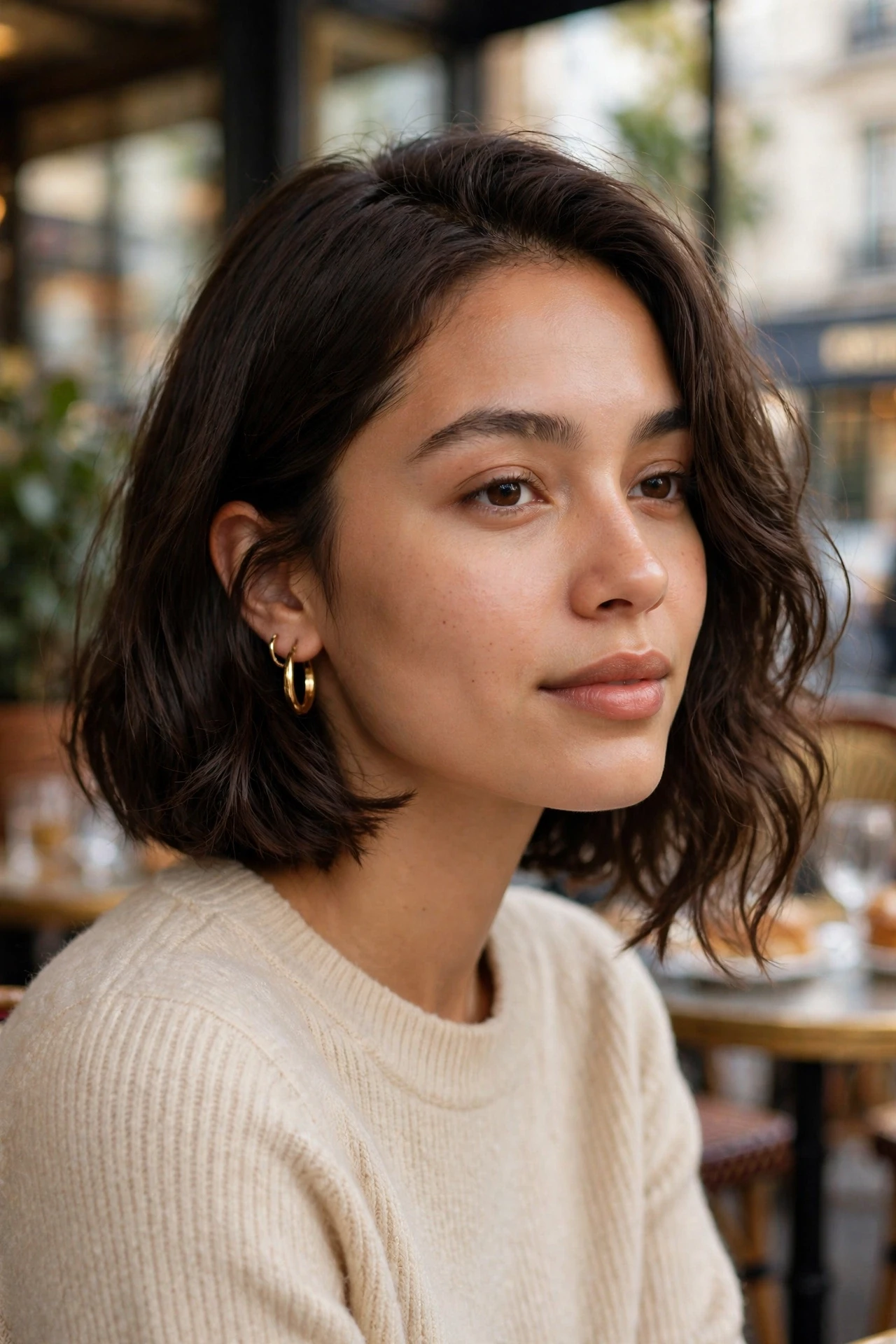
One side tucked behind the ear. That is the whole style, and it might be the most Parisian thing on this list. It is asymmetrical without being edgy, polished without being done, and it shows off an earring like nothing else.
The untucked side keeps its fullness, which creates that lovely lopsided silhouette you see in every French street-style photo. It also solves the eternal problem of hair falling in your coffee. Practical and chic is a rare combination.
This works best on bobs with some natural wave, where the tucked side stays put and the free side does its thing. If your hair is very straight and slippery, a single bobby pin behind the ear keeps the tuck honest. Our textured french bob guide has more ideas for adding grip.
13. The Wispy Fringe-Free Bob
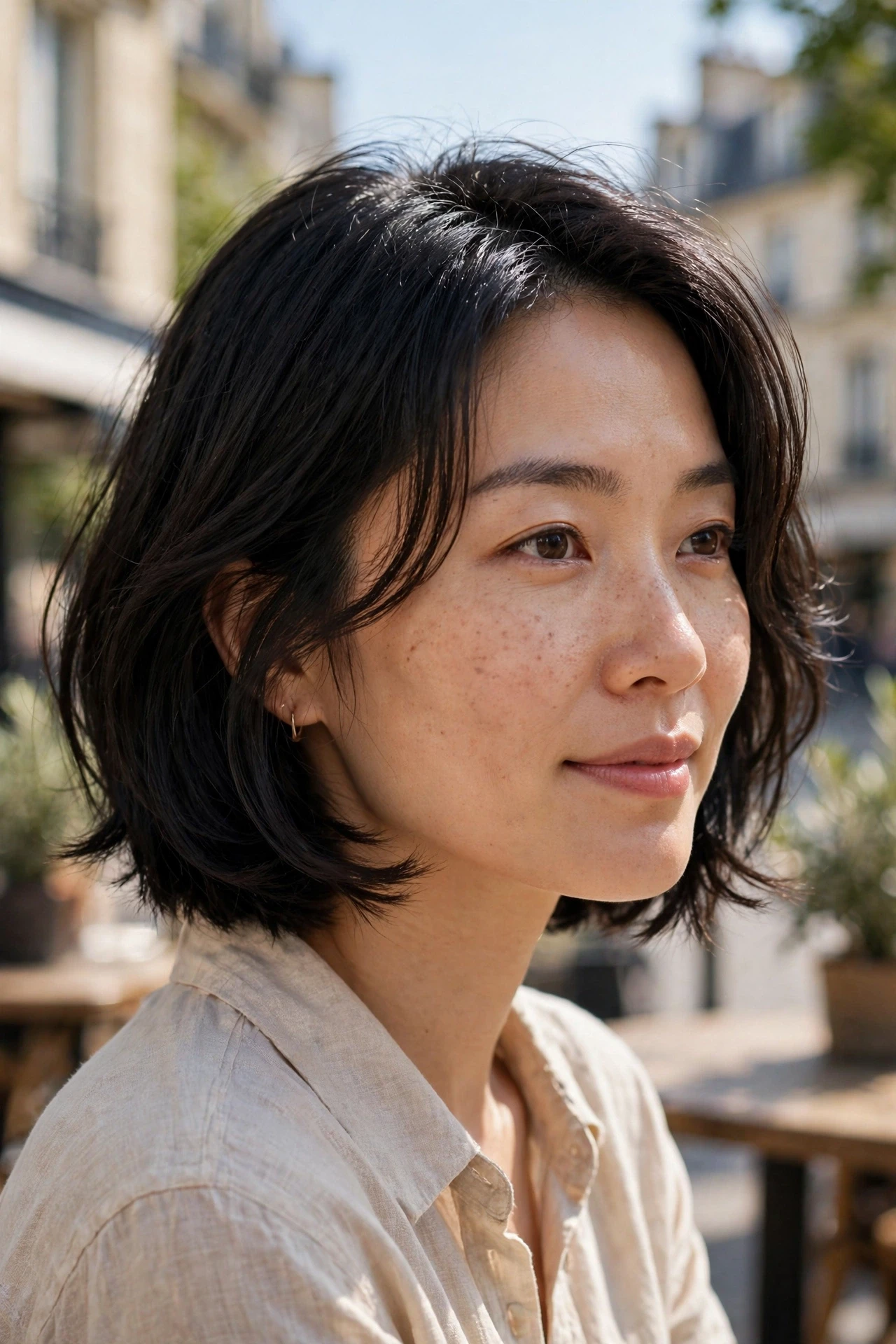
No bangs? No problem. Some of the chicest Parisian bobs skip the fringe entirely and let the cut’s architecture do the talking. The face-framing comes from soft, longer pieces around the cheekbones instead of a horizontal line across the forehead.
This version is lower maintenance than any fringed bob, because there is nothing to trim between appointments and nothing to style on humid mornings. It grows out beautifully too, which means fewer salon visits.
If you have been nervous about bangs but love the Parisian look, this is your entry point. It reads just as French, with half the commitment. We go deeper on this in our french bob no bangs guide.
14. The Beautiful Grow-Out
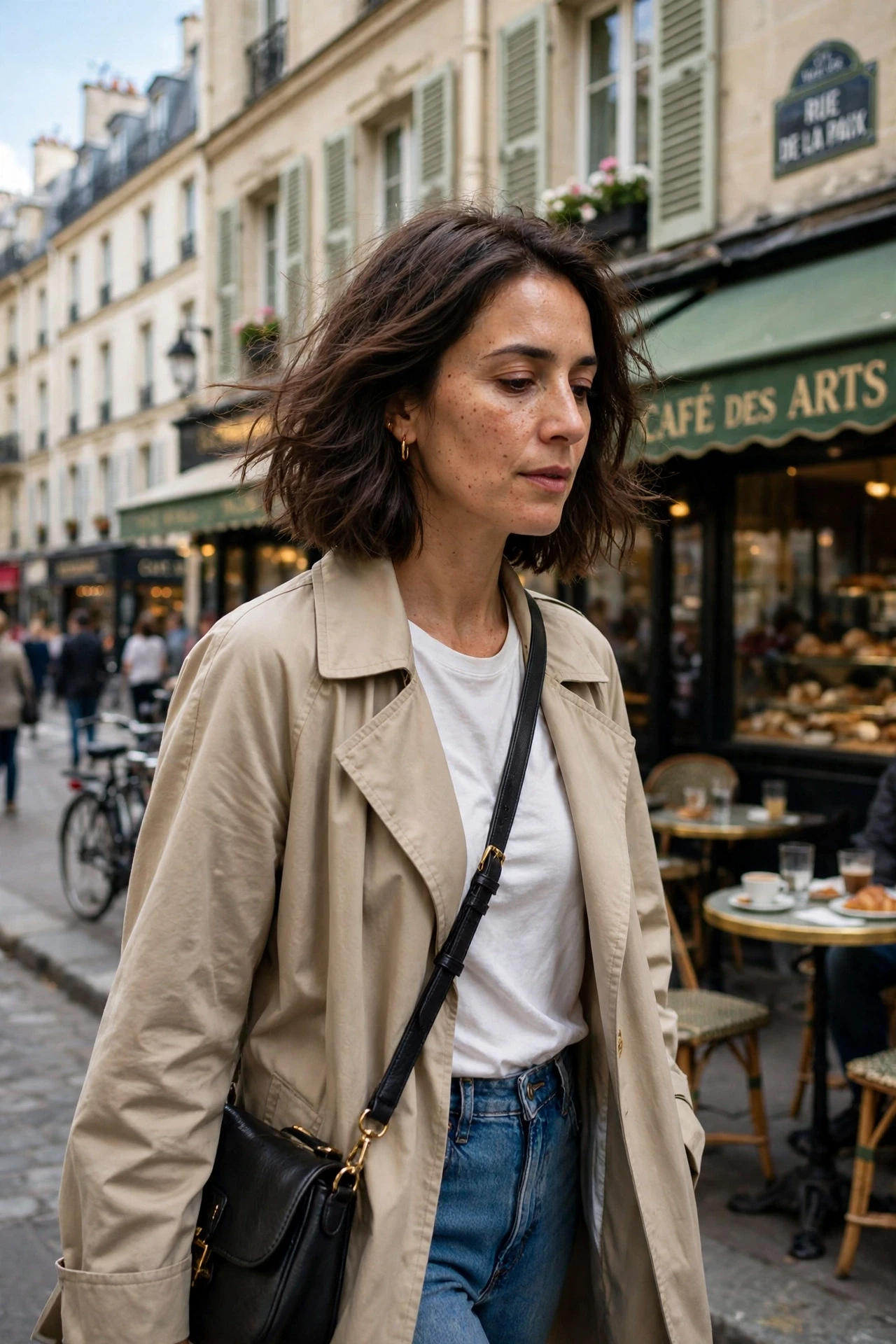
Here is something the wig companies and quick-fix blogs never mention: the parisian bob has the best grow-out of any short cut. Because it was never precise to begin with, it never looks wrong as it gets longer. It just becomes a different good haircut.
Around month three it turns into a soft lob with Parisian bones. The layers keep it from going triangular, the texture keeps it interesting, and you can stretch appointments to ten or twelve weeks without panic. If you are curious about that in-between stage, our french lob guide covers it.
This is a genuine financial argument for the cut. Fewer trims, less product, less time. Chic that respects your calendar and your wallet is the most Parisian thing of all.
15. The Wet-Look Editorial Moment
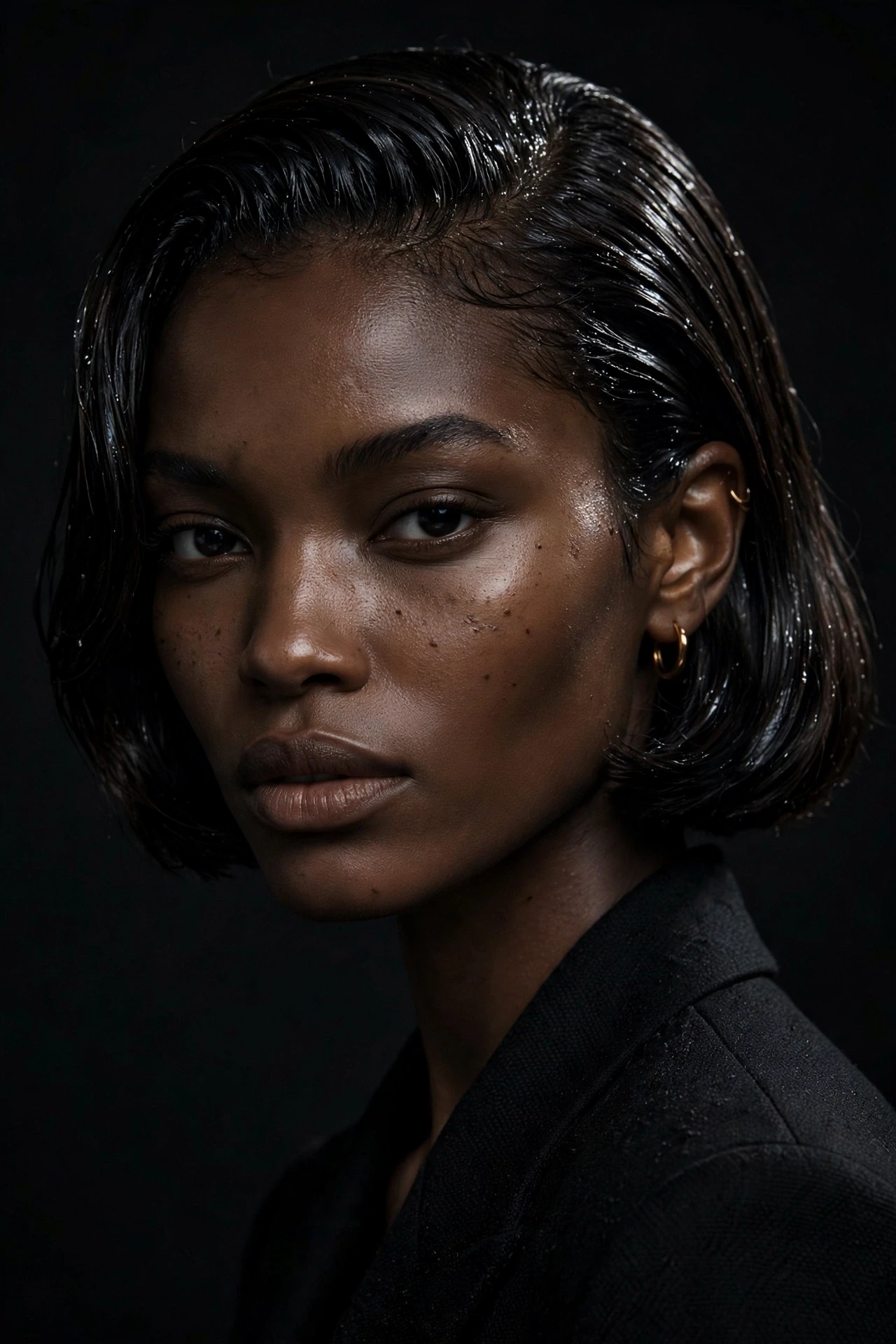
Sometimes Paris goes bold. The wet look takes the same bob and slicks it with gel or strong cream, combed back or to the side, for a high-fashion finish that belongs at gallery openings and rooftop dinners.
The key is product choice: a glossy gel or wet-look cream, not oil, and less than you think. Work it through damp hair, comb it into place, and let it set. The result should look intentional and sculptural, never greasy.
This is not an everyday look, and that is the point. The parisian bob’s range, from undone mornings to editorial nights, is what keeps it interesting year after year.
16. The Red Lip Rule
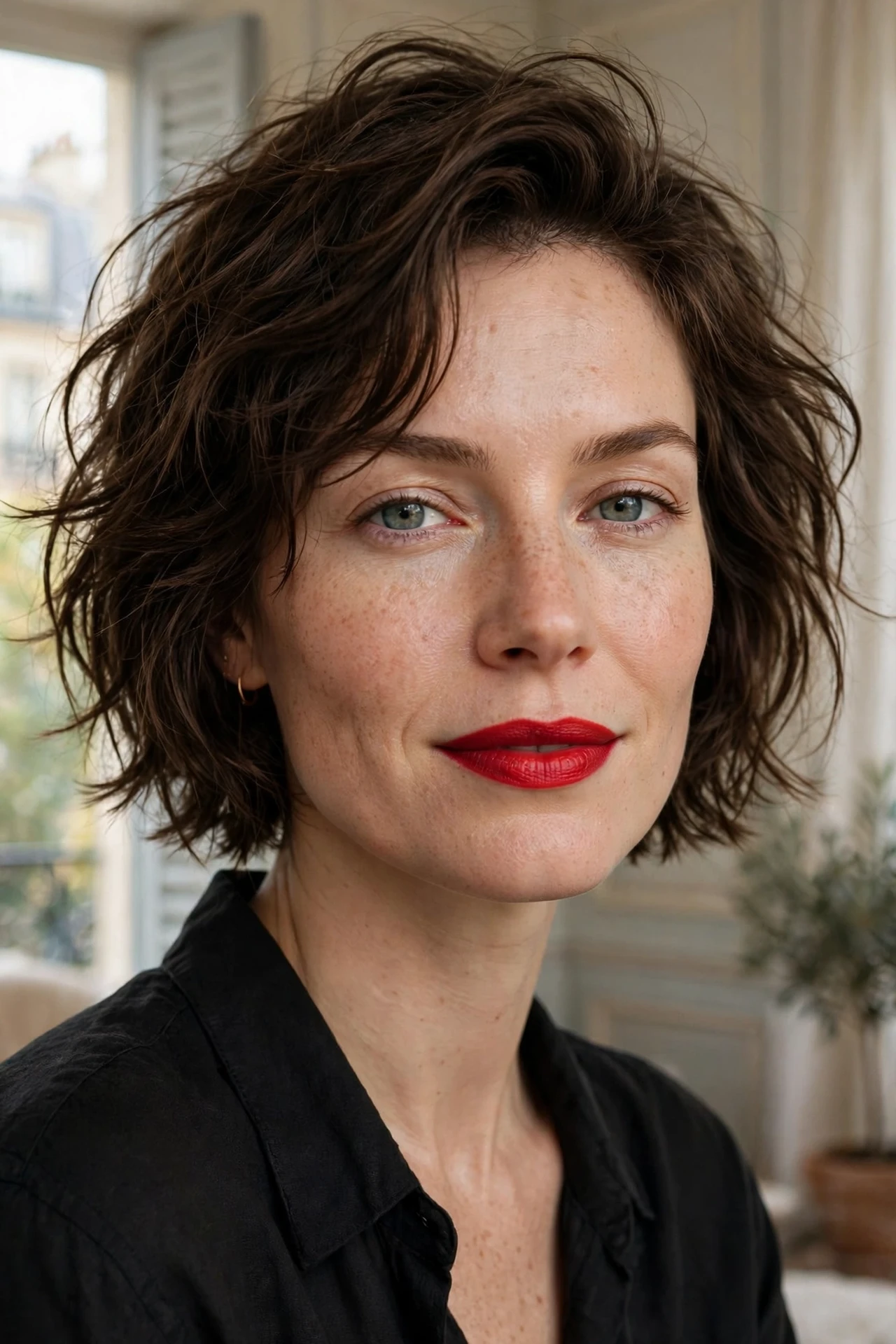
French beauty philosophy in one sentence: pick one thing to try on, and let everything else relax. With a parisian bob, that one thing is very often a red lip. The undone hair plus the deliberate lip is the entire formula.
It works because of contrast. Effortless hair next to a precise mouth looks like a choice. Effortless hair next to a bare face looks like a Tuesday. Both are fine, but the lip is what turns the bob into a look.
Keep the rest of the face simple: groomed brows, a little mascara, done. The bob and the lip do all the talking, and they never interrupt each other.
17. The Wavy Air-Dried Bob
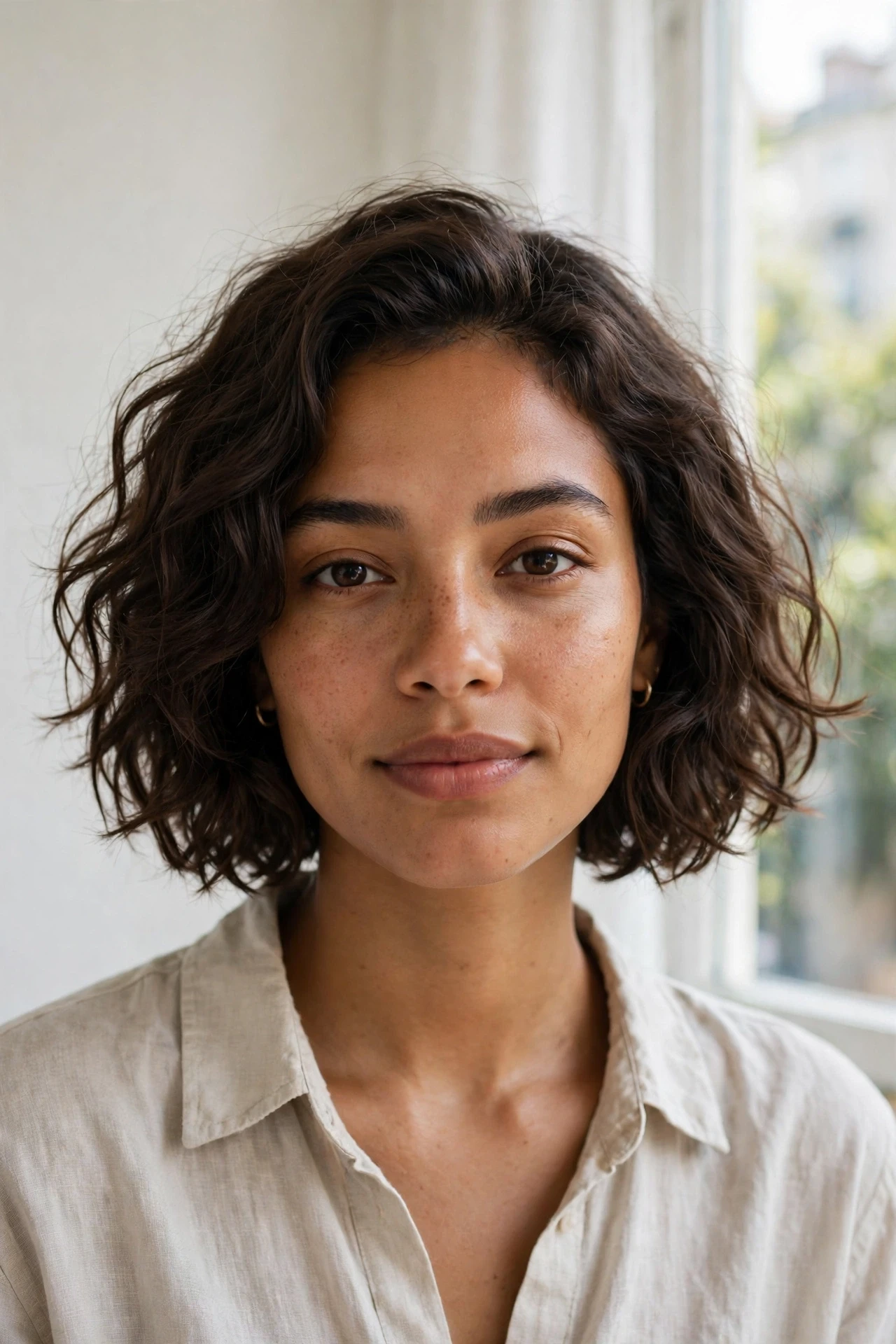
If your hair has natural wave, congratulations: you were born for this cut. The parisian bob was essentially designed around the hair texture that French women actually have, which is rarely pin straight and often gloriously wavy.
Enhance what is there instead of creating what is not. A curl cream or light mousse on damp hair, a scrunch, air dry. The wave pattern does the styling for you, and the chin-to-collarbone length keeps the waves from stretching out.
This is the lowest-effort version on the entire list, and somehow also one of the prettiest. Working with your texture instead of against it is the whole philosophy in a single wash day.
18. The Silk Scarf Pairing
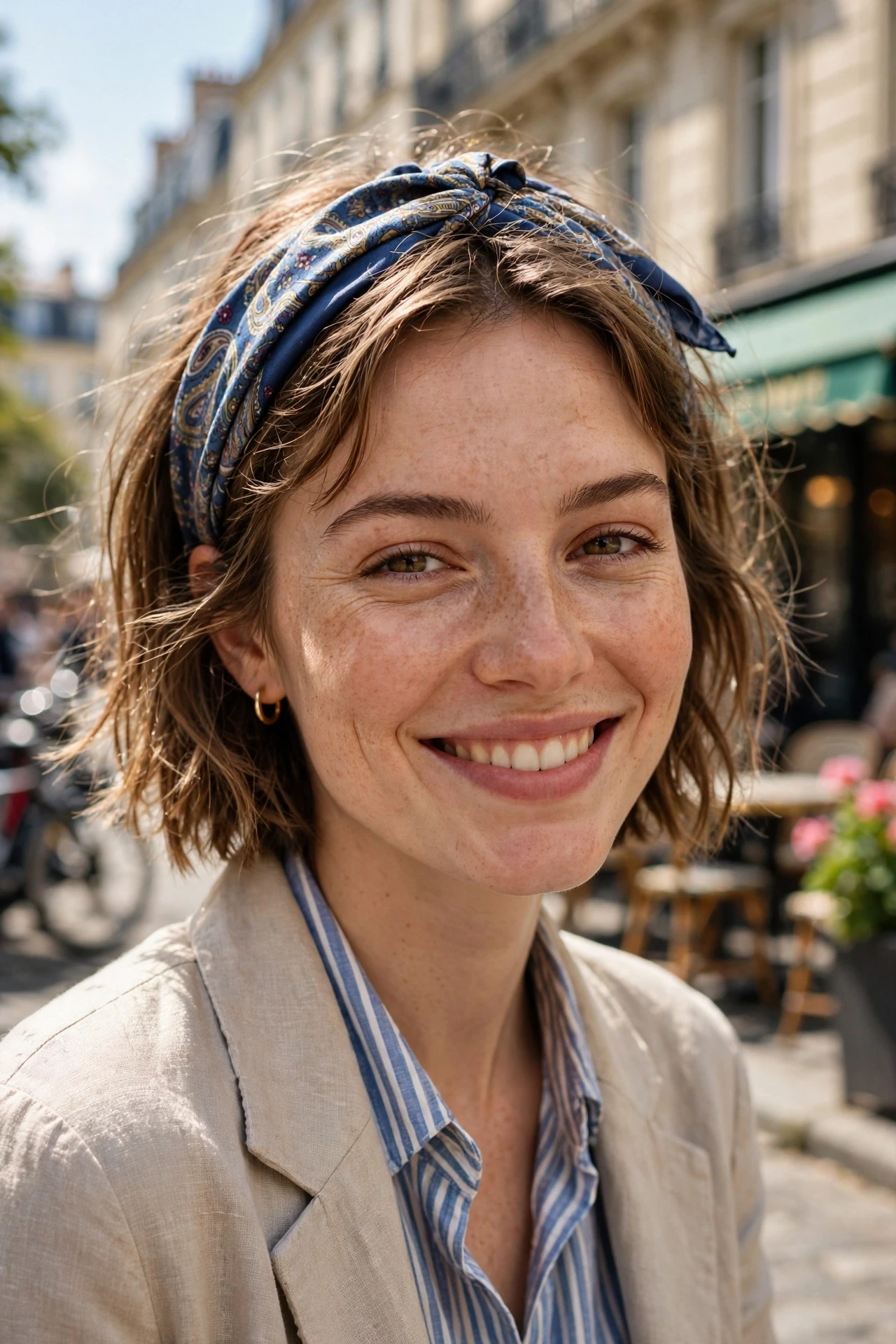
A silk scarf is the Parisian woman’s favorite hair accessory, and a bob is its favorite canvas. Tied as a headband, knotted at the nape, or threaded through a low twist, it adds pattern and polish in about thirty seconds.
The trick is letting the bob stay messy underneath. Perfect scarf plus perfect hair looks costumey. Perfect scarf plus undone hair looks like you. That tension between polished accessory and relaxed hair is exactly the French sweet spot.
It is also the best rescue for a bad hair day. When nothing is cooperating, a scarf covers the roots and reframes the whole situation. Every Parisian woman has used this move. Now you know it too.
19. The Micro Fringe Rebelle
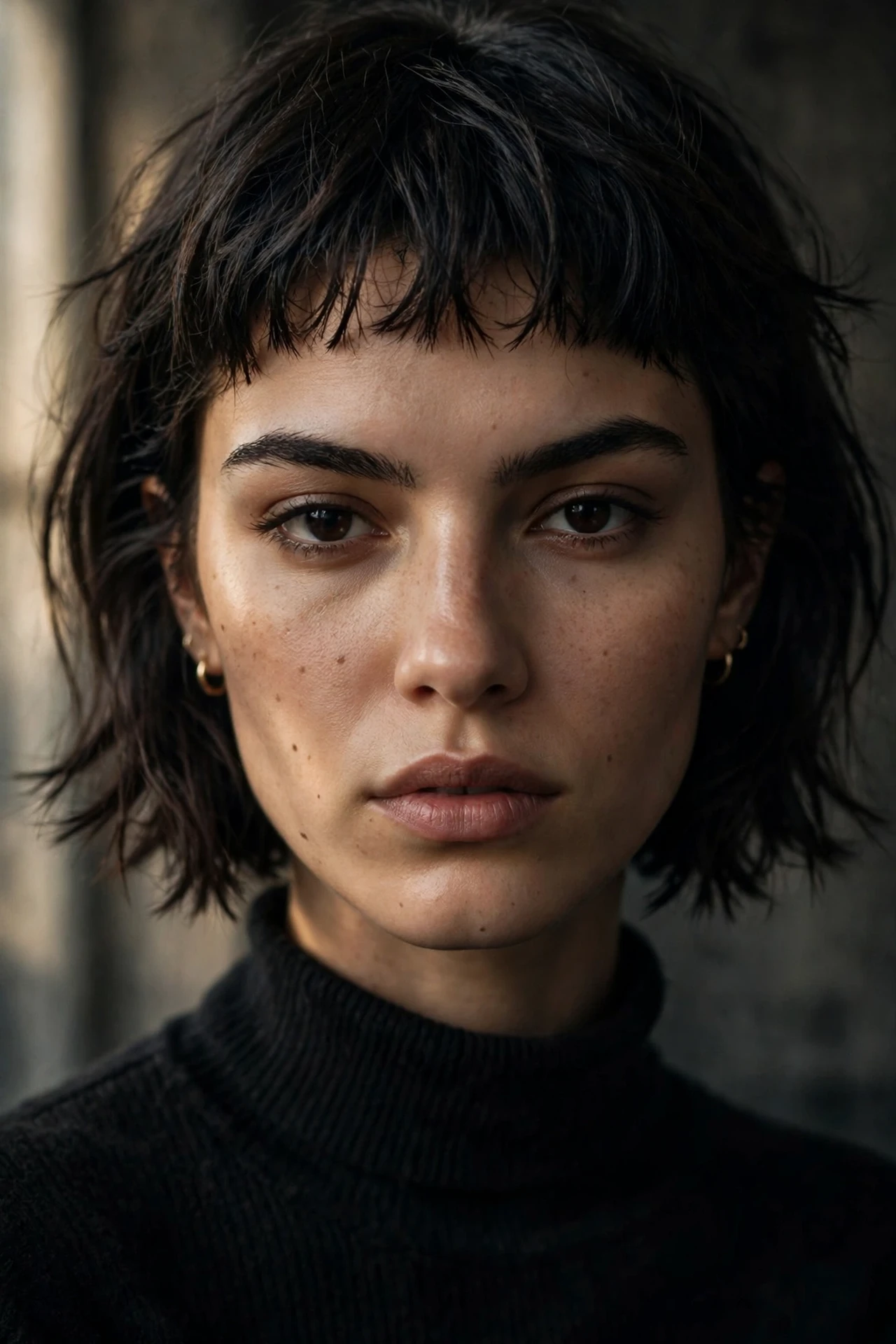
For the bold ones: the micro fringe. Cut well above the brows, piecey rather than blunt, paired with a tousled bob. It is the rebellious little sister of the classic French fringe, and it has main-character energy.
This is not a low-maintenance choice, so go in with open eyes. A micro fringe needs trims every three to four weeks and a minute of styling most mornings. What you get in return is a look nobody forgets.
It suits oval and heart faces best, and it loves a strong brow. If you have been wearing the same safe fringe for years, this is the Parisian dare you have been waiting for.
20. The Half-Up Twist
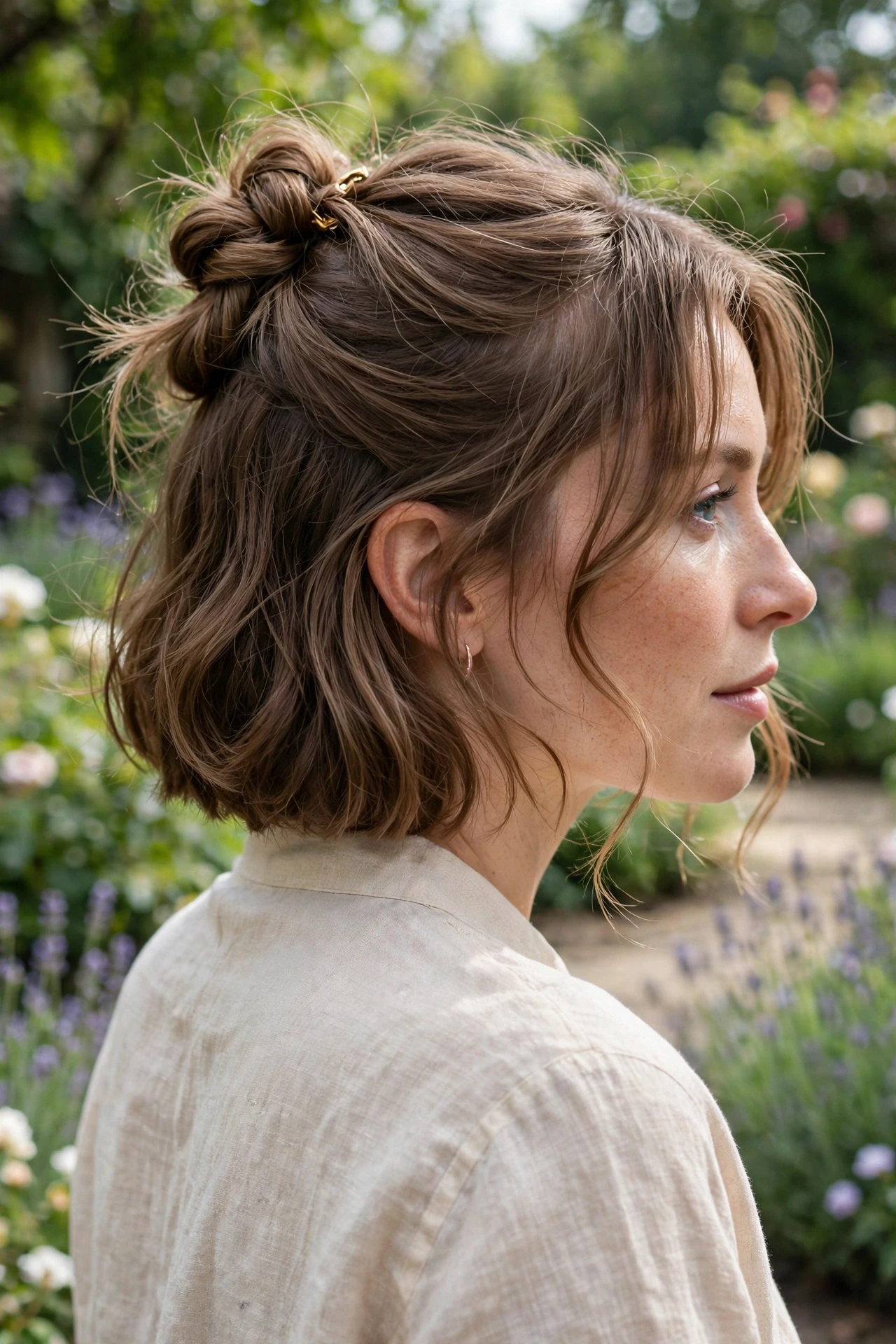
Proof that short hair can still play: gather the top section of your bob, twist it loosely, and pin it at the crown. Let the face-framing pieces fall free. Instant romance, zero skill required.
The Parisian version is deliberately imperfect. The twist is loose, a few pieces escape, and nobody would mistake it for a bridal updo. It is the hairstyle equivalent of an untucked shirt: relaxed on purpose.
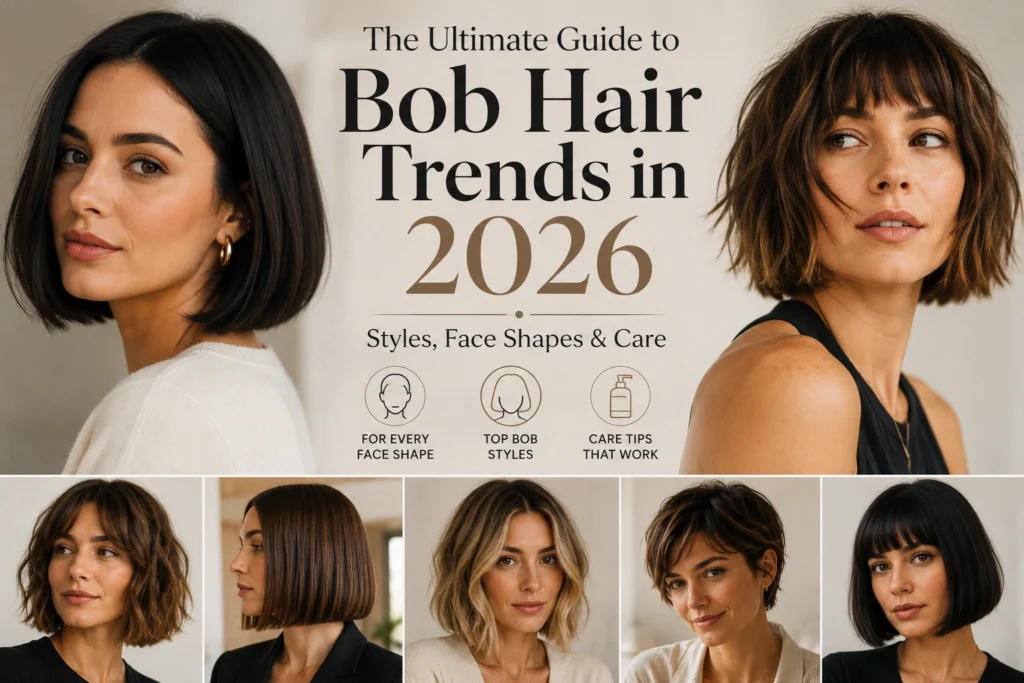
This is perfect for second or third-day hair, when the texture is at its peak and the roots need a little camouflage. Brunch, markets, gallery afternoons: the half-up twist was made for all of them. Still deciding which bob suits you best? Our Ultimate Guide to Bob Hair Trends compares 16 major bob styles side by side to help you choose.
What is a parisian bob exactly?
A parisian bob is the soft, undone, longer interpretation of the french bob family. It usually sits at the chin or just below, sometimes grazing the collarbone, with soft flou layers and a tousled finish. Bangs are optional. The defining trait is not the length but the philosophy: it should look like you barely styled it, because you barely did.
What is the difference between a parisian bob and a french bob?
Think of them as sisters. The classic french bob is shorter, bolder and more graphic, usually chin length or above with a defined fringe. The parisian bob is its laid-back cousin: a little longer, softer layers, an optional fringe, and an overall whisper instead of a statement. For the full technical comparison, read our french bob haircut guide.
Does a parisian bob need bangs?
No. Bangs are the classic pairing, but some of the chicest Parisian versions skip the fringe entirely and rely on soft face-framing layers instead. A curtain fringe is the popular middle ground. Choose based on your forehead, your face shape and how much maintenance you honestly want.
How do I style a parisian bob without heat?
This is the signature move. Apply a light styling cream or mousse to damp hair, scrunch gently, and let it air dry. That is genuinely most of it. Parisian women treat air drying as the styling step, not the lazy option. A deep side part or a one-side tuck adds polish on days you want a little more intention.
How often does a parisian bob need trimming?
Every six to eight weeks keeps the shape fresh, though the grow-out is famously forgiving. Because the cut is soft rather than precise, it transitions gracefully into a longer bob between appointments. Stylist McMahon, quoted in Real Simple’s guide to the cut, recommends a maintenance trim every four to six weeks for the crispest version (source).
Will a parisian bob work on thick hair?
Yes, with the right layering. Thick hair needs interior layers to remove bulk so the bob moves instead of puffing out. Ask your stylist to thin the interior while keeping the perimeter soft. Air drying works beautifully on thick textures, and the natural weight gives you that swingy Parisian movement for free. See our french bob for thick hair guide for texture-specific tips.

Sana Malik is a hair and beauty writer with a deep love for the bob in all its forms from sharp French bobs to soft, lived-in lobs. After years of experimenting with her own short hair and helping friends figure out what actually suits their face shape, she started writing to cut through the confusing advice out there. At BobHairTrends, she breaks down each cut into simple, honest guides: how to ask for it, how to style it at home, and who it really flatters. When she isn’t researching the latest trends, she’s usually testing a new styling product or convincing someone it’s finally time for the chop.