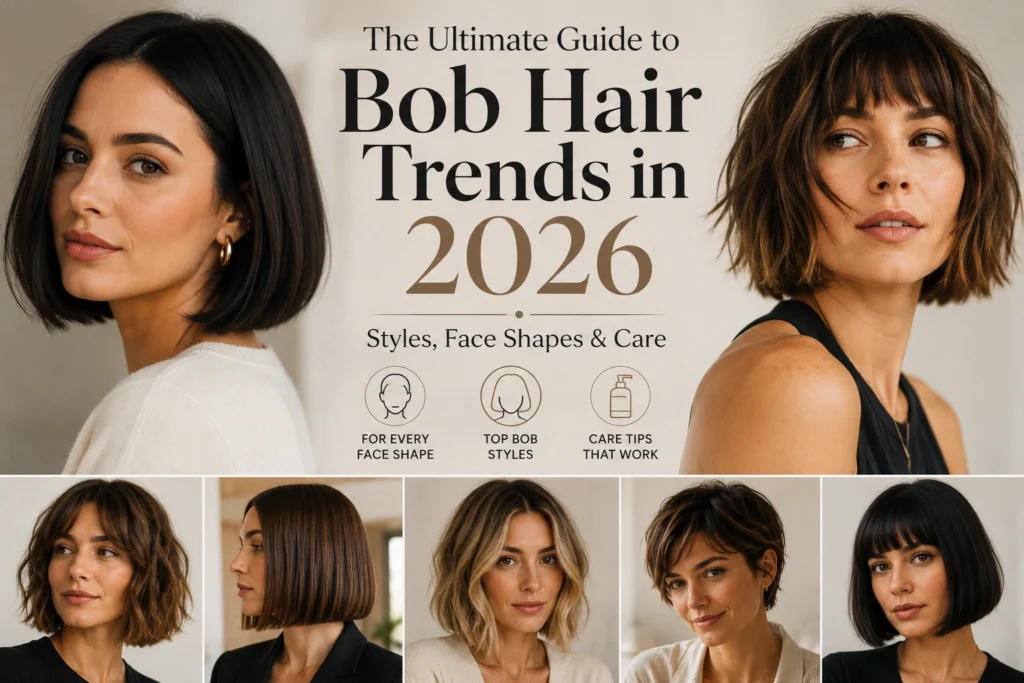


Thick hair and the french bob for thick hair are honestly a match made in Paris. Most guides treat density like a problem to solve. The truth is simpler. A chin-length cut with the right internal structure turns your thickness into the lush, swingy finish everyone is trying to buy with extensions.
The secret is what your stylist does underneath the surface. A french bob for thick hair keeps its clean blunt outline, but the weight gets sculpted from the interior. That is the difference between a chic Parisian silhouette and a heavy triangle.
Below you get 20 thick-hair-friendly styles plus the salon script, the debulking techniques explained in plain language, and the product routine that keeps bulk under control. Bring this guide to your appointment. If a french bob for thick hair is on your wishlist, this guide is for you.
20 French Bob Styles for Thick Hair (2026)
1. The Debulked Classic
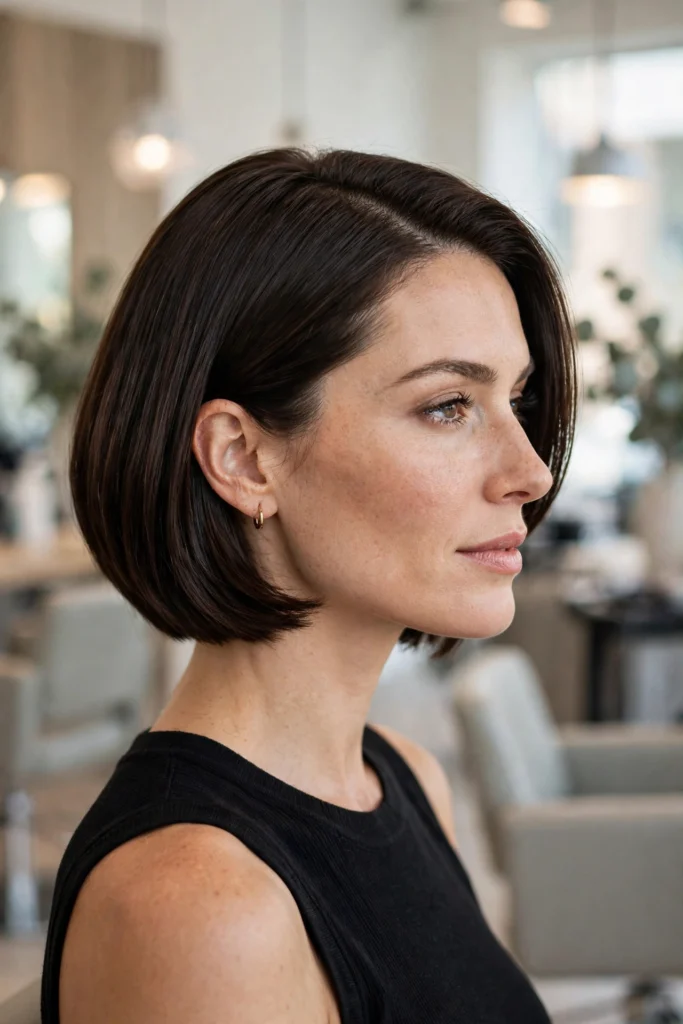
Start with the foundation everything else builds on. The classic french bob sits right at the chin with a clean blunt perimeter, but underneath the surface your stylist removes weight with point cutting through the interior.
What you see is a smooth, polished outline. What you feel is hair that swings instead of sitting like a helmet. This is the cut to show a nervous first-timer.
The debulking is invisible. Nobody watching you walk down the street would guess anything was thinned. The shape just looks expensive, like your hair naturally falls this perfectly.
Ask for the perimeter to stay strong. Weight comes out of the mid-lengths, never off the ends, so the blunt line stays crisp for weeks.
2. Feathered Ends French Bob
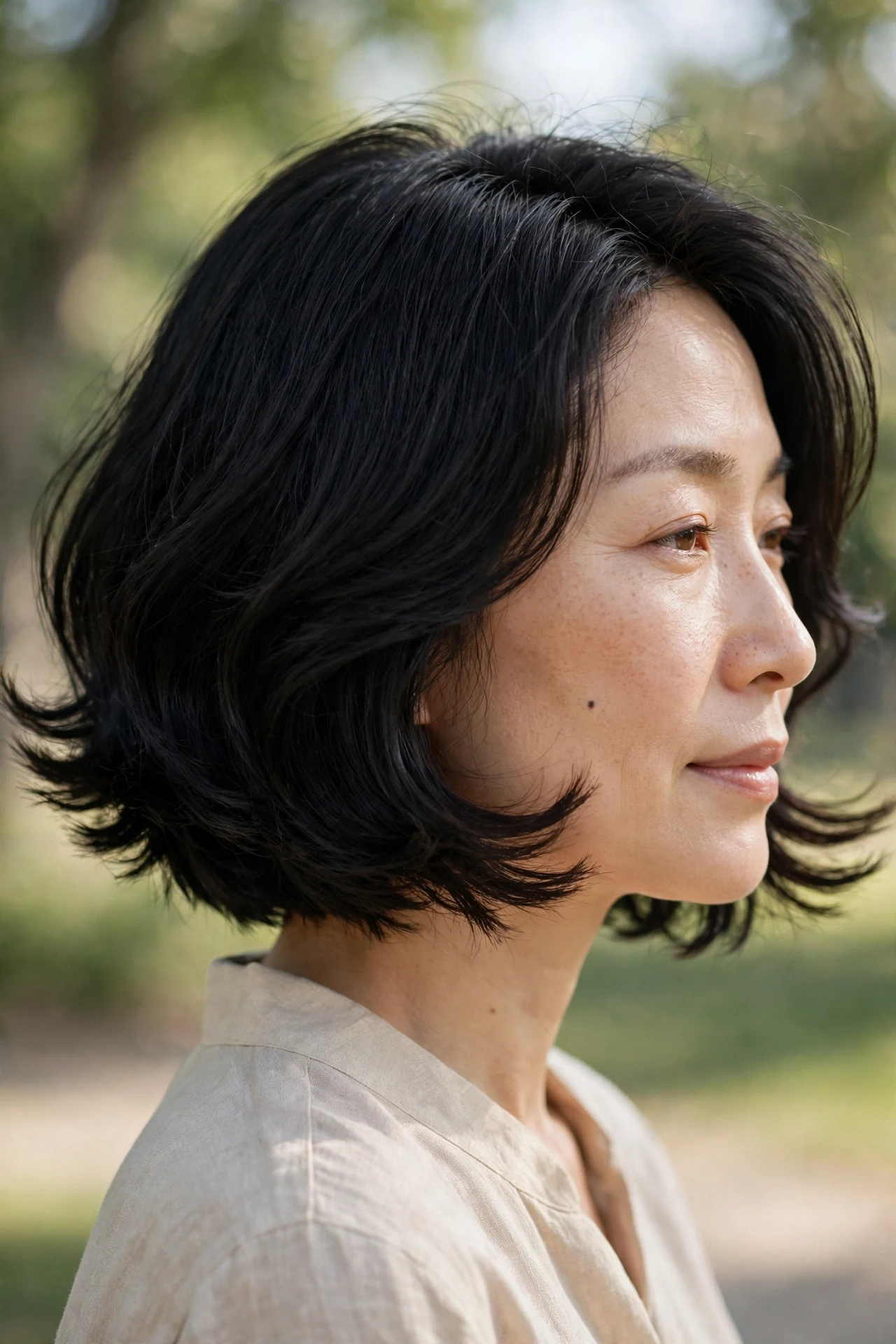
Thick hair worn blunt at chin length has one classic enemy. It builds a heavy, triangular shelf along the bottom edge. Feathering is the structural fix for that.
The ends get softened and lightly flicked so weight lifts off the perimeter while the base stays blunt enough to keep the french outline. The whole silhouette goes from blocky to balanced.
Feathering is also kind to grow-out. When the hair gets longer, those softened ends keep the shape forgiving instead of turning into a bell. It is the most practical version on this list. Let it grow a few more inches and you’ve got a french lob.
Style it with a hot-air styler if you own one. It smooths the thicker lengths and sets the little flick in one pass.
3. Textured French Bob with Wispy Fringe
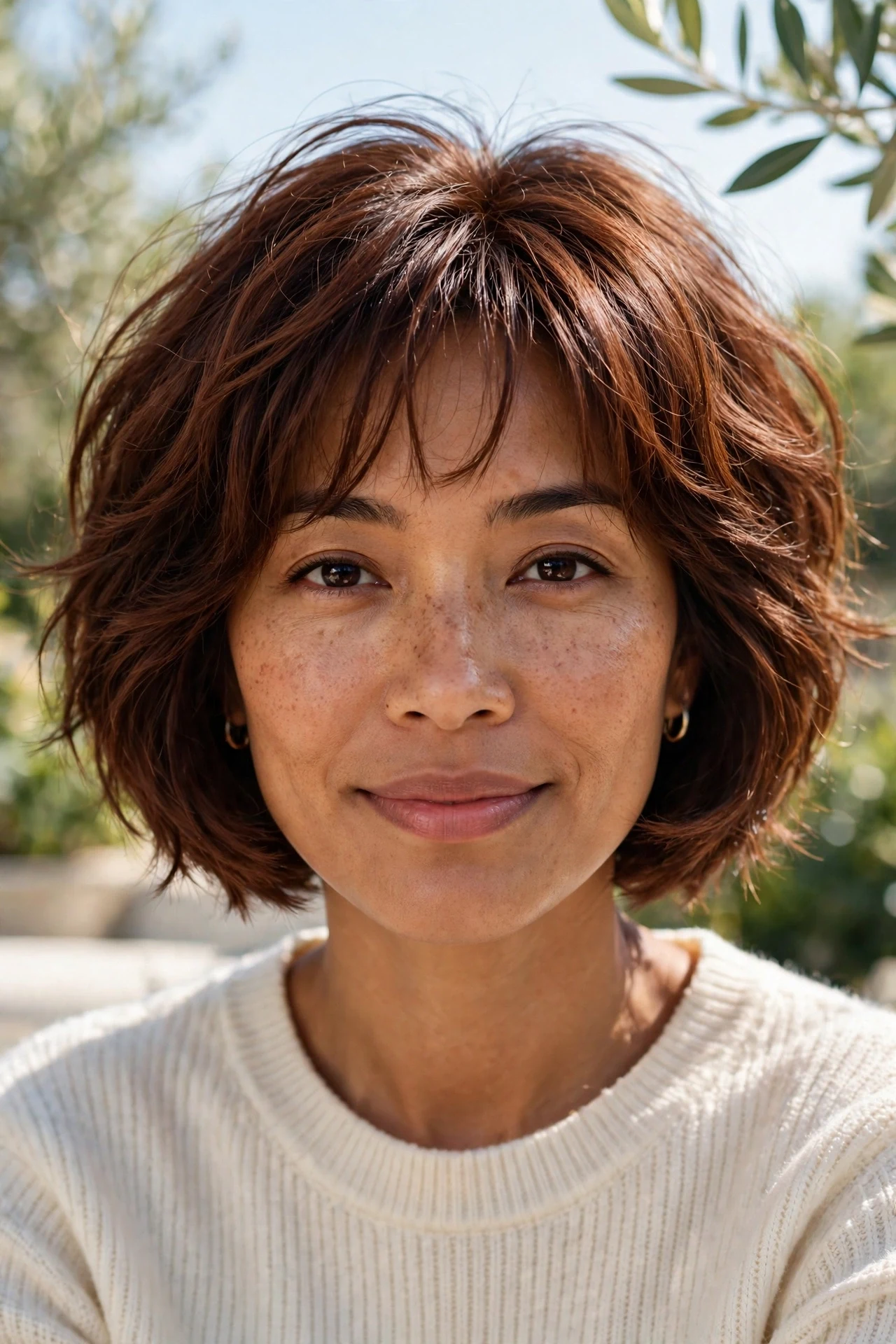
A full blunt fringe on thick hair can feel like a wall. A wispy fringe fixes that in one move. The bangs get point cut into soft pieces so they sit lightly instead of landing as one dense slab.
The bob itself stays chin length with texture sliced through the ends. Together the cut reads light and modern, not heavy and retro.
This version flatters thick hair because it embraces density instead of fighting it. Your natural fullness gives the texture something to hold onto, so it keeps its shape with almost no effort.
Wispy bangs also grow out gracefully. They turn into soft face framing by week six, which means fewer emergency fringe trims.
4. Undercut Nape French Bob
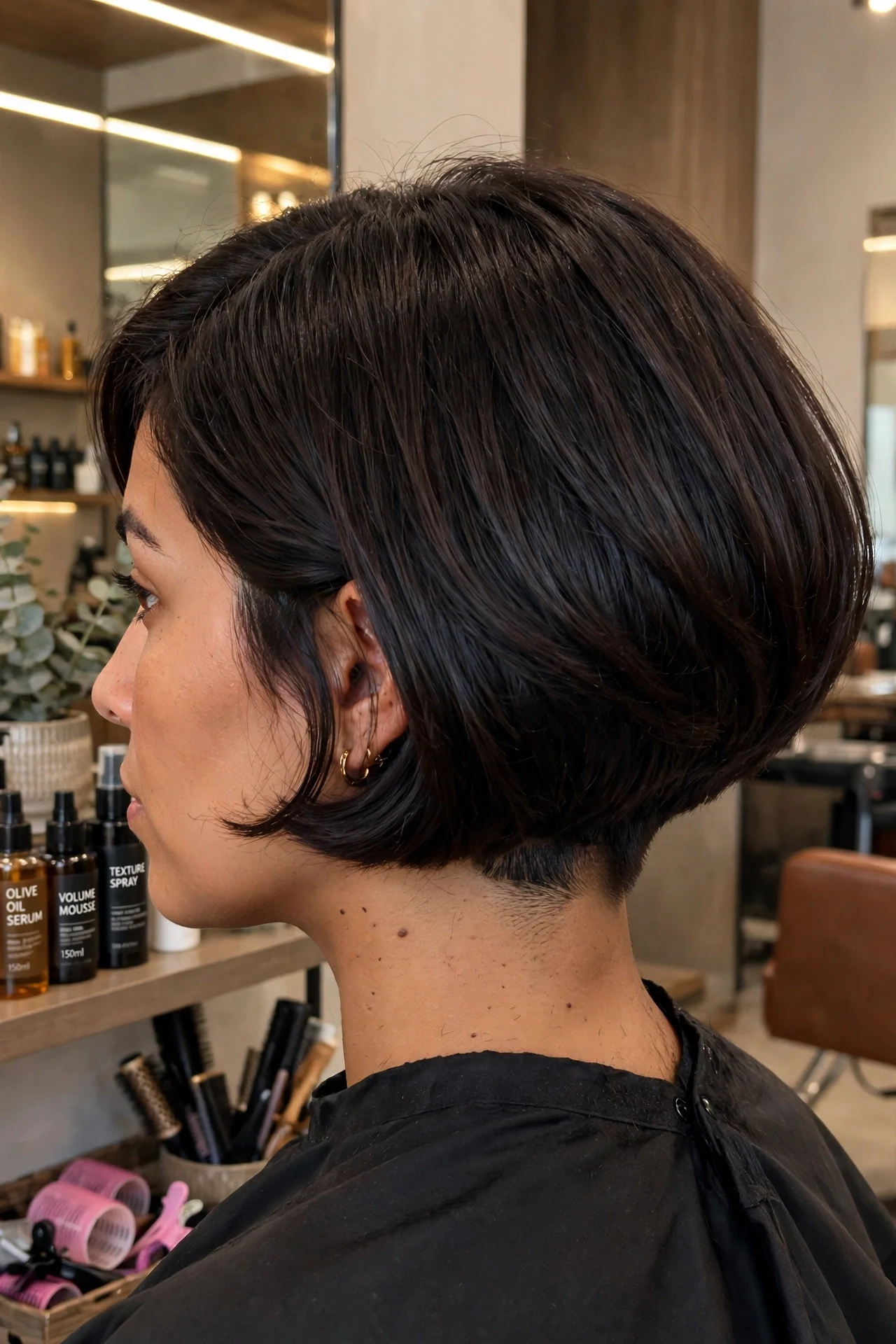
Want the most dramatic weight loss with zero visible change. The undercut nape does exactly that. A hidden section at the back of the neck gets clipped short while the top layers fall over it.
Nobody sees it. You just feel the difference every time you turn your head. The bulk that usually pushes the back of a bob outward simply disappears.
This is the trick stylists use for hair so dense it fights gravity. It is also perfect for summer, because the nape stays cool and the cut dries faster.
The only honest tradeoff is grow-out. The undercut section needs a tidy-up every six to eight weeks or the back starts to push out again.
5. Shattered Ends French Bob

Shattered ends sound aggressive. They are not. The technique cuts the ends into irregular, piece-y points at slightly different lengths so the perimeter breaks up instead of landing as one thick line.
On thick hair this creates movement that a blunt edge never could. Each point falls a little differently, and the cut looks like it is always mid-swing.
It is the low-key cool version of the french bob. No mirror-polish finish, no perfect symmetry, just texture that looks like you woke up in the 11th arrondissement.
Styling is nearly nothing. Scrunch a pea-sized amount of cream into damp ends and leave it alone. Touching it more than that kills the effect.
6. French Bob with Curtain Bangs

Curtain bangs on thick hair need one thing above all else. Debulking through the fringe itself. When that is done, the bangs part softly at the center and melt into the sides of the bob.
The chin-length body stays clean and blunt, which gives the softness of the curtain something structured to play against. It is a beautiful tension.
Round faces love this combination. The center part and the longer curtain pieces draw the eye vertically, which balances the width that thick hair adds at the jaw.
Train the part while the hair is damp. A quick blast of the dryer with your fingers, bangs pushed away from the center, sets it for the whole day.
7. Air-Dried French Bob for Natural Volume

Here is a styling secret most thick-haired women learn too late. Air drying works better when the layers are left a touch longer. The weight of your hair pulls the shape down flatter instead of springing into a puffball.
This version is designed for that reality. The cut follows your natural bend, the fringe sits slightly longer so it settles instead of springing, and one product does the whole job.
The honest trade is simple. Wash day takes zero minutes of styling, but the trim schedule matters more. Book every six to seven weeks, because the shape IS the styling here.
One texture spray in damp hair, hands off while it dries. Sleeping on satin keeps the dried shape smooth into day two.
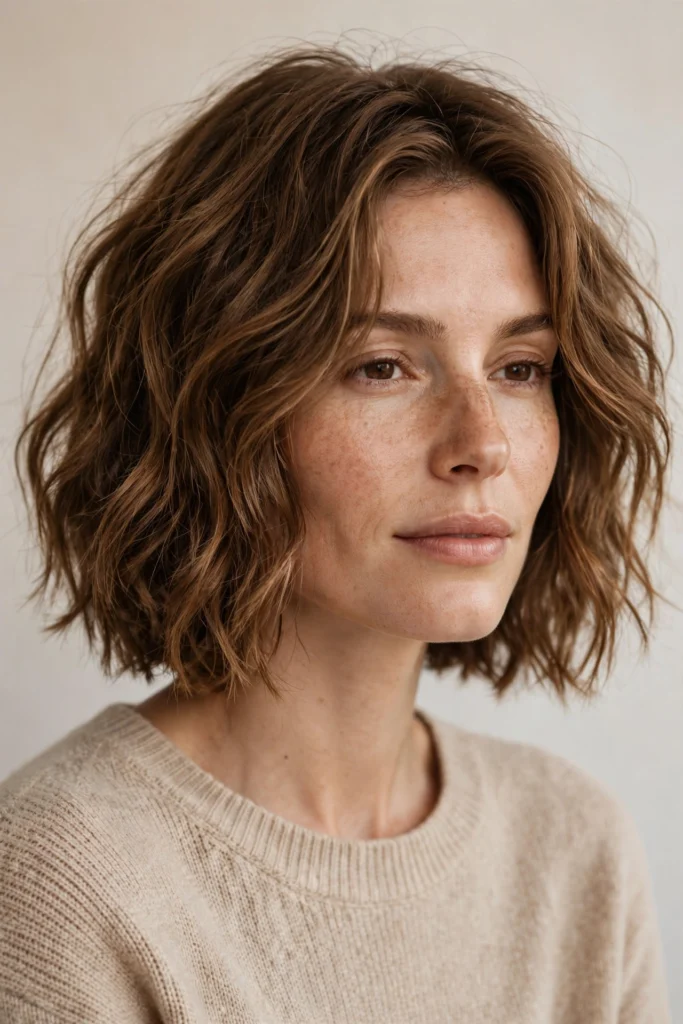
8. Wavy French Bob for Thick Hair

Waves and the french bob were meant for each other. Thick hair holds a bend longer than fine hair, so this version stays styled from morning to evening with very little help.
The length sits at or just above the jawline with a blunt edge that keeps the waves contained. Without that blunt anchor, thick waves would eat the silhouette alive.
Your stylist should cut it slightly longer than the target length. Waves lift everything once dry, and a cut that looked perfect wet will bounce too high.
Frizz control is the real work here. A smoothing cream on the mid-lengths before the waves form keeps the Parisian polish. Skip the top of the head or you will flatten the good volume.
9. Blunt Perimeter French Bob with Interior Layers
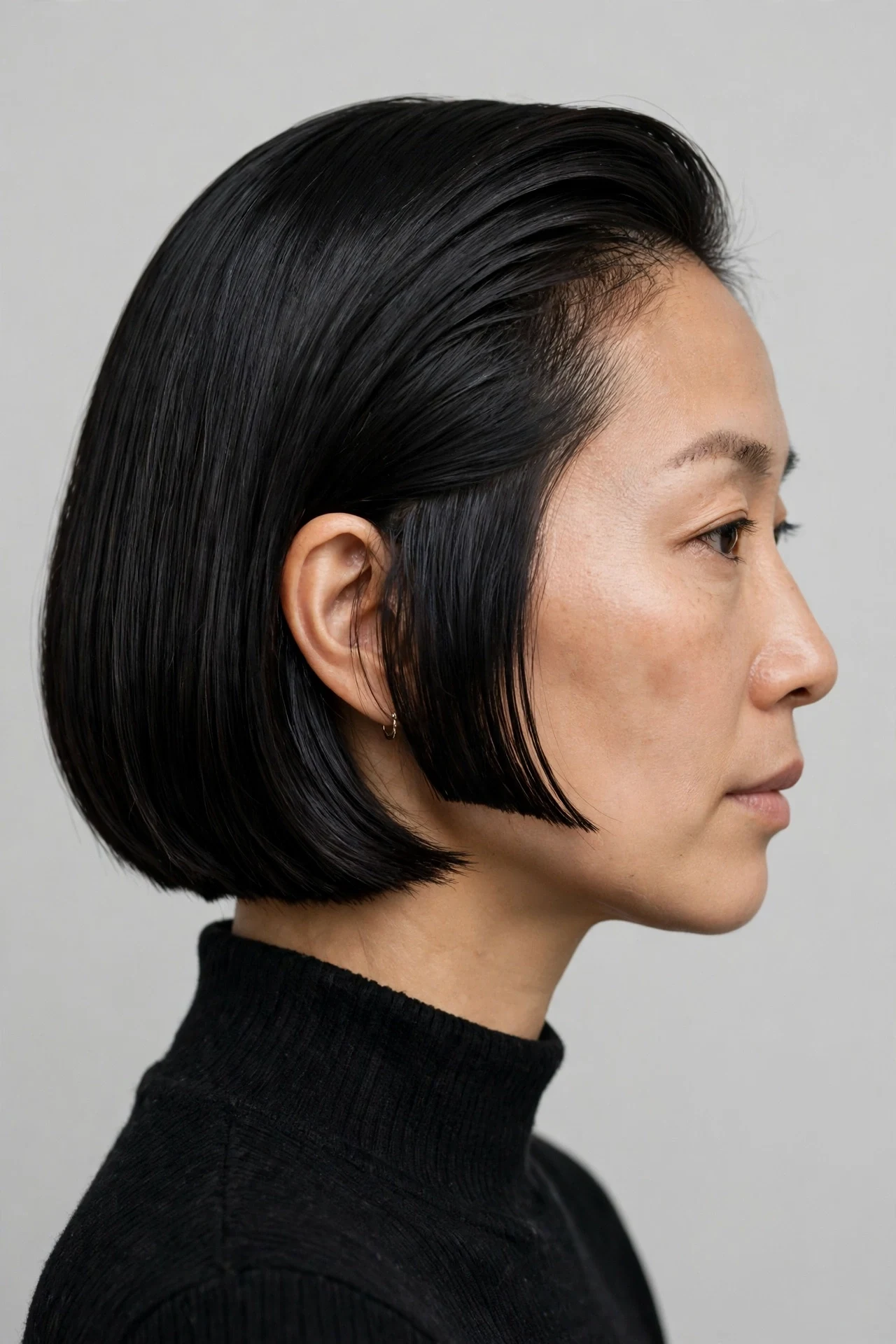
This is the most misunderstood technique in the book. Interior layers are cut underneath the top surface, so from the outside the bob looks like one clean blunt sheet. Inside, whole sections have been shortened to release weight.
Thick hair gets all the movement of layers with none of the visible choppiness. The outline stays razor sharp. The body feels half as heavy.
This is the cut for someone who wants the sleek, editorial french bob but has hair that would normally refuse it. The interior work makes the impossible wearable.
Ask for it by name. Say “keep the perimeter blunt, take the weight from the interior.” A good stylist will know exactly what you mean.
10. Razor-Cut French Bob
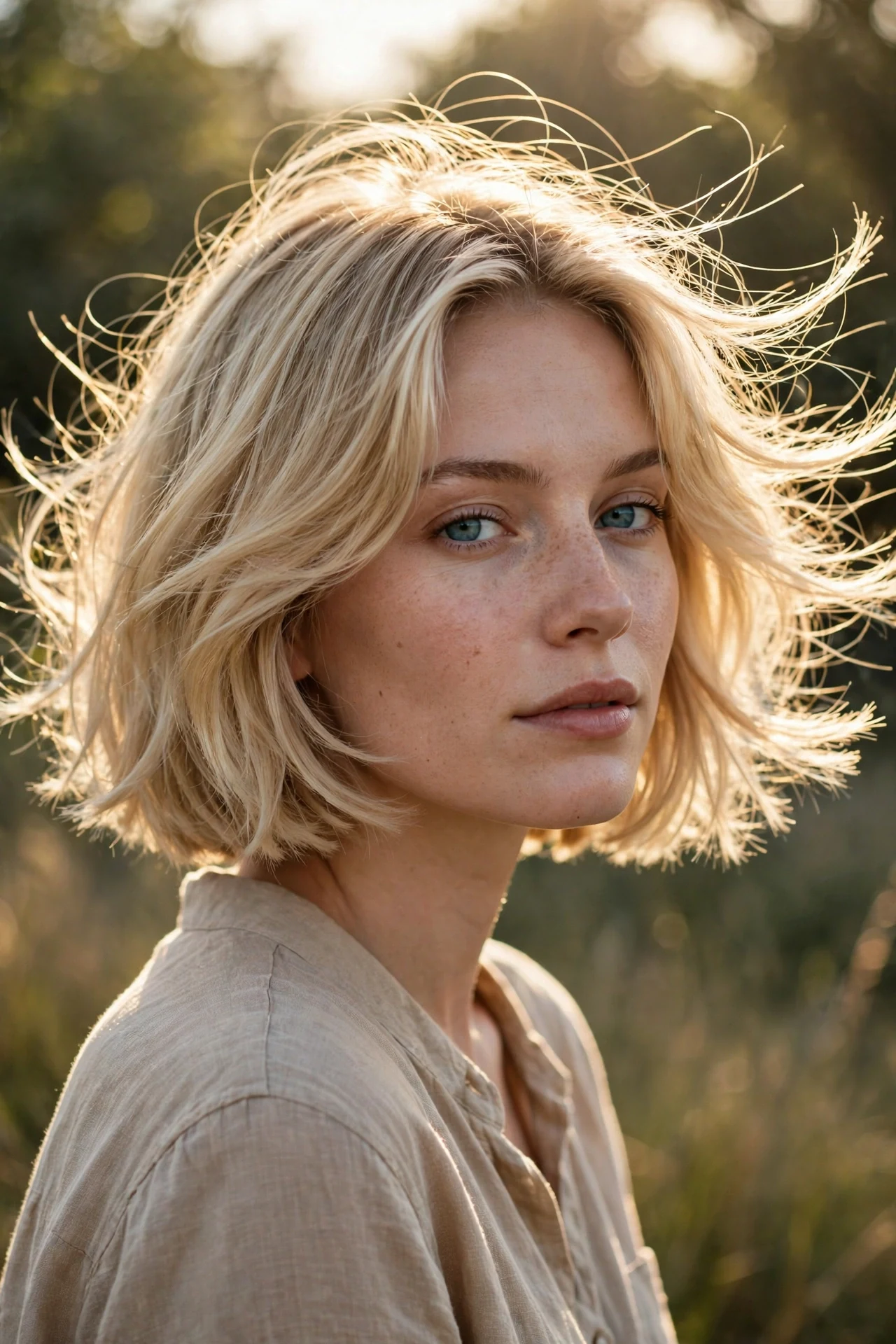
The razor is thick hair’s best friend and worst enemy, depending on who holds it. In skilled hands, a razor slices through the ends and creates a soft, feathery edge that shears could never fake.
On a french bob, razor cutting removes bulk and builds texture in the same motion. The ends land wispy instead of chunky, and the whole cut feels lighter than it looks.
The warning matters though. A razor on very coarse or frizzy hair can rough up the cuticle and invite frizz. This technique suits thick hair with a smooth strand texture best.
Ask your stylist honestly whether your hair type is a good candidate. They will tell you in ten seconds if you ask directly.
11. Side-Parted French Bob
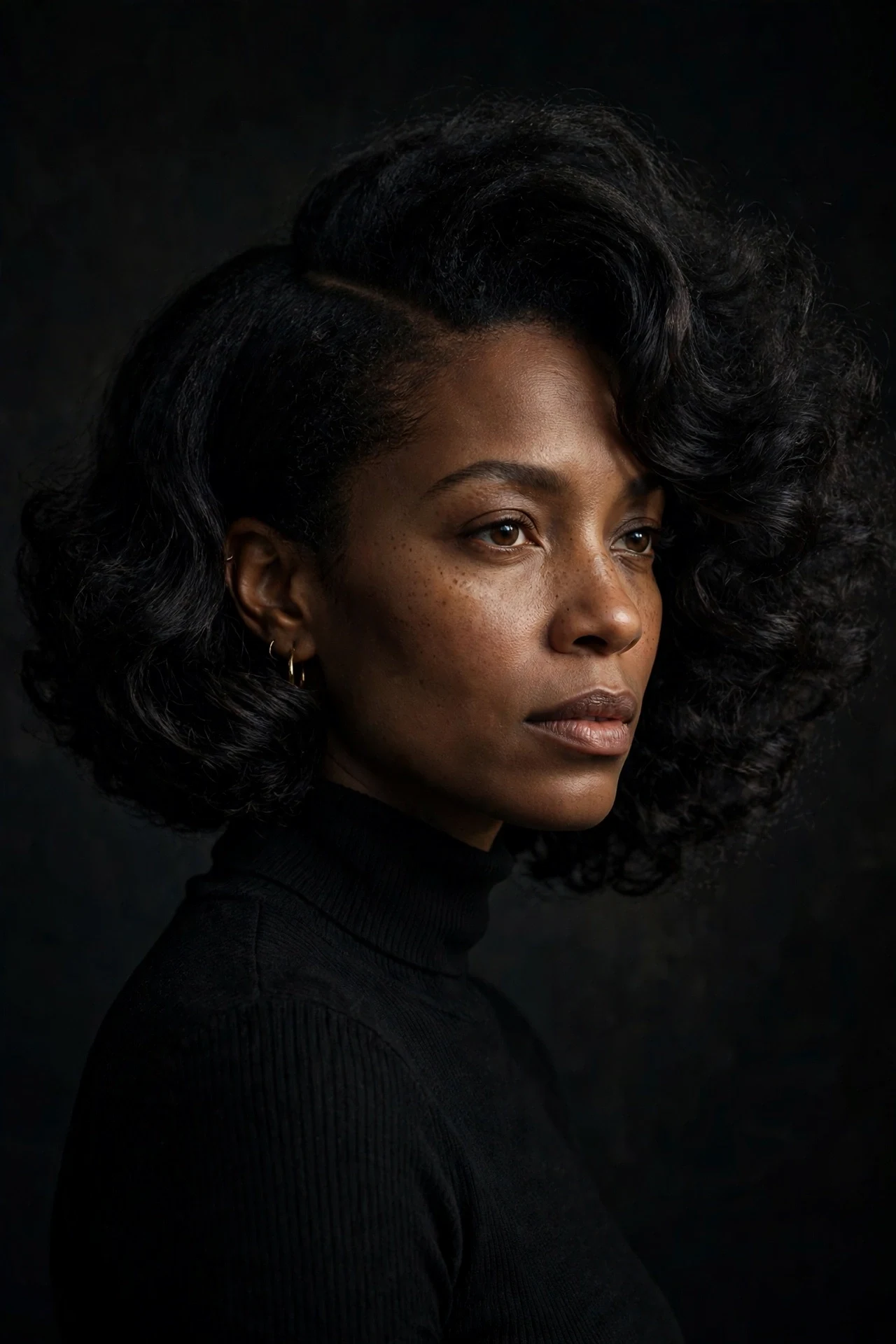
A deep side part is the fastest way to change how thick hair behaves at chin length. It redistributes the weight, sending volume to one side and letting the other side fall sleek.
The cut itself stays a classic french bob. The part does all the styling work. Sweeping everything to one side also lifts the roots on the heavy side, which fights flatness at the crown.
This version photographs beautifully. The asymmetry gives the eye somewhere to travel, and the full side looks intentionally dramatic instead of accidentally bulky.
Flip the part every few days. Hair trains itself to fall one way, and switching keeps the roots from going flat and the volume evenly distributed.
12. French Bob with Micro Bangs
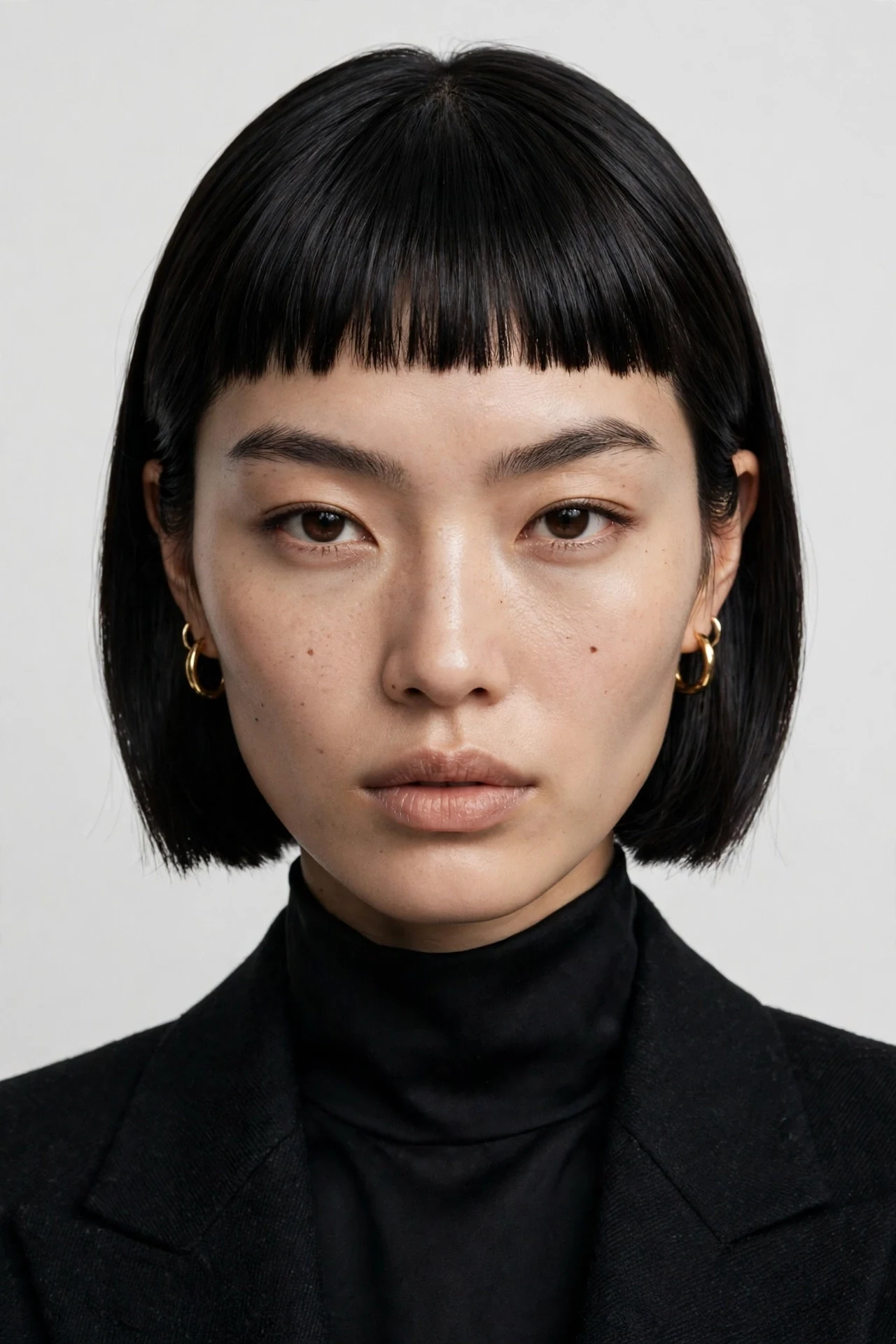
Micro bangs on thick hair are a statement, and they need courage plus a good debulking. Cut well above the brow and thinned so they do not sit like a shelf, they make the whole bob look bold and fashion forward.
The short fringe shows off your brows and cheekbones completely. Everything about the face opens up. The chin-length body frames it all with that dense, rich finish thick hair does so well.
Grow-out is the real commitment here. Micro bangs need a trim every three to four weeks to stay at their length. There is no awkward-phase hiding with this one.
But if you love an editorial look, nothing on this list hits harder. It turns a classic cut into something people remember.
13. Tousled Bedhead French Bob

The bedhead french bob is the art of looking like you did nothing, which for thick hair is usually true by accident. This version makes it deliberate. Choppy texture gets cut through the ends, and the styling is just texture spray and your fingers.
Thick hair is actually ideal for this. Fine hair falls flat by noon, but density holds the tousled separation all day. Your hair type is the cheat code here.
The key is strategic messiness. Work the texture into the mid-lengths and ends, never the crown, or you will build a triangle on top of a triangle.
This is also the most forgiving version for second and third day hair. Dry shampoo at the roots and a quick re-scrunch is the entire refresh routine.
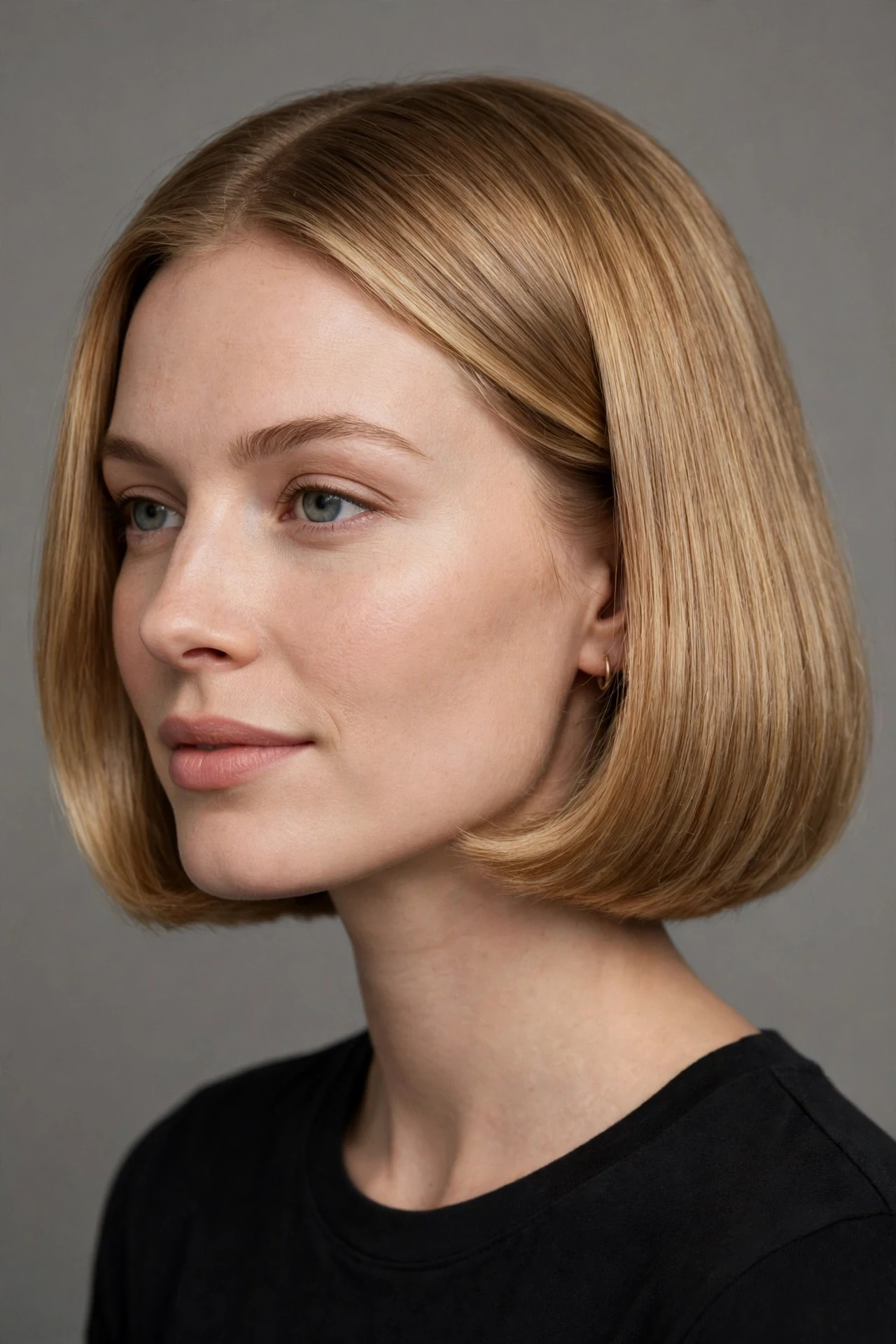
14. Sleek Polished French Bob
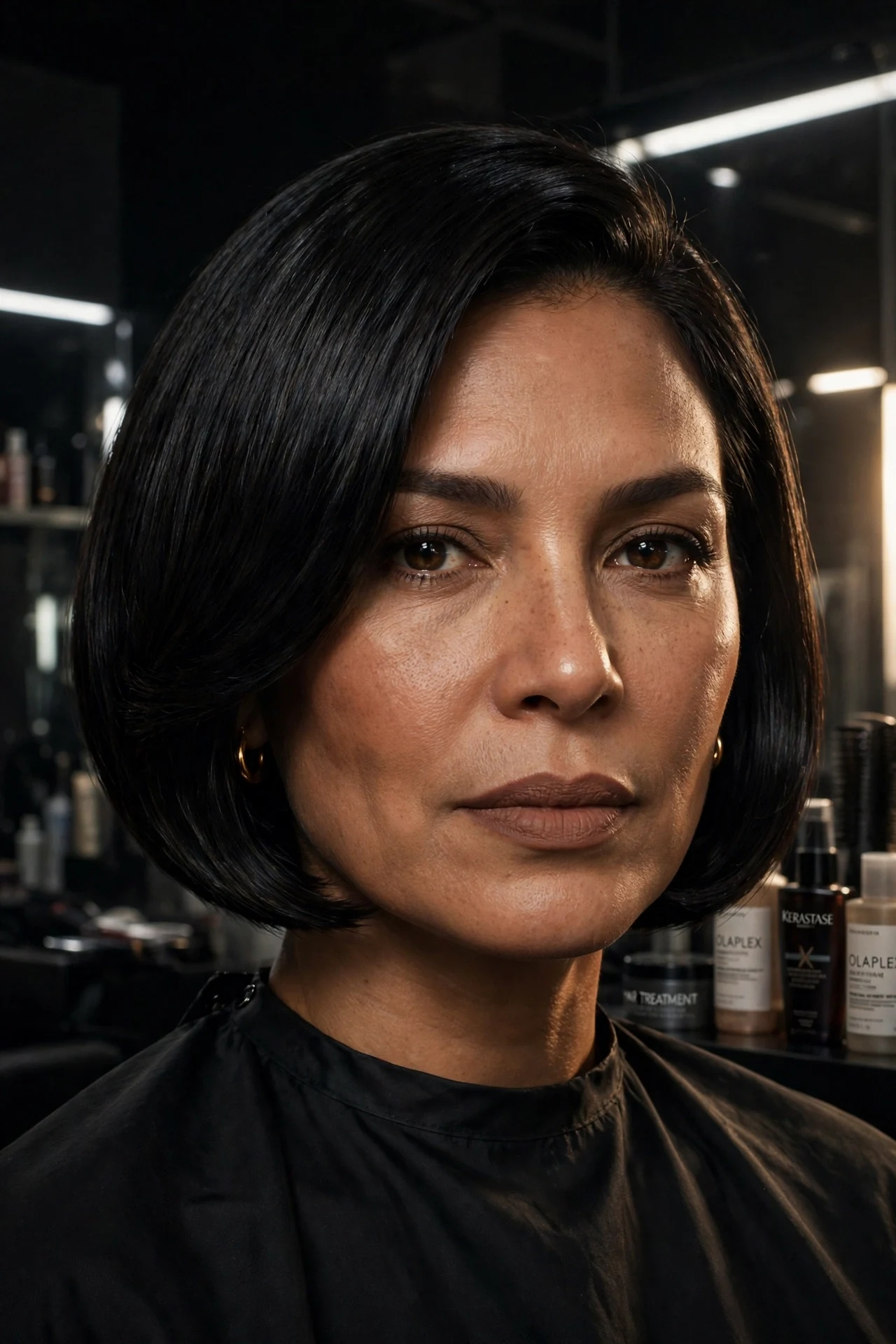
Not every thick-haired woman wants texture. The sleek polished french bob proves density can look glassy and expensive when the cut is precise and the heat styling is careful. A blonde french bob in this sleek finish looks especially expensive.
The perimeter lands in one clean line at the chin. The surface gets smoothed with a flat iron in small sections, and a light oil on the very ends seals the shine.
Humidity is the enemy of this version, so it is a fair-weather or indoor-event choice. Keep an anti-humidity spray in your bag if you commit to it for a whole day out.
The payoff is that jaw-dropping mirror finish. Thick hair holds sleekness longer than fine hair once it is set, because there is more mass for the heat to mold.
15. French Bob with Face-Framing Angles
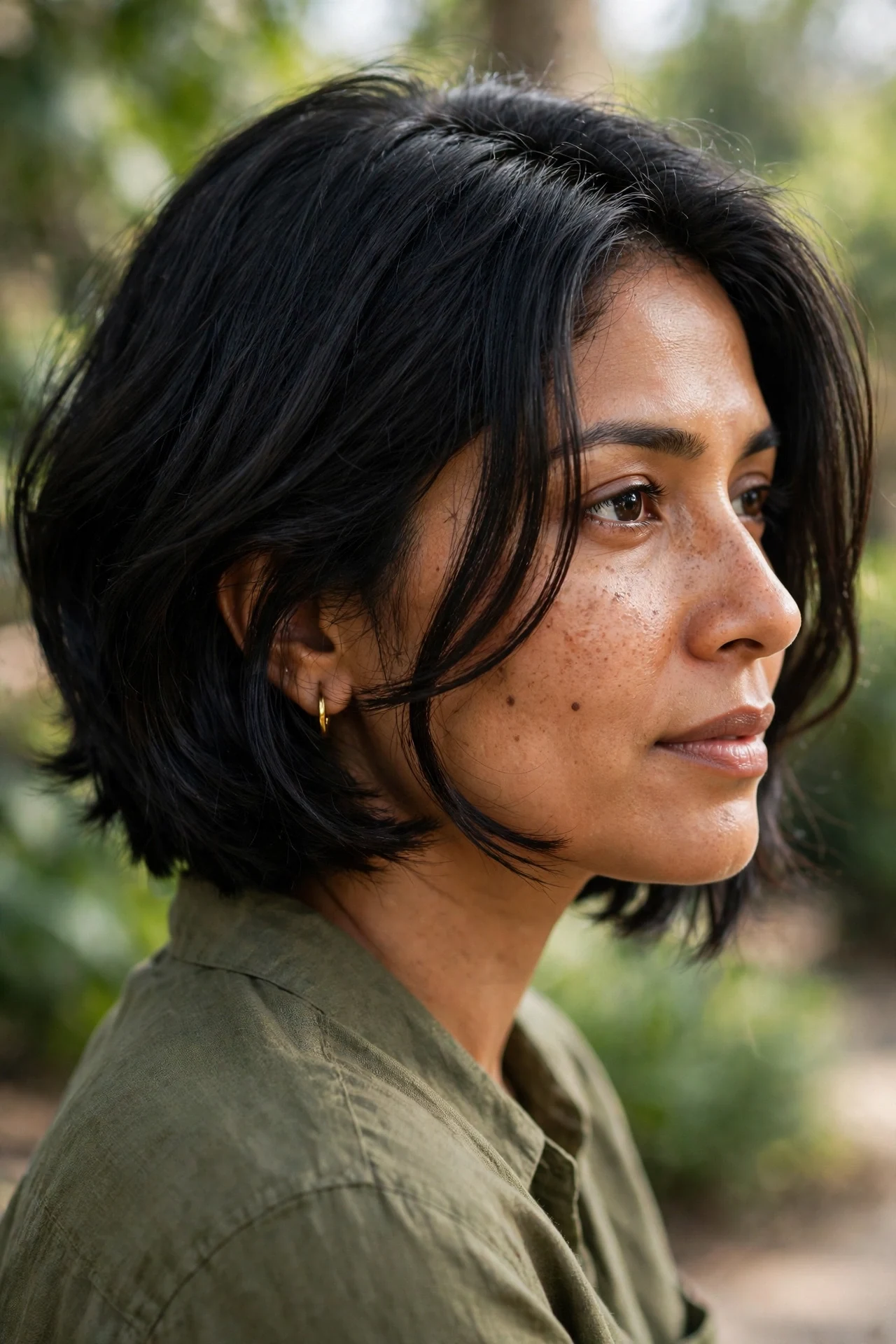
Shorter pieces at the front that angle back into the chin-length body do two jobs at once. They slim the face and they break up the solid wall of hair that thick density can create.
The front pieces graze the cheekbones and melt into the bob, so the cut keeps its french identity. It is not a layered bob in disguise, just a smarter front edge.
This version suits strong jawlines and square faces especially well. The angles soften the perimeter exactly where the face is widest.
Style the front pieces with a round brush flicked away from the face. That one motion gives the whole cut its finished, intentional look.
16. Stacked Back French Bob
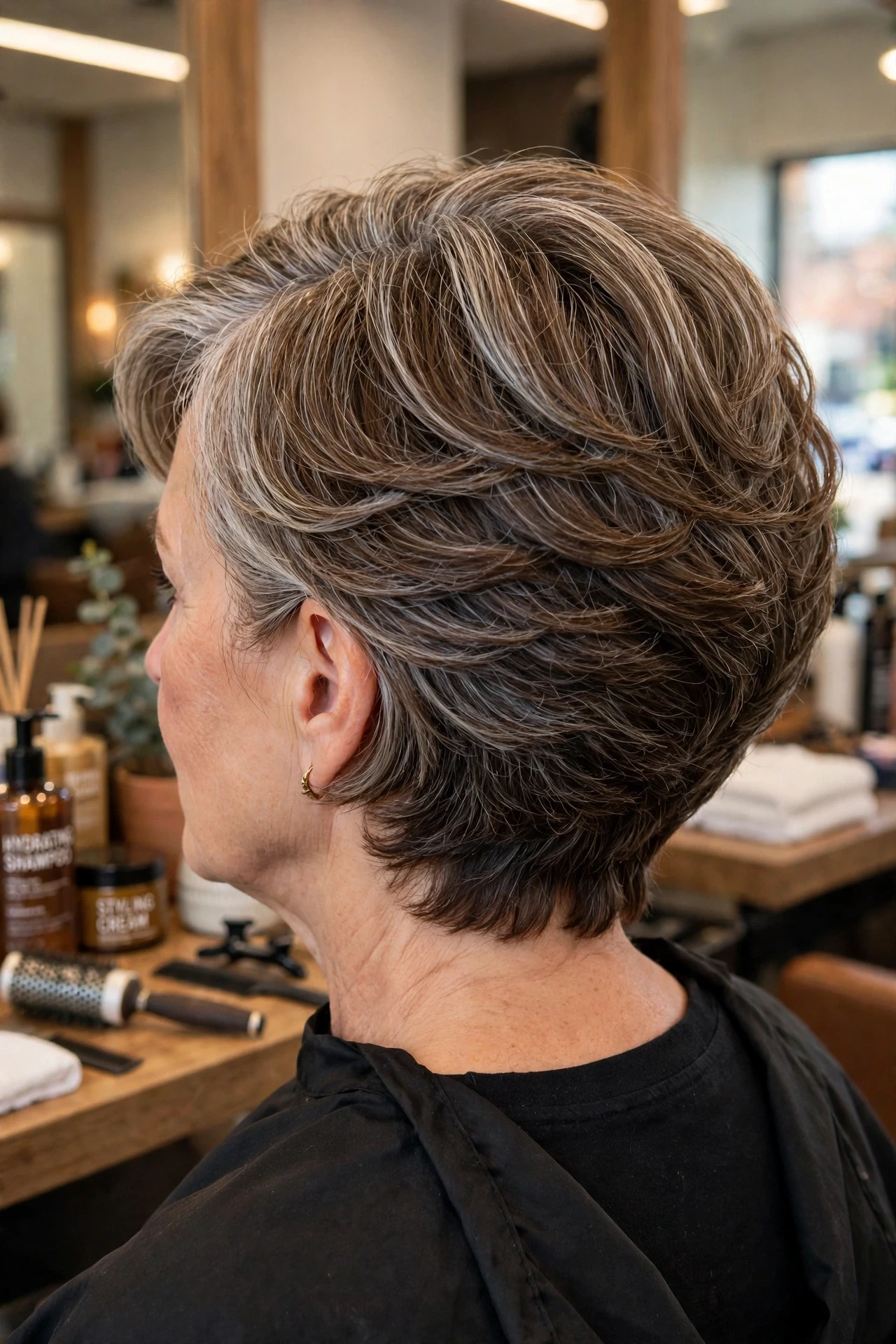
Stacking builds shorter layers at the nape that graduate longer toward the front. On thick hair this is pure engineering. It removes the bulk that pools at the back of the neck and creates lift at the crown in one move.
From the front it reads as a classic french bob. From the back and side you see the beautiful graduation that keeps the shape from going boxy.
The stacked back holds its shape well between appointments, which makes it lower maintenance than it looks. The structure does the work your blow dryer would otherwise do.
One caution. If you have a strong cowlick at the nape, tell your stylist before they stack it. Short layers over a cowlick can misbehave, and the cut needs to be adjusted for it.
17. What to Tell Your Stylist (Word for Word)
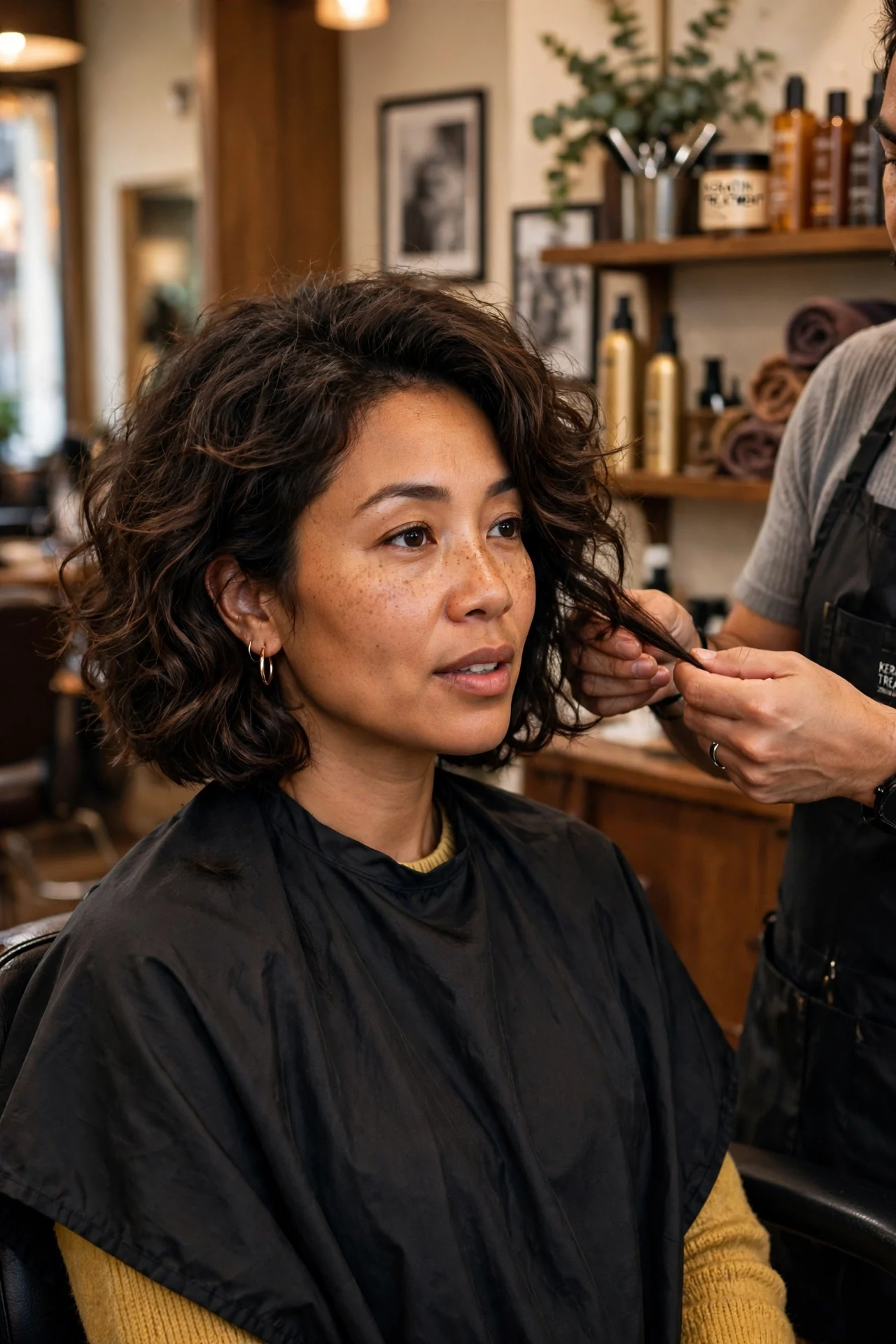
Walk in with a script and you walk out with the right cut. Photos help, but only if they show people with YOUR hair density. A fine-haired inspiration photo sets your stylist up to fail. For extra inspiration before your appointment, browse these French bob styling ideas.
Say this: “I want a chin-length french bob. Keep the perimeter blunt, but take the weight out of the interior so it does not go triangular.” Then ask how they plan to remove the bulk.
Listen to the answer. “Point cutting” and “slicing” are precise techniques with good grow-out. “Just thinning shears at the end” is vaguer, and worth a follow-up question about where exactly the weight comes off.
Talk lifestyle too. If you air dry most days, say so. Your stylist may leave the layers a little longer so the weight helps the hair fall flatter on its own. A french bob for thick hair works best when the cut matches how you actually style it day to day.
18. Debulking Techniques Explained
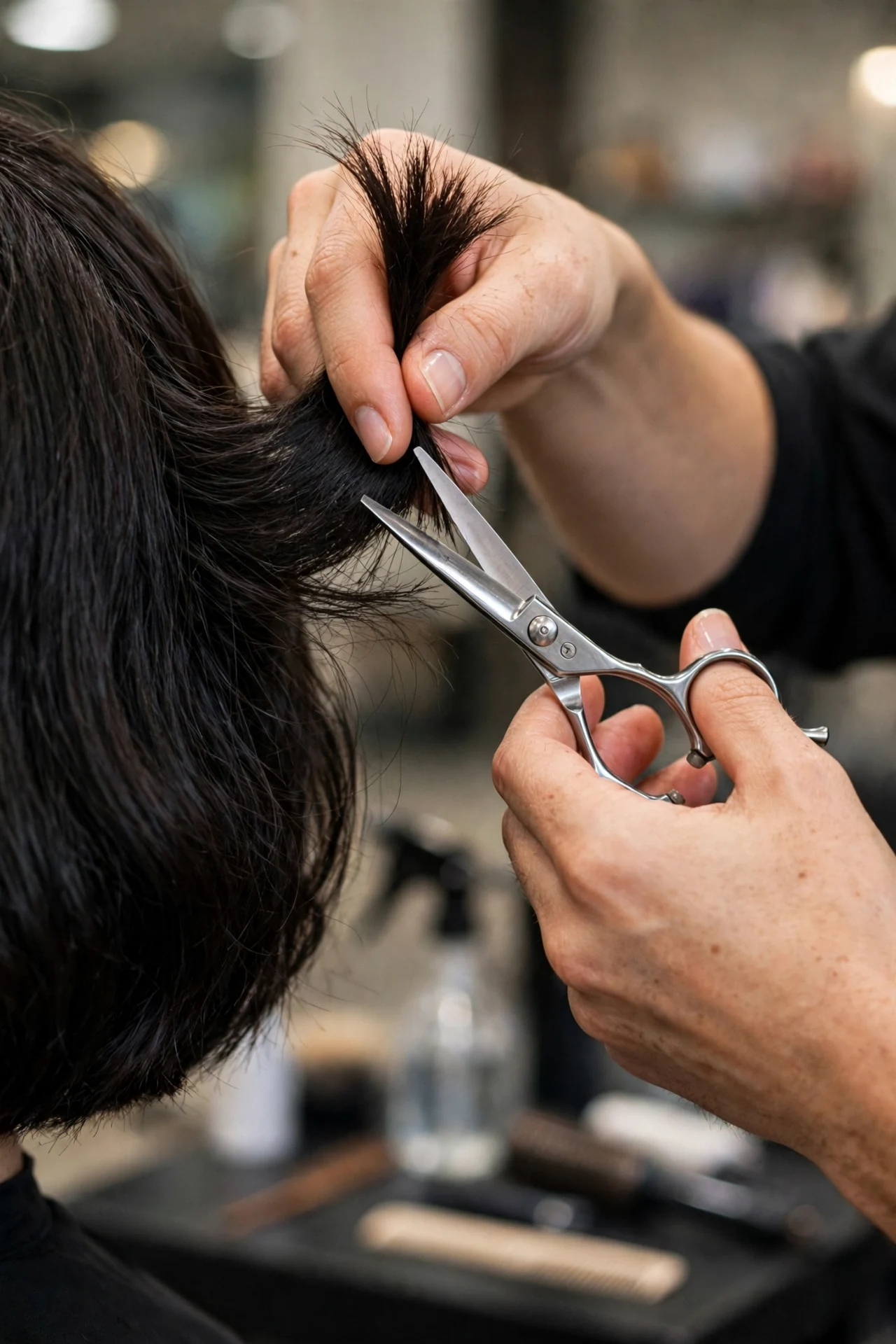
Here is what each method actually does, in plain language. Point cutting snips into the ends at an angle, softening the edge and removing a little weight. It is the gentlest option and grows out beautifully.
Slicing slides the shears down a section of hair, carving out interior weight without touching the surface. This is the invisible workhorse behind most great thick-hair bobs.
Thinning shears look like regular scissors with teeth. They remove chunks of bulk fast, which is great in skilled hands and risky in careless ones. Too much thinning near the surface creates frizz and weird regrowth texture.
Razor cutting slices the hair at an angle for a soft, feathered edge. Lovely on smooth thick hair, risky on coarse or frizzy strands. Now you can have an informed conversation instead of just nodding.
19. Products That Tame the Bulk
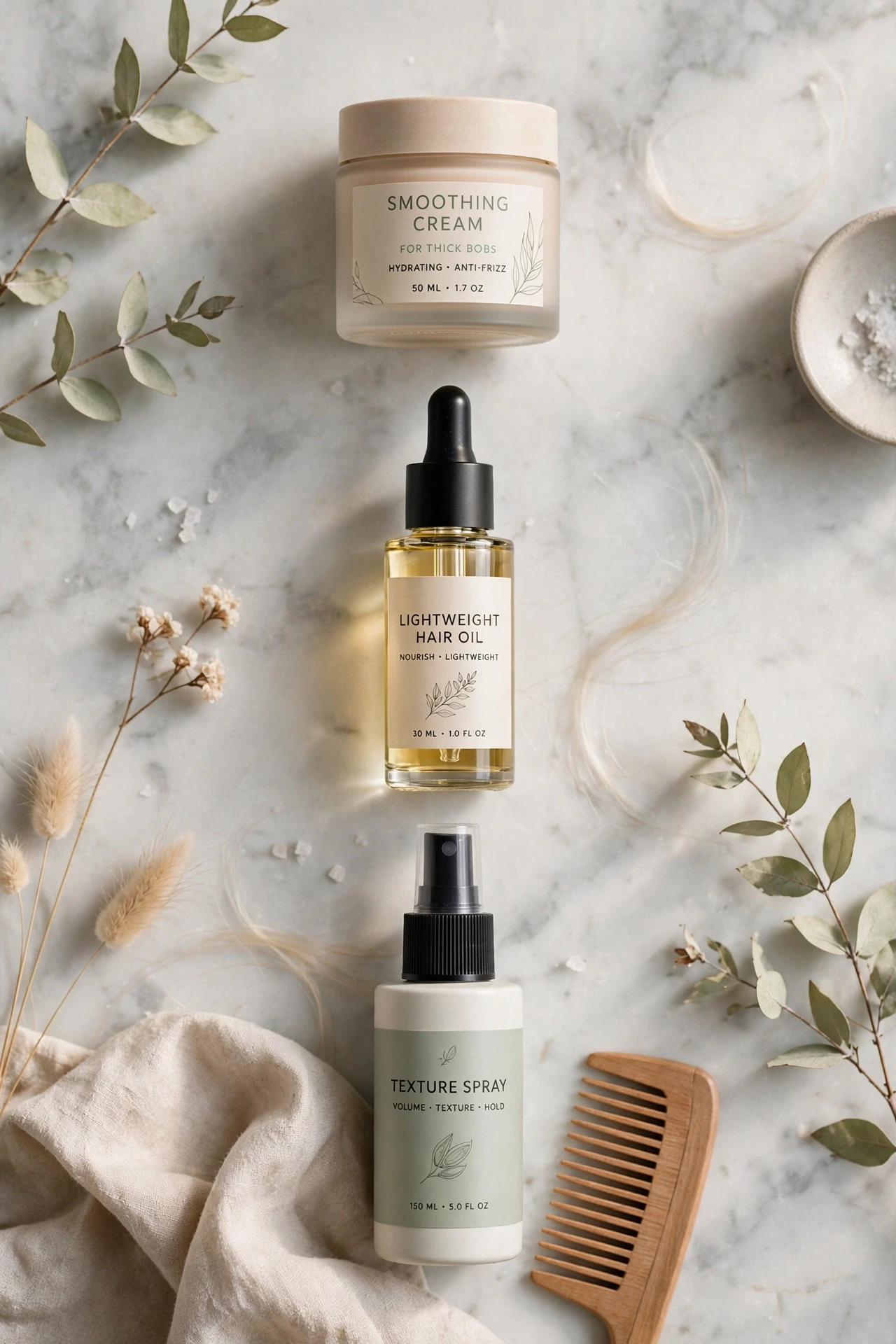
Thick hair needs product strategy, not product quantity. Where you put it matters more than how much you use. Creams and oils go on the mid-lengths and ends only. Roots stay product-free or the crown goes flat while the sides go wide.
Start with a smoothing cream on damp hair to control the cuticle. Add a pea-sized amount of lightweight oil to the very ends for shine. Finish with texture spray or salt spray only if you want that undone french finish.
Skip heavy masks at the roots and anything labeled “ultra hydrating” near the scalp. Thick hair at chin length gets weighed down faster than long hair because there is less length to distribute the product.
Dry shampoo is your day-two best friend, applied the night before. It absorbs oil while you sleep, so you wake up with volume instead of fighting flat roots in the morning.
20. Humidity and Second-Day Refresh Guide
Humidity is thick hair’s ancient enemy, and a french bob lives right where frizz shows most. The defense starts in the shower. A sulfate-free shampoo keeps the cuticle smooth so moisture cannot sneak in and swell the strands.
Before stepping out, a light anti-humidity spray over the finished style seals everything. It is the difference between a bob that survives August and one that surrenders by noon.
For second-day refresh, do not rewash. Mist the ends lightly with water, smooth a tiny amount of cream over the frizzy spots, and hit the perimeter with a flat iron for thirty seconds.
Sleeping on a satin pillowcase preserves the shape overnight better than any product. Cotton creates friction, friction creates frizz, and frizz is exactly what this routine is fighting. A french bob for thick hair keeps its shape best when nights are friction-free.
Frequently Asked Questions
Does a french bob work on really thick hair?
Yes, and it can be one of the best cuts for it. The short length removes the weight that makes long thick hair exhausting, while the blunt perimeter keeps the ends looking full instead of wispy. The key is interior debulking, which your stylist does underneath the surface. Without that step, thick hair at chin length tends to build a triangular shape, wide at the bottom and flat on top. With it, the same hair swings and moves like a dream.
How do I avoid the triangle shape with a french bob?
The triangle happens when all the weight sits at the perimeter with nothing removed inside. Prevent it by asking for interior layers, point cutting, or slicing through the mid-lengths, and by keeping the length at or just below the chin rather than shorter. Feathered or shattered ends also help because they break up the solid bottom edge. If your bob is already triangular, one corrective appointment with interior weight removal usually fixes it.
Should thick hair get thinning shears in a french bob?
Thinning shears can work, but they are not the only option and not always the best one. Point cutting and slicing remove weight more precisely and grow out more cleanly. Thinning shears remove bulk fast, which suits very dense hair, but overuse near the surface creates frizz and strange regrowth texture. Ask your stylist which technique they prefer and why. A confident, specific answer is a good sign.
How often does a french bob for thick hair need trimming?
Every six to eight weeks for most thick hair. The shape holds longer than on fine hair because density keeps the silhouette full, but once the ends pass the chin the line softens and the cut loses its french character. If you have an undercut nape or micro bangs, those need tidying every three to six weeks. Book the next appointment before you leave the salon so the shape never gets away from you.
Can I air dry a french bob if my hair is thick?
Absolutely, and many thick-haired women get their best results this way. The trick is leaving the layers slightly longer so the weight of the hair pulls the shape down instead of springing into volume. Ask your stylist to cut with air drying in mind, then use one product, a texture or smoothing cream, on damp hair and keep your hands off it while it dries. Touching it as it dries creates the frizz you are trying to avoid.
What is the best fringe for thick hair with a french bob?
A wispy or textured fringe beats a blunt one for most thick hair. A full blunt fringe on dense hair can look heavy and sit like a separate piece rather than blending into the cut. Wispy bangs, curtain bangs, or a soft side-swept fringe integrate better because they are debulked through the fringe itself. Micro bangs work too if you want a bold look, but they need thinning so they do not land as a solid shelf.
Final Thoughts
A french bob for thick hair is proof that density is an asset, not a problem, once the interior weight is handled. Pick the version that fits your routine, bring the script to your stylist, and enjoy the swing. Still deciding which bob suits you best? Our Ultimate Guide to Bob Hair Trends compares 16 major bob styles side by side to help you choose.

Sana Malik is a hair and beauty writer with a deep love for the bob in all its forms from sharp French bobs to soft, lived-in lobs. After years of experimenting with her own short hair and helping friends figure out what actually suits their face shape, she started writing to cut through the confusing advice out there. At BobHairTrends, she breaks down each cut into simple, honest guides: how to ask for it, how to style it at home, and who it really flatters. When she isn’t researching the latest trends, she’s usually testing a new styling product or convincing someone it’s finally time for the chop.