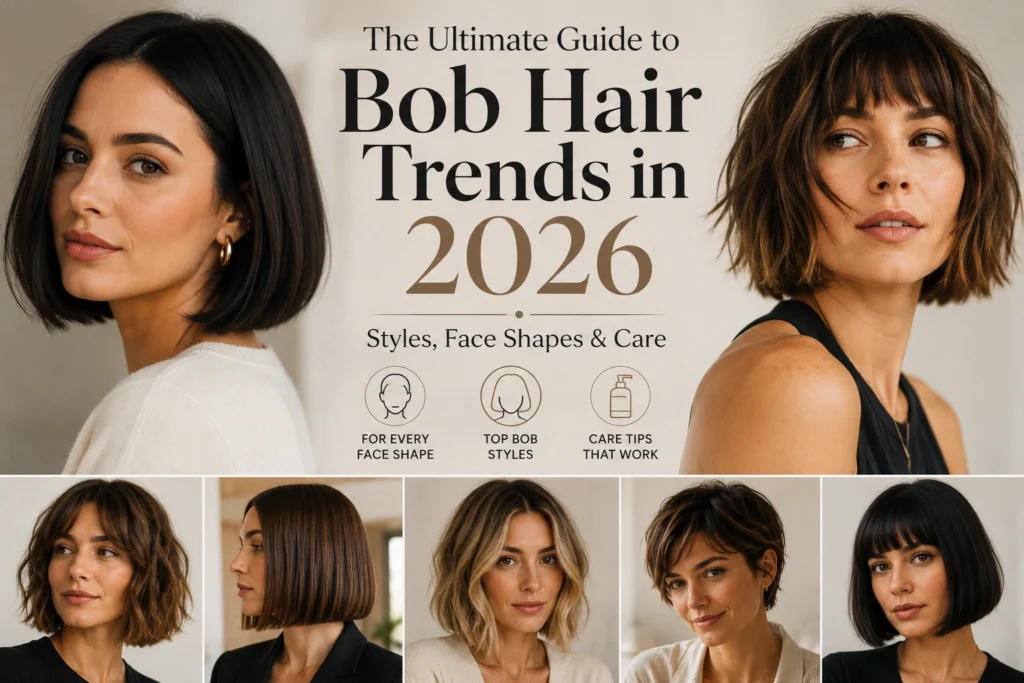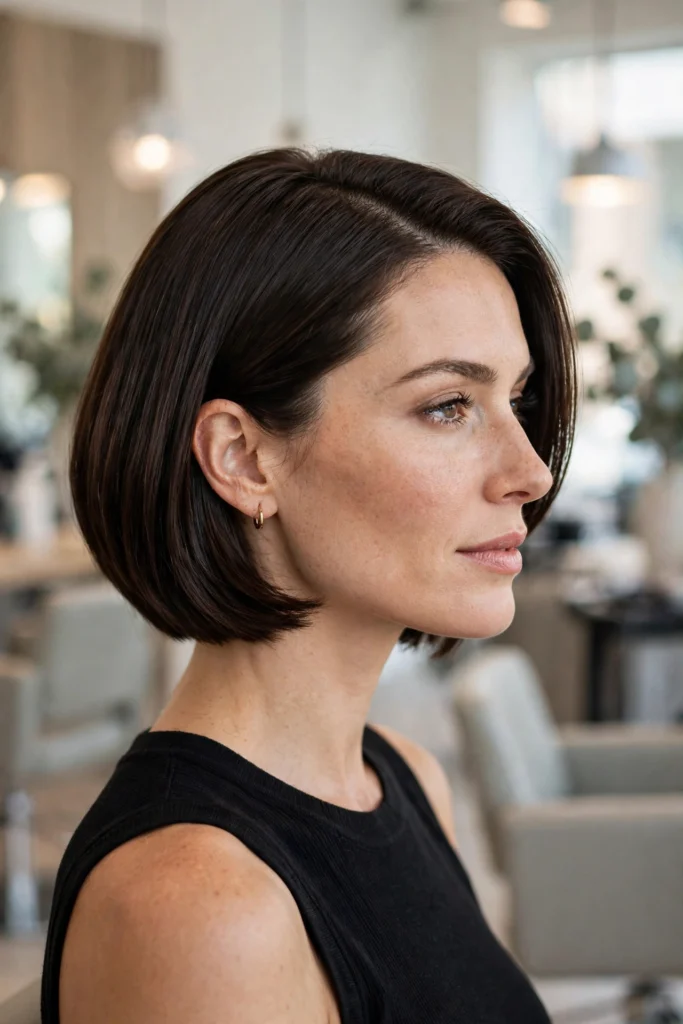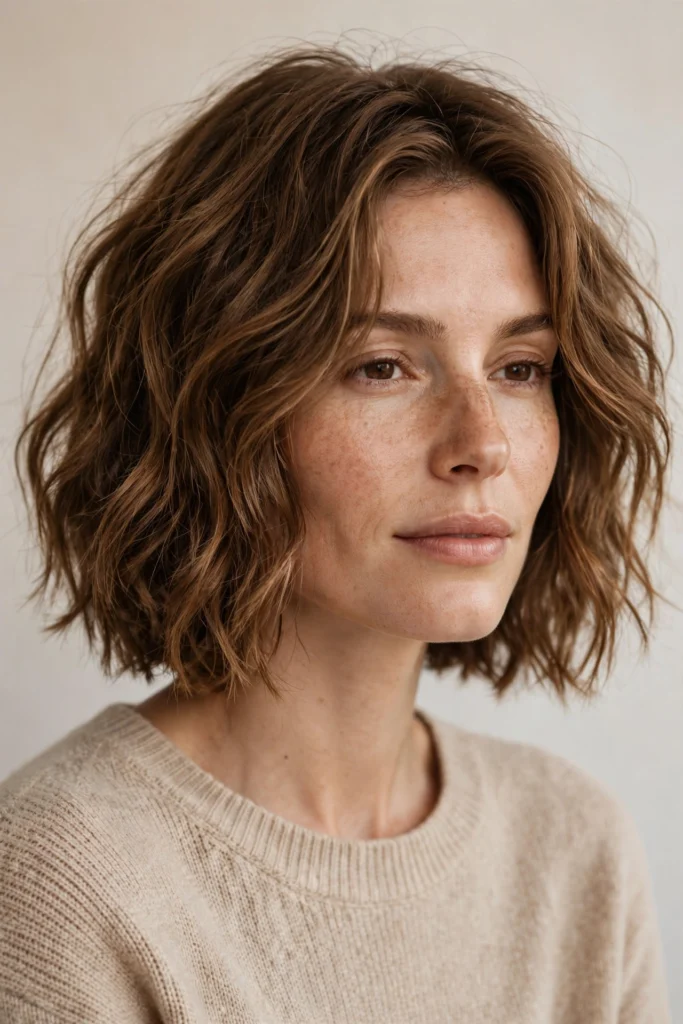

An asian bob haircut works so well because it is built around the hair itself, not against it. Asian hair is often straight, dense and strong, with a smooth cuticle that holds shine beautifully, and a bob turns those qualities into a shape that looks polished with very little effort.
This guide covers the whole picture, not just one look. You will find versions for thick, coarse, fine and wavy hair, bangs options that actually suit Asian features, face-shape guidance, humidity-proof styling for daily wear, grow-out advice and exactly what to say at the salon. Start with the cut that matches your texture, then use the styling notes to make it yours.
- Asian hair suits bobs because straight, dense hair holds a clean line and natural shine.
- Thick or coarse hair needs internal layers and softened ends, while fine hair needs a blunt, full hemline.
- See-through bangs, curtain bangs and side-swept bangs each flatter different face shapes and forehead heights.
- Humidity styling is about sealing the cuticle and choosing a finish that works with frizz, not against it.
- A good Asian bob grows out gracefully for 8 to 12 weeks when the perimeter and layers are planned from the start.
20 Asian Bob Haircut Ideas for Every Hair Type and Face Shape
Every cut below is chosen for a real reason, whether that is texture, face shape, lifestyle or age. Read the texture notes first if you are unsure, because matching the cut to your hair type matters far more than copying a photo.
1. Classic Blunt Asian Bob Haircut

This is the cut most people picture first, and for good reason. A one-length blunt edge makes straight Asian hair look thick, glossy and expensive, and the clean line means it still looks tidy on day two. Ask for a sharp perimeter with almost no layers, and keep the length at the chin or just below it for the classic effect.
2. Layered Bob for Thick Asian Hair

Thick hair can turn a bob into a heavy triangle if it is cut all one length, so layers are your best friend here. Long, soft layers through the mid-lengths remove weight without thinning the outline, and an asian bob haircut cut this way swings freely instead of sitting flat. It also dries faster, which matters when your hair is dense.
3. Fine Hair Asian Bob That Looks Fuller

Fine hair needs the opposite approach: keep the ends thick. A blunt perimeter at chin length makes every strand count, and a little root lift at the crown stops it looking flat. Our bob haircuts for thin hair to look thicker guide explains the same fullness tricks in more detail, and they transfer beautifully to Asian hair.
4. Asian Bob with See-Through Bangs
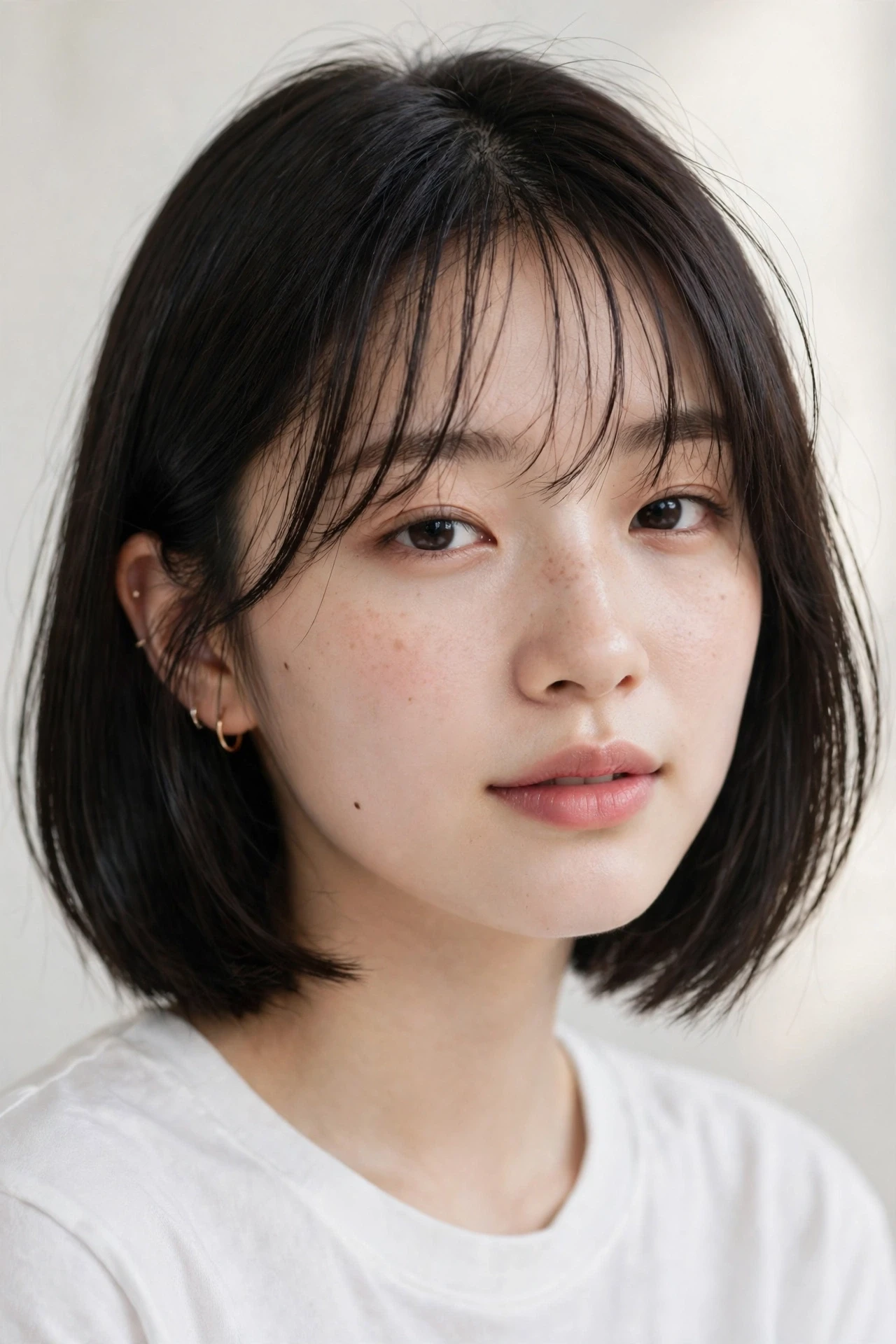
See-through bangs are light, feathery and forgiving, which is why they suit so many Asian faces. They soften a strong jawline, balance a higher forehead and grow out without an awkward stage. Keep them wispy rather than thick, and let the longest pieces blend into the face-framing layers at the sides.
5. Curtain Bangs Asian Bob

Curtain bangs open up the face instead of covering it, and they pair naturally with a jaw-length bob. Parted in the middle and swept to each side, they frame the cheekbones and blend straight into the layers. If you like the idea but want more fringe inspiration, our French bob with curtain bangs shows how the same fringe works on a shorter, Parisian shape.
6. Side-Swept Bangs Asian Bob

A long side-swept fringe is the lowest commitment bang of all. It adds softness across the forehead, works with a deep side part, and can be tucked behind the ear on days you want it out of the way. It is also the easiest bang to grow out, since it simply becomes a face-framing layer.
7. Chin-Length Asian Bob
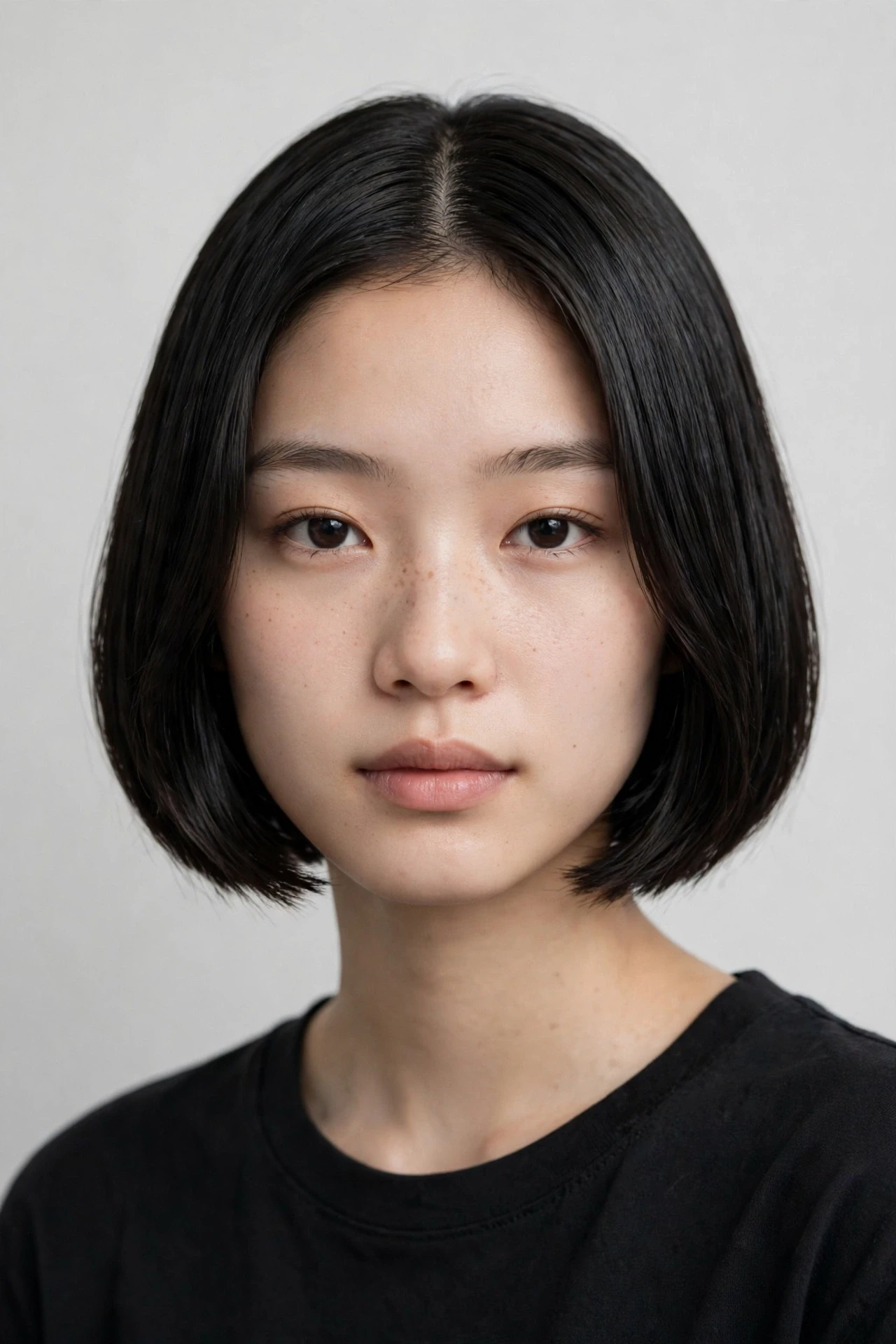
Chin length is the sweet spot if you want a real bob rather than a lob. It lifts the face, shows off the jawline and neck, and still feels substantial on thick hair. The key is a slightly rounded outline so the ends curve in naturally instead of flipping out as they dry.
8. Jaw-Length Sleek Asian Bob

This is the polished office version: smooth, tucked at the jaw and quietly confident. A jaw-length sleek bob suits straight hair perfectly, and it is one of the fastest morning styles once the cut is right. For more on keeping straight hair this smooth, see our bob haircut for straight hair guide.
9. Shoulder-Grazing Asian Bob

If a chin-length bob feels too brave, start here. A shoulder-grazing bob still reads as a bob, but it ties back on busy days and grows out without drama. It is also the length our long bob haircut guide recommends as the bridge between a bob and a lob, and it flatters almost every face shape.
10. Textured Wavy Asian Bob

Not all Asian hair is pin straight, and this cut celebrates natural wave. Choppy layers and a texturizing finish let waves form on their own, so the style looks intentionally undone rather than frizzy. An asian bob haircut with texture is also wonderfully forgiving in humid weather, because a little movement hides frizz that a sleek style would show.
11. Asian Bob for a Round Face

For a round face, length is your friend. A bob that falls past the chin, with longer layers framing the cheeks, creates a lengthening line instead of cutting the face in half. A side part helps too, by breaking up the symmetry. Our bob short hair for round face guide covers the same principles across more lengths.
12. Asian Bob for a Longer Face
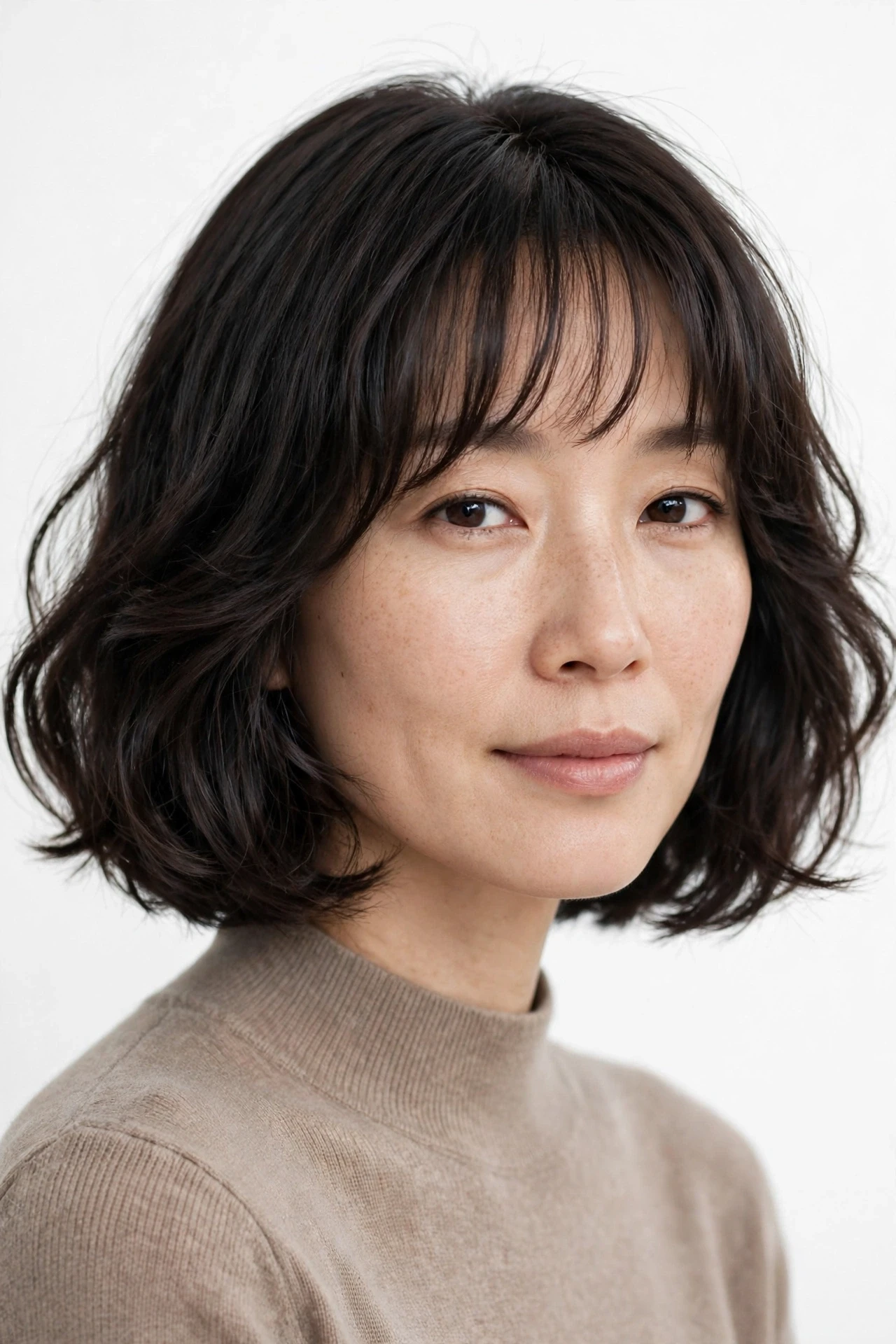
A longer face benefits from width and softness at the sides. Chin length with gentle waves, a fringe, or curled-under ends all add horizontal balance and stop the face looking longer. Avoid a flat, very long bob with a center part and no layers, since that combination can stretch the face further.
13. A-Line Asian Bob
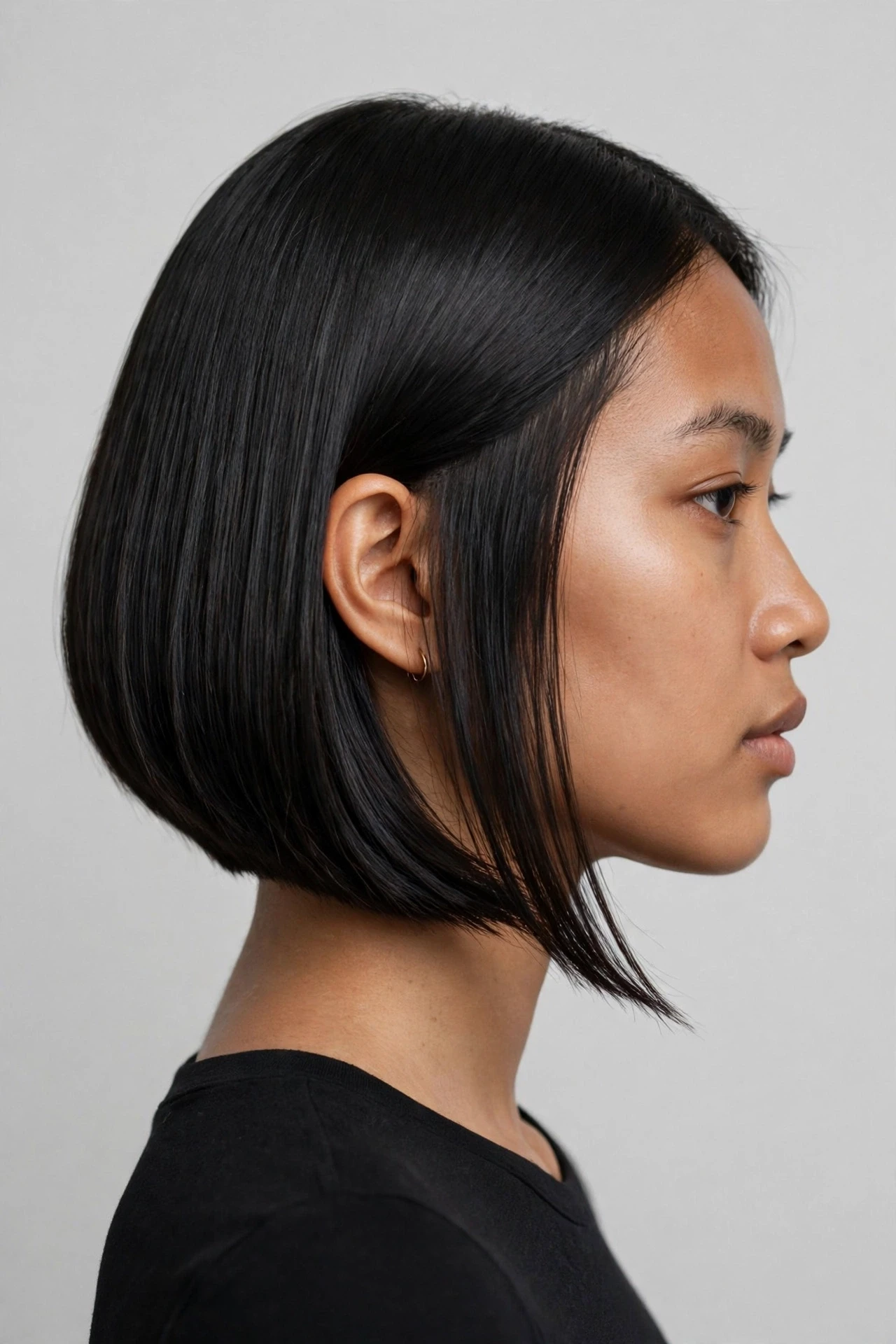
The A-line shape is shorter at the nape and longer toward the front, which gives a sharp, modern silhouette without losing the face-framing length. It works beautifully on straight Asian hair because the angle stays crisp. For the classic version of this shape, see our stunning A-line bob haircuts collection.
14. Inverted Asian Bob

An inverted bob adds stacked layers at the back for volume at the crown, with longer pieces in front. It is a great choice if your hair lies flat at the roots, since the graduation builds lift that lasts all day. Keep the front long enough to tuck or sweep, so the cut still feels soft from the front.
15. Soft Curly Asian Bob
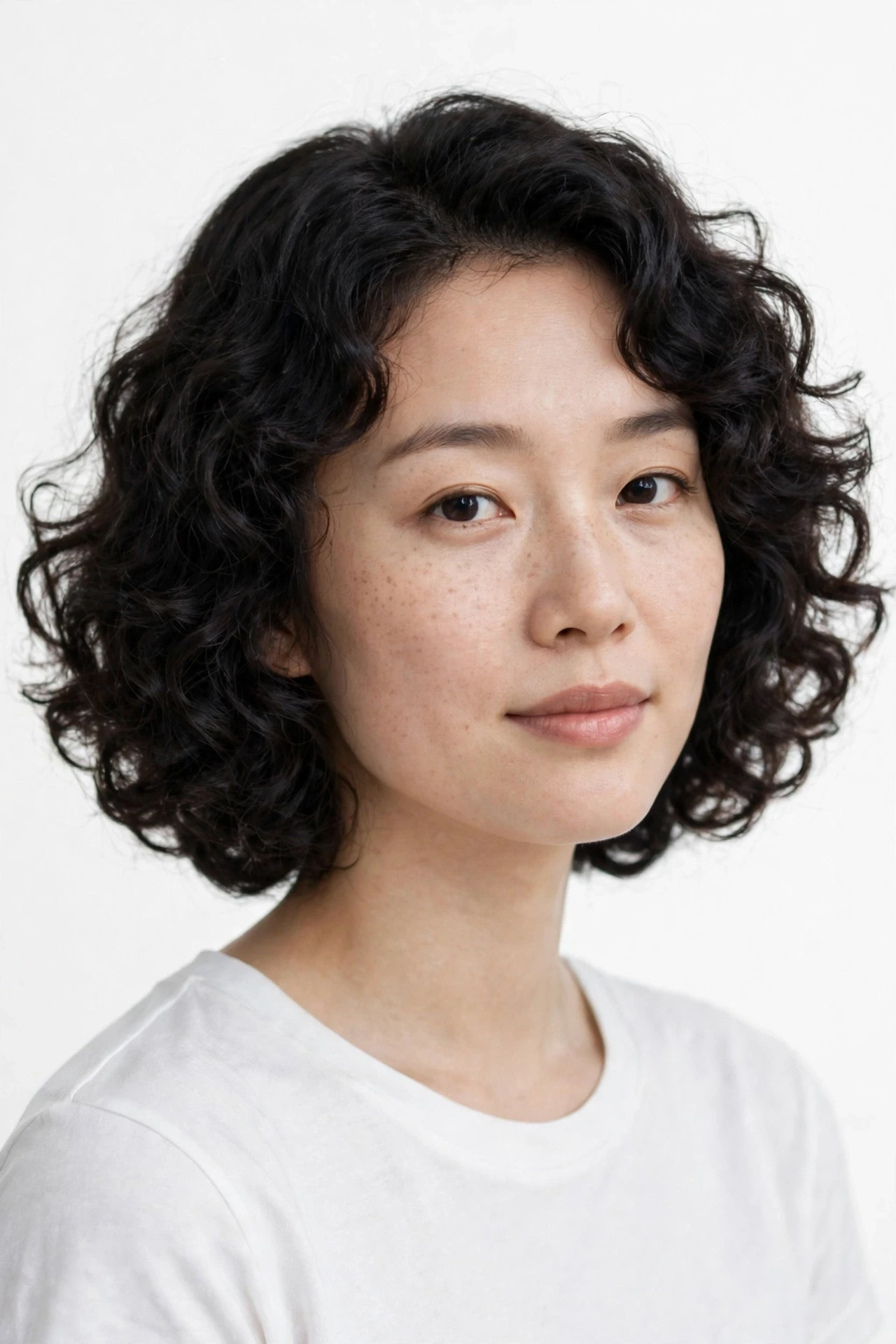
Wavy and curly Asian hair makes a gorgeous bob when it is cut to work with the curl, not against it. Layers should be cut dry or with the natural curl pattern in mind, so the shape holds once the curls spring up. Our curly bob hairstyles guide has more curl-first cutting advice that applies here too.
16. Glass-Hair Asian Bob

Glass hair is all about the finish: mirror shine, a razor-sharp edge and not a hair out of place. Asian hair takes to this look naturally thanks to its smooth cuticle. The secret is in the blow-dry, smoothing in small sections from root to tip, plus a light shine serum only on the ends so the roots stay full.
17. Asian Bob for Coarse Hair

Coarse hair has wonderful body, but it can look blunt and stiff if the ends are left too thick. Ask your stylist to soften the last inch with point cutting or slide cutting, and an asian bob haircut on coarse hair will move, swing and sit naturally instead of forming a solid block. A smoothing cream on damp hair tames the surface without flattening the volume.
18. Humidity-Proof Asian Bob for Daily Wear

Humidity is the daily reality for many Asian women, and the right bob handles it gracefully. Choose a finish that already has movement, like soft waves or textured ends, rather than fighting for pin-straight hair all day. Seal damp hair with a light anti-frizz cream, let it dry mostly naturally, and carry a small smoothing balm for touch-ups instead of re-styling from scratch.
19. Grow-Out Friendly Asian Bob
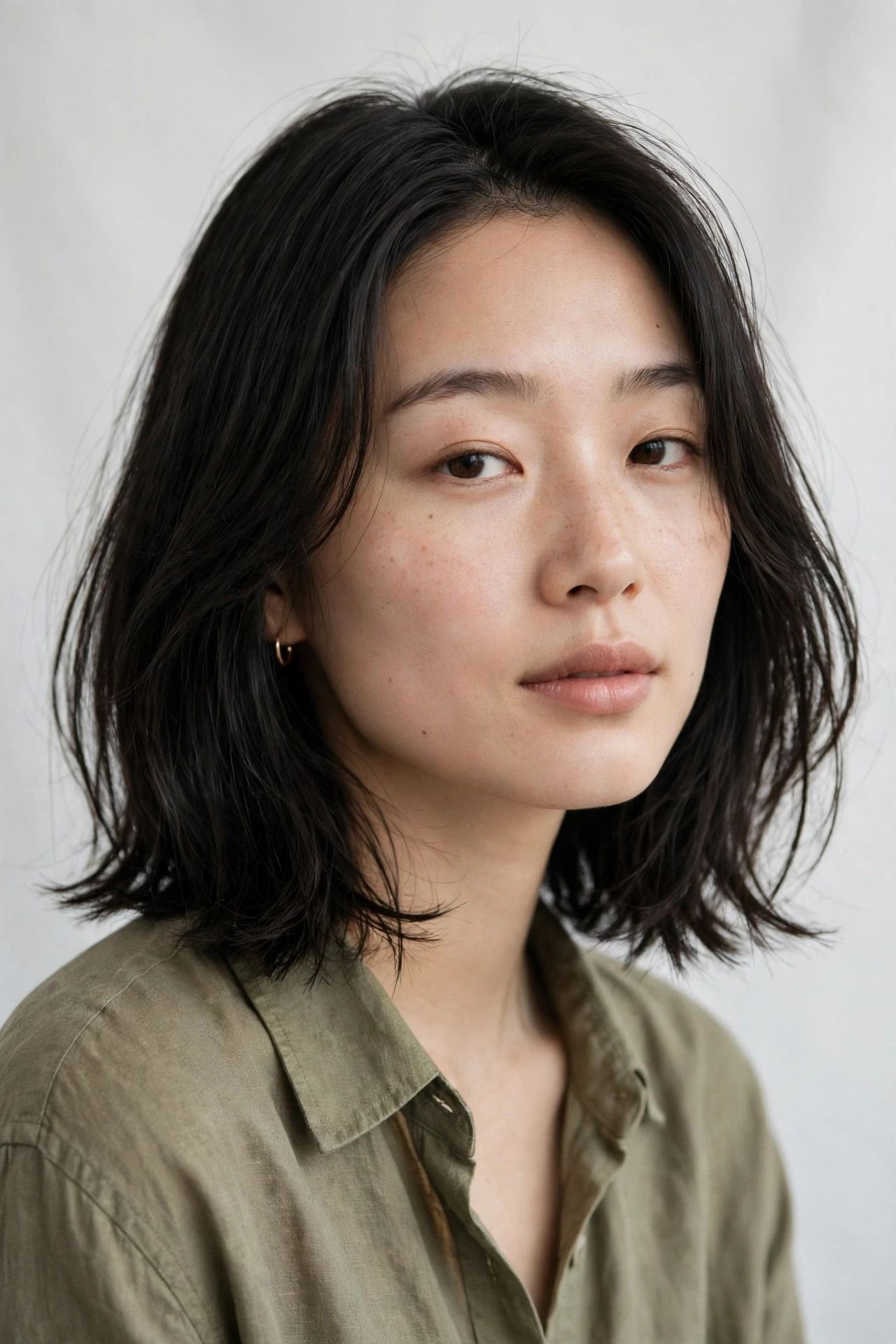
A well-planned bob should still look good at week ten. Soft edges, a slightly longer front and layers that blend as they grow mean the cut turns into a lob rather than an awkward in-between stage. Book a tidy-up every 8 to 12 weeks, but know that this shape forgives a missed appointment better than a sharp blunt bob does.
20. Elegant Asian Bob Over 50

A bob is one of the most flattering cuts after 50, and Asian hair keeps its density and shine beautifully at this age. Soft layers, gentle volume at the crown and a chin-length shape lift the face without looking severe. For more mature bob ideas in the same spirit, our layered bob hairstyles over 50 collection is a lovely next read.
What to Ask Your Stylist for an Asian Bob
A great Asian bob starts in the consultation, not at home. Tell your stylist how your hair dries naturally, how much time you honestly spend styling, and whether humidity is a daily issue for you. Stylists often note that Asian hair holds a blunt line beautifully but needs internal work for thickness, and Allure regularly covers how cut and texture should be matched rather than forced.
- Length: “I want a bob that ends at my chin or jaw, and I want to know how it will look as it grows out.”
- Texture: “Please cut for how my hair dries naturally, because I mostly air dry and rarely use heat.”
- Thickness: “Can you remove bulk from the inside without thinning the outline?”
- Bangs: “Which fringe suits my forehead and face shape, and how will it grow out?”
- Maintenance: “How many weeks can I go between trims before this shape falls apart?”
Asian Bob Care: Humidity, Grow-Out and Maintenance
Daily care for an Asian bob is refreshingly simple. Wash with a smoothing shampoo, use a light conditioner mainly on the mid-lengths and ends, and avoid heavy creams at the roots, which flatten the volume that makes a bob look alive. Let the hair dry at least halfway naturally before any heat, and finish with a drop of shine serum on the ends only.
For humidity, keep a small anti-frizz balm in your bag rather than re-styling from scratch. For grow-out, a quick perimeter tidy every couple of months keeps the shape, even if you skip the full cut. And if your bob starts flipping out at the ends, that is usually a sign the perimeter needs a trim, not that you need a new style.
Does an Asian bob haircut suit thick Asian hair?
Yes, with layers. Thick Asian hair needs long internal layers to remove bulk so the bob swings instead of forming a triangle. A blunt perimeter with hidden layers inside keeps the outline full while the inside stays light and easy to dry.
What is the best bob length for Asian hair?
Chin to jaw length suits most people, because it shows off the natural shine and clean line of straight Asian hair. If you want an easier grow-out or a style that ties back, choose a shoulder-grazing bob instead, and keep the ends soft so it never looks heavy.
Which bangs work best with an Asian bob?
See-through bangs suit most faces and grow out gracefully, curtain bangs flatter wider faces and high foreheads, and side-swept bangs are the easiest to maintain. Avoid a very thick, heavy fringe unless your stylist thins it, since dense Asian hair can make a heavy bang look solid.
How do I stop my Asian bob frizzing in humidity?
Work with movement rather than against it. Choose a textured or softly waved finish, seal damp hair with a light anti-frizz cream, and let it dry naturally as much as possible. A sleek style needs a full smoothing blow-dry to survive humidity, while a textured bob hides frizz on its own.
How often should I trim an Asian bob?
Every 8 to 12 weeks is right for most bobs. Sharp blunt bobs need the shorter end of that range to keep the line crisp, while layered and grow-out friendly bobs can stretch toward 12 weeks. Bangs alone may need a quick tidy every 4 to 6 weeks.
Can I get an Asian bob if my hair is wavy or curly?
Absolutely. Wavy and curly Asian hair makes a beautiful bob when the layers are cut with the natural pattern in mind, ideally on dry or naturally dried hair. The result has more volume and movement than a straight bob, and it needs less daily styling.
Final Thoughts
The best asian bob haircut is the one that matches your texture, your face and your real morning routine. Pick the version above that fits your hair type, take the salon script with you, and give the cut two weeks to settle before judging it. For the bigger picture of how bobs fit together across lengths and textures, our main bob trends guide is the perfect next read.
Sana Malik is a hair and beauty writer with a deep love for the bob in all its forms from sharp French bobs to soft, lived-in lobs. After years of experimenting with her own short hair and helping friends figure out what actually suits their face shape, she started writing to cut through the confusing advice out there. At BobHairTrends, she breaks down each cut into simple, honest guides: how to ask for it, how to style it at home, and who it really flatters. When she isn’t researching the latest trends, she’s usually testing a new styling product or convincing someone it’s finally time for the chop.