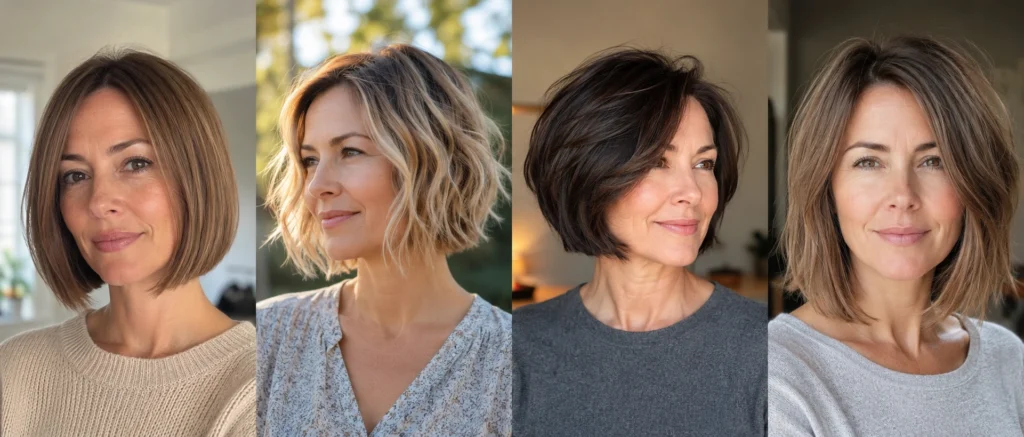
Three weeks ago a client sat down in my chair, pulled out her phone, and showed me a photo of her hair from five years ago. “It used to look so full,” she said. Her hair was still beautiful fine, silky, straight but the weight of the length was dragging every strand flat against her head.
I cut it into a chin-length blunt bob that same afternoon. She texted me the next morning: “I forgot what volume felt like.” That moment is exactly why I put this guide together.
If you have thin hair, you already know the frustration. Products build up, blowouts fall flat by noon, and long hair just makes everything worse.
The good news is that the right bob haircut can completely change how your hair looks and feels without a single bottle of volumizing spray.
Bob haircuts for thin hair to look thicker work by removing dead weight, concentrating density at the ends, and creating shapes that give the illusion of fullness.
Whether you want something short and bold or a shoulder-length style with a little more length, there is a bob in this list that will work for your hair.
These 15 cuts are organized by how they create volume so you can find the technique that matches your hair type, face shape, and lifestyle. Save this for your next salon visit and bring it with you. Your stylist will thank you.
For a broader look at what is trending, check out our Ultimate Guide to Bob Hair Trends.
The Volume Science: Why Bobs Work for Thin Hair
Before the styles, here is the one thing worth understanding: length is the enemy of thin hair. The longer your hair, the more gravity pulls every strand downward, flattening it against your head. A bob removes that drag entirely.
When hair is cut shorter, two things happen. First, the ends stack together at a single point, creating the appearance of thickness even if each individual strand is very fine. Second, shorter hair lifts at the roots more easily because it weighs less meaning you get natural volume without fighting your own hair.
Bob haircuts for thin hair to look thicker also work because of how the perimeter is cut. A strong, clean outline at the bottom signals density to the eye. Your brain reads a defined edge as full, healthy hair. Wispy, uneven ends do the opposite. The American Academy of Dermatology notes that thin hair is fragile and benefits from gentle, low-manipulation care and the right bob cut is exactly that: a low-effort shape that does the volume work for you without daily heat or product loading.
Every cut in this list uses at least one of these four volume tricks:
- Blunt perimeter — concentrates density at the ends
- Strategic layering — lifts the crown without removing weight at the bottom
- Stacking — builds height and fullness at the back
- Texture — creates dimension so hair does not lie flat
15 Bob Haircuts for Thin Hair to Look Thicker
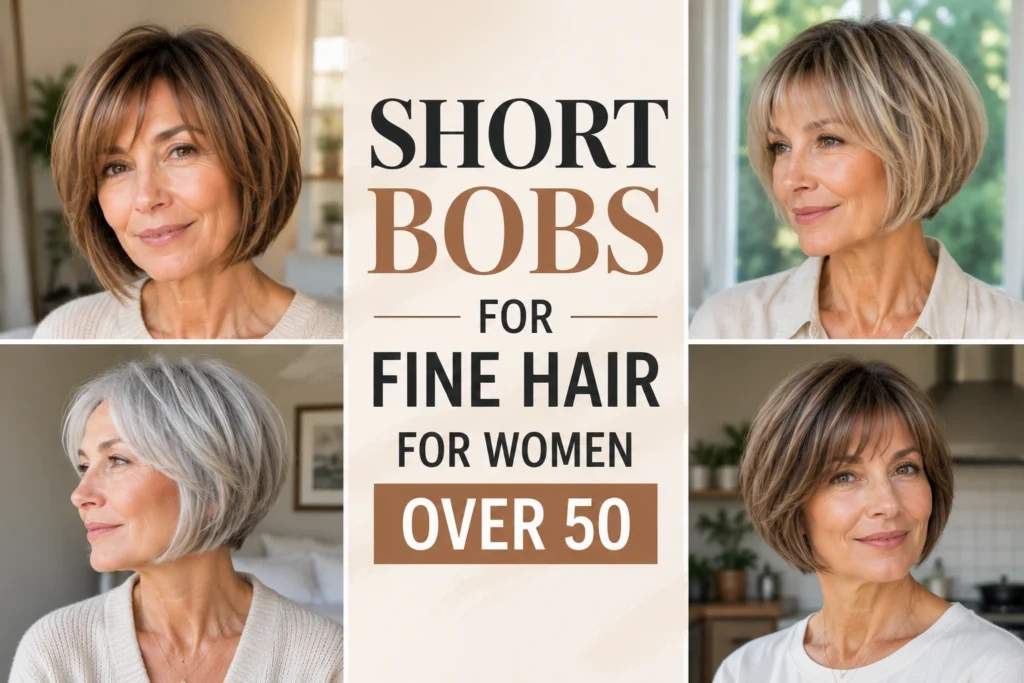
1. The Blunt Chin-Length Bob
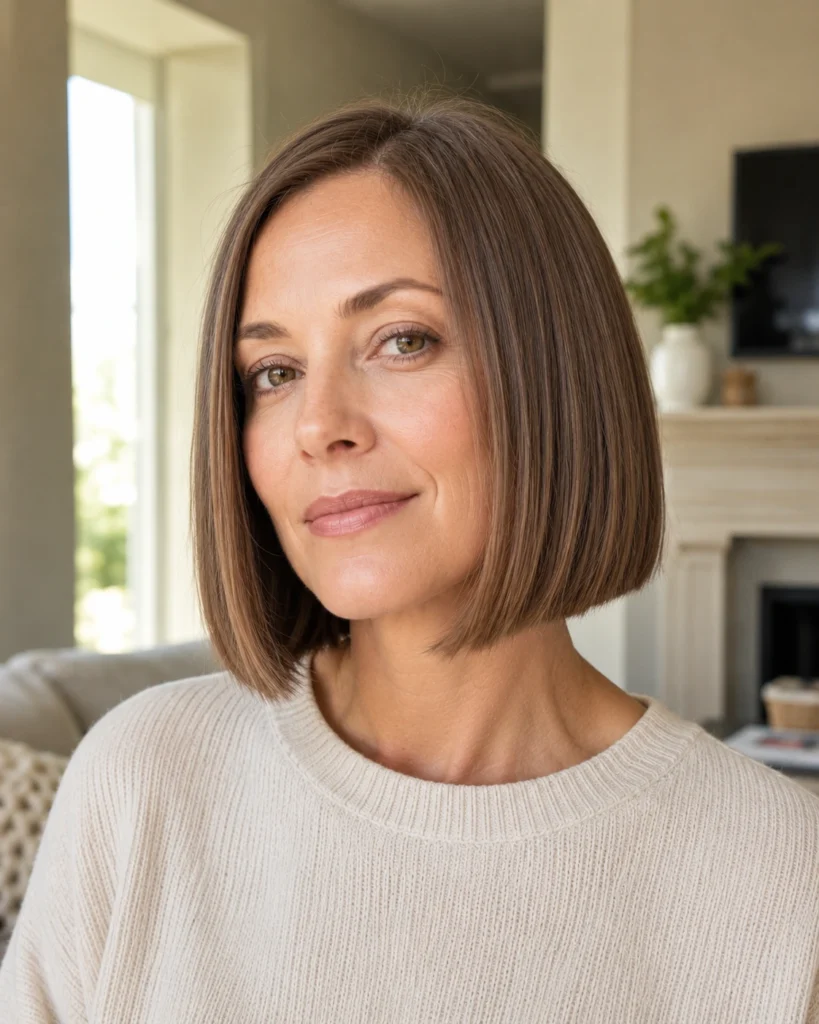
This is the one stylists recommend first when someone asks about bob haircuts for thin hair to look thicker and for good reason. A blunt bob cut at chin-length concentrates all of your hair’s weight at one line.
No layers, no graduation, no thinning shears. Just one clean, flat cut that makes ends look dramatically denser than they are.
The blunt perimeter tricks the eye into reading your hair as thick because there is a visible, solid edge at the bottom. It is the oldest volume trick in the book and it still works better than any product you can buy.
Best for: All face shapes. Works especially well on oval and heart-shaped faces. Best hair type: Fine, straight to slightly wavy hair. Ask your stylist for: “A one-length blunt bob at chin-length, no internal layers, no thinning shears on the ends.”
2. The Blunt Bob for Thinning Hair (Jaw-Skimming Length)
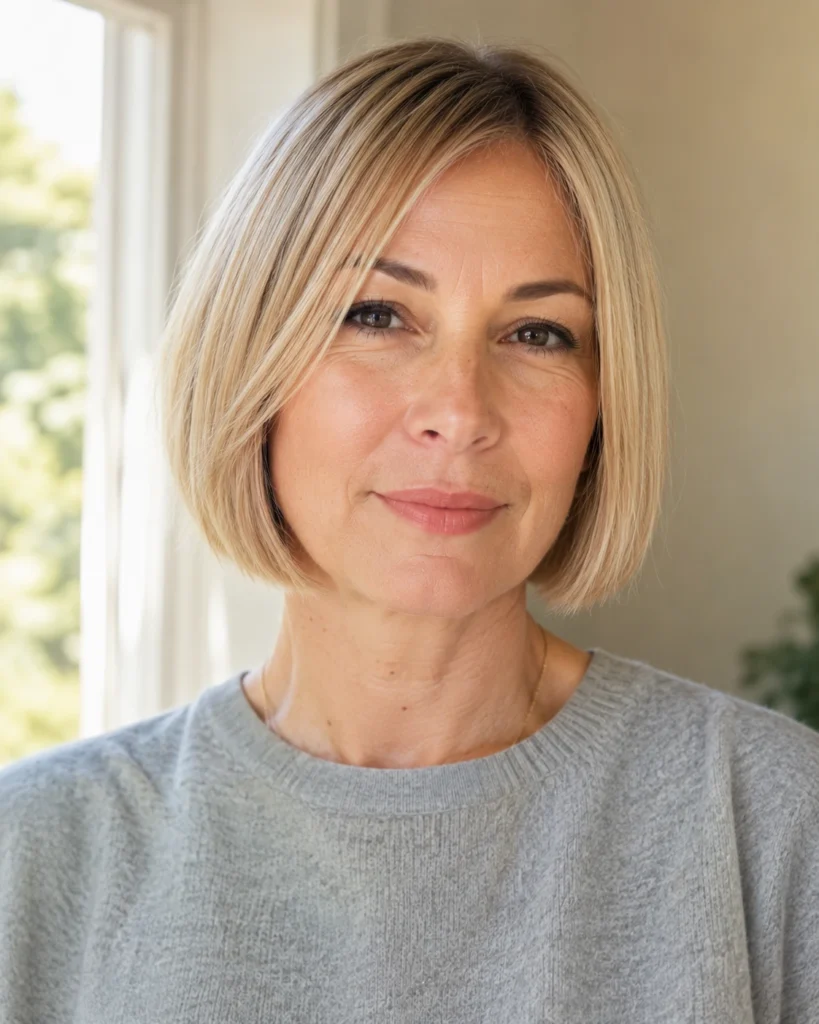
A variation on the classic blunt cut, this one sits right at the jawline instead of below the chin. Among bob haircuts for thinning hair, this jaw-skimming length is particularly powerful because it keeps the weight line even higher —which means every strand contributes to the density at the ends rather than hanging below the face.
If your hair has become noticeably thinner over the past few years, this length is worth considering. It is short enough to add real body but long enough to frame the face and feel comfortable.
Best for: Round, square, and oval faces. Best hair type: Fine and thinning hair of any texture. Ask your stylist for: “A blunt bob cut right at the jaw, no layers, keep the ends clean and dense.”
3. The Textured Bob with Soft Layers
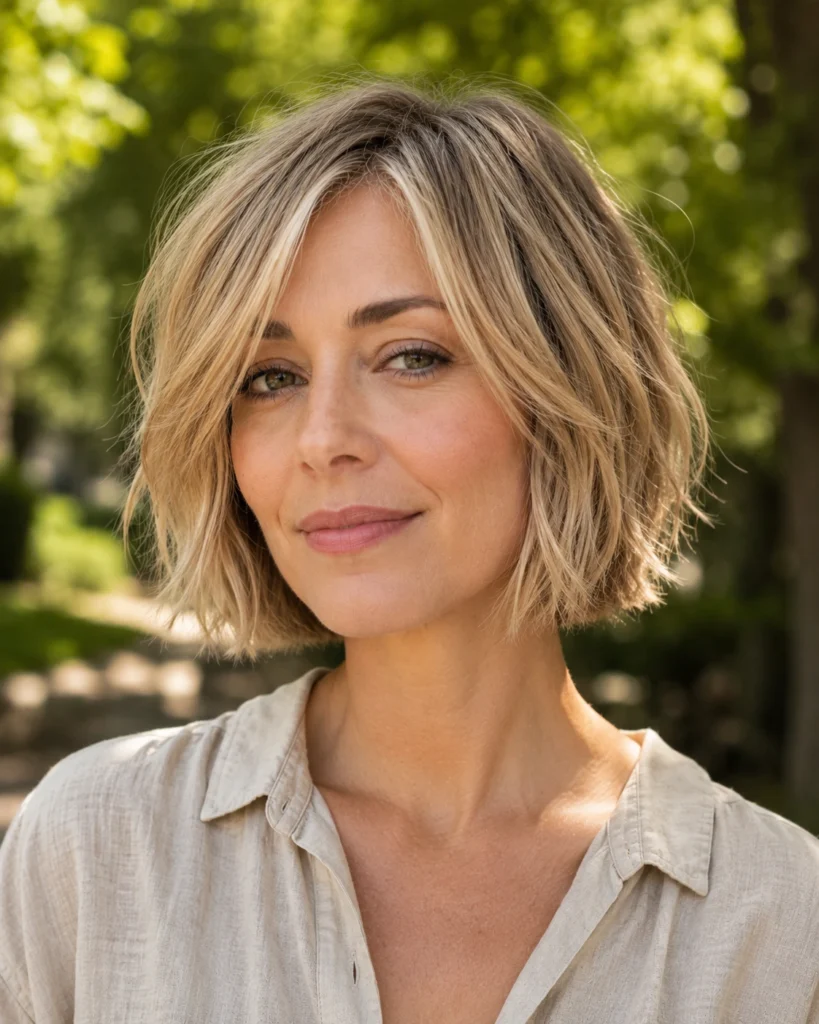
Not everyone wants a strict blunt finish, and that is fine. A textured bob uses point-cutting or soft razor work on the ends to create movement without sacrificing the weight line. The result is a bob that looks deliberately tousled and full not flat or stiff.
As covered in our textured bob haircut guide, this style works for fine hair because the added texture creates dimension that makes each strand look like it has more body.
It is one of the best bob haircuts for thin hair to look thicker when your hair has even a tiny amount of natural movement, because the point-cut ends encourage that movement rather than flattening it.
Best for: Oval, heart, and long face shapes. Best hair type: Fine, straight to wavy. Also works well on fine 2a waves. Ask your stylist for: “A chin-length bob with point-cut ends for texture keep the weight line intact at the bottom but add soft movement through the tips.”
4. The Boho Bob for Fine Hair
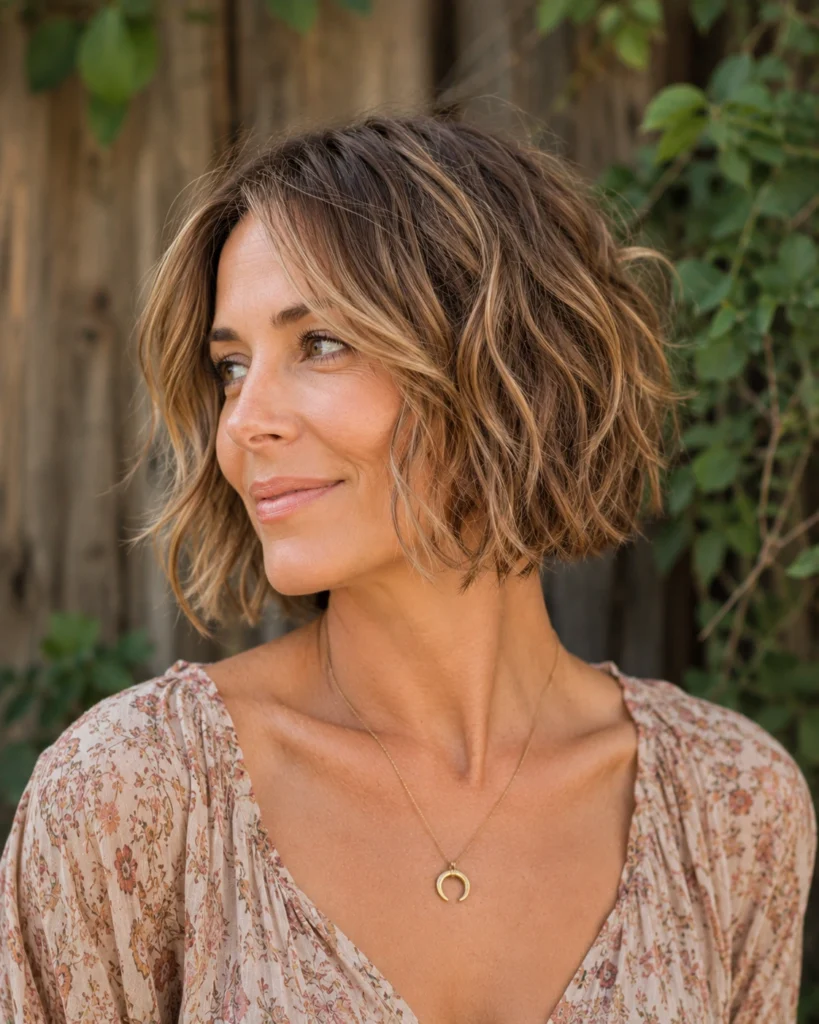
The boho bob is one of the biggest haircut trends of 2026 and it is particularly good news for fine hair. Inspired by 70s bohemian style, this cut uses soft gradations and blurred, tousled waves to create a lived-in, effortlessly full look.
What makes the boho bob one of the most effective bob haircuts for thin hair to look thicker is the combination of soft layering and natural texture.
Unlike heavily layered cuts that remove too much weight, the boho bob keeps a solid base while adding just enough movement at the ends to create dimension. Actress Sienna Miller has been closely associated with this style, and her fine hair is exactly why it works so well on thin strands.
Air-dry it, tousle it with your fingers, and the volume is built right in. No hot tools required.
Best for: All face shapes, especially oval and heart. Best hair type: Fine, straight to wavy hair. Works beautifully on natural 2a–2b waves. Ask your stylist for: “A boho bob with soft, blended layers and a slightly lived-in finish — nothing too sharp or structured.”
5. The Stacked Bob
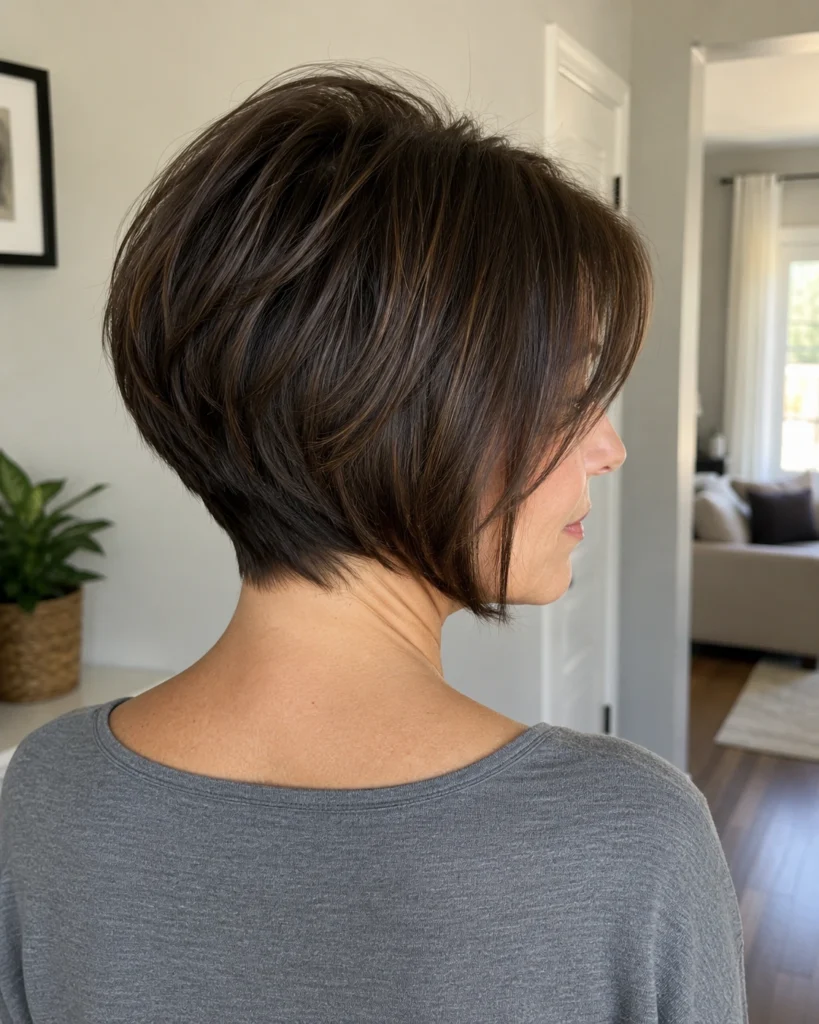
The stacked bob is built entirely around volume. Graduated layers at the back stack on top of each other, creating height and fullness that radiates outward. From behind, this cut looks dramatically thick even on the finest hair.
The front lengths are typically kept longer to frame the face, while the back is stacked short and tight. This contrast creates a rounded silhouette that reads as full and intentional.
If your biggest complaint is that your hair looks flat at the crown and the back, the stacked bob is one of the most targeted bob haircuts for thin hair to look thicker that you can ask for.
Best for: Round, oval, and heart face shapes. Best hair type: Fine, straight to slightly wavy. Avoid on hair that is very wavy or curly without a dry-cut consultation first. Ask your stylist for: “A stacked bob with graduation at the back keep the nape tight and stacked, with longer pieces at the front to frame my face.”
6. The Inverted Bob for Thin Hair
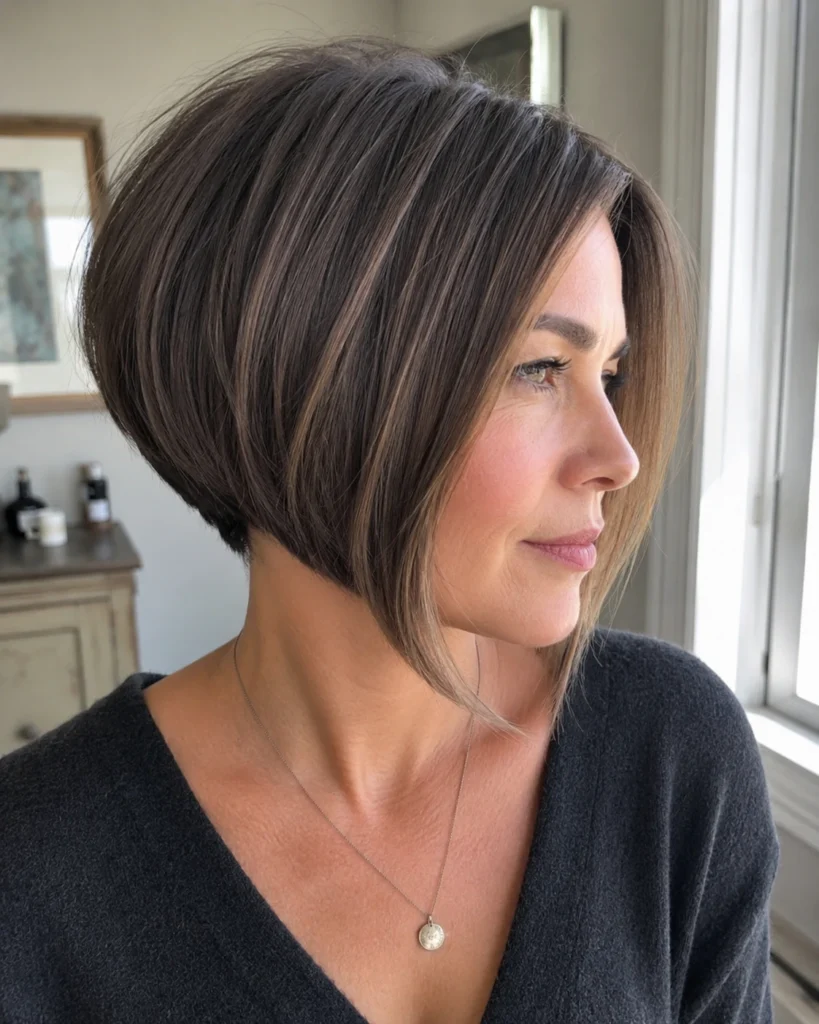
The inverted bob longer in front, shorter in the back is a natural volume builder for thin hair. The graduated back creates stacking at the nape and crown, while the longer front pieces add face-framing length without weighing everything down.
This is a strong choice if you want the volume benefits of a stacked bob but prefer more length around the face. The angled line also adds visual interest and dimension, making your hair look fuller than a straight cut at the same length.
For anyone researching bob cut for thinning hair, the inverted shape is worth a serious look.
Best for: Round and square faces the angle elongates and slims. Best hair type: Fine and straight. The clean angle shows best on smooth textures. Ask your stylist for: “An inverted bob shorter at the nape, gradually longer toward the chin. Soft graduation at the back for volume.”
7. The French Bob for Fine Hair
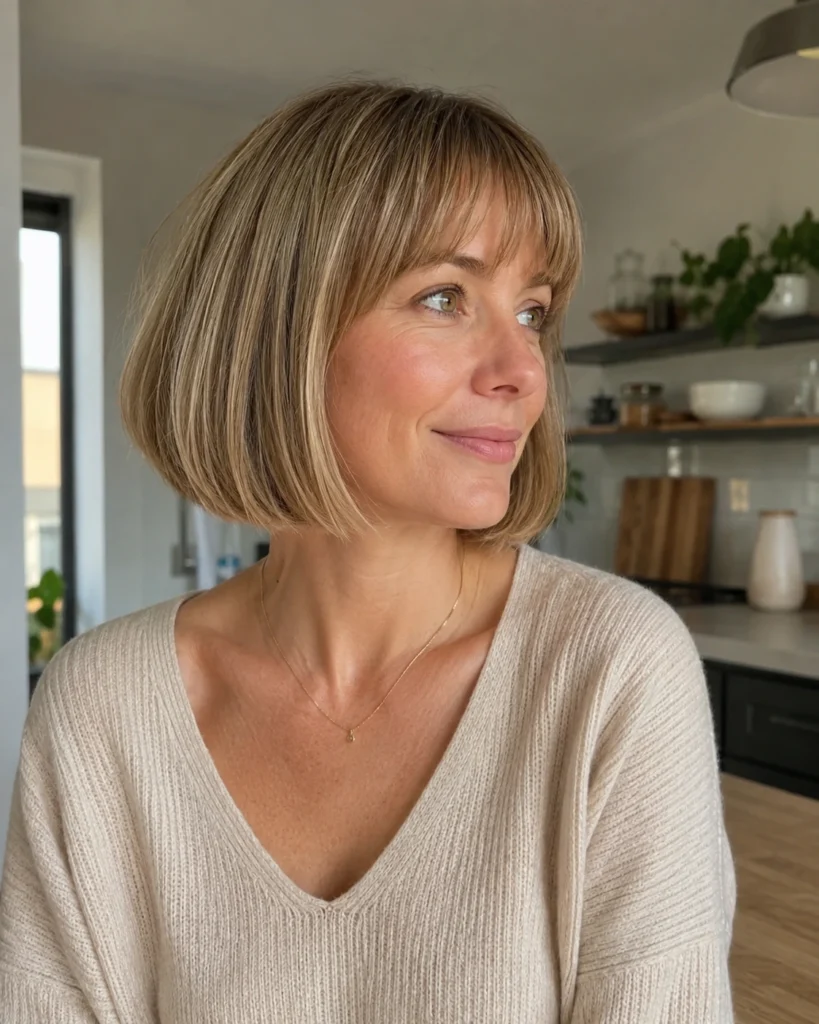
The French bob hits at or just above the chin, which is precisely where fine hair benefits most from a cut. As detailed in our low maintenance fine hair French bob guide, this cut works because the shorter length removes the weight that drags fine strands flat and lets the hair spring up naturally from the roots.
The rounded shape at the bottom also creates the illusion of fullness across the entire silhouette. Many fine-haired clients are surprised by how thick their hair looks in the first week after getting a French bob that is the weight removal doing its job.
It remains one of the most consistently requested bob haircuts for thin hair to look thicker in my chair every single week.
Best for: Oval, heart, and long face shapes. Best hair type: Fine, straight to wavy. Ask your stylist for: “A French bob at or just above the chin blunt or very slightly textured finish, rounded shape.”
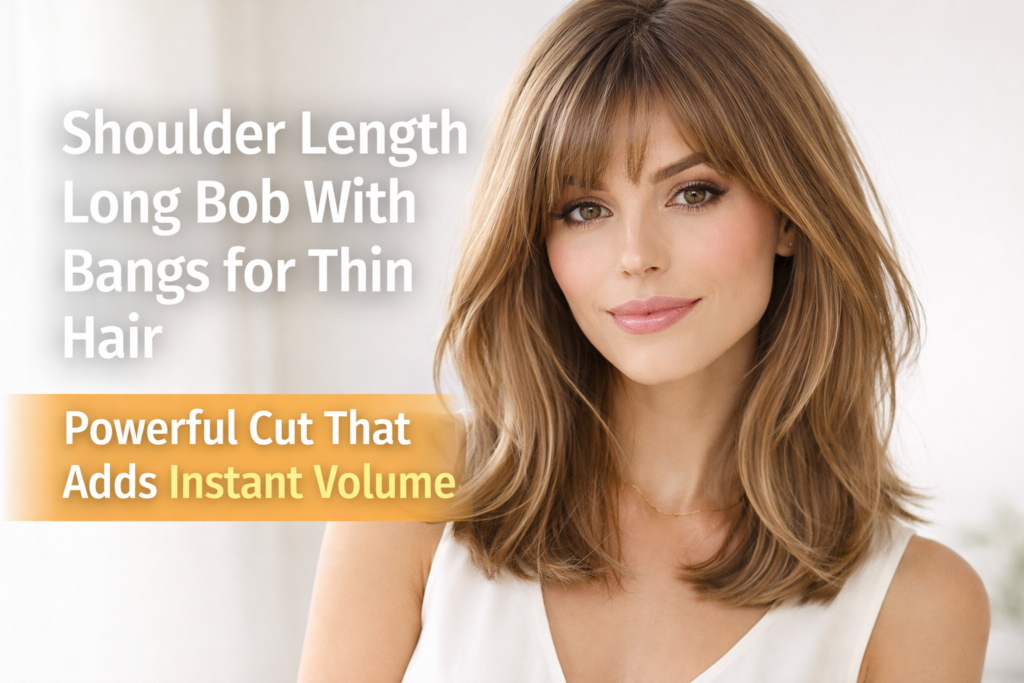
8. The Shoulder Length Bob for Thin Hair to Look Thicker

Not ready to go short? A shoulder length bob haircut for thin hair to look thicker is the right answer. At collarbone or shoulder length, this cut keeps enough length for versatility while still delivering real volume benefits.
The key at this length is keeping the layers long and blended not choppy. As explained in our long layered bob for fine hair guide, subtle graduation lifts the crown and softens the lengths without removing too much density at the ends. The result is a longer bob that moves and lifts instead of hanging flat.
Best for: All face shapes. Especially good for round faces that prefer more length. Best hair type: Fine to medium, straight to wavy. Ask your stylist for: “A shoulder-length bob with long, blended layers keep the weight line at the ends strong, soft face-framing pieces only.”
9. The Lob (Long Bob) with a Strong Weight Line
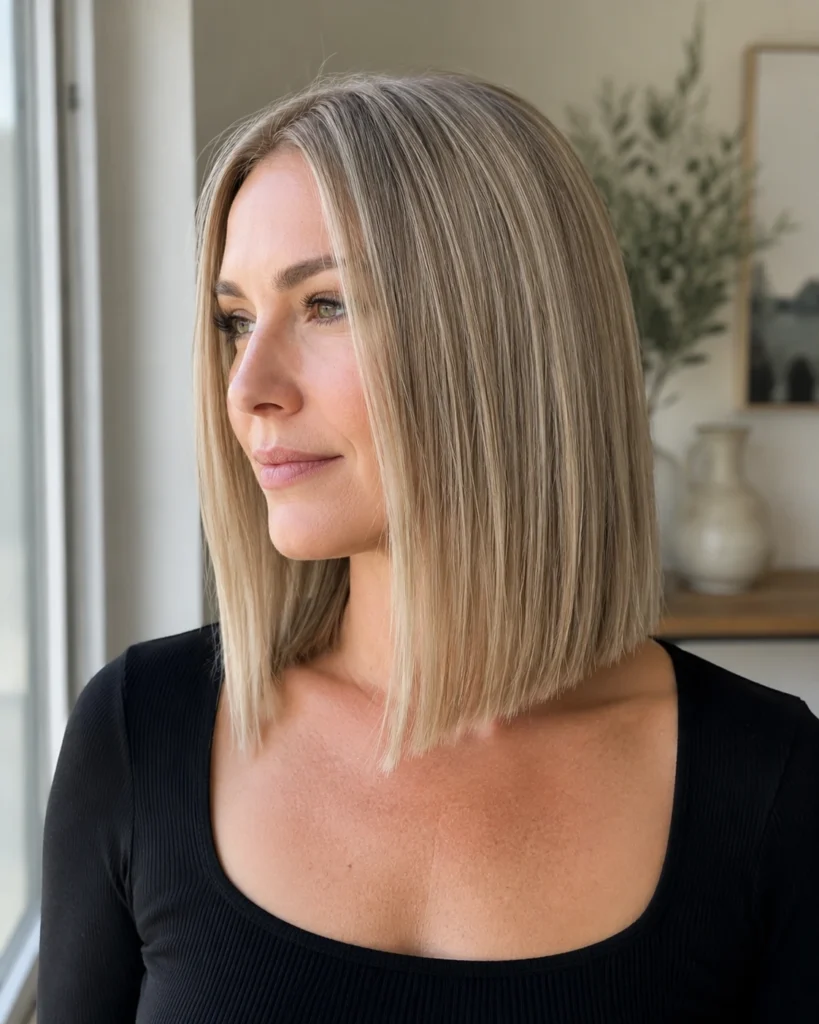
The lob sits between the chin and collarbone and is the most universally flattering length across all face shapes and hair types. For thin hair specifically, the trick is insisting on a strong weight line at the bottom meaning the ends stay blunt and dense even if there are subtle layers above.
This is not the lob with heavy shag layers or lots of internal thinning. It is a clean, structured lob where the perimeter does the volume work. Think Hailey Bieber’s classic lob it always looks full because the ends are never allowed to go wispy.
Best for: Every face shape. Best hair type: Fine, straight to wavy. Ask your stylist for: “A collarbone-length lob with a blunt weight line at the ends minimal internal layers, soft face-framing only.”
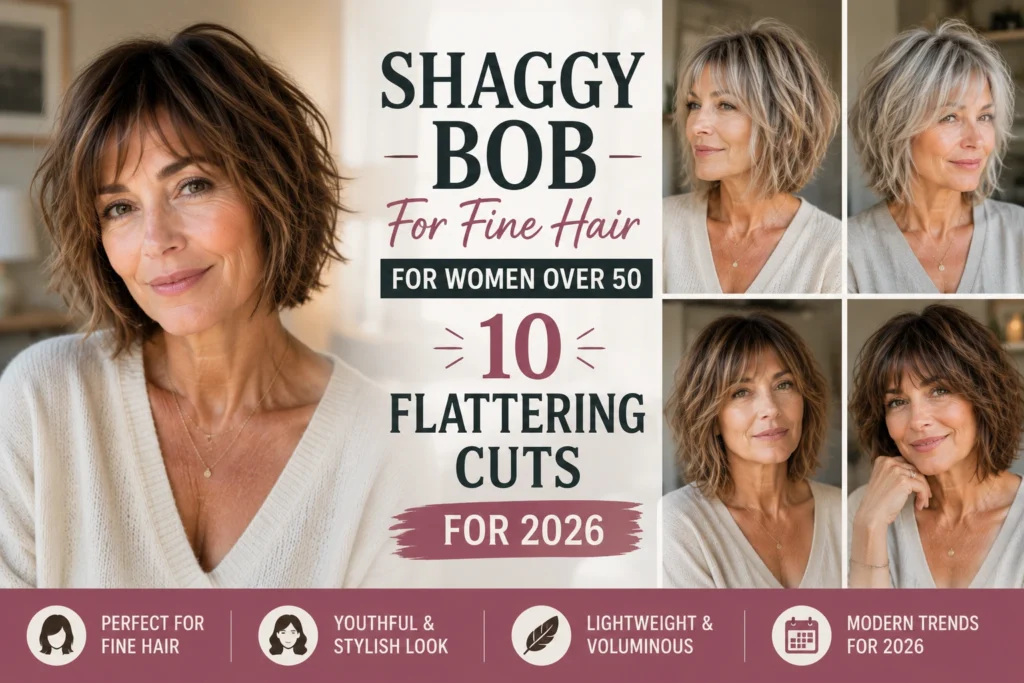
10. The Choppy Bob for Thin Hair
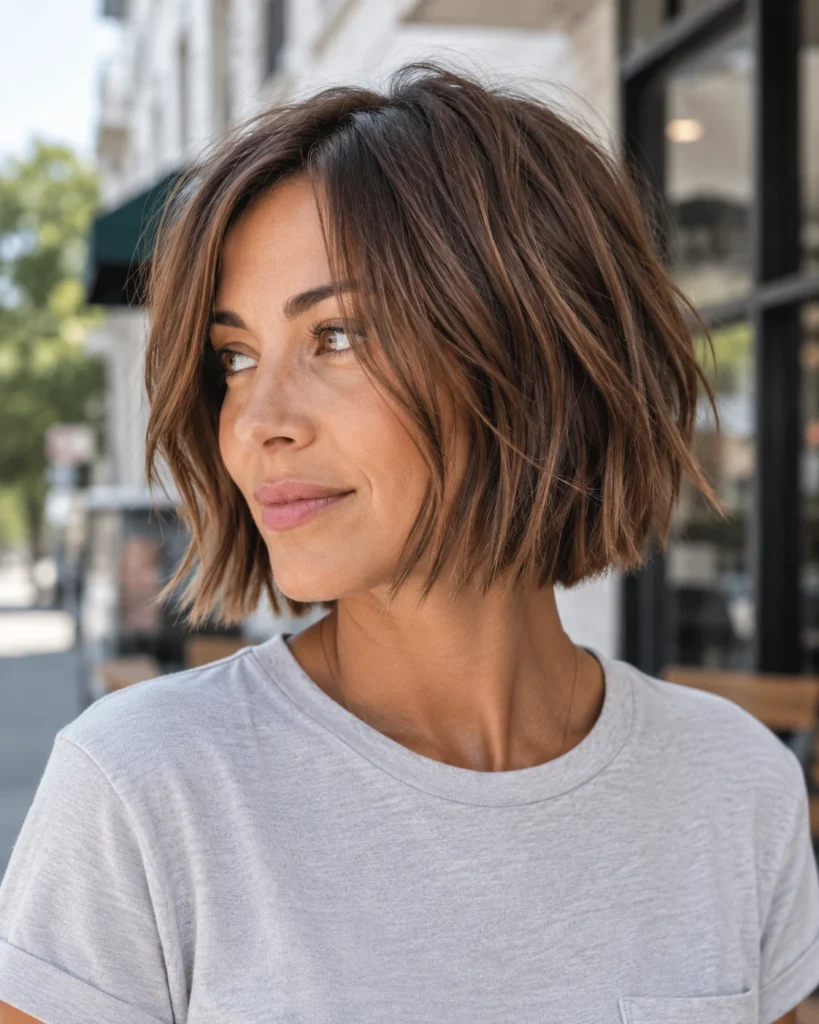
A choppy bob uses deliberate, piecey layers to create the appearance of thickness through texture rather than weight. The ends are cut at slightly different lengths not random, but intentional which gives fine hair a lived-in look that reads as full and healthy.
This works because your eye fills in the gaps between the choppy pieces and reads the overall silhouette as dense. It is a smart trick for women whose fine hair looks limp when cut bluntly but who also do not want heavy layering that removes too much weight.
Best for: Oval, heart, and long face shapes. Best hair type: Fine, straight to slightly wavy. Works especially well if your hair has a little natural texture. Ask your stylist for: “A choppy bob at chin-length point-cut ends, piecey finish, but keep the overall weight line intact.”
11. The Bob with Curtain Bangs

Adding curtain bangs to a bob is one of the fastest ways to make thin hair look fuller at the front. The bangs frame the face and add density at the forehead, which draws the eye forward and away from any thinning at the crown.
For more on how this style works and how to ask for it, our French bob with curtain bangs guide covers the full picture. The key for thin hair is keeping the bangs soft and airy not a heavy, blunt fringe that can look flat. Curtain bangs part in the center and sweep lightly to the sides, which adds dimension without weighing the front down.
Best for: Oval, round, and heart face shapes. Best hair type: Fine, straight to wavy. Ask your stylist for: “A chin-length bob with soft curtain bangs parted in the center, face-framing, not too thick or blunt.”
12. The Wavy Bob for Fine Hair

Waves are one of the most effective volume tools for fine hair because they physically lift the hair away from the scalp and create three-dimensional shape. A wavy bob combines the weight benefits of a shorter cut with the body-building effect of wave texture.
If your hair does not wave naturally, a light sea salt spray and diffuser can recreate this look at home. For those with a natural 2a or 2b wave pattern, a wavy bob at chin or collarbone length will air-dry into exactly this shape with very little effort. The wavy French bob guide at wavy french bob haircut shows what this looks like in practice.
Best for: Oval, heart, and long face shapes. Best hair type: Fine with natural wave 2a–2b. Also achievable on straight fine hair with minimal styling. Ask your stylist for: “A chin-to-collarbone bob cut for natural waves layered to encourage movement, not fight it.”
13. The Asymmetrical Bob
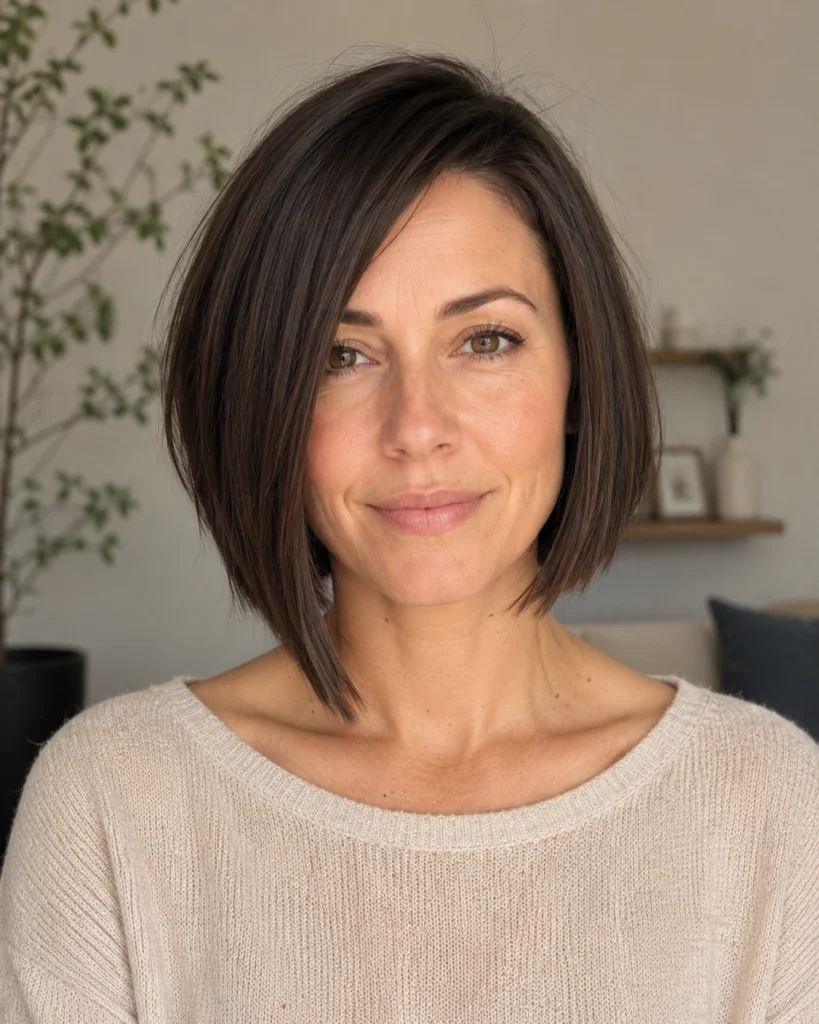
An asymmetrical bob one side longer than the other adds dimension and visual interest that makes thin hair look fuller by keeping the eye moving across the silhouette. Static, even-length hair can draw attention to its thinness; an asymmetrical cut distracts from that by creating shape and contrast.
The longer side also adds a sense of weight and density even if the individual strands are very fine. This is a bold choice but a smart one for thin hair that needs something more than a straight cut to look full.
Best for: Oval and heart face shapes. The angle can over-emphasize width on round faces — check with your stylist. Best hair type: Fine, straight. The clean angle shows best on smooth, straight textures. Ask your stylist for: “An asymmetrical bob — one side at chin-length, the other slightly longer toward the collarbone. Blunt ends on both sides.”
14. The Pixie Bob (Bixie) for Thin Hair
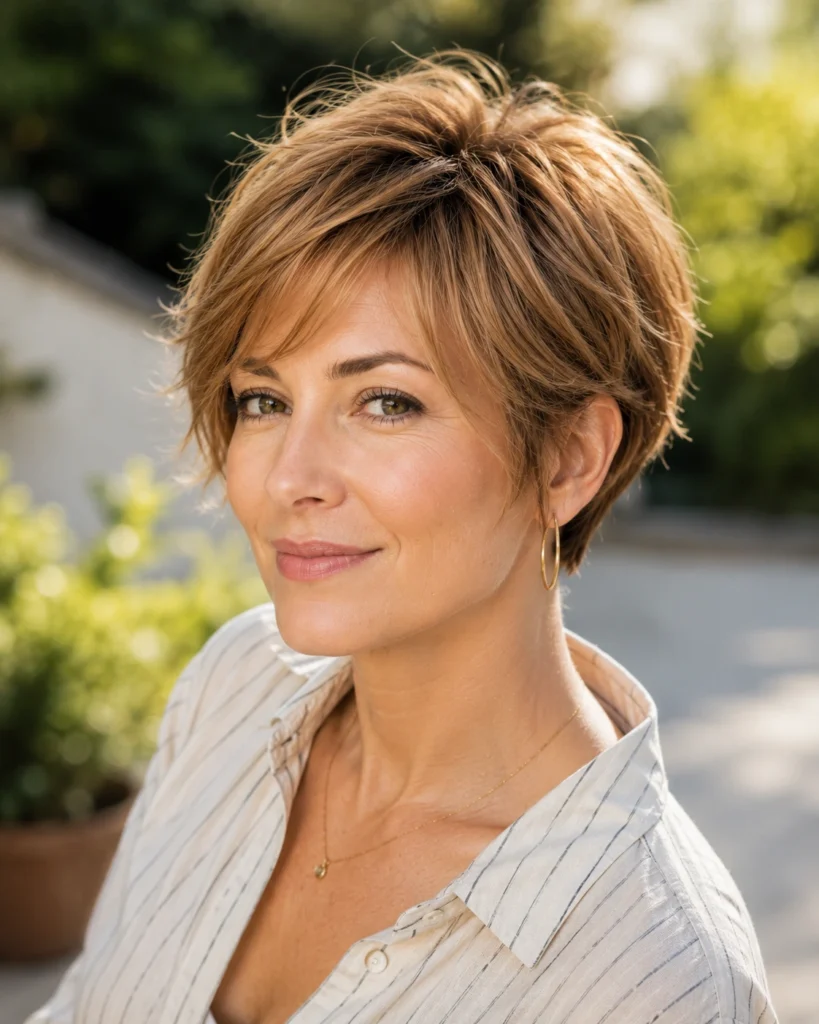
The pixie bob or bixie sits right between a pixie cut and a bob, giving you maximum volume benefits with a slightly more feminine shape than a full pixie. At this length, even the finest hair looks thick because there is simply not enough length left for gravity to flatten it.
This is the most dramatic cut on this list, but it is also the most effective. As covered in our pixie bob for women guide, the bixie works across face shapes and hair types. If your thinning hair has been a source of real frustration, this length will change things faster than anything else.
Best for: Oval, heart, and long face shapes. Best hair type: All fine hair types. Most effective on the finest, flattest hair. Ask your stylist for: “A pixie bob longer than a pixie but shorter than a chin-length bob. Textured throughout for volume, especially at the crown.”
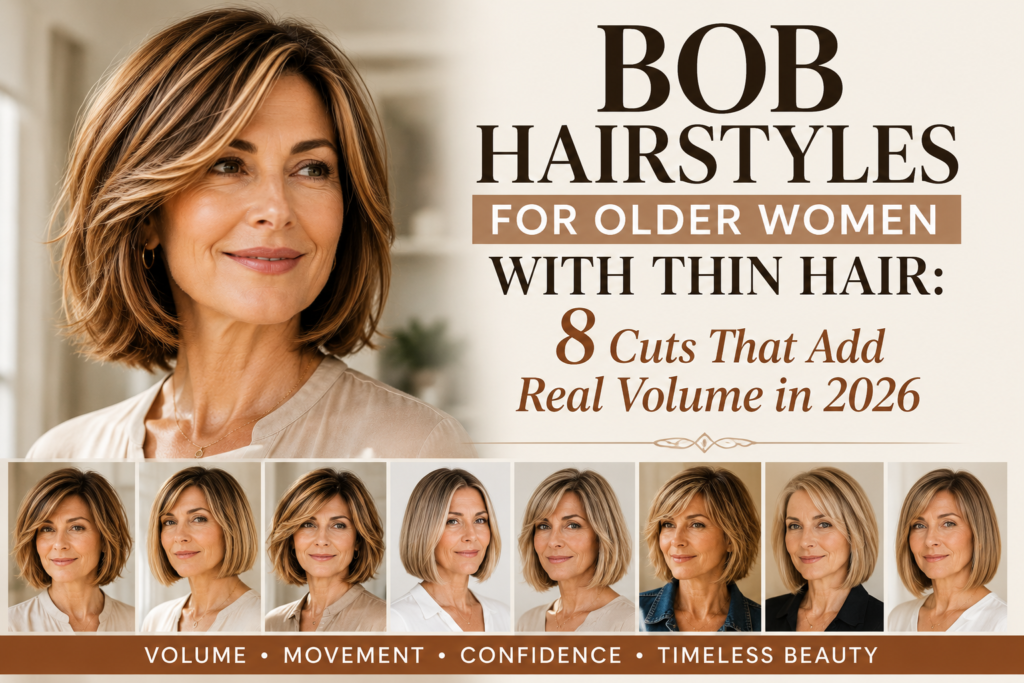
15. The Bob Cut for Thinning Hair Over 50
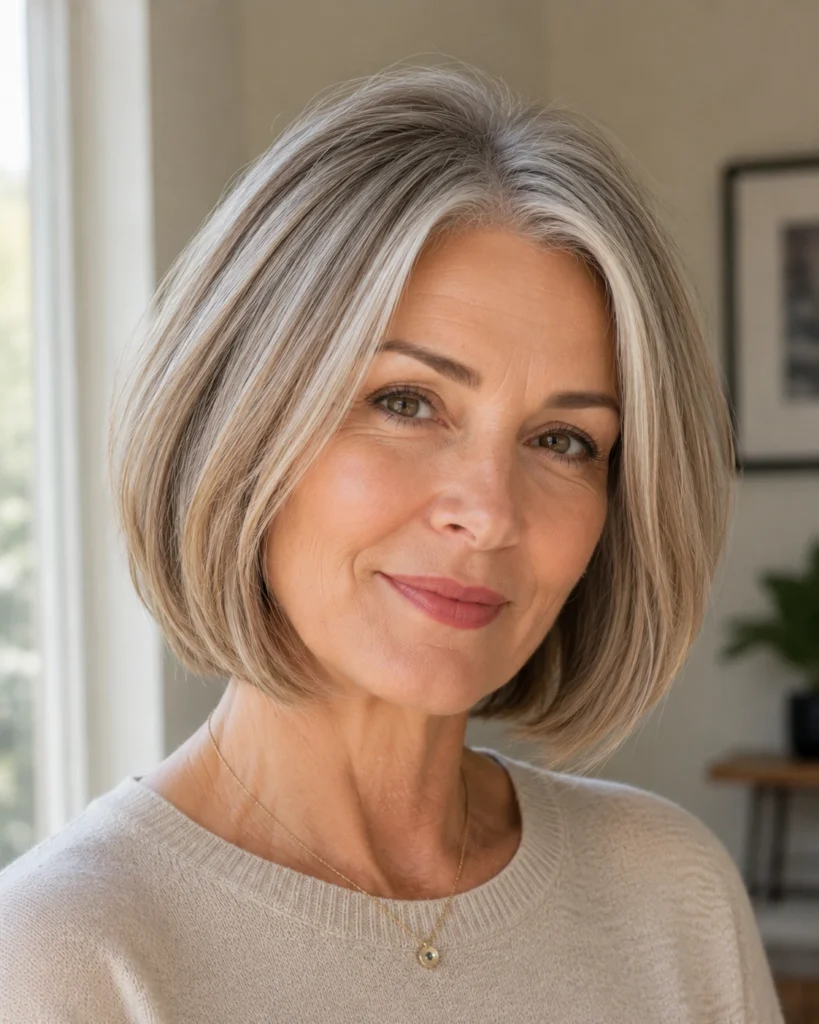
Hair naturally thins after 50 due to hormonal changes and reduced follicle activity.
The good news is that the right bob haircuts for thin hair to look thicker at this stage do not require dramatic cuts a chin-to-shoulder-length bob with soft, blended layers and a strong weight line at the ends gives thinning mature hair the structure it needs to look full and polished.
Avoid heavy graduation or excessive layering at this life stage — both remove too much weight from hair that already lacks density.
Instead, keep the cut simple and clean. As shown in our French bob haircut over 50 guide, a well-executed bob at this age looks effortless, modern, and genuinely fuller than longer styles.
Best for: All face shapes. Oval and round faces particularly benefit from the chin-to-shoulder length. Best hair type: Fine and thinning, any texture. Ask your stylist for: “A chin-to-shoulder-length bob with soft layers — blunt weight line at the ends, nothing too choppy or thin.”
How to Choose the Right Bob for Your Face Shape and Hair Type
Round face: Go for longer bobs — chin to collarbone. The inverted bob and angled cuts create length. Avoid very short, rounded shapes that add width.
Oval face: Every bob on this list works for oval faces. Use this freedom to choose based on hair type and lifestyle, not face shape.
Square face: Soft, textured bobs and wavy bobs work best. The softness balances the jawline. Avoid very blunt, sharp cuts that echo the jaw’s squareness.
Heart face: Chin-length bobs, lobs, and curtain bang bobs are all excellent. The length adds width at the jaw and balances a wider forehead.
Long face: Shoulder-length bobs and wavy bobs add horizontal width. Avoid very long lobs that elongate further.
Fine and straight hair: Blunt cuts, stacked bobs, and French bobs are your best friends. They concentrate weight and create the strongest illusion of thickness.
Fine and wavy hair: The boho bob, wavy bob, and textured bob all work with your natural texture to build volume with minimal effort.
Thinning at the crown: Stacked bobs and pixie bobs build height exactly where it is needed. Avoid heavy top layers that flatten the crown further.
Common Mistakes That Make Thin Hair Look Thinner
Using thinning shears on fine hair. Thinning shears remove weight from the ends — exactly what fine hair cannot afford to lose. Ask your stylist specifically not to use them.
Getting too many layers. Layers can help when done correctly, but too many layers on fine hair create stringy, wispy ends that look sparse. Keep layers long and blended if you go that route.
Keeping too much length. Long hair and thin hair are a bad combination. The longer the hair, the flatter it lies. Going shorter is usually the single most effective change you can make.
Skipping the blowout technique. How you dry your hair matters as much as how it is cut. Flip your head upside down while blowdrying and use a round brush to lift the roots. This alone adds significant volume.
Using heavy products. Heavy creams and oils coat fine strands and make them look limp. Stick to lightweight mousses, sea salt sprays, and volumizing mists instead.
How to Style Bob Haircuts for Thin Hair at Home
Getting the right bob haircut for thin hair to look thicker is step one. Maintaining the volume at home is step two.
- Start with a volumizing mousse applied to damp hair at the roots — work it in with your fingertips, not a brush.
- Flip your head upside down and blowdry on medium heat with a concentrator nozzle. This lifts the roots and builds height from the start.
- Use a round brush at the ends on the last pass of the blowdry to curl the ends slightly under — this adds the illusion of a fuller, denser perimeter.
- Finish with a light texturizing spray worked through the mid-lengths and ends. Avoid the roots if you want to keep the lift you just created.
- Skip the flat iron on volume days. A flat iron removes any bend or texture that adds body. Save it for days when you want a sleek look over a full one.
- On no-wash days, a quick hit of dry shampoo at the roots, followed by a light scrunch with your fingers, refreshes the volume without resetting the whole style.
Total styling time for most bobs: 10 to 15 minutes.
What Real Clients Ask Me About Bob Haircuts for Thinning Hair
Will a bob make my hair look thinner if it’s already fine?
The opposite, actually. A shorter bob concentrates your hair’s density at the ends instead of spreading it thin across your back. Most clients are surprised at how much fuller their hair looks the moment weight is removed.
How short do I need to go for it to make a real difference?
Chin-length is usually the sweet spot for fine hair. You do not have to go shorter than that to see results, though the shorter you go, the more dramatic the effect. Even a shoulder-length bob with a strong weight line will make a noticeable difference.
Can I still pull my hair back with a bob?
Yes, a chin-length or longer bob can go into a small ponytail or a half-up style. Shorter bobs — French bob and above work well in half-up clips and barrettes.
How often do I need to trim a bob for thin hair?
Every six to eight weeks is ideal. Fine hair needs clean ends to maintain the illusion of density. Letting the ends grow out and go wispy defeats the whole purpose of the cut.
Are there any bob styles I should avoid with thin hair?
Heavy shag bobs with lots of internal thinning can strip too much weight from fine hair and leave ends looking stringy. Very blunt, very short bobs can also expose the scalp if your hair is genuinely thin rather than just fine. Ask your stylist to assess your density before committing to anything extremely short.
Final Thoughts
Bob haircuts for thin hair to look thicker are not just a trend — they are genuinely the most effective solution for hair that has lost volume over time. Every cut in this list uses a proven technique: concentrating weight at the ends, building height through stacking, or creating dimension through texture. The right bob does not just look good; it makes your hair feel like itself again.
The best next step is bringing two or three of these photos to your stylist and asking which volume technique suits your specific density and texture. Start with the blunt chin-length bob or the shoulder-length bob if you are unsure — both are safe, strong starting points that rarely disappoint on fine or thinning hair.
Save this guide, bookmark your favorites, and explore more styles in our bob haircut trends collection.

Sana Malik is a hair and beauty writer with a deep love for the bob in all its forms from sharp French bobs to soft, lived-in lobs. After years of experimenting with her own short hair and helping friends figure out what actually suits their face shape, she started writing to cut through the confusing advice out there. At BobHairTrends, she breaks down each cut into simple, honest guides: how to ask for it, how to style it at home, and who it really flatters. When she isn’t researching the latest trends, she’s usually testing a new styling product or convincing someone it’s finally time for the chop.