

Here’s the thing nobody tells you about straight hair: it’s the hardest texture to cut well. Curls forgive. Waves distract. Straight hair? It shows everything — every uneven snip, every lazy layer, every shortcut your stylist hoped you wouldn’t notice.
But flip that around, and it’s also the most rewarding hair to cut. A bob haircut for straight hair done right doesn’t just look good, it looks expensive.
The line stays where the scissors left it. Light slides down the lengths like water. There’s nothing to hide behind, so when the geometry is right, the whole thing sings.
I’ve spent years in the chair watching straight-haired clients walk out transformed by nothing but precision. These are the 20 cuts I recommend most.
Each comes with honest details on styling effort and upkeep, so you pick one that fits your actual life. If you want the broader basics first, our modern short bob styling tips are a good warm-up.
1. The Glass Blunt
This is where every conversation about precision bobs should start. One length, chin level, zero layers — just a single horizontal line so sharp it could cut glass. On straight hair, nothing else reads this clean.
The magic is all in the perimeter. Ask your stylist to cut it dry at the end, so they can see exactly where each strand falls — wet cutting lies to you, and on a blunt bob, lies show.
For the finish, think liquid mirror. Flat-iron in thin sections, then press a pea-sized drop of shine serum through the mid-lengths. That’s it. No texture spray, no “effortless” anything.
Fair warning on upkeep: this cut is honest about neglect. Dry ends show immediately on a blunt edge, so you’re looking at trims every 6 weeks and heat protectant as a non-negotiable.
2. The Jaw-Skimmer
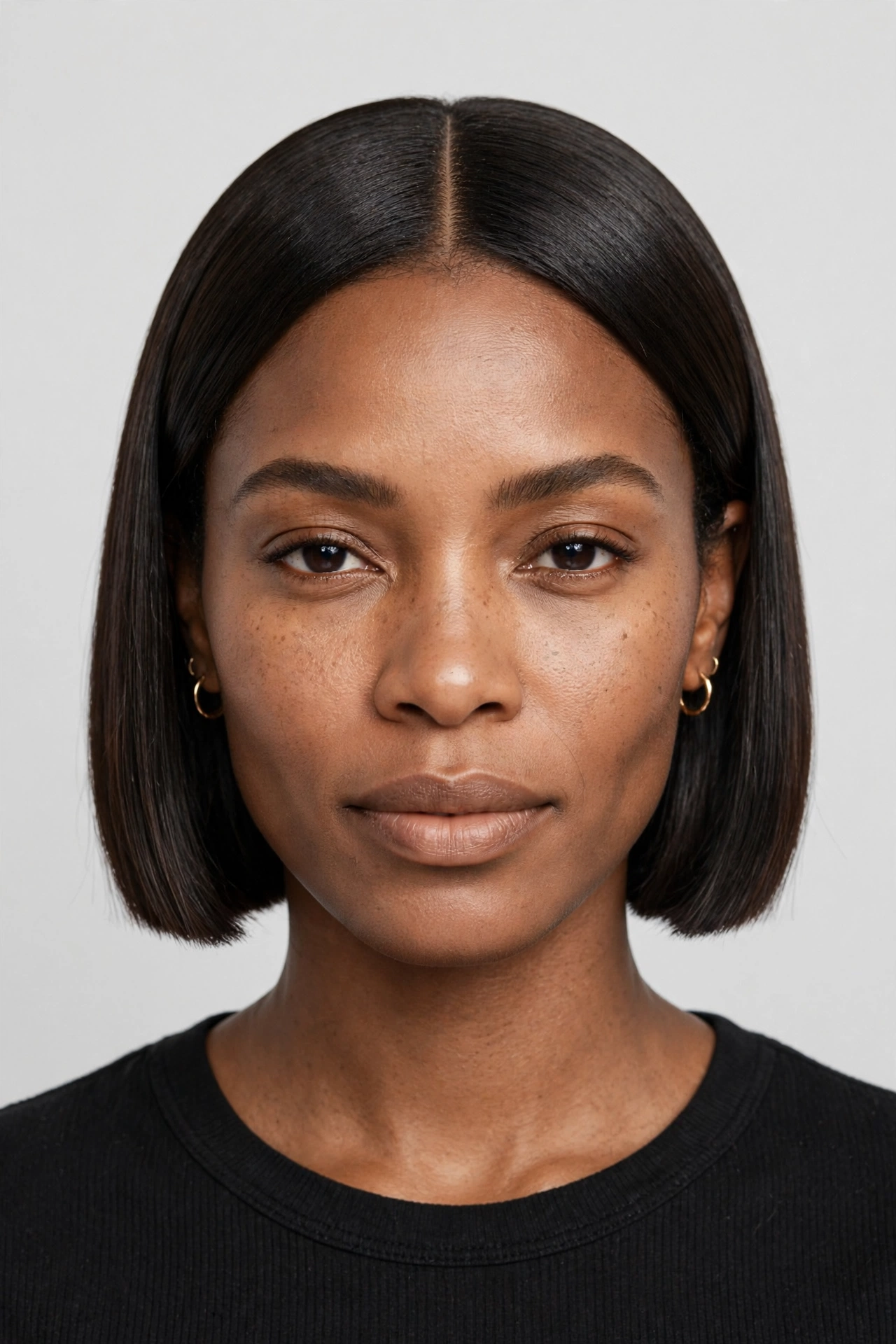
Love the blunt bob but want something with a little more tailoring? The jaw-skimmer sits right on the jawbone — deliberate, symmetrical, quietly severe in the way only a great minimalist cut can be.
A middle part is doing heavy lifting here. It turns the cut into a mirror image of itself, which is exactly the effect you want — symmetry is the whole personality of this bob.
Styling is almost suspiciously easy. Your hair already wants to do this; a boar-bristle brush and ten minutes with a flat iron get you that continuous, light-catching sheen. Reshape every 6 to 8 weeks and you’re golden.
3. The Micro Bob
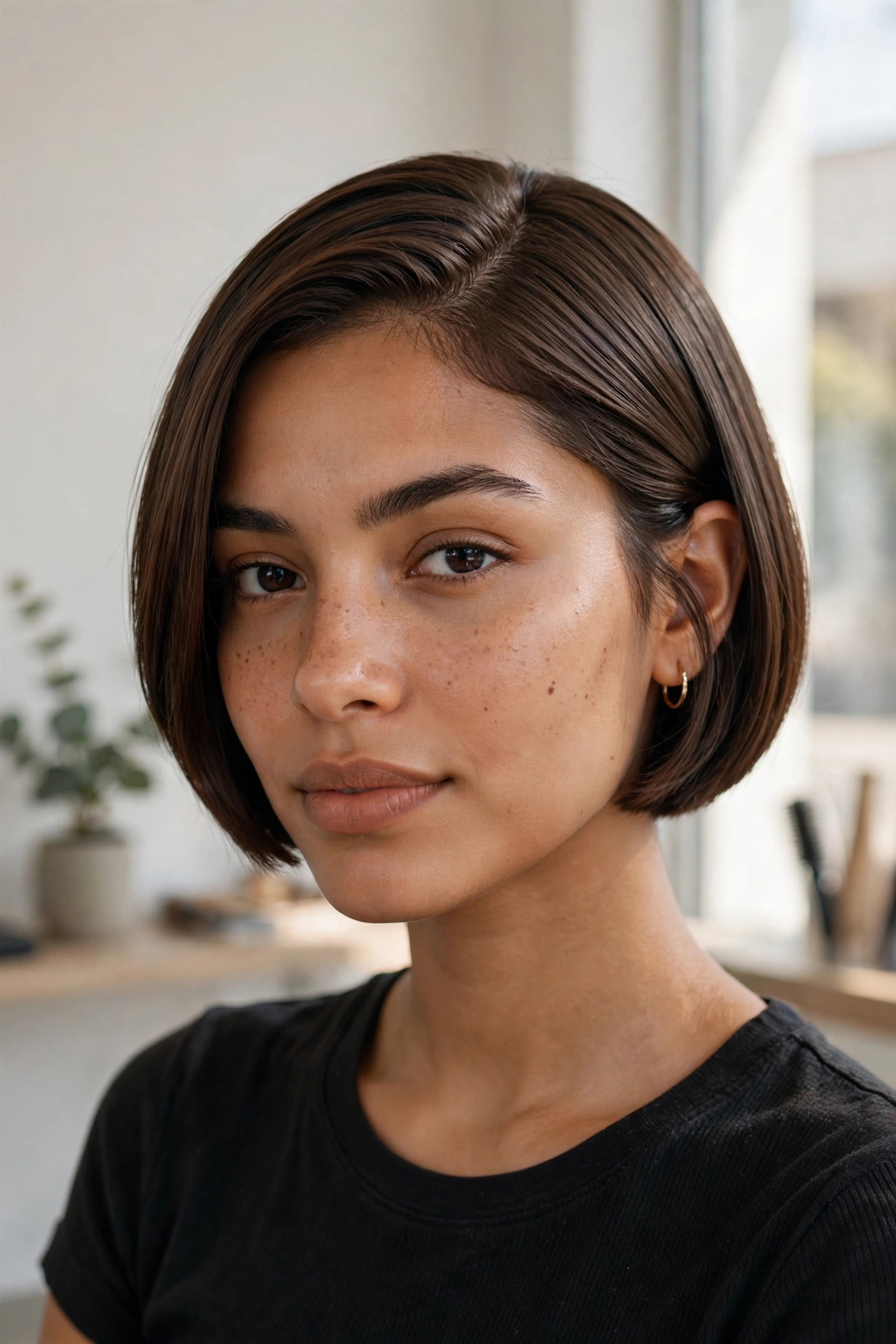
Okay, deep breath — this one is short. Barely past the cheekbone. It’s the boldest cut on this list, and I’ll be straight with you: it only works because straight hair keeps it architectural instead of puffy.
What makes it wearable is the tuck. Those ends curve just slightly under, hugging the cheekbone, so it reads as sculpted rather than severe. A sleek side part keeps it from feeling like a helmet.
Here’s the catch nobody mentions until you’re in the chair: micro lengths lose their shape in 3 to 4 weeks. This is a standing-appointment cut. If you’re not ready to see your stylist monthly, pick something lower-maintenance from this list.
4. The Collarbone Slice

Not ready to go full bob? I get it. The collarbone cut is the compromise that doesn’t feel like one — long enough to scrape back into a ponytail on lazy days, short enough to swing when you walk.
Straight hair is doing you a favor here. Where wavy textures go wispy at this length, yours stays crisp — the perimeter holds a clean line all the way around, which is what gives it that expensive look.
A gloss treatment is the cheat code for this cut. Straight strands reflect light along their full length, so anything that boosts shine pays off double. Upkeep is forgiving too: trims every 8 to 10 weeks, since the length hides regrowth gracefully.
5. The Swing Bob

Some bobs sit still and look pretty. The swing bob moves — the ends kick outward as you walk, and on straight hair that flip has a snap to it that waves just can’t replicate.
The cut is chin-length and a touch shorter in the back, which is what sets up the flip. Your stylist should cut the ends to turn outward — this isn’t something you fake with styling alone.
Speaking of styling: a large round brush, five minutes, ends flicked out, mist of shine spray. Done. The cut itself holds for 6 to 8 weeks, which makes this one of the more easygoing entries here.
6. The Beveled Bob

Beveling is one of those quiet salon terms for something you’ll absolutely notice — the ends curve gently under instead of ending in a hard corner. It takes a standard bob and gives it a couture finish.
On straight hair, the bevel reads as one soft, continuous curve. No frizz breaking it up, no wave fighting it — just a smooth roll under at the jaw. A deep side part adds a whisper of asymmetry so it doesn’t feel too prim.
The finish here is satin, not glass. You’re going for refined, not severe. A round-brush blowout creates the bend; plan on refreshing it each time you style, and trims every 7 weeks to keep the curve exact.
7. The Graduated Stack
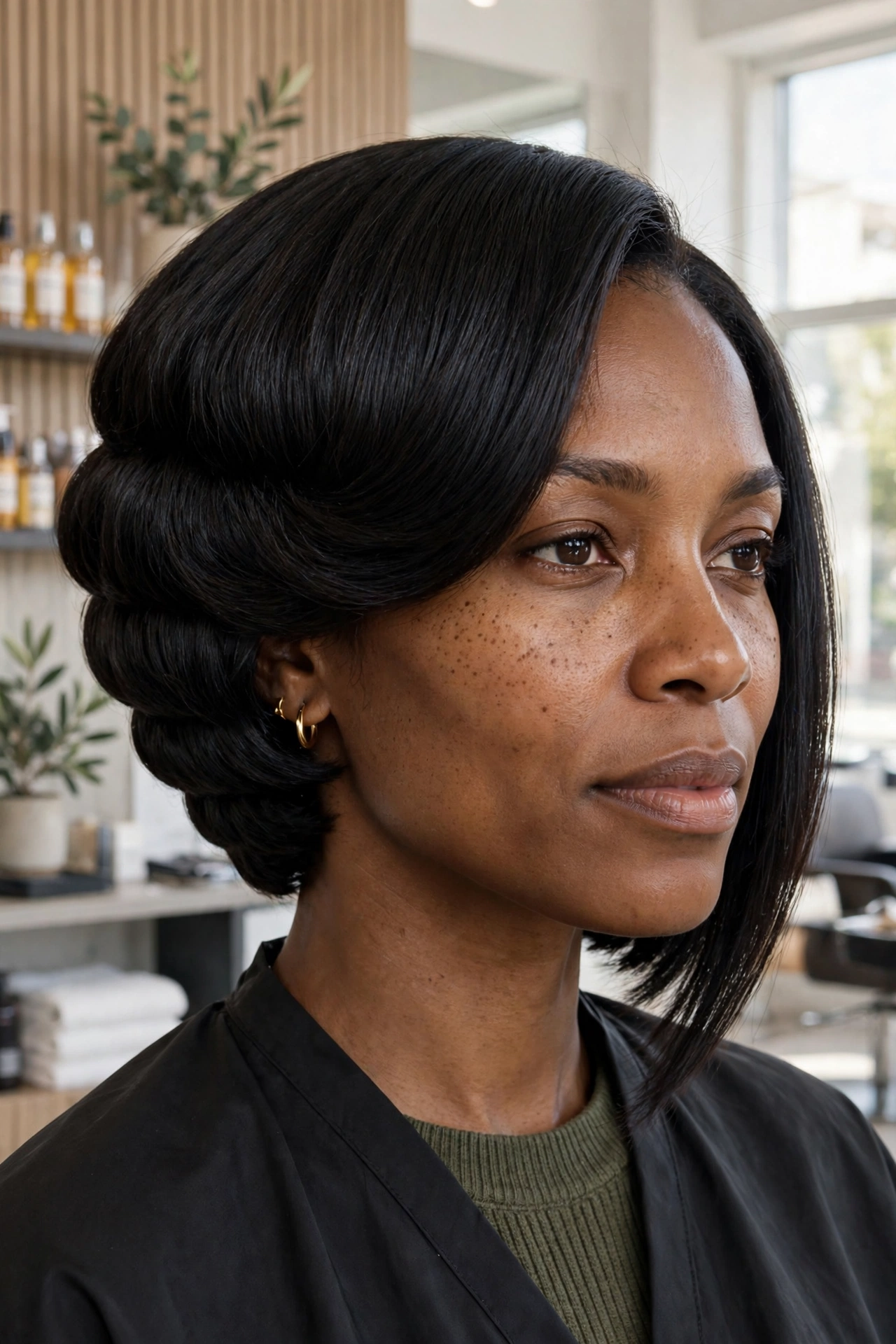
Straight hair’s eternal complaint? Flat at the back of the head. The graduated stack fixes it structurally — short layers piled at the nape push everything up, while the front stays long and sleek.
From the side, it’s genuinely architectural: stacked at the back, sweeping long toward the chin. Flat-iron the front pieces dead straight and let the back do its own thing — that’s the whole styling routine, honestly.
One thing to know going in: graduation grows out visibly. When the nape starts looking shaggy instead of stacked, it’s time — usually every 5 to 6 weeks. This cut rewards consistency.
8. The A-Line Edge

Short in the back, long in the front — the A-line is geometry you can actually feel when you run your hand along it. On straight hair the diagonal is unmistakable: one clean slope from nape to collarbone.
Here’s my non-negotiable for this cut: zero frizz. Any fuzz along that diagonal breaks the line, and the line is the entire point. If your hair fights humidity, talk to your stylist about a keratin treatment before you commit.
A center part shows off the symmetry best. And budget for trims every 5 weeks — as the angle grows out, the drama fades fast, and a grown-out A-line just looks like a bob that needs a haircut.
9. The Asymmetric Cut
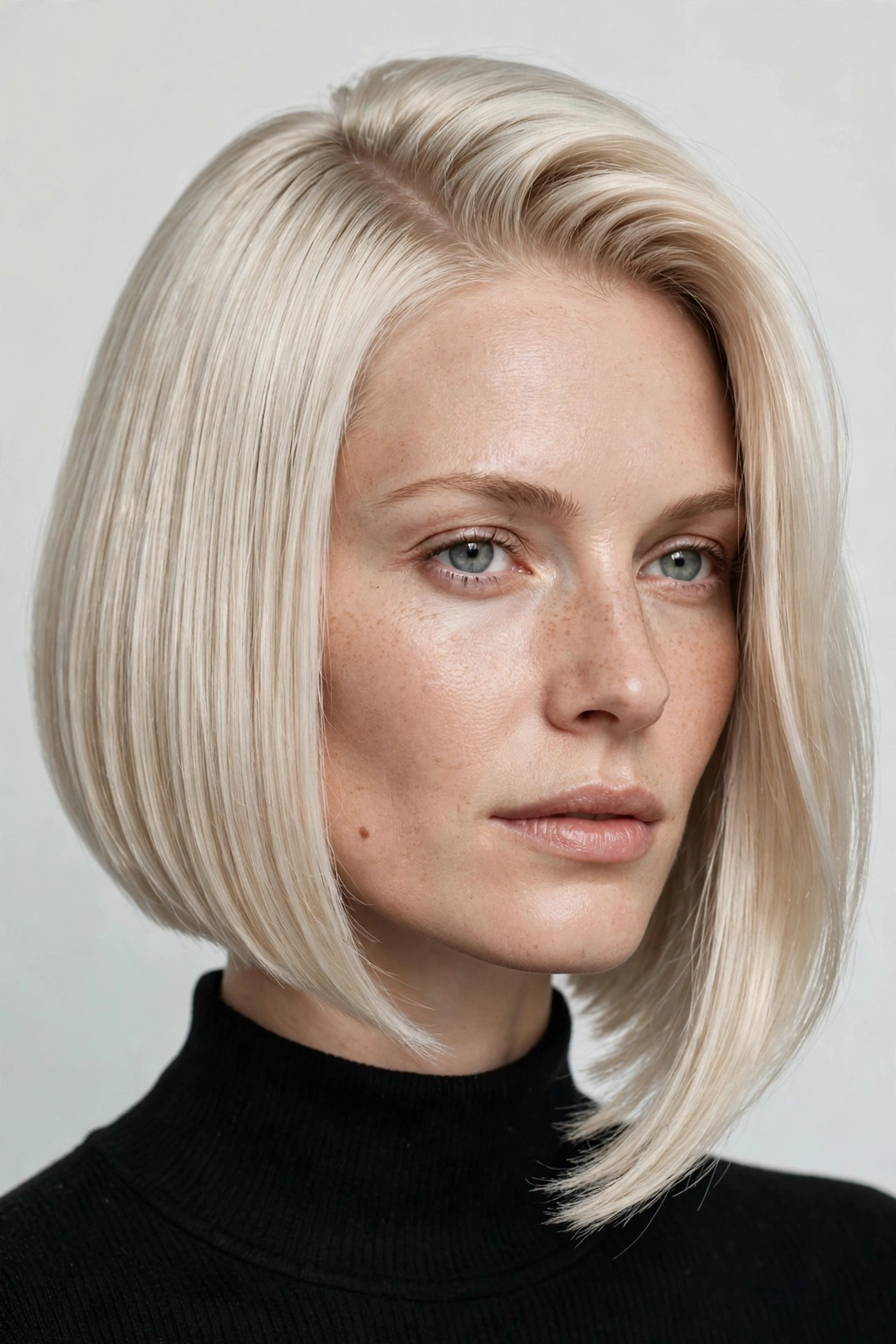
One side at the chin, the other sweeping two or three inches longer past the jaw. It’s a small rebellion, and I love it — asymmetry turns a classic haircut into a conversation.
Straight hair isn’t optional here, it’s essential. The length difference has to read as deliberate, and any wave makes it look like a cutting mistake. Everything gets flat-ironed poker-straight so the asymmetry is the only drama.
Be honest with yourself about maintenance before you book it. The contrast goes soft quickly — 4 to 5 week trims keep it crisp. This is a cut for someone who enjoys the salon, not someone who dreads it.
10. The Blunt Lob
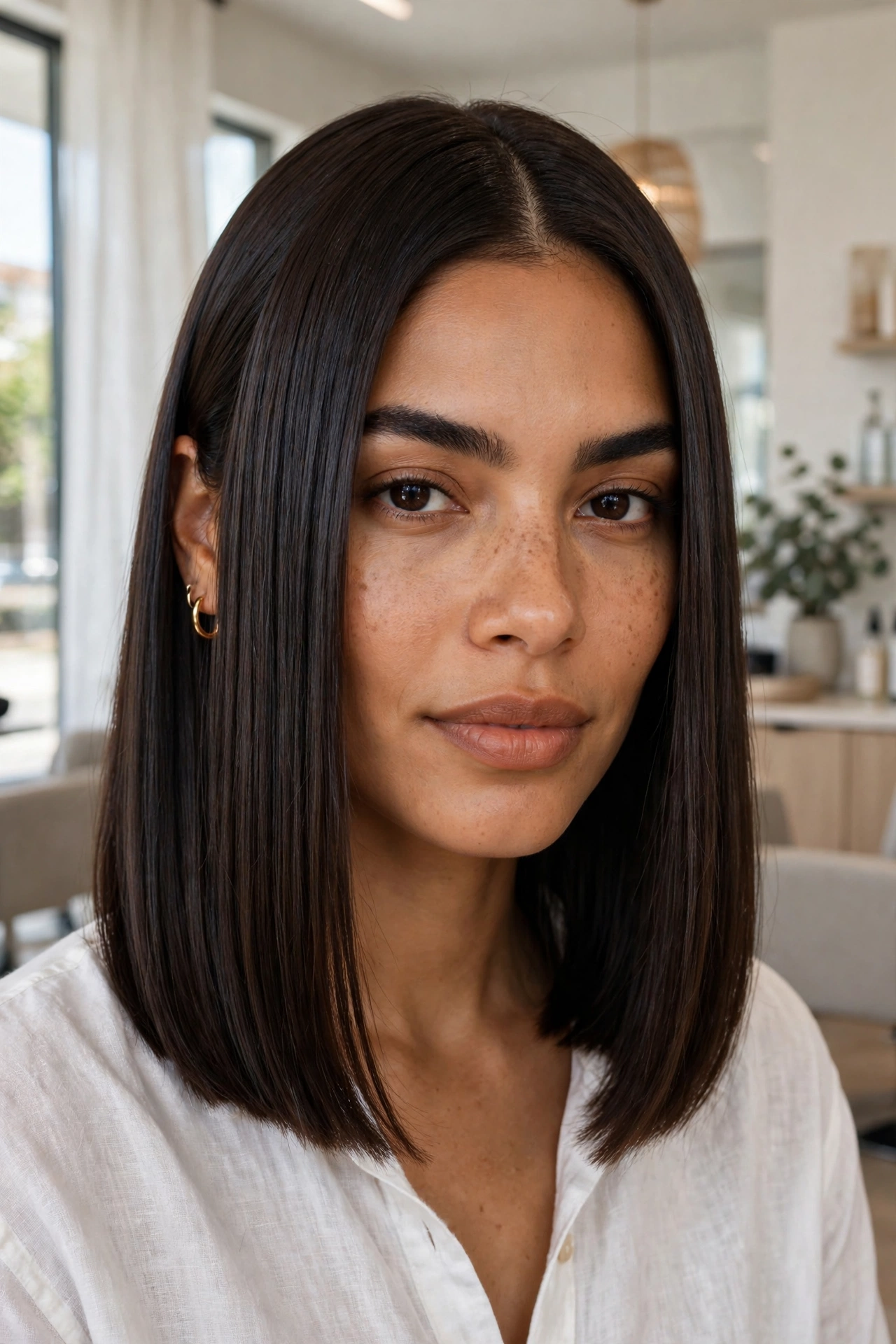
If this list had a diplomat, it’d be the blunt lob. Shoulder-length, one length, middle part — professional enough for the boardroom, easy enough for real life. It’s the lowest-drama entry point into precision cutting.
What I love about it: straight hair at this length has the maximum surface area for shine. A weekly gloss mask keeps it looking luminous with almost no daily effort — this is genuinely a wash-and-go-ish precision cut.
Trims every 10 to 12 weeks. That’s it. The length hides regrowth so well you can practically forget your stylist’s name between visits. (Don’t, though. Tip well.)
11. The Sliced Pixie-Bob
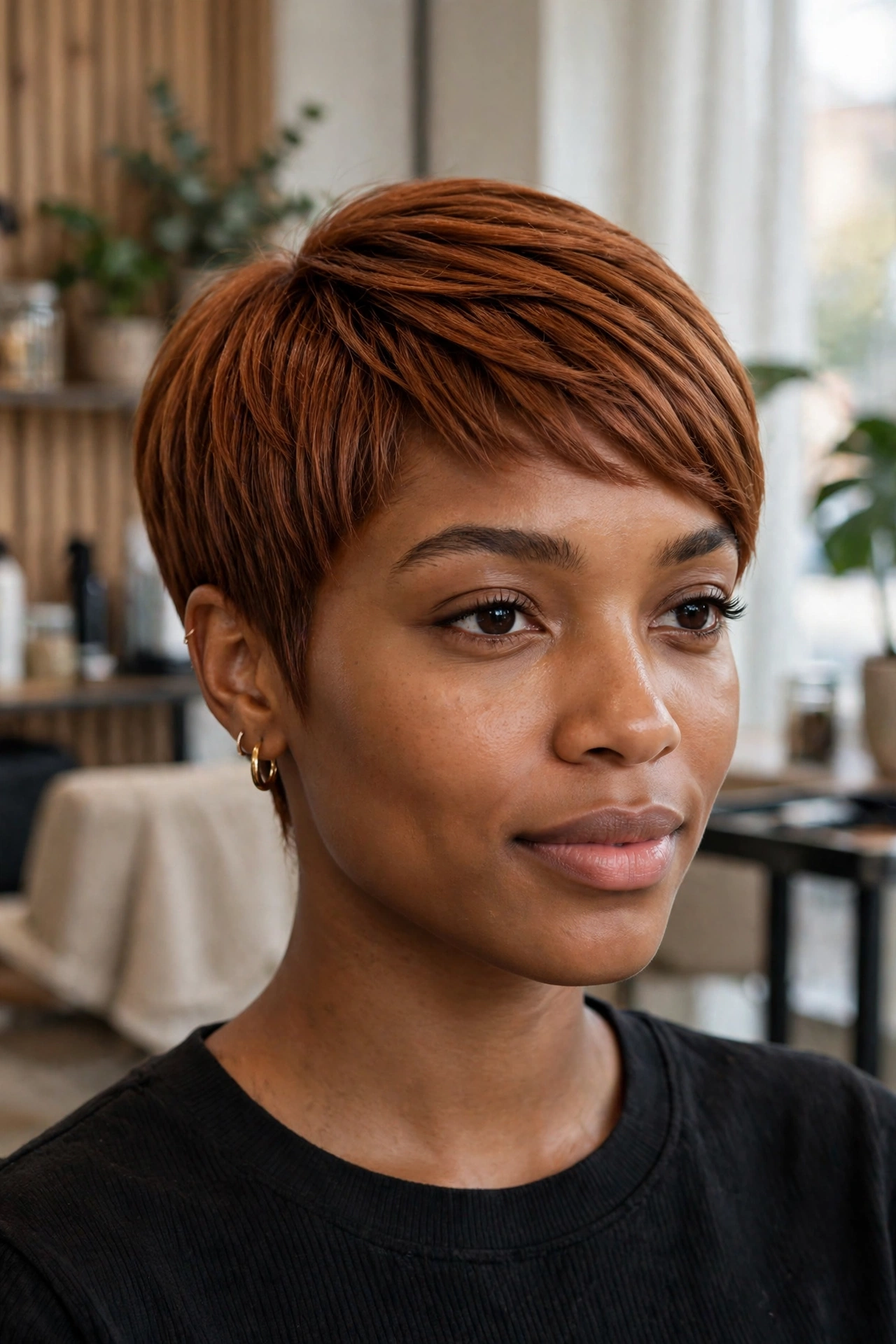
Short at the back, longer through the crown, with fine slices of texture cut in — the pixie-bob is where precision gets playful. Think pixie attitude, bob coverage.
The key word is sliced, not layered. Your stylist carves thin sections of movement into the cut, and straight hair keeps each slice defined instead of fuzzy. A dab of styling cream separates the pieces without any crunch.
Now the reality check: short hair grows out fastest, and this shape depends on that tapered nape. Every 4 weeks, like clockwork. If that sounds like a lot, it is — but the daily styling takes about ninety seconds.
12. The French Straight

The French bob might be the chicest haircut ever invented, and straight hair is its soulmate. That jaw-length curve, the full fringe — it all depends on smoothness to hold its shape.
Curious about the full story behind this classic? Here’s what a French bob actually is — the history is as good as the haircut.
For the finish, resist the urge to shellac it. The French bob should look touchable, a little lived-in — just a light oil through the ends. Bangs need trimming every 3 to 4 weeks (they grow faster than you think); the bob itself can go 7.
13. The Curtain Part
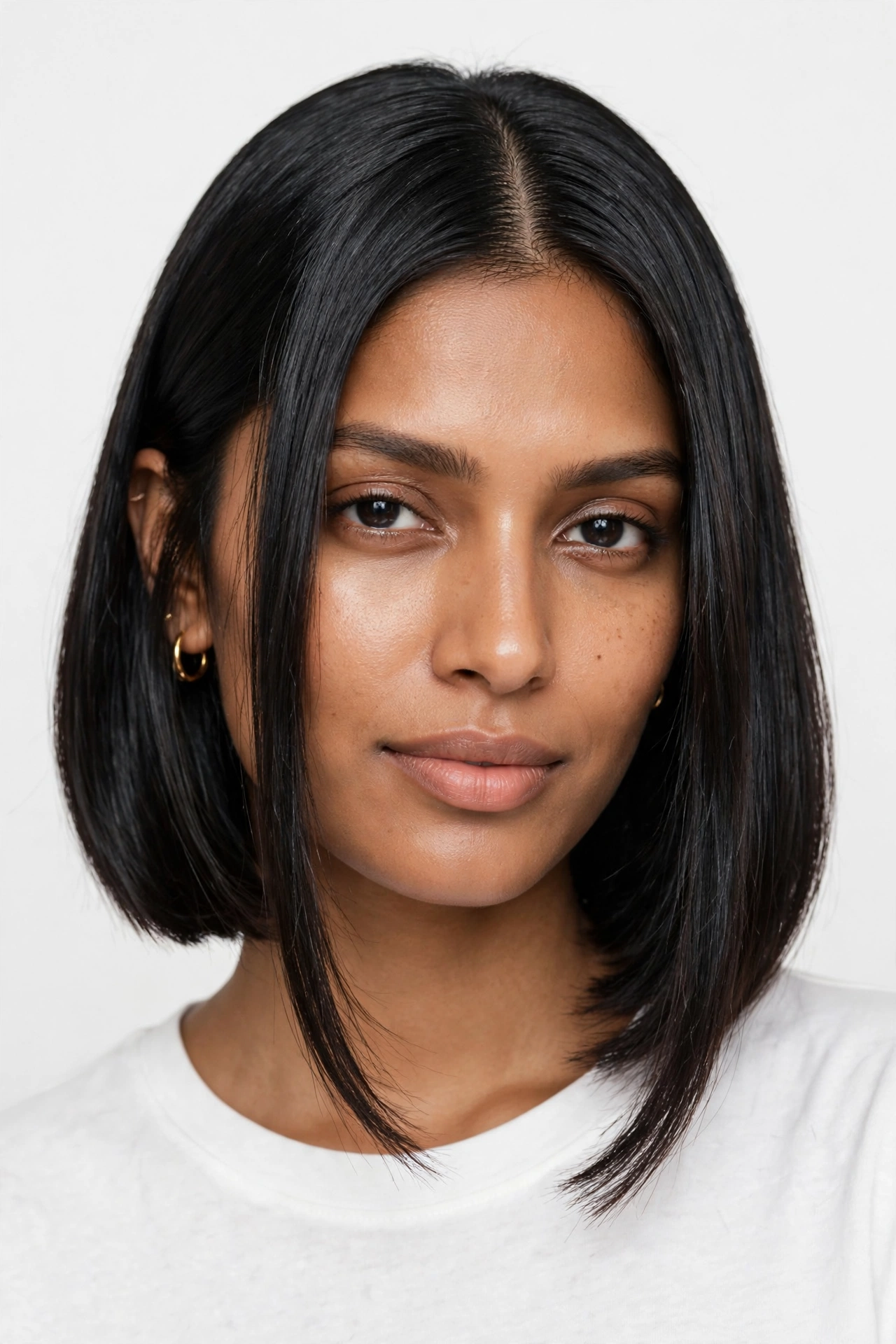
Picture this: the back stays blunt and clean, but the front opens up in longer, face-framing pieces parted down the middle — like curtains. It softens the bob’s geometry without giving up any of its precision.
Straight hair is the reason this works so well. Those curtain pieces fall in clean lines instead of puffing outward, framing your cheekbones like they were drawn on. Two inches longer than the back is the sweet spot.
Styling-wise, give the front pieces the faintest bend with a flat iron — just a whisper, not a curl. Overall trims every 7 to 8 weeks, with the front reshaped as needed.
14. The Wet-Look Sleek

The most editorial cut on this list, and the least practical — which is exactly why it’s fun. Hair slicked close to the head with a high-gloss, just-surfaced-from-water finish. Pure fashion.
Let’s be clear: this is a styling choice, not a structural one. The cut underneath is a simple jaw-length bob with a deep side part. The drama comes from gel or gloss pomade combed from roots to ends.
That’s also the good news — wash it out and you’re back to a normal bob. It only works on straight hair (texture breaks the illusion), and it’s a commitment for exactly one evening. Try it for a night out before you dismiss it.
15. The Ear Tuck
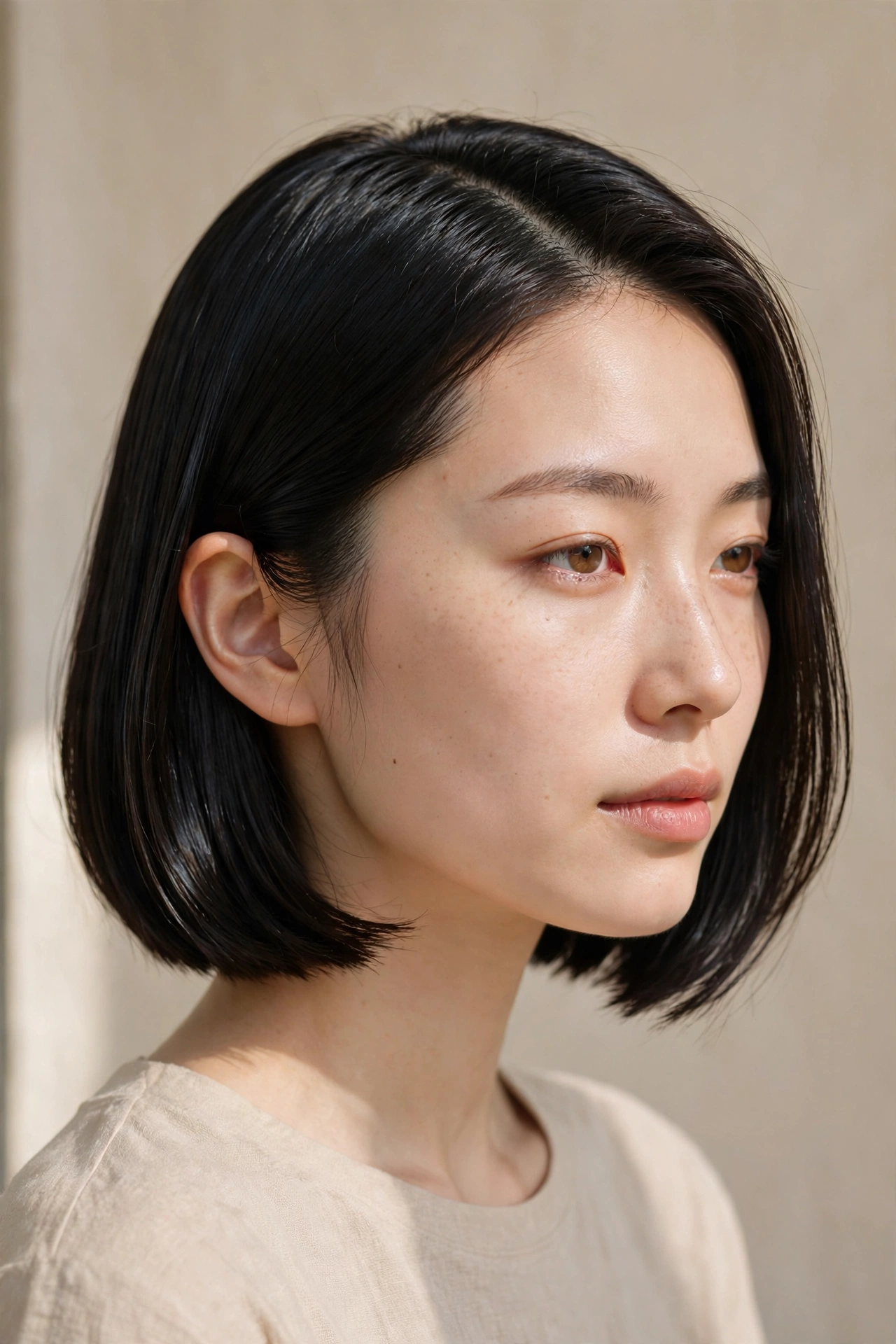
Sometimes the boldest styling move is the simplest one. Tuck one side behind your ear, let the rest fall in a perfect sheet — suddenly your everyday bob looks like a minimalist editorial.
This isn’t really a cut, it’s a trick — and that’s why I included it. Any bob on this list can wear it. The only requirement is that the hair lies completely flat, so flat-iron first and use a deep side part to set it up.
Upkeep? Nonexistent. Zero extra salon visits. It’s the rare “new hairstyle” that costs nothing and takes ten seconds, which honestly makes it the best value on this entire list.
16. The Inverted Taper
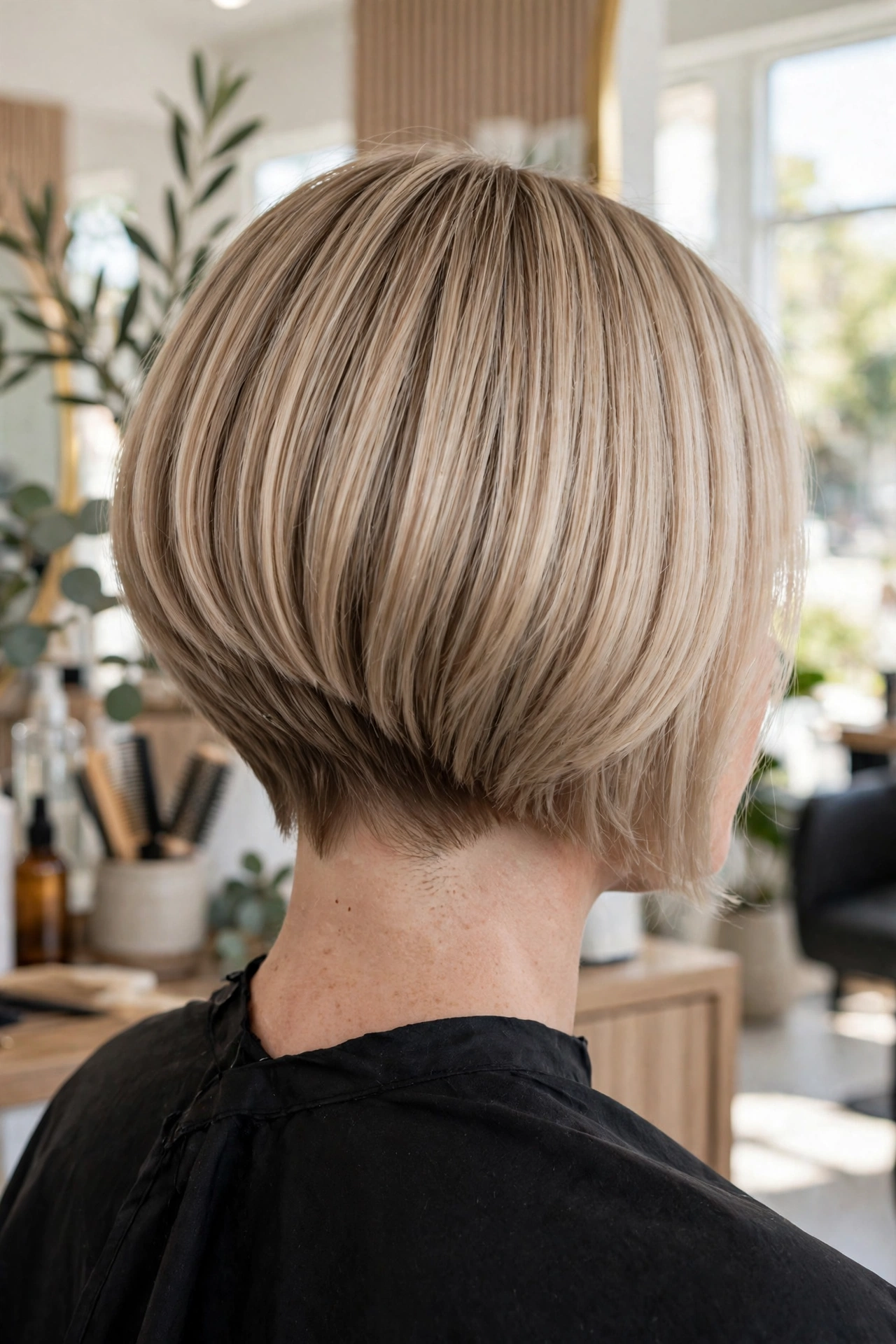
Walk around to the back, because that’s where this cut lives. The nape tapers up close, layers stack above it, and the front falls long — from behind, it’s pure engineering.
Straight hair shows off the graduation like a blueprint. Every stacked layer is visible, deliberate, architectural. Blow-dry the nape flat against the head and the taper looks razor-sharp.
Precision this exact doesn’t maintain itself. The taper grows out in weeks, not months — plan on trims every 4 to 5 weeks or the back goes from sculpted to shaggy. Worth it, but go in with open eyes.
17. The Razor Ends
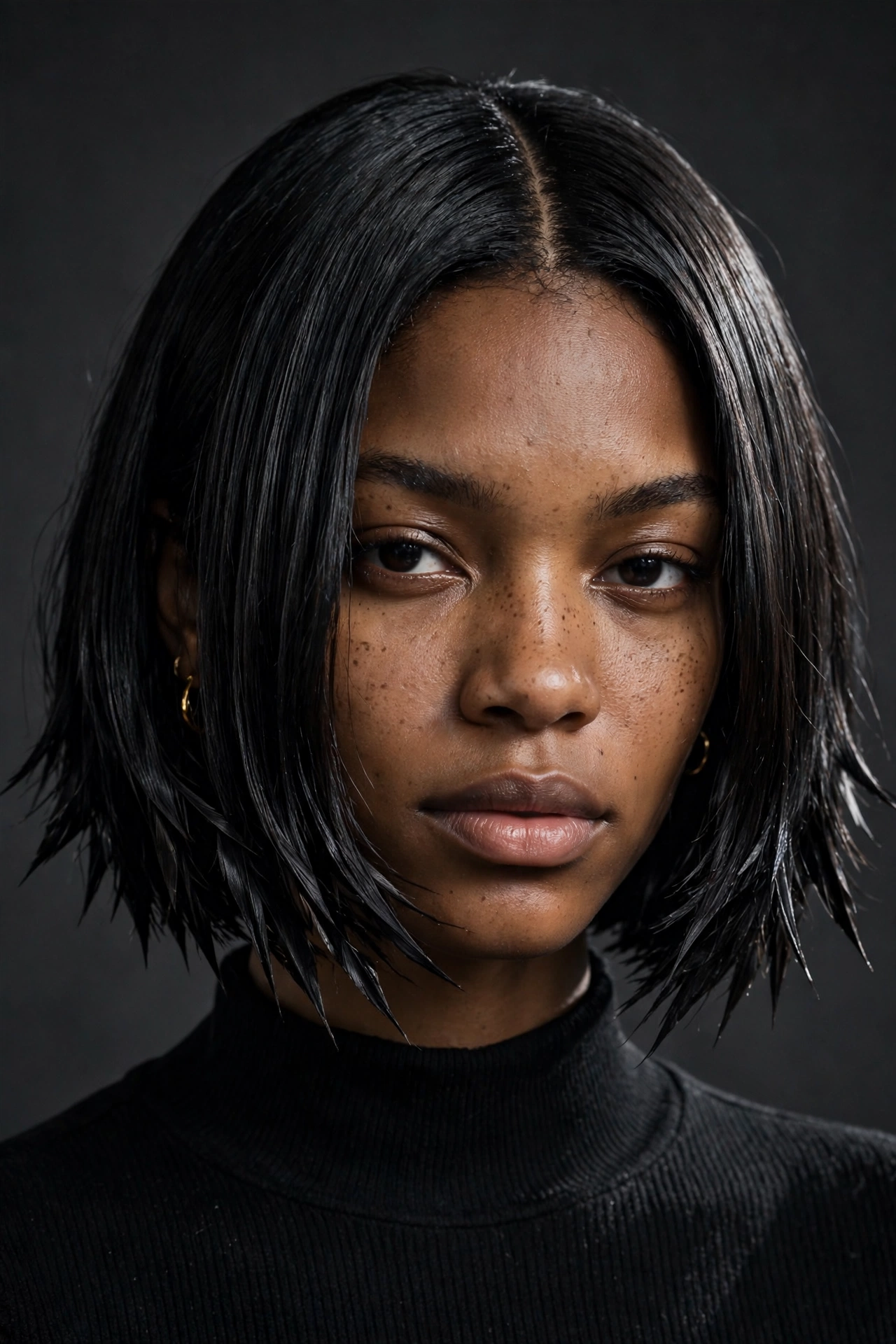
Scissors make clean lines. Razors make texture — feathered, piecey ends that catch light in fragments and move when you do. It’s precision with a whisper of rebellion.
Here’s what surprises people: razor-cut ends are actually lower maintenance than blunt ones. The texture grows out softer, so you can stretch trims to 7 or 8 weeks without the cut looking tired.
Product choice matters more than you’d think. A light serum lets the pieces separate and shine; anything heavy waxes, thick creams — glues them together and kills the whole effect. Less is more, truly.
18. The Swoop Fringe

A long fringe swept from a deep side part, falling in one clean diagonal across the forehead. It softens everything above the eyes while the bob stays sharp behind it — the best of both moods.
On straight hair, the swoop is uninterrupted no wave breaking the line, just a smooth diagonal flow. Blow-dry it in the direction of the swoop with a paddle brush and it practically styles itself.
The fringe is the diva here. It needs trimming every 4 weeks to stay at that perfect brow-grazing length; let it grow and the swoop turns into an eye-poker. The bob itself is easygoing by comparison.
19. The Blunt Bangs

Full, straight-across bangs plus a chin-length bob. It’s the most graphic combination in this guide — bold, a little severe, completely unforgettable when it’s done right.
Straight hair is non-negotiable for this one. Any wave at all turns that crisp fringe line into frizz, and the whole look falls apart. Flat-iron the bangs and the lengths in the same pass so they read as one continuous sheet.
Maintenance is real: bangs grow fast and a blunt line shows every millimeter. Trims every 3 to 4 weeks. But honestly? The impact is worth the calendar commitment.
20. The Silver Glass

Let’s end with the ultimate proof of this guide’s thesis. Straight silver hair, glass finish, jaw length — precision plus shine, and the cool tone amplifies the mirror effect like nothing else.
There’s something about silver that makes people assume it’s high-effort. The cut itself isn’t — one length, center part, blunt perimeter, trims every 6 to 8 weeks. It’s the color that asks for attention: purple shampoo weekly to keep it bright silver instead of yellow.
A gloss serum delivers that mirror finish. And if you’re growing out your natural silver, this is the cut that makes the transition look intentional instead of accidental.
Straight-hair bob questions, answered
What is the best bob haircut for straight hair?
The blunt one-length bob, honestly. Straight hair holds a crisp perimeter better than any other texture, so the classic chin-length blunt cut shows off both your hair’s natural shine and the scissor work. It’s the cut this whole guide is built around.
Does a bob look good on thin straight hair?
Yes — and this surprises people. A blunt bob is one of the best cuts for thin straight hair because those solid ends create the illusion of density.
Layers would just wisp away on thin hair. Our guide to blunt bobs for fine hair breaks down exactly why.
How do I get glass-like shine on a straight bob?
Thin sections are the secret. Flat-iron small slices of hair, then press a pea-sized amount of shine serum through the mid-lengths and ends. One pass with a boar-bristle brush beforehand smooths the cuticle so light reflects evenly instead of scattering.
How often should I trim a blunt bob on straight hair?
Every 6 to 8 weeks as a rule of thumb. Blunt perimeters show regrowth and split ends faster than layered cuts — regular trims are genuinely what keep the line looking expensive rather than tired.
Can straight hair hold a French bob?
It’s the ideal hair for it. The French bob’s curved-under ends and full fringe need smoothness to hold their shape, and straight hair delivers that naturally. Wavy textures need daily heat styling to fake the same effect.
What bob length is best for straight hair?
Somewhere between chin and collarbone. Shorter lengths show off the geometry; longer lengths maximize the shine. Everything in between comes down to your face shape and how much maintenance you’ll actually do.
The final word
Here’s what I hope you take from all twenty of these: a bob haircut for straight hair shouldn’t hide its nature — it should show it off. Pick the geometry that speaks to you, be honest about the upkeep level you’ll maintain, and let the shine do the talking.
Save your favorites to Pinterest before your salon visit (future you will be grateful), and when you’re ready for more, our classic bob style guide for 2026 is the perfect next read.

Sana Malik is a hair and beauty writer with a deep love for the bob in all its forms from sharp French bobs to soft, lived-in lobs. After years of experimenting with her own short hair and helping friends figure out what actually suits their face shape, she started writing to cut through the confusing advice out there. At BobHairTrends, she breaks down each cut into simple, honest guides: how to ask for it, how to style it at home, and who it really flatters. When she isn’t researching the latest trends, she’s usually testing a new styling product or convincing someone it’s finally time for the chop.