
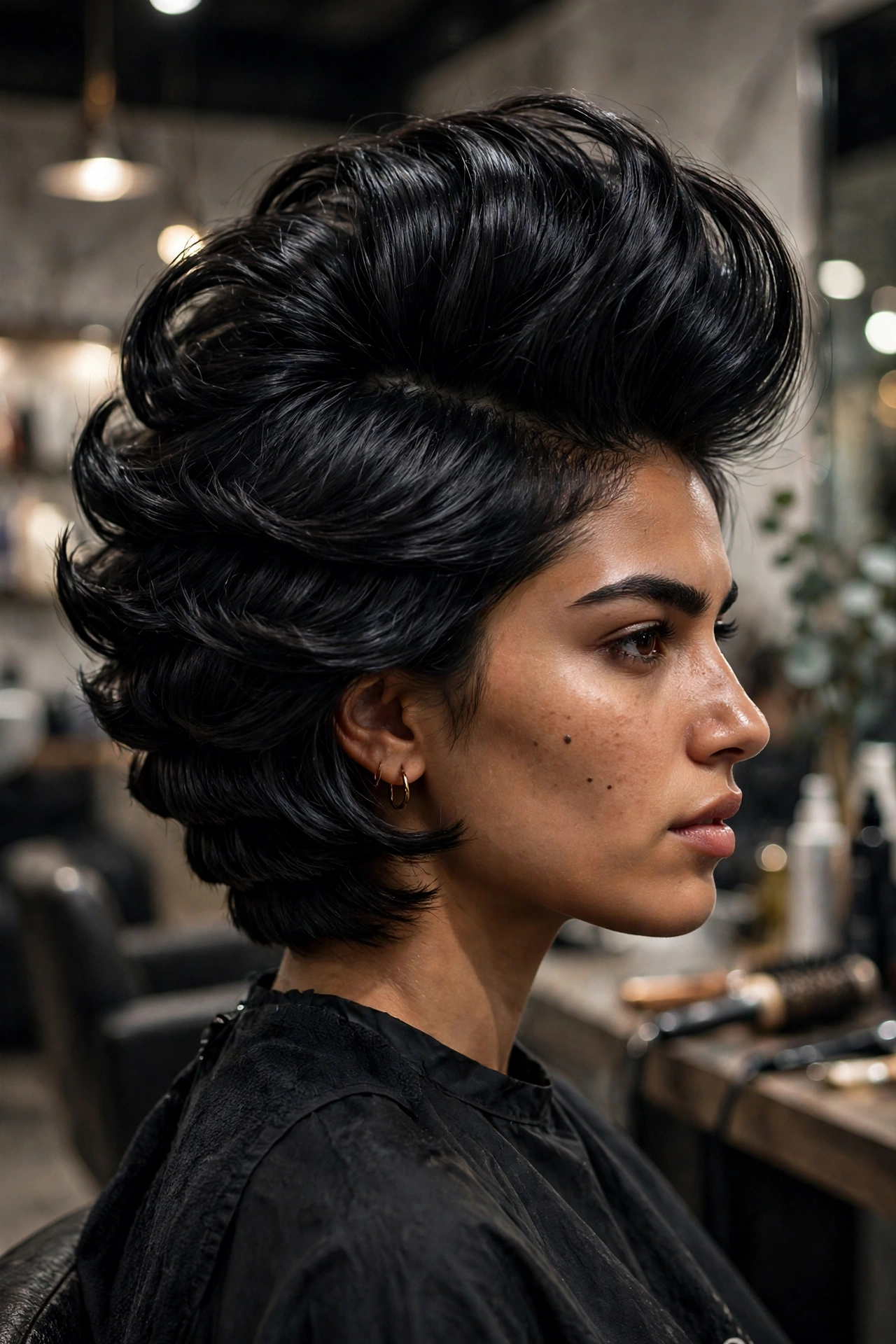
Thin hair has one unfair disadvantage: gravity always wins. But stacked bob haircuts for thin hair flip that script completely, building height and fullness exactly where flat hair needs it most.
The secret is the stacking itself. Shorter layers cut underneath push the longer top layers up and out, like scaffolding for your hair. No extensions, no teasing marathons. Just smart geometry doing the heavy lifting.
I have watched this cut rescue the flattest heads in my chair for years. Below are the 20 stacked bob haircuts for thin hair I recommend most, each with honest notes on who it suits and the exact words to use at the salon.
20 Stacked Bob Haircuts for Thin Hair
1. The Classic Stacked Bob
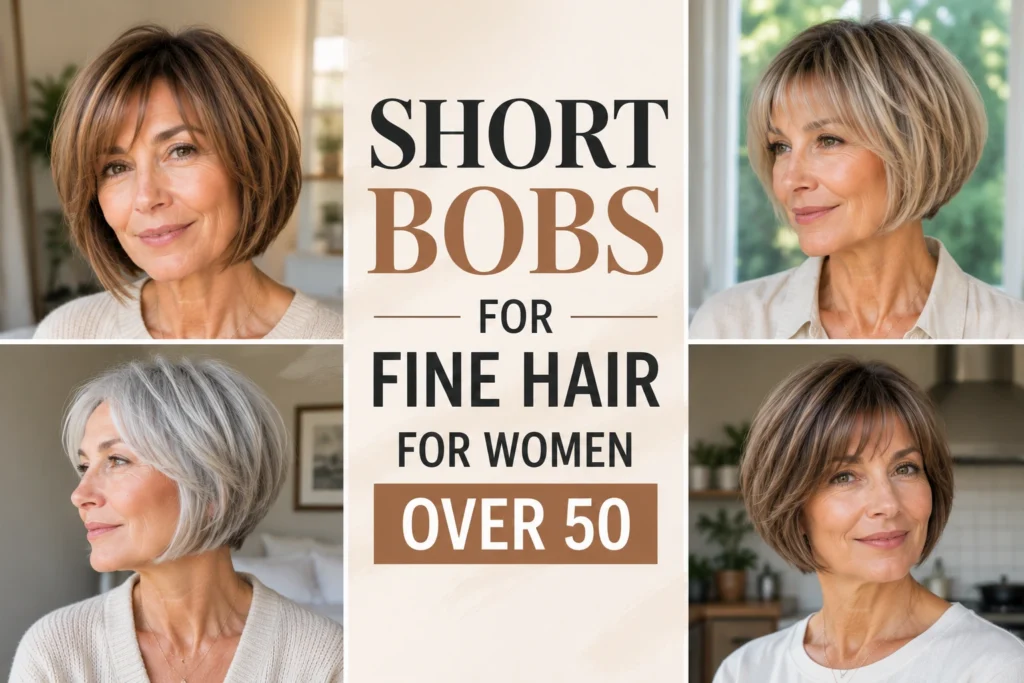
This is the one that made “stacked” famous, and it earned every bit of that fame. The nape is cut short and tight while layers graduate upward into a rounded, full crown. From the side you can see the architecture working: short underneath, sweeping long toward the chin.
On thin hair, the contrast is the entire trick. A clean, close nape makes everything above it look dramatically thicker by comparison. It is polished without being stiff, and the stacking angle can be tuned to flatter almost any face shape.
Of all the stacked bob haircuts for thin hair I reach for first, this is the safest bet. Ask for: a stacked bob with a tight tapered nape and graduation through the crown. Bring photos, because “stacked” means slightly different things to different stylists.
2. The Tapered-Nape Stack
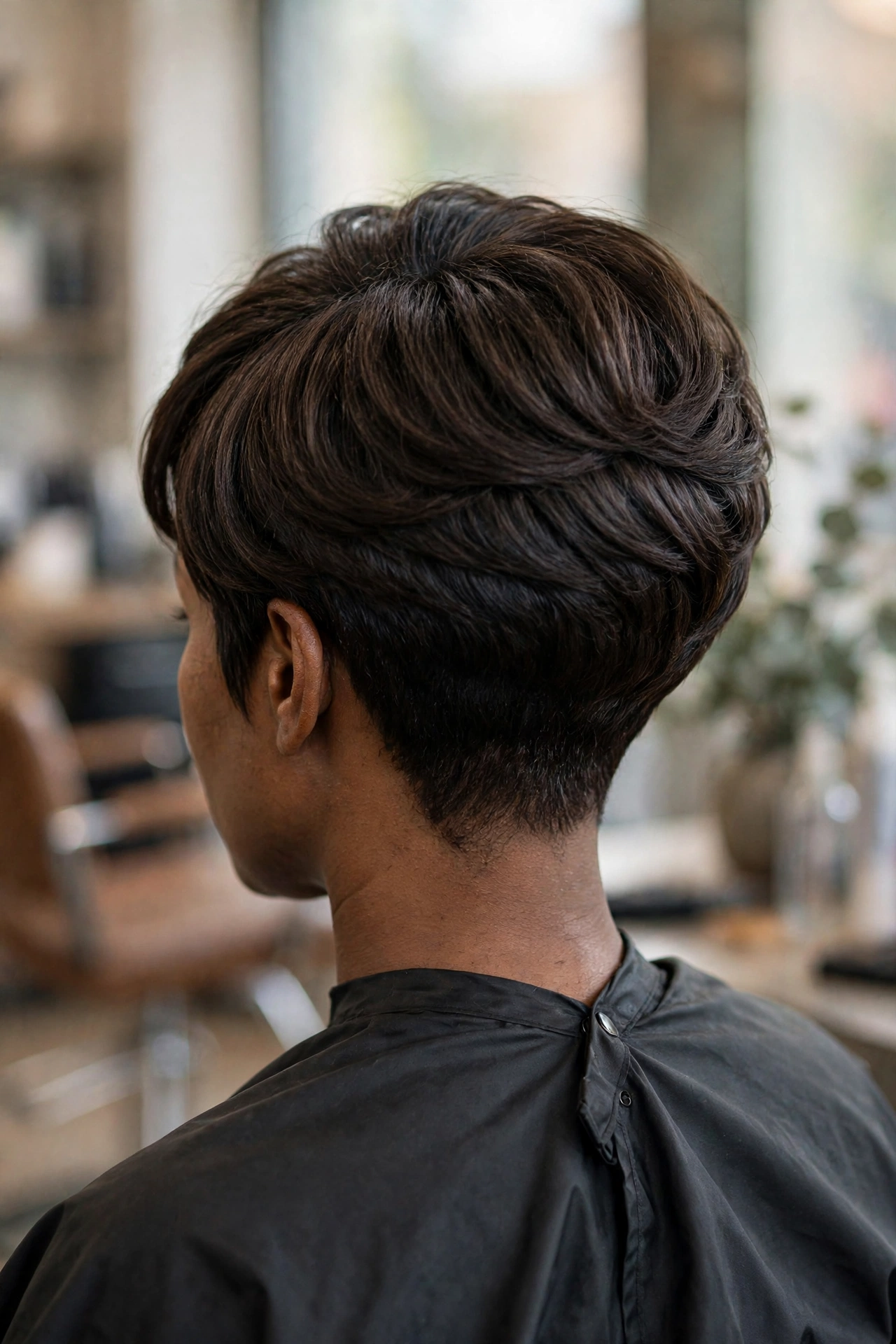
Some stacked bobs whisper. This one is all about the back view. The nape is tapered close and immaculate, so the eye travels straight up to the fullness of the crown.
What I love here is the neatness factor. A tidy nape makes thin hair look intentional and expensive rather than sparse. It is also wonderfully cool on the neck in summer, which clients always mention as a bonus they did not expect.
Maintenance note: the taper grows out fast. Book a nape clean-up every 4 to 5 weeks or the crisp line goes soft and the whole shape loses its punch.
3. The Side-Swept Stack
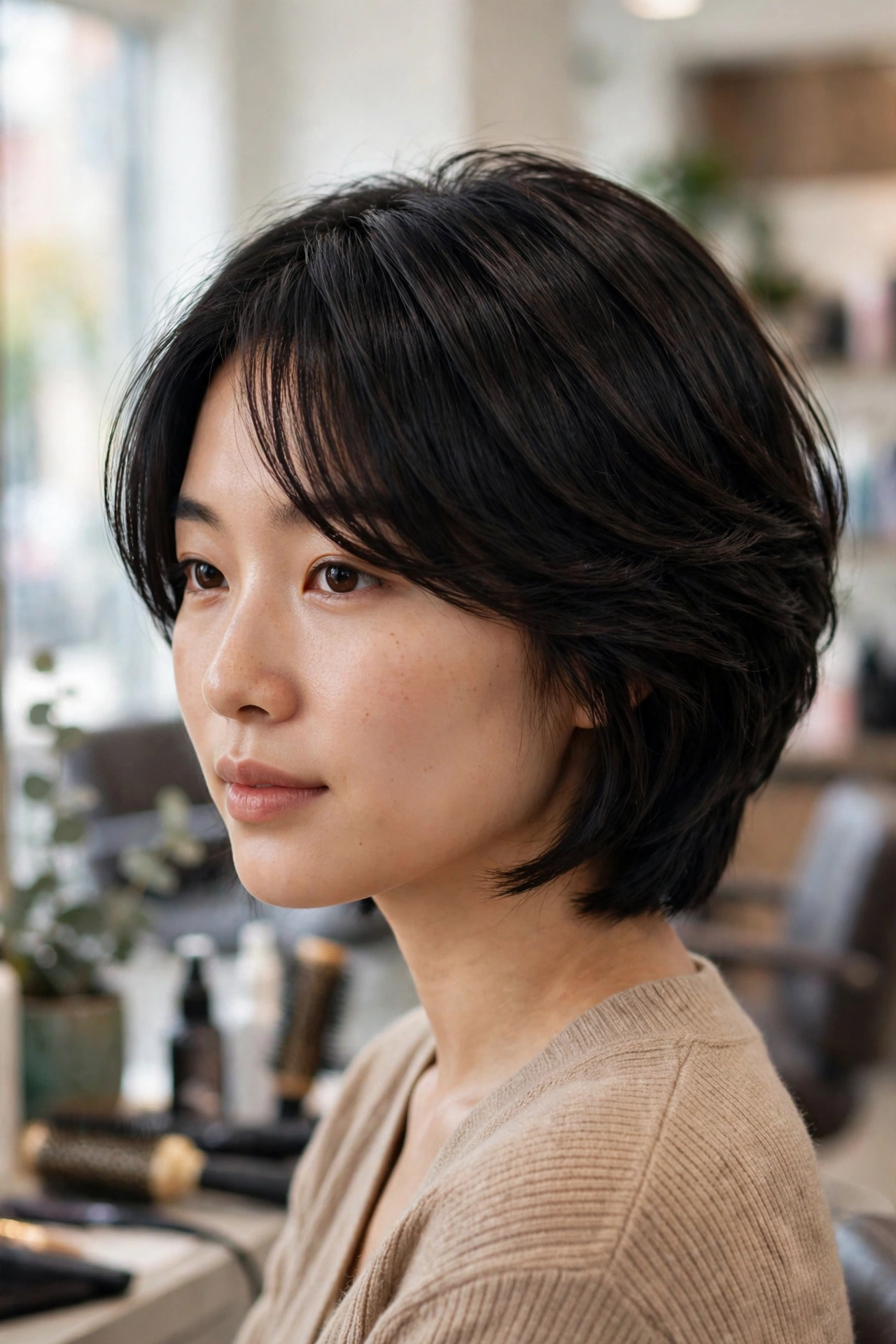
A deep side sweep might be the oldest volume trick in the book, and on a stacked bob it works double time. Flipping most of your hair to one side instantly doubles the visual fullness over there. Simple physics, gorgeous result.
The stacked back keeps the silhouette rounded while the sweep adds drama up front. It is soft, face-flattering, and it grows out without any awkward phases, which is more than most statement cuts can claim.
Style it by blow-drying the roots in the opposite direction first, then sweeping over. That little rebellion at the part is where the lift comes from.
4. The Curtain-Bang Stack
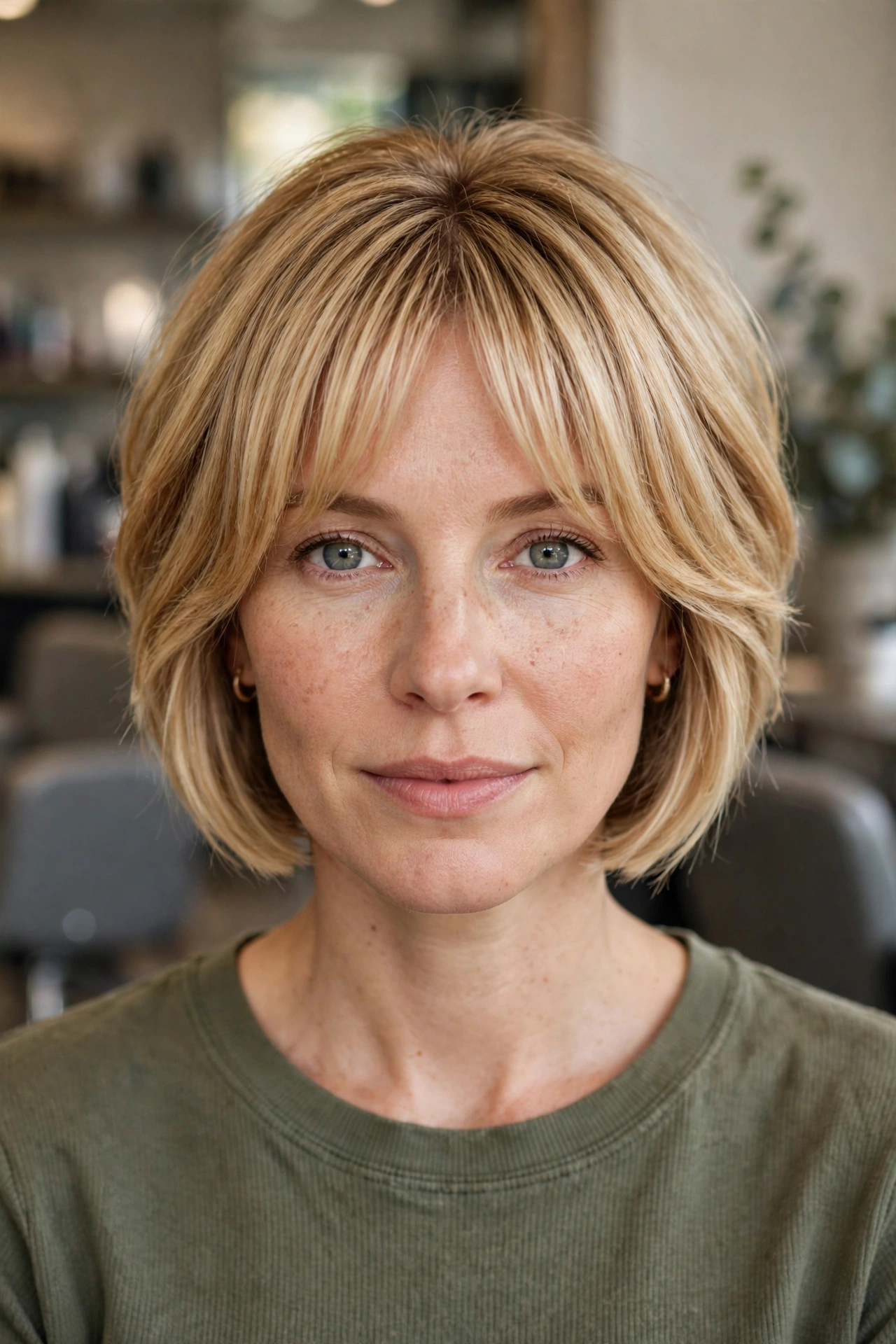
Curtain bangs plus a stacked back is a combination that just makes sense. The fringe frames the face and pulls the eye outward, which reads as width. The stacking handles the crown. Together they cover every angle.
For thin hair, keep the curtain bangs long, grazing the cheekbones. Short, wispy curtain pieces can go stringy on fine strands, while longer ones blend into the face-framing layers seamlessly.
One honest trade-off: bangs need trims every 4 to 6 weeks. If you are not ready for that commitment, the side-swept version above gives you 80 percent of the effect with zero fringe maintenance.
5. The Dramatic Inverted Stack
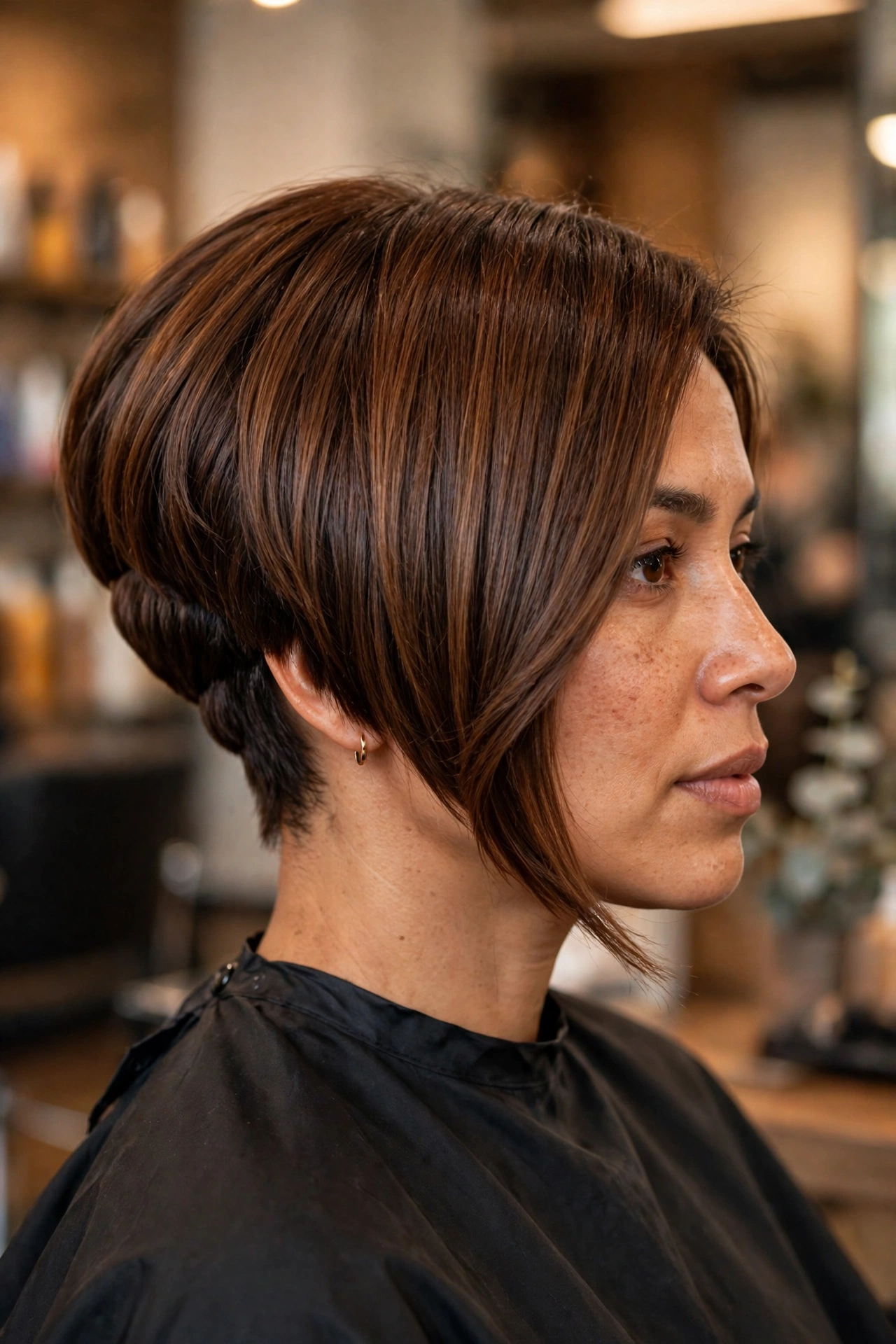
Short at the nape, long and swinging at the front. The inverted stack is the showstopper of the family, and thin hair wears it beautifully because all that diagonal movement distracts from any sparseness at the scalp.
The stacked back does the quiet structural work while the long front pieces do all the talking. It is elongating, elegant, and surprisingly versatile: sleek for work, tousled for the weekend.
Fair warning: the angle needs precision. As it grows out, the drama fades into just-a-bob, so plan on trims every 6 weeks to keep it intentional.
6. The Stacked Lob

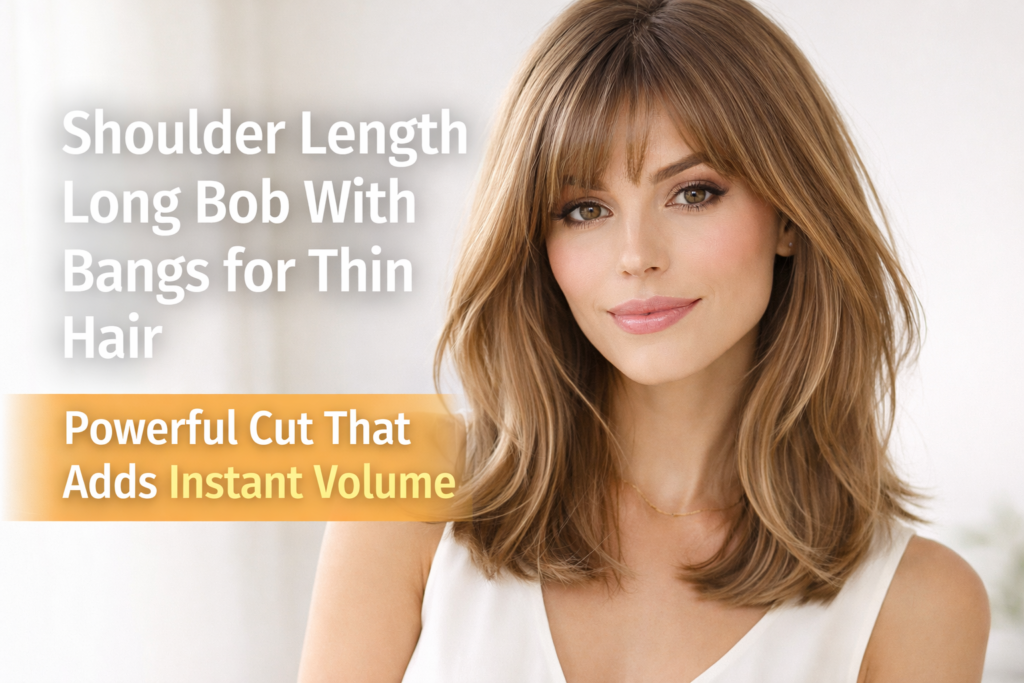
Not ready to go short? The stacked lob keeps you at collarbone length while borrowing every volume trick of the classic cut. The back is stacked more gently, so the crown still lifts without sacrificing the length you love.
This is the great compromise cut. Long enough to pull back on busy days, short enough to hold a style. Fine hair that usually strings out at longer lengths suddenly has shape and swing.
Among stacked bob haircuts for thin hair, this is my top pick for commitment-phobes. Keep the front pieces just grazing the collarbone: any longer and gravity starts winning again.
7. The Wispy Fringe Stack
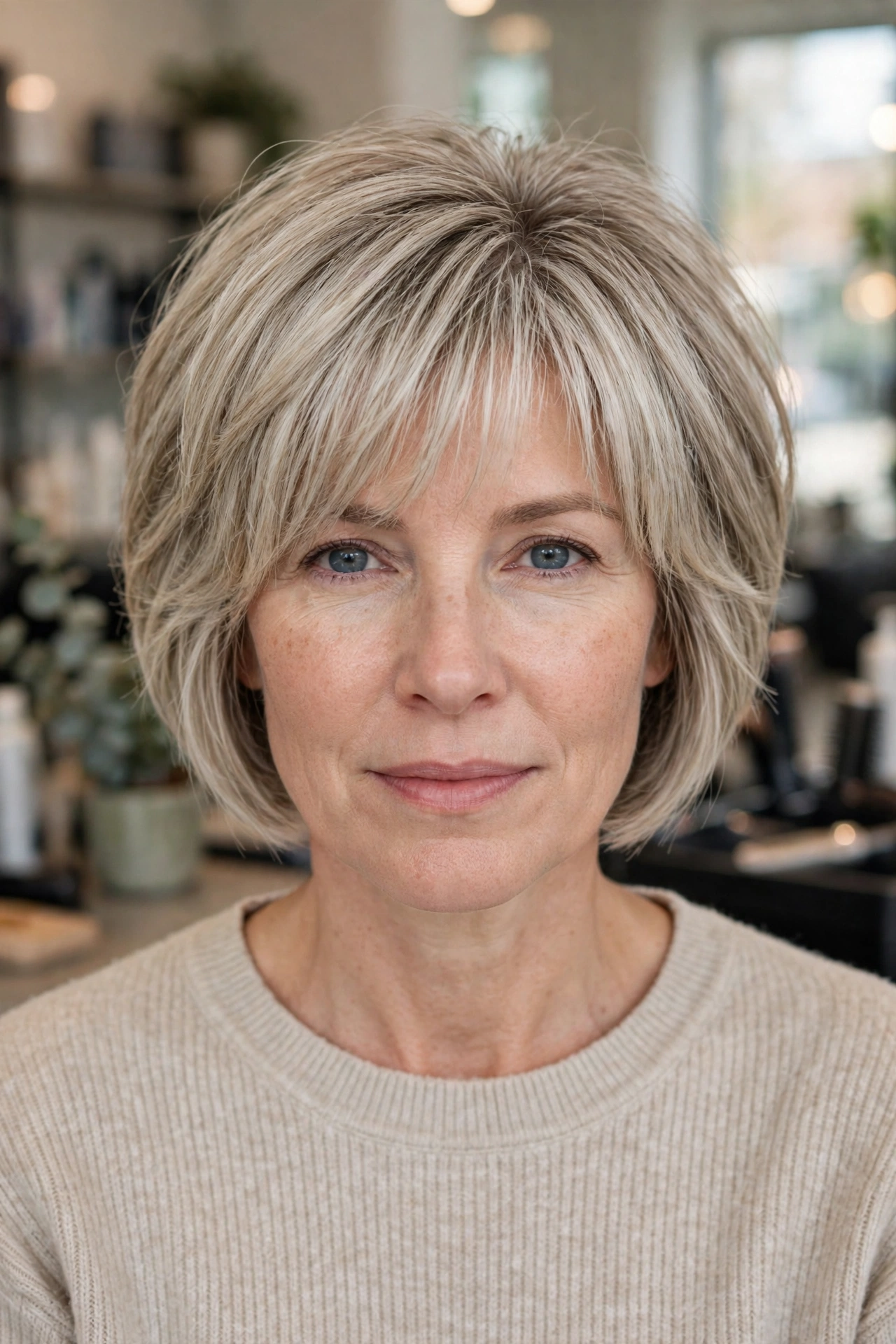
A full heavy fringe can overwhelm thin hair. A wispy one? Completely different story. Feathered, piece-y bangs add softness around the forehead while the stacked structure keeps everything else full.
The key is texture. Wispy bangs should be point-cut and piece-y, never blunt, so they melt into the rest of the cut instead of sitting on it like a separate piece. On fine strands that blending is everything.
Ask your stylist to cut the fringe dry. Wet cutting shrinks bangs up shorter than planned, and on thin hair there is no density to hide behind if they go too short.
8. The Deep Side-Part Stack
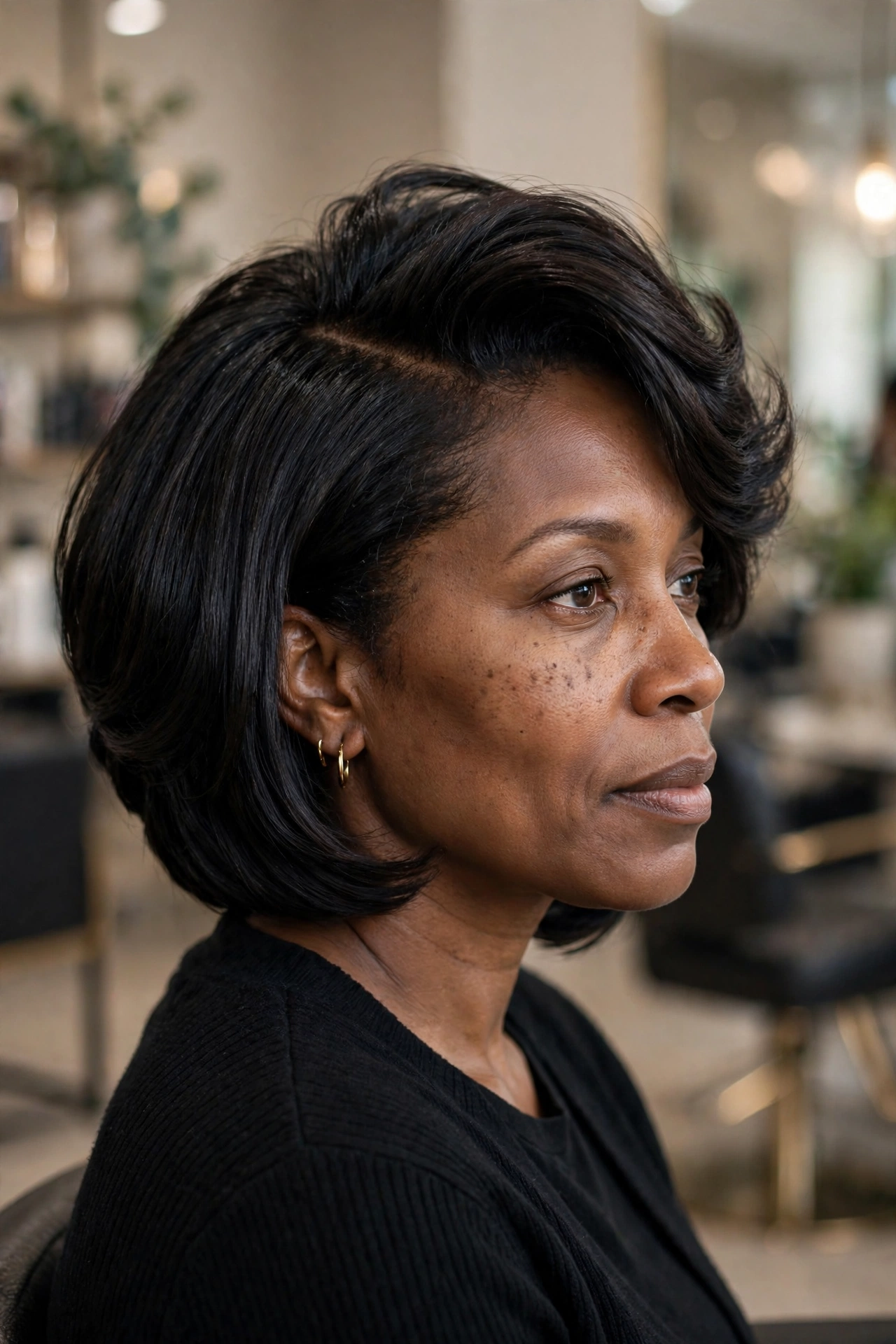
Sometimes the cut is only half the story. A deep side part redistributes your hair’s volume to one side, where it becomes a glamorous sweep instead of flatness. On a stacked bob, the effect multiplies because the layers underneath push all that swept hair even higher.
I suggest this to clients who want maximum change with minimum scissors. It is also a quiet hero for cowlicks and anyone whose center part has never once behaved.
Train the part while hair is damp: blow-dry in the opposite direction first, then flip. Roots have memory, and you can teach them where to lift.
9. The Razored Texture Stack
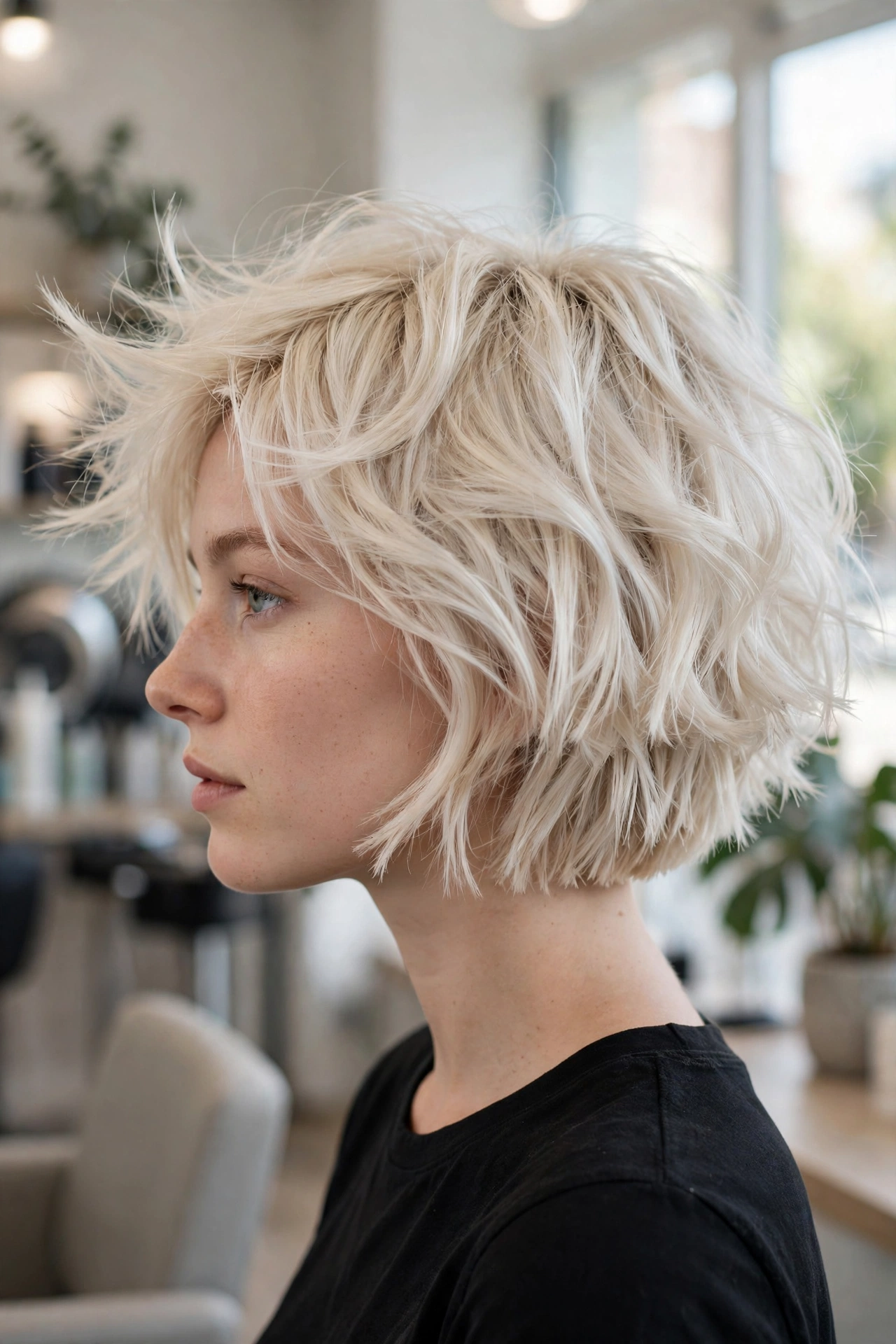
Razor cutting gives thin hair something scissors alone cannot: feathered, airy ends that move like water. On a stacked bob, razored texture through the mid-lengths breaks up any helmet-like roundness and keeps the shape modern.
One rule matters here more than anywhere: razor the interior, never the perimeter. A razor on the outline of thin hair creates see-through ends, and that is a grow-out project nobody wants.
Find a stylist who razors well, because not everyone does. Done right, this is one of the most touchable, lived-in versions on the list.
10. The Balayage Dimension Stack
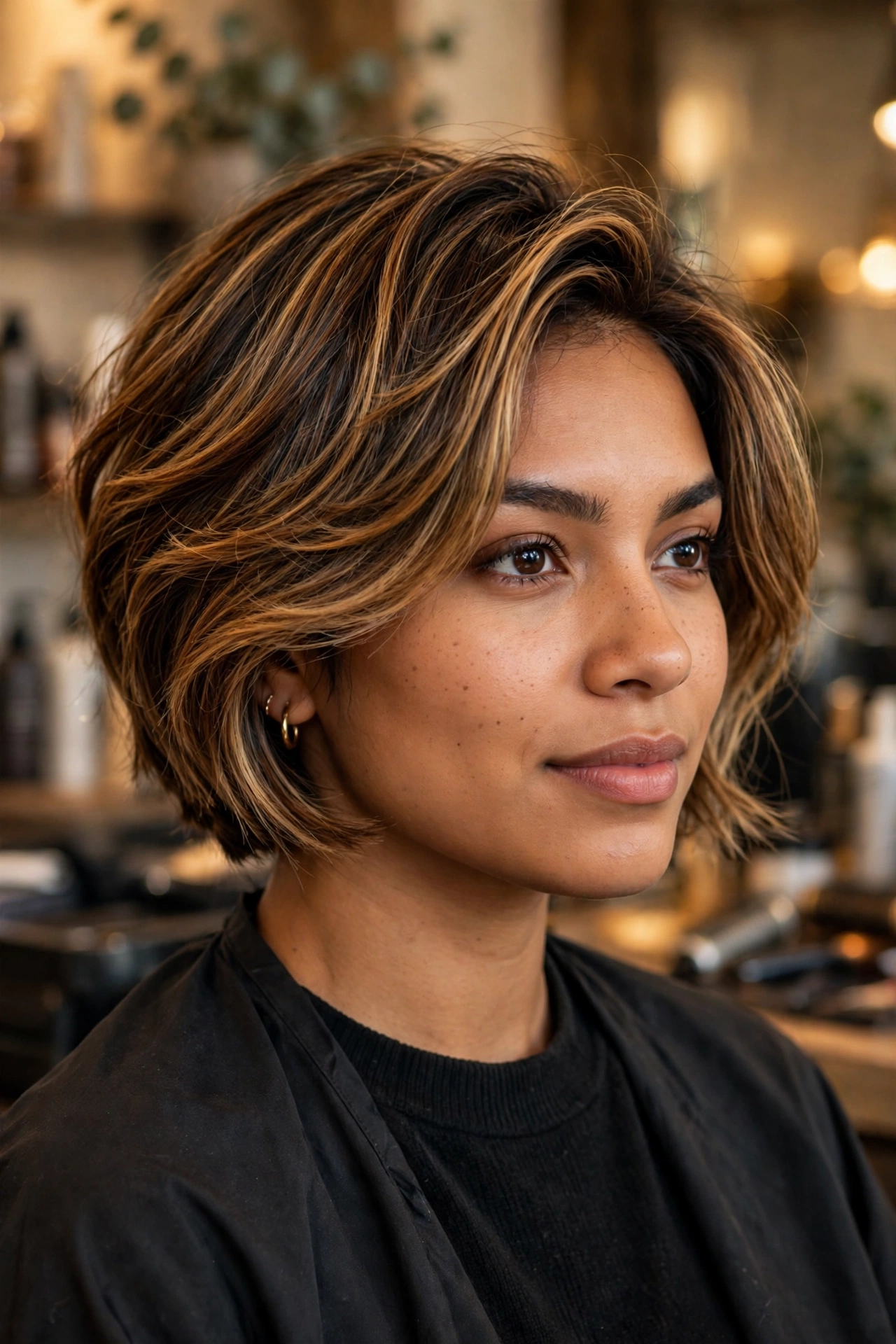
Color is a volume cheat code, and balayage is the best version of it. Hand-painted ribbons of lighter tone woven through a stacked bob create depth that flat, one-color thin hair simply cannot achieve alone. The eye reads light and shadow as thickness.
Keep the contrast soft, two shades lighter at most. You want “is her hair naturally this thick?” not “nice highlights.” Concentrate the lightness through the mid-lengths and ends, keeping roots slightly deeper to fake density at the scalp.
It is the priciest option on this list, but also the one that photographs best. Worth it for the Pinterest saves alone.
11. The Over-50 Elegant Stack

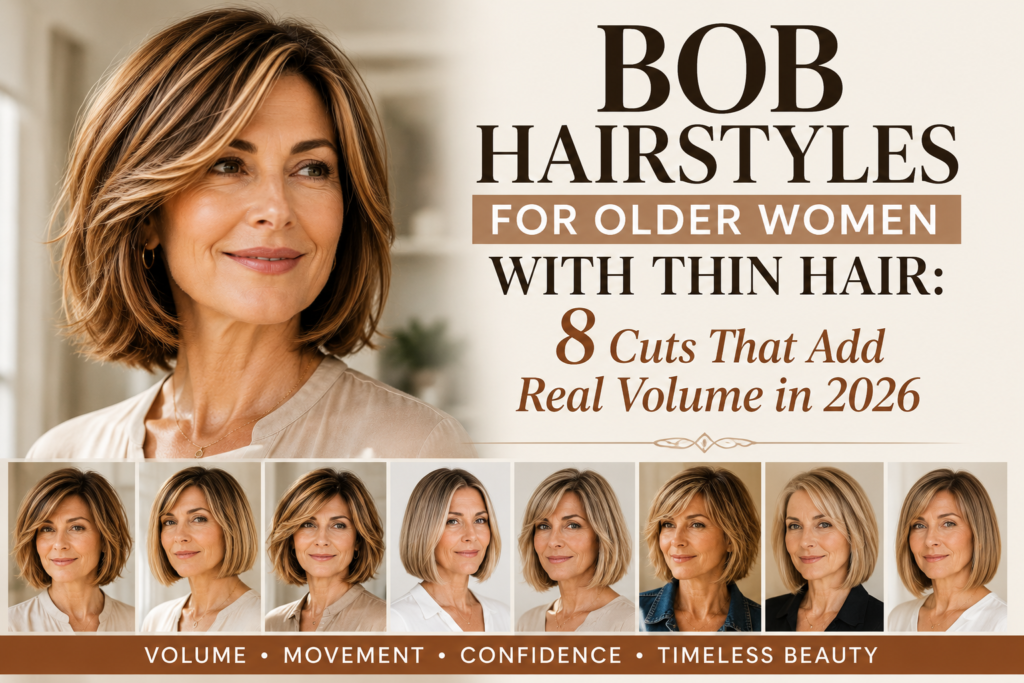
Let us say the quiet part out loud: hair often gets finer with age, which is exactly why this cut is beloved by women in their fifties and sixties. The stacking lifts everything upward in a subtle, flattering way that never tries too hard.
Silver and gray hair looks spectacular in this shape because the graduated layers catch light beautifully. Keep the length jaw to chin: shorter maximizes the stacking effect, since less weight means more lift.
It is the rare cut that takes years off and adds volume at the same time. My clients in this age group rebook it without ever trying anything else.
12. The Asymmetrical Stack
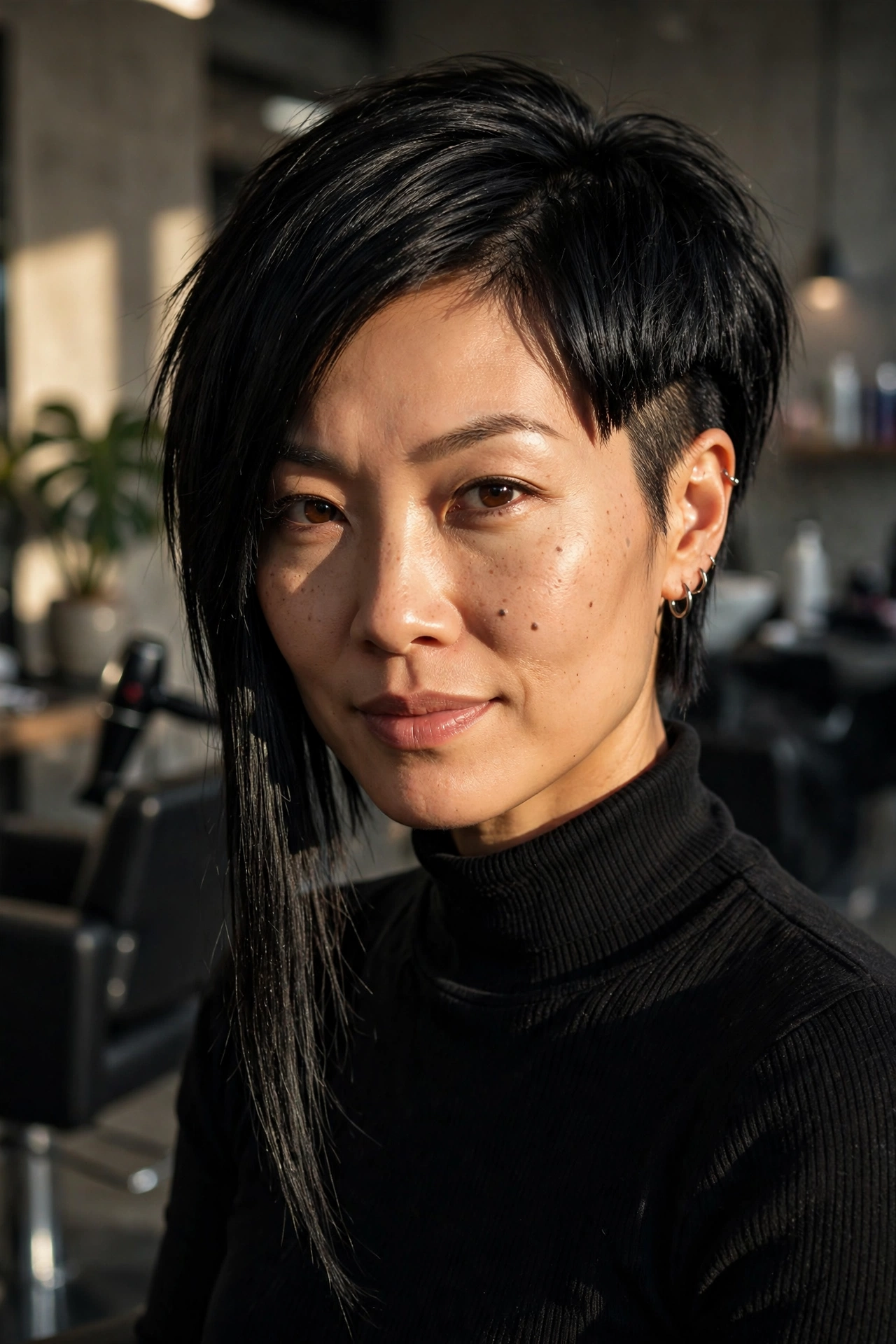
One side longer than the other. A small rebellion, and thin hair loves it. The asymmetry lays down diagonal lines that pull the eye along, which reads as movement and abundance rather than sparseness.
The shorter side shows off the beautiful stacking at the back. The longer side gives you styling options and face-framing softness. It is the cut for the woman who is done playing it safe.
If you want stacked bob haircuts for thin hair with real edge, start here. Commit to the difference, at least an inch and a half between sides. Timid asymmetry just looks like a mistake.
13. The Hidden-Undercut Stack
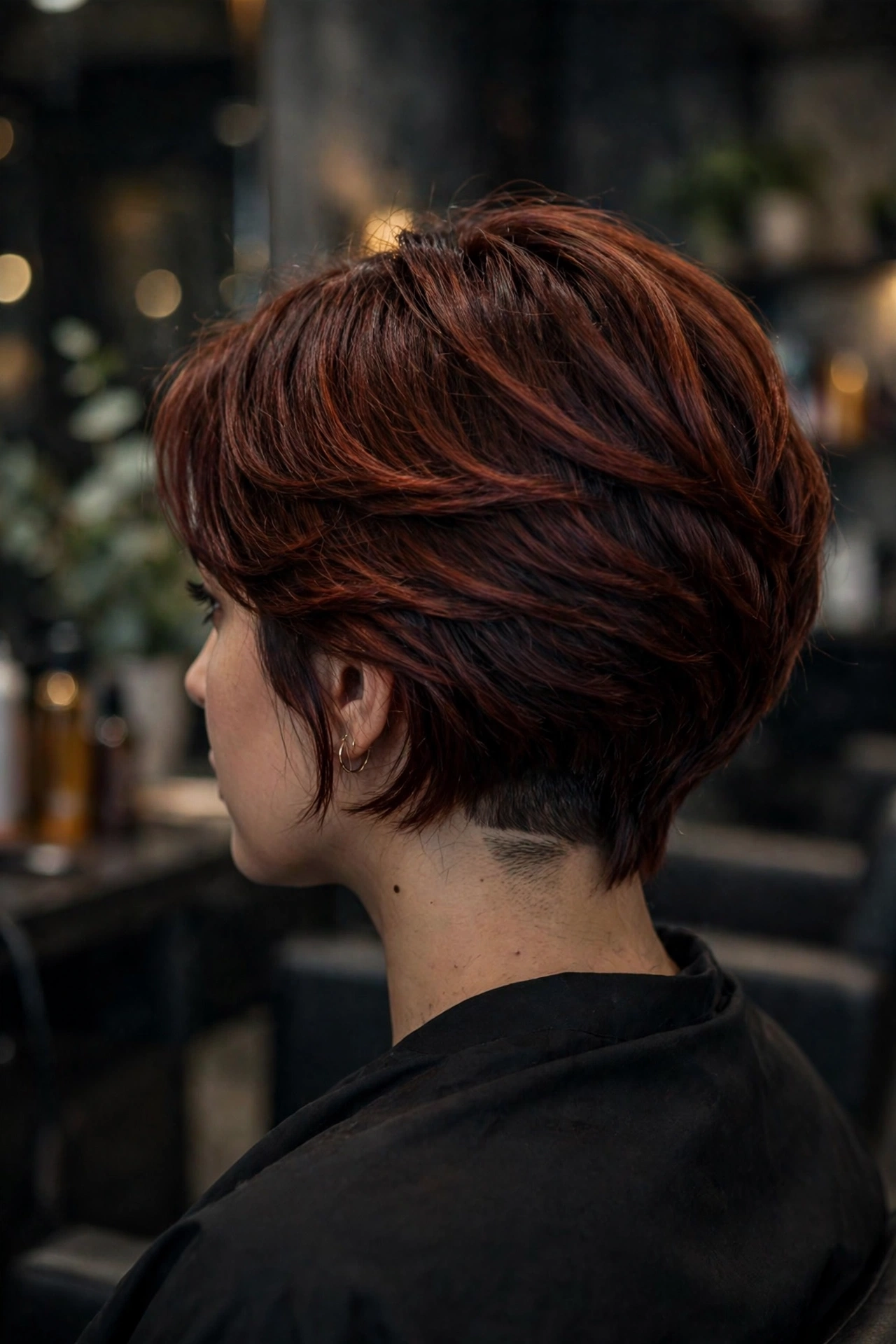
This sounds counterintuitive for thin hair, but hear me out. A whisper of an undercut at the nape removes the wispiest, weakest ends exactly where they drag the cut down. Everything above instantly looks thicker by comparison.
From the front it reads as a classic stacked bob. The undercut stays completely hidden, doing quiet structural work underneath. It is also wonderfully light on the neck.
The caveat: this only works when the undercut is minimal. Take too much and thin hair has nothing left to stack. Find a stylist who understands restraint.
14. The Sleek Polished Stack
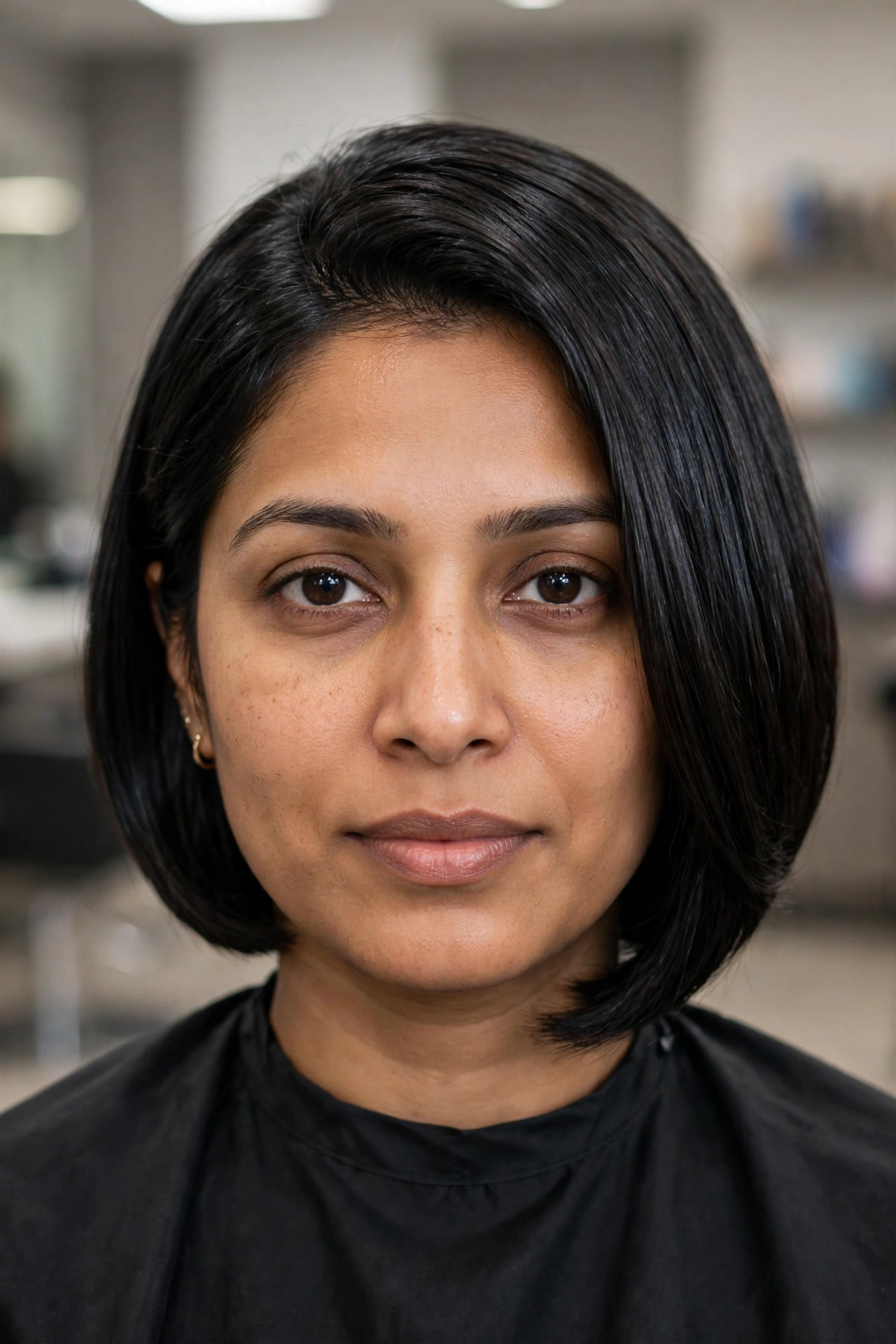
Proof that stacked does not have to mean tousled. Worn sleek and straight, a stacked bob shows off its architecture: those graduated layers build a rounded, full silhouette with almost no styling effort beyond a flat iron.
This is the minimalist’s answer. Clean lines, mirror shine, and a shape that does all the talking. On thin hair it reads expensive, because precision always does.
Flat-iron in small sections and bend the ends very slightly under. That tiny bevel keeps the silhouette rounded instead of limp. A drop of shine serum, and you are done.
15. The Wavy Stack
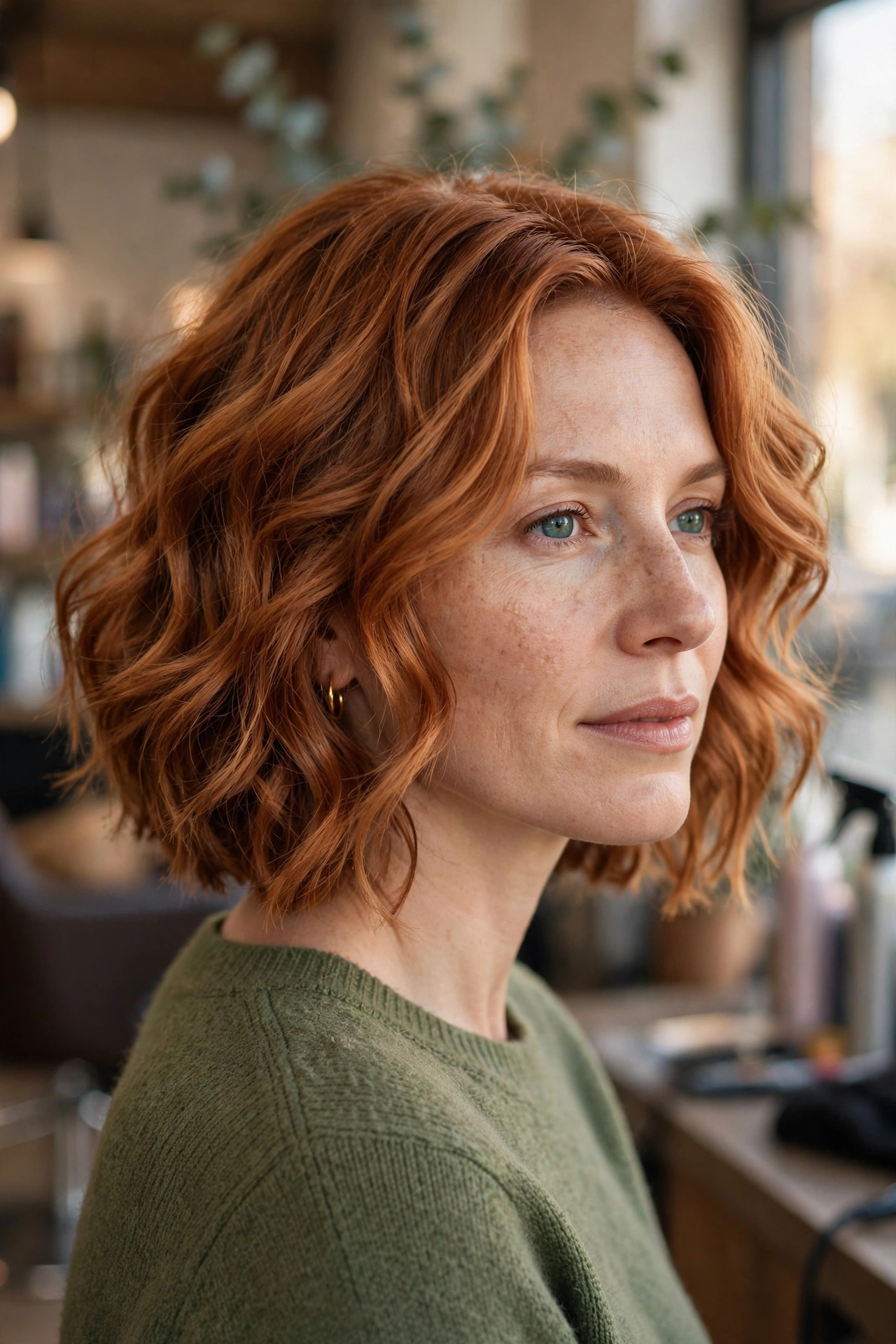
If your thin hair has a natural wave, stop fighting it. A stacked bob is practically designed for waves: the graduated layers encourage them to spring up instead of dragging down, and each wave gets room to form without competing with the layer above.
The result is defined, bouncy texture that looks twice as abundant as straightened thin hair ever could. Scrunch in lightweight mousse while damp and let it air dry. Heavy creams will pull the waves, and the volume, right back down.
Overnight braids work beautifully here too. Undo them in the morning, shake, and walk out the door.
16. The Face-Framing Stack
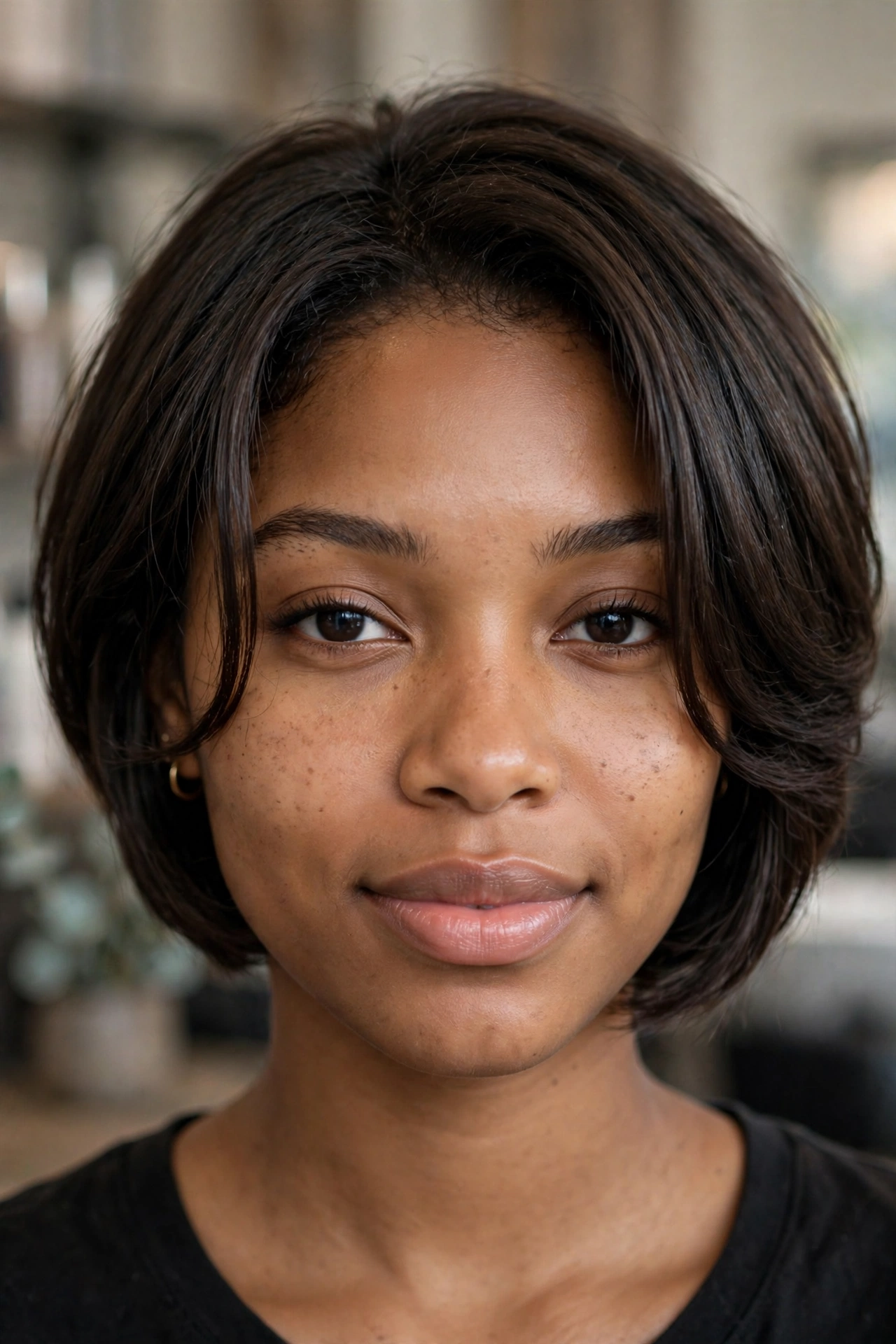
Sometimes the transformation has nothing to do with the back of your head. Longer, face-framing pieces pull every eye toward your cheekbones while the stacked back quietly handles the volume.
For thin hair this is a brilliant misdirection. The front looks intentional and styled, so the whole head reads as thick and healthy rather than thin and struggling. Start the framing at the cheekbone for maximum effect.
It photographs beautifully from every angle, which is exactly why your feed is full of it. Ask your stylist to blend the framing into the stack with no harsh lines.
17. The Micro Stack
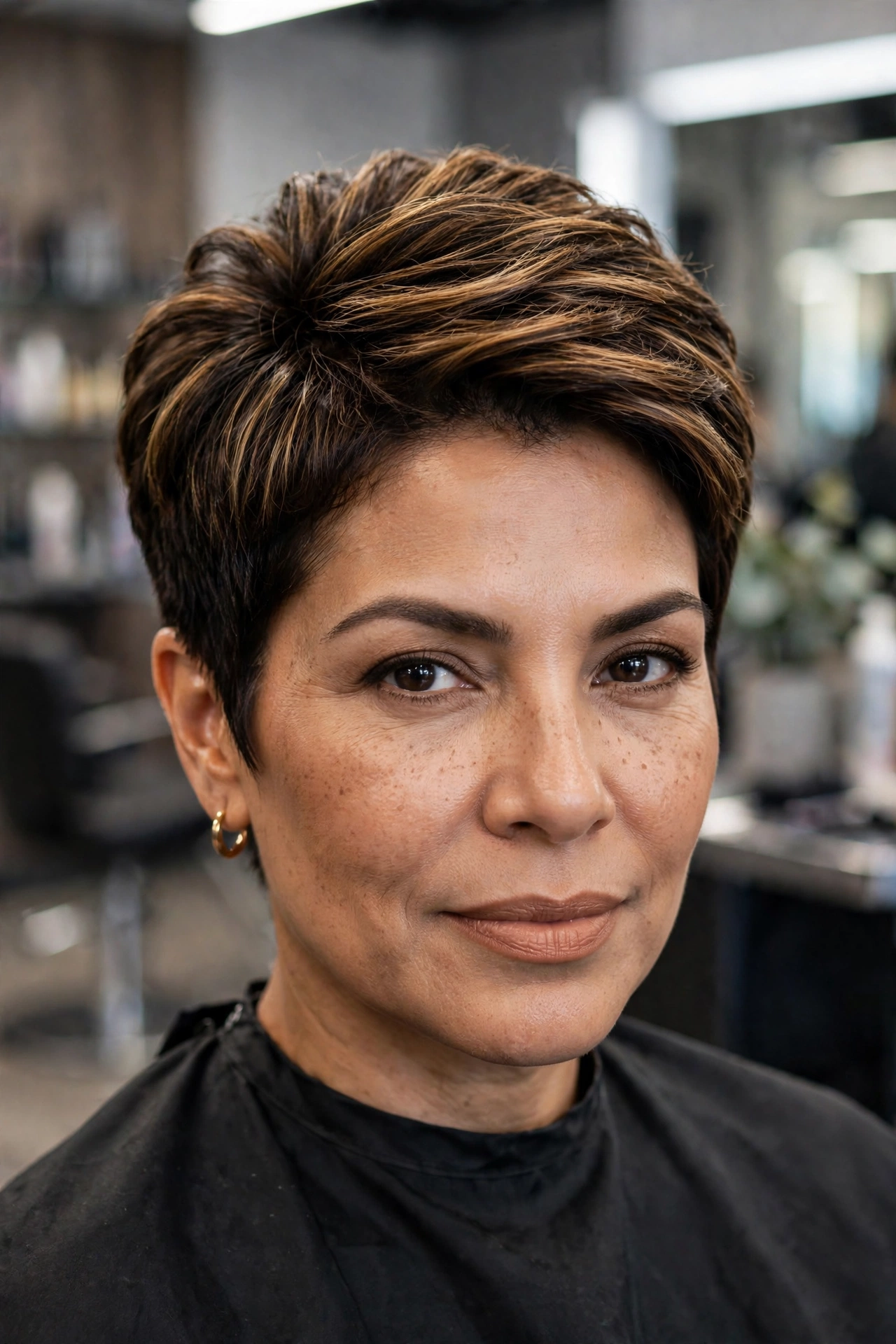
Short, sculptural, and not for the faint of heart. The micro stack takes the graduation higher and tighter, building a compact cap of volume that sits close to the head.
On thin hair this works because there is simply less hair to go flat. The short length concentrates all the stacking exactly where you want it: the crown. It reads bold and fashion-forward, like a pixie with bob ambitions.
The honest cost is maintenance. Short stacking grows out in weeks, not months, so this is a standing-appointment cut. If you love the salon, you will love this cut.
18. The Copper Statement Stack
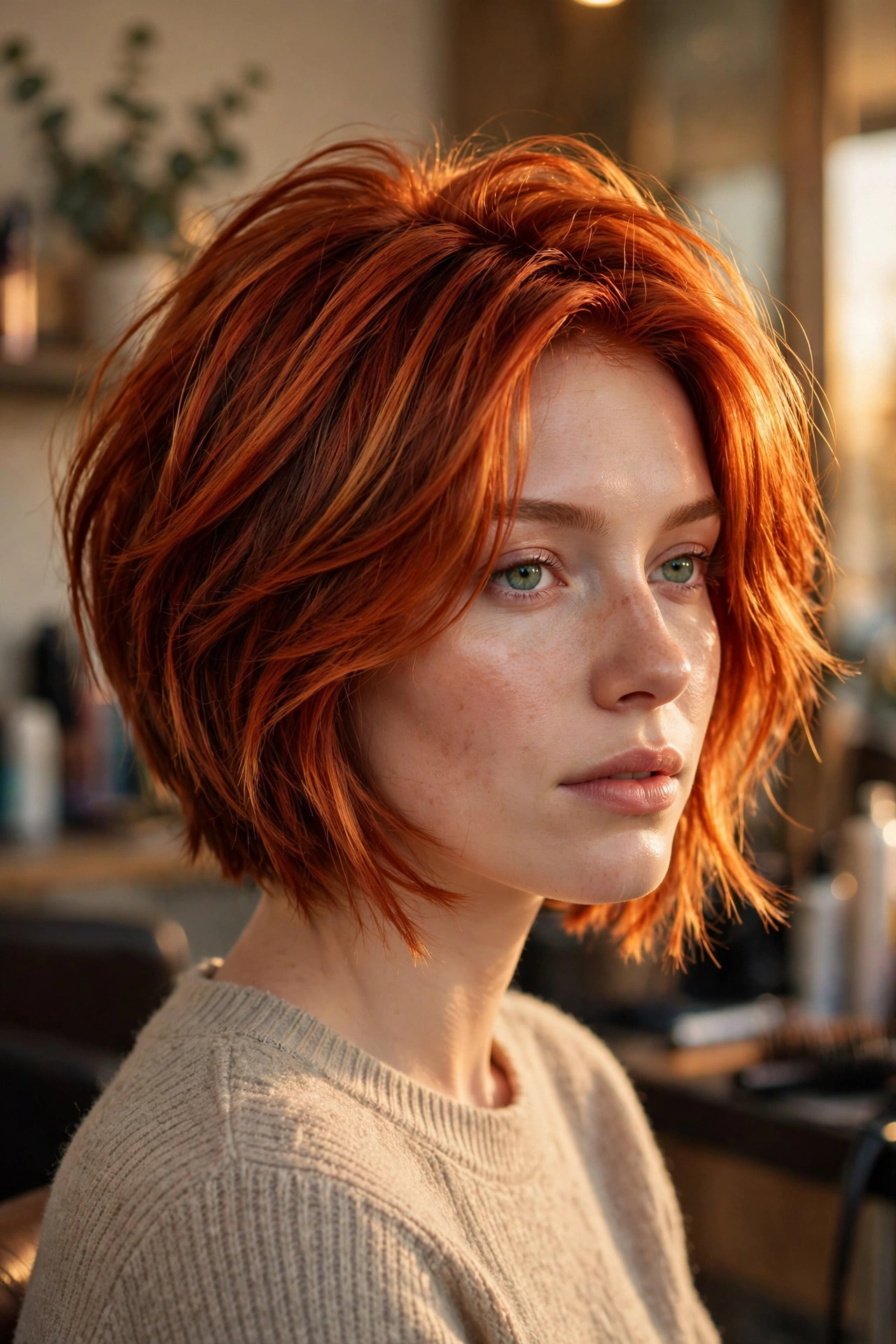
Sometimes the trend is not the cut, it is the color on the cut. Vivid copper on a stacked bob is transformative for thin hair because warm tones refract light differently off every layer, creating dimension no single-process color can fake.
Dimension is the antidote to flatness, and flatness is thin hair’s biggest enemy. Keep the copper slightly lived-in at the roots so grow-out stays chic for months instead of weeks.
One warning from experience: copper fades fast. Commit to a color-depositing conditioner or do not commit at all. Your shower will thank you for the honesty.
19. The Curly Stack
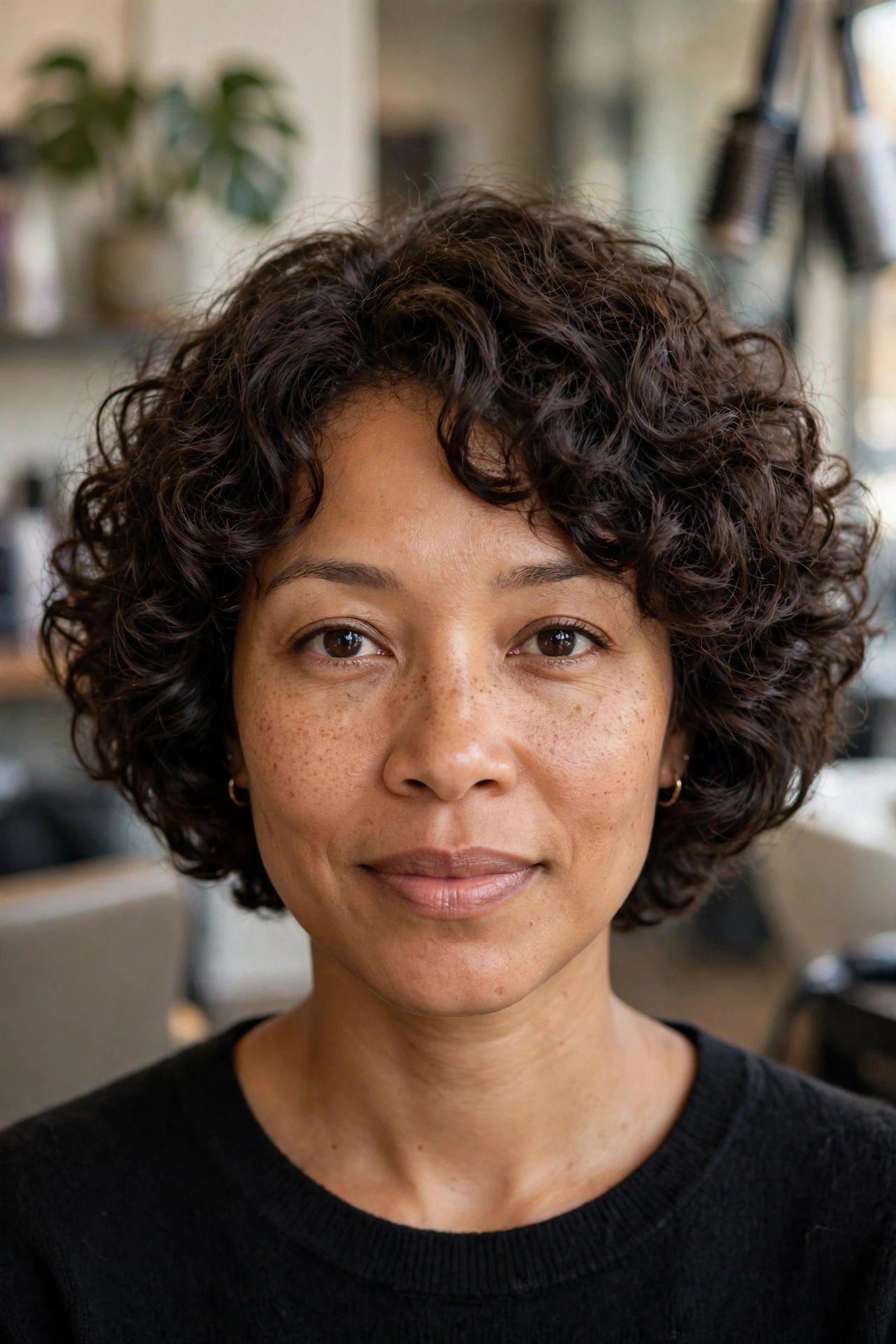
Fine curls and stacked bobs are a match most people overlook. The graduation gives each curl room to spring up instead of stacking into one heavy triangle, and the result is defined, bouncy volume that looks abundant.
The non-negotiable: cut it dry or on stretched curls. Wet cutting lies about length, and on a stacked curly bob those lies show up as lopsided graduation. Find a curl-savvy stylist and you are golden.
Diffuse on low heat or air dry with a little curl cream scrunched in. The cut does the architecture; your curls do the rest.
20. The Wash-and-Go Stack
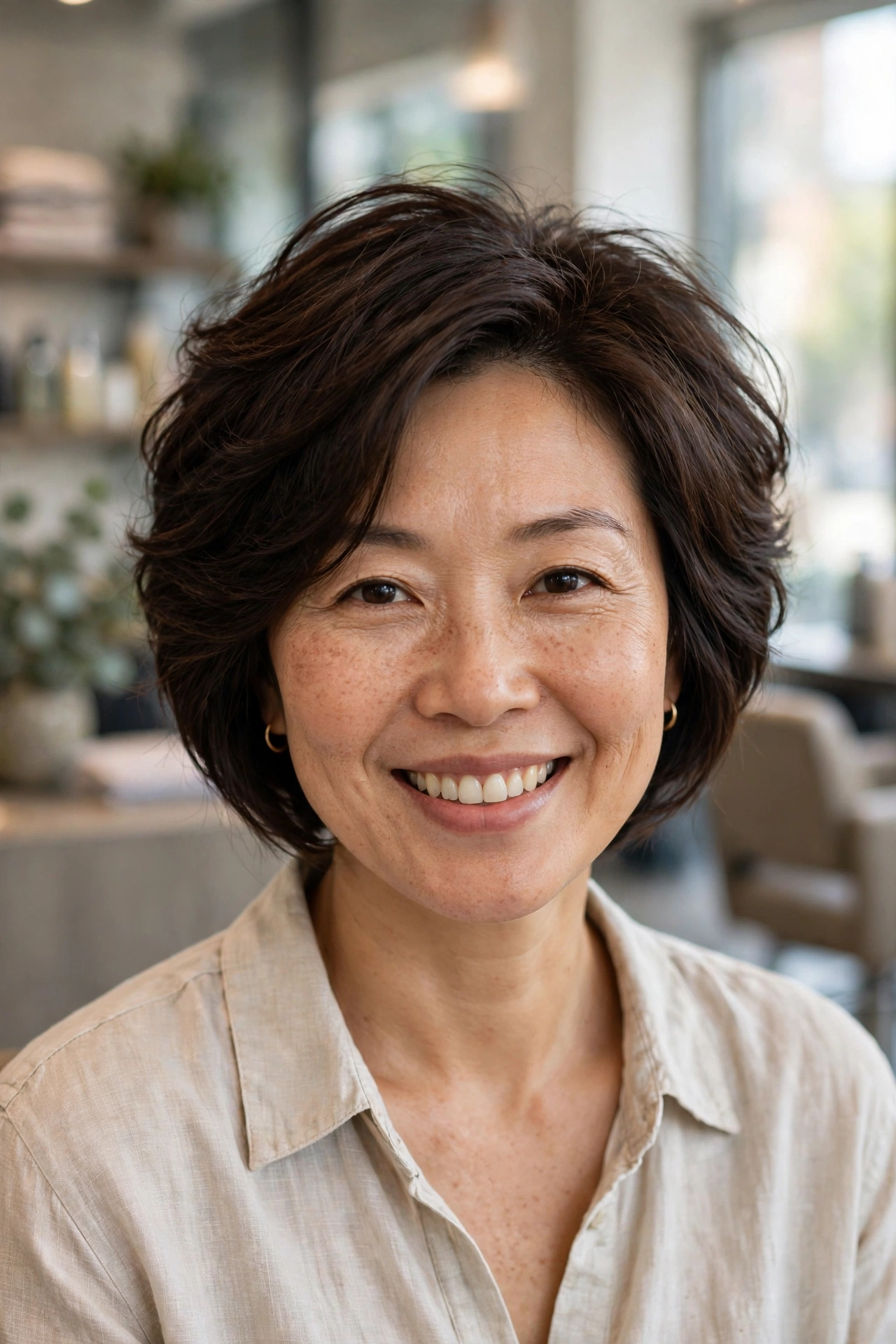
Real talk: some mornings you have six minutes, not sixty. This is the cut for those mornings. The stacking here is slightly softer than the classic, more forgiving as it grows, and even air-dried hair falls into a rounded, full shape.
Wash it, add one product, walk out the door. The graduation does all the structural work so you do not have to. For busy lives and low-maintenance hearts, nothing beats it.
My sixty-second routine for clients: volumizing mousse on damp roots, flip your head upside down, rough-dry. That is the entire program. You are welcome.
The Bottom Line
Here is what I want you to take away: thin hair was never a problem to hide. It is a hair type to cut for. Stacked bob haircuts for thin hair do not fight your hair’s nature; they work with it, building in the volume that nature forgot.
Start by saving your favorites from this guide to a Pinterest board. Future you, sitting in the salon chair with phone in hand, will be so grateful. Then book the appointment, bring the photos, and use the magic words: stacked, graduated at the nape, for volume.
Want to keep exploring? These bob haircuts that make thin hair look thicker are the perfect next read. If you are torn on length, our long layered bob for fine hair guide will help you decide. And for a second opinion from the pros, Parade’s guide to the best stacked haircuts rounds up even more stylist-approved takes on the trend.
FAQs:
Will a stacked bob work on very thin hair?
Yes, and honestly it is one of the best cuts for it. The short layers underneath act like scaffolding, lifting everything above them. Even very thin hair gains visible fullness because the shape is built into the cut, not faked with product.
What is the difference between a stacked bob and a graduated bob?
They are close cousins and the terms get mixed up constantly. “Stacked” describes the look: visible layers piled at the back. “Graduated” describes the technique: hair cut at an angle, shorter underneath. Most stacked bobs use graduation to get there.
How do I ask my stylist for stacked bob haircuts for thin hair?
Bring photos, save a few from this guide to your phone. Then say the words “stacked” and “graduation at the nape for volume.” Mention that your hair is thin and you want the stacking to create fullness while keeping the perimeter solid enough to look thick.
How often should I trim a stacked bob?
Every 6 to 8 weeks. As the nape grows out, the stacking loses its precision and the shape starts to collapse. A quick clean-up at the back restores the lift instantly. It is the cheapest volume boost in beauty.
Can I wear a stacked bob if my hair is wavy or curly?
Absolutely. The graduation actually helps texture spring up instead of dragging down. Ask for slightly longer layers than you would for straight hair, since waves and curls shrink the length. Dry cutting is the gold standard here.
Will a stacked bob make my face look round?
It can, if the stacking is too uniform. The fix is easy: ask for longer front pieces or an asymmetrical finish. That vertical line breaks up the roundness and keeps the cut modern. Your stylist can tune the shape to your face in about two minutes of consultation.

Sana Malik is a hair and beauty writer with a deep love for the bob in all its forms from sharp French bobs to soft, lived-in lobs. After years of experimenting with her own short hair and helping friends figure out what actually suits their face shape, she started writing to cut through the confusing advice out there. At BobHairTrends, she breaks down each cut into simple, honest guides: how to ask for it, how to style it at home, and who it really flatters. When she isn’t researching the latest trends, she’s usually testing a new styling product or convincing someone it’s finally time for the chop.