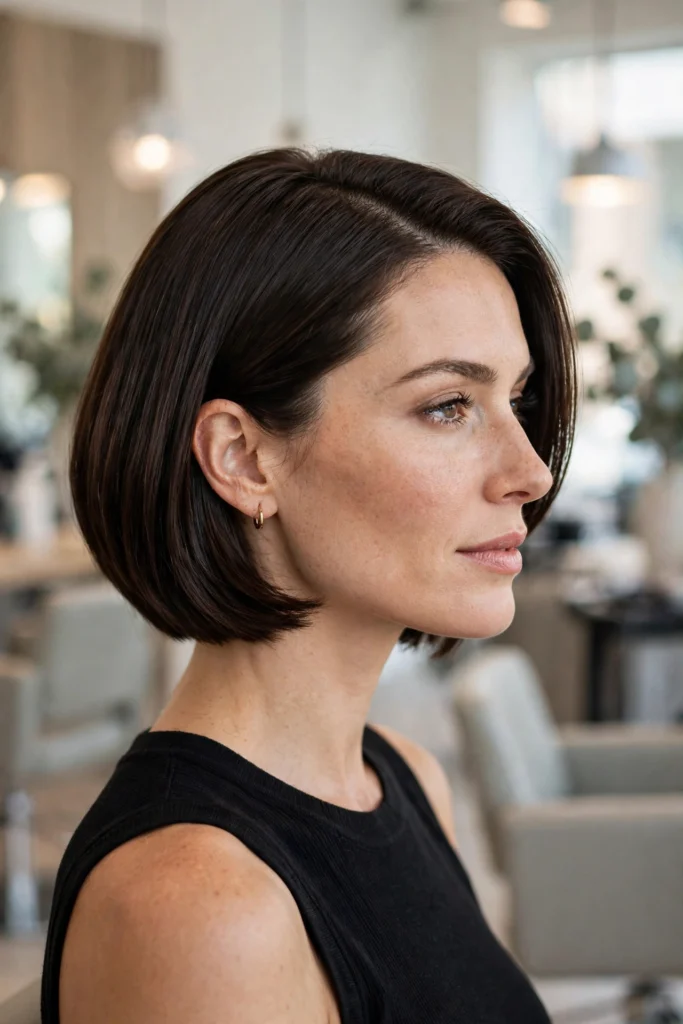

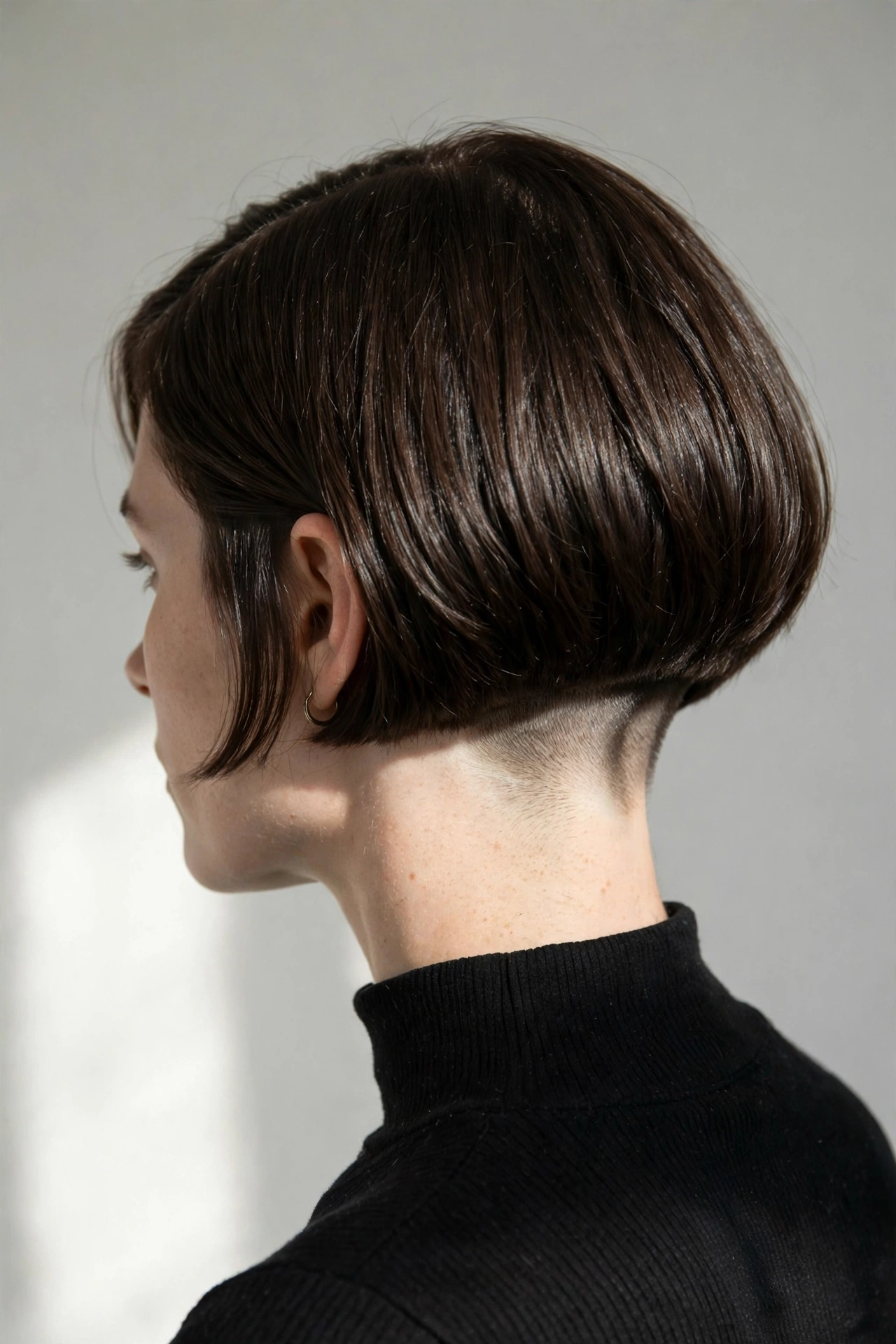
An undercut bob haircut is the boldest way to wear a bob without giving up the shape you love. The top keeps its bob length and swing, while a shaved or closely cropped section underneath adds edge, lightness, and a secret you can show or hide as you please.
This guide walks through 20 versions, from hidden nape undercuts you can wear to the office to full side shaves that make a statement. You will also find grow-out advice, face-shape notes, and exactly what to say in the salon chair. If you are still deciding between bob lengths, our main bob trends guide puts the undercut in context with every other bob shape.
- An undercut removes bulk underneath while the bob length on top stays intact, so the cut looks full from the front and feels lighter.
- Hidden nape undercuts are the easiest first step; side undercuts are the boldest and hardest to hide.
- Curly, coily, thick, and fine hair can all wear an undercut, but the placement and length of the shaved section change.
- The undercut needs a tidy-up every 3 to 4 weeks, while the bob itself can go longer between trims.
- Grow-out is manageable: let the undercut soften into a tapered nape, or keep the top long enough to cover it while it grows.
20 Undercut Bob Haircut Ideas That Balance Edge and Wearability
1. Hidden Nape Undercut Bob
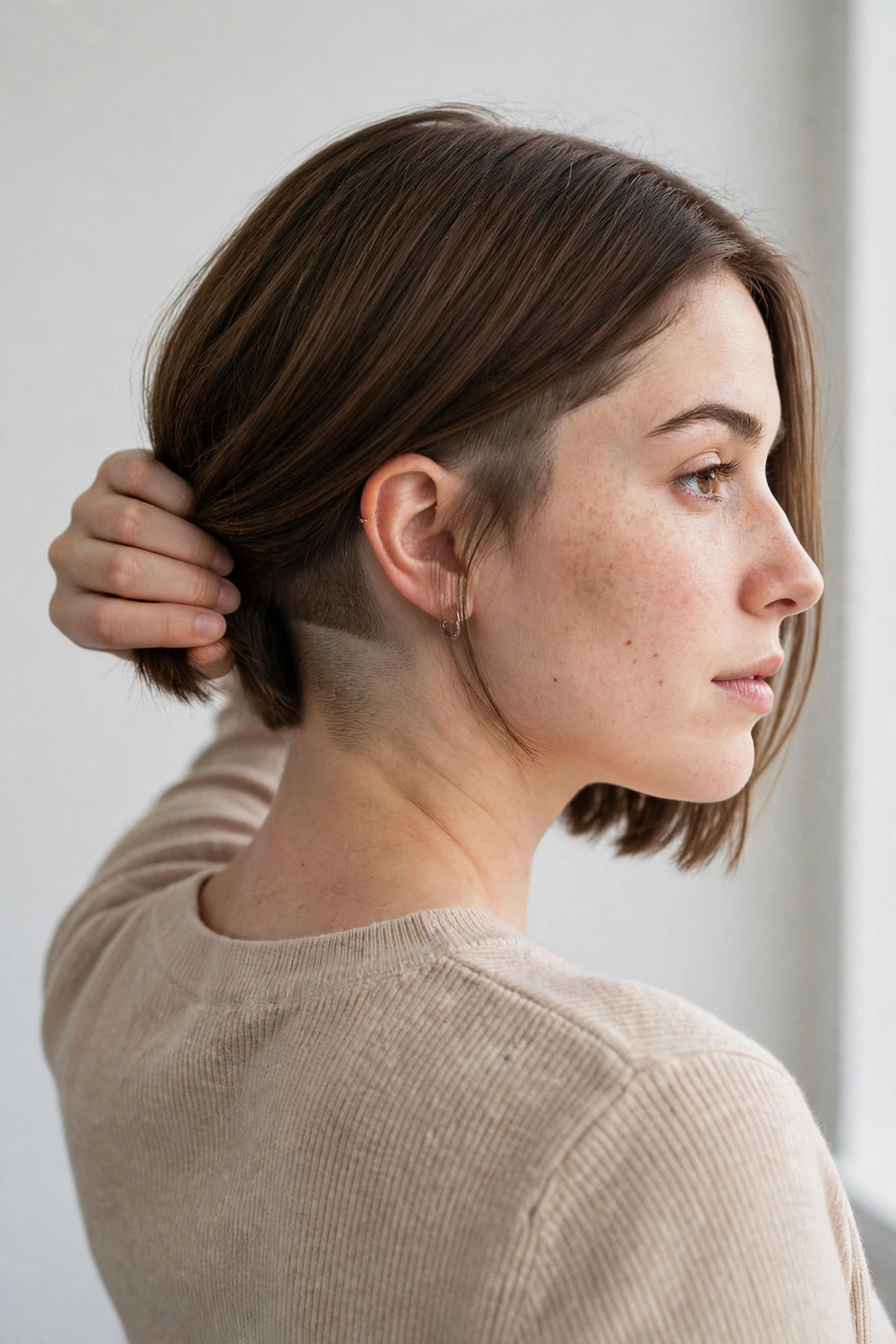
Start here if you love the idea but are not ready to show it off every day. The shaved section sits low at the nape, completely covered when your hair falls naturally, and it only appears when you lift your hair or tie it up. Ask your stylist for a low, narrow undercut that follows the nape, and keep the bob blunt on top so the contrast stays clean. It is the version most first-timers choose, and for good reason.
2. Side Shaved Undercut Bob
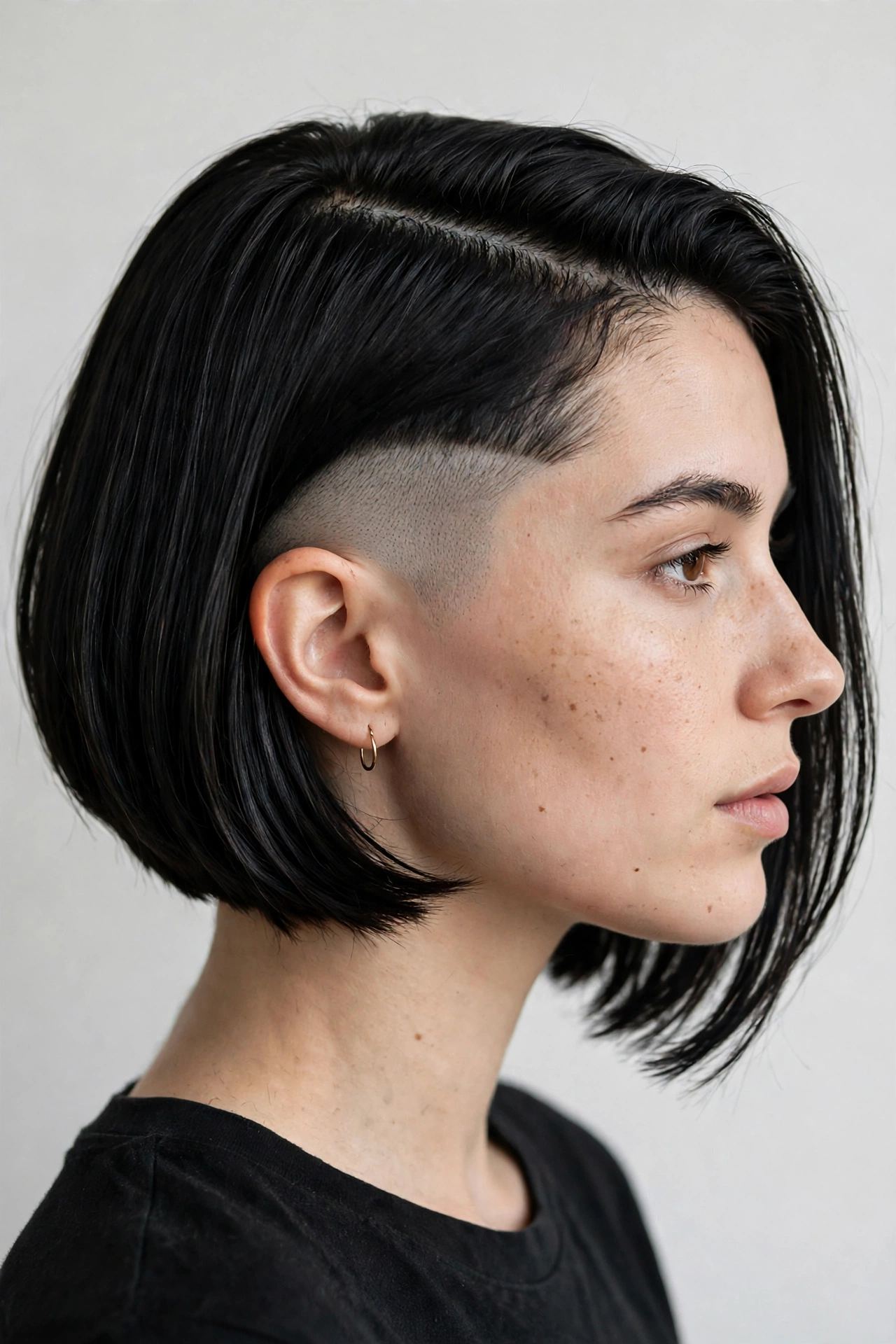
This is the version that turns heads. One side is clipped close above the ear while the rest of the bob sweeps over the top, so the shave flashes every time you move. It suits straight and slightly wavy hair best, because the longer side needs to lie smooth to show the contrast. Fans of sharper, punk-leaning cuts will also love our edgy pixie mullet ideas, which push the same attitude even further.
3. Undercut Bob with Micro Bangs
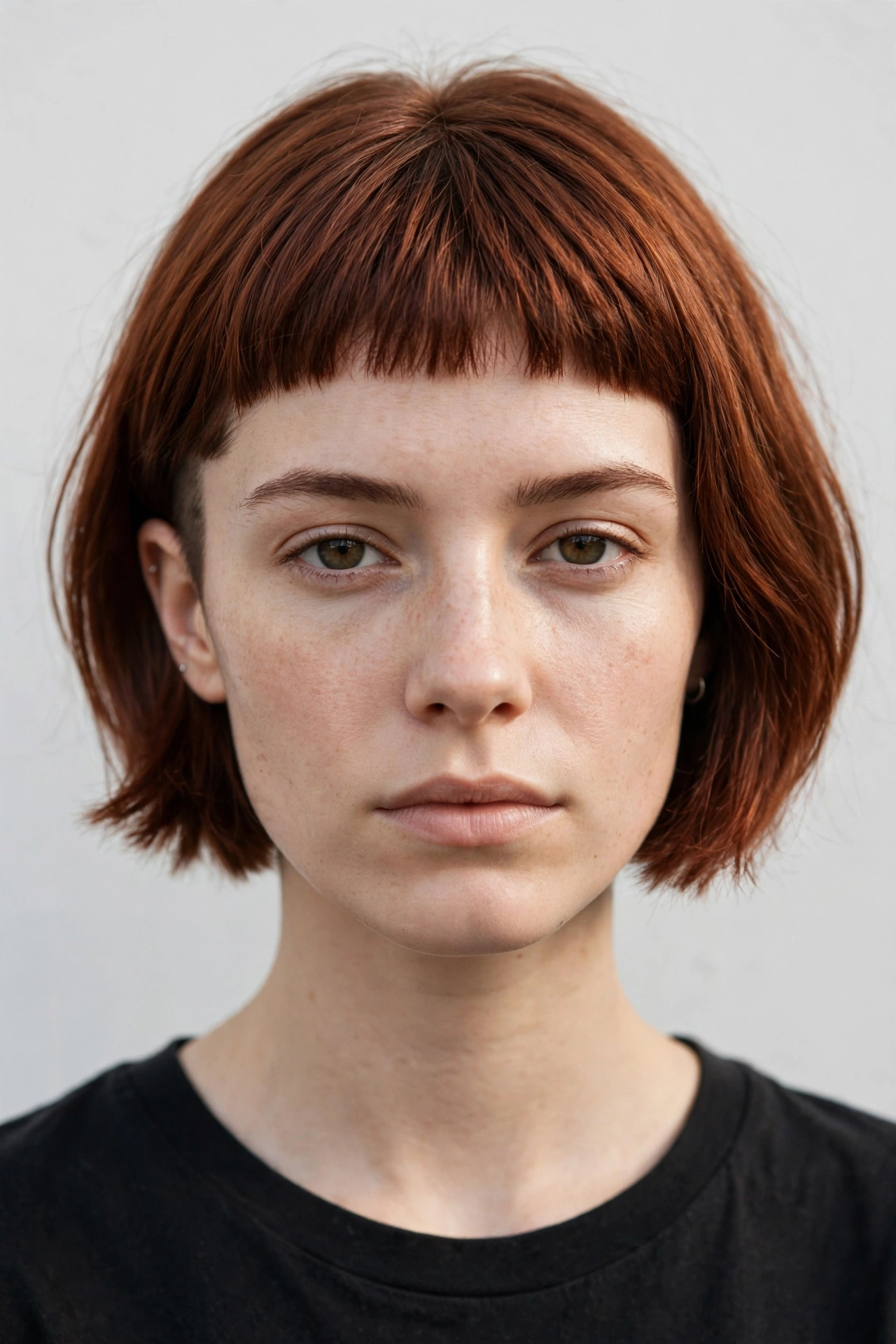
Pairing a micro fringe with a cropped nape gives you two bold choices in one cut, and somehow they balance each other. The short fringe opens up the face, while the undercut keeps the back from feeling heavy. Keep the fringe just above the brows and textured at the ends, not cut in a hard straight line, so it grows out softly. This one needs a confident hand with the clippers, so bring photos and be specific about how short you want the nape.
4. Curly Undercut Bob
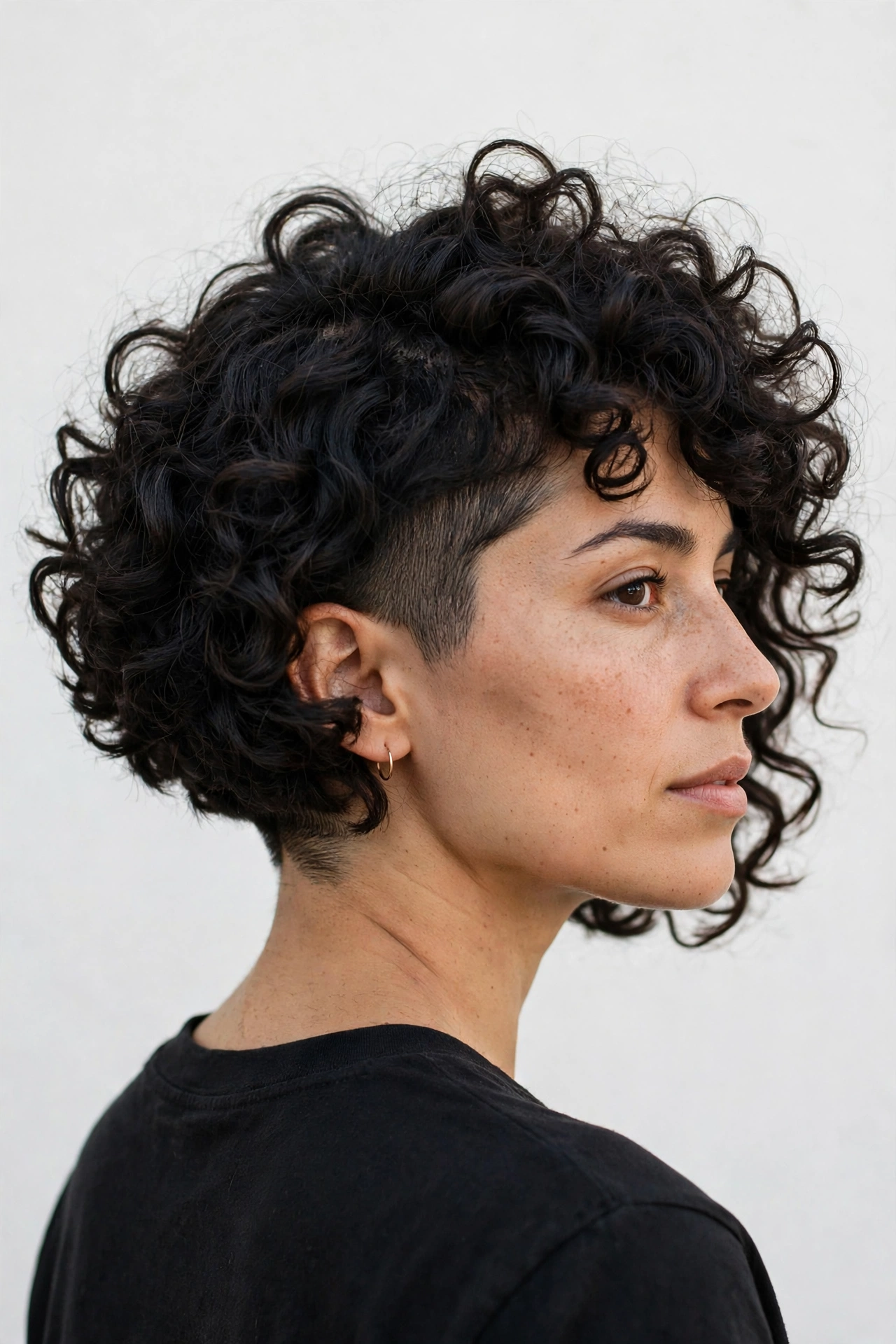
Curls and undercuts are a natural match, because removing weight underneath lets the curls on top spring up and hold their shape. The trick is cutting the top dry, curl by curl, so the length is judged at its real, shrunken state. A side or nape undercut also cuts drying time noticeably. For more curl-first inspiration, our curly bob hairstyles guide shows how the same shapes work without the shave.
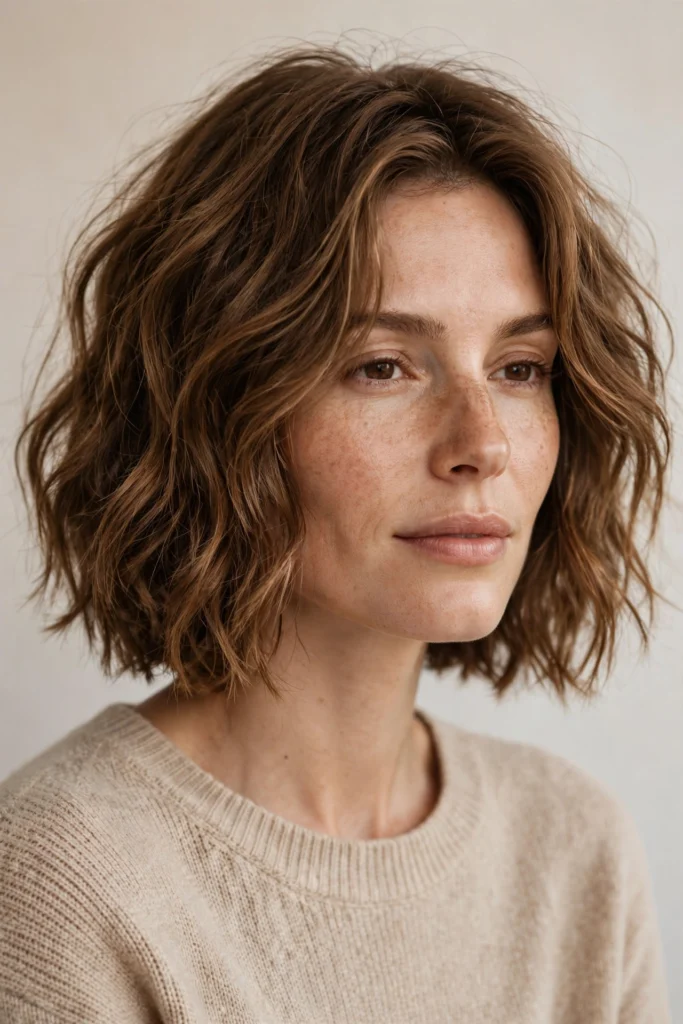
5. Wavy Textured Undercut Bob
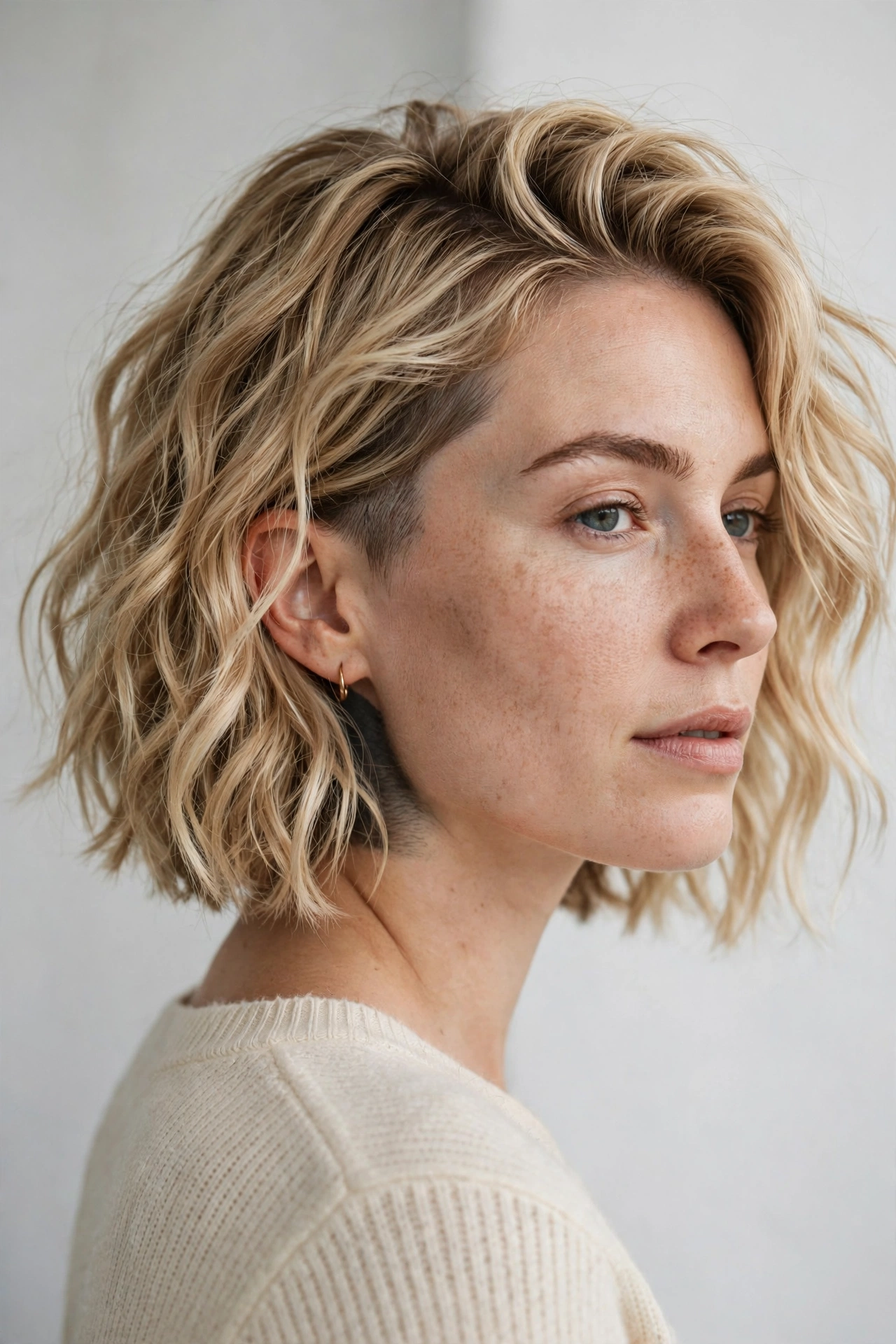
Waves soften an undercut in the best way. The texture on top keeps the cut from looking severe, and the shaved nape underneath stops the waves from puffing out into a triangle. Scrunch in a little texture cream while damp, then leave it alone until dry. The messier it dries, the more intentional it looks, which makes this the easiest bold bob to live with day to day.
6. Sleek Blunt Undercut Bob
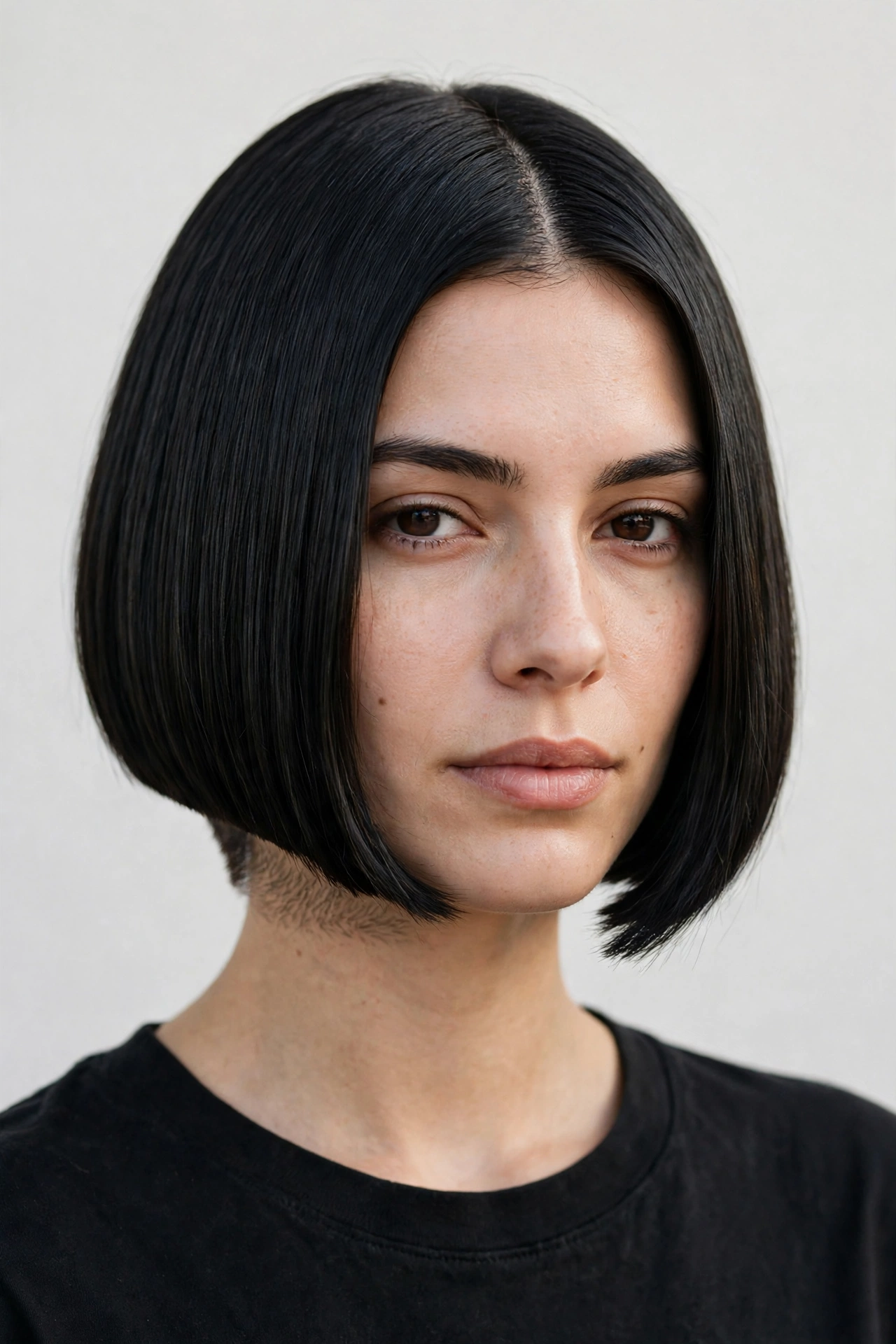
Nothing shows off an undercut like a mirror-smooth blunt bob. The sharp hemline draws the eye, and the clipped nape underneath adds a surprise when you turn around. This version needs regular smoothing, either with a flat iron or a good blow dry, because frizz blurs the clean line. If you like strong geometry, our A-line bob haircuts offer the same precision with a longer front.
7. Undercut Bob with Curtain Bangs
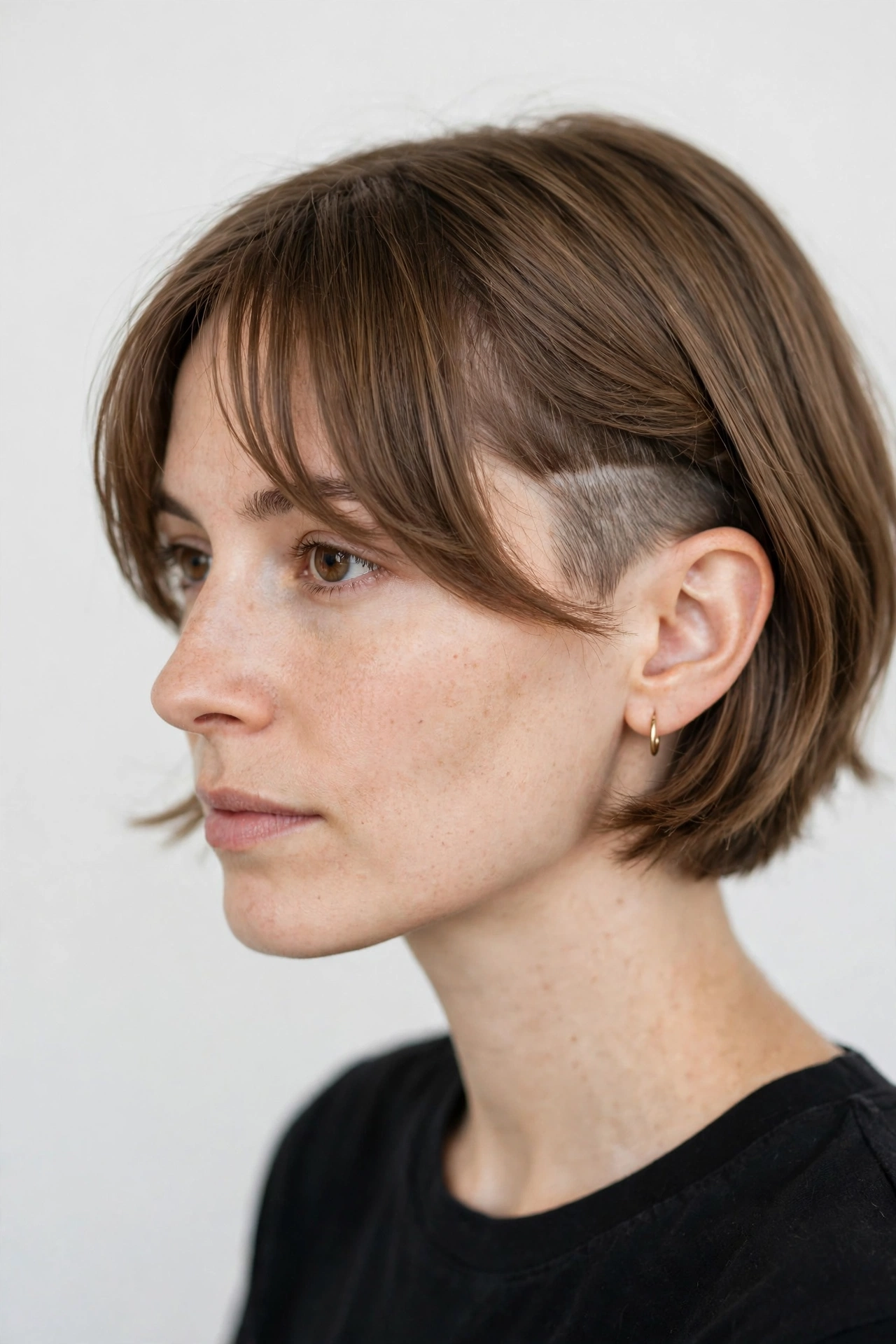
Curtain bangs are the gentlest way into an undercut bob. The face-framing fringe softens the forehead, while the side undercut underneath adds edge that only shows when you tuck your hair back. Keep the fringe long enough to sweep to either side, and ask for the undercut on one side only if you want the option of hiding it. More fringe ideas live in our French bob with curtain bangs guide, where the same soft framing meets a classic shape.
8. Asymmetrical Undercut Bob
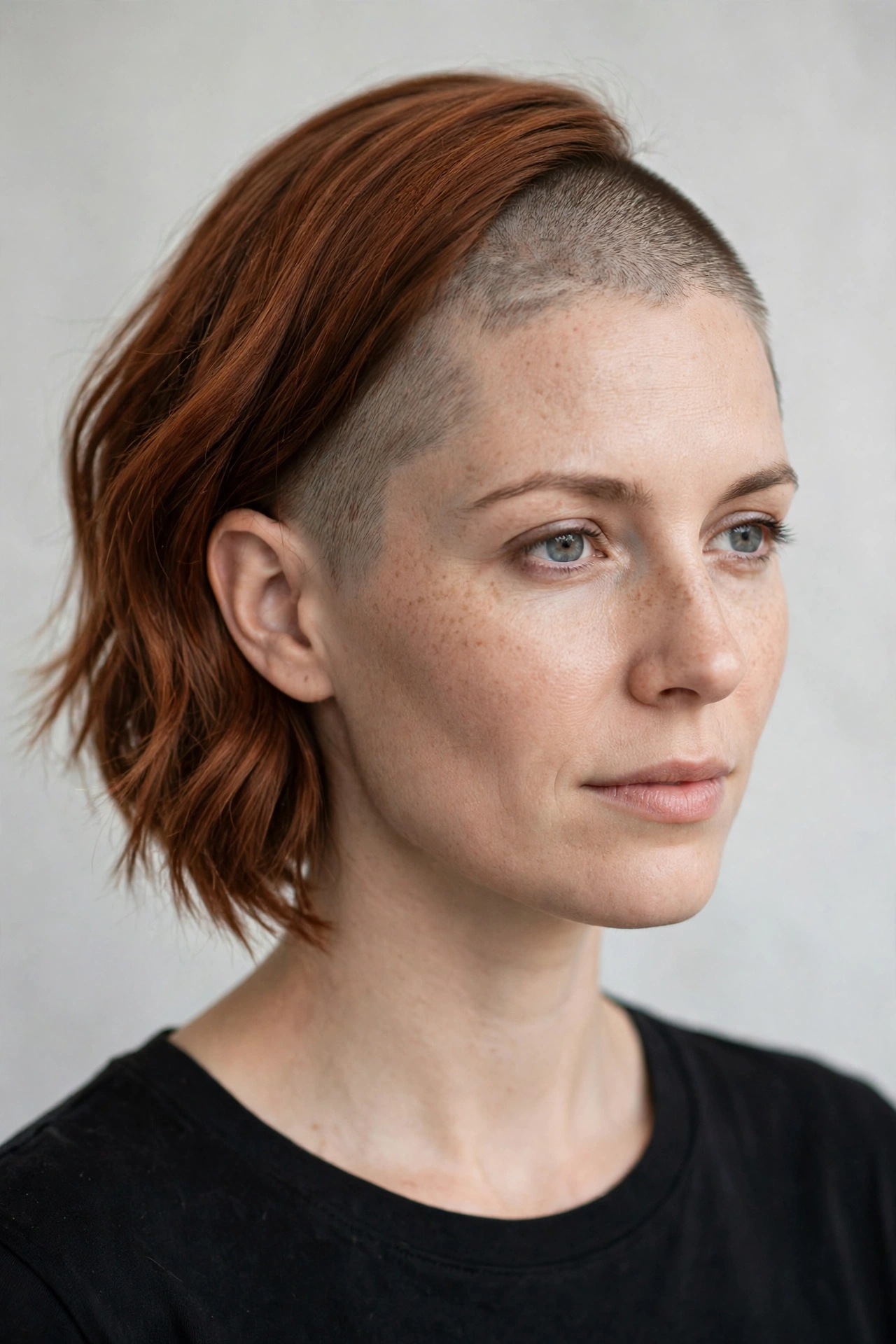
An asymmetrical bob already breaks the rules, so adding an undercut feels like a natural next step. One side stays longer, grazing the jaw, while the other side is cropped close, and the imbalance is the whole point. This cut photographs beautifully and suits anyone who likes their hair to do the talking. The only catch is upkeep: the shorter side grows out faster visually, so book tidy-ups before the asymmetry starts to blur.
9. Pixie Bob Undercut Blend
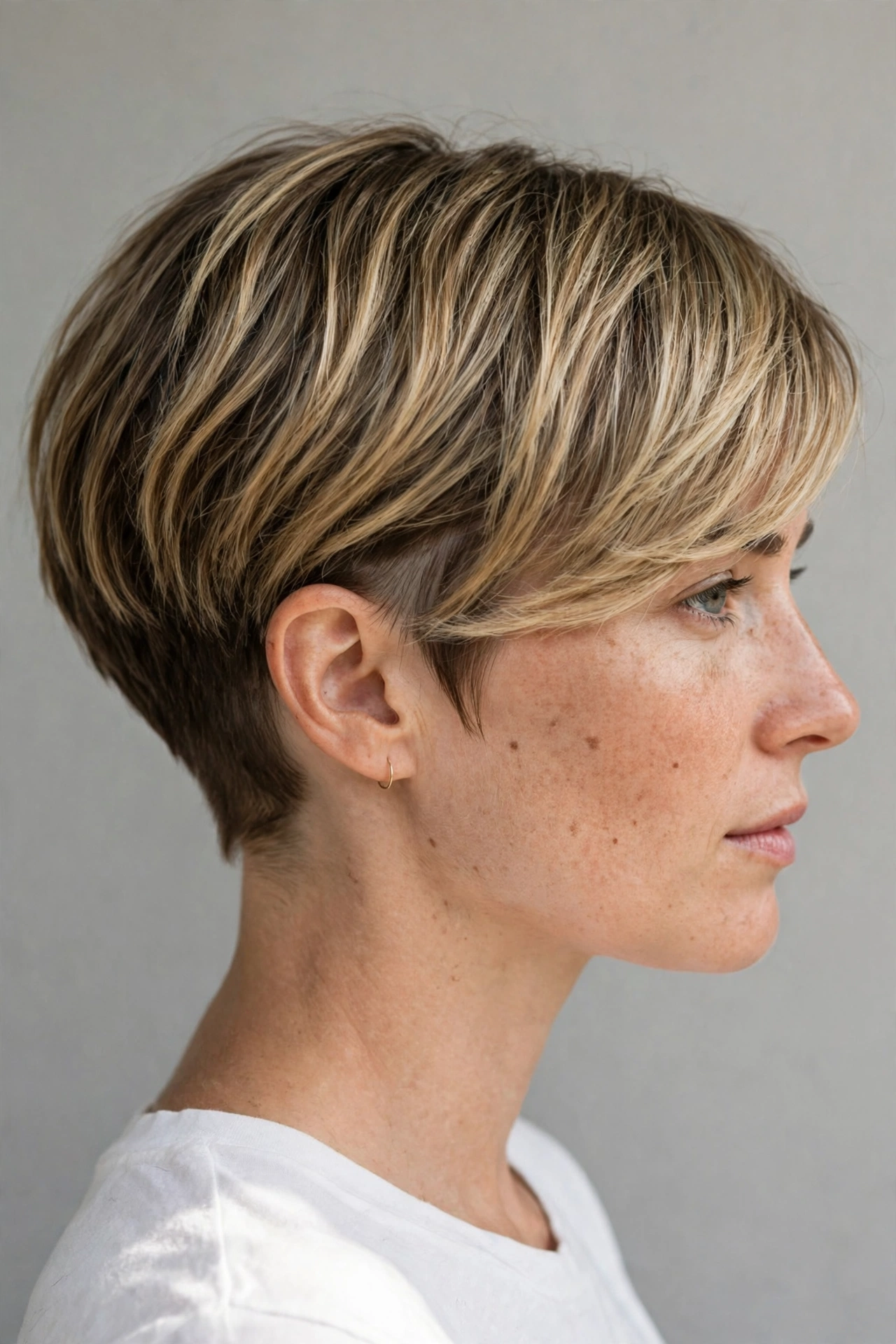
Not sure whether you want a pixie or a bob? This blend gives you both. The back and sides stay short and tapered like a pixie, while the top keeps enough bob length to sweep across the forehead. It is lighter than a full bob and longer than a pixie, which makes it a smart stepping stone if you are growing out a pixie or shortening a bob. Style it with a little wax at the roots for piecey separation.
10. Bold Copper Undercut Bob
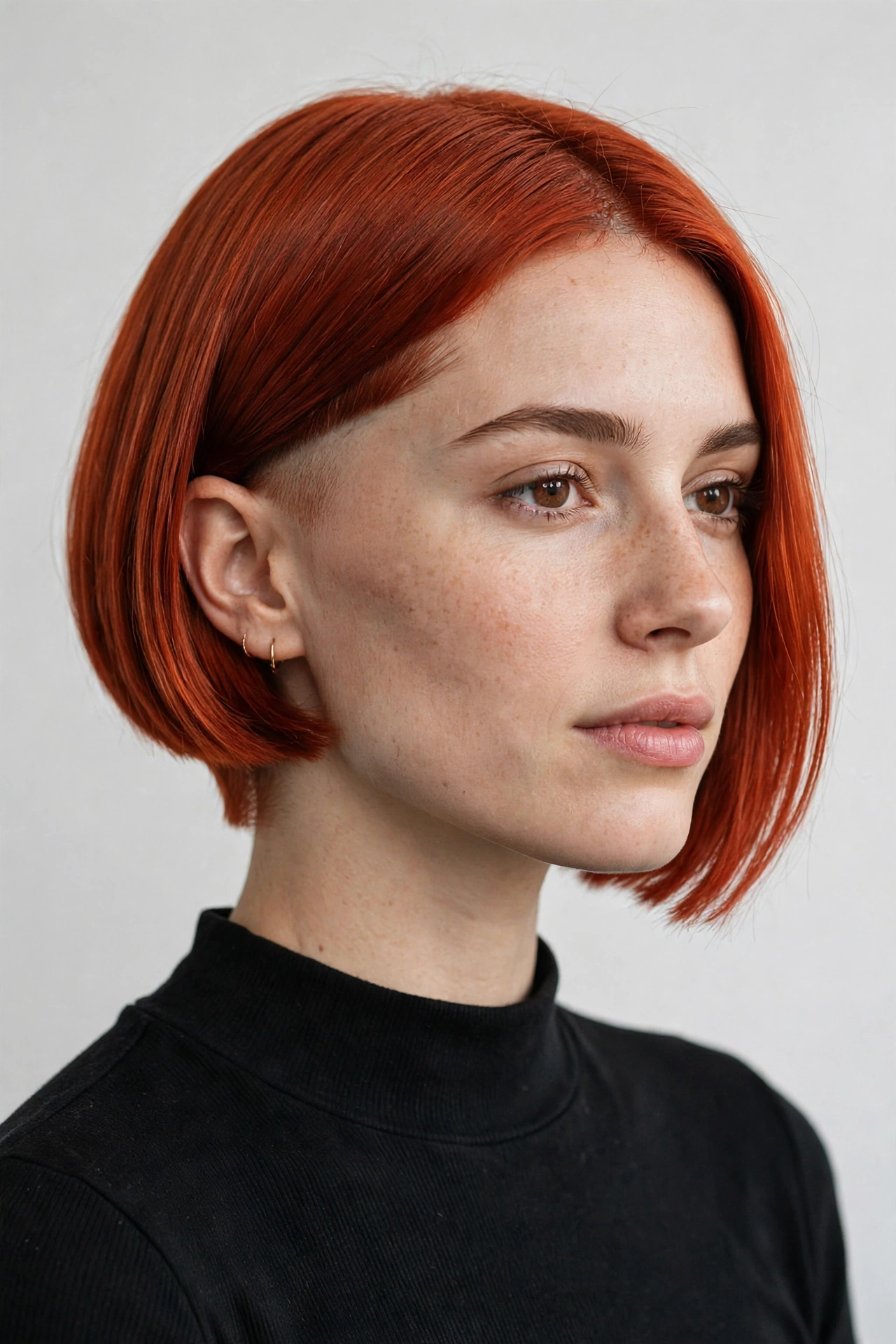
Color changes everything. A vivid copper bob with a cropped undercut underneath reads twice as bold, because the shaved section breaks up the solid color and adds shadow. Copper fades faster than most shades, so plan on gloss refreshes between color appointments and wash in cool water. Our hair color for bob hairstyles guide covers the shades that hold up best on short, sharp cuts like this one.
11. Undercut Bob for Thick Hair
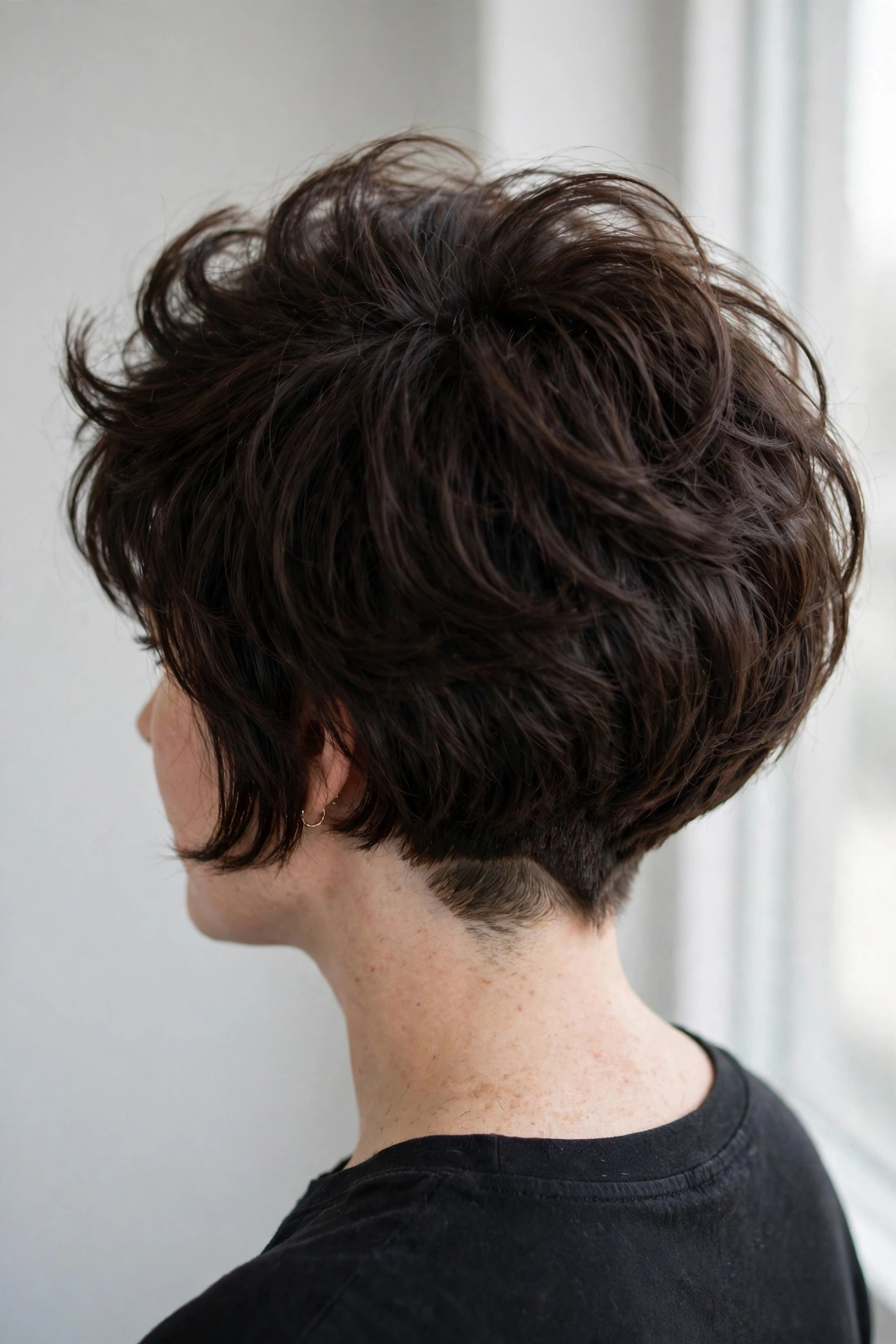
Thick hair is where an undercut earns its keep. Removing a whole section underneath takes out the bulk that makes bobs puff up, and the top layer falls flatter and smoother as a result. Ask for the undercut to cover the nape and lower sides, but keep the top layer long enough that it fully covers the shave when worn down. You will feel the difference immediately, especially on humid days.
12. Fine Hair Undercut Bob

Fine hair can wear an undercut too, but the placement matters more. Keep the shaved section small and low at the nape, and keep the bob blunt on top so the ends still look dense. The undercut here is less about removing bulk and more about adding a hidden edge. Our guide to bob haircuts for thin hair explains how a thick hemline keeps fine hair looking fuller, and the same rule applies here.
13. Undercut Bob with a Shaved Design
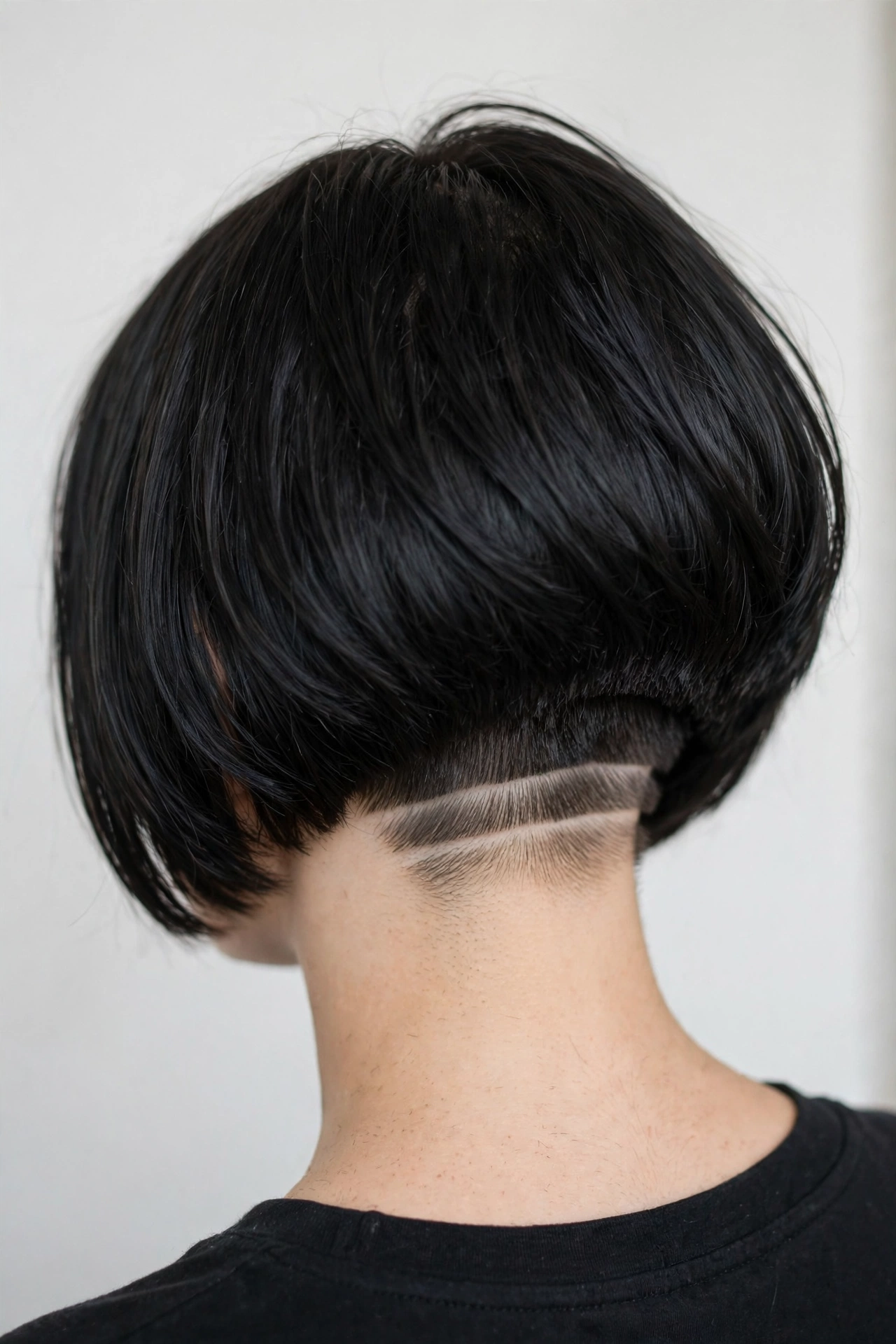
A shaved line or two in the nape turns the undercut into a detail worth showing off. Keep the design simple, one or two clean lines that follow the curve of the nape, because intricate patterns grow out unevenly within days. This version looks best when you wear your hair up or tucked, so think of it as a part-time statement. It also gives your stylist a chance to show off clipper work, so choose someone who enjoys the detail.
14. Grow-Out Friendly Undercut Bob
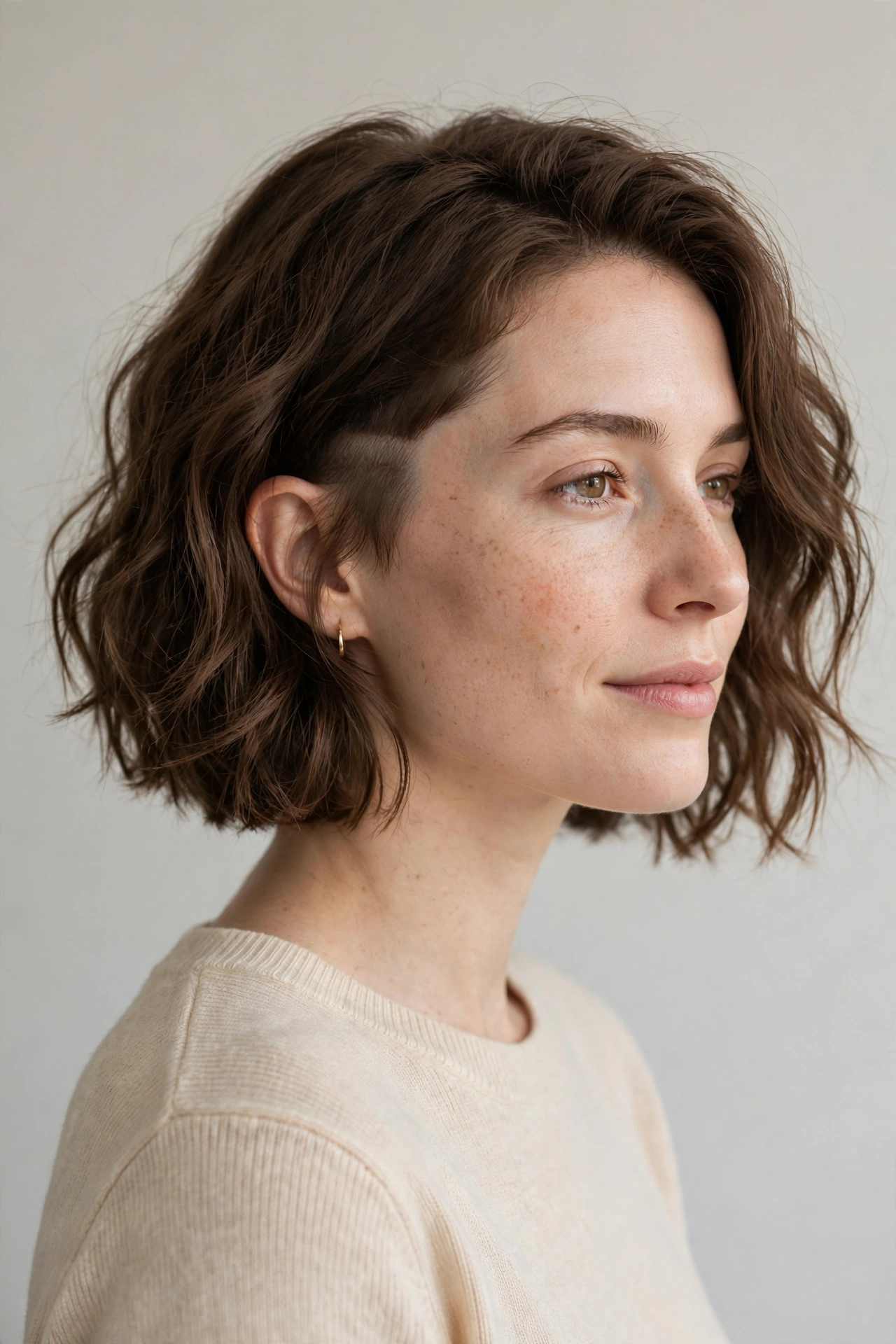
Every undercut grows out, and this version plans for it. The undercut bob haircut in this photo keeps the top layer long enough to cover the nape, so the shaved section can soften into a taper without an awkward stage. Expect the first few weeks to look sharp, then a softer, layered nape as it grows. If you decide to keep it, a quick tidy-up every few weeks resets the line; if not, the top simply takes over.
15. Undercut Bob with Long Layers on Top
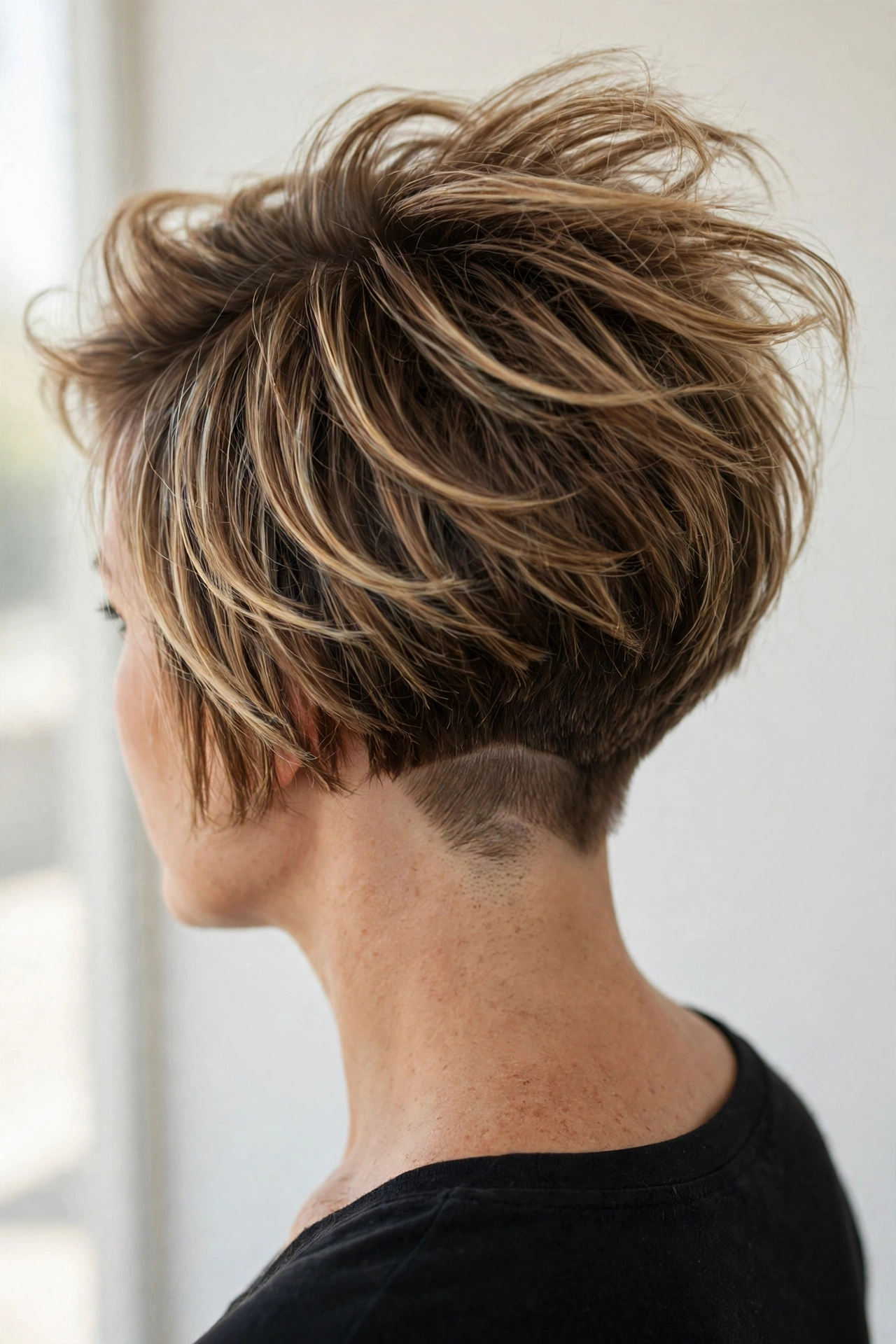
Layers on top change the whole mood of an undercut. Instead of a solid curtain of hair over the shave, you get movement, texture, and pieces that flick out as you move. This is the version to pick if a blunt bob feels too severe on you, or if your hair is naturally wavy and needs shaping. The nape undercut underneath keeps the layers from collapsing into bulk at the back.
16. Jaw-Length Undercut Bob
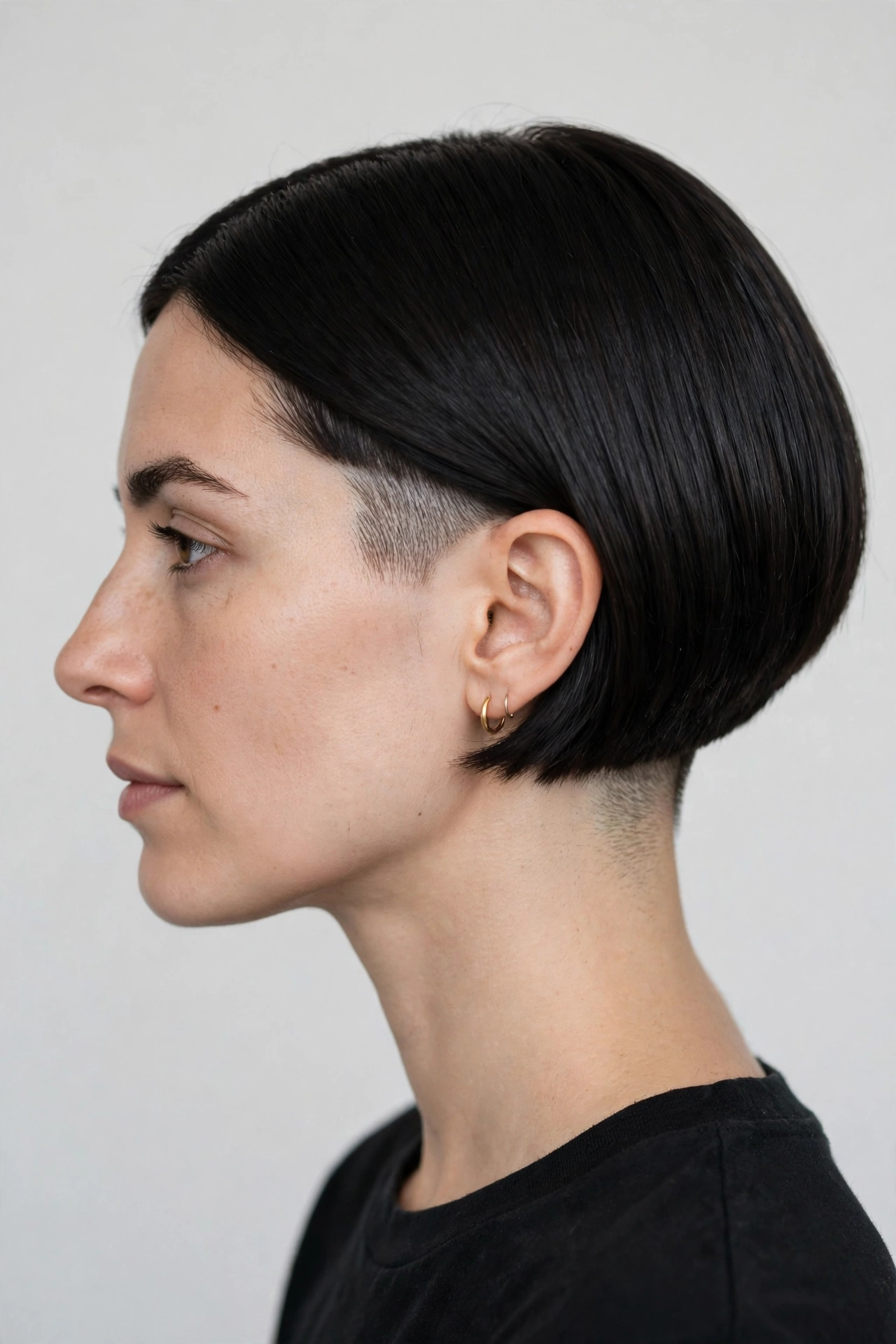
Shorter is bolder, and a jaw-length bob with shaved sides proves it. The length stops right at the jaw, so the undercut frames the face rather than hiding behind it. This length suits strong jawlines and anyone who wants a cut that needs almost no styling. For more short-length inspiration, our short bob haircuts for fine hair show how cropped lengths stay polished with minimal effort.
17. Undercut Bob for a Round Face
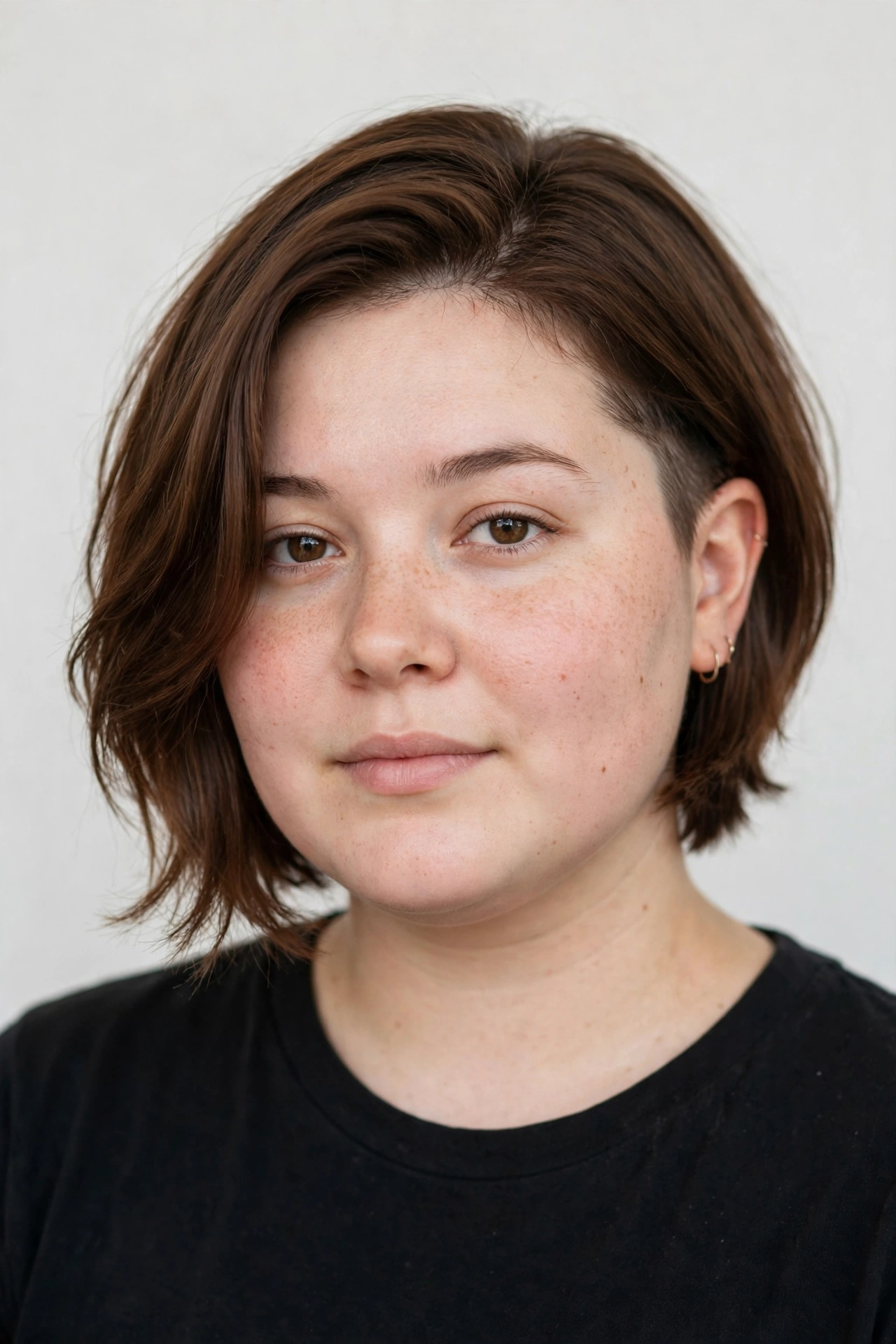
A round face and an undercut bob work well together when the front stays long. Keep the front pieces past the jaw and add height at the crown, and the cut lengthens the face instead of widening it. A side undercut helps too, because it removes width at the sides. Our bob for round face guide covers the same lengthening tricks on softer, non-undercut bobs if you want to compare.
18. Side Swept Undercut Bob
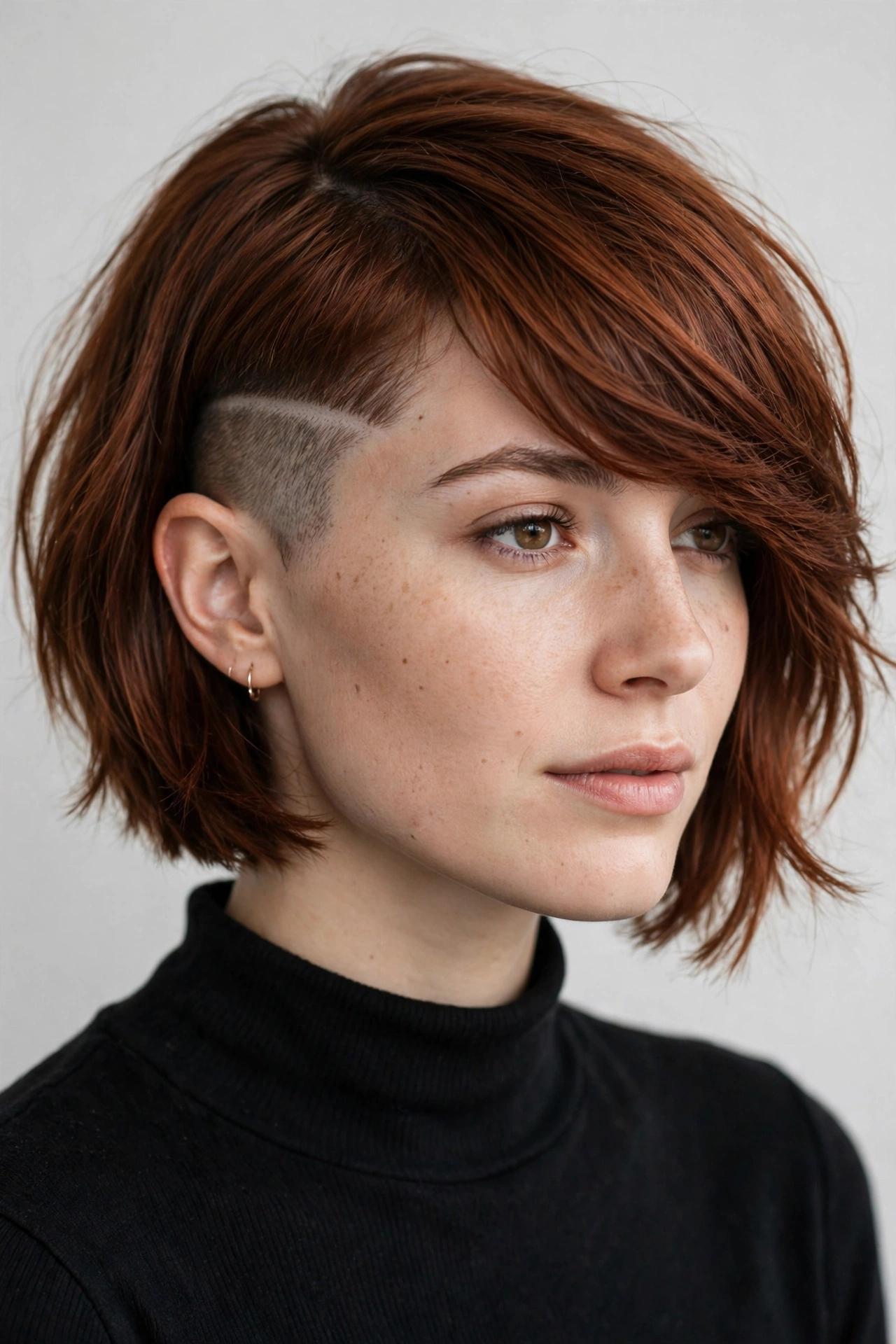
Sweeping the fringe and top layer to one side is the easiest way to show off a side undercut without committing to a fully shaved look every day. On days you want it hidden, just sweep the hair back over the shave. The long sweep also adds volume at the roots, which flatters flatter hair types. This is the most flexible version in the gallery, and the one stylists recommend most to first-timers who are still deciding.
19. Coily Undercut Bob
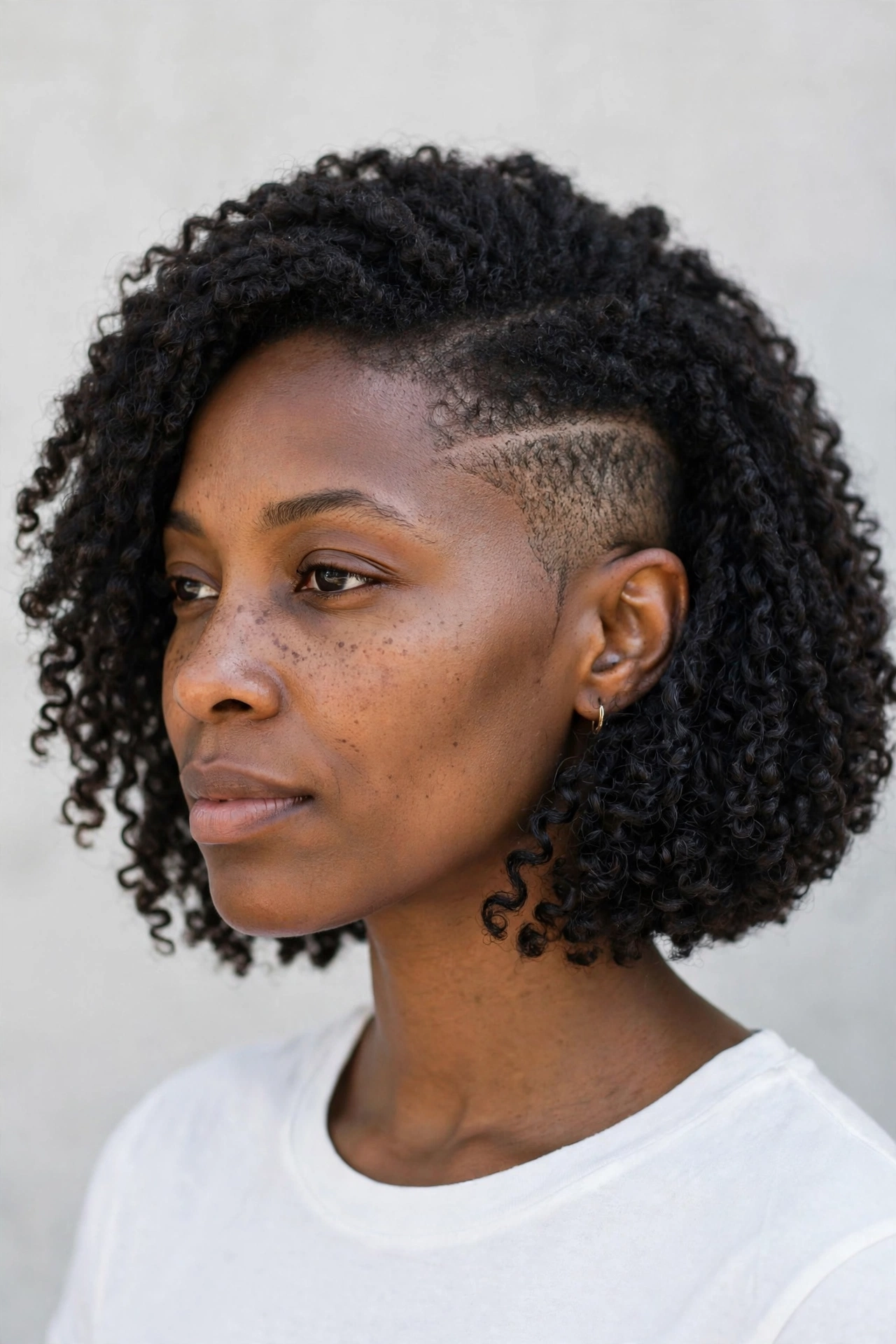
Coily hair gets the most practical benefit from an undercut: less bulk, faster drying, and a shape that holds for days. The top keeps its rounded bob silhouette while the sides and nape are cropped close, so the coils on top get all the attention. Moisture is the maintenance here, not heat, so keep the top hydrated and the undercut tidy. Our inverted bob styles for curly hair show a similar rounded shape with a different weight distribution.
20. Low Maintenance Everyday Undercut Bob
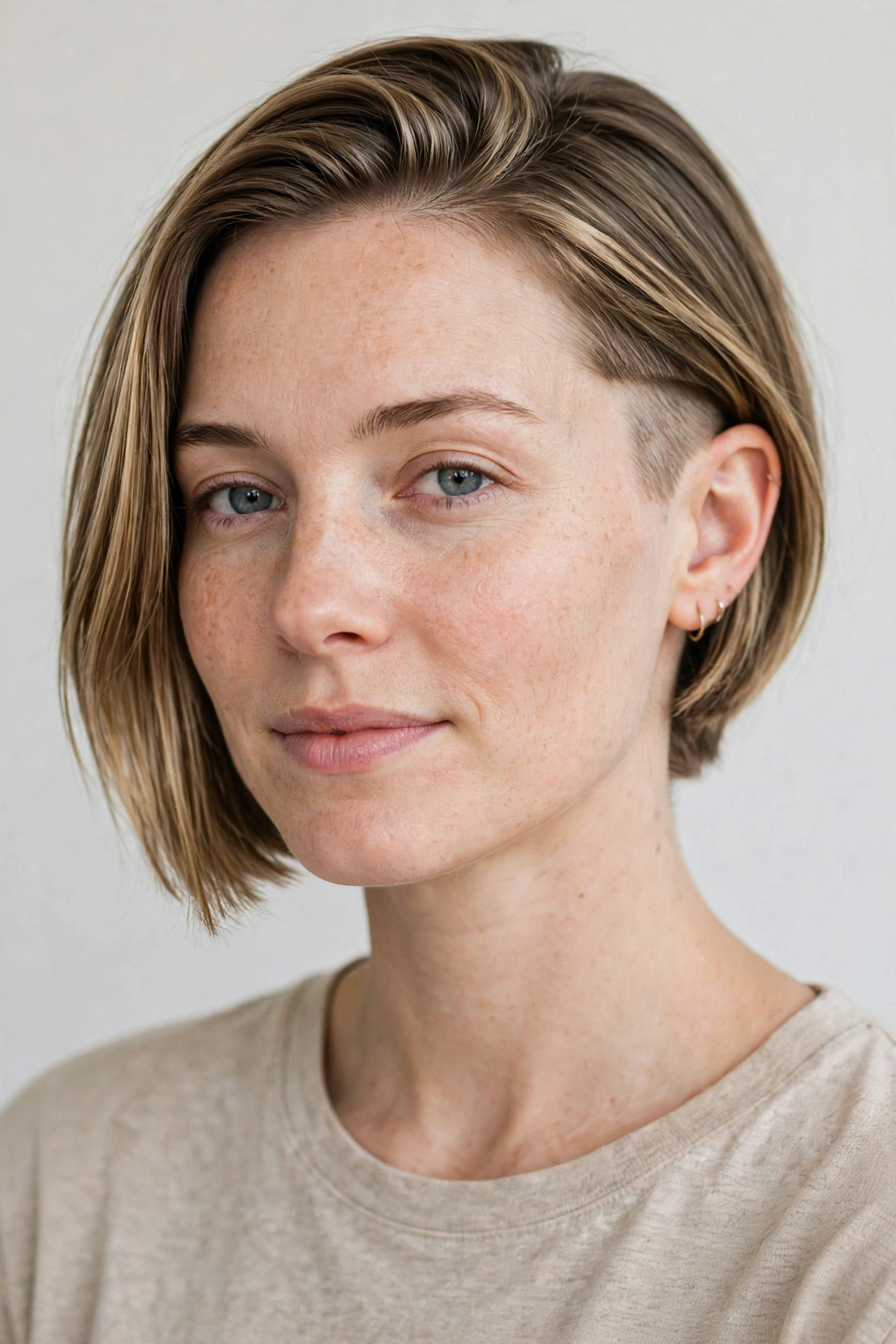
This is the undercut bob for real life. The bob is chin length, the undercut is small and low, and the whole thing takes minutes: tuck one side behind the ear, smooth the top, and go. It works for workdays, weekends, and everything between, and it grows out more gracefully than the bolder versions here. If you only try one idea from this gallery, make it this one.
What is an undercut bob haircut?
It is a bob with a shaved or closely cropped section underneath, usually at the nape or on one side, while the top keeps its bob length. The undercut can be hidden under the top layer or shown off, depending on how you wear your hair.
How do I ask my stylist for an undercut bob?
Bring photos, point to exactly where you want the shave, and say how short you want it, for example clipper-short at the nape or a softer tapered crop. Also say whether you want to hide it for work, because that decides whether the undercut sits low at the nape or higher on the side.
Does an undercut bob work for curly or coily hair?
Yes, and it often works better than on straight hair. Removing bulk underneath lets curls and coils spring up with more definition, and it cuts drying time. Ask for the top to be cut dry so the length is judged at its natural shrinkage.
How often do I need to maintain the undercut?
Plan on a tidy-up every 3 to 4 weeks to keep the shaved line crisp. The bob on top can usually go 6 to 8 weeks between trims, so many people book a quick undercut refresh between full cuts.
What does an undercut bob look like as it grows out?
The shaved section softens into a short tapered layer over a few weeks. If the top layer is long enough to cover the nape, the grow-out is barely visible, and you can either re-shave it or let it blend into a tapered bob.
Can I hide an undercut bob for work?
Yes, if you choose a hidden nape undercut. Worn down, a chin-length bob fully covers a low nape shave, so it only shows when you tie your hair up. Side undercuts are harder to hide, so save those for when you want the shave visible.
Final Thoughts
The best undercut bob is the one that fits your life, not just your mood on appointment day. Start with a hidden nape version if you are unsure, go bolder with a side shave once you know you love the feeling, and keep the top layer long enough to give yourself options. The cut is forgiving, the grow-out is manageable, and the confidence boost is real.
Before you book, browse Allure for fresh takes on short, sharp cuts, then bring your favorite photos to your stylist. And if you are still weighing bob shapes overall, our main bob trends guide is the next read.
Sana Malik is a hair and beauty writer with a deep love for the bob in all its forms from sharp French bobs to soft, lived-in lobs. After years of experimenting with her own short hair and helping friends figure out what actually suits their face shape, she started writing to cut through the confusing advice out there. At BobHairTrends, she breaks down each cut into simple, honest guides: how to ask for it, how to style it at home, and who it really flatters. When she isn’t researching the latest trends, she’s usually testing a new styling product or convincing someone it’s finally time for the chop.