✦ Key Takeaways
- The back of a French bob has three main shapes: flat, graduated, and stacked
- Neckline choice (tapered, straight, or rounded) matters as much as the length itself
- Fine hair suits a stacked back; thick hair suits a flat or gently graduated back
- Always bring a back-view reference photo, not just a front-facing one
- Ask to see the back in the mirror before leaving the salon, every time
You spend most of your time looking at your hair from the front. Your stylist spends most of their time working on the back. And somehow, the two of you rarely have a proper conversation about what the french bob back view should actually look like.
That gap is where haircuts go wrong.
The back of a French bob is not just an afterthought. The neckline shape, the graduation level, and how the back connects to the sides are all decisions that quietly define the entire cut.
Get them right and the bob looks intentional from every angle. Get them wrong and something feels off even if you cannot quite put your finger on why.
This guide is entirely dedicated to that conversation. By the end you will know exactly what to look for, what questions to ask, and what a well-executed french bob back view should show you.
Start with our foundational piece on What is a French Bob if you want the full picture before focusing on the back.
Start Here First
Table of Contents
Why the Back of a French Bob Actually Matters?
Most women book a haircut, show their stylist a photo from the front, and never once discuss what happens at the back. This is understandable.
Pinterest is full of front-facing bob photos. Instagram shows you the side profile. The back view of any haircut is genuinely hard to find good reference images for.
But here is the thing about a French bob specifically. The French bob stays sophisticated through a strong, heavy finish at the ends with very minimal layering throughout.
That “heavy finish” lives primarily at the back of the head. If the back is wrong, the weight distribution is wrong, and the whole cut loses its signature quality. Woman & Home
The french bob back view reveals three things that the front view never will. First, whether the neckline is clean and intentional or scraggly and neglected.
Second, whether the back weight sits correctly for the shape you want. Third, whether the graduation behind the ears creates a smooth, connected line from front to back.
None of these things show up in a front-facing photo. All of them matter enormously.
📖 Keep Reading
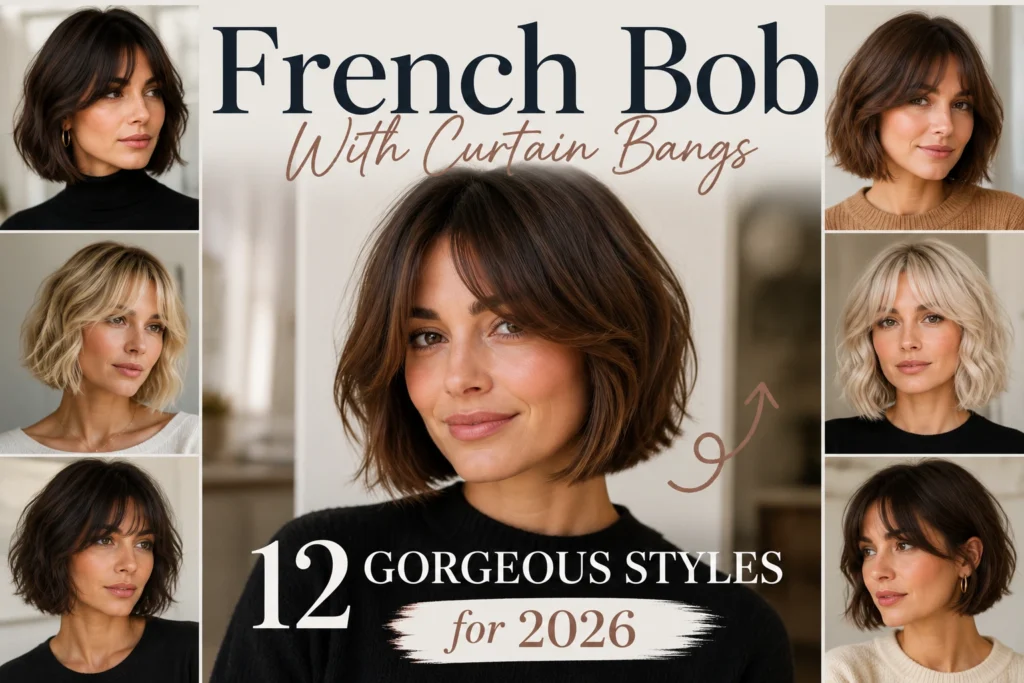
French Bob with Curtain Bangs
Softer face-framing version of the French bob
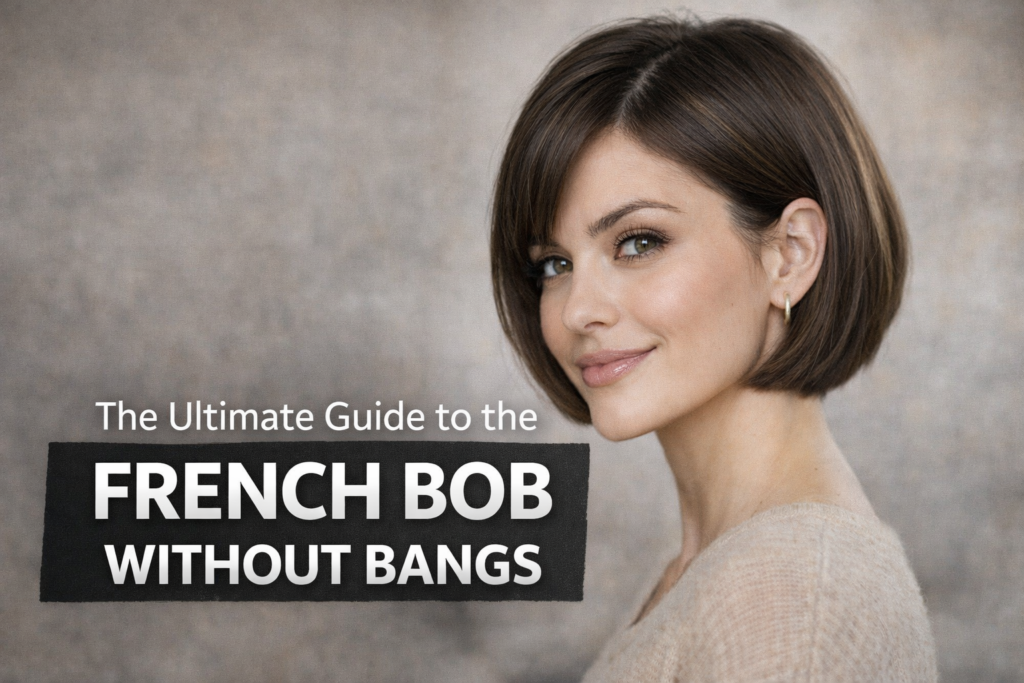
Read Guide →French Bob Without Bangs
Clean forehead version of the French bob
Read Guide →Choppy Short French Bob
Textured edgy version of the French bob
Read Guide →Fine Hair French Bob Guide
Low maintenance French bob for fine hair
Read Guide →What the French Bob Back Should Look Like?
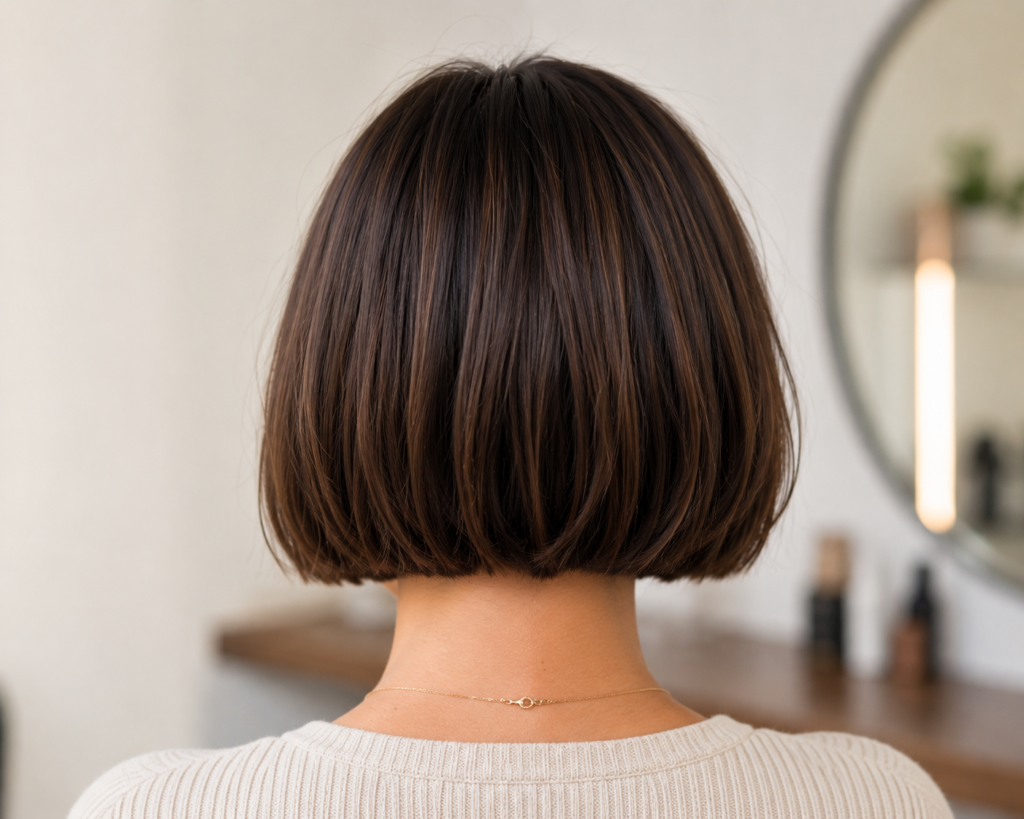
A well-cut French bob from behind has a few non-negotiable qualities regardless of which variation you choose.
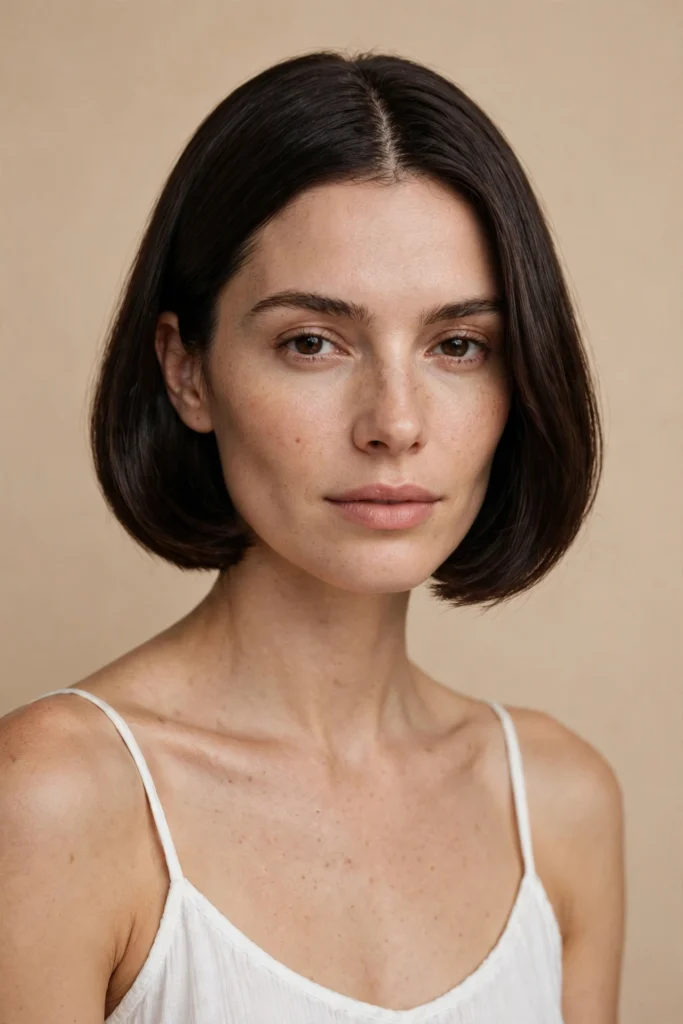
The length should be consistent. The back of the bob should connect cleanly to the sides, creating a continuous line around the head rather than a stepped or uneven finish. When you hold a mirror up to see the back, the line should look deliberate and smooth.
The neckline should be clean. Even on a textured or messy French bob, the neckline itself should be neat. The French bob stops at the jawline and is ultra chic and effortless, but that effortlessness comes from precise cutting underneath, not from leaving the back untidy. Bobhairtrends
The weight should sit at the right point. For a classic French bob this means the bulk of the hair sits at the ends, creating a dense, full appearance at the bottom of the cut. For a stacked version it sits higher up, creating more volume at the crown.
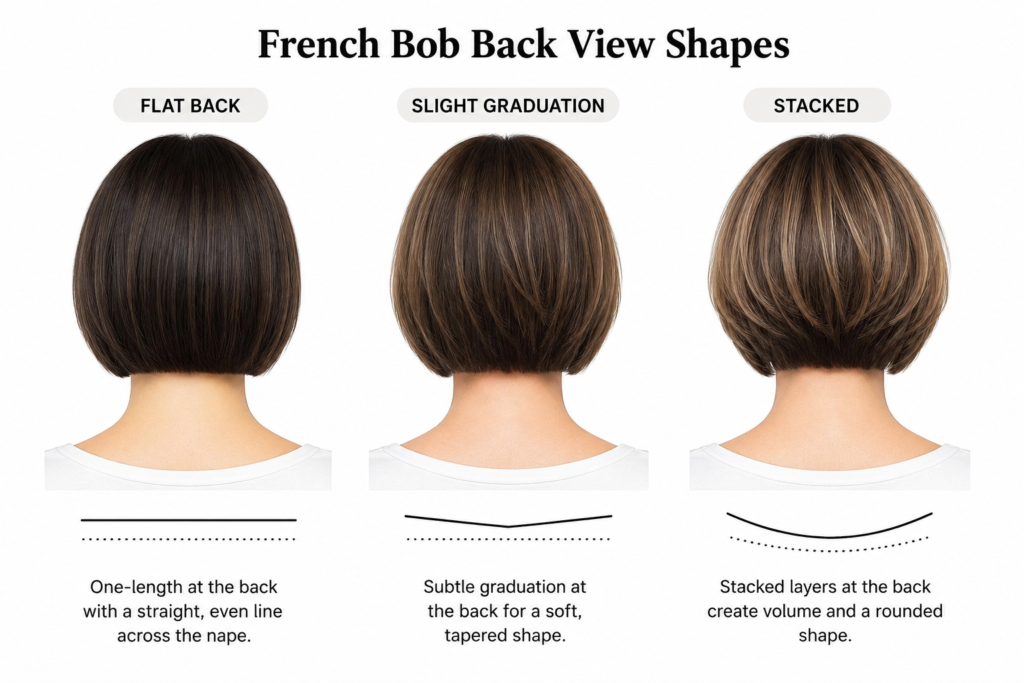
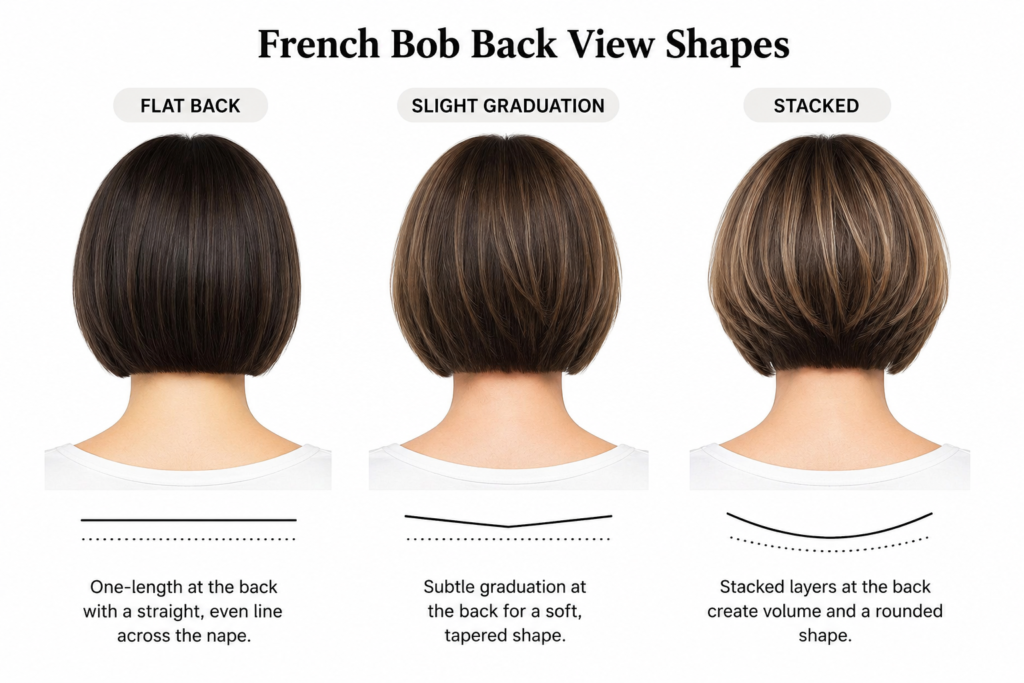
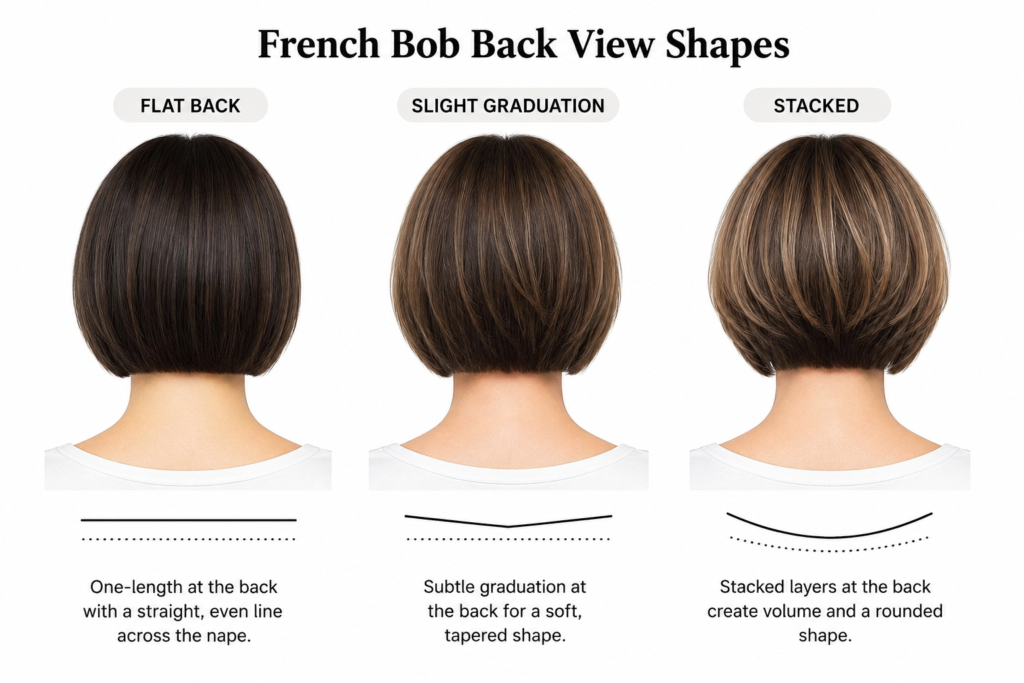
The Three Main French Bob Back Shapes:
This is where most women have never had a proper conversation with their stylist. There are actually three distinct back shapes for a French bob and each one creates a completely different silhouette when viewed from behind.
The Flat or One Length Back
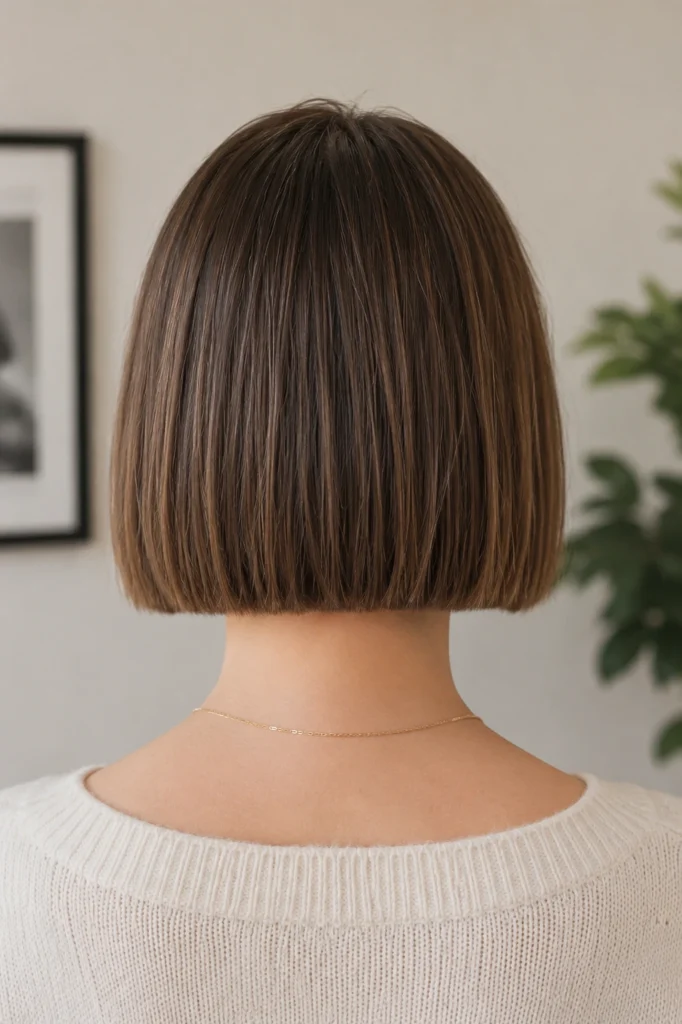
The most classic French bob back view. The hair is cut to one length all the way around with no graduation or stacking. From behind the bob hangs as a single, uniform curtain of hair that ends in a clean horizontal line.
This version suits women who want the most traditional Parisian look. It works beautifully on fine to medium hair because the one-length cut keeps all the weight at the bottom and creates maximum density. On very thick hair it can sometimes feel heavy without some internal thinning.
Best for: Fine hair, straight hair, oval and heart face shapes.
The Graduated Back
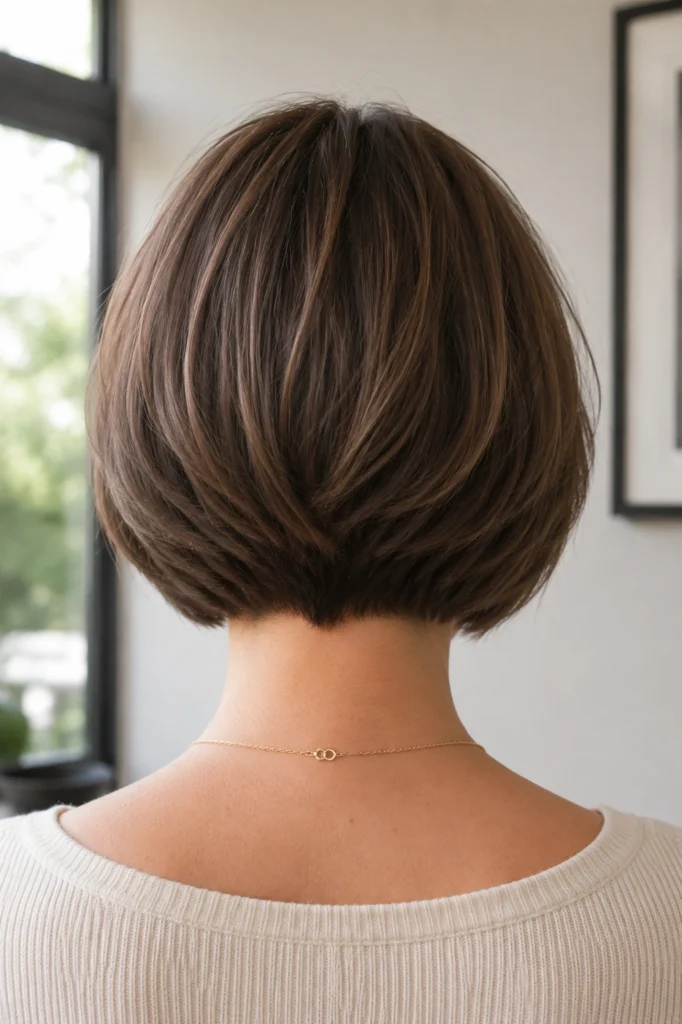
A soft graduation means the back is cut slightly shorter underneath and gradually longer toward the surface. From behind you see a smooth, rounded shape rather than a flat wall of hair.
The graduation is subtle nothing dramatic, just enough to create shape and help the ends curve slightly inward or under.
The sculpted French bob is the version that commands attention in 2026, and its signature quality is a precise back shape that gives the cut its architectural quality from every angle. Parade
Best for: Medium to thick hair, round and square face shapes, women who want more movement at the ends.
The Stacked Back
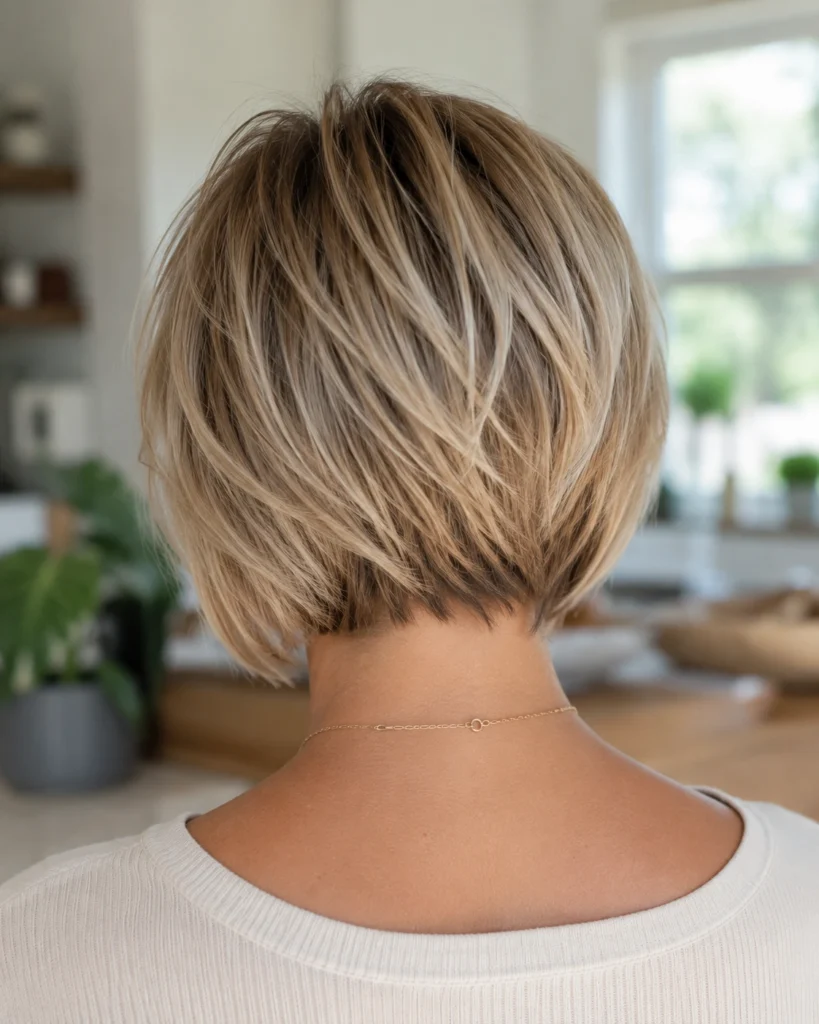
The most voluminous option. Stacking means the layers underneath are cut shorter and the exterior length is longer, building volume at the crown and back of the head. From behind a stacked French bob has a rounded, full shape that tapers toward the neckline.
This variation adds the most volume and is especially popular for fine hair that needs a visual boost. The downside is that it requires more frequent trims to keep the stacking precise and intentional looking.
Best for: Fine and thin hair, women who want extra volume, oblong and long face shapes.
French Bob Neckline Options
The neckline is the most visible detail in the french bob back view and also the detail most women forget to discuss with their stylist. There are three neckline shapes to choose from.
The Tapered Neckline
The most natural looking option. The hair at the neckline is gradually thinned out so it blends softly into the neck rather than creating a hard line. From behind a tapered neckline looks clean without appearing too severe or styled.
This works well for women who have natural hair growth patterns at the nape that are uneven or who grow out between trims frequently. A tapered neckline is the most forgiving as it grows out.
The Straight Neckline
The boldest option. A clean horizontal line is cut straight across the nape of the neck. From behind this creates a very graphic, high-fashion look that emphasizes the precision of the cut. It is the most demanding neckline to maintain because grow-out becomes visible quickly.
If you have seen a French bob from behind that looks impossibly sharp and polished, it almost certainly had a straight neckline. This is the detail that gives the cut that “just left the salon” quality.
The Rounded Neckline
A softer middle ground. The neckline follows a slight curve rather than a straight horizontal line, making it more forgiving than the straight version while still looking intentional. From behind it gives the bob a softer, more feminine quality.
This is often the default choice for stylists when not specifically requested otherwise. Most French bobs you see on Instagram with a clean but soft back finish have a rounded neckline.
💡 Pro Tip
Take a photo of the back of your hair with your phone right before you leave the salon. It takes ten seconds and gives you a real reference for what “correct” looks like, so you’ll notice immediately if the neckline starts growing out unevenly before your next trim.
What to Show Your Stylist About the Back?
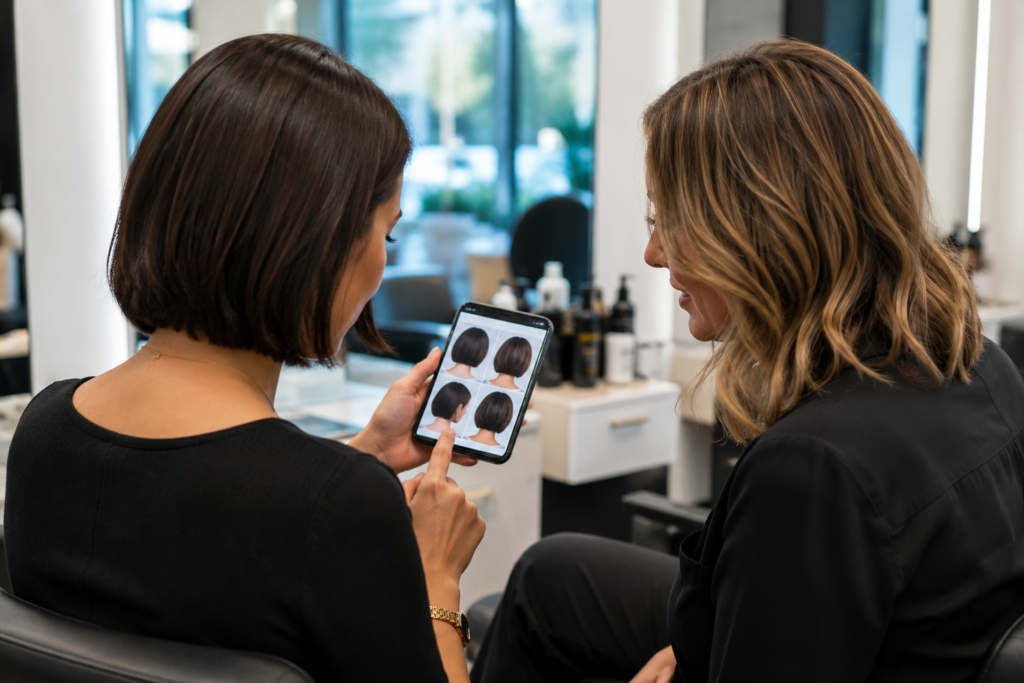
Most people walk into a salon with one front-facing photo. Here is what you should actually bring and say.
Bring at least one back view reference photo. This sounds obvious but almost nobody does it. A quick search on Pinterest for “french bob back view” or “french bob neckline” will give you exactly what you need.
Show your stylist both the front and the back so there is zero ambiguity about the complete shape.
Specify your neckline preference. Use the three options above. Tell your stylist whether you want tapered, straight, or rounded. This single conversation point will change the quality of your result more than almost anything else.
Mention your grow-out timeline. If you get trims every four to five weeks, a straight neckline works well. If you tend to stretch trims to eight or ten weeks, a tapered neckline will look better for longer between appointments.
Ask to see the back before you leave. This is not being difficult. It is being thorough. Hold up the mirror yourself and look at the neckline, the shape, and the way the back connects to the sides. If something looks off, now is the time to mention it.
Our Short French Bob Haircut guide has more detail on the full cut conversation worth reading before any appointment.
How the French Bob Back View Changes With Hair Type?
The same cut looks meaningfully different from behind depending on your hair texture. Understanding this helps you choose the right back shape for your specific hair.
Straight Hair
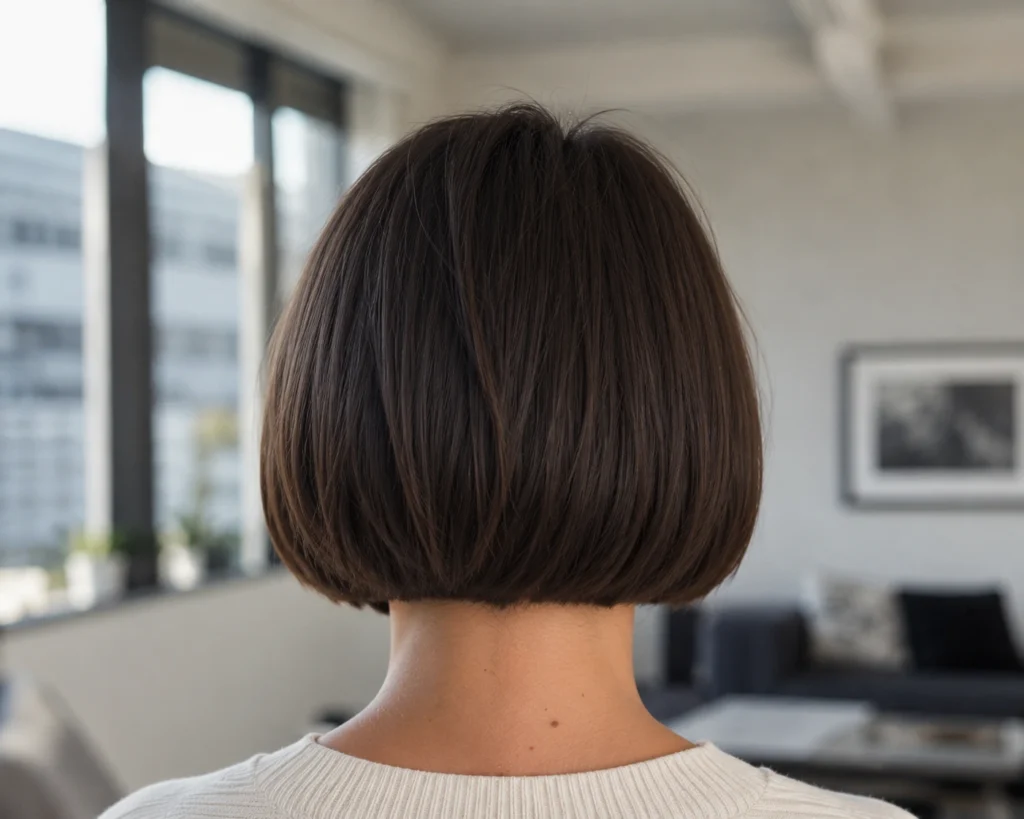
Straight hair shows every detail of the back view with complete clarity. The neckline, the graduation, the weight line — all of it is completely visible.
This means straight hair rewards a precise, well-executed back shape more than any other type, but it also shows any imprecision immediately.
For straight hair the one-length flat back or a soft graduation both work beautifully. The straight neckline looks particularly striking on straight hair because the clean lines complement each other.
Wavy Hair
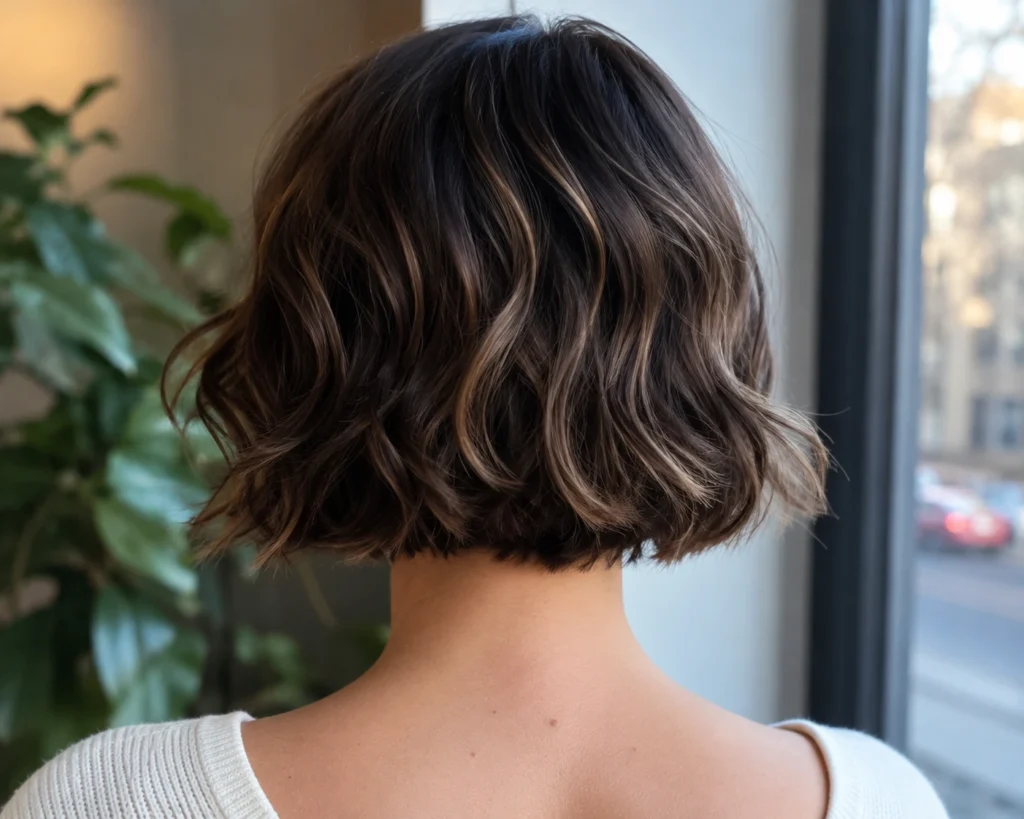
Natural waves create soft movement at the back that adds visual interest and makes the back shape feel more relaxed. The texture of the waves softens the neckline slightly, making the tapered or rounded option particularly natural looking.
For wavy hair the graduated back is often the most flattering option because it works with the wave pattern to create a smooth, curved shape rather than fighting against the natural texture. Our Wavy French Bob Haircut guide covers this in much more detail.
Thick Hair
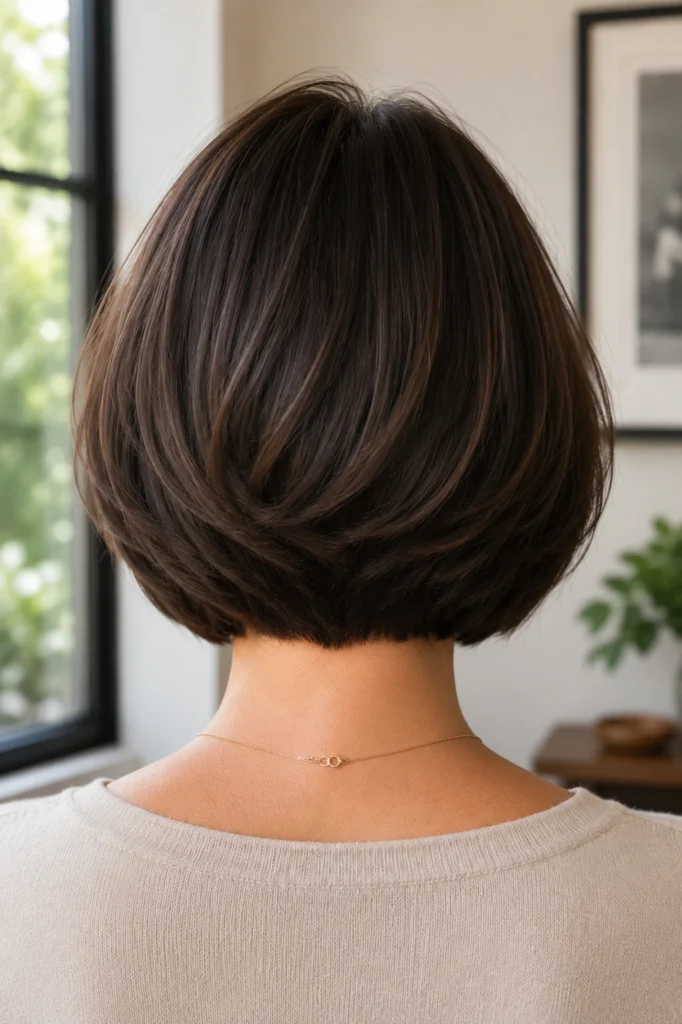
Thick hair can create a dense, heavy appearance at the back of the bob if not managed correctly. Without any graduation or internal thinning, thick hair in a one-length French bob can look blocky from behind rather than sleek and intentional.
For thick hair a soft graduation or internal thinning at the back makes a significant difference to the overall silhouette. The back should look full but shaped rather than just heavy.
Fine or Thin Hair
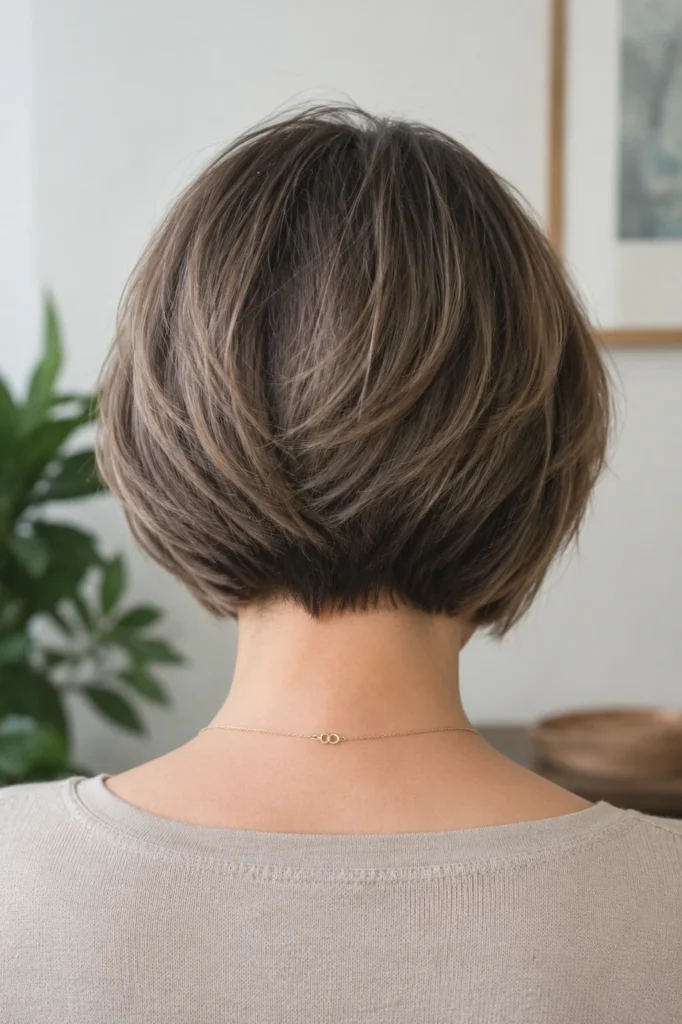
Fine hair benefits most from the stacked back variation because the layers create the appearance of volume and body at the crown. From behind a stacked fine-hair French bob looks fuller and more structured than the actual density of the hair would suggest.
For more on managing fine hair in this cut, our Low Maintenance Fine Hair French Bob guide has everything you need.
Match It to Your Hair Type
Maintaining the French Bob Back View
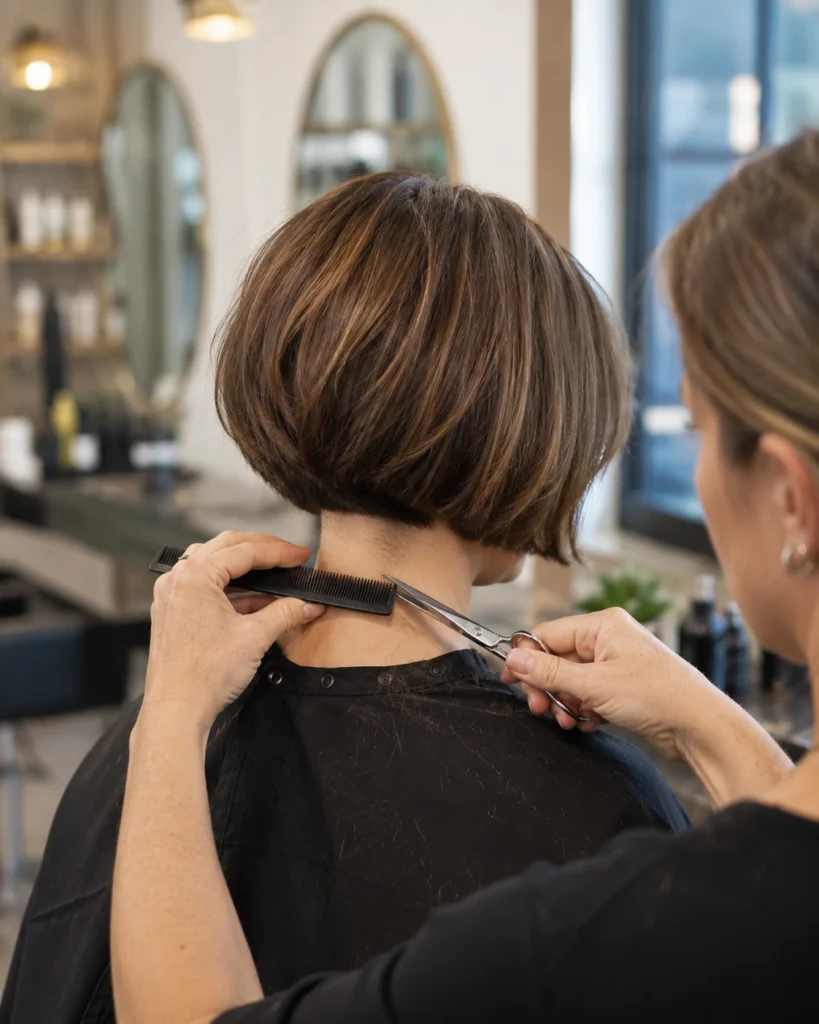
The back of a French bob needs the most consistent attention of any part of the cut. Here is what good maintenance looks like.
Trim Every Four to Six Weeks
The neckline is the first thing to lose its shape as the bob grows out. A straight neckline becomes ragged within three to four weeks on faster-growing hair. Even a tapered neckline needs refreshing regularly to keep the back looking intentional.
Plan your salon visits around the neckline rather than the length. The length at the front can often wait a little longer but the back needs consistent attention.
Between Salon Visits
Some women are comfortable doing a small neckline clean-up at home with a trimmer between appointments. If your stylist uses a straight razor or clipper at the neckline, ask them to show you the line before you leave so you have a reference for any touch-up.
A silk pillowcase helps preserve the back shape overnight. Friction from cotton pillowcases can create small flyaways and fuzzy texture at the neckline that makes the back look ungroomed even when the rest of the bob looks perfect.
Product Choices for the Back
The back of the bob tends to lift or frizz more than the front because it has less weight pulling it down. A small amount of smoothing serum or light-hold pomade worked through the back of the hair after styling helps keep it flat and connected.
According to Byrdie, focusing heat styling at the back of the bob before the front ensures the most important structural area is set before the rest of the hair is styled around it.
Frequently Asked Questions:
What should the back of a French bob look like?
A well-executed French bob back view shows a clean, intentional neckline with consistent length from the back connecting smoothly to the sides. The ends should have a solid weight line rather than looking wispy or uneven. Whether the back is flat, graduated, or stacked depends on the variation you have chosen but all three should look deliberate and precise.
Should a French bob be stacked or flat in the back?
This depends entirely on your hair type and the shape you want. Fine hair generally looks better with a stacked back because the layers create volume. Thick hair often looks better with a flat or gently graduated back so the volume stays controlled. Wavy hair suits a gentle graduation that works with the natural texture.
How often should the neckline of a French bob be trimmed?
Every four to six weeks for a straight neckline, every six to eight weeks for a tapered or rounded neckline. The back grows faster than you expect and a ragged neckline is the fastest way to make an otherwise great bob look neglected.
Can I see the back of my French bob before I leave the salon?
Always. Ask your stylist to hand you the mirror before you step out of the chair. Look at the neckline shape, check that the back length matches what you discussed, and confirm that the graduation or stacking looks the way you wanted. A good stylist will expect and welcome this.
Why does my French bob look different from behind than in photos?
Usually because the reference photos you used showed only the front or side view. The back shape, neckline choice, and graduation level were not visible in those photos. Next time bring a back view reference image specifically and have the neckline conversation explicitly before your stylist begins cutting.
Final Thoughts:
The french bob back view is the part of the cut that most women never think about until something feels wrong and they cannot explain what it is.
Now you have the vocabulary and the knowledge to make it a real part of your salon conversation. Back shape, neckline style, graduation level, hair type considerations these are the details that separate a bob that looks great from every angle from one that only works from the front.
Save this before your next appointment. Show your stylist the back view reference image alongside your front view photo. Have the neckline conversation before the scissors come out.
Browse all our French Bob styles to find your perfect variation before you book.
💕 You Might Also Like

Sana Malik is a hair and beauty writer with a deep love for the bob in all its forms from sharp French bobs to soft, lived-in lobs. After years of experimenting with her own short hair and helping friends figure out what actually suits their face shape, she started writing to cut through the confusing advice out there. At BobHairTrends, she breaks down each cut into simple, honest guides: how to ask for it, how to style it at home, and who it really flatters. When she isn’t researching the latest trends, she’s usually testing a new styling product or convincing someone it’s finally time for the chop.