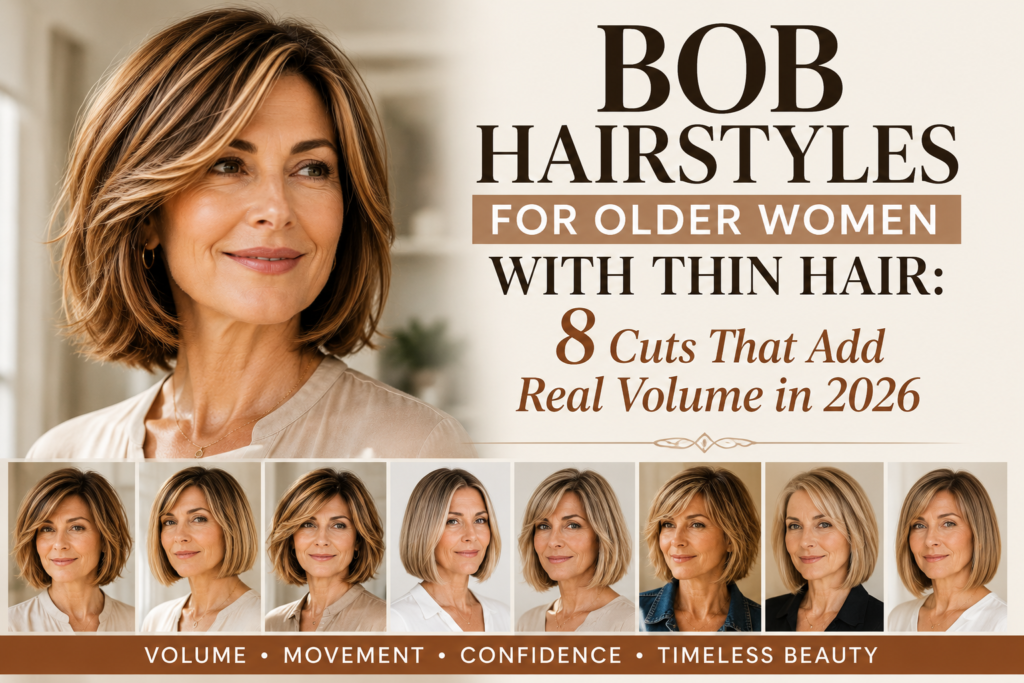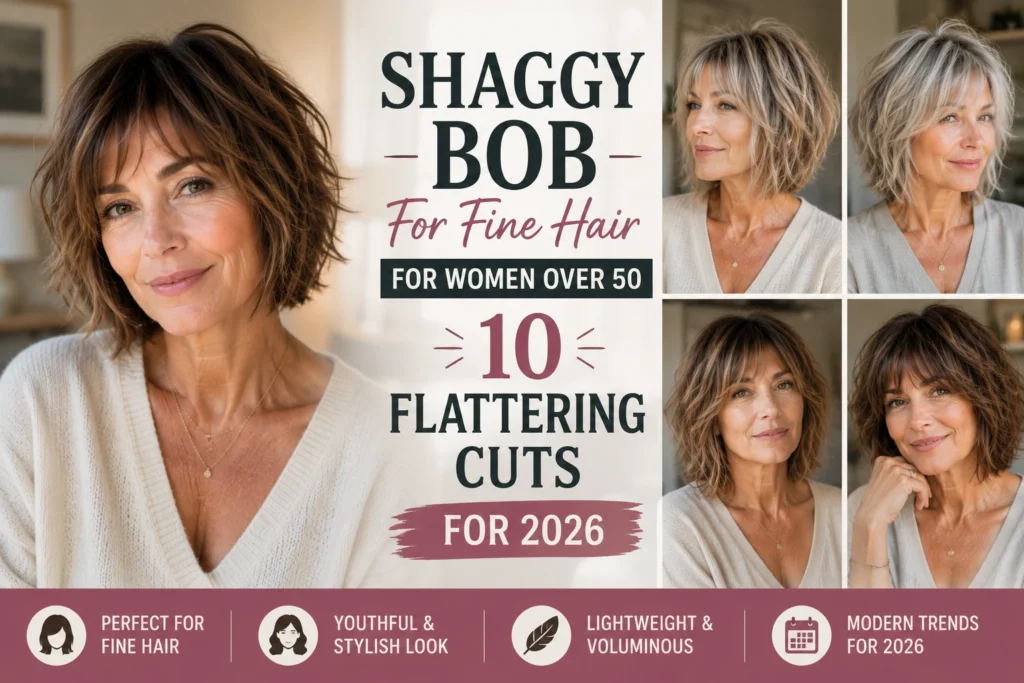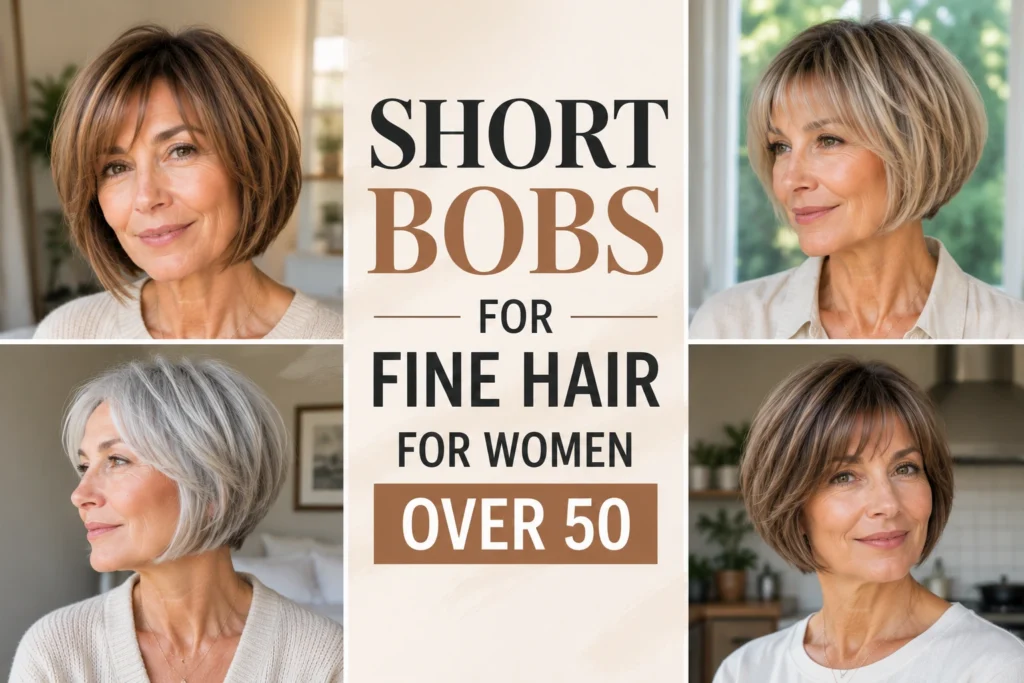

Fine hair has a cruel habit of going flat by noon. A fine hair graduated bob is the one cut that refuses to let that happen, because the volume is built into the architecture of the haircut itself, not faked with a fistful of product.
Graduation is just the salon word for cutting hair at an angle: shorter underneath, longer on top. Those shorter layers down below push everything above them up and out. Think of it as scaffolding your stylist quietly builds into your hair while you sip the salon coffee.
I have cut this style on hundreds of fine-haired clients, and the reveal-mirror reaction never gets old. Below are the 22 versions I recommend most, each with honest notes on who it suits and exactly what to say in the chair.
22 Fine Hair Graduated Bob Styles for Instant Fullness
1. The Classic Graduated Bob
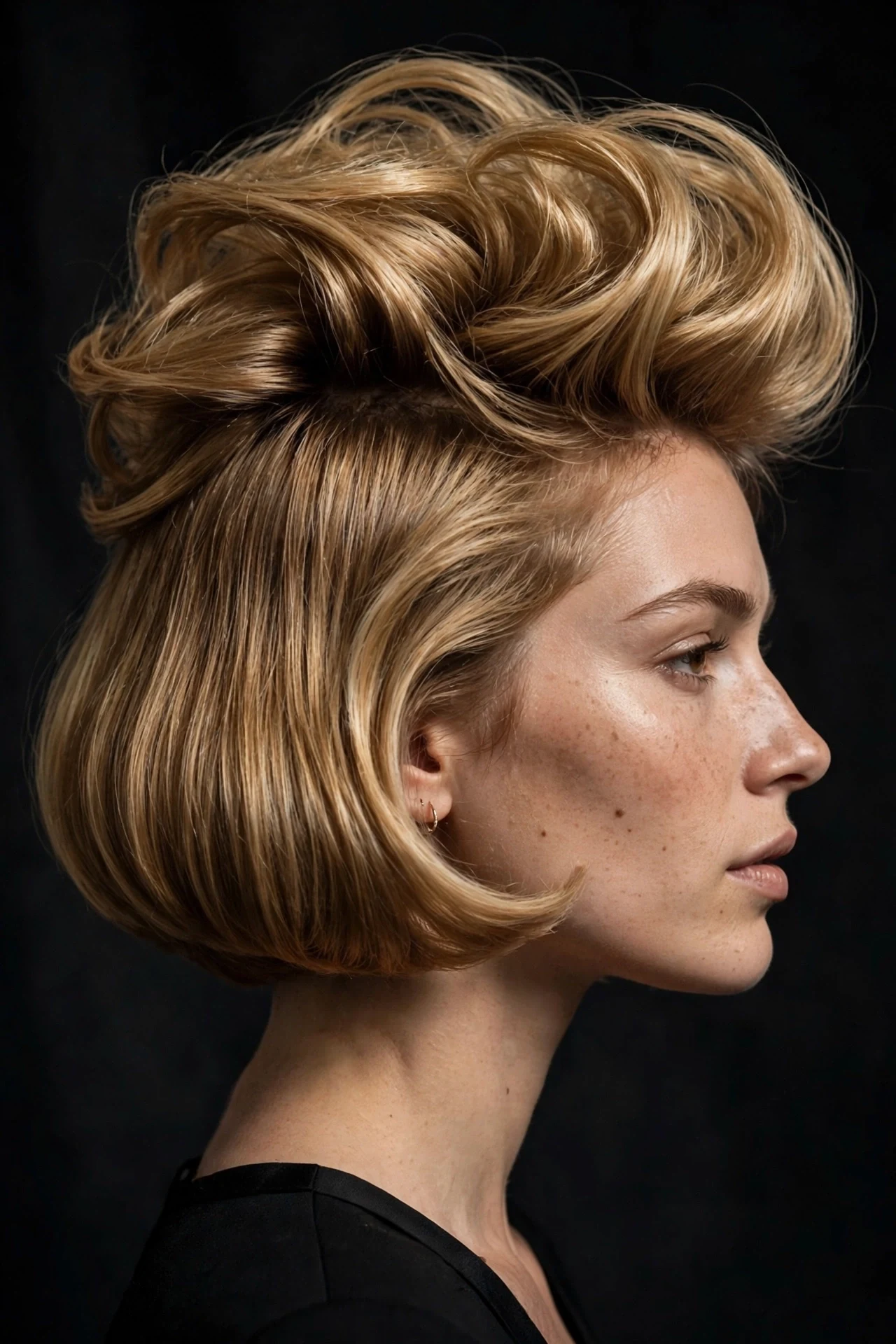
Start with the original, because it earned its reputation the honest way. The nape sits short and neat while the crown rises into a soft, rounded dome of volume. Seen from the side, you can read the whole story: tight underneath, sweeping longer toward the chin.
On fine hair this contrast does something magical. A clean nape makes everything above it look dramatically thicker, the way a dark frame makes a painting pop. It reads polished without ever looking stiff.Ask for a fine hair graduated bob with a tight tapered nape and gentle graduation through the crown. And bring photos, because “graduated” means slightly different things to every stylist.
Ask for a fine hair graduated bob with a tight tapered nape and gentle graduation through the crown. And bring photos, because “graduated” means slightly different things to every stylist.
2. The Stacked-Nape Graduated Bob
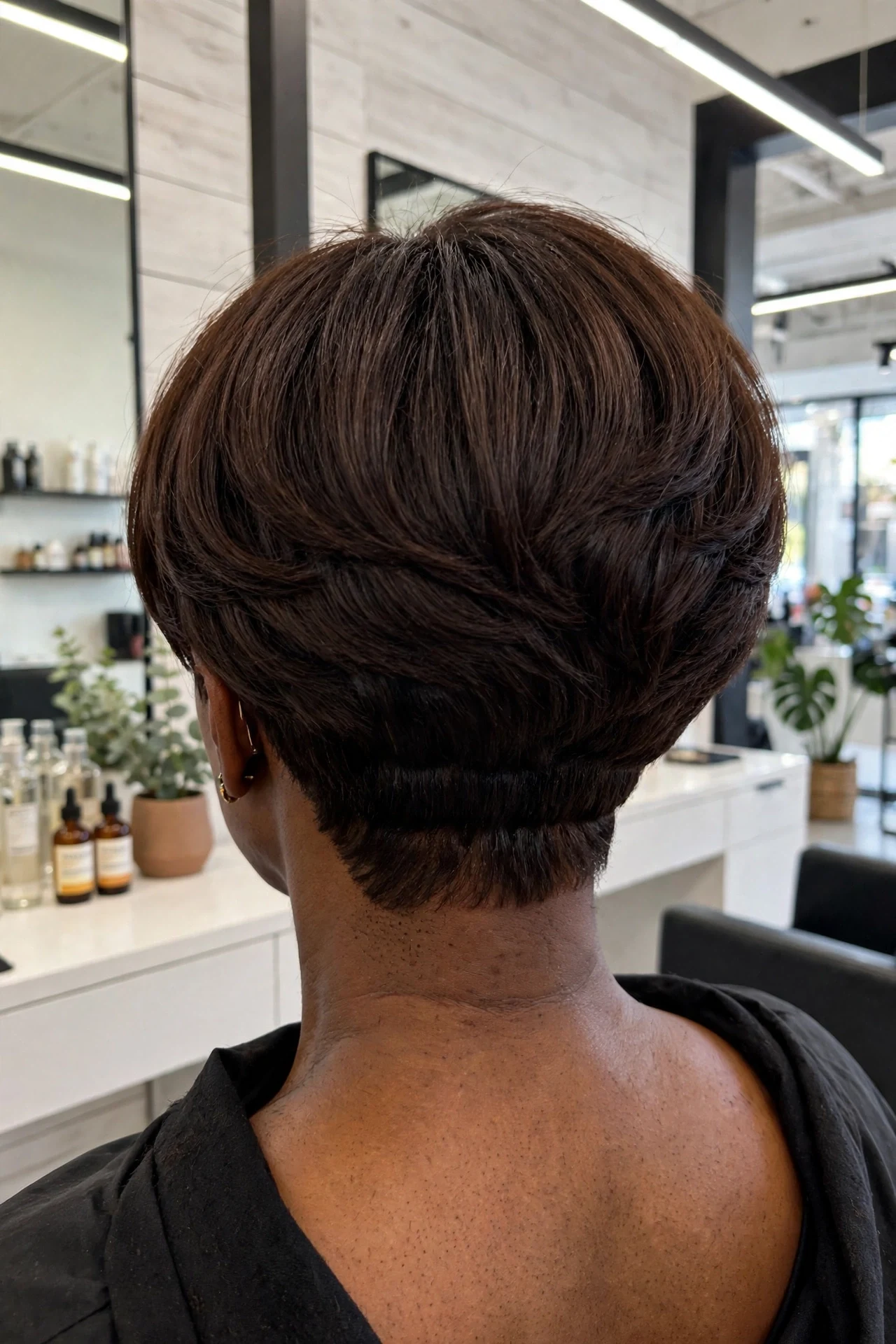
This is the one you get when you care about the back view as much as the front. The nape is stacked tight and immaculate, so the eye travels straight up to a crown that looks twice as full as it is.
There is a neatness factor here I cannot overstate. A tidy nape makes fine hair look intentional and expensive instead of sparse. Bonus: your neck stays cool all summer, which every client mentions as the surprise perk.
The honest maintenance note: stacked napes grow out fast. Book a nape clean-up every 4 to 5 weeks, or that crisp line softens and the whole shape loses its punch.
3. The A-Line Graduated Bob
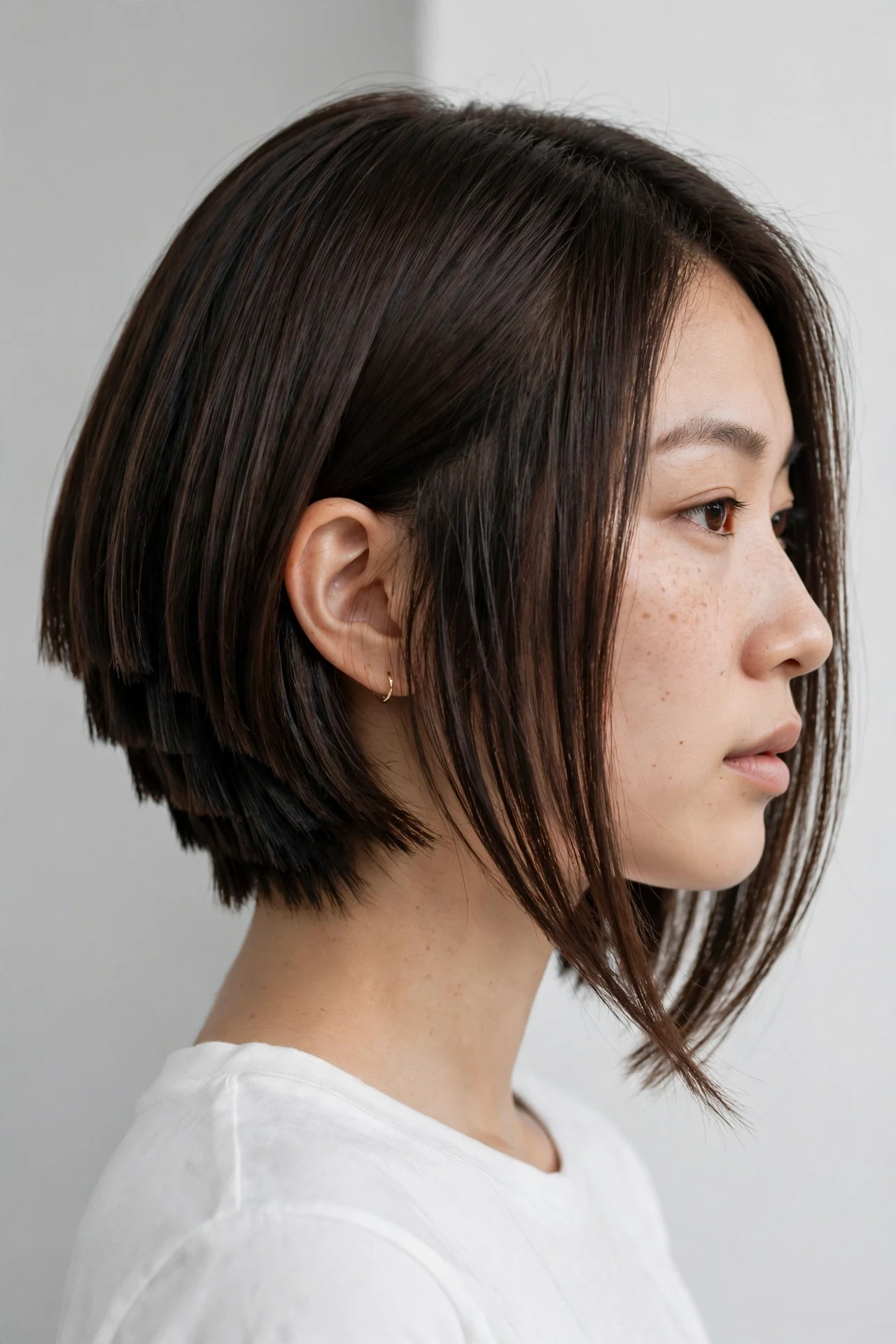
Short at the back, long at the front. The A-line is the sharpest arrow in the graduation family, and fine hair wears it beautifully because all that diagonal movement distracts from any sparseness at the scalp.
I love this one on straight hair especially. The long front pieces fall like a curtain and move when you move, while the graduated back quietly does the structural work. It is elongating, a little bit fierce, and it photographs like a dream.
One warning from the chair: the angle needs precision. As it grows out, the drama fades into just-a-bob, so plan trims every 6 weeks to keep it looking intentional.
4. The Textured Graduated Bob
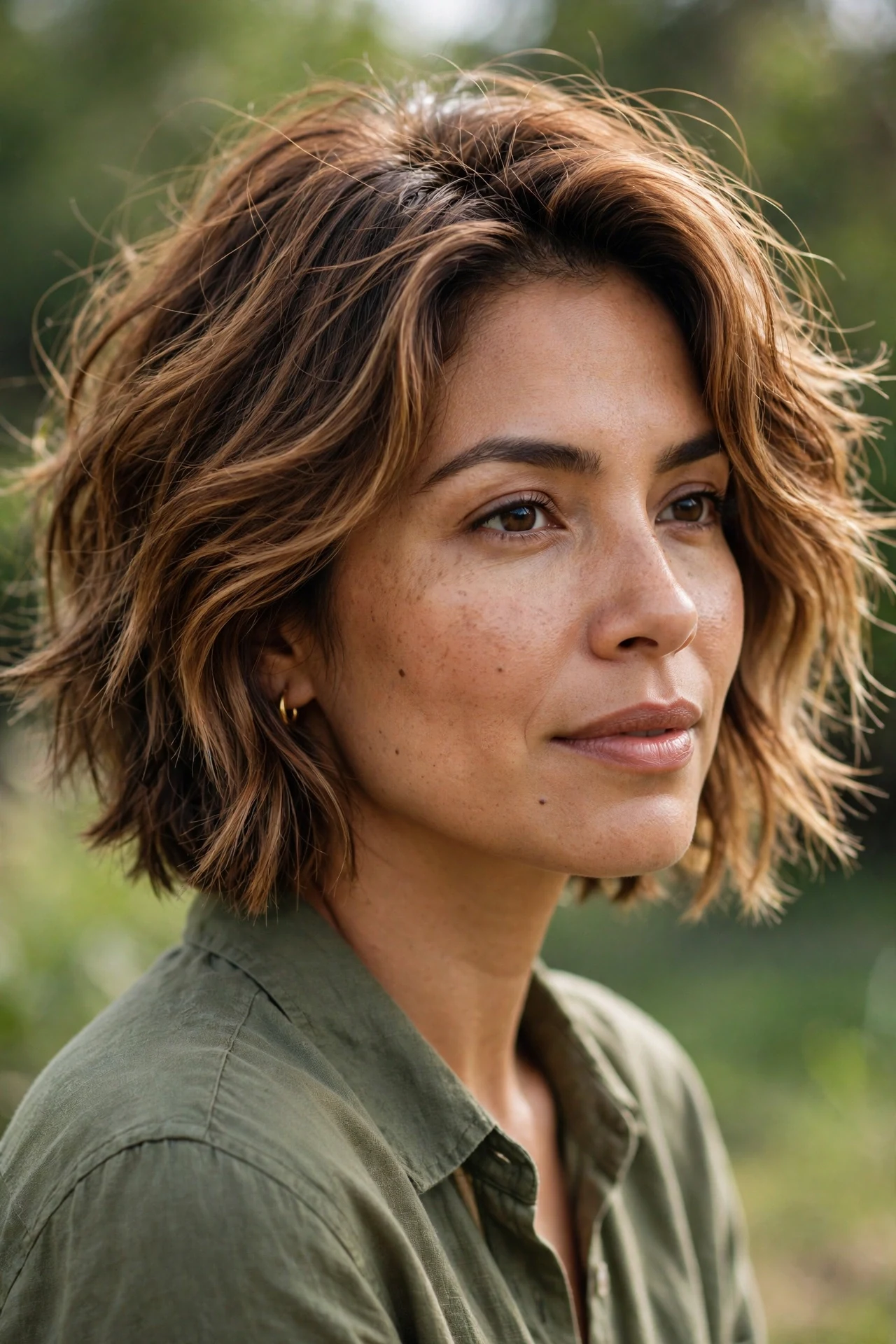
If the classic graduated bob is a tailored blazer, this is the same blazer with the sleeves pushed up. Piece-y, airy texture through the ends gives fine hair the movement it usually lacks, and movement reads as fullness.
The trick is where the texture lives. Keep it through the mid-lengths and ends, not up at the crown, or you lose the roundness that makes graduation work. Point cutting (not a razor) is my preference on fine strands.
Style it with a pea-sized amount of lightweight mousse and scrunch. Honestly, some days that is the entire routine.
5. The Sleek Graduated Bob
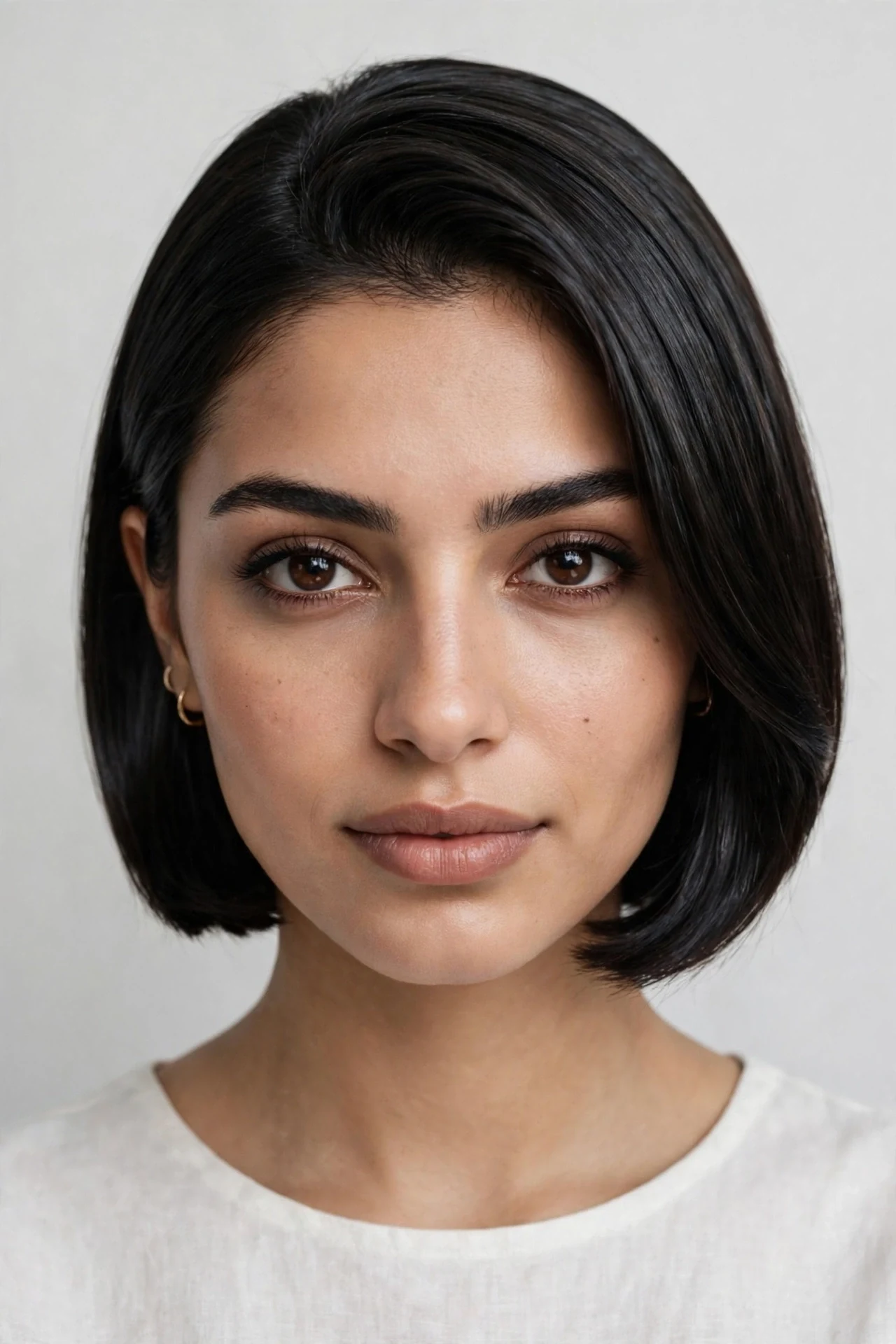
Now, forget the idea that fine hair must always be tousled to look full. A sleek, glass-shine finish on a fine hair graduated bob looks impossibly chic, and the graduation still gives it that curved, full silhouette.
The shine is doing real work here. Light bouncing off smooth, healthy-looking strands makes hair read denser than it is. I reach for a heat protectant with a little silicone and a flat brush, and I take my time at the crown, lifting each section as I go.
This is my top pick for the office or any event where you want to look like you have your life together. Sleek hair just says that.
6. The Graduated Lob
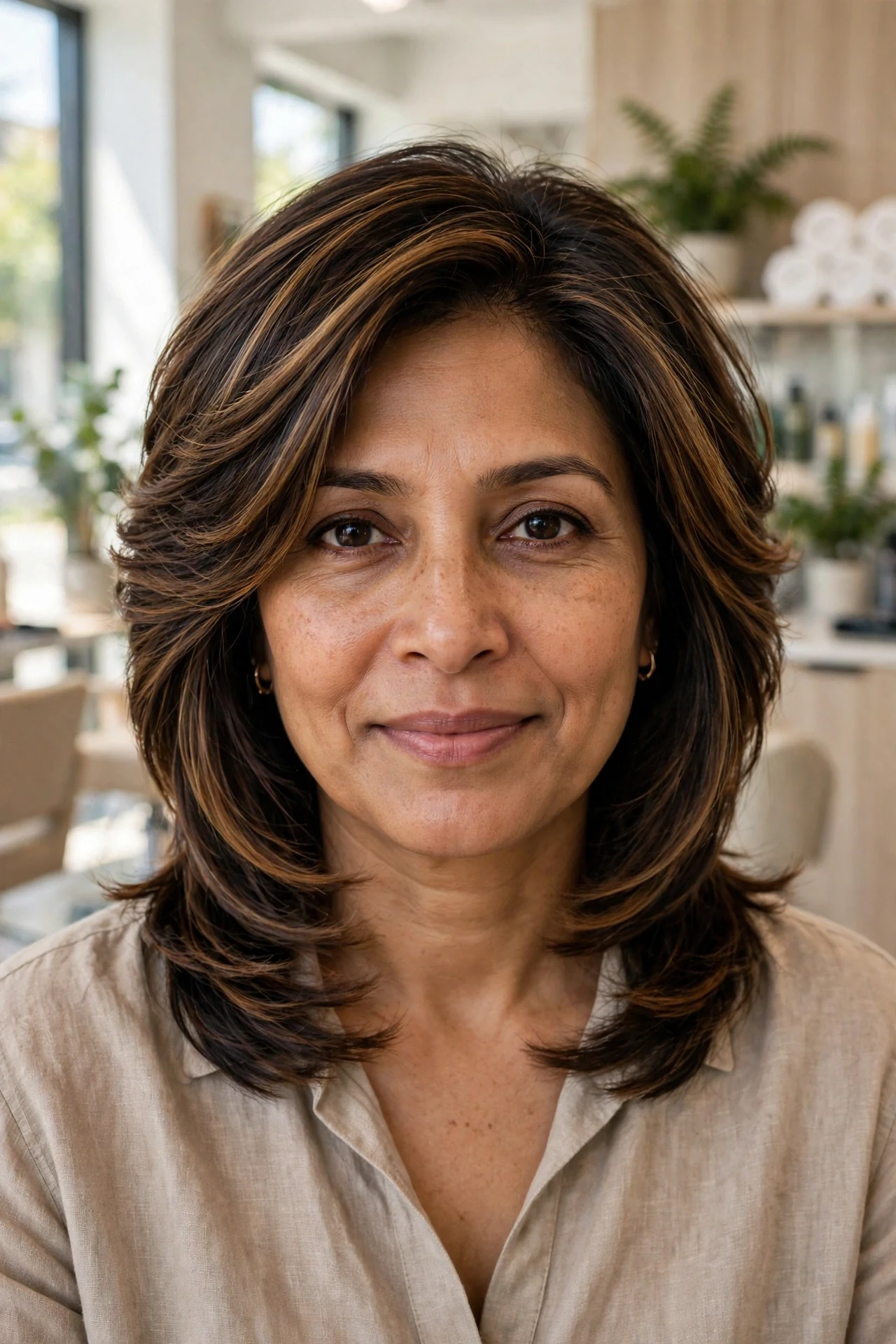
Not ready to go short? Meet the compromise cut. The graduated lob keeps you at collarbone length while borrowing every volume trick of the classic version. The back is graduated more gently, so the crown still lifts without sacrificing the length you love.
Fine hair that usually strings out and sulks at longer lengths suddenly has shape and swing. Long enough to pull back on busy days, short enough to actually hold a style. It is the best of both worlds and I will not be taking questions.
Keep the front pieces grazing the collarbone. Any longer and gravity starts winning again, and nobody wants that rematch.
7. The Inverted Graduated Bob
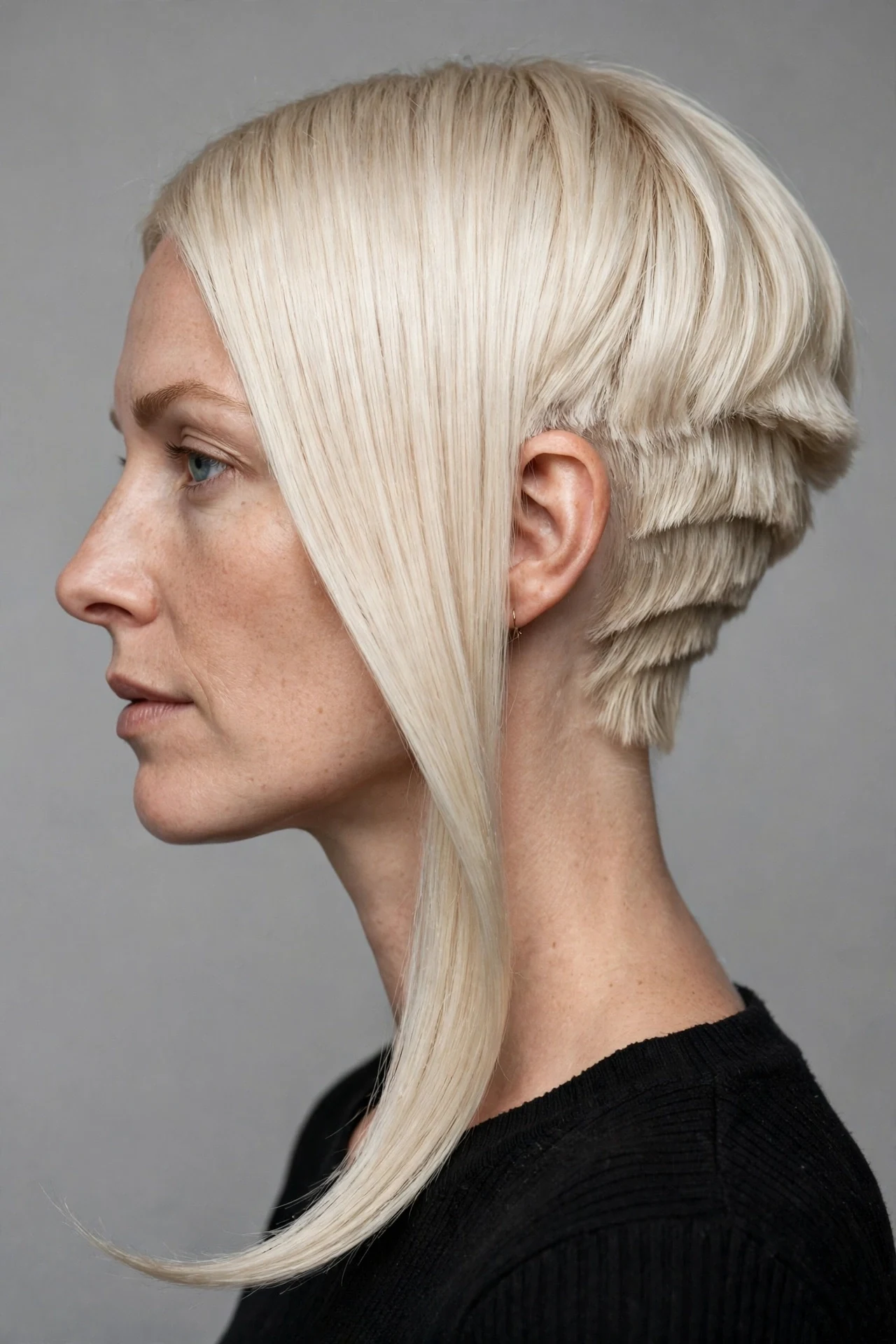
The inverted graduated bob is the showstopper of the family. Very short and stacked at the nape, swinging long at the front, with an angle so steep it practically has its own zip code.
Thin hair wears this one beautifully because the drama up front pulls all the attention forward. Nobody is looking at your scalp when your front pieces are doing that. It is elongating, elegant, and weirdly versatile: sleek for work, tousled for weekends.
Fair warning, this cut demands a confident hand. Interview your stylist a little. Ask to see their graduated work before you commit.
8. The Side-Swept Graduated Bob
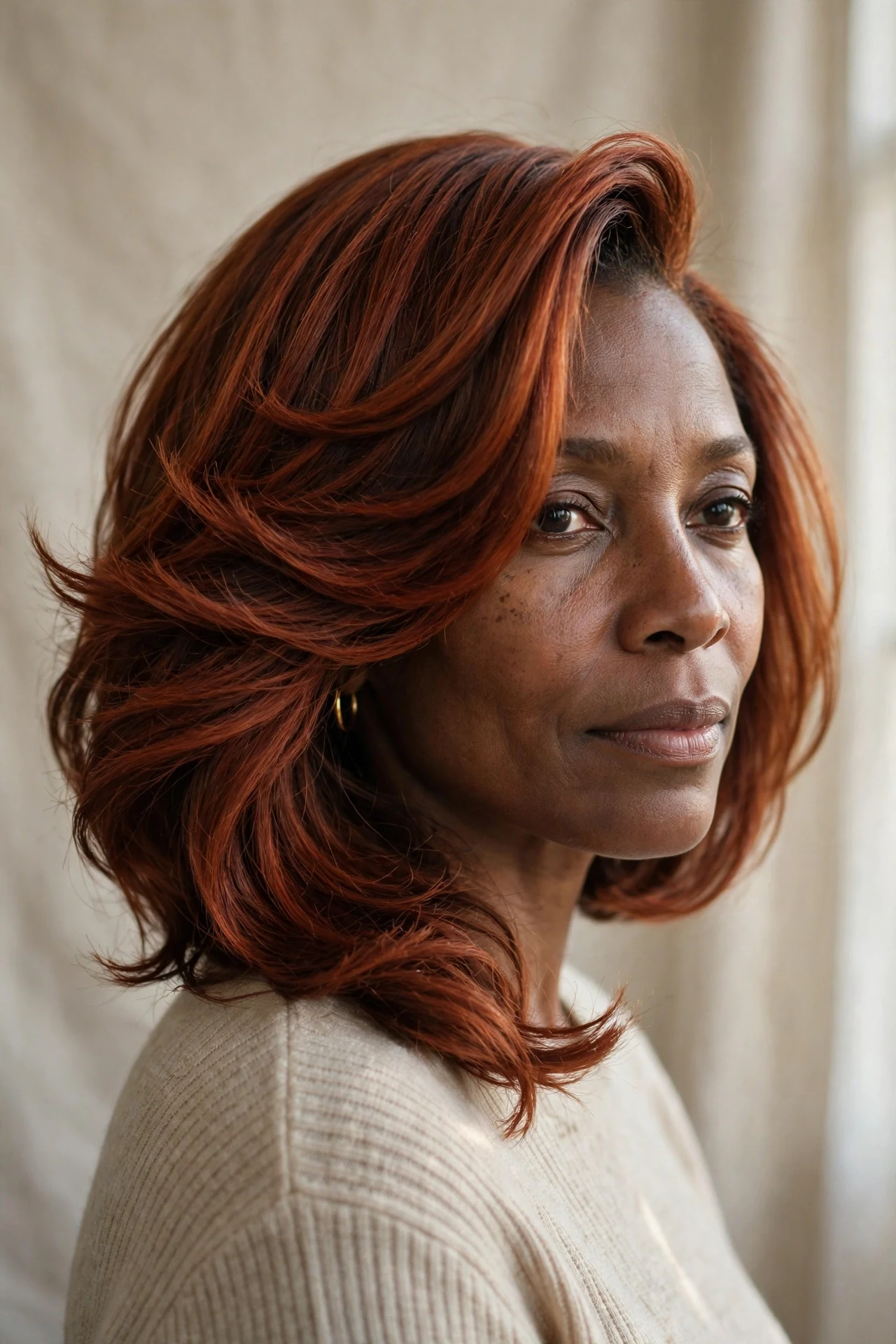
Sometimes the cut is only half the story. Flipping most of your hair to one side instantly doubles the visual fullness over there. Simple physics, gorgeous result. On a graduated bob the effect multiplies, because the layers underneath push all that swept hair even higher.
I suggest this to clients who want maximum change with minimum scissors. It is also a quiet hero for cowlicks and anyone whose center part has never once behaved itself.
Train the part while your hair is damp. Blow-dry in the opposite direction first, then flip it over. Roots have memory, and you can teach them where to lift.
9. The Curtain-Bang Graduated Bob
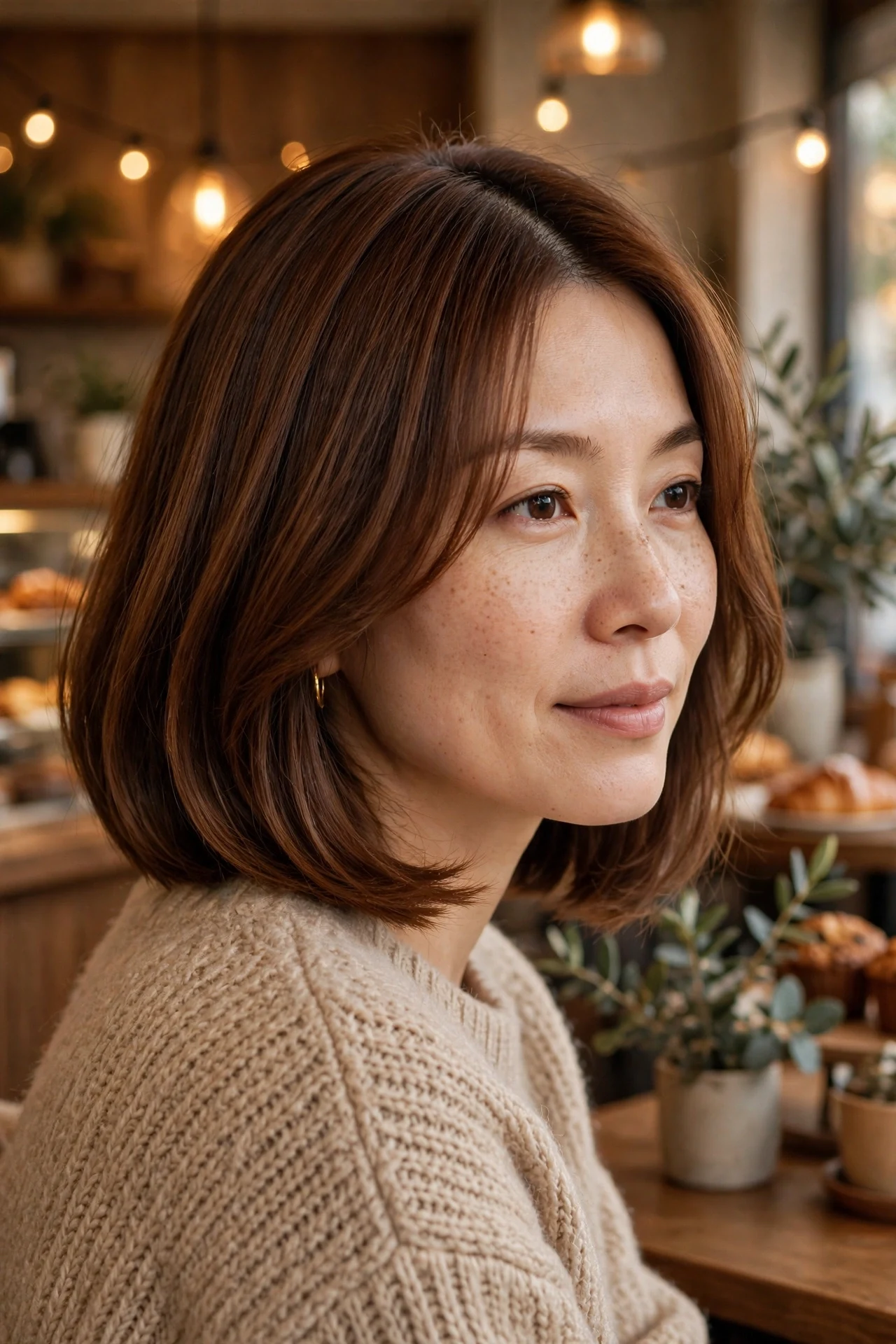
Curtain bangs plus a graduated back is a combination that just makes sense. The fringe frames the face and pulls the eye outward, which reads as width, while the graduation handles the crown. Together they cover every angle.
For fine hair, keep those curtain pieces long, grazing the cheekbones. Short, wispy curtain bits can go stringy on fine strands, while longer ones melt into the face-framing layers seamlessly.
One honest trade-off: bangs want trims every 4 to 6 weeks. If that commitment makes you tired just reading it, the side-swept version above gives you most of the effect with zero fringe maintenance.
10. The Wispy Fringe Graduated Bob
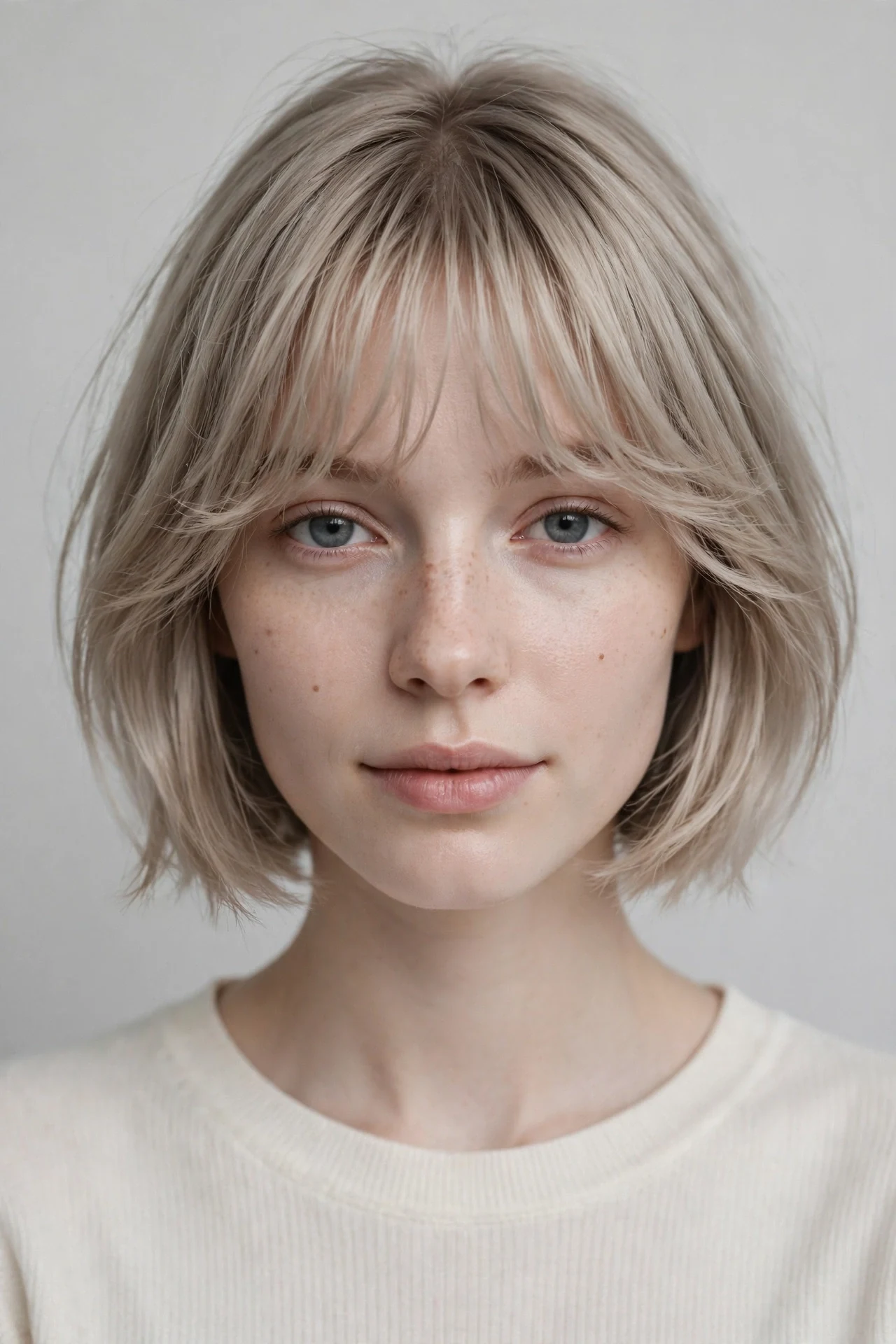
A heavy blunt fringe can swallow fine hair whole. A wispy one tells a completely different story. Feathered, piece-y bangs add softness around the forehead while the graduated structure keeps everything else standing tall.
Here is my hill to die on: this fringe must be cut dry. Wet cutting shrinks bangs up shorter than planned, and on fine hair there is no density to hide behind if they bounce up too far. I have seen the regret in the mirror. Do not be that client.
Of all the fine hair graduated bob variations with bangs, this is the softest and most forgiving. It grows out like a dream, blending straight into face-framing layers.
11. The Deep Side-Part Graduated Bob
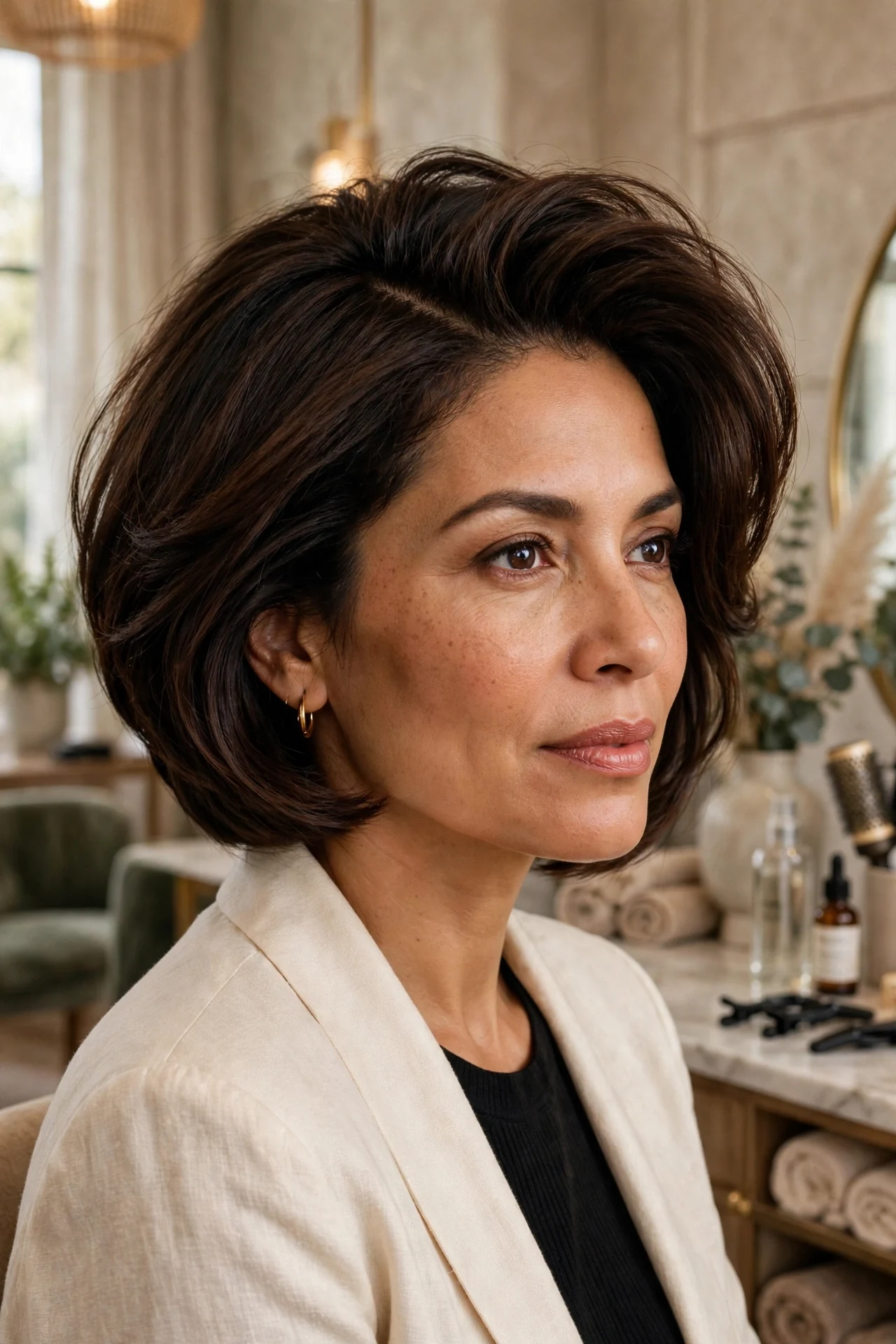
Want to know the cheapest volume trick in existence? It is free. A deep side part redistributes your hair’s volume to one side, where it becomes a glamorous sweep instead of flatness.
On a graduated bob this multiplies, because the crown is already lifted by the cut. You are essentially stacking tricks: the haircut’s architecture plus the part’s redistribution. Clients always look shocked at how different they look with just a part change.
My styling shortcut: a little root-lifting spray at the part, a round brush, and five extra seconds of heat. That is the whole production.
12. The Razored Graduated Bob
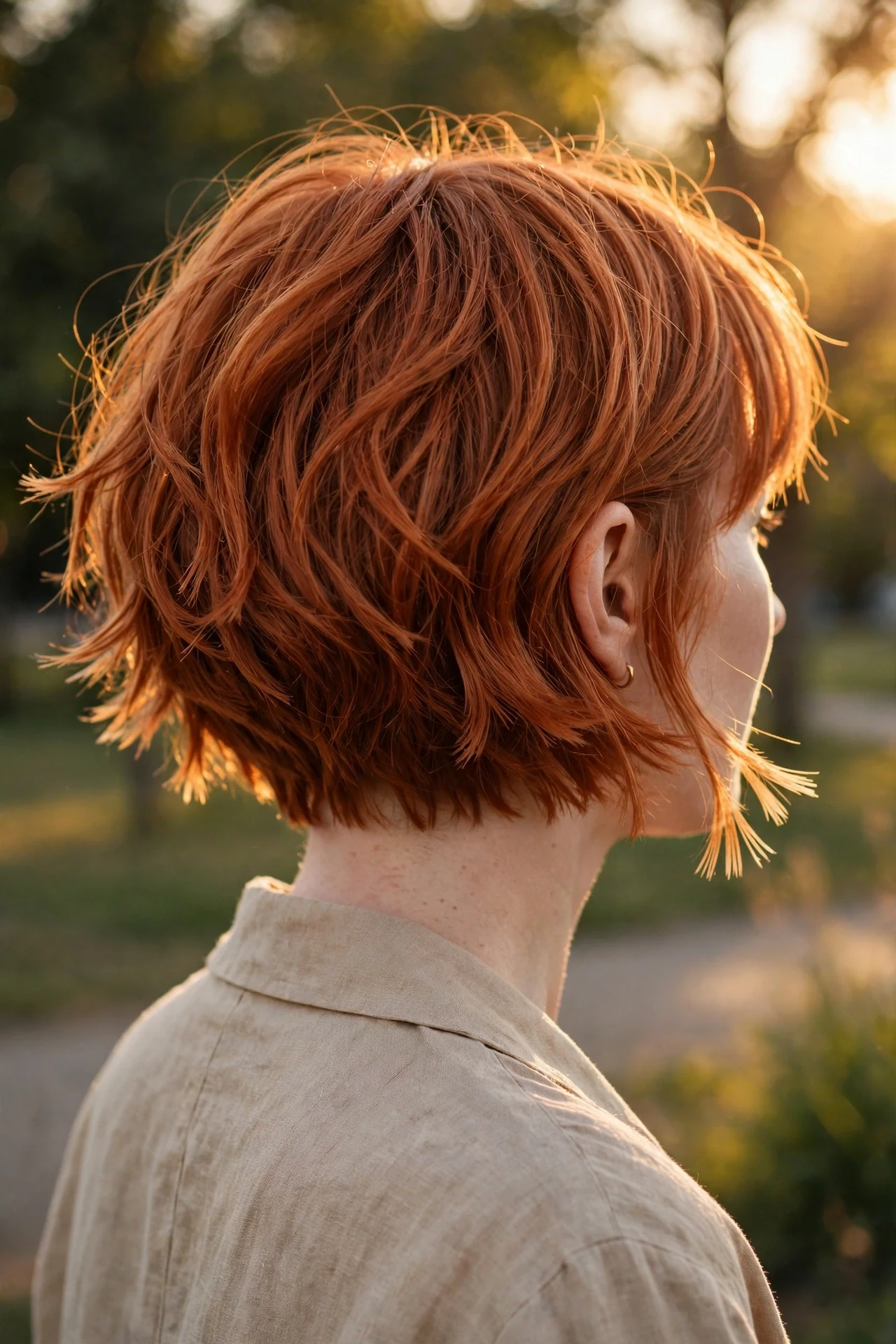
A razor in the right hands is pure magic on fine hair. Feathery, separated ends create the illusion of more strands than you actually have, and the graduated shape underneath keeps it from going flat.
The key word is “right hands.” An aggressive razor on fine hair can turn ends wispy and sad. Ask for light razoring through the ends only, with the crown left clean and solid so the roundness survives.
This cut loves a little chaos. Air-dry it, scrunch in some texture cream, and walk out the door. It is the wash-and-go queen of the graduation family.
13. The Face-Framing Graduated Bob
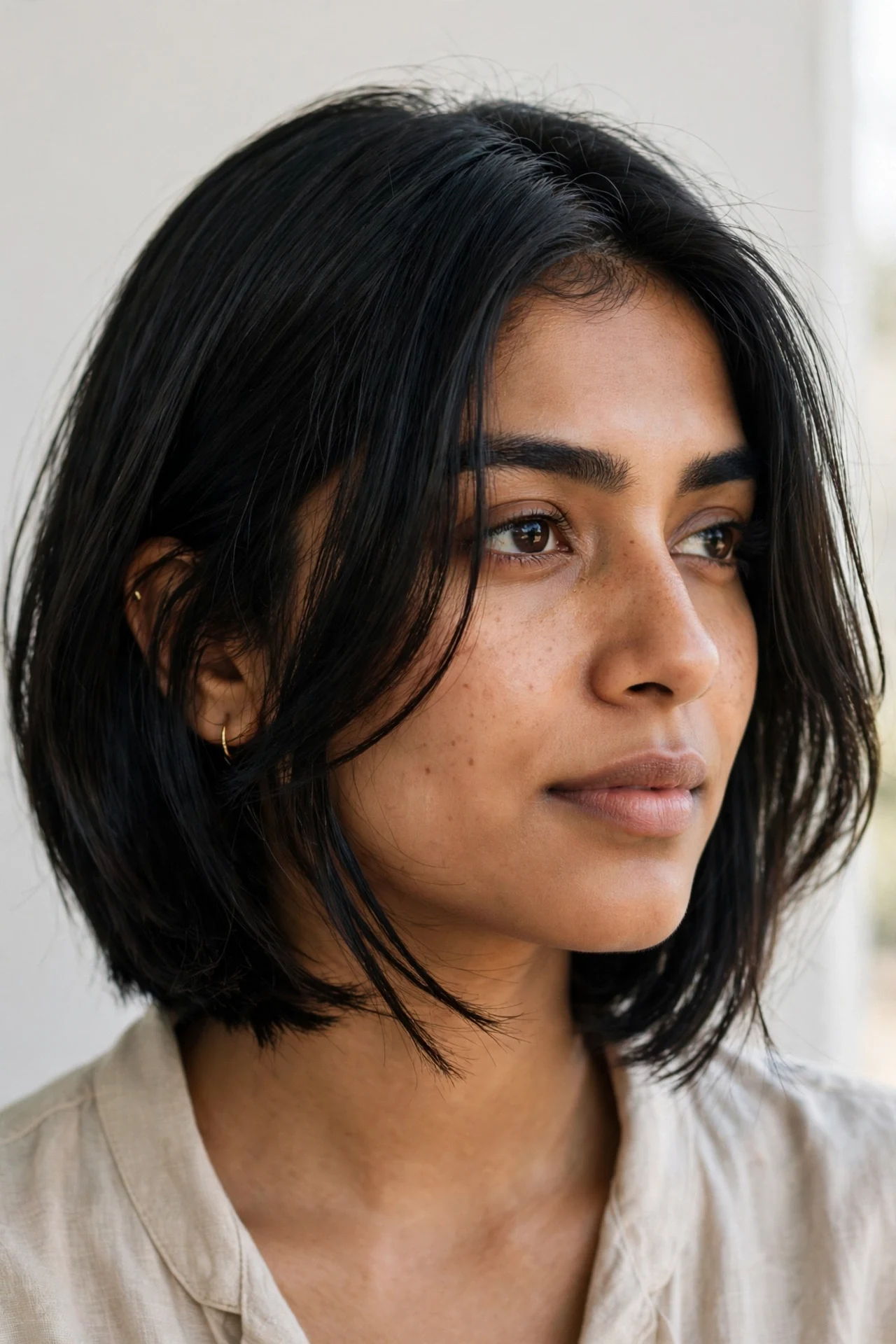
Here is a version for everyone who thinks bobs are all about the back. Long, soft pieces around the face draw the eye to your cheekbones and jaw, and they make the whole haircut look more expensive.
The framing layers should start no higher than the chin on fine hair. Any shorter and they can look sparse; longer pieces lie smoothly and blend into the graduated body of the cut. It is a small detail that changes the entire feel.
I especially love this on oval and long faces. Those front pieces break up length in the most flattering way.
14. The Blunt Graduated Bob

Sounds like a contradiction, right? Blunt ends on a graduated cut. But hear me out: keeping the perimeter solid and full while the interior is graduated gives you the best of both worlds. Volume at the crown, thickness at the ends.
This is the fine hair graduated bob I recommend to clients whose ends always look see-through. That crisp bottom edge makes every strand count. No wispy bits, no apologies.
It needs trims every 6 to 8 weeks to stay sharp, because blunt edges show growth first. Worth it. A fresh blunt edge is one of life’s small, perfect pleasures.
15. The Wavy Graduated Bob
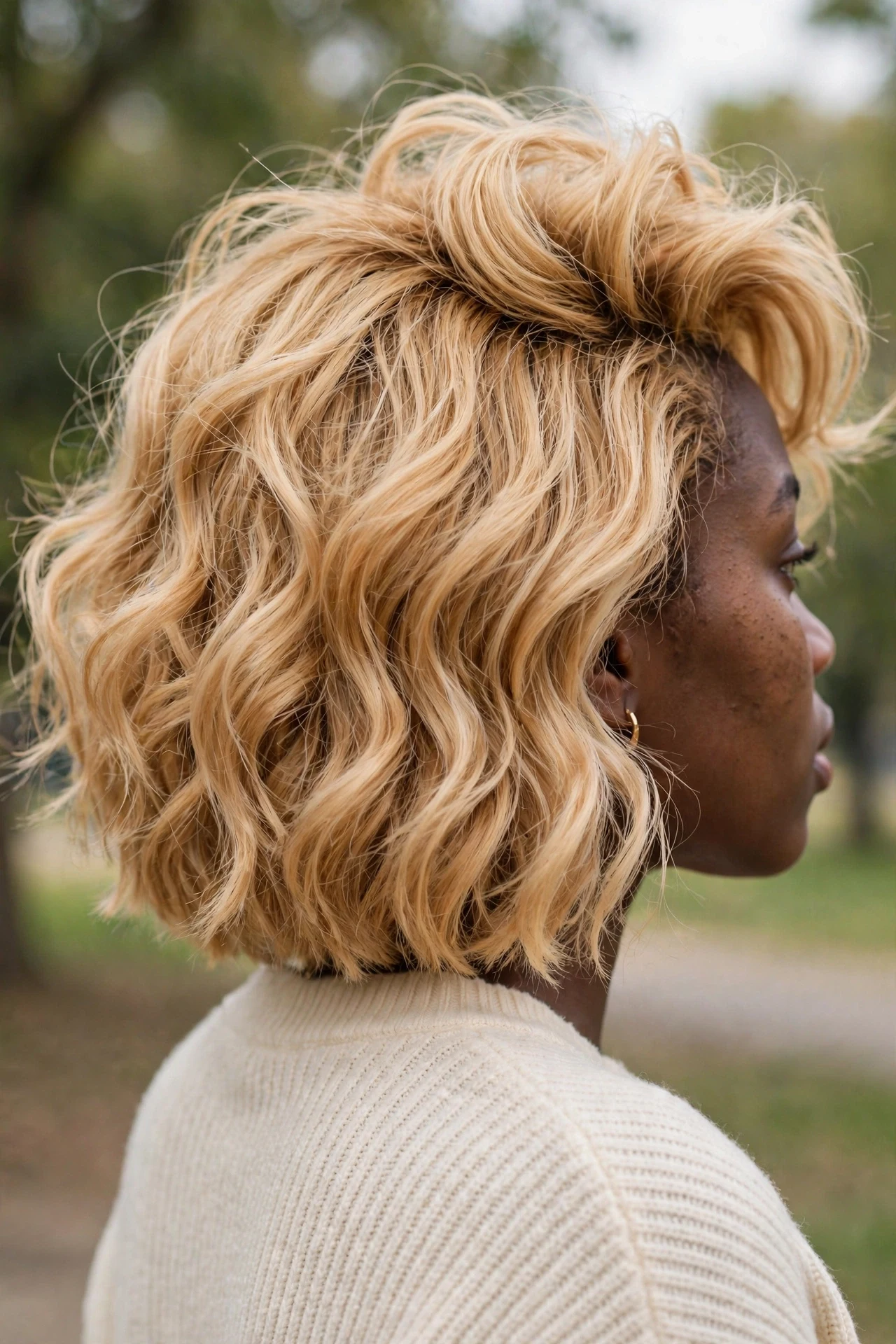
Waves and graduation are a match made in heaven. The cut builds the roundness, and the waves add the kind of airy separation that makes fine hair look twice as abundant.
The styling secret nobody tells you: wave it in alternating directions. One piece toward your face, the next away. That zigzag pattern stops the hair from clumping into one flat curtain and keeps every wave visible.
Finish with a light-hold spray, not a heavy one. Fine wavy hair collapses under product weight, and we did not do all this work just to flatten it again.
16. The Balayage Graduated Bob
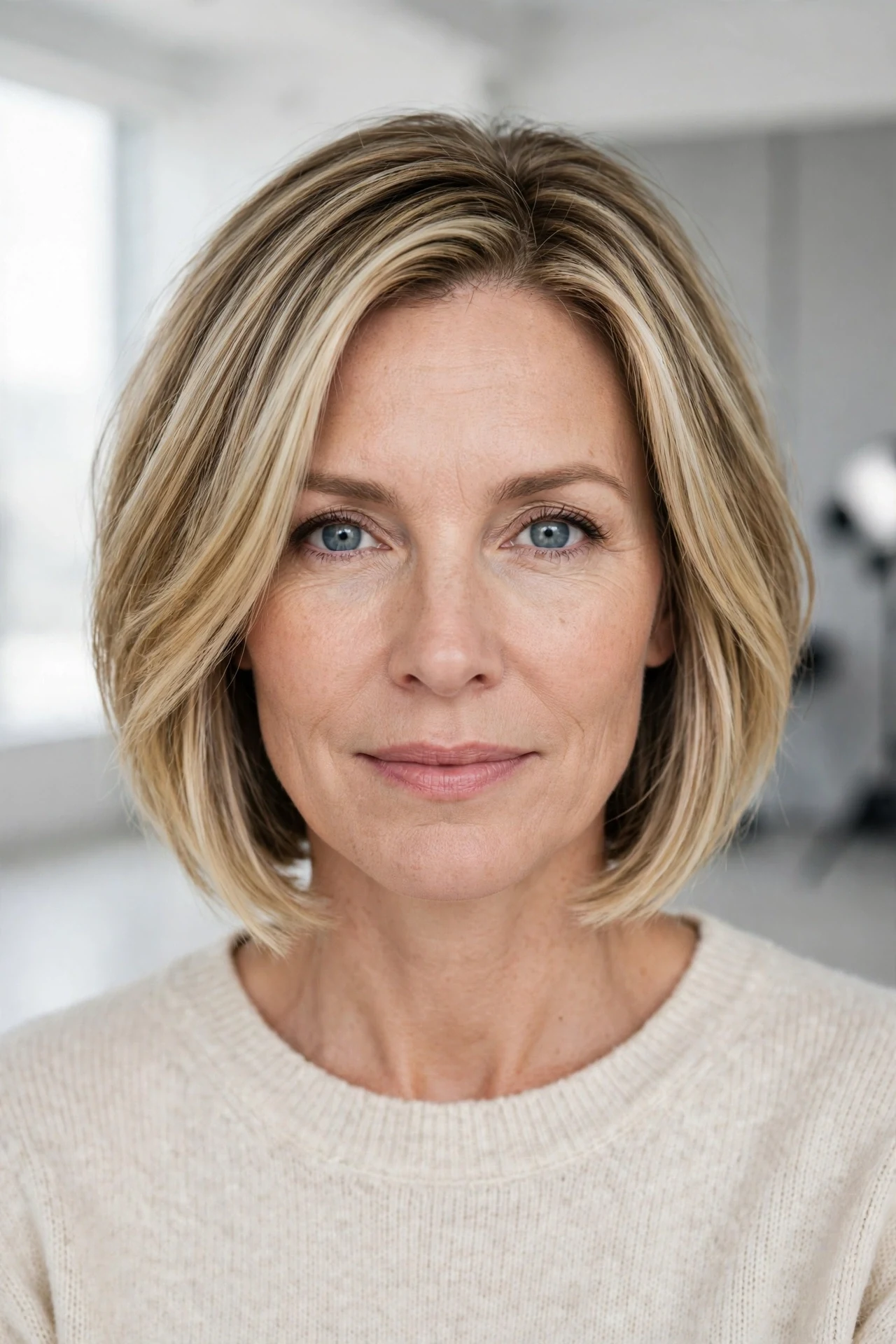
Color is a volume tool, and I will die on this hill. Balayage painted through a graduated bob creates light and shadow that the eye reads as depth, and depth reads as thickness. It is an optical illusion you can wear to brunch.
Ask your colorist to concentrate the lightness through the crown and ends, keeping the roots a touch deeper. That contrast is what creates the dimension. Flat, one-process color on fine hair does the opposite of what you want.
Bonus: balayage grows out softly, so you are not chained to the salon every month. Your wallet says thanks.
17. The Copper Graduated Bob
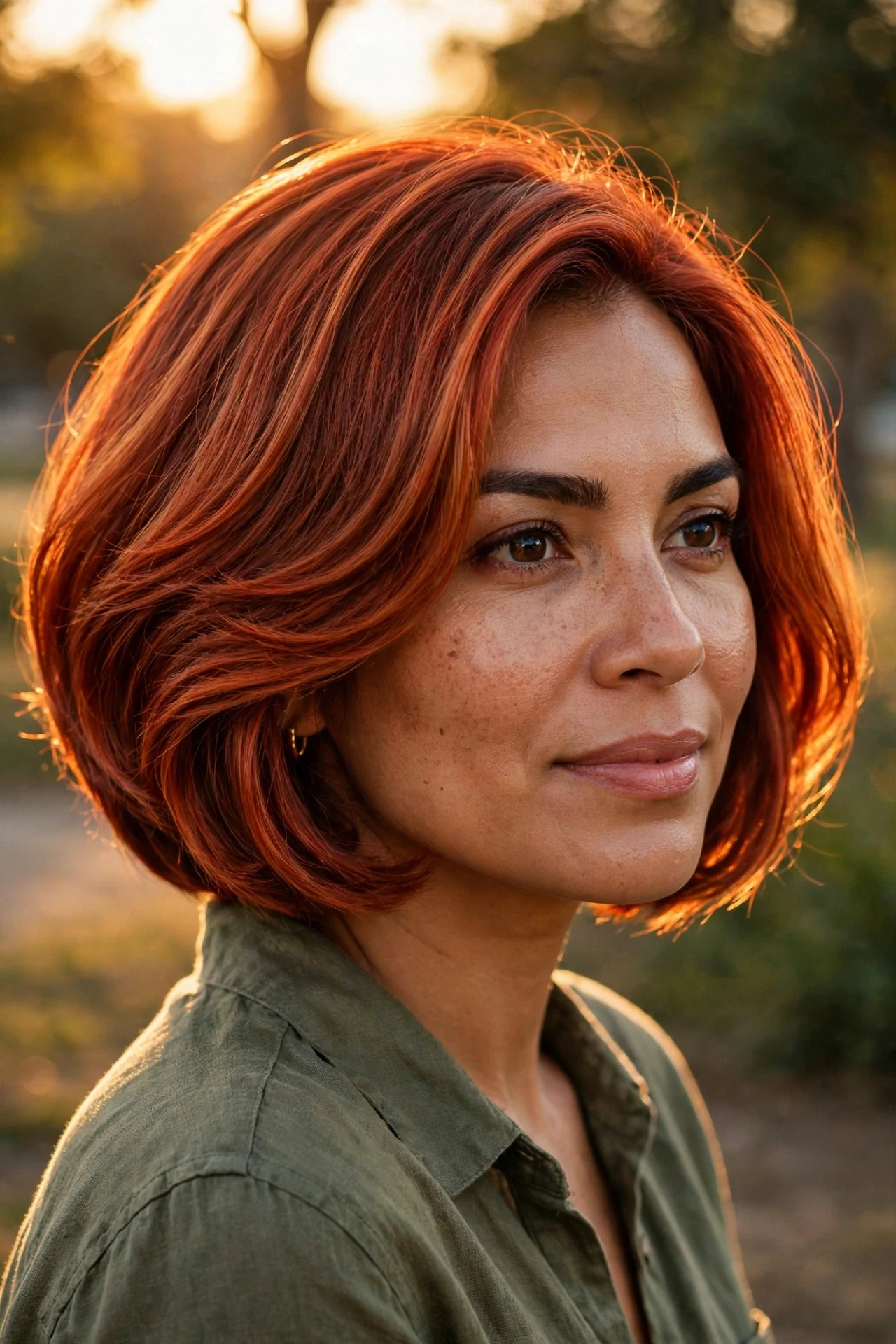
If you are going to commit to a graduated bob, why not commit to a color with main-character energy? Copper makes fine hair look richer and denser, especially in sunlight, where all those warm tones catch the light.
This shade does demand upkeep. Copper fades faster than almost any color, so invest in a color-depositing conditioner and wash in cool water. I tell my copper clients to think of it as a skincare routine, but for hair.
The payoff is enormous. A copper graduated bob turns heads in a way brown never will. Just saying.
18. The Silver Graduated Bob for Women Over 50
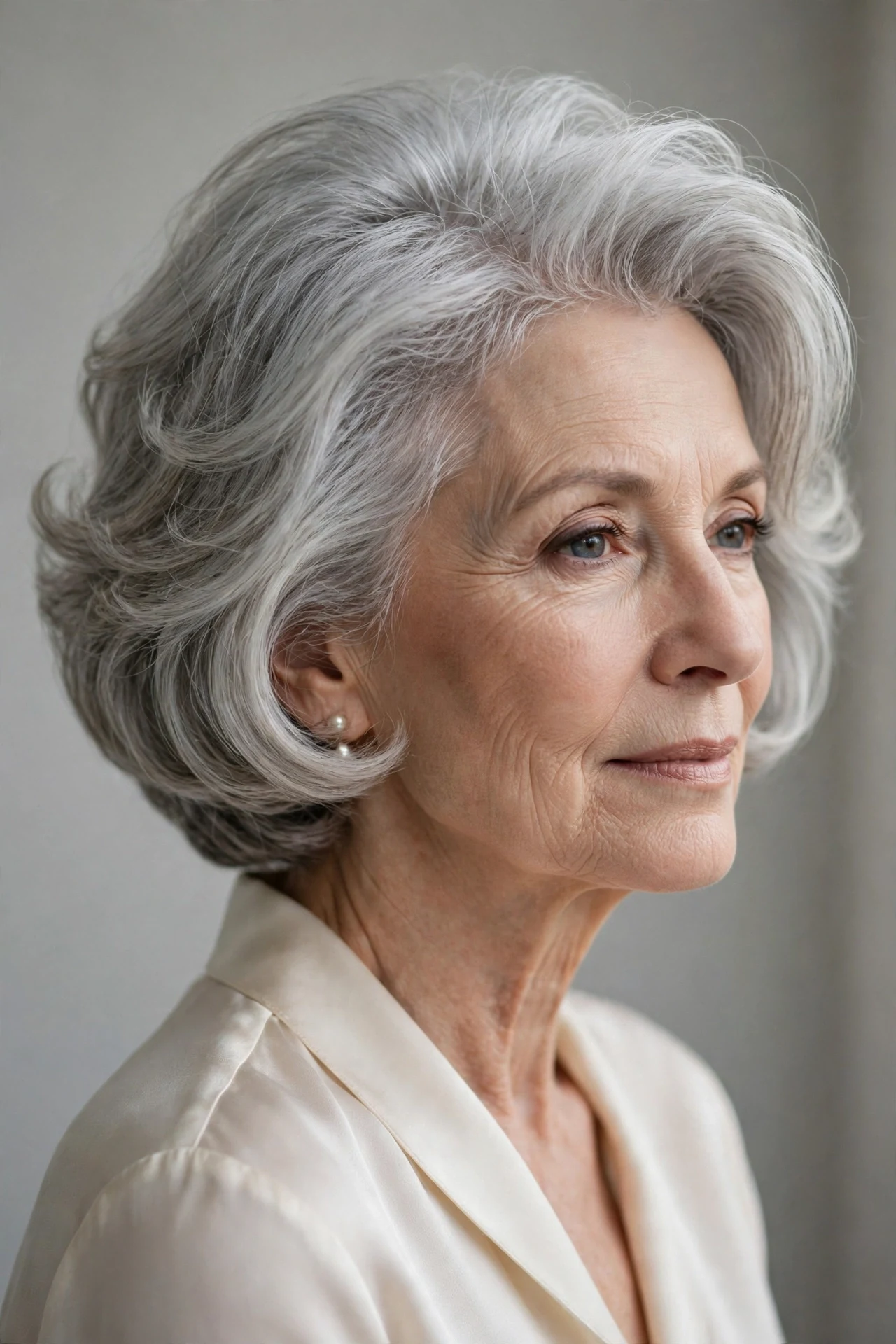
Silver hair and graduation were made for each other. The cut gives fine, aging hair the lift it loses over time, and silver’s natural dimension does the rest. This is elegance with zero effort.
Keep the graduation soft rather than severe. A gentle, rounded shape flatters mature faces far more than a dramatic angle. And a purple shampoo once a week keeps the silver bright instead of dull.
I have watched this cut take ten years off clients. Not a facelift, not fillers. Just a really, really good haircut.
19. The Asymmetrical Graduated Bob
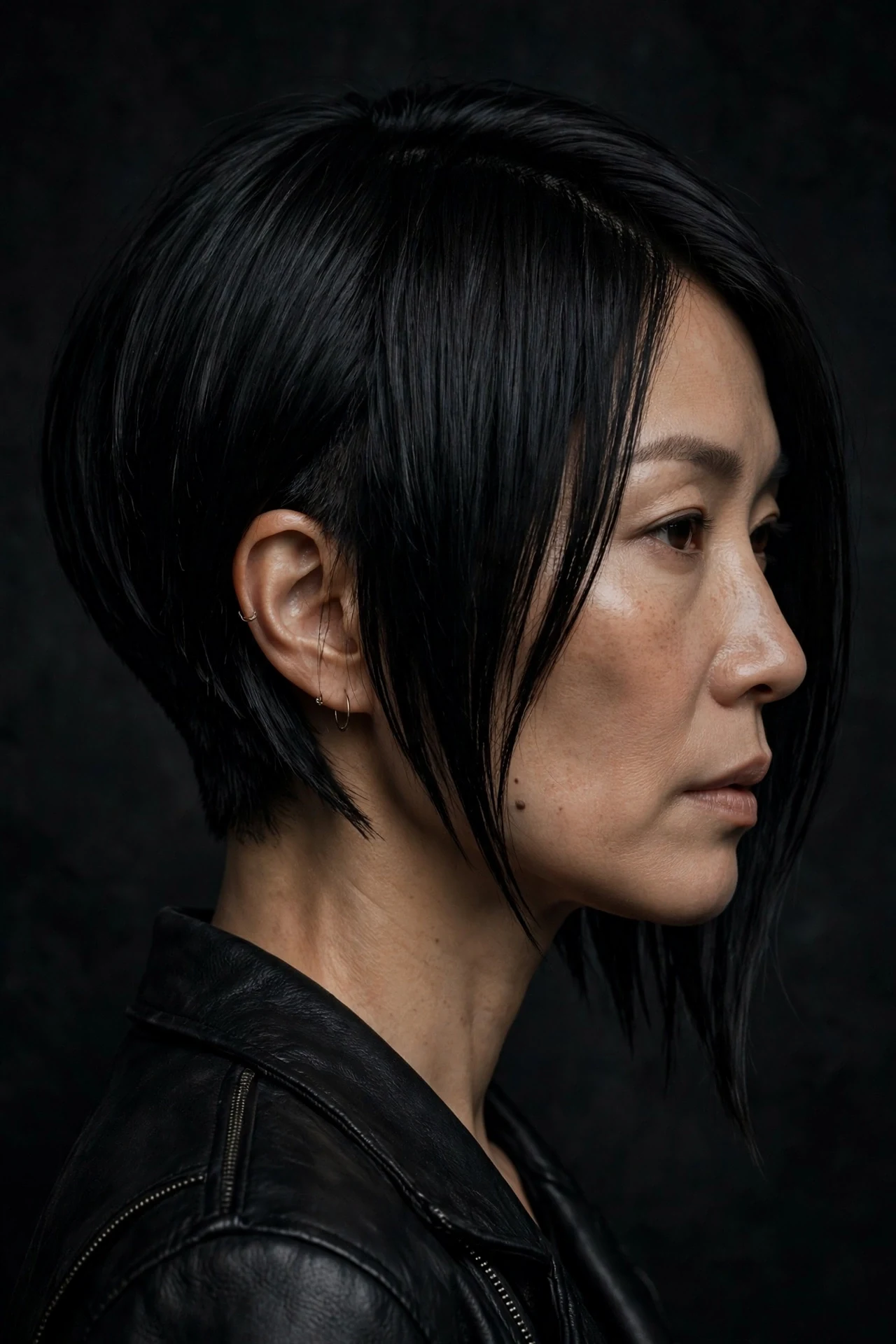
One side longer than the other. It sounds simple, but asymmetry is the ultimate distraction technique: the eye follows the line instead of hunting for thin spots. Clever, right?
A fine hair graduated bob with an asymmetrical finish also reads instantly modern. It is the version I suggest when a client says she wants “something different” but cannot articulate what. This is the what.
Keep the difference subtle, an inch or two at most, unless you are feeling bold. Subtle asymmetry looks chic; extreme asymmetry looks like a dare.
20. The Curly Graduated Bob
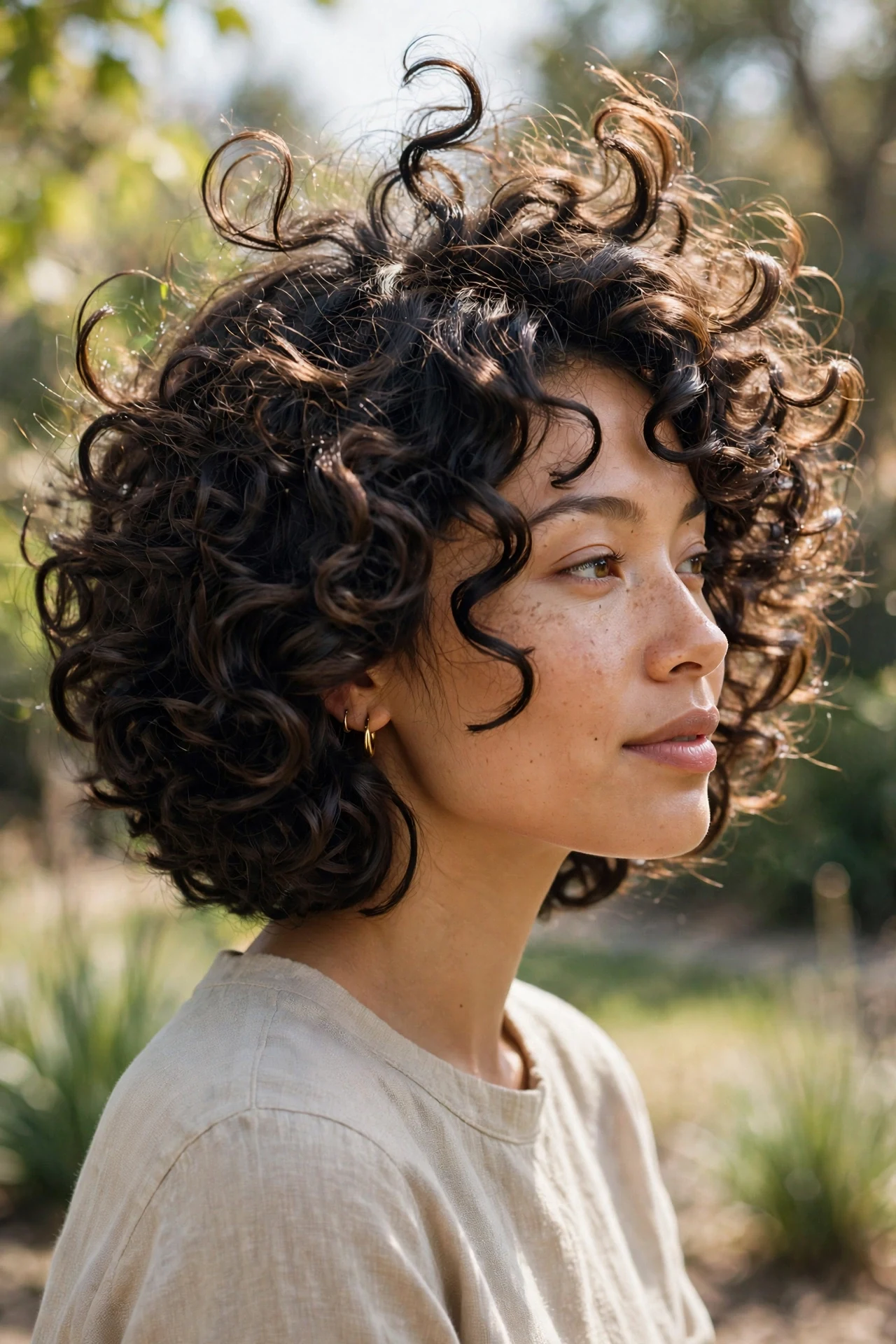
Curly girls, graduation is your best friend. Cutting curls at an angle lets them spring up instead of dragging down, so fine curly hair gets height instead of a triangle. Yes, the triangle. We all know the triangle.
The golden rule: cut it dry, curl by curl. Wet cutting on curls is a gamble because of shrinkage, and on fine curls there is no margin for error. Find a stylist who dry-cuts curls and never look back.
Style with a curl cream on soaking wet hair, then diffuse or air-dry. The graduation does the heavy lifting; the cream just keeps the frizz polite.
21. The Choppy Graduated Bob
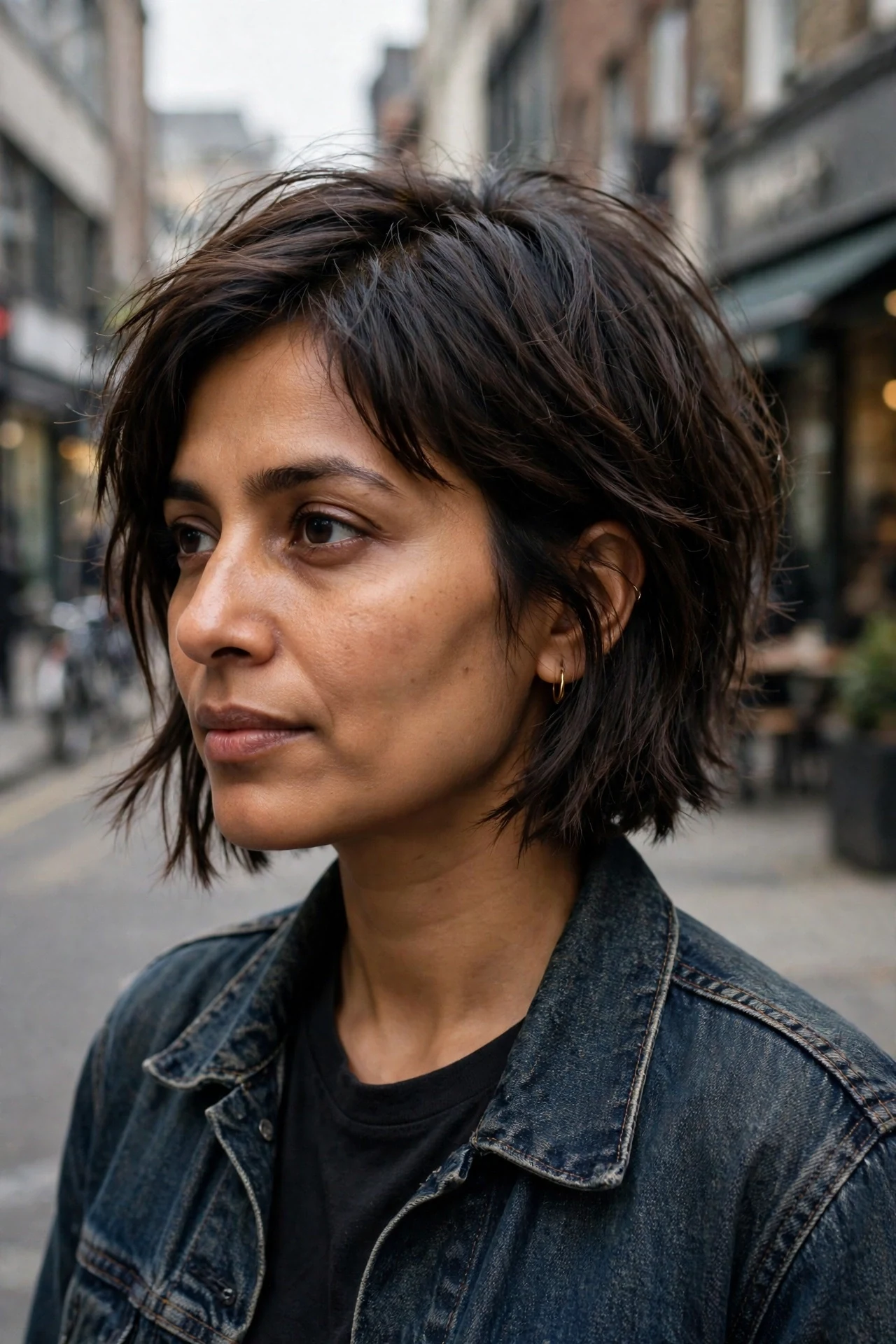
Choppy layers are texture’s louder cousin. Where the textured version whispers, this one talks with its hands. Separated, piece-y layers give fine hair an undone, lived-in fullness that looks effortless even when it took ten minutes.
The trick is balance. Too much choppiness up top and you lose the crown roundness that graduation provides. I keep the choppiness through the mid-lengths and ends, and let the crown stay smooth and full.
This is the cool-girl cut of the bunch. It pairs beautifully with a leather jacket and an attitude.
22. The French Graduated Bob

We end where all good taste ends: Paris. The French graduated bob sits right at the jaw, understated and immaculate, with just enough graduation to keep it from lying flat. It is the quiet luxury of haircuts.
What makes it French is the restraint. No drama, no extreme angles, just a perfect shape that looks like you woke up that way. (You did not. Nobody does. That is the secret.)
A fine hair graduated bob in this French style suits absolutely everyone, which is a claim I do not make lightly. If you are overwhelmed by 21 options, start here. You cannot go wrong.
The Bottom Line
Here is what I want you to take away: fine hair was never a problem to hide. It is a hair type to cut for. A fine hair graduated bob does not fight your hair’s nature; it works with it, building in the volume that nature forgot.
Start by saving your favorites from this guide to a Pinterest board. Future you, sitting in the salon chair with phone in hand, will be so grateful. Then book the appointment, bring the photos, and use the magic words: graduated at the nape, for volume.
Want to keep exploring? These stacked bob haircuts for thin hair are the perfect next read. If you are torn on length, our long layered bob for fine hair guide will help you decide. And for a second opinion from the pros, Allure’s gallery of bob haircuts and hairstyles rounds up even more stylist-approved inspiration.
Will a graduated bob work on very fine hair?
Yes, and it is honestly one of the smartest cuts for it. The shorter layers underneath act like scaffolding, lifting everything above them. Even very fine hair gains visible fullness because the shape is built into the cut rather than faked with product.
What is the difference between a graduated bob and a stacked bob?
They are close cousins and the terms get mixed up constantly. “Graduated” describes the technique: hair cut at an angle, shorter underneath. “Stacked” describes the look: visible layers piled at the back. Most stacked bobs are created with graduation, so you will hear both words in the salon.
How do I ask my stylist for a fine hair graduated bob?
Bring photos, and save a few from this guide to your phone. Then use the magic words: “graduation at the nape for volume, keeping the ends full.” Mention that your hair is fine and you want the cut to create fullness while keeping enough weight at the perimeter to look thick.
How often should I get a graduated bob trimmed?
Every 6 to 8 weeks. As the nape grows out, the graduation loses its precision and the shape starts to collapse. A quick clean-up at the back restores the lift instantly. It is genuinely the cheapest volume boost in beauty.
Can I wear a graduated bob with wavy or curly hair?
Absolutely. Graduation actually helps texture spring up instead of dragging down. Ask for slightly longer layers than you would for straight hair, since waves and curls shrink the length. Dry cutting is the gold standard for textured hair.
Will a graduated bob make my ends look thinner?
Not if it is cut right. The graduation lives in the interior and at the nape; your stylist should keep the perimeter solid and full. If your ends always look see-through, ask for the blunt version in this guide. That crisp edge makes every strand count.
Sana Malik is a hair and beauty writer with a deep love for the bob in all its forms from sharp French bobs to soft, lived-in lobs. After years of experimenting with her own short hair and helping friends figure out what actually suits their face shape, she started writing to cut through the confusing advice out there. At BobHairTrends, she breaks down each cut into simple, honest guides: how to ask for it, how to style it at home, and who it really flatters. When she isn’t researching the latest trends, she’s usually testing a new styling product or convincing someone it’s finally time for the chop.