

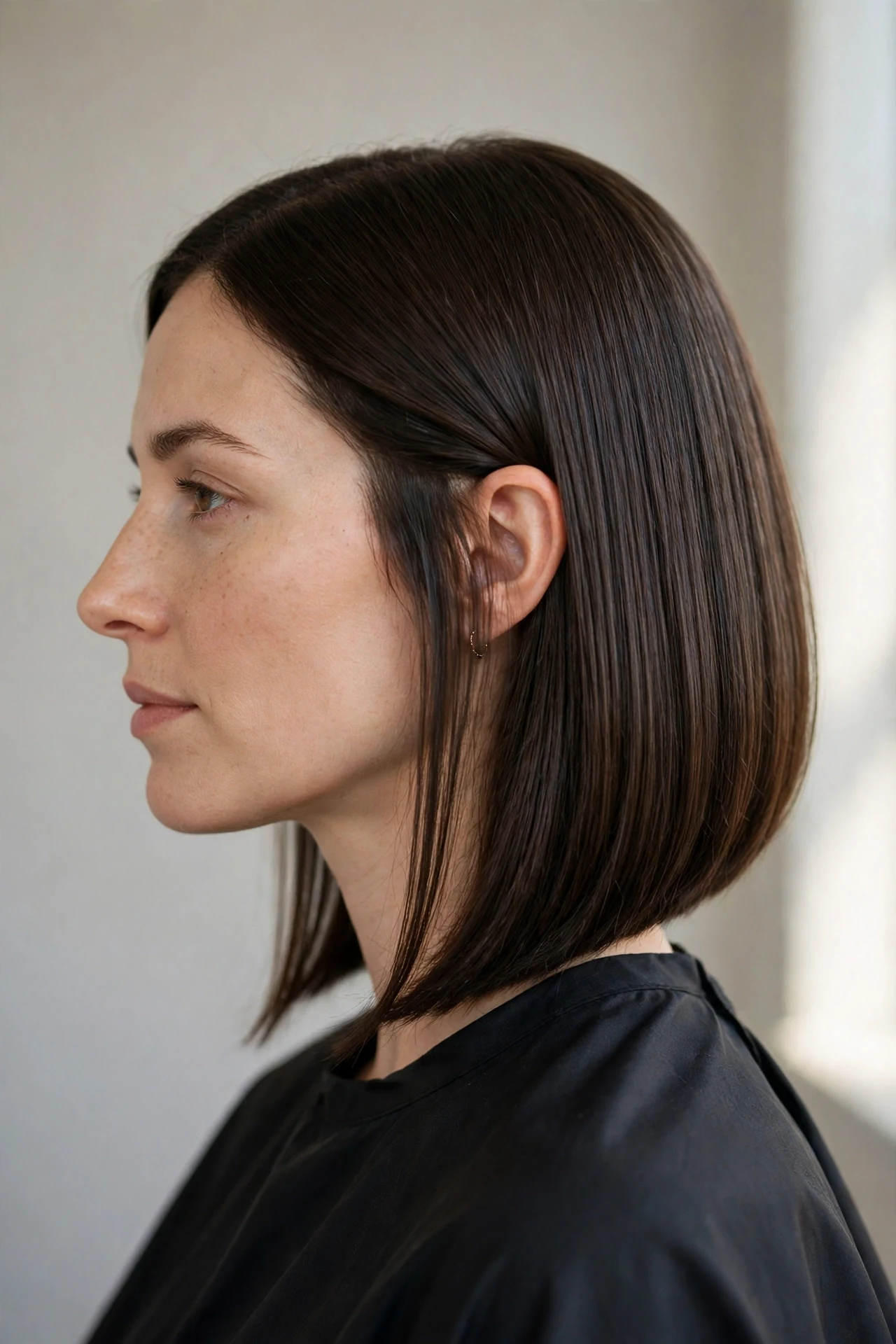
An aline long bob haircut is the cleverest cut in the lob family, because one simple angle changes everything. The back sits shorter, the front falls longer, and suddenly your jawline looks sharper, your neck looks longer, and a plain collarbone cut looks like a salon masterpiece.
The trick is choosing the right angle for your face and your lifestyle, and that is exactly what this guide does. Below you will find 20 A-line lob styles, from whisper subtle slopes to full drama angles, plus a comparison table and a word for word salon script. For the wider lob picture, our long bob haircut guide covers every lob family in one place.
- An A-line lob is shorter at the back and longer at the front, which frames the face and slims the jawline.
- A subtle angle (about an inch of difference) looks polished and office friendly, while a dramatic angle (three inches or more) is a full statement.
- Side profile photos matter more than front photos here, so always check the angle from the side before you commit.
- A-line, inverted, and asymmetrical are cousins, not twins, and the comparison table below shows which one suits you.
- These 20 styles cover every texture, face shape, and budget of effort, with a salon script at the end to take to your appointment.
As an Amazon Associate I earn from qualifying purchases.
What Is an Aline Long Bob Haircut?
The A-line shape is borrowed from the letter A itself. Hair is cut shortest at the nape, then angles gradually downward toward the front, so the two front pieces are the longest points of the cut. At lob length, that usually means a back that sits just below the chin and front pieces that brush the collarbone.
What makes the angle so flattering is the diagonal line it draws. Instead of a horizontal line across the jaw, the eye follows a slope, which lengthens the neck and softens a strong jaw. Ask your stylist to show you the cut from the side before they finish, because the profile is where the angle either sings or falls flat. For more angle inspiration across all bob lengths, Byrdie regularly rounds up angled bob ideas worth browsing.
A-Line vs Inverted vs Asymmetrical: Which Angle Is Right for You?
These three cuts get mixed up constantly, even in salons, so pin this table down before your appointment. The A-line keeps both front sides even. The inverted adds stacked graduation at the back. The asymmetrical deliberately makes one side longer than the other.
| Cut | How the angle works | Best for | Upkeep |
|---|---|---|---|
| A-line lob | Shorter back, even front pieces angle down to the collarbone | Most face shapes, first time angled cuts | Trim every 6 to 10 weeks |
| Inverted lob | Stacked graduation at the back adds crown volume, front stays long | Fine or flat hair that needs lift at the back | Trim every 6 to 8 weeks |
| Asymmetrical lob | One side deliberately longer than the other for an edgy line | Straight hair, bold style lovers | Trim every 6 to 8 weeks |
20 Gorgeous A-Line Lob Styles to Show Your Stylist
The Subtle A-Line Lob
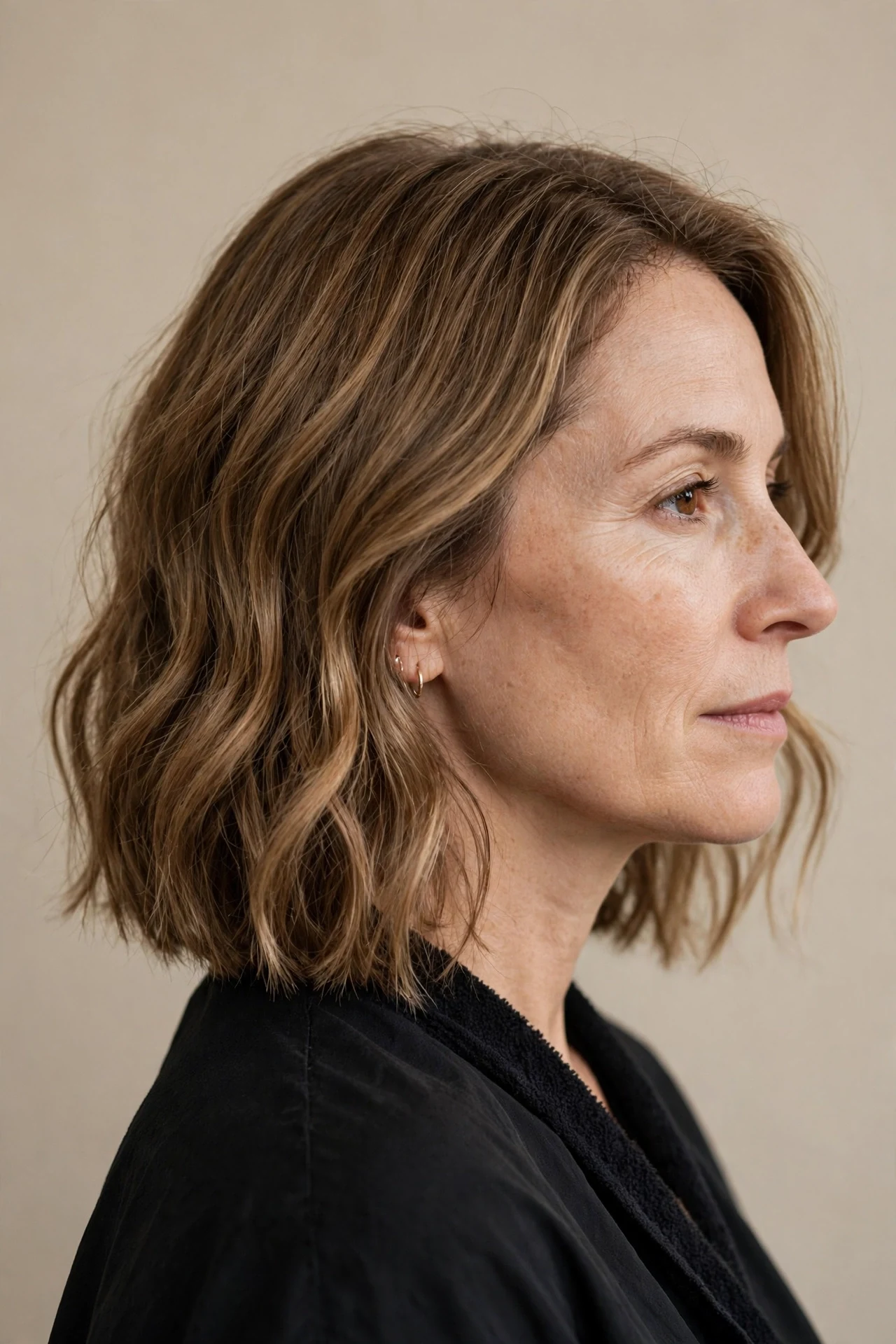
Start here if you are A-line curious but not ready for drama. The back is only about an inch shorter than the front, so the angle reads as a soft slope rather than a statement. It is the easiest A-line to grow out, and it suits almost every workplace.
The Classic A-Line Lob
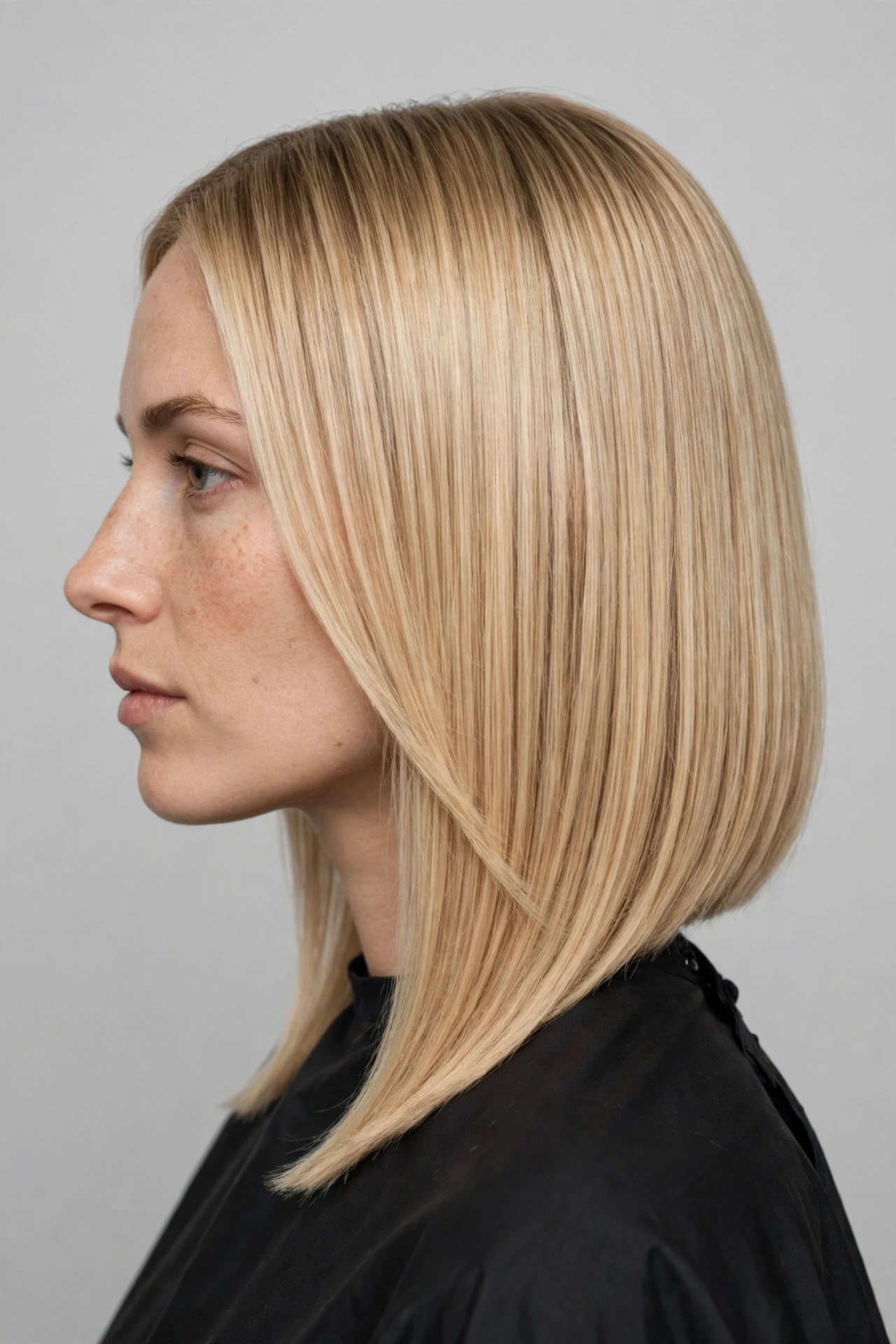
This is the textbook version, and it is popular for a reason. A clean, even angle runs from a chin length back to collarbone front pieces, with no layers breaking the line. Our long bob haircut guide shows how this classic sits among the other lob families if you want to compare before you book.
The Dramatic A-Line Lob
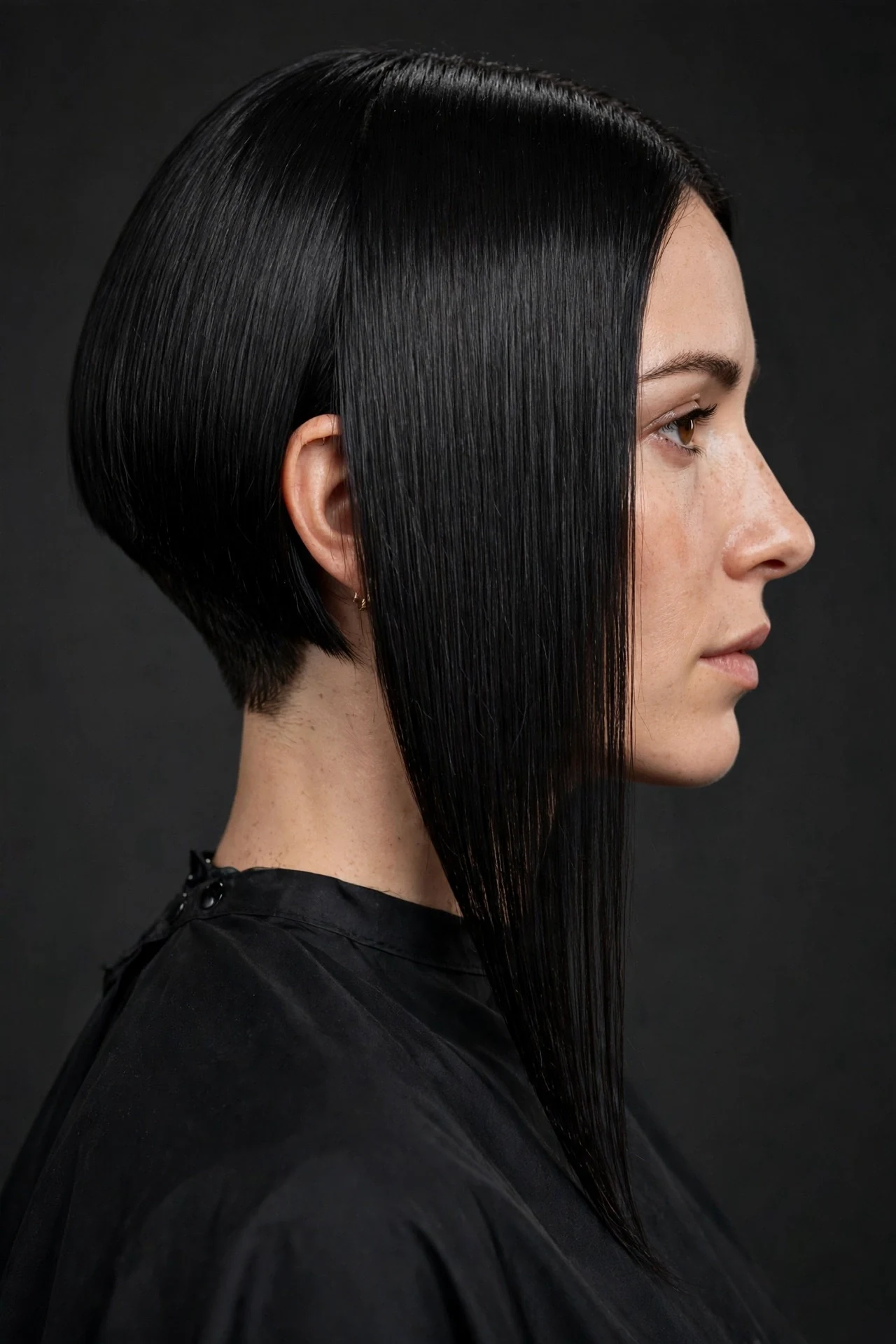
Three inches or more of difference between back and front, and nobody will mistake this for a regular lob. The steep slope looks incredible from the side profile, especially worn sleek and straight. Book a stylist who cuts a lot of bobs, because a steep angle leaves no room for wobbly lines.
A-Line Lob with Curtain Bangs

Curtain bangs soften the geometry of the angle without hiding it. They part in the middle, sweep to each side, and blend into the long front pieces. If bangs are tempting you, our long bob with long bangs guide has more fringe pairings to browse.
Sleek Glass-Hair A-Line Lob
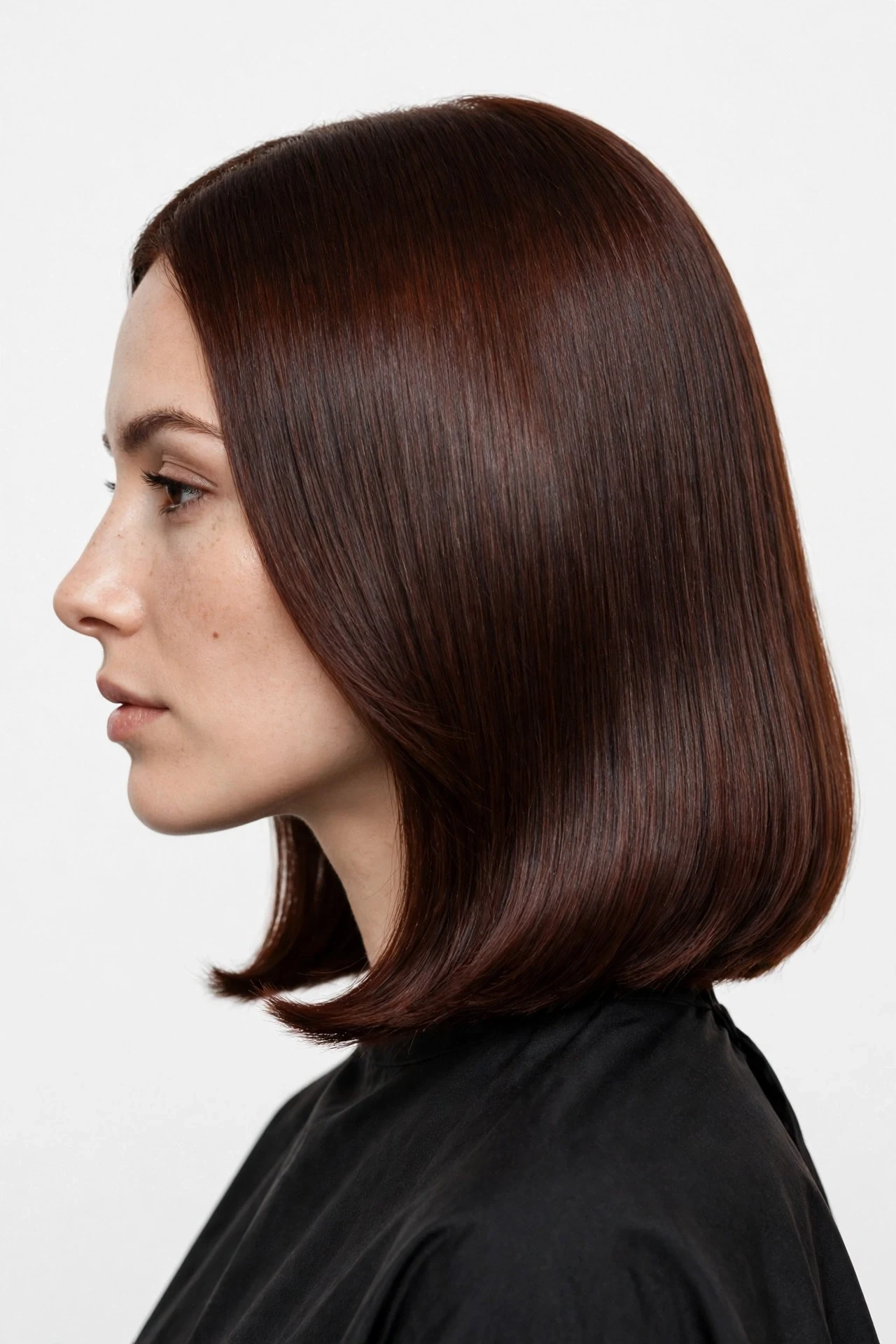
Glass hair and a sharp angle are a match made in salon heaven, and this sleek aline long bob haircut shows the slope off better than any other finish. The smooth finish shows off every millimeter of the slope, and the shine makes the diagonal line look almost drawn on. Use a smoothing serum and a flat iron, and keep the ends tucked under for that liquid finish.
Soft Wavy A-Line Lob
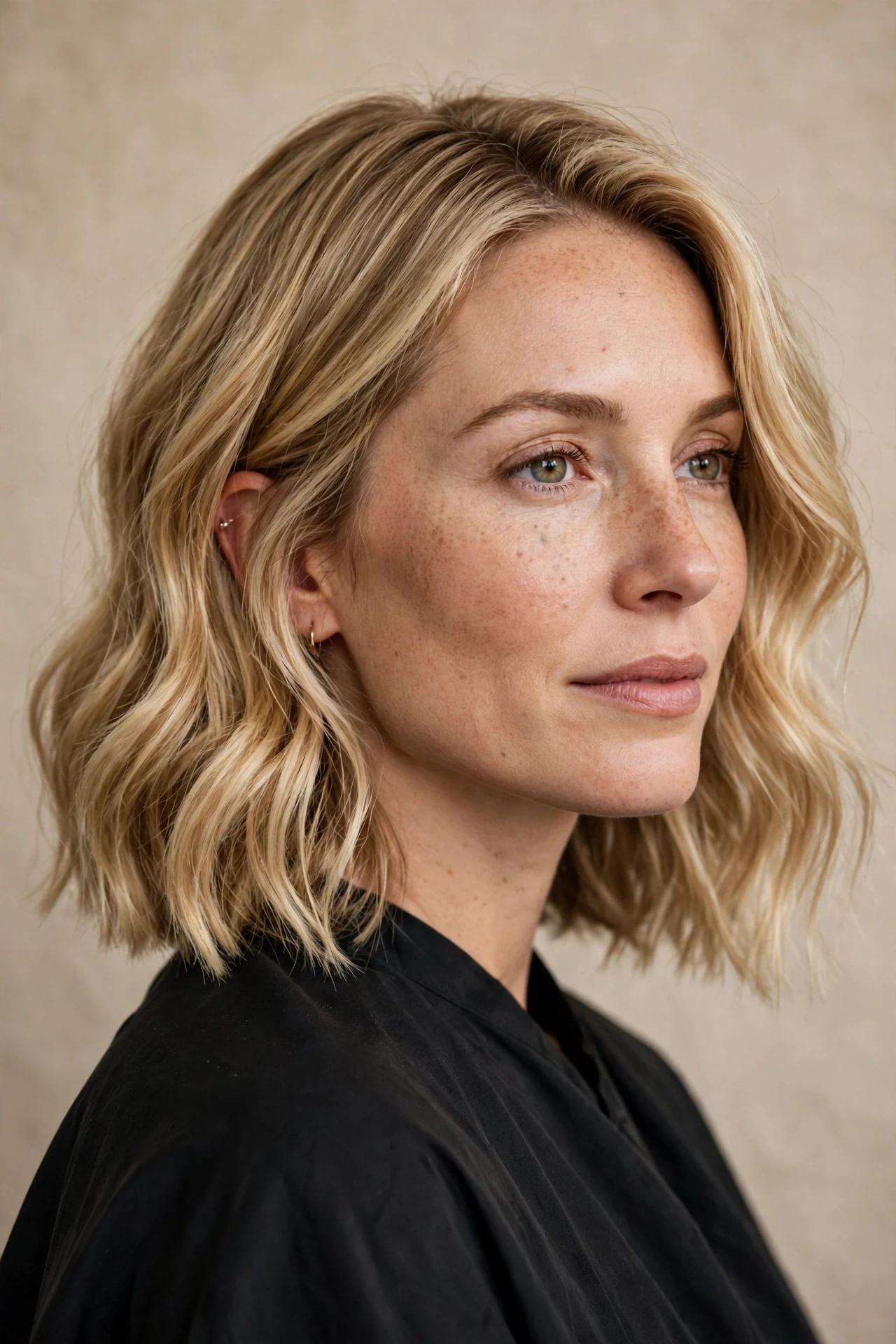
Waves relax the angle just enough to make it feel romantic rather than architectural. The slope still shows, especially at the front, but the texture keeps it from looking severe. Scrunch in a little salt spray and let it air dry for the easiest version of this cut.
Curly A-Line Lob
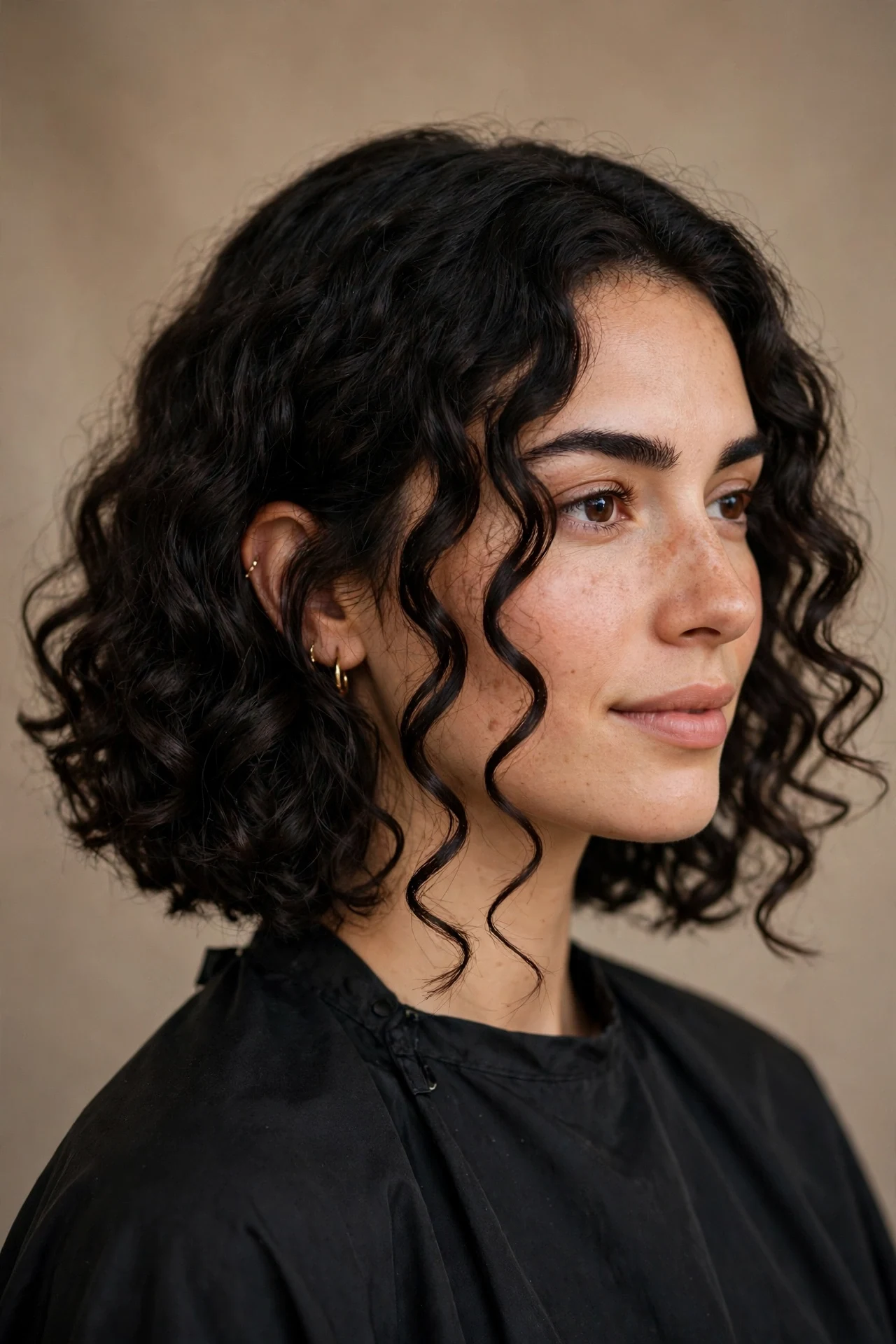
Cut dry, curl by curl, so the angle lands right once the curls spring up. A curly A-line needs a gentler slope than a straight one, because curls shorten the front pieces as they dry. The payoff is a shape that frames the face beautifully from every side.
Textured Choppy A-Line Lob
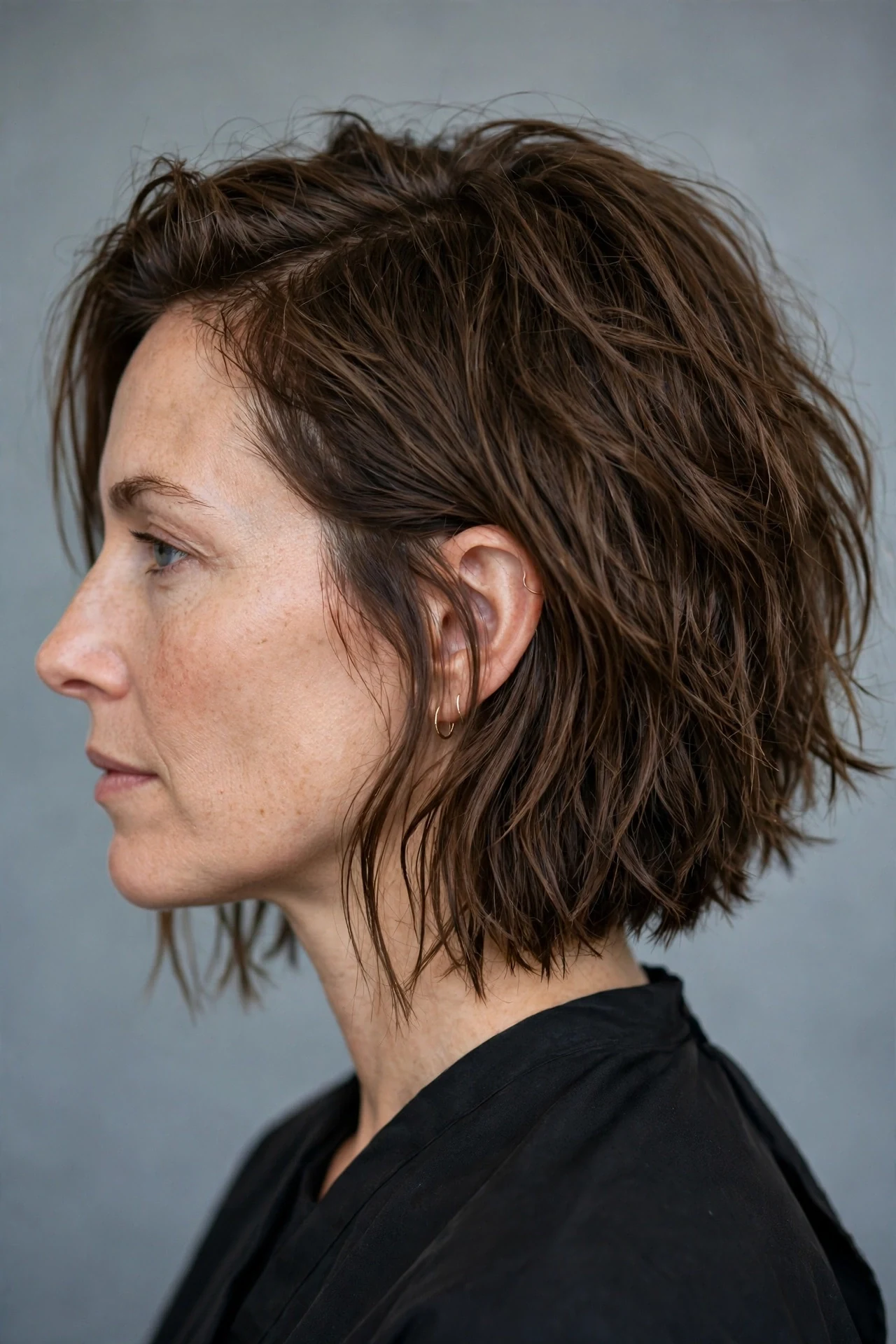
Choppy, piecey ends take the formality out of the angle and give it a lived in edge. This is the A-line for people who love the shape but hate looking too polished. A dab of texture paste on the ends is all the styling it needs.
A-Line Lob for Fine Hair
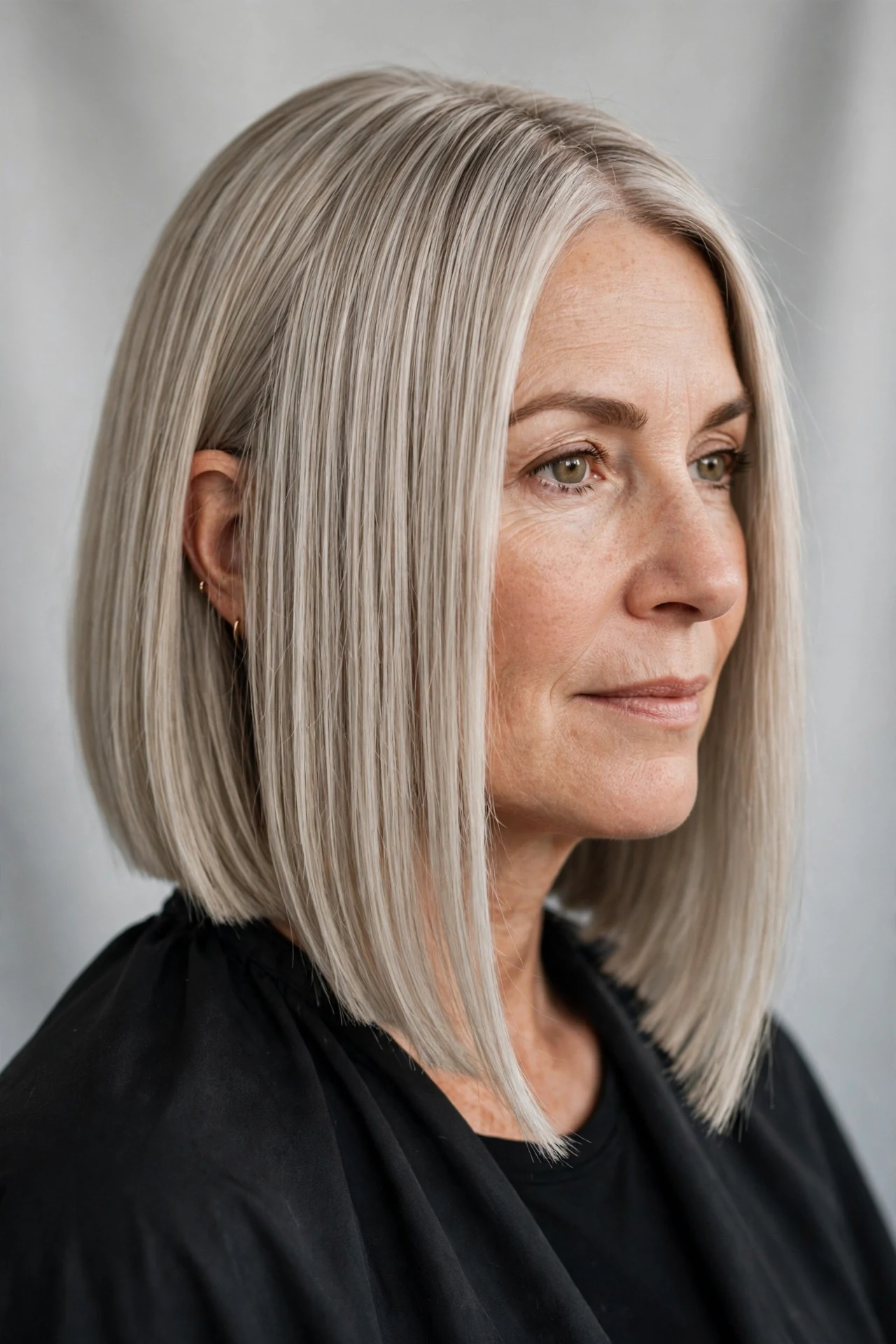
Fine hair loves an A-line, because the shorter back stacks up weight while the longer front keeps the length you want. Keep the perimeter blunt and the layers invisible, and the hemline looks far thicker than it is. Our long layered bob for fine hair guide goes deeper on layer placement for finer textures.
A-Line Lob for Thick Hair
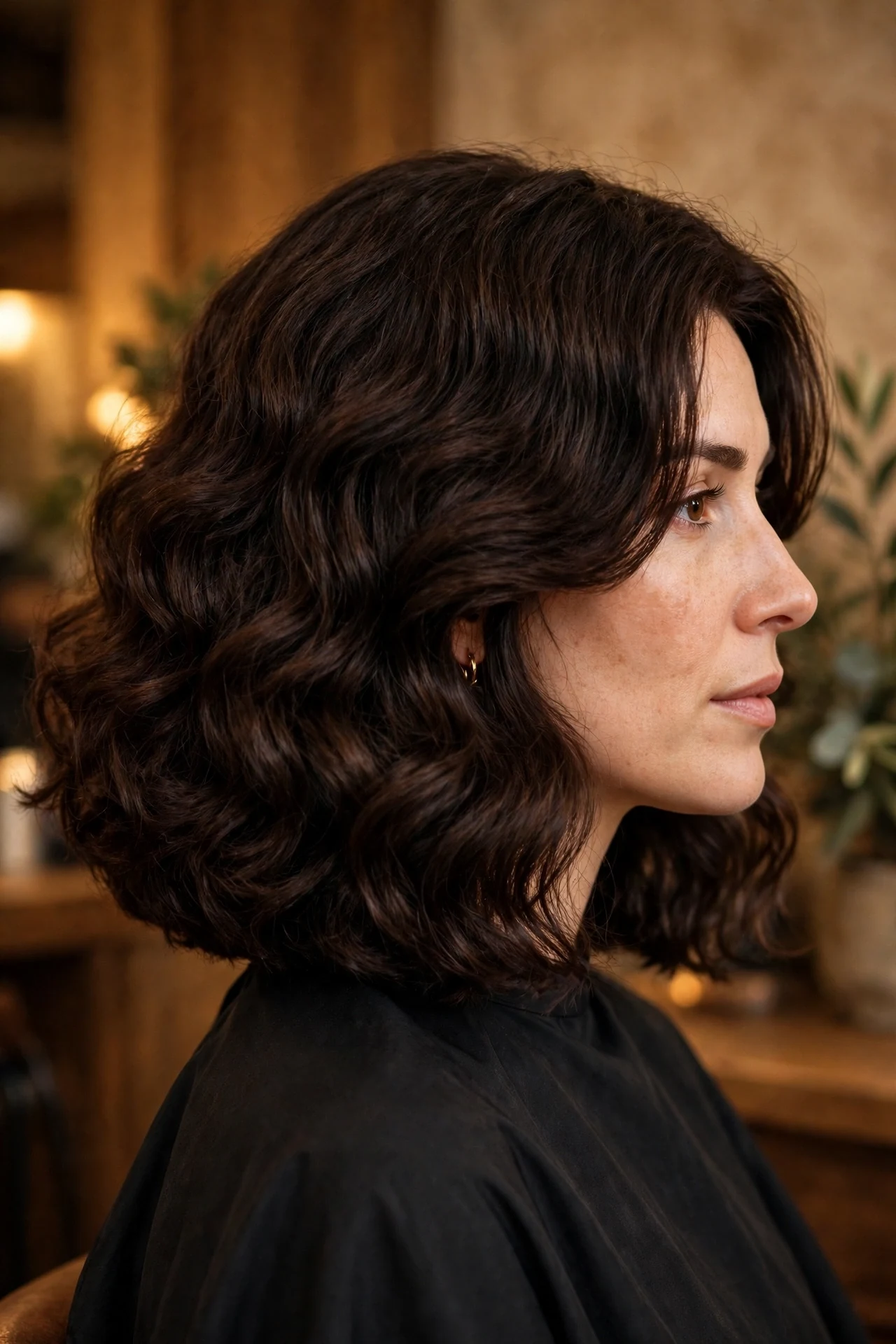
Thick hair holds an angle like nothing else, but it needs internal layering to remove bulk without touching the outline. Without that hidden weight removal, a thick A-line can puff out at the back. With it, the slope falls clean and heavy in the best way.
Blunt A-Line Lob
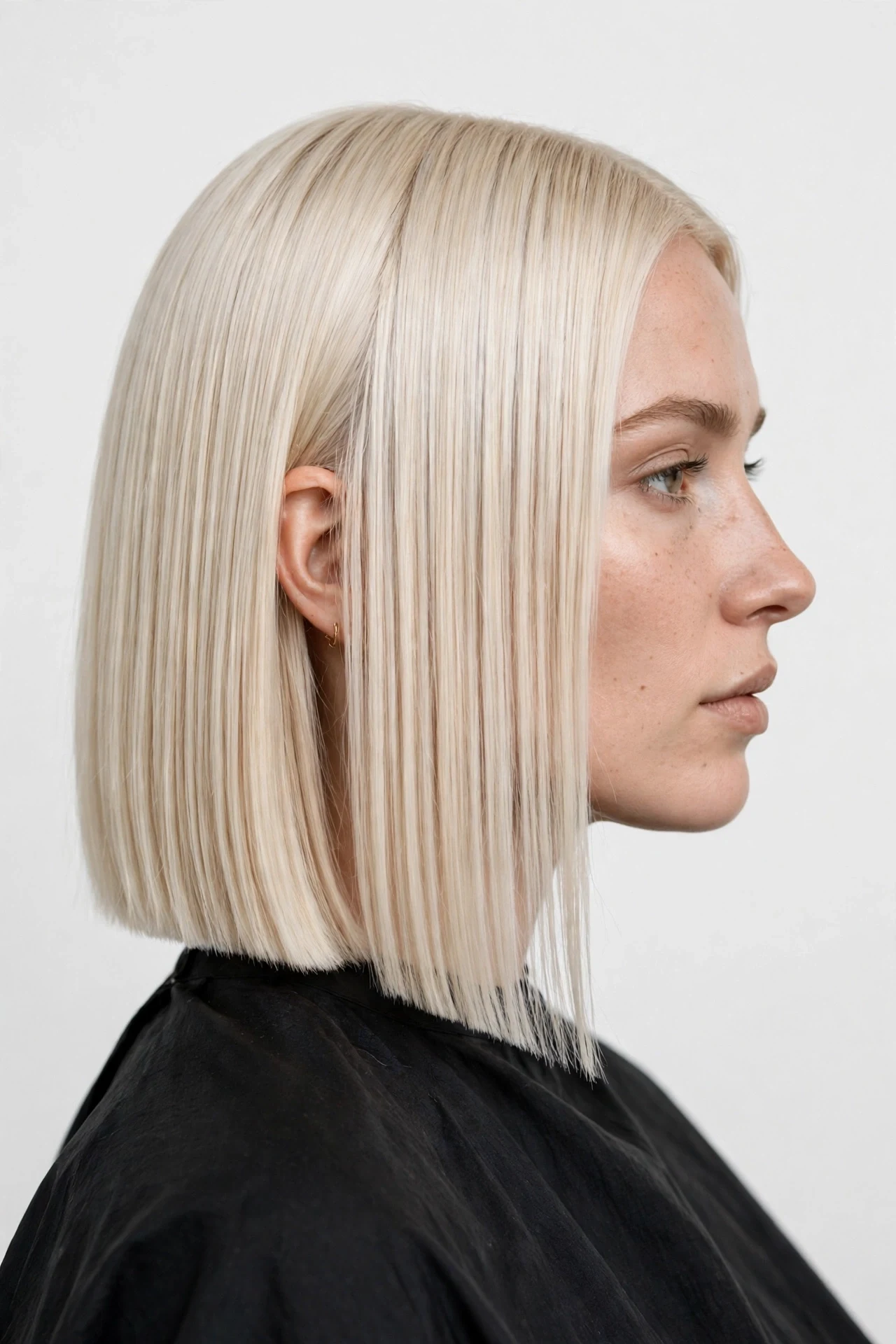
One length, no layers, one unbroken diagonal line. The blunt A-line is the boldest, most graphic version of the cut, and it looks sharpest on straight hair. It needs trims every six to eight weeks, because even a little growth softens that crisp line.
Layered A-Line Lob
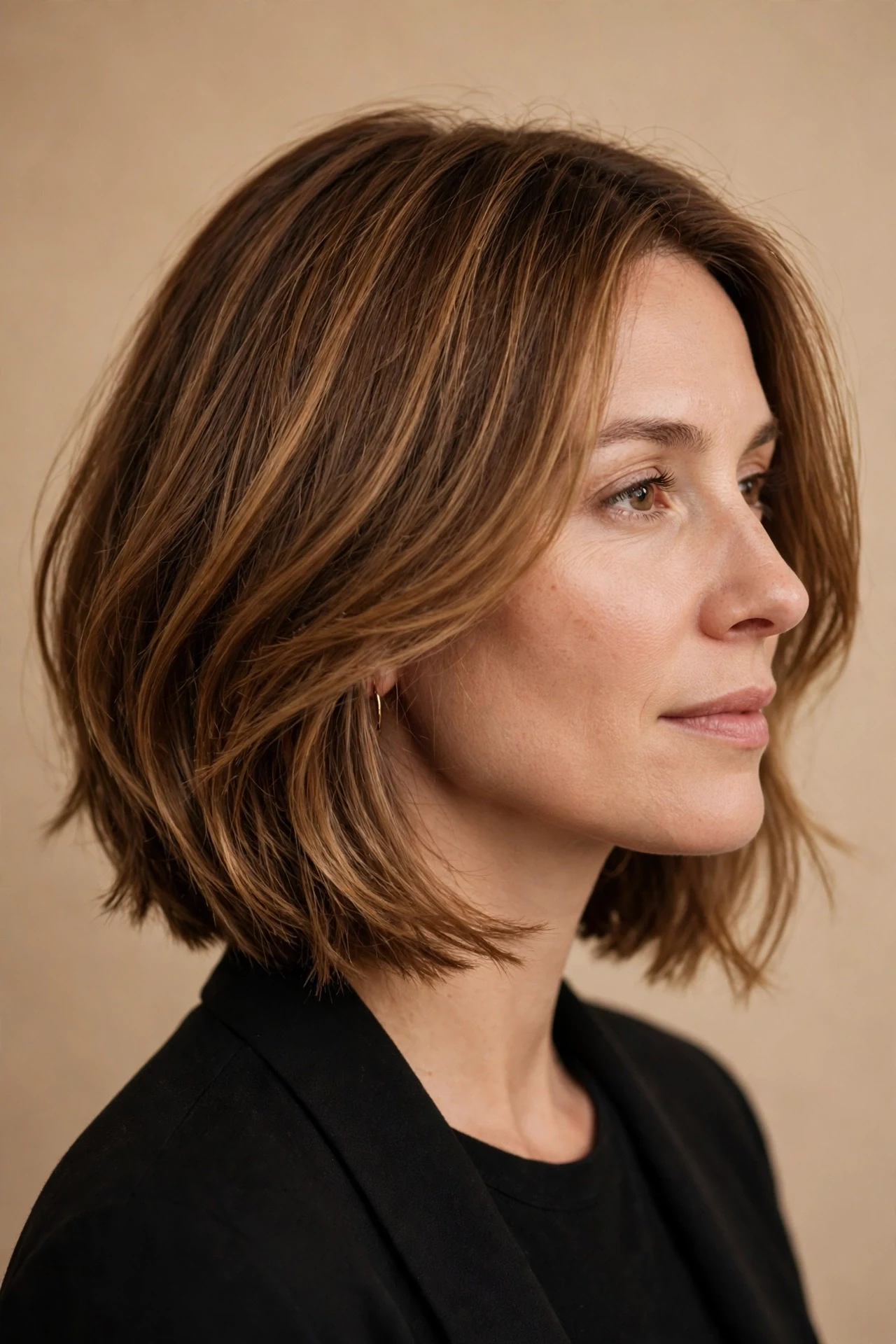
Long layers through the mid lengths and ends give this aline long bob haircut movement without breaking the angle. The outline stays diagonal, but the inside of the cut moves like long hair. It is the best choice if you like to curl or wave your lob regularly.
Deep Side Part A-Line Lob
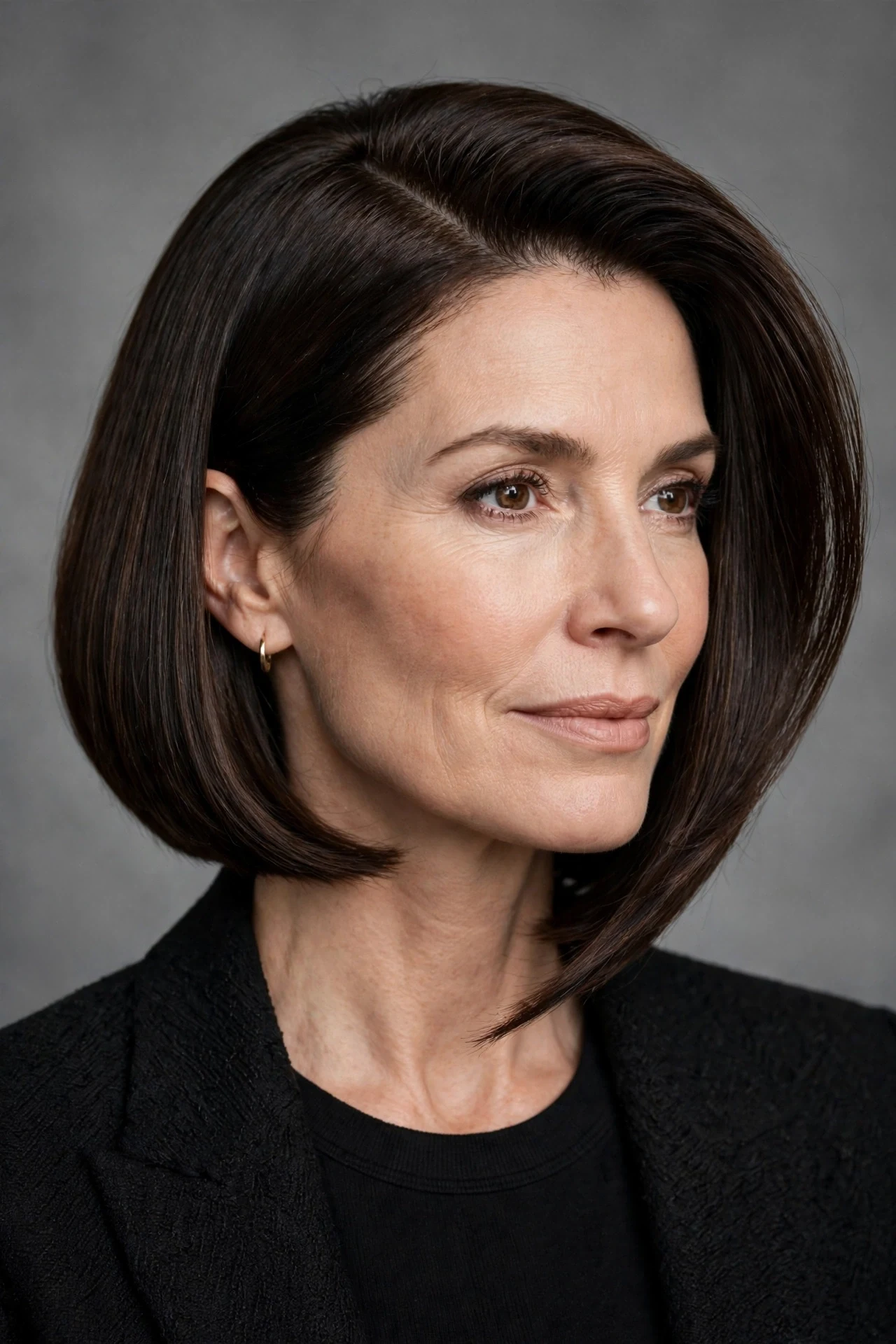
Sweeping everything to one side makes the angle look even more dramatic, because the longer side gets extra length and volume. It is the simplest styling trick on this list, and it changes the whole cut in ten seconds. Try it before you commit to a steeper cut.
Balayage A-Line Lob
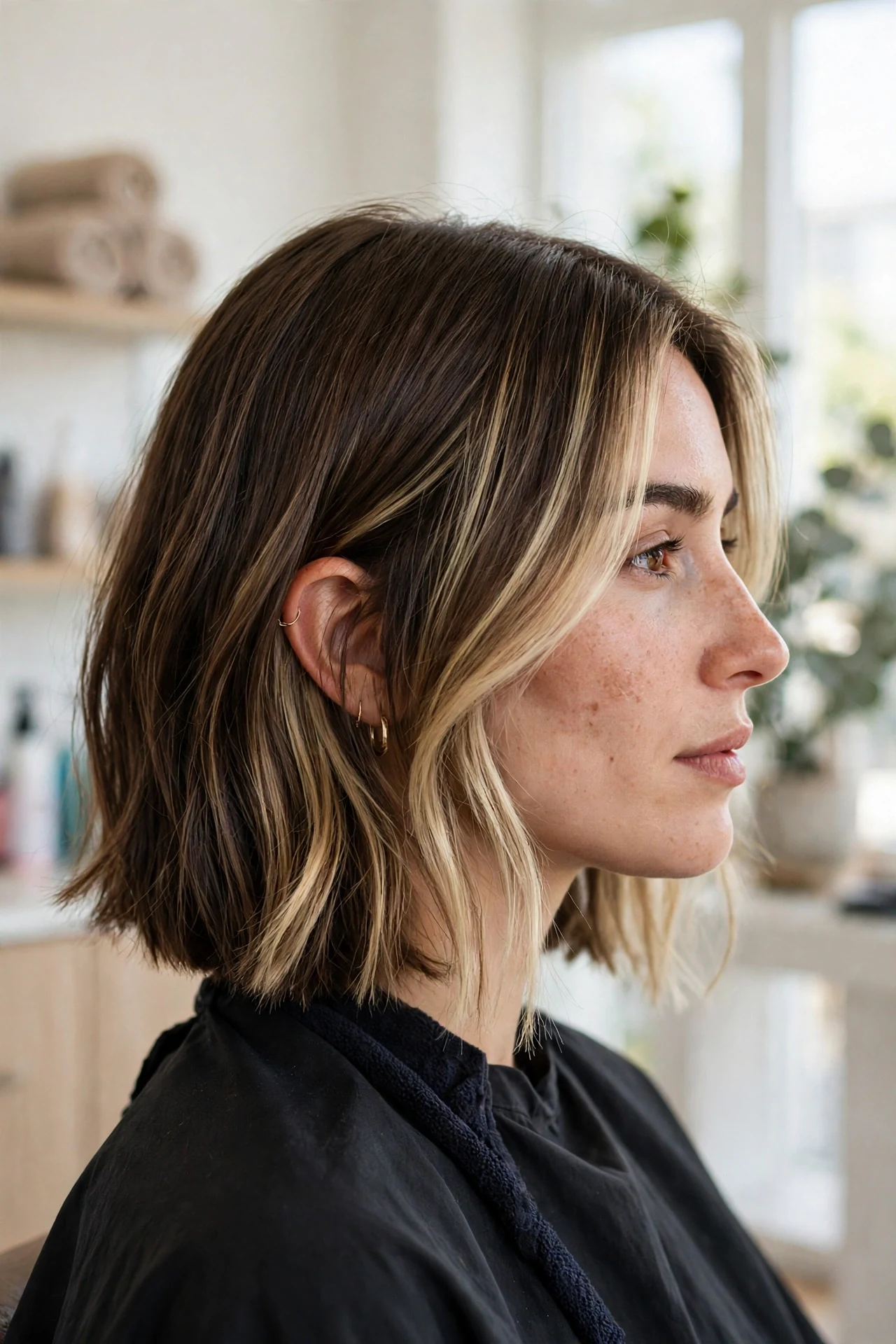
Hand painted color melting through an A-line makes the angle visible even in photos. Lighter pieces at the front draw the eye along the slope, which is exactly what you want. Ask for a root shadow so the grow out stays graceful for months.
A-Line Lob for a Round Face
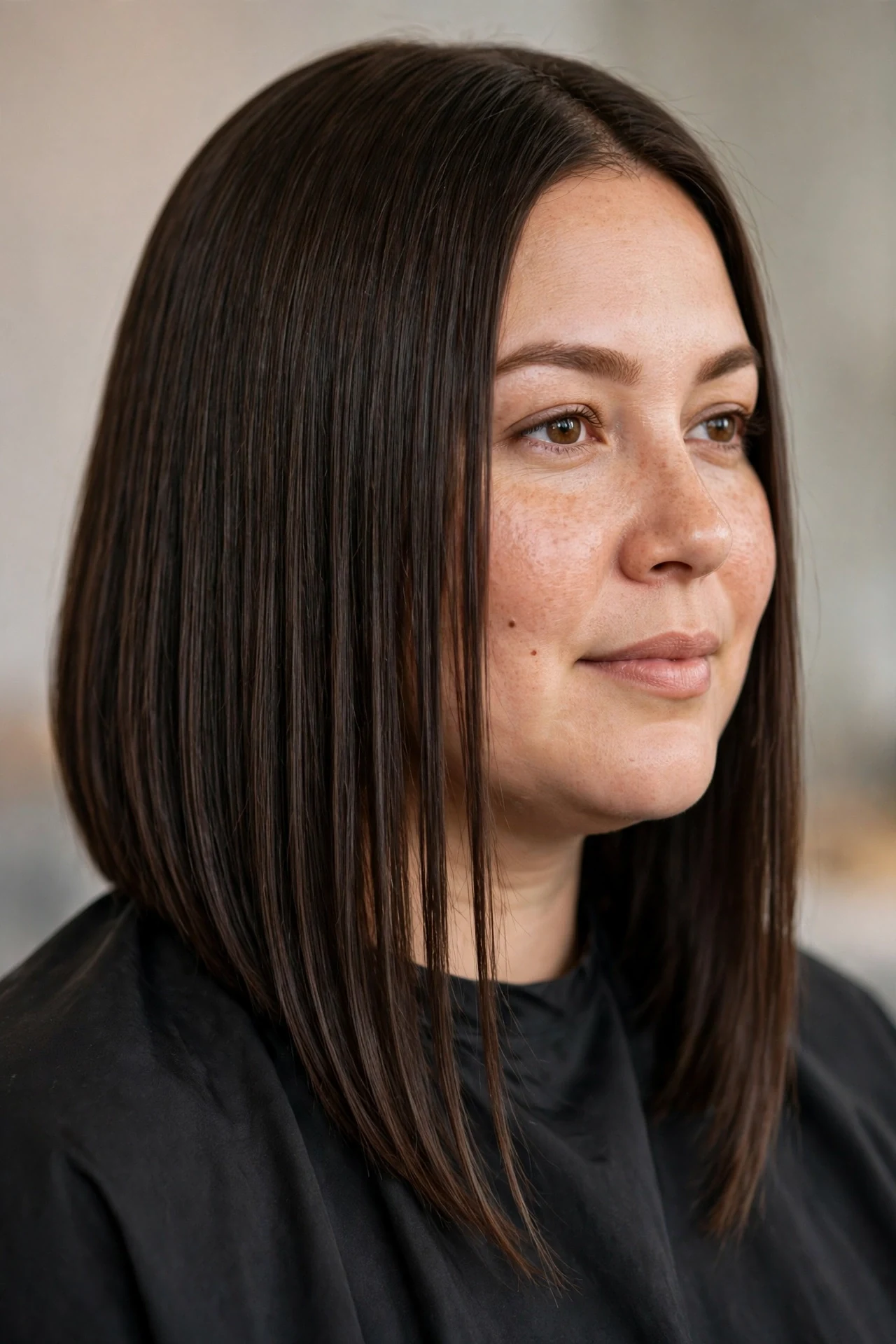
This is the secret weapon cut for round faces. The long front pieces create vertical lines that slim the face, while the shorter back keeps the shape from widening at the cheeks. Keep the front pieces below the chin and skip volume at the sides.
A-Line Lob for a Square Face
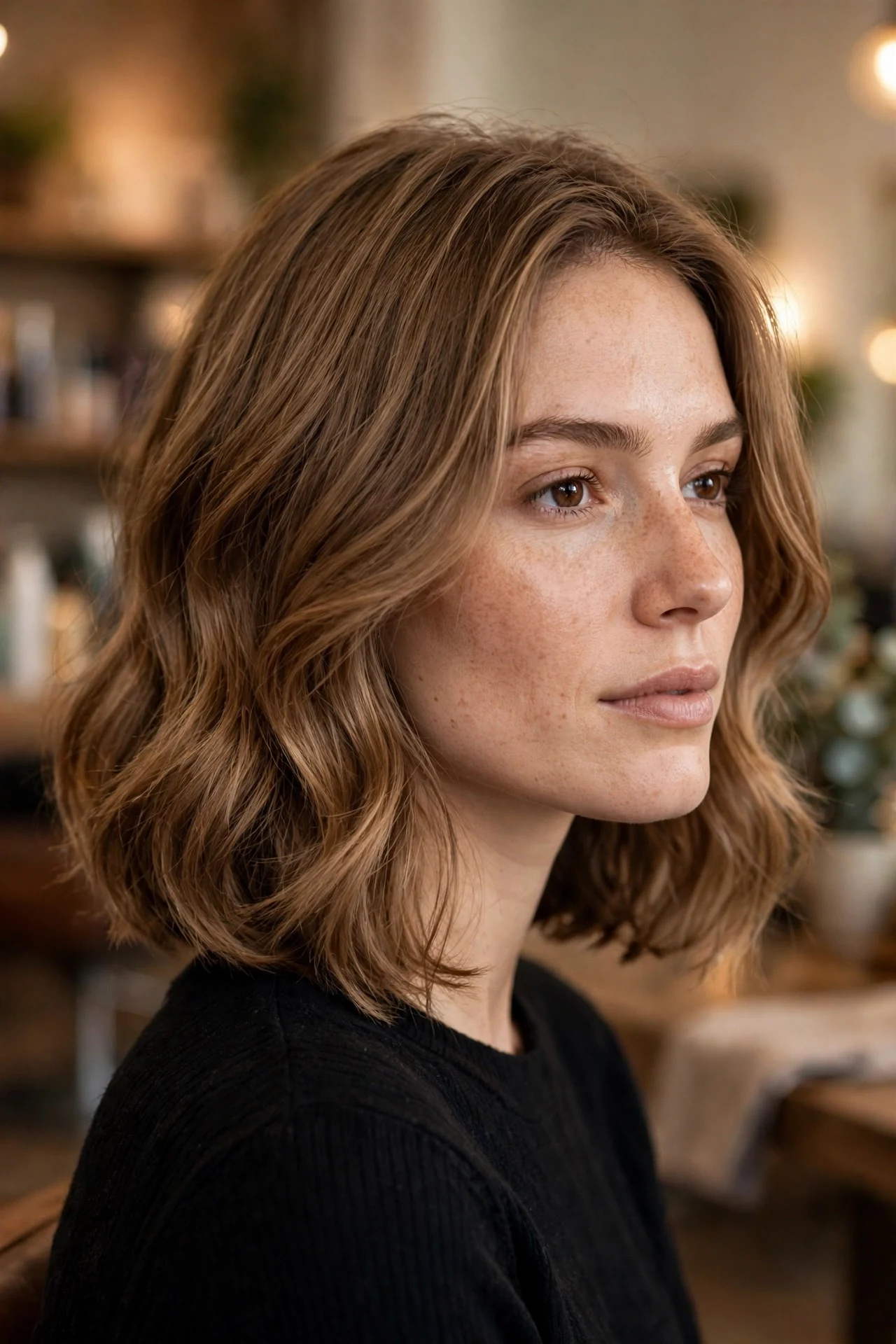
A softer, more gradual angle works best here, with face framing layers that curve around a strong jaw instead of cutting straight across it. The diagonal line draws attention away from the jaw corners. A center or soft side part both work beautifully.
Stacked Back A-Line Lob
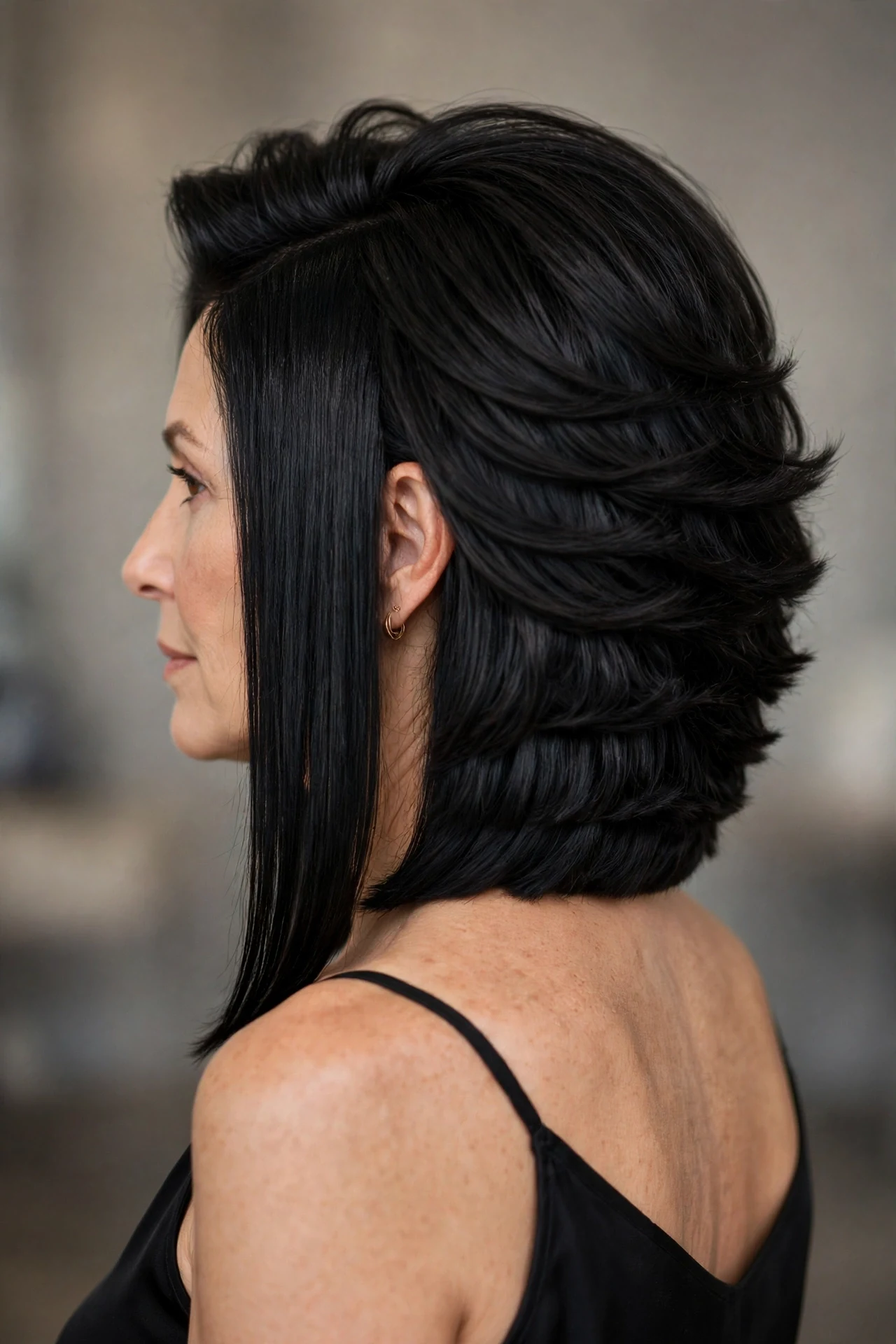
This is where the A-line meets its inverted cousin. The back is graduated and stacked for volume at the crown, while the front stays long and sleek. It is the answer if you love the A-line shape but want more lift at the back.
Face-Framing A-Line Lob
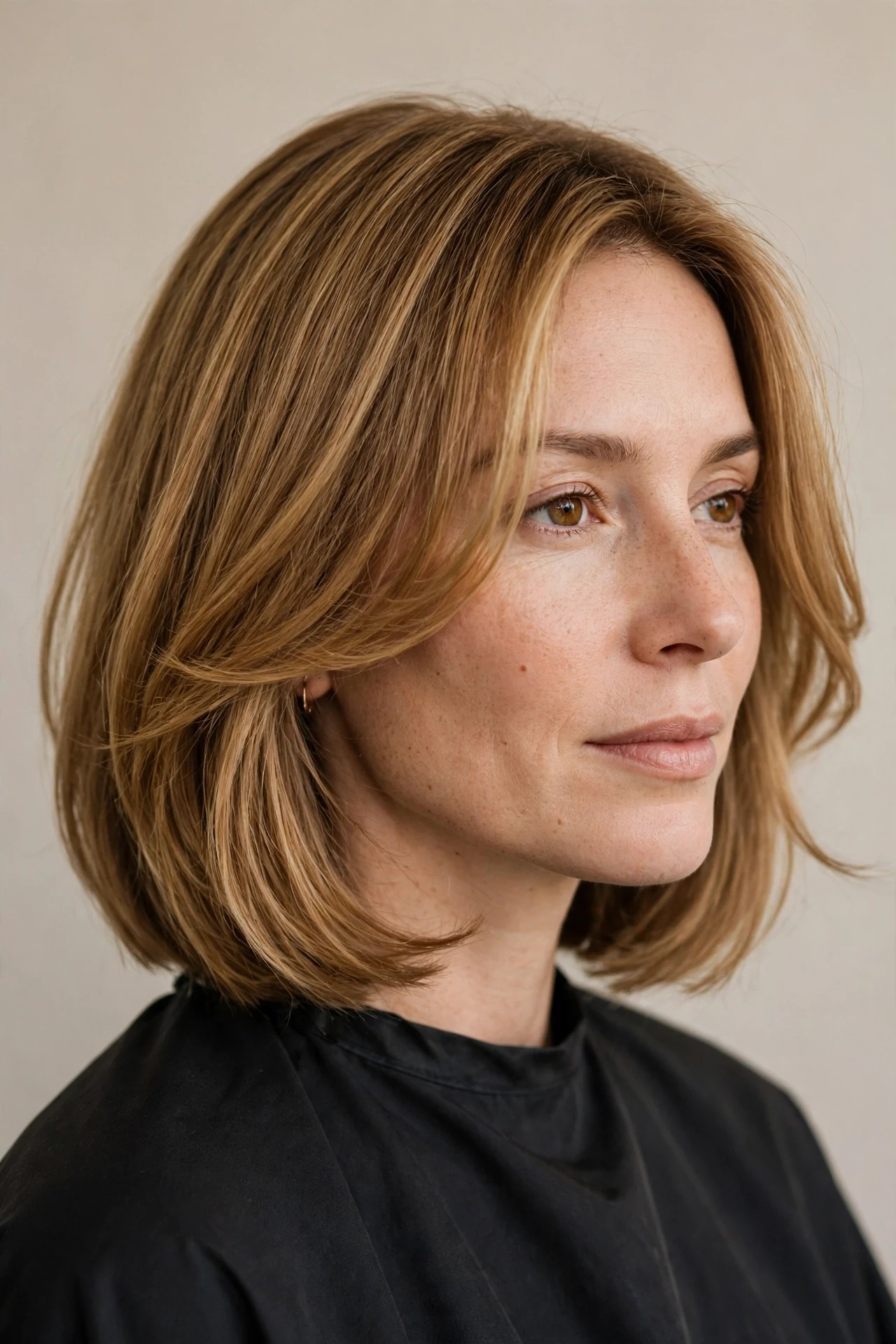
Two slightly shorter pieces in front soften the whole cut around the face while the back keeps its clean angled line. It is the gentlest way to wear an A-line, and it grows out more forgivingly than a blunt version. If you love fringe but not full bangs, our long bob with long bangs guide is worth a look.
A-Line Lob for Natural Curls
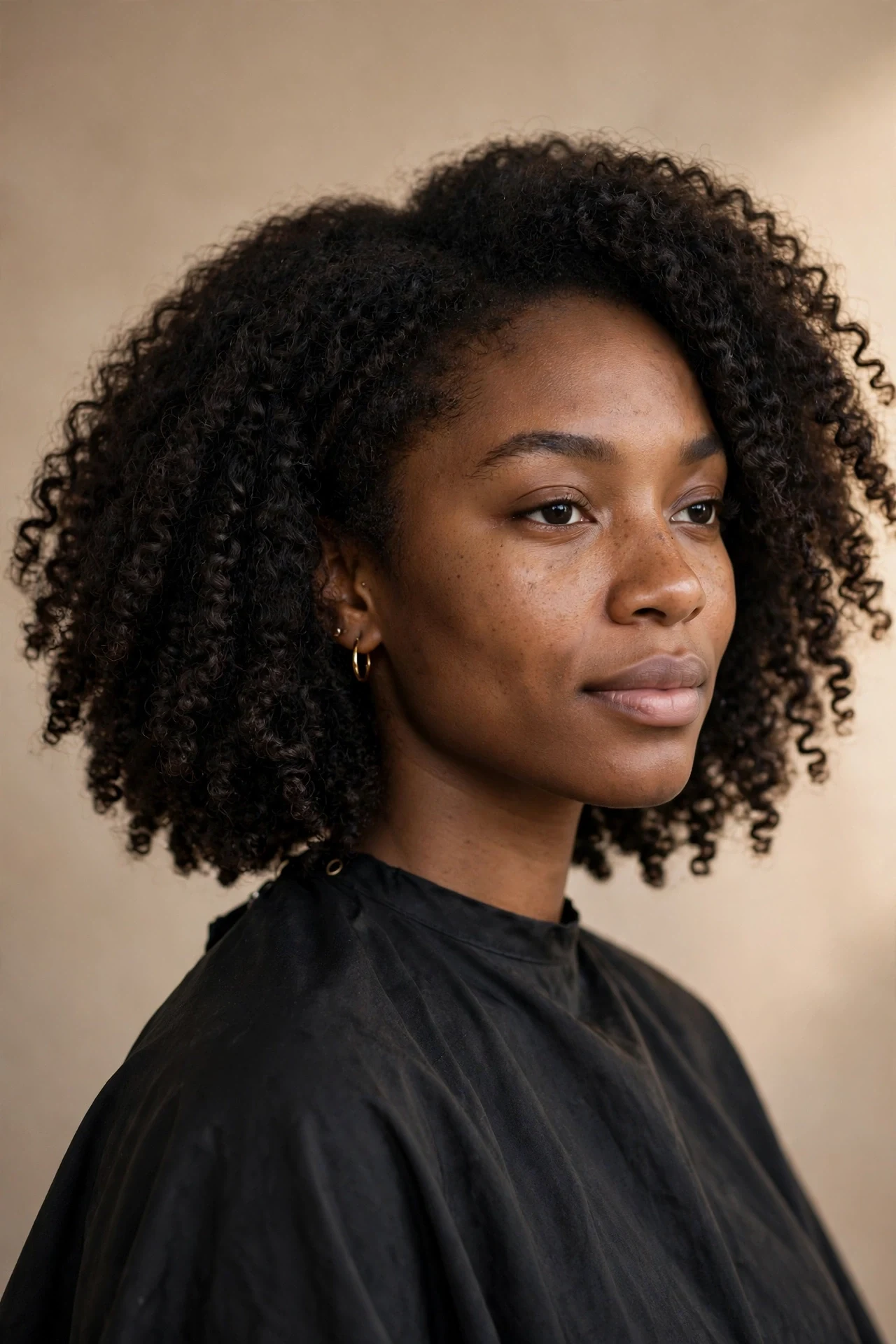
Natural curls and an A-line angle are a gorgeous pairing when the cut respects the curl pattern. The angle is cut longer than it will look dry, and the shape is built curl by curl. For more curl focused inspiration, see our long bob hairstyles for black hair guide.
Soft Grown-Out A-Line Lob

Eight weeks after the salon, the angle softens and the cut relaxes into this easy, lived in version. The slope is still there, just gentler, and the front pieces sit beautifully at the collarbone. It is proof that an A-line grows out far more gracefully than a short bob.
How to Ask Your Stylist for an A-Line Lob
Copy this, or screenshot it, and read it to your stylist. It covers the angle, the back, and the profile check that separate a great A-line from a wonky one.
Ask your stylist for an aline long bob haircut with a gradual angle, shorter at the nape and longer at the front, with the front pieces ending at my collarbone. Please keep the perimeter clean, add only invisible internal layers if my hair is thick, and show me the side profile before you finish so we can check the angle together.
Final Thoughts
Whatever angle you choose, remember that the side profile is the whole point of an aline long bob haircut, so judge it from the side, not just the front. Bring two or three photos of the exact angle you want, and be honest about how much styling time you really have each morning.
If you are still deciding between lob families, our long bob haircut guide compares them all side by side, and our main bob trends guide puts the A-line in the context of every bob trend this year. Pick your angle, book the appointment, and enjoy the sharpest lob of your life.
Frequently Asked Questions
What is an aline long bob haircut?
An aline long bob haircut is a lob that is shorter at the back and gradually longer toward the front, with the front pieces usually reaching the collarbone. The angled outline frames the face and lengthens the neck.
What is the difference between an A-line, an inverted, and an asymmetrical bob?
An A-line keeps both front sides even and angles down from a shorter back. An inverted bob adds stacked graduation and volume at the back. An asymmetrical bob deliberately makes one side longer than the other.
How steep should my A-line angle be?
A subtle angle has about an inch of difference between back and front and looks polished and low key. A dramatic angle has three inches or more and makes a bold statement. Most first timers are happiest starting subtle.
Is an A-line lob good for fine hair?
Yes, it is one of the best lob shapes for fine hair. The shorter back builds up weight and the blunt perimeter makes the hemline look thicker, while the long front keeps the length you want.
How often should I trim an A-line lob?
Every six to eight weeks for a blunt or dramatic angle, and every eight to ten weeks for a subtle or layered angle. Regular trims keep the diagonal line crisp instead of letting it blur into a regular lob.
Can I wear an A-line lob wavy or curly?
Yes, but ask for a gentler angle than you would for straight hair, because waves and curls shorten the front pieces as they dry. A curly A-line should always be cut dry, curl by curl.

Sana Malik is a hair and beauty writer with a deep love for the bob in all its forms from sharp French bobs to soft, lived-in lobs. After years of experimenting with her own short hair and helping friends figure out what actually suits their face shape, she started writing to cut through the confusing advice out there. At BobHairTrends, she breaks down each cut into simple, honest guides: how to ask for it, how to style it at home, and who it really flatters. When she isn’t researching the latest trends, she’s usually testing a new styling product or convincing someone it’s finally time for the chop.