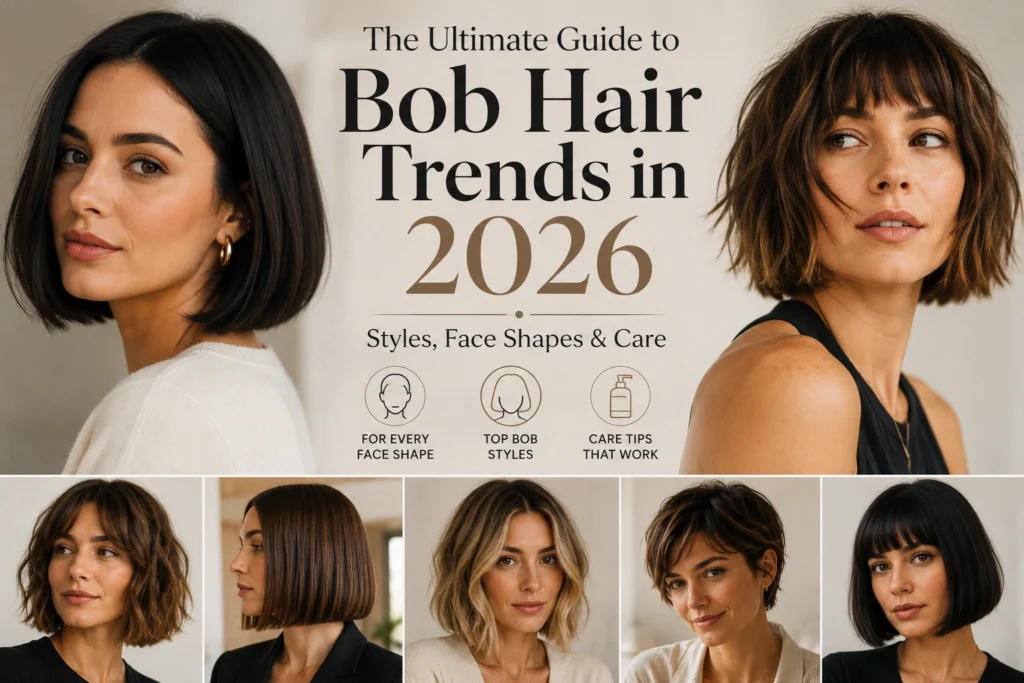

If you have been wondering what is a bixie haircut and whether it is a real haircut or just TikTok slang, here is the short answer. It is real, it is flattering on far more people than you would expect, and it is the reason your feed keeps serving you choppy, 90s-inspired layers.
The bixie sits in the sweet spot between a pixie and a bob. Think of it as a pixie that grew up a little, or a bob that got restless and went for texture. It has a shorter, tapered nape like a pixie, with a longer, shaggier crown and face-framing fringe that borrows its attitude from the bob.
This guide is the one I wish existed when the bixie first blew up. You will get the honest anatomy of the cut, a true will-it-suit-me test, the salon script for a stylist who has never heard the term, and the month-by-month grow-out path. Plus 11 wearable bixie styles to screenshot for your appointment. If you already love the idea, start with our full bixie haircut style hub.
What Is a Bixie Haircut, Exactly? Start Here Before You Book
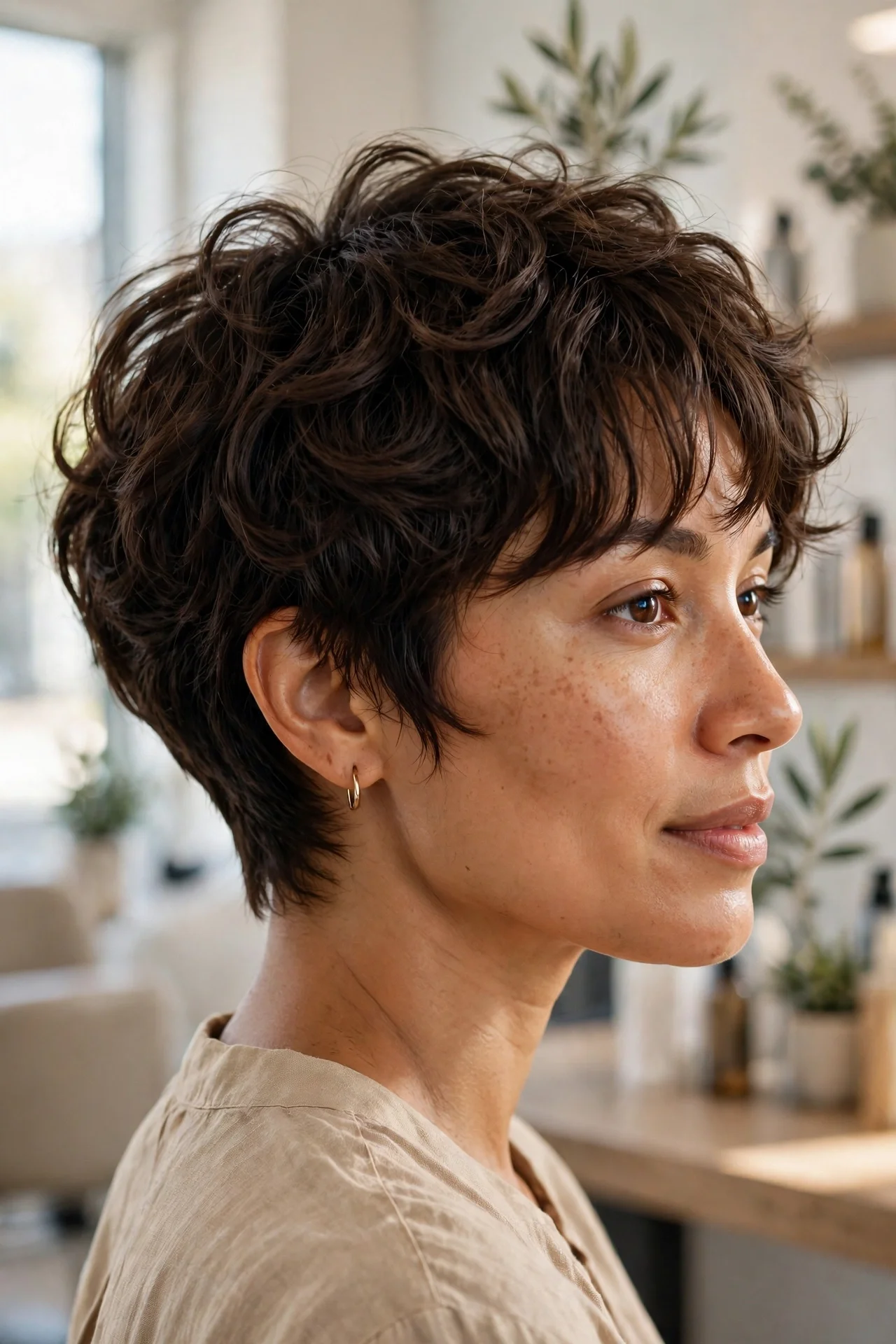
Let us settle what is a bixie haircut in plain terms, because the name gets thrown around loosely online. A bixie is a short haircut with pixie-short tapering through the nape and sides, layered into a longer, textured top and fringe that falls somewhere around the ears to just below the cheekbones. The layers are the whole point. They are shattered, piecey, and full of movement, never blunt.
Where did it come from? The 90s icons did it first: Winona Ryder, Halle Berry, Meg Ryan, and Princess Diana all wore versions of it. Then Gen Z found those photos on TikTok around 2021 and 2022, and the cut came roaring back. In 2026 it is no longer a trend piece. It is a legitimate, everyday haircut that salons cut weekly, which is exactly why you need a proper guide and not a celebrity photo dump.
1. What Makes a Bixie a Bixie: The Anatomy
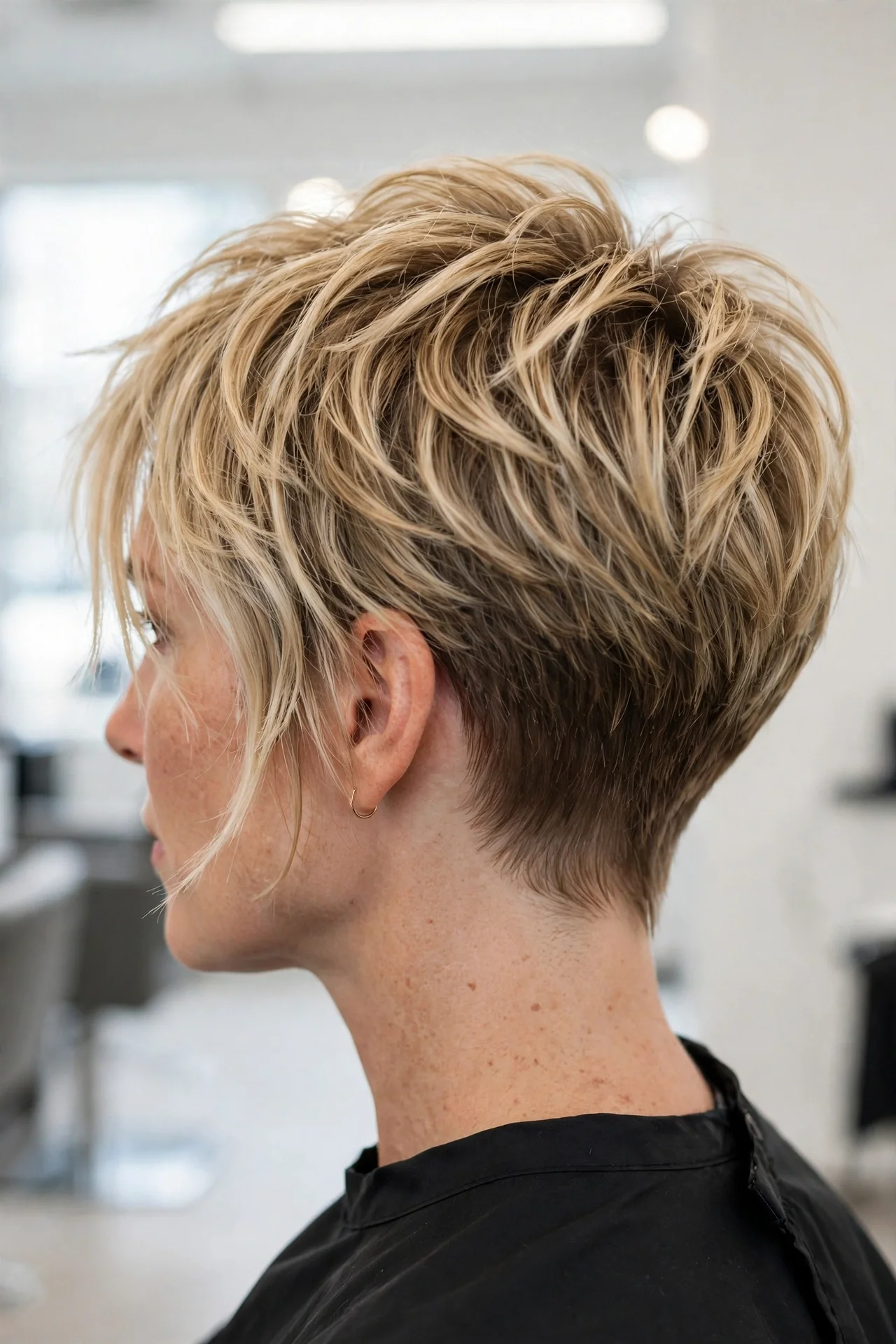
A true bixie has three non-negotiable features. First, a tapered or faded nape, shorter at the back of the neck like a pixie. Second, a longer crown with internal layering that creates height and movement on top. Third, a fringe or face-framing layer that is textured, never blunt or heavy.
What it is not: a grown-out pixie that was left alone for four months. That distinction matters. A bixie is cut with intention, the nape taper and the crown layers are built in on purpose, while a grown-out pixie just happened by accident. This is the detail stylists care about, and it is the one that separates a chic bixie from a haircut that looks neglected.
So what is a bixie haircut on a technical level? It is a disconnected, heavily layered short cut with pixie proportions at the back and bob-adjacent length through the top and fringe. If your cut has all three features above, congratulations, you are wearing a bixie.
2. The Classic Tousled Bixie

This is the version that started the revival. Choppy layers through the crown, a soft fringe that falls across the forehead, and a nape that hugs the neck. It is styled with fingers and a little texture cream, which means bedhead is basically the goal.
It works best on straight to wavy hair with medium density. Fine hair gets instant volume from the layering, and thick hair gets lightness without losing shape. Ask your stylist for point-cut layers rather than blunt ends, that shattered edge is what keeps it looking effortless instead of helmet-like.
3. Bixie vs Pixie: What Is the Actual Difference?
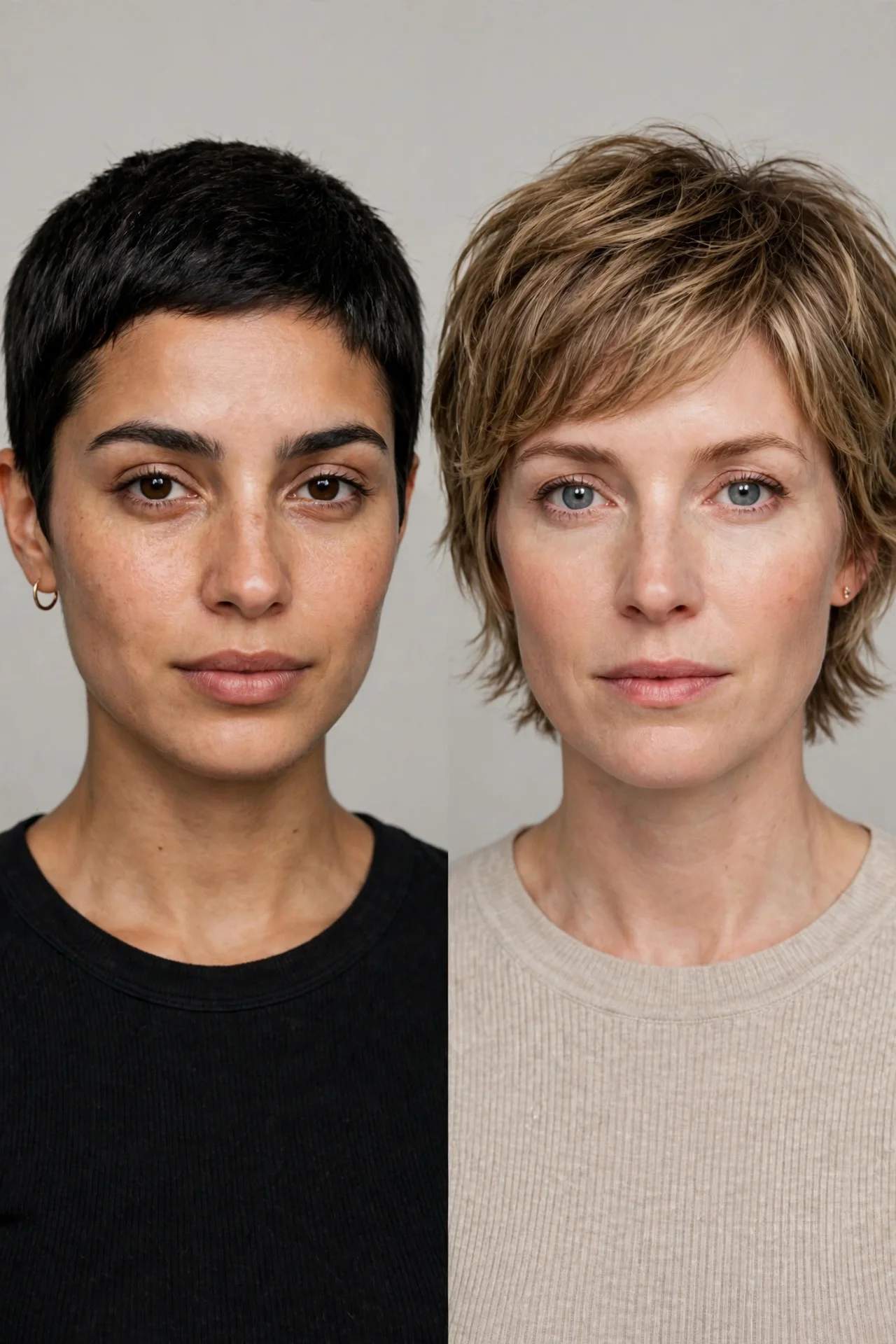
The pixie is shorter everywhere. It sits close to the head, the fringe is usually short, and the whole silhouette is neat and cropped. The bixie keeps the pixie’s tapered nape but leaves the top and fringe noticeably longer, which gives you styling options a pixie simply cannot offer: tuck it, sweep it, wave it, or slick it back.
Here is the practical difference. A pixie grows out awkwardly, with that in-between mullet phase everyone dreads. A bixie grows out gracefully into a short bob, which is one of its biggest selling points. If you love short hair but fear commitment, the bixie is the lower-risk bet. You get the edge of a pixie with an escape route.
4. The Side-Swept Bixie
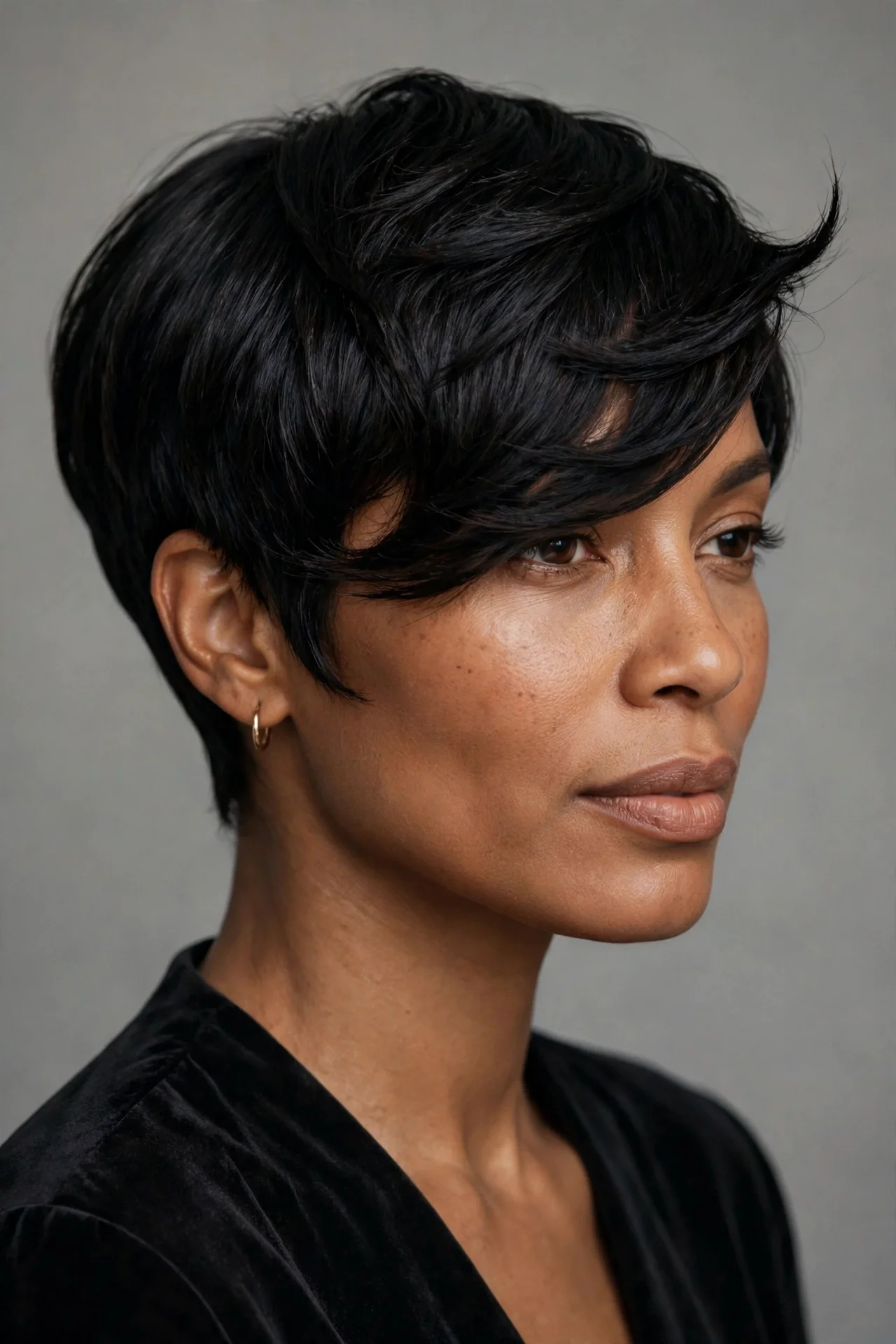
Sweep the longer fringe across the forehead and the whole cut changes personality. This version is softer and more romantic than the classic, and it is the best bixie for anyone who feels nervous about short hair exposing too much face.
The side sweep also does real work for face shapes. It breaks up a wide forehead, softens a strong jawline, and creates a diagonal line that is flattering on nearly everyone. Style it by blow-drying the fringe to the side with a small round brush, then lock it with a light-hold spray. Flat on one side, volume on the other, done.
5. Bixie vs Bob: Where One Ends and the Other Begins
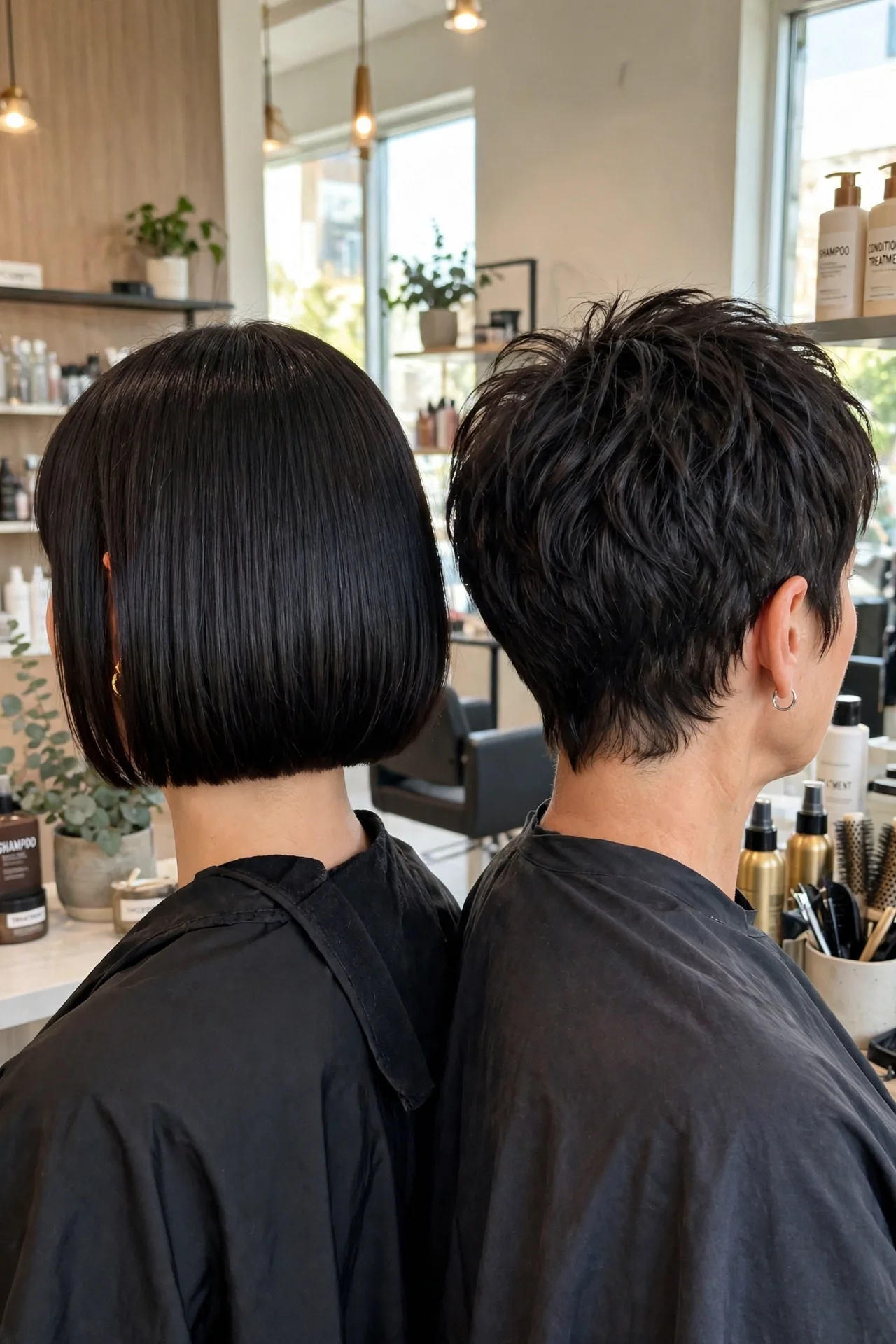
A bob is defined by its perimeter: one length (or close to it) that hits somewhere between the jaw and the shoulders, with a clean outline. The bixie breaks that outline on purpose. The nape is cropped short, the top is layered heavily, and there is no clean perimeter to speak of.
Length is the quickest tell. If the back is tapered up the neck and the longest pieces barely graze the ears, that is bixie territory. If the back is full and the hair sits in a solid line at the jaw, that is a bob. Curious where the middle ground lives? Our boy bob vs bixie cut breakdown walks through the hybrid zone between the two.
6. The Curly Bixie

Curls and the bixie are a genuinely great match, which surprises people. The layering removes weight where curls get bulky and adds shape where curls go flat. The key is that it must be cut dry or on stretched curls, so the stylist sees the true spring of each curl.
Keep the crown longer than you think you need. Curls shrink, and a bixie that looks perfect wet can turn into a much shorter cut once dry. Ask for the fringe to be cut curl by curl. Style with a curl cream scrunched in, then diffuse on low heat. The result is a halo of defined, bouncy texture with a neat little nape underneath.
7. Bixie vs Wolf Cut vs Shag vs Mixie: Stop Mixing Them Up
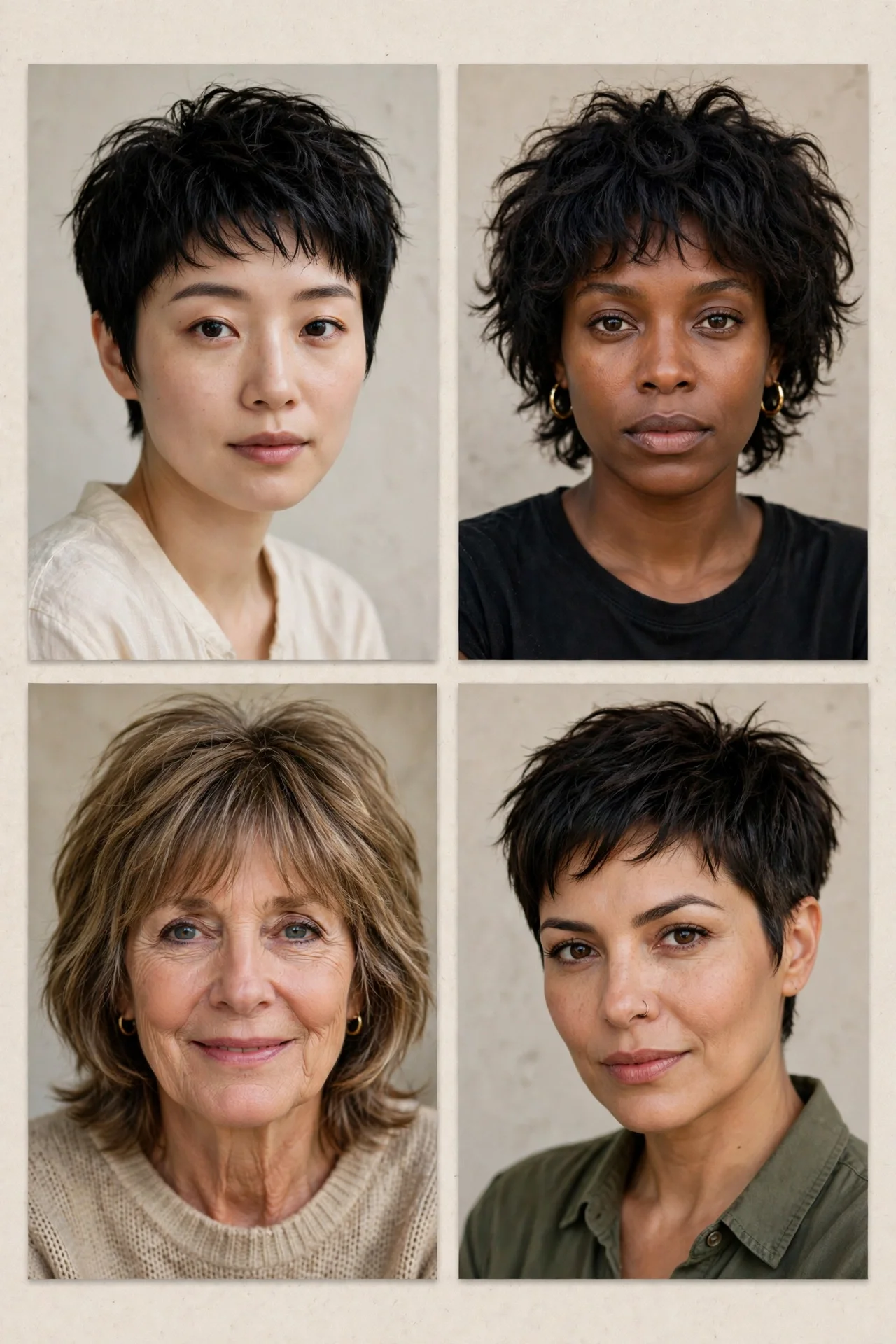
This is the comparison nobody on page one does properly, so let us fix that. All four are layered short cuts, but they are not interchangeable.
| Cut | Length | Layer style | Vibe | Upkeep |
|—|—|—|—|—|
| Bixie | Short, ears to nape | Shattered, textured, pixie-tapered nape | Polished 90s cool | Trims every 6-8 weeks |
| Wolf cut | Medium, shoulders+ | Extreme disconnection, mullet-like | Wild, rocker, undone | Grows out shaggy, low effort |
| Shag | Medium to long | Feathered all-over layers | Retro 70s, soft | Trims every 8-10 weeks |
| Mixie | Very short | Pixie front, mullet back | Edgy, fashion-forward | Trims every 4-6 weeks |
The bixie is the shortest and the most polished of the four. The wolf cut and shag live at longer lengths with a wilder silhouette. The mixie is the bixie’s punk cousin, shorter on top with a longer, rattier back. If a photo you love has hair touching the shoulders, it is not a bixie, no matter what the caption says.
8. The Sleek Polished Bixie
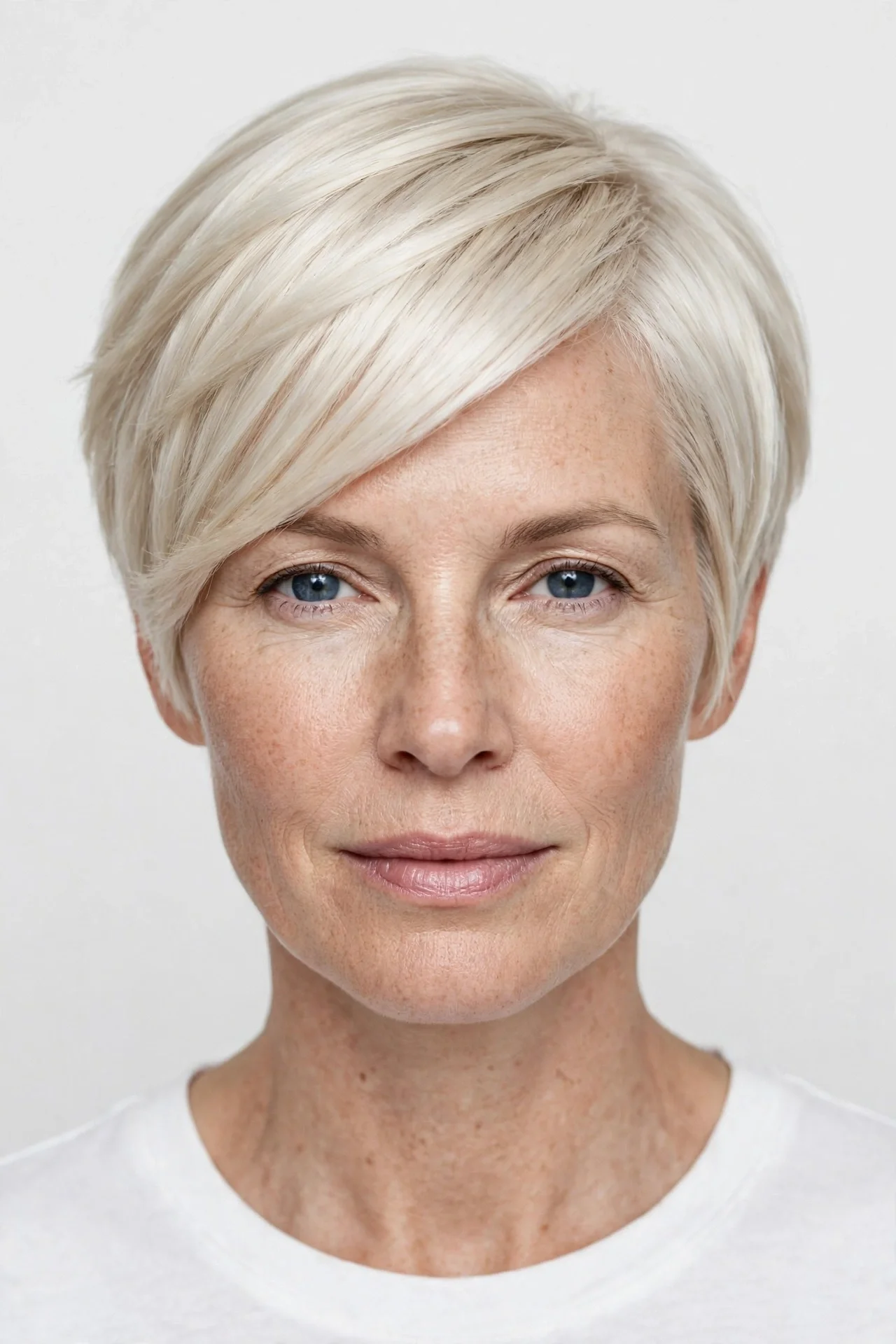
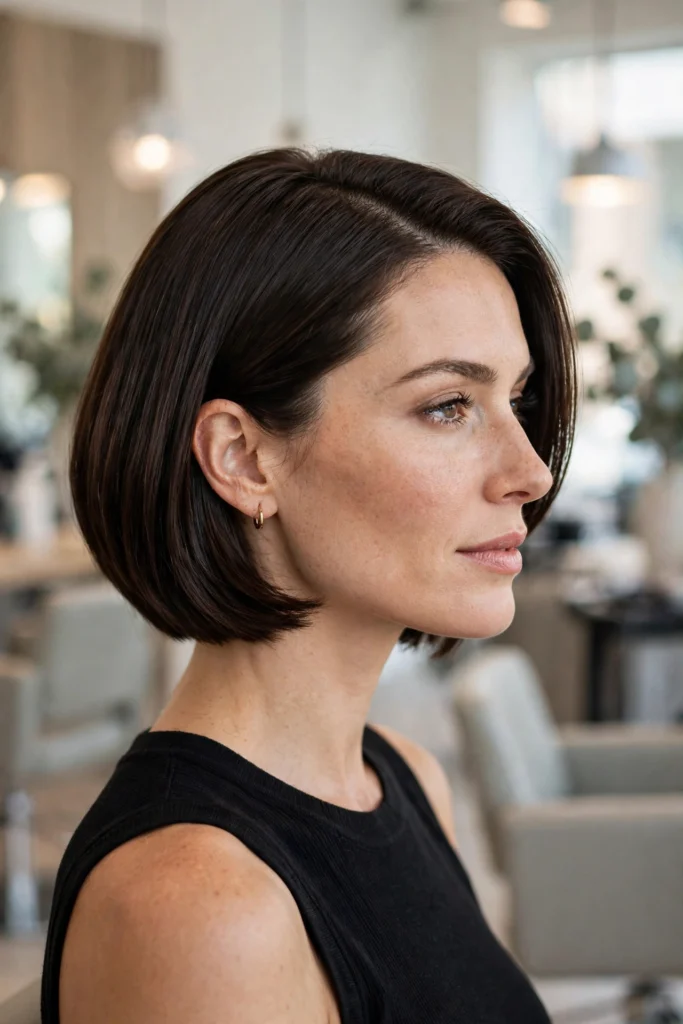
Who says texture is mandatory? Smoothed down with a flat iron and a shine serum, the bixie turns into something sleek and editorial. The layers create subtle movement even when straightened, so it never looks flat or severe.
This version is perfect for work environments where the tousled look feels too casual. It also photographs beautifully, which is worth knowing if you have events coming up. Use a heat protectant, flat iron in small sections, and finish with a pea-sized amount of smoothing oil through the ends. The nape stays neat, the crown stays glossy, and you look like you tried much harder than you did.
9. Will It Suit You? The 60-Second Self-Test

Every explainer lists face shapes. Almost none tells you how to actually decide. So here is a three-question test. Answer honestly.
One: what is your hair texture and density? Straight to wavy hair of any density is the easiest win. Curly and coily hair works beautifully but needs a curl-experienced stylist. Very fine, sparse hair can work if the crown is kept full and the layers stay long, but aggressive thinning will make it look wispy.
Two: how much daily styling will you really do? Be honest. The bixie needs about five minutes, texture product and finger styling, to look intentional. If your real routine is zero minutes and air-dry, choose the longer, softer bixie variations further down this list, or skip it.
Three: what is your grow-out tolerance? The bixie needs trims every 6 to 8 weeks to keep its shape. If you are a twice-a-year haircut person, the grow-out path is kind but the in-between months will test you. Pass all three questions and book the appointment.
Still asking yourself what is a bixie haircut going to do for your face shape specifically? Round faces want height at the crown and a longer, side-swept fringe. Square faces want softness around the jaw, so keep pieces in front of the ears. Heart and oval faces can wear nearly any version. Long faces should avoid too much crown height and keep the fringe fuller.
10. The Bixie with Curtain Bangs

Curtain bangs split down the middle and melt into the face-framing layers, giving the bixie a softer, more feminine frame. This is the version to choose if a straight-across fringe feels too harsh or too high-maintenance for you.
The beauty of curtain bangs on a bixie is how they grow. Instead of stabbing your eyes at week four, they simply blend into the layers around your face. Ask your stylist to cut them so the shortest point hits at the cheekbone, not the brow. Style with a round brush pulling away from the face, and they fall into that perfect swoop on their own.
11. How to Ask Your Stylist, Even If She Has Never Heard the Term

Here is the scenario nobody prepares you for. You sit down, say the word bixie, and your stylist looks blank. It happens more than you would think, because the cut goes by other names in many salons. Do not panic, and definitely do not leave. Use this exact script.
Say: “I want something shorter than a bob but longer than a pixie, with a tapered nape, lots of shattered layers through the crown, and a textured fringe. Here are photos of the length and texture I want.” Then show two to three photos: one front view, one side view, one back view. Photos beat vocabulary every single time.
Add these specifics to avoid disaster. Confirm the shortest point at the nape, how much ear coverage you want, whether you part in the middle or on the side, and how short the fringe should be at its shortest. Ask her to show you how she would style it before she starts cutting, so you know the daily routine you are signing up for.
If your stylist Googles what is a bixie haircut right in front of you, take it as a good sign, not a red flag. A stylist who checks references is a stylist who cares about getting it right. The dangerous ones are the ones who nod confidently and cut a bob with layers.
12. The Choppy Textured Bixie
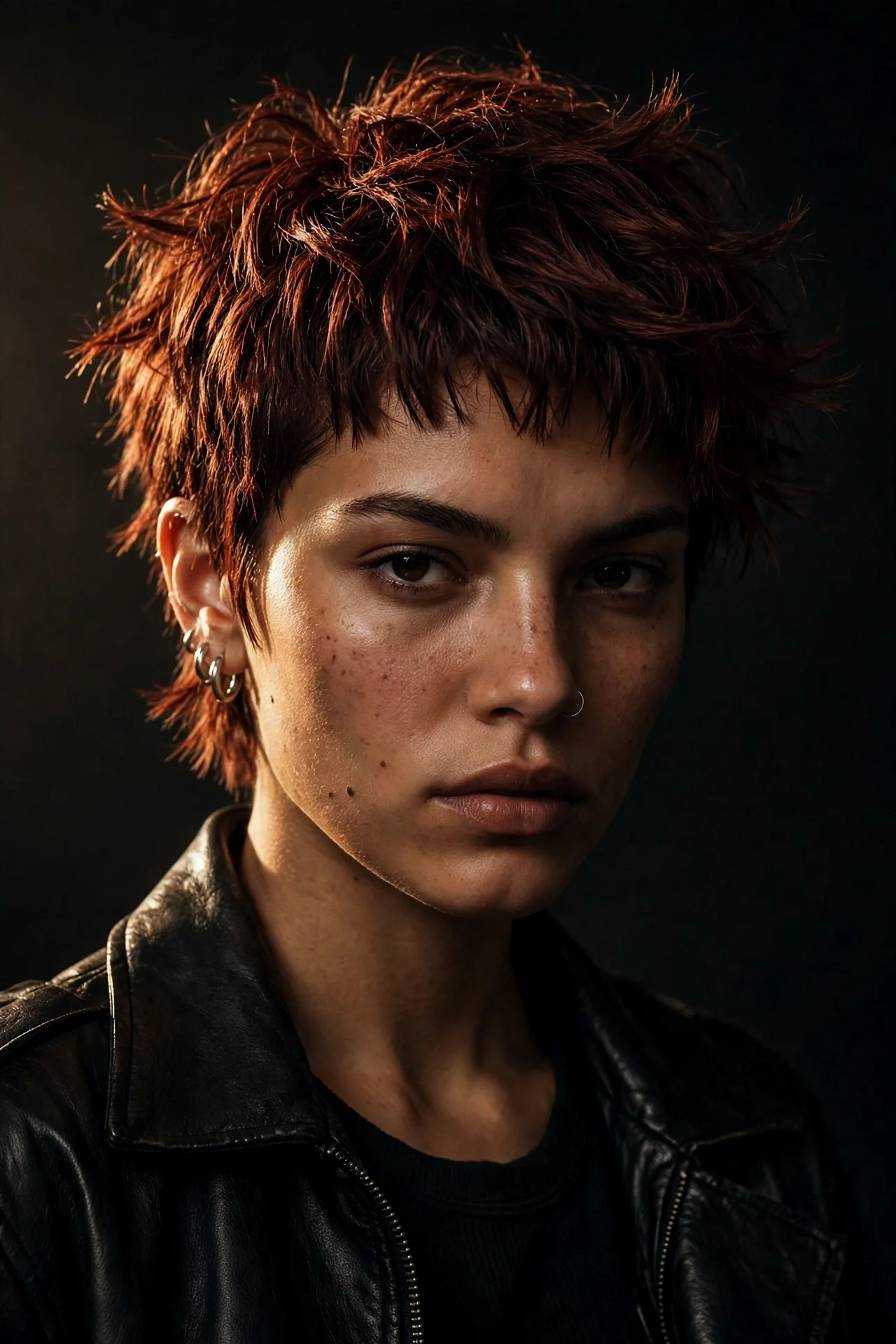
This is the bixie turned up to full volume. Aggressive point-cutting, visible separation between layers, and ends that look almost spiky in places. It is the most fashion-forward version on this list and the one that photographs with the most attitude.
It suits thick hair best, because the choppiness needs density to hold the piecey shapes. On fine hair, ask for the texture to be concentrated at the ends rather than carved through the interior, or you will lose fullness fast. Style with a matte texture paste, twisting small sections between your fingers to define the pieces. This is not a wash-and-go cut. It is a wash, paste, and go cut.
13. Fixing a Botched Bixie: What Went Wrong and How to Save It
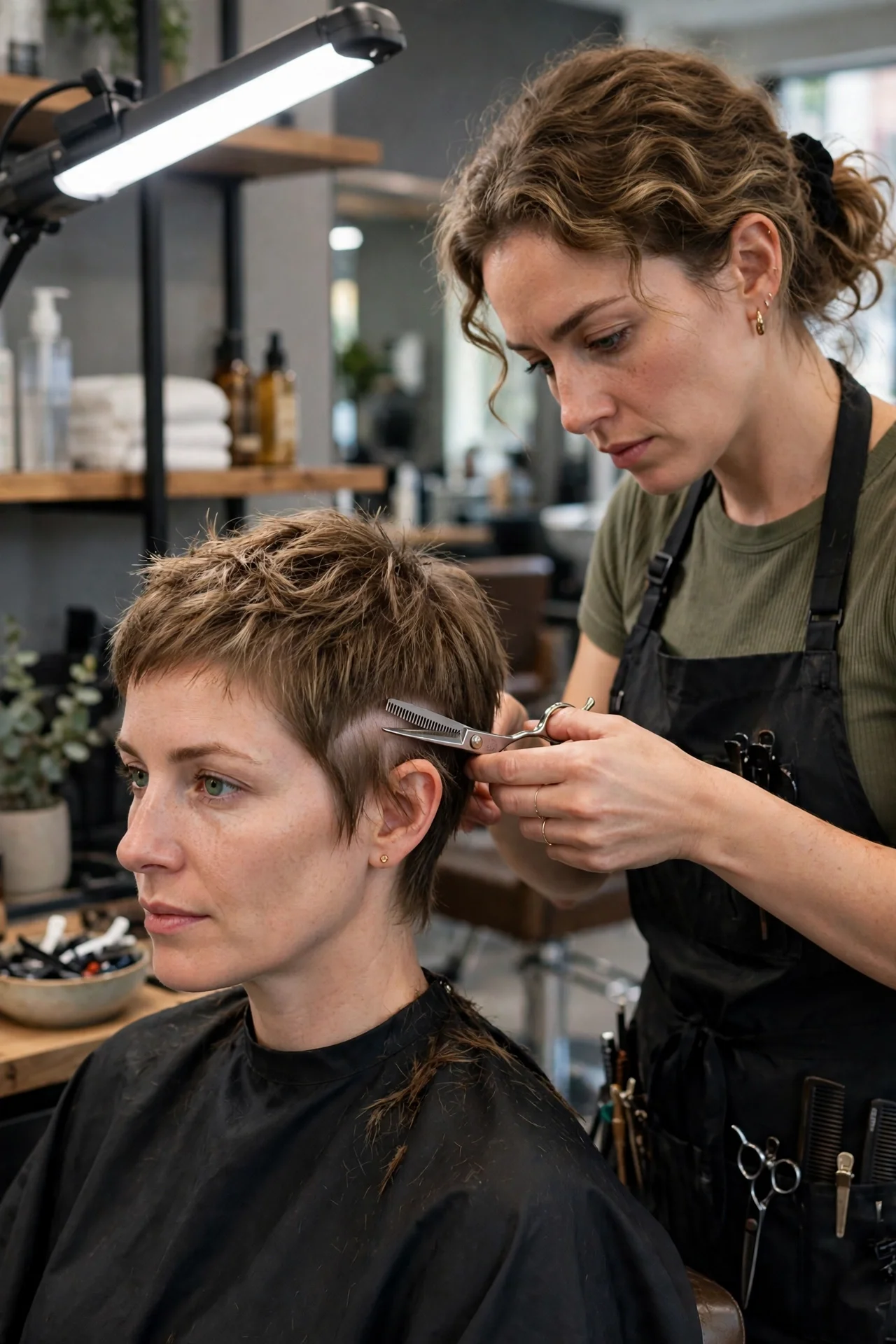
Nobody talks about this, so let us. A bad bixie usually fails in one of three ways. It was cut too blunt, so it sits like a mushroom instead of moving. The crown was cut too short, leaving you with a boyish crop you did not ask for. Or the fringe is wrong, too heavy, too short, or cut straight across like a bowl.
The fixes depend on the damage. Too blunt? A skilled stylist can point-cut and slide-cut texture into the existing shape without losing length, usually in one appointment. Crown too short? That needs time, not scissors: grow it for six to eight weeks, keeping only the nape and edges cleaned up, then reshape. Wrong fringe? Fringe grows fast and can often be re-cut or blended into face-framing layers within weeks.
The golden rule: do not let the same stylist “fix” it for free in a panic appointment unless you trust her. A correction cut from a second stylist, with photos of what you originally wanted, saves more hair in the long run. And take photos of the botched cut before anyone touches it, so the new stylist can see exactly what went wrong.
14. The Wavy Mermaid Bixie

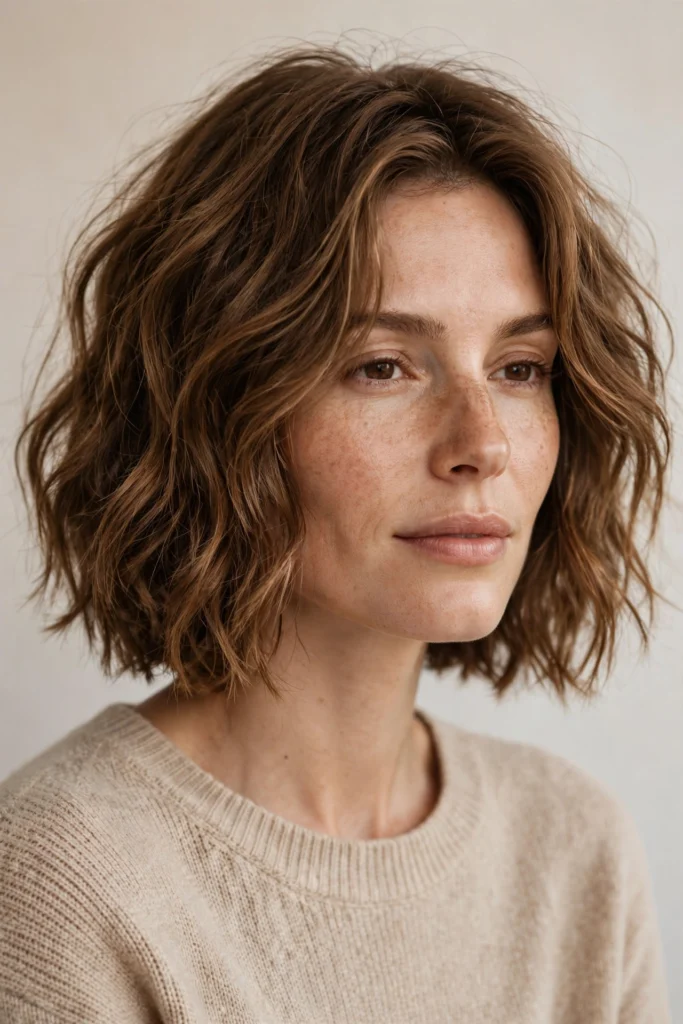
Longer through the top than the classic, with loose waves that give it a mermaid feel, this version is the bixie for people who are not ready to go properly short. The waves add width and softness, which makes it one of the most universally flattering variations here.
It is also the easiest to grow out, since the extra length on top transitions smoothly into bob territory. Style with a large-barrel curling iron, wrapping sections away from the face, then break the curls up with your fingers and a sea-salt spray. Sleep on it and it looks even better on day two, which is rare for a short cut.
15. The Maintenance Routine That Keeps It Looking Intentional
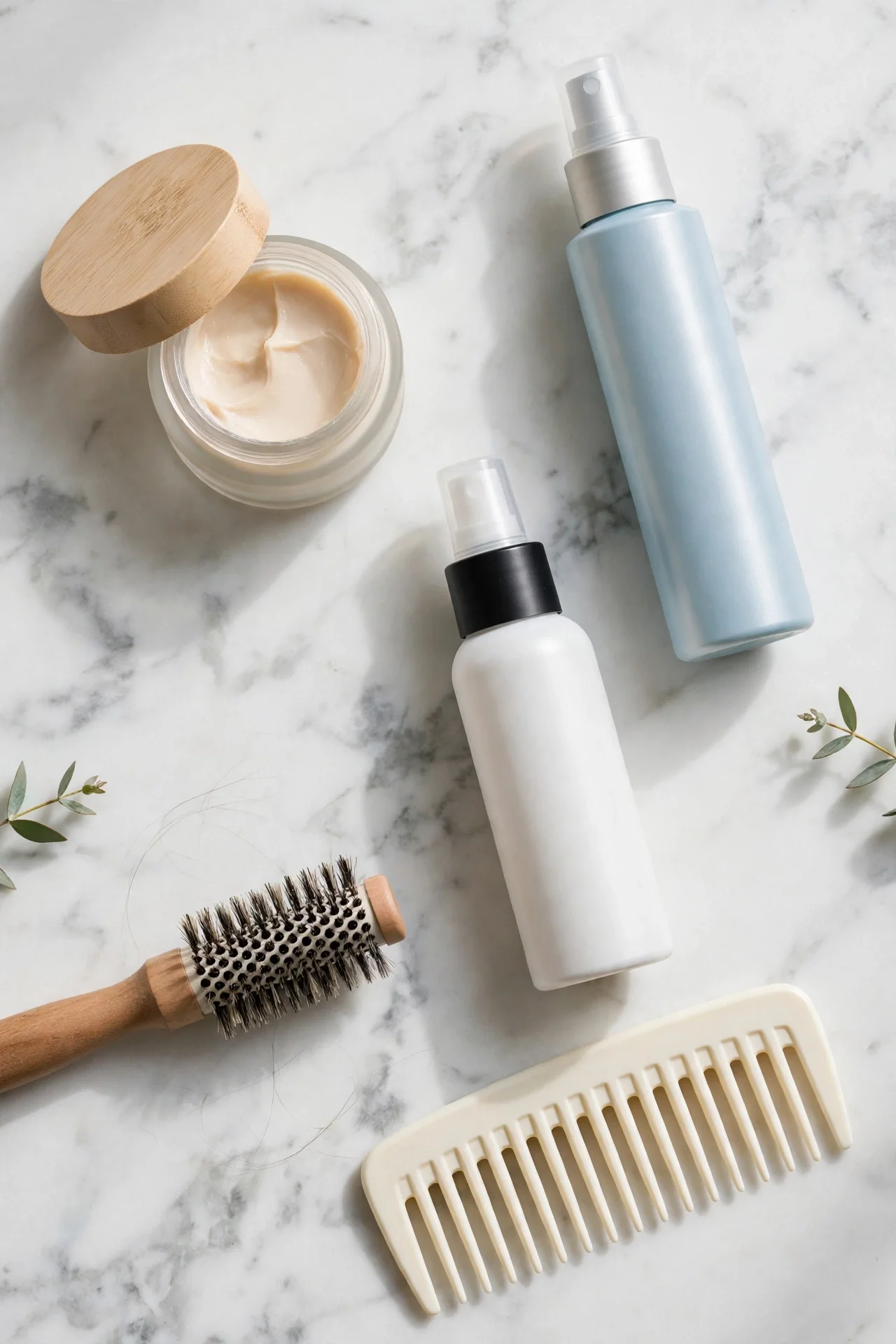
A bixie has a dirty secret: it looks effortless, but effortlessness is scheduled. Trims every 6 to 8 weeks keep the nape clean and the layers from collapsing into a shapeless blob. Shorter, edgier versions need the 6-week end of that range. Longer, softer versions can stretch to 8 or even 10.
Why do sources disagree on the interval? Because they are describing different bixies. A choppy, piecey bixie loses its edge fast as hair grows. A soft, grown-in bixie just gets longer and still looks fine. Your version determines your schedule, not some universal rule.
Daily, you need three things: a texture cream or paste, a light-hold spray, and dry shampoo for day two and three. Wash every two to three days, not daily, since freshly washed bixies can puff up with too much volume. Professional color gloss treatments, like the ones Revlon Professional recommends for keeping bixies shiny (their pro bixie guide is worth a read), keep the cut looking expensive between appointments.
16. The Slicked-Back Evening Bixie
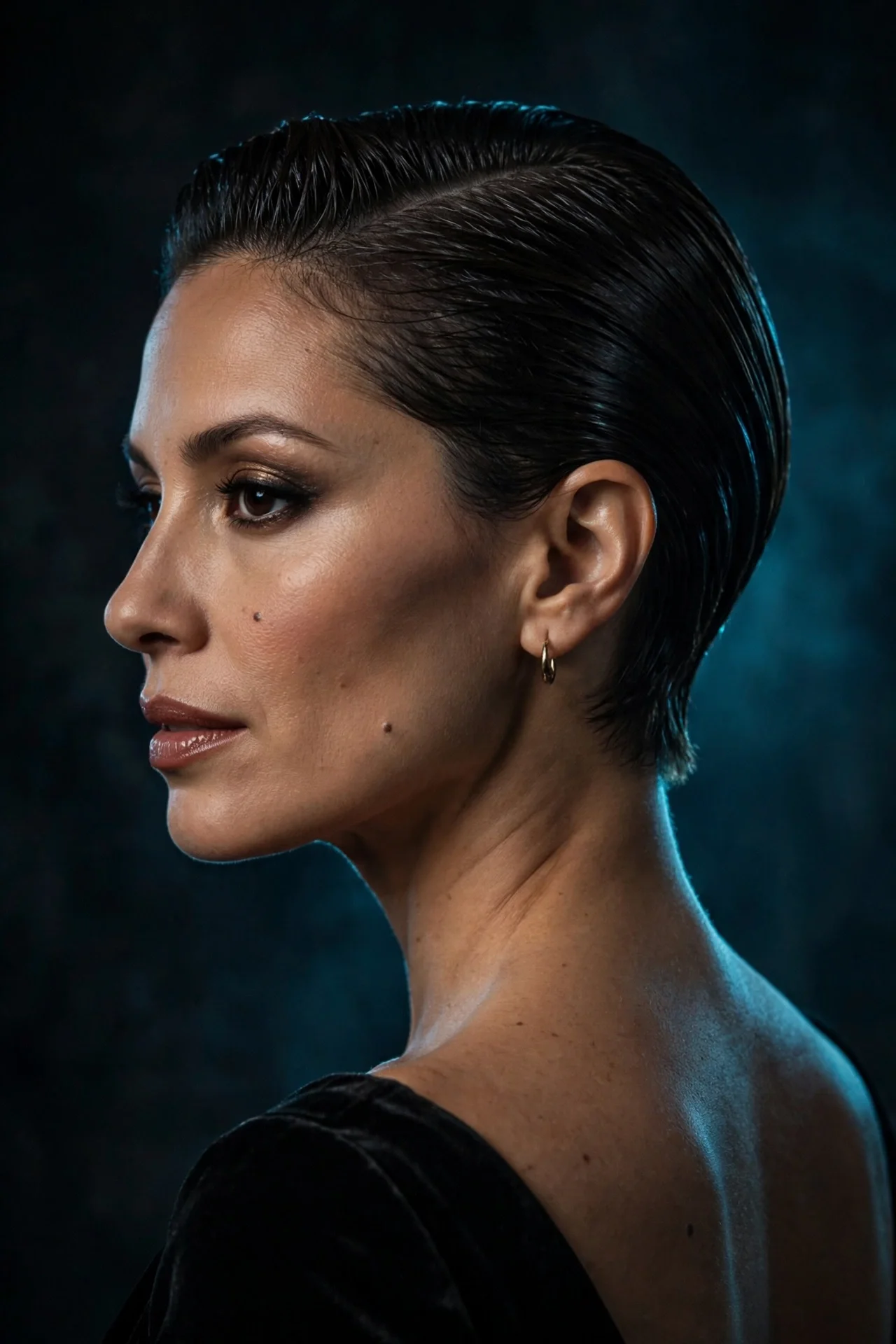
For nights out, comb everything back with a strong-hold gel and let the bixie do its red-carpet thing. The tapered nape keeps it neat from behind while the longer top creates beautiful height and shine. It is dramatic, elegant, and takes about three minutes.
The trick is product distribution. Work the gel through damp hair from roots to mid-lengths, comb straight back, and let it set without touching it. A little shine spray on top finishes it. This style also buys you an extra day between washes, since the gelled look hides roots and oil better than any other bixie variation.
17. The Grow-Out Timeline: Month by Month
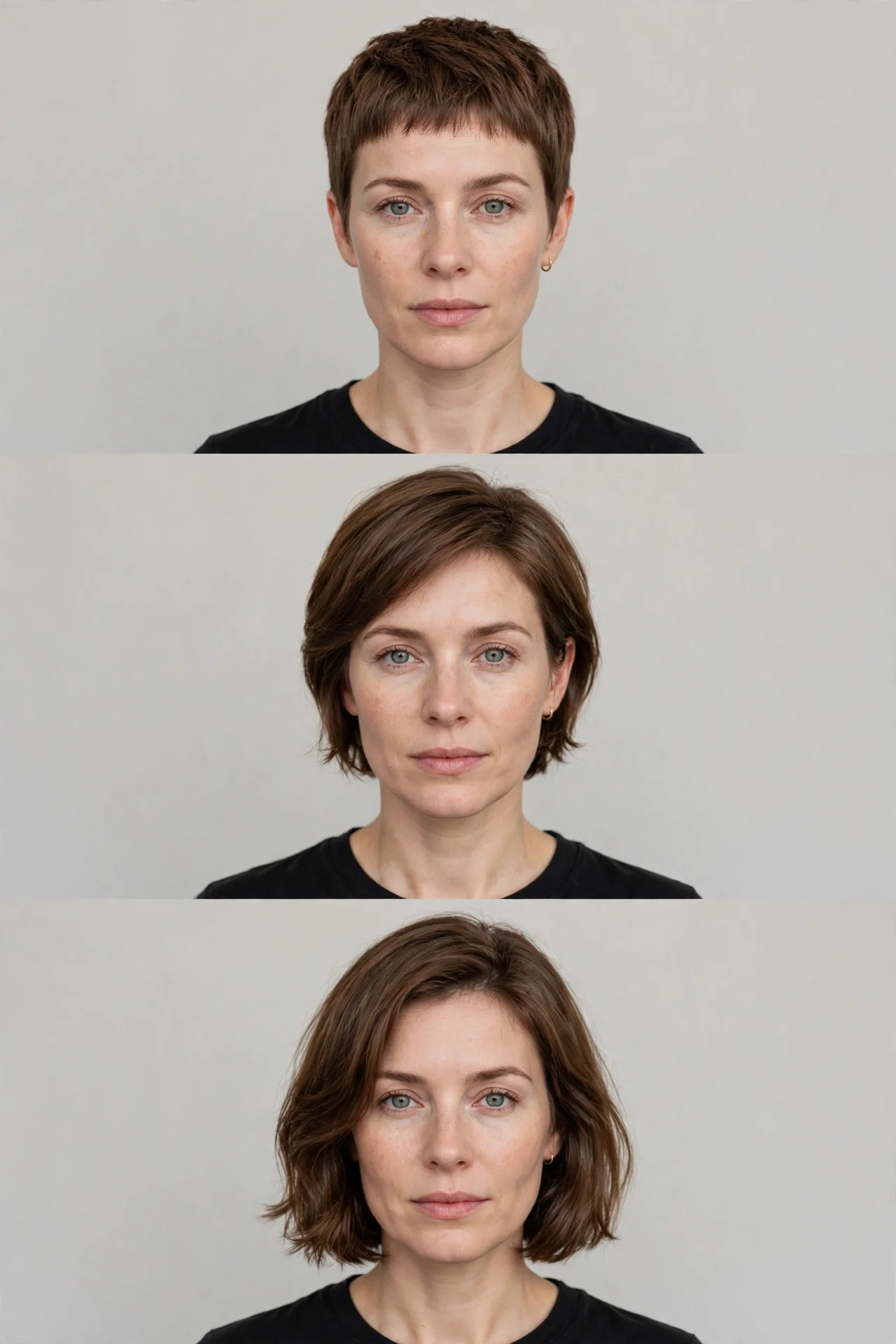
Everyone promises the bixie “grows out well.” Nobody shows you what that actually looks like. Here is the honest timeline, assuming average growth of about half an inch per month.
Months 1 to 2: the bixie is still a bixie, just softer. The nape starts to feel long. Book a cleanup trim at week 6 to 8, nape and edges only, and tell your stylist you are growing it out so she leaves the top alone.
Months 3 to 4: you now have a longer bixie, sometimes called a bixie-bob. The crown has real length and the fringe blends into face-framing layers. This is a genuinely cute phase, not an awkward one. Ask for light reshaping to keep the silhouette balanced.
Months 5 to 6: welcome to the micro bob. The nape has filled in and the back is approaching one length. One shaping appointment here, evening out the back and refining the perimeter, and you have a legitimate short bob.
Months 7 to 8: you are wearing a true bob. The grow-out is complete, with zero mullet phase along the way. Compare that to growing out a pixie and you will understand why the bixie is the commitment-phobe’s short cut.
18. The Voluminous Crown Bixie

If your hair is fine or flat, this version is your best friend. The layers are stacked to build maximum lift at the crown, and the fringe is kept full to balance the volume on top. It is the bixie that gives you the most hair you have ever had.
Blow-dry upside down for root lift, then set the crown with a little volumizing powder at the roots. A round brush helps, but honestly, rough-drying with your fingers and flipping your part gives a more modern result. Avoid heavy oils and serums on the crown, they will flatten everything you just built. Keep those for the ends only.
19. The Copper Dimensional Bixie
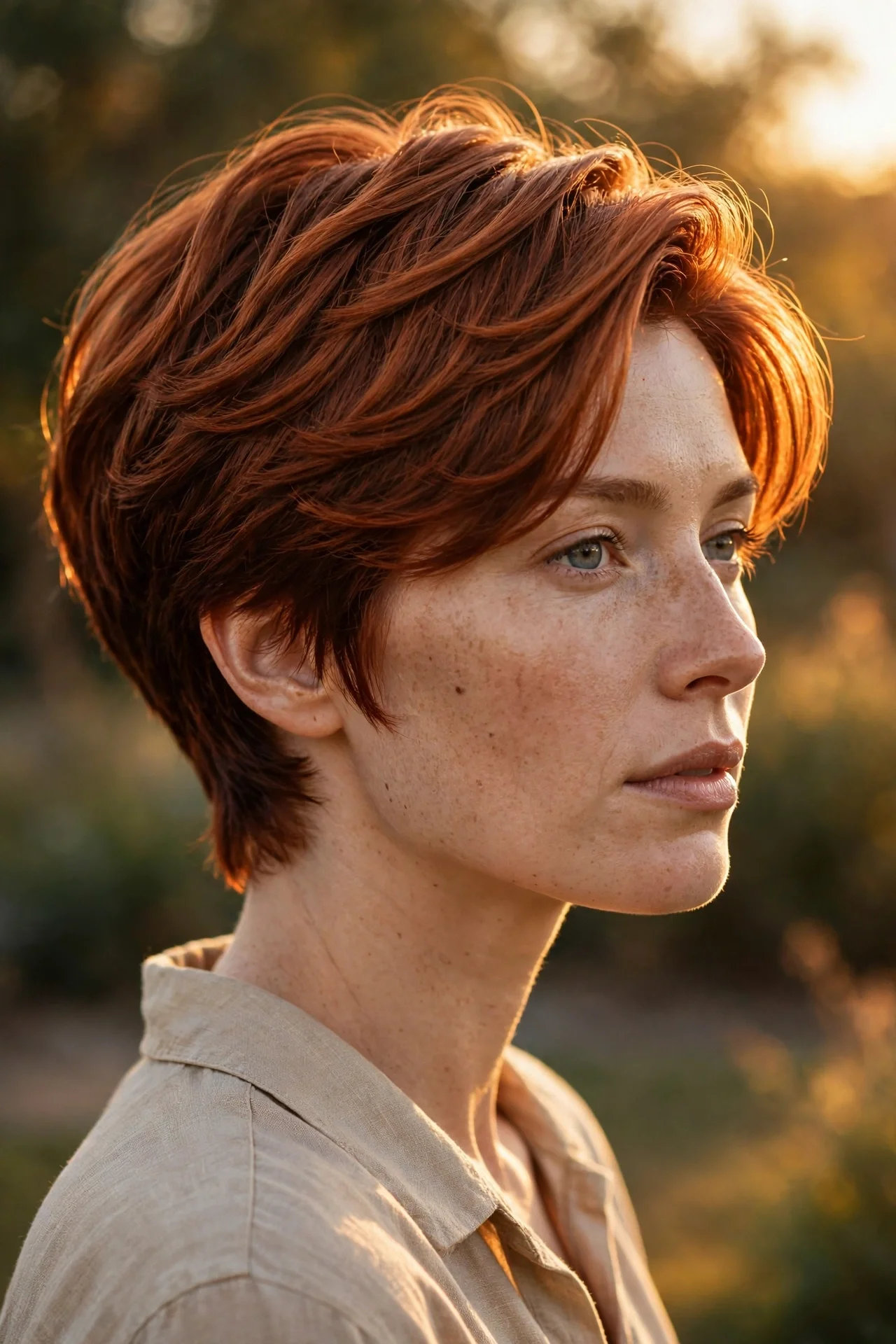
Color changes everything on a bixie. Copper, auburn, and dimensional reds make every layer visible, turning the cut’s texture into the main event. The shattered ends catch light differently at every angle, which is something a one-length bob simply cannot do.
This is also the version that hides regrowth best if you go for a lived-in, rooty application rather than all-over color. Ask your colorist for dimension through the crown and slightly deeper tone at the nape, which makes the taper look even sharper. Copper fades fast, so plan on a gloss refresh every 6 weeks, ideally timed with your trim.
20. The Soft Grown-In Bixie

Last but not least, the bixie for real life. Longer all over, softer at the nape, layers that blend rather than shatter. It is what your bixie looks like at month three of the grow-out timeline, worn on purpose from day one.
Choose this if your styling tolerance is low and your salon visits are infrequent. It needs the least maintenance of every version here, survives air-drying better than the choppier cuts, and still reads as a deliberate, modern haircut. Ask your stylist for “a bixie, but grown-in and soft,” and show her this photo. She will know exactly what to do.
Frequently Asked Questions
What is the difference between a bixie and a wolf cut?
Length and polish. A bixie is short, with a tapered nape and textured crown that sits around the ears. A wolf cut is medium length, hitting the shoulders or beyond, with extreme disconnected layers and a wilder, mullet-like silhouette. The bixie is the neater, more wearable of the two.
How do I ask for a bixie if my stylist does not know the term?
Describe it, do not just name it. Say "shorter than a bob, longer than a pixie, with a tapered nape and lots of shattered layers through the crown and fringe." Bring two to three reference photos showing front, side, and back views. Confirm the shortest length at the nape, your ear coverage, and your parting before she picks up the scissors.
How does a bixie grow out? What will it look like in 3 months?
At three months you will have a longer bixie, sometimes called a bixie-bob, with a softened nape and a crown that is starting to reach bob length. There is no awkward mullet phase. By months five to six it becomes a micro bob, and by month eight a true bob, with one shaping trim along the way.
Is a bixie just a grown-out pixie?
No, and this is the distinction stylists care about most. A bixie is cut intentionally, with a tapered nape and textured crown and fringe built in from the start. A grown-out pixie is simply a pixie that has not been trimmed, with none of that deliberate shaping. They may look similar at a glance, but the bixie has structure the grow-out lacks.
Does a bixie suit round faces?
Yes, with the right tweaks. Keep height at the crown to elongate the face, choose a longer side-swept fringe rather than a short straight one, and keep some length in front of the ears to slim the cheeks. Avoid versions that add width at the sides, like very rounded or bowl-like shapes.
How often does a bixie need trimming?
Every 6 to 8 weeks for most versions. Shorter, choppier bixies need the 6-week end of the range to keep their edge, while longer, softer versions can stretch to 8 or even 10 weeks. In between full appointments, a quick nape cleanup keeps the cut looking fresh.
The Bottom Line
So, what is a bixie haircut in one sentence? It is the short cut that finally stopped making you choose between a pixie and a bob, a tapered nape up front with a pixie’s ease, layered into a longer, textured crown with a bob’s versatility. It suits more face shapes and hair types than its reputation suggests, it grows out better than any other short cut, and in 2026 it has settled from trend into staple.
Book the consultation, bring the photos, use the script, and give it one full grow-out cycle before you judge it. Most bixie converts never go back to one-length hair. Once you have lived with layers that move, blunt cuts start to feel like a costume you have outgrown.

Sana Malik is a hair and beauty writer with a deep love for the bob in all its forms from sharp French bobs to soft, lived-in lobs. After years of experimenting with her own short hair and helping friends figure out what actually suits their face shape, she started writing to cut through the confusing advice out there. At BobHairTrends, she breaks down each cut into simple, honest guides: how to ask for it, how to style it at home, and who it really flatters. When she isn’t researching the latest trends, she’s usually testing a new styling product or convincing someone it’s finally time for the chop.