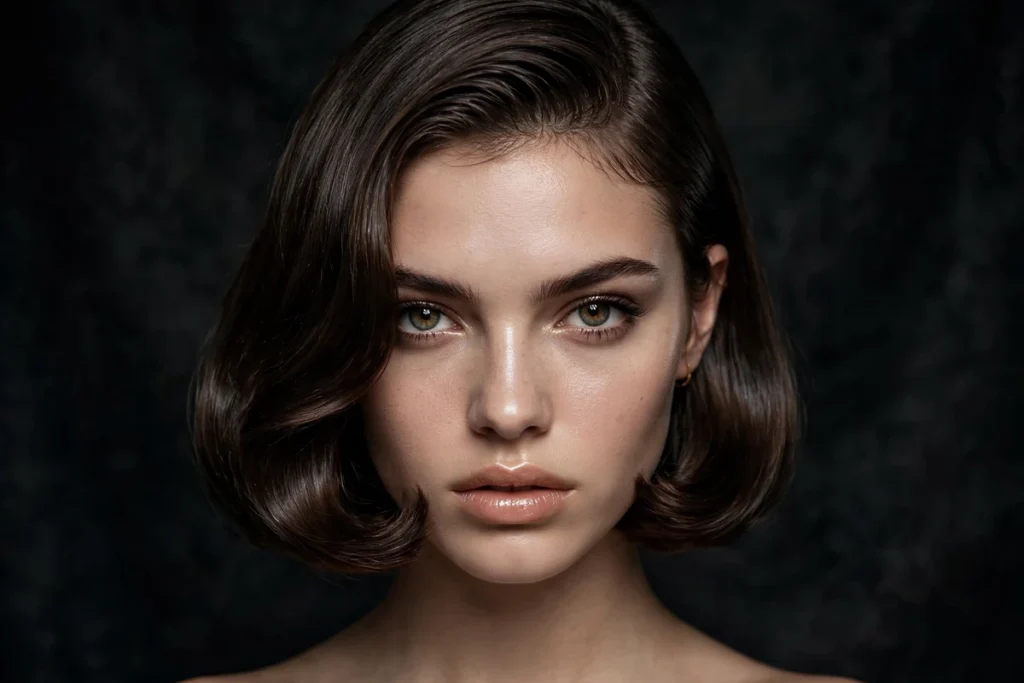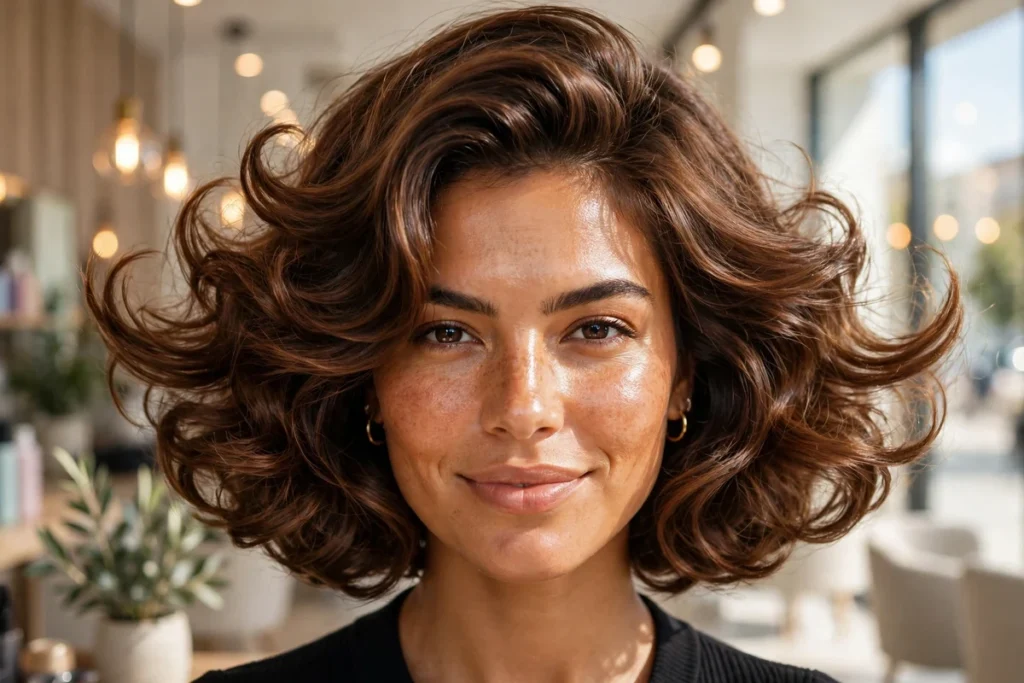


If you are shopping for an italian bob for older women, you have probably noticed something frustrating. Almost every article on the topic shows a celebrity in her twenties or a stock photo of someone who clearly does not need reading glasses. That changes here. Every single photo in this guide shows a real woman in her 50s, 60s, or 70s, with real silver, gray, and salt-and-pepper hair. No celebrities, no twenty-somethings, no fantasy.
20 Italian Bob for Older Women Styles That Prove Age Is an Advantage
Here is the honest truth about why this cut works so well after 50. The italian bob keeps its weight at the ends and curves gently under at the jawline. That curve does something lovely. It softens the jaw and the lower face instead of cutting a hard line across it. As we age, our hair gets finer and our facial contours get softer, and this cut meets both of those realities exactly where they are.
You also get built-in volume without teasing or backcombing. The italian bob is cut to sit between the jaw and the shoulders, which means the hair has far less distance to travel before it lifts. Fine, thinning hair suddenly looks like it has opinions again.
One more thing before we start. If you are new to the cut itself, our guide to what an italian bob actually is breaks down the technique, and the full italian bob collection has styles for every age and hair type.
1. The Classic Chin-Grazing Silver Italian Bob

Let us start with the purest version. Chin length, ends curved under, natural silver worn proudly. This is the cut stylists picture when someone says italian bob, and it is pure magic on a woman in her sixties.
The reason it works is the proportion. The length ends right where the jaw softens, and the curved ends hug instead of hanging. Silver hair reflects light beautifully at this length, so the whole thing glows.
Keep the part flexible. A middle part reads modern and confident. A side part reads softer and more traditional. Try both in the mirror on day one.
2. Salt-and-Pepper Curved Under with Soft Layers
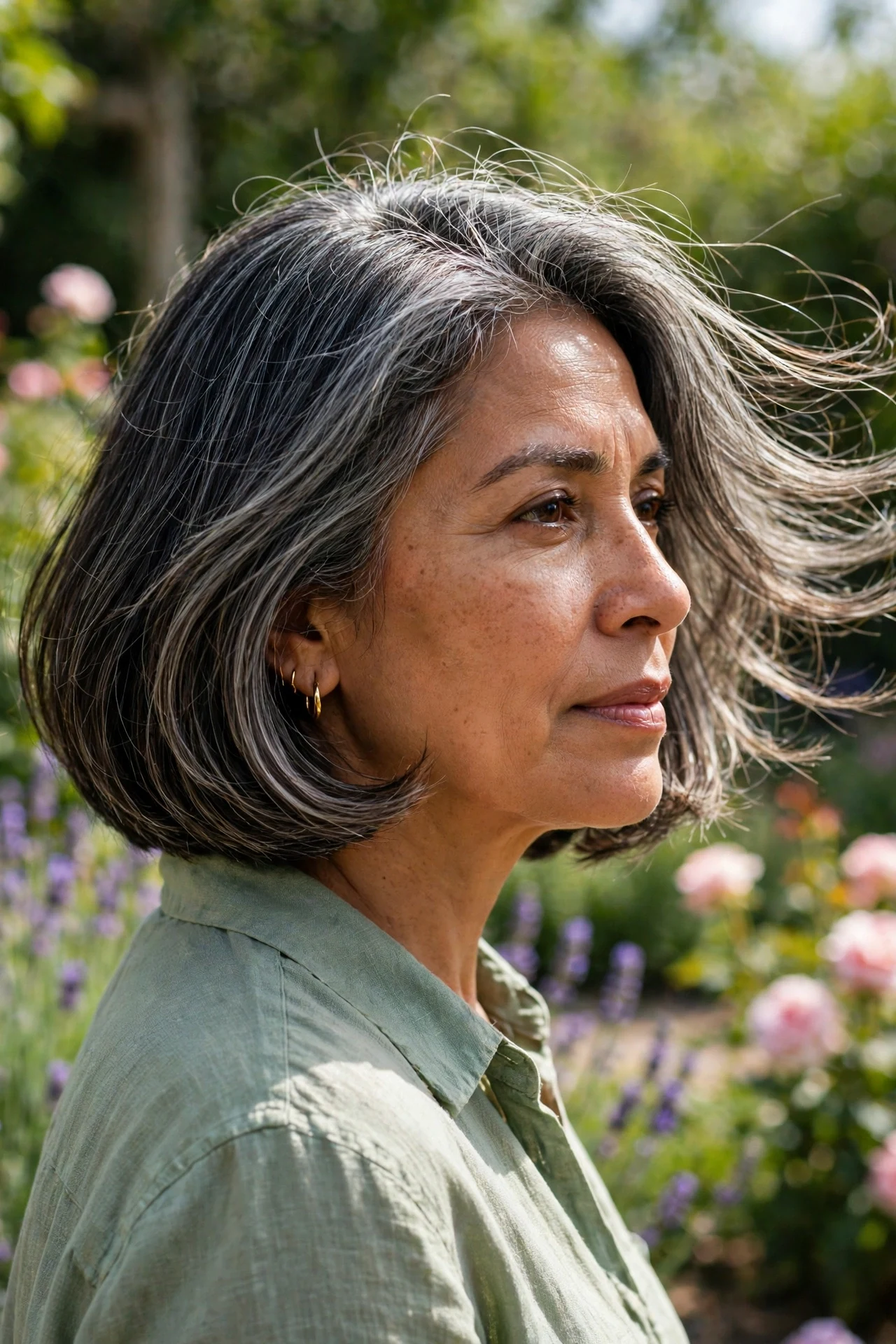
Salt-and-pepper hair and the italian bob were made for each other. The subtle internal layers catch the mix of dark and silver strands and turn them into dimension instead of confusion.
This style suits a woman in her fifties who has stopped fighting the gray and started working with it. Ask your stylist to keep the layers long and invisible. You want movement, not steps.
Style it with a round brush just at the ends. Two minutes of under-curve and you look like you spent forty.
3. The Gray-Blending Brunette Italian Bob

Not ready to go fully silver? This version keeps a rich brunette base and melts in silver-toned highlights around the face and part line. It is the gentlest possible gray transition.
The highlights do double duty. They camouflage incoming gray at the roots, and they brighten the face the way a good highlighter brightens cheekbones.
Ask for hand-painted placement rather than foils. You want it to look like sunlight found you, not like stripes.
4. Curly Gray Italian Bob with Natural Volume
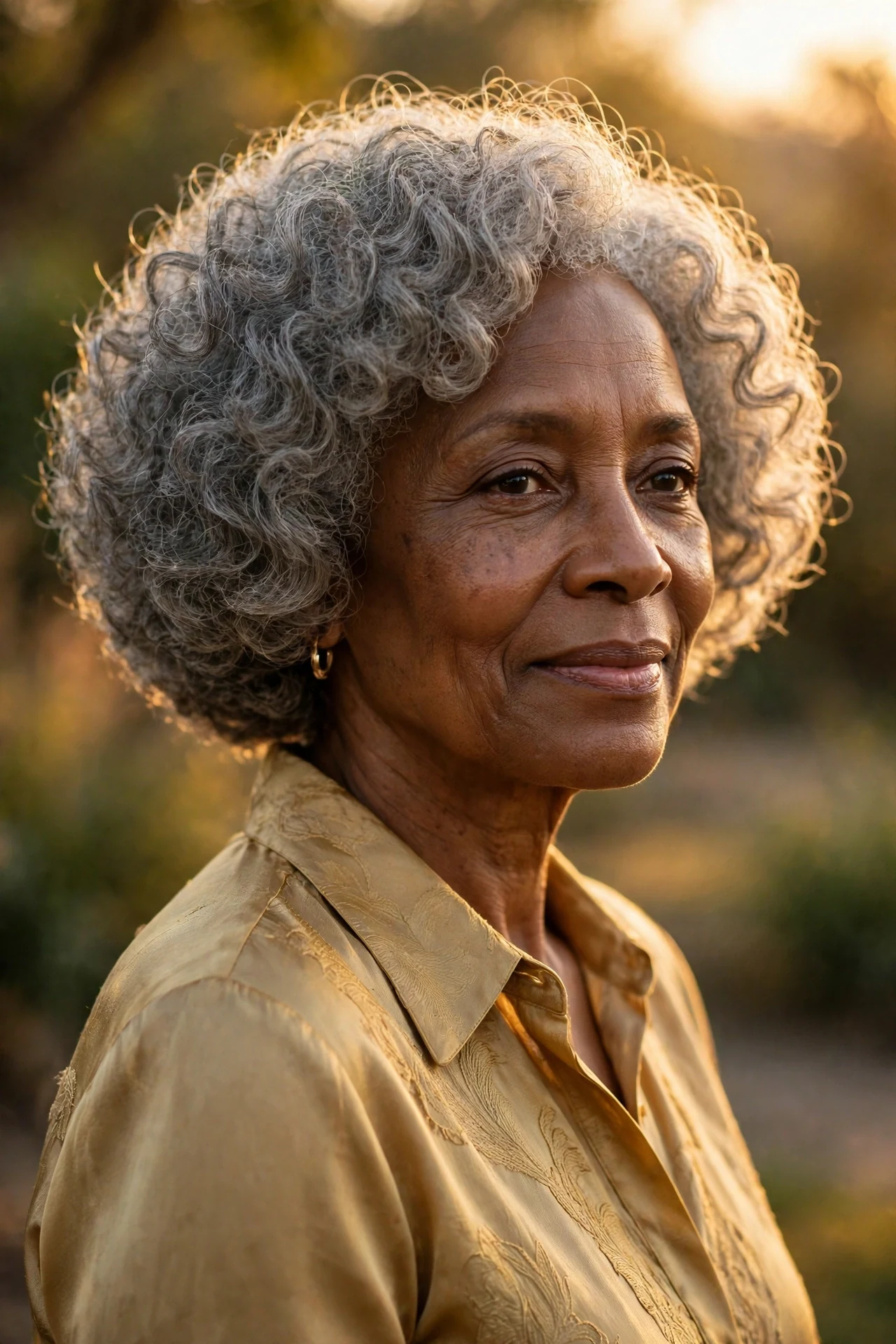
Gray curls at bob length are genuinely spectacular, and the italian bob shape gives them a beautiful rounded silhouette instead of a triangle. The weight distribution of this cut was practically invented for curly texture.
The trick is hydration. Gray hair runs drier than pigmented hair, and curls show dryness faster. A leave-in cream and a diffuser are your two best friends.
This length also means wash day gets shorter, which is a gift nobody talks about enough.
5. The Neck-Covering Longer Italian Bob
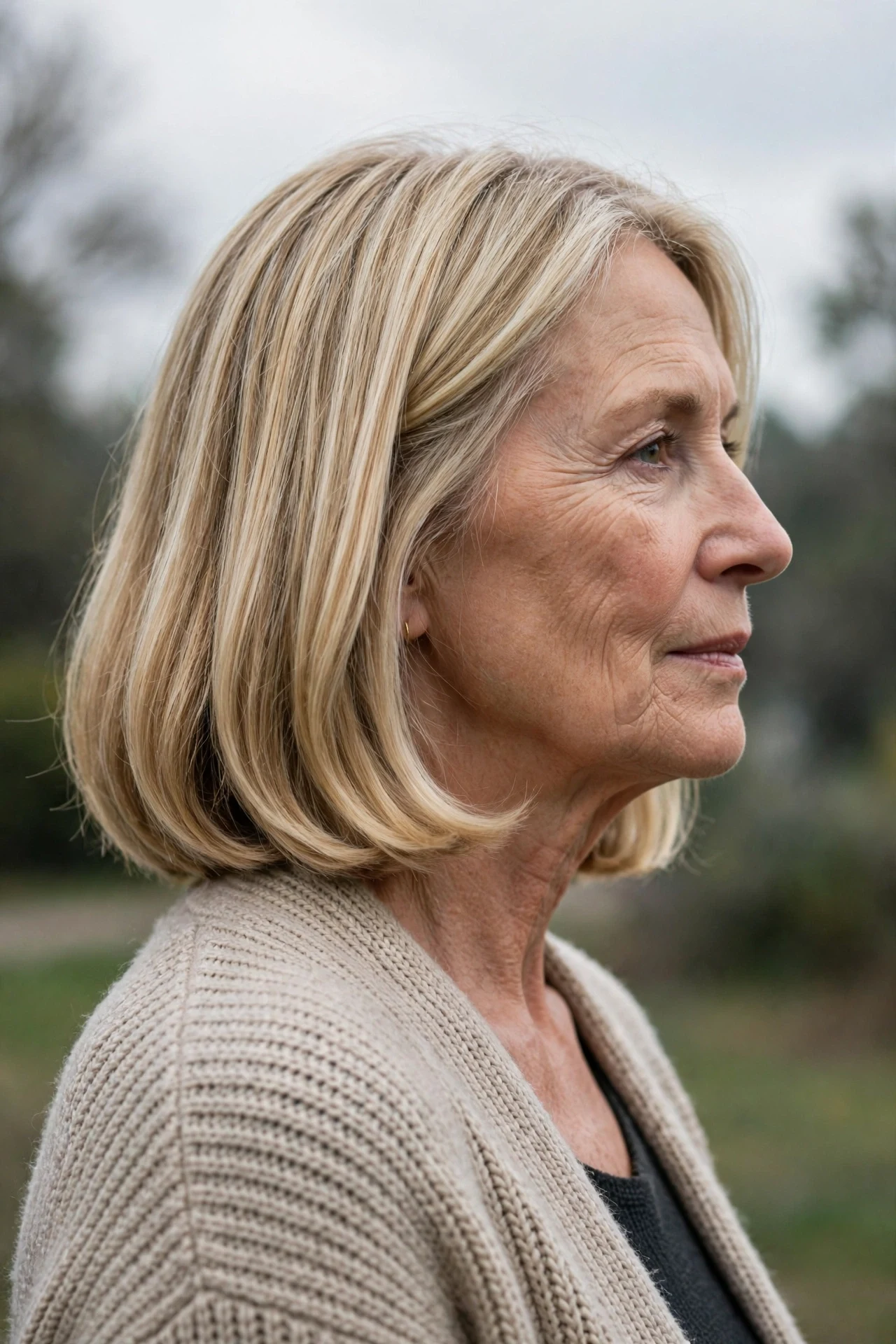
Some of us would like the neck area to have a little privacy, and there is nothing wrong with that. This version sits just below the collarbone in front, with the back tucked in for shape.
You keep the softness of the italian bob while getting graceful coverage where you want it. The face-framing pieces draw the eye up to your cheekbones and eyes.
It is also the most versatile length in this list. It can be tucked behind the ears, pinned loosely, or worn with a headband on busy days.
6. The Gray Transition Italian Bob
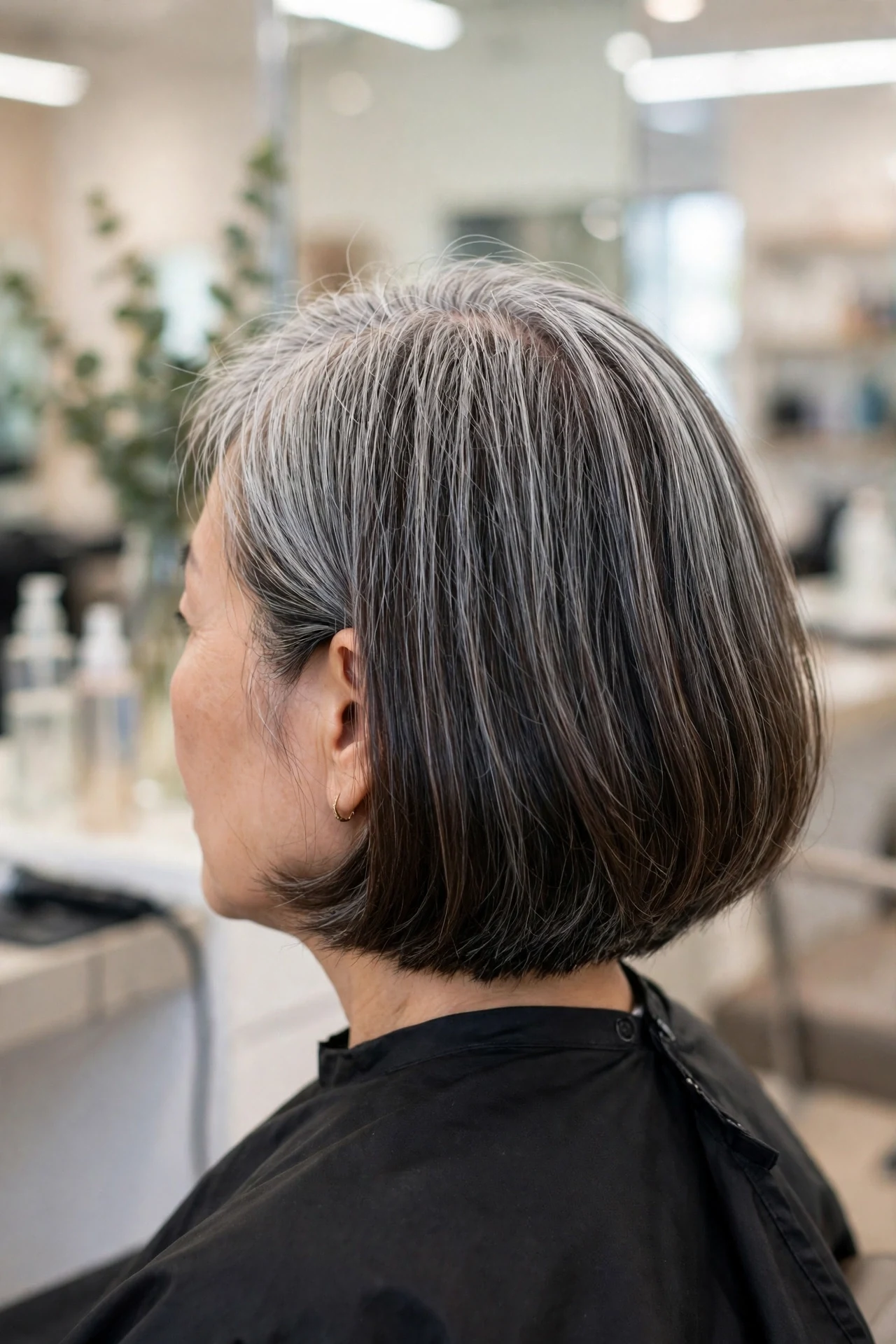
Growing out hair dye is usually miserable. The line between old color and new gray marches down your head like a timeline of regret. The italian bob fixes this better than almost any other cut.
Here is the plan. Get the bob cut first, which removes several inches of old color immediately. Then ask for gray-blending highlights at each trim to blur the line as it grows down. Most women reach a clean transition in six to nine months, which sounds long until you compare it to the years of roots you were fighting.
Keep trims every seven to eight weeks during the transition. Each trim removes more old color and the line keeps fading.
7. Thin-Hair Italian Bob with Invisible Layering

Thinning hair after 50 is normal, and the italian bob is one of the kindest cuts for it. The secret is invisible layering: short pieces hidden underneath that push the top hair up and out.
What you must avoid is aggressive thinning shears or too many layers. Those remove the very weight your hair needs to look full. Tell your stylist you want the ends to stay thick and blunt-ish, with the lift hidden inside.
A volumizing mousse at the roots and a cool-shot finish will make this look twice as full as it is.
8. Italian Bob with Curtain Bangs for the Forehead

Curtain bangs are the gentlest way to soften forehead lines without committing to a full fringe. They part in the middle and sweep to each side, framing the eyes.
On an italian bob, they blend into the face-framing layers so there is no harsh line where bangs end and bob begins. Everything flows.
They do need a trim every four to five weeks to keep their shape, so factor that into your salon rhythm.
9. The Glasses-Friendly Italian Bob

Here is something no competitor article bothers to mention. Your frames and your bob have to get along. This version is cut with the glasses in mind: the length sits just below the jaw so it never competes with the frames, and the sides are tucked slightly so they do not push the arms of the glasses out.
Rectangular frames like these pair beautifully with the rounded ends of the bob. The geometry balances.
If you wear progressives, tell your stylist. The way you tilt your head to read changes where the hair falls, and a good stylist will cut for your real life, not a standing-straight photo.
10. Deep Side Part for a Widening Part Line
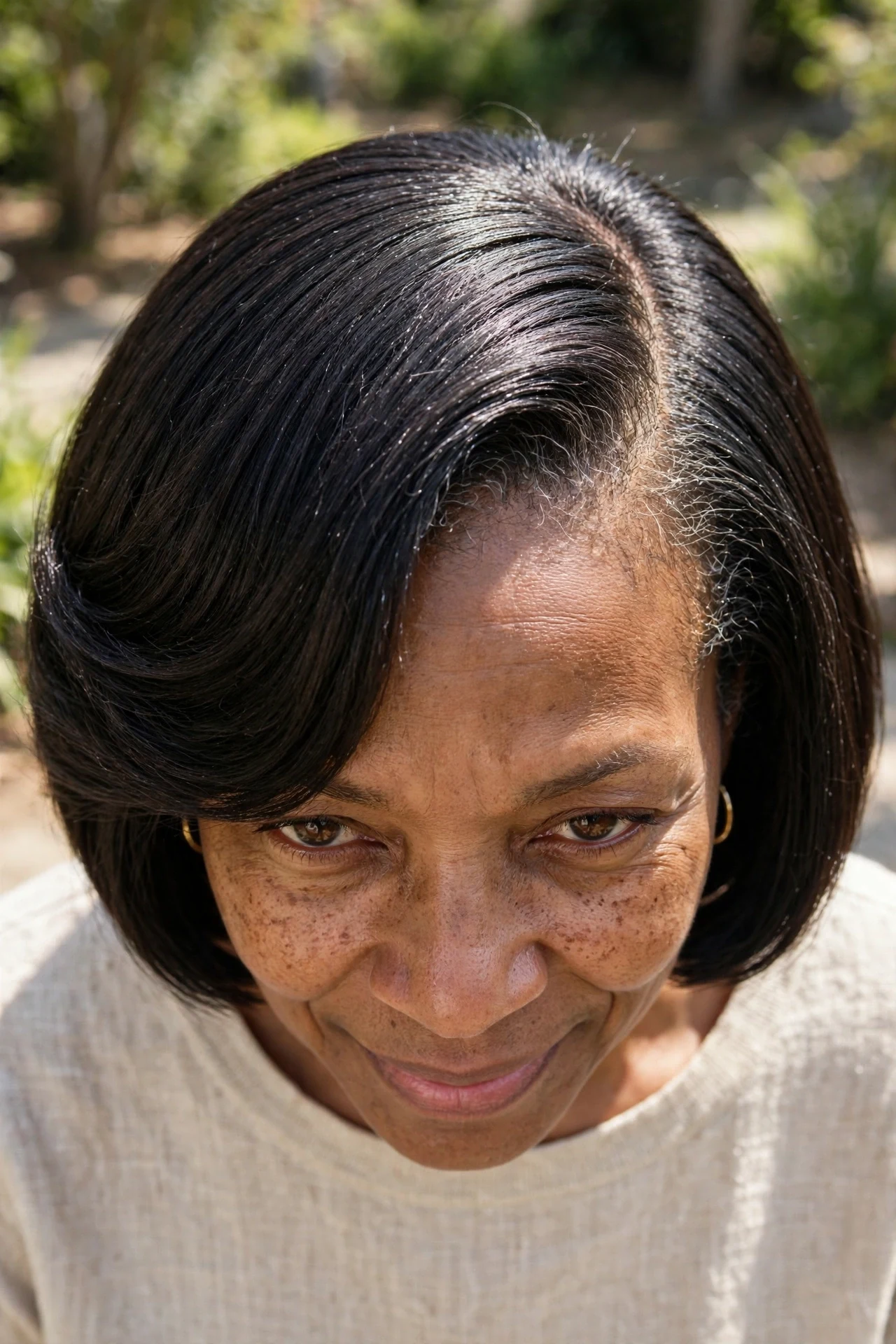
If your part has started to widen, and for many women in their fifties it has, a deep side part is the simplest camouflage in the book. The hair sweeps across the scalp and covers the sparse area completely.
The italian bob makes this easy because the shorter length means the sweep stays light and lifted instead of dragging flat. Add a little root powder on the part line and the effect is complete.
This is also the fastest morning style in this guide. Part, sweep, done.
11. Wavy Silver Italian Bob, Air-Dried

At seventy, you have earned the right to stop blow-drying every morning. This wavy version is cut to look its best air-dried, with the natural wave encouraged by the layer placement.
Scrunch in a little curl cream on damp hair and walk away. The cut does the rest. The slight wave gives silver hair movement and life that a straight style can flatten out.
This is proof that low effort and high polish can coexist. They absolutely can.
12. Wispy Fringe Italian Bob with Round Frames
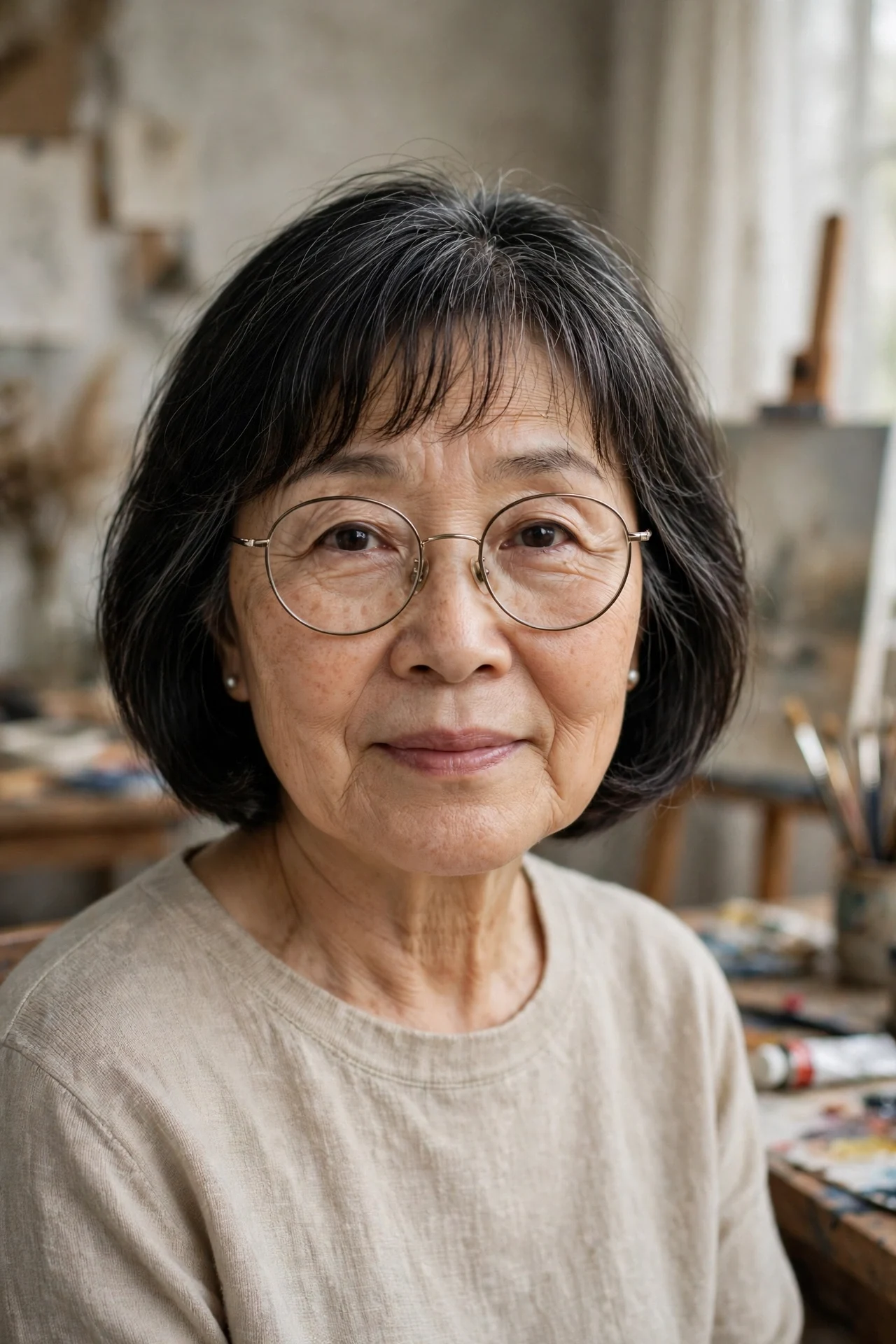
Our second glasses pairing, because one was not enough. Round frames with a wispy fringe create a soft, artistic look that is completely different from the structured rectangular pairing in section nine.
The fringe is wispy on purpose. A heavy bang plus round frames can crowd the face. Wispy keeps the forehead light and lets the eyes stay the focus.
This combination looks wonderful on fine, straight hair, where the fringe falls naturally without much styling.
13. Tapered-Nape Italian Bob for Warm Days
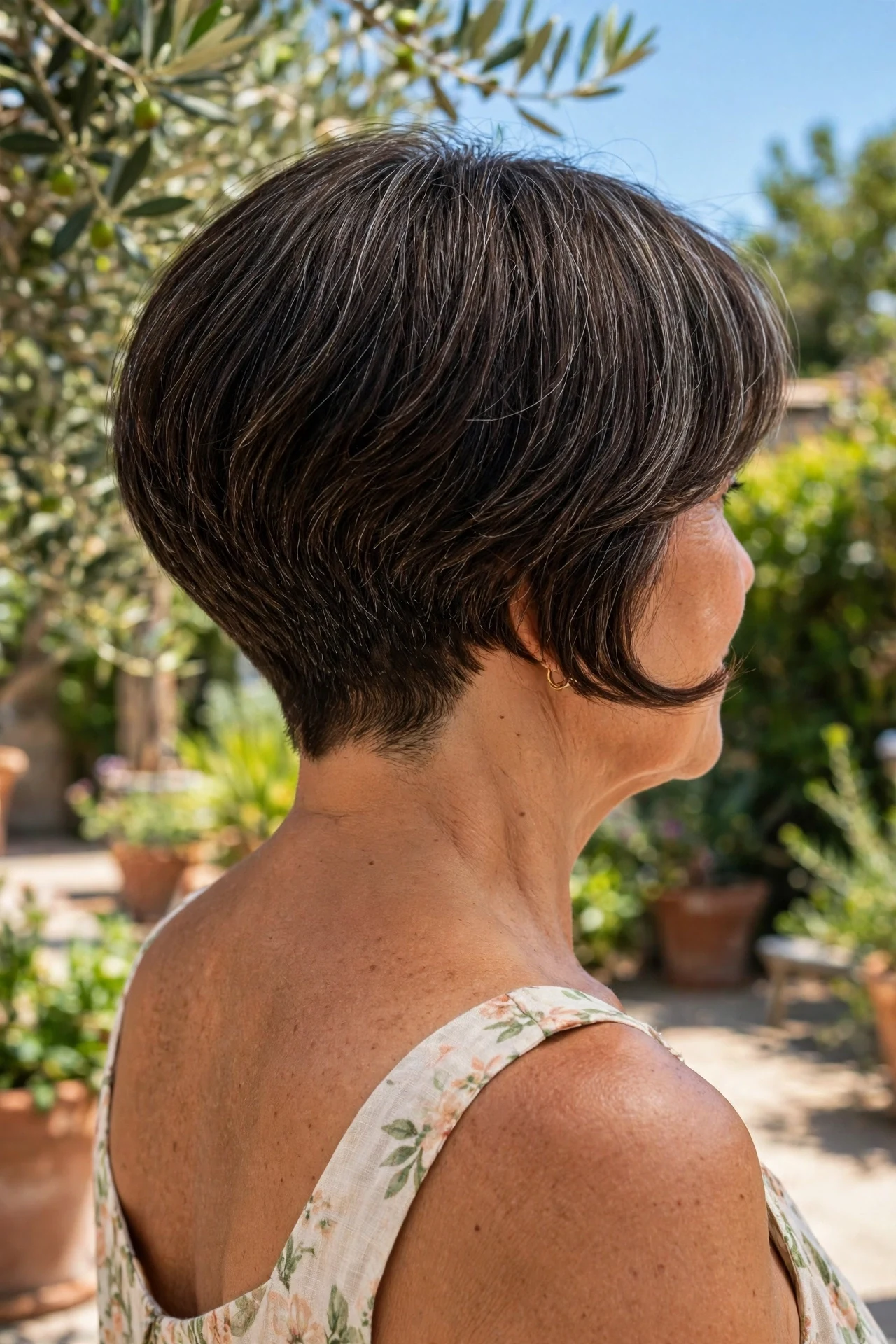
Hot flashes are real, and a heavy nape makes them worse. This version keeps the front at classic italian bob length but tapers the nape close and light.
You get the face-framing beauty in front and blessed airflow in back. It also grows out gracefully, since the taper blends into the length over time.
If you run warm at night, you will notice the difference the first evening. Small cut, big comfort.
14. Silver Balayage Blend Italian Bob
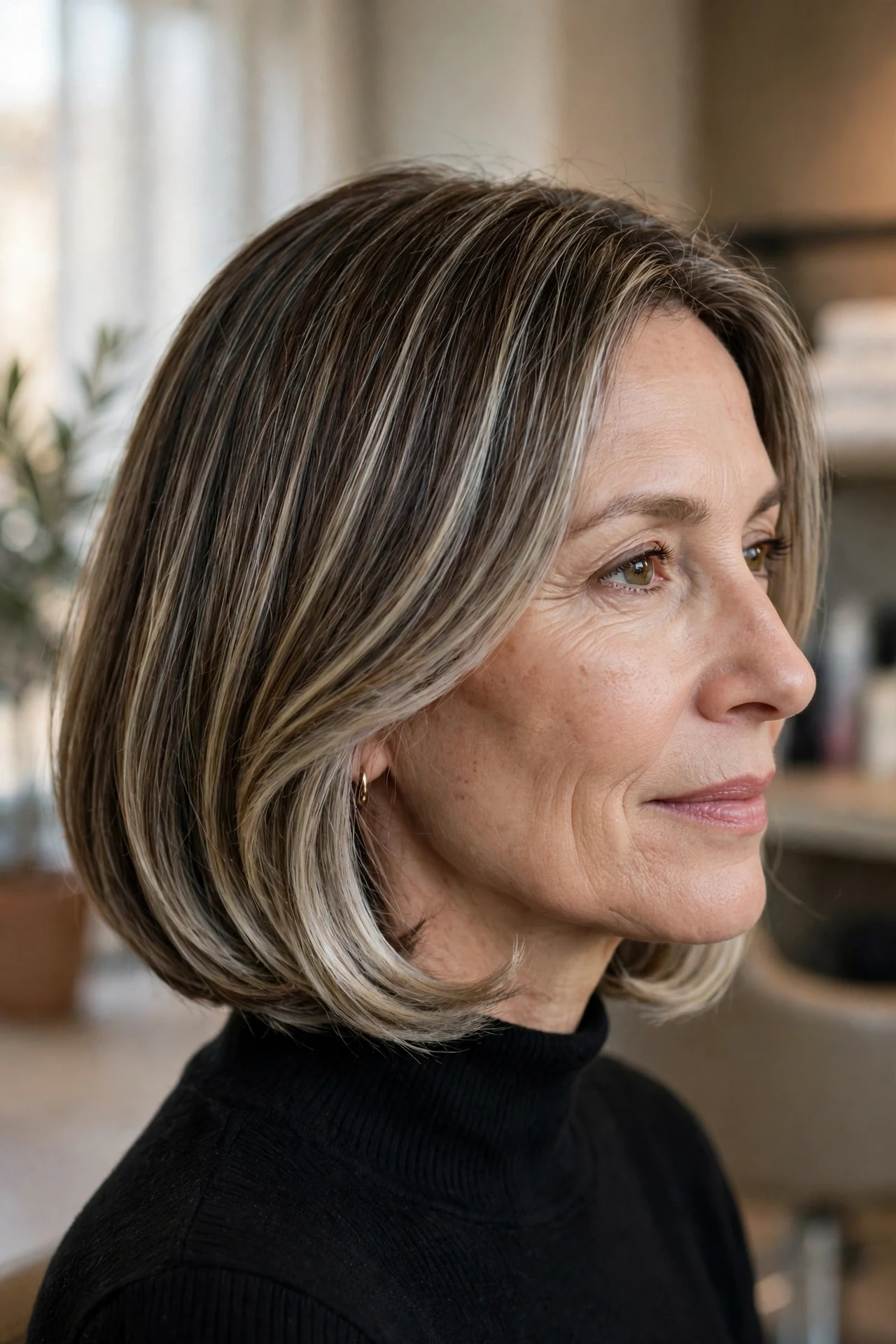
This is the color for the woman whose gray is coming in unevenly. A silver balayage melts the different tones together so the grow-out looks intentional from week one.
The italian bob shape shows off balayage beautifully because the curved ends display the color transitions. Straight, blunt cuts hide the blend. This one shows it off.
It is a color service, so it costs more up front, but the grow-out is so soft that you can stretch appointments to twelve weeks.
15. The Jawline-Softening Rounded Italian Bob

In our seventies, the jawline softens and the skin under the chin changes. A rounded italian bob answers this with a curve that mirrors and flatters the new contours instead of fighting them.
The roundness is the whole point. Where a sharp bob would create a harsh contrast with a softened jaw, this one echoes the shape and looks harmonious.
Ask your stylist to round the perimeter with scissors rather than a razor. You want a soft edge, not a shattered one.
16. Face-Framing Highlights Italian Bob

A few bright pieces around the face do for your complexion what good lighting does for a photograph. This version keeps the base natural silver or salt-and-pepper and adds luminous face-framing highlights.
Our third glasses style here, cat-eye frames, because they lift the eye upward and pair gorgeously with the highlight placement. The whole look has an upward energy.
Highlights need toning every few months to stay bright rather than brassy, so budget a toner between full color appointments.
17. The Wash-and-Go Natural Texture Italian Bob
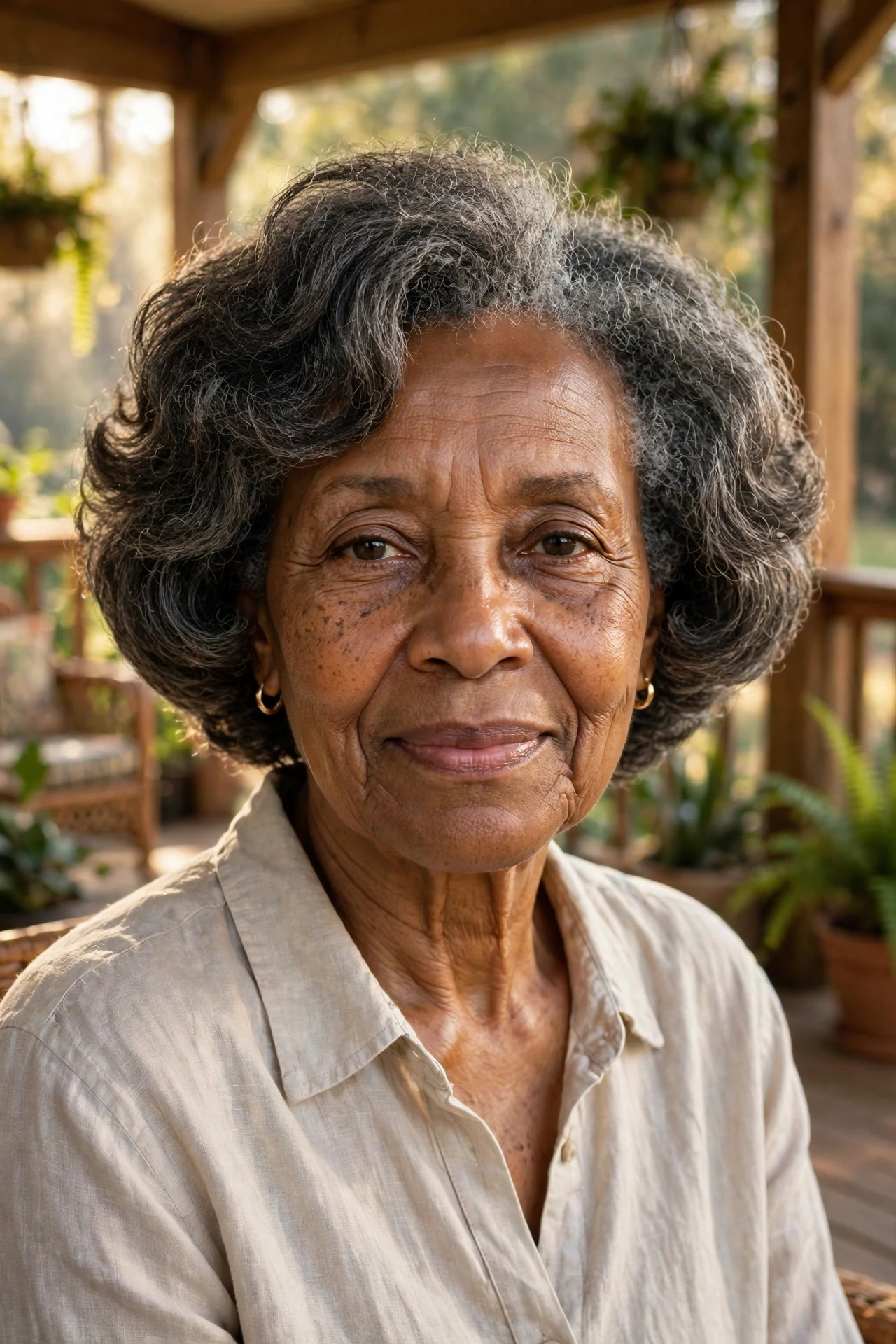
Not every woman wants to style daily, and this cut respects that. It is shaped to your natural texture, whatever it is, so wash-and-go is a genuine option rather than a marketing phrase.
The key is a stylist who cuts for your texture instead of cutting straight and hoping. Curly, coily, and wavy textures each need a different approach to the italian bob’s signature curve.
A silk pillowcase helps any texture wake up better. It is the cheapest beauty upgrade in this entire guide.
18. What to Tell Your Stylist: The Exact Script
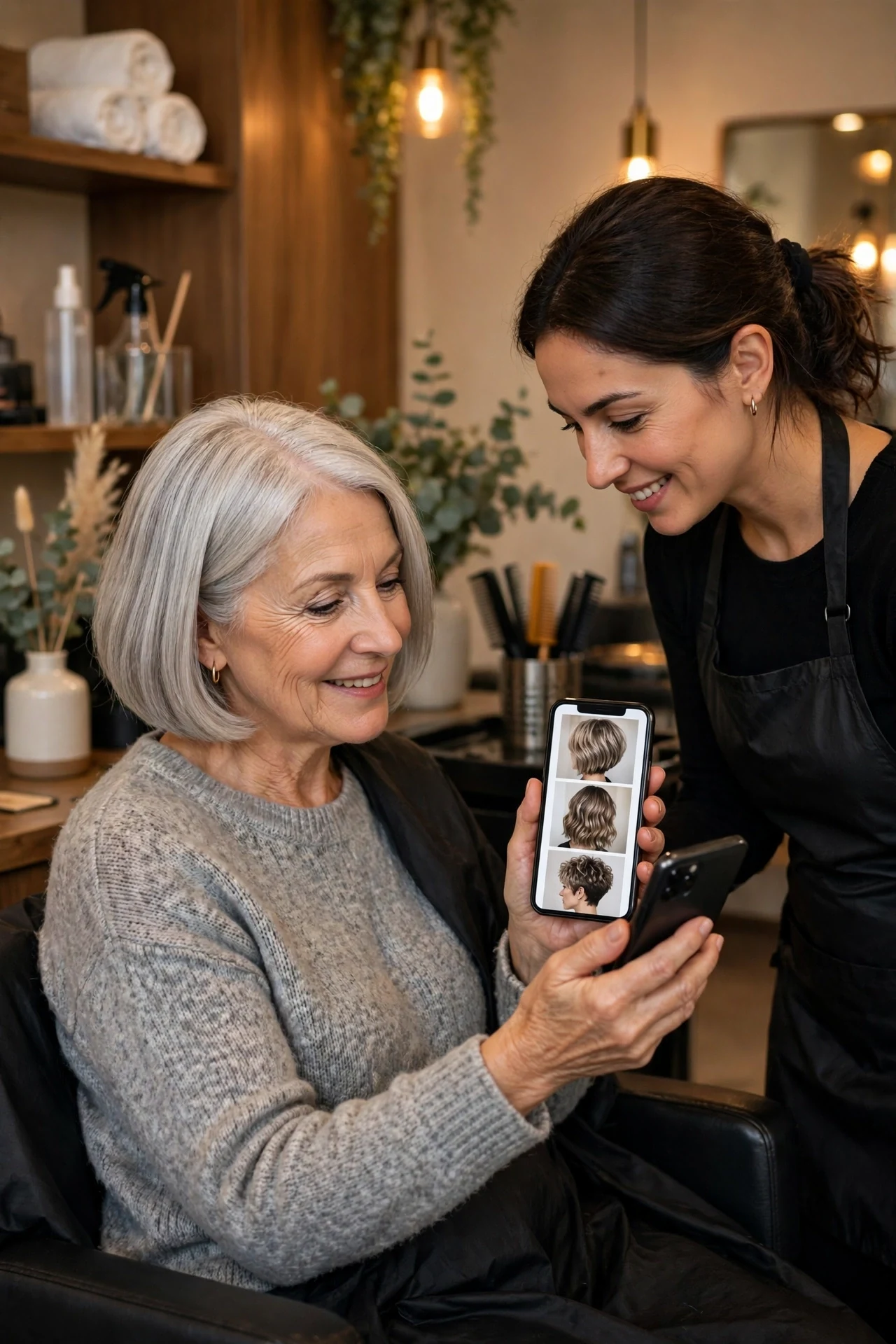
Most salon disappointments are communication failures, not skill failures. Here is exactly what to say at your appointment, especially if your hair is thinning or you wear glasses.
Start with this: “I want an italian bob, jaw to just below, with the ends curved under and the weight kept at the bottom. Please keep the layers long and invisible, because my hair is fine and I do not want the ends thinned out.”
Then add your specifics: “I wear glasses, so please check the sides with my frames on.” Or: “I am growing out my color, so please blend the line rather than cutting it all off at once.”
Bring two or three photos from this guide on your phone. Point at what you like. Stylists think in pictures, and your words plus a photo remove all guesswork. For more on the technique itself, see what an italian bob is.
19. The Honest Yearly Cost of an Italian Bob After 50
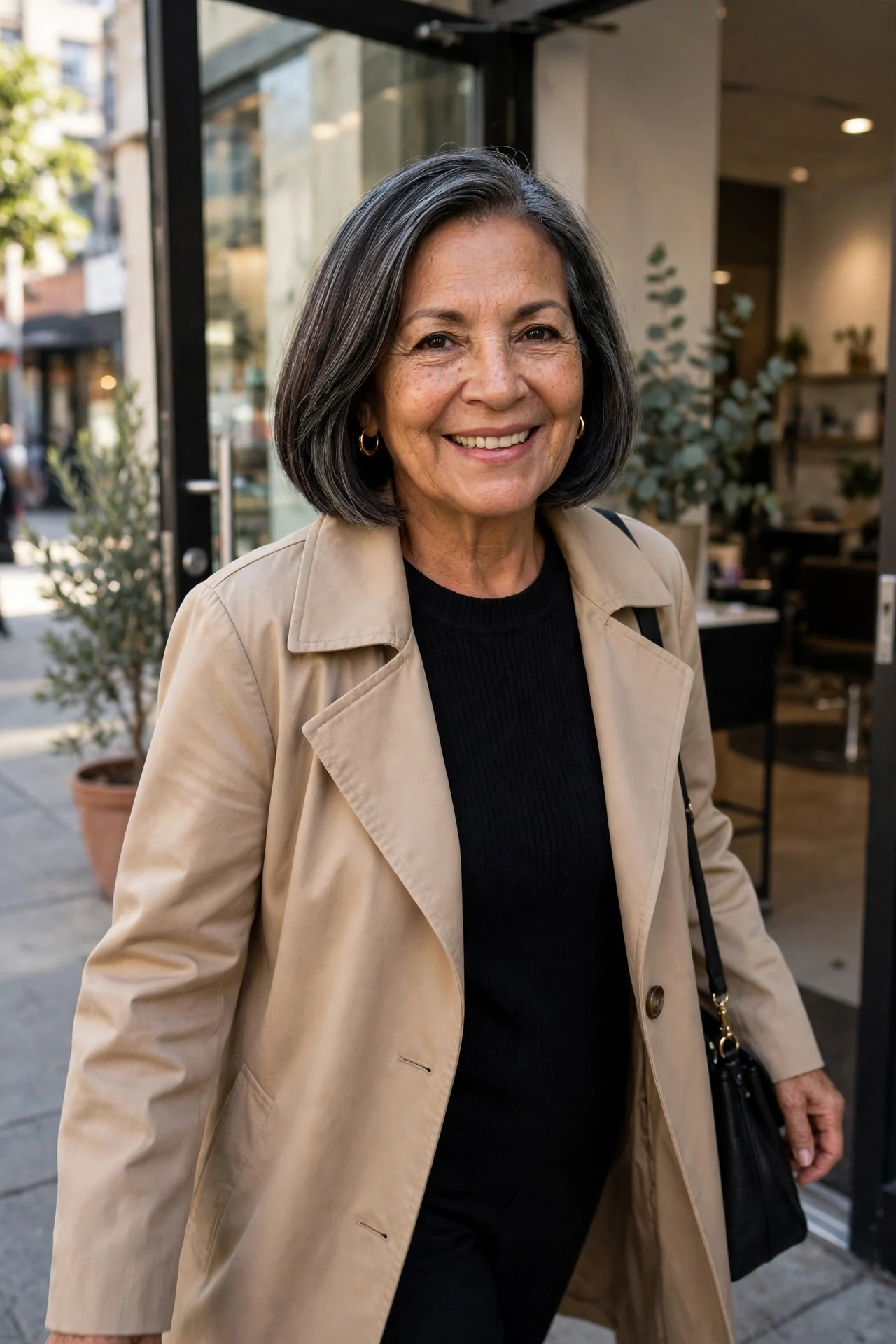
Let us do real math, because nobody else will. A good italian bob needs a trim every six to eight weeks. That is about seven cuts a year. At a typical mid-range salon price of 65 to 90 dollars, you are looking at roughly 455 to 630 dollars a year for cuts.
Add the extras. A purple shampoo for silver hair runs about 14 dollars and lasts three months, so roughly 56 dollars a year. A gloss or toner twice a year to keep silver bright adds another 80 to 120 dollars.
Total honest range: about 600 to 800 dollars a year if you color or gloss, closer to 500 if you go fully natural and skip the extras. Compare that to full root touch-ups every five weeks, which easily run double. The italian bob is not just flattering after 50. It is economical.
20. The Seventies Italian Bob: No Age Ceiling

Let us end where the other articles never go. Seventy and beyond. This cut does not have an expiration date, and the woman in this photo is the proof.
The secret at this age is softness everywhere: soft layers, soft ends, soft color. Nothing severe, nothing trying too hard. The italian bob delivers this naturally because severity was never in its DNA.
If you have been told that long hair ages you or short hair is the only option, ignore both rules. The italian bob sits right in the sweet spot between them, and it will sit there beautifully for as long as you want it to.
Frequently Asked Questions
Is the italian bob for older women good for thinning hair?
Yes, it is one of the best cuts for it. The weight at the ends makes fine hair look fuller, and hidden interior layers add lift without removing bulk. Ask your stylist to avoid thinning shears on the ends and keep the perimeter solid. See section 7 above for the full thin-hair breakdown.
How do I transition to gray while wearing an italian bob?
Cut the bob first to remove old color, then ask for gray-blending highlights at each trim to soften the demarcation line. Most women complete the transition in six to nine months with trims every seven to eight weeks. Section 6 has the full step-by-step plan.
How often do I need trims after 60?
Every six to eight weeks to keep the curved-under shape crisp. If you wear curtain bangs, they need a separate trim every four to five weeks. Book your next appointment before you leave the salon so the shape never slips.
Will an italian bob work with glasses?
Absolutely, with one adjustment. Ask your stylist to check the sides with your actual frames on so the hair does not push the arms out or compete with the frames. Three glasses-friendly versions are shown in sections 9, 12, and 16, and see AARP’s gallery of over-50 gray hairstyles for more inspiration.
What should I tell my stylist at the appointment?
Say: jaw-length to just below, ends curved under, weight kept at the bottom, long invisible layers only. Mention glasses and gray grow-out if they apply, and bring two or three photos from this guide. Section 18 has the full word-for-word script.
How much does an italian bob cost per year to maintain?
Roughly 600 to 800 dollars a year at a mid-range salon, covering seven trims plus purple shampoo and two glosses. Going fully natural without color drops it closer to 500. Section 19 breaks down every line item.
Sana Malik is a hair and beauty writer with a deep love for the bob in all its forms from sharp French bobs to soft, lived-in lobs. After years of experimenting with her own short hair and helping friends figure out what actually suits their face shape, she started writing to cut through the confusing advice out there. At BobHairTrends, she breaks down each cut into simple, honest guides: how to ask for it, how to style it at home, and who it really flatters. When she isn’t researching the latest trends, she’s usually testing a new styling product or convincing someone it’s finally time for the chop.