

If you are hunting for a bixie haircut over 50 that looks like it was designed for a real woman in her 50s or 60s, not a celebrity with a glam squad, you are in the right place. The bixie, that clever hybrid of a pixie and a bob, has quietly become one of the most requested short cuts for mature women, and the reasons are practical, not just fashionable.
It gives you the swing and softness of a bob with the lightness of a pixie. That means lift at the roots, movement around the face, and none of the helmet effect short hair can produce after 50. It is also one of the most forgiving shapes for fine, thinning, or graying hair, which describes most of us at this stage.
The problem with nearly every bixie gallery online is the photos. Actresses in their sixties with professional styling, or twenty-something models. Nobody shows the cut on an actual 65-year-old with silver hair and reading glasses. This gallery fixes that. Scroll on for twenty styles, a month-by-month gray transition plan, an exact script for your stylist, and the honest yearly cost of keeping a bixie looking sharp.
20 Bixie Haircut Over 50 Ideas Shown on Women Who Look Like You
Browse the twenty looks below and notice what is missing: no red-carpet celebrities, no twenty-something models. Every bixie haircut over 50 in this gallery is shown on a woman in her 50s, 60s, or 70s, starting from the classic bixie haircut shape and including several volume-boosting ideas borrowed from our bixie for fine hair collection. Save the ones you love and bring them to your next appointment.
1. Soft-Shaping Classic Bixie

This is the bixie in its purest form: chin-skimming length, softly rounded layers, and ends that curve gently under at the jaw. On silver-gray hair it looks expensive and deliberate, the kind of cut that makes people ask who does your hair.
Ask your stylist to keep the perimeter just below the earlobe and the layers long through the sides. Tuck one side behind your ear on days you want your cheekbones to do the talking. A pea-sized amount of smoothing cream is the entire styling routine.
2. Textured Bixie for Fine Hair
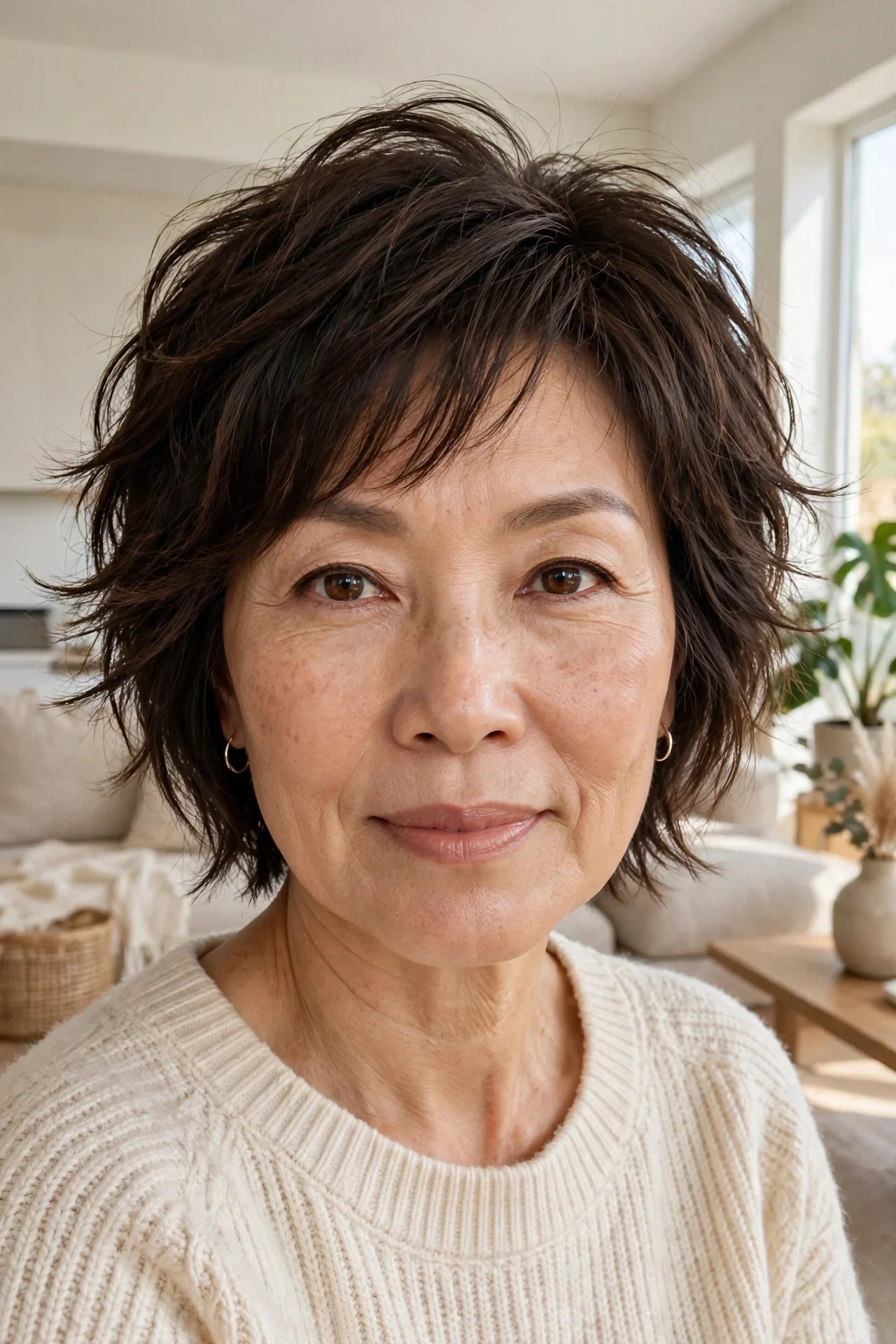
Fine hair after 50 has a habit of going flat by lunchtime. The fix is texture, not teasing. Point-cut ends and short internal layers give fine strands somewhere to sit, so the cut holds its shape instead of collapsing against the scalp.
Keep the length around the cheekbones and ask for the ends to be piecey rather than blunt. Blow dry with your head tipped forward, then finish with a light texturizing spray. The slightly undone it looks, the fuller it reads.
3. Salt-and-Pepper Layered Bixie
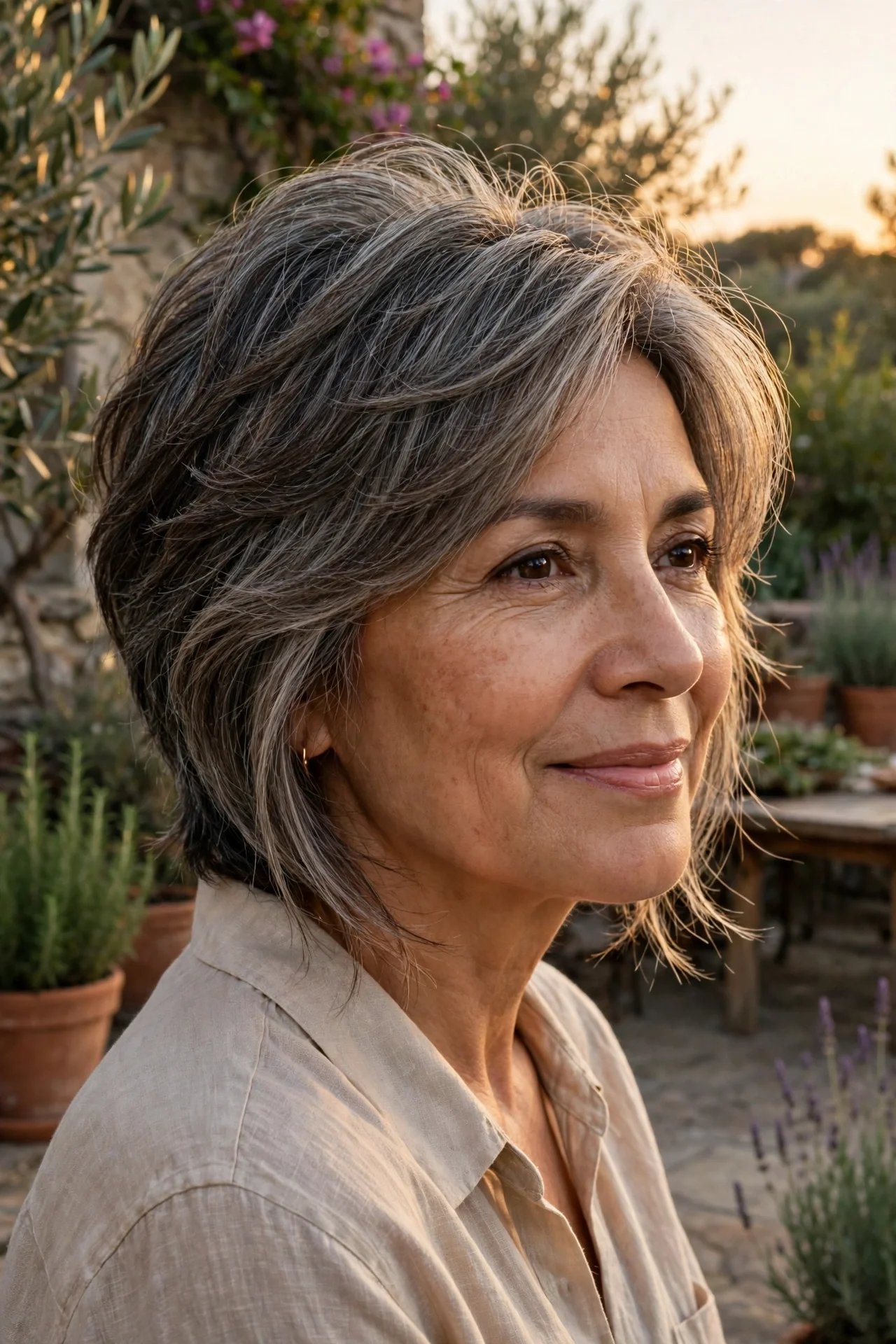
Somewhere between colored hair and fully silver? This cut is your best friend during that in-between stage. Layers break up the line where old color meets natural growth, so the grow-out looks intentional instead of neglected.
The layering also adds swing, which salt-and-pepper hair sometimes lacks on its own. Ask for soft layers through the crown and slightly longer pieces framing the face. It photographs beautifully, which matters more than we admit at family gatherings.
4. Chin-Length Bixie With Glasses
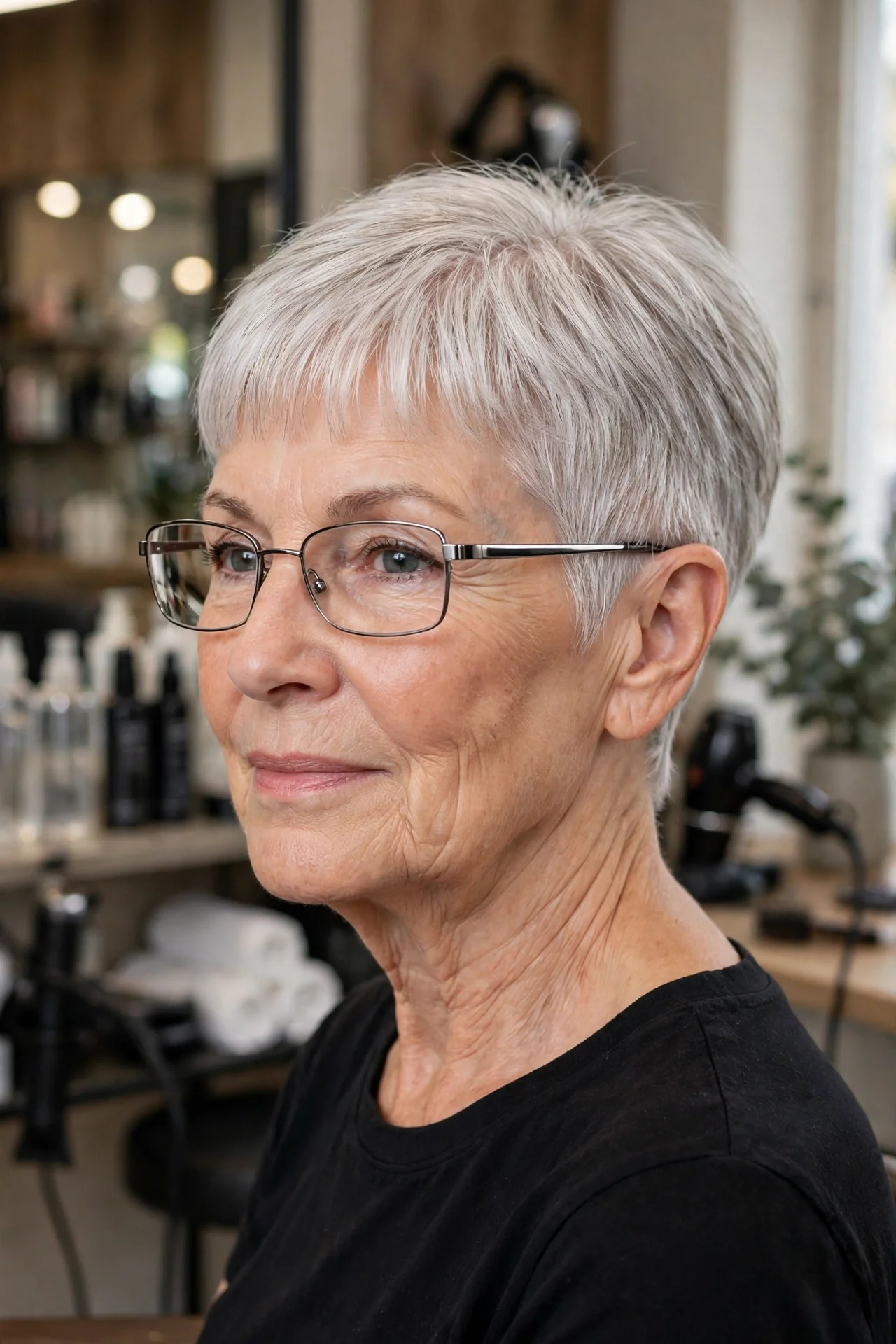
Glasses and short hair can fight each other when the temples are too bulky. This version keeps the sides slim so rectangular frames sit cleanly, and the chin-length pieces balance the lower face beautifully.
Bring your actual glasses to the appointment, not a photo of them. Your stylist needs to see exactly where the arms rest. Ask for the fringe to skim above your frames so nothing competes with your eyes for attention.
5. Wavy Silver Bixie

Natural wave is a genuine gift after 60, and this cut lets it shine. The bixie length gives waves enough room to form without the weight that drags them straight, and silver hair shows off every bend and curve of the pattern.
Scrunch in a curl cream while damp and let it air dry, or diffuse for five minutes when you are in a hurry. The goal is defined but touchable, never crunchy. For wavy textures, this is a true wash-and-go.
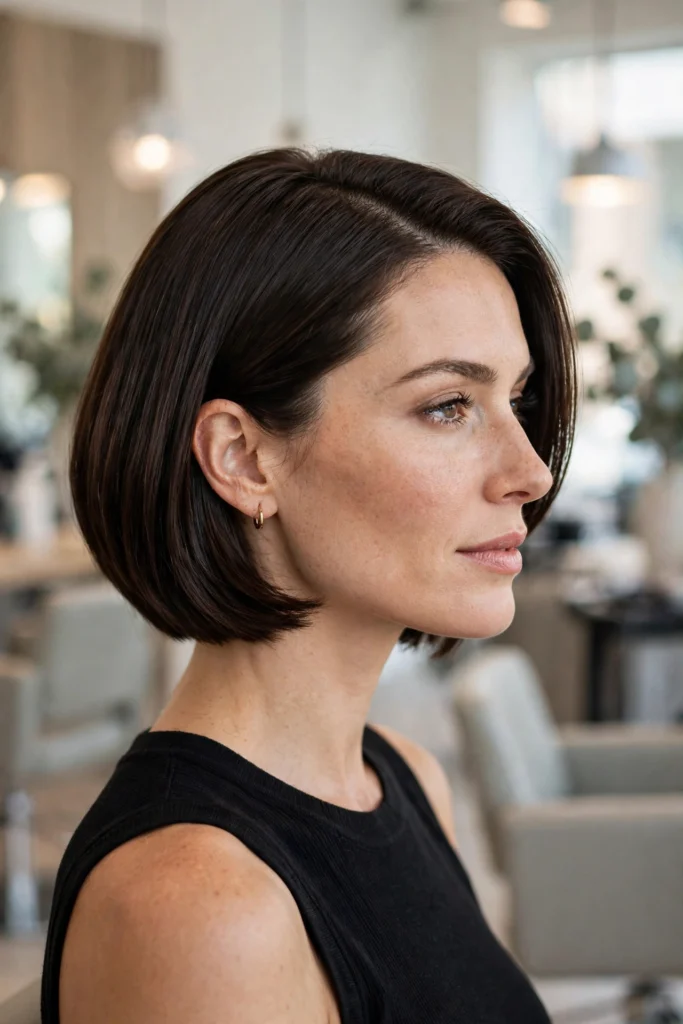
6. Side-Swept Bixie on Dark Hair
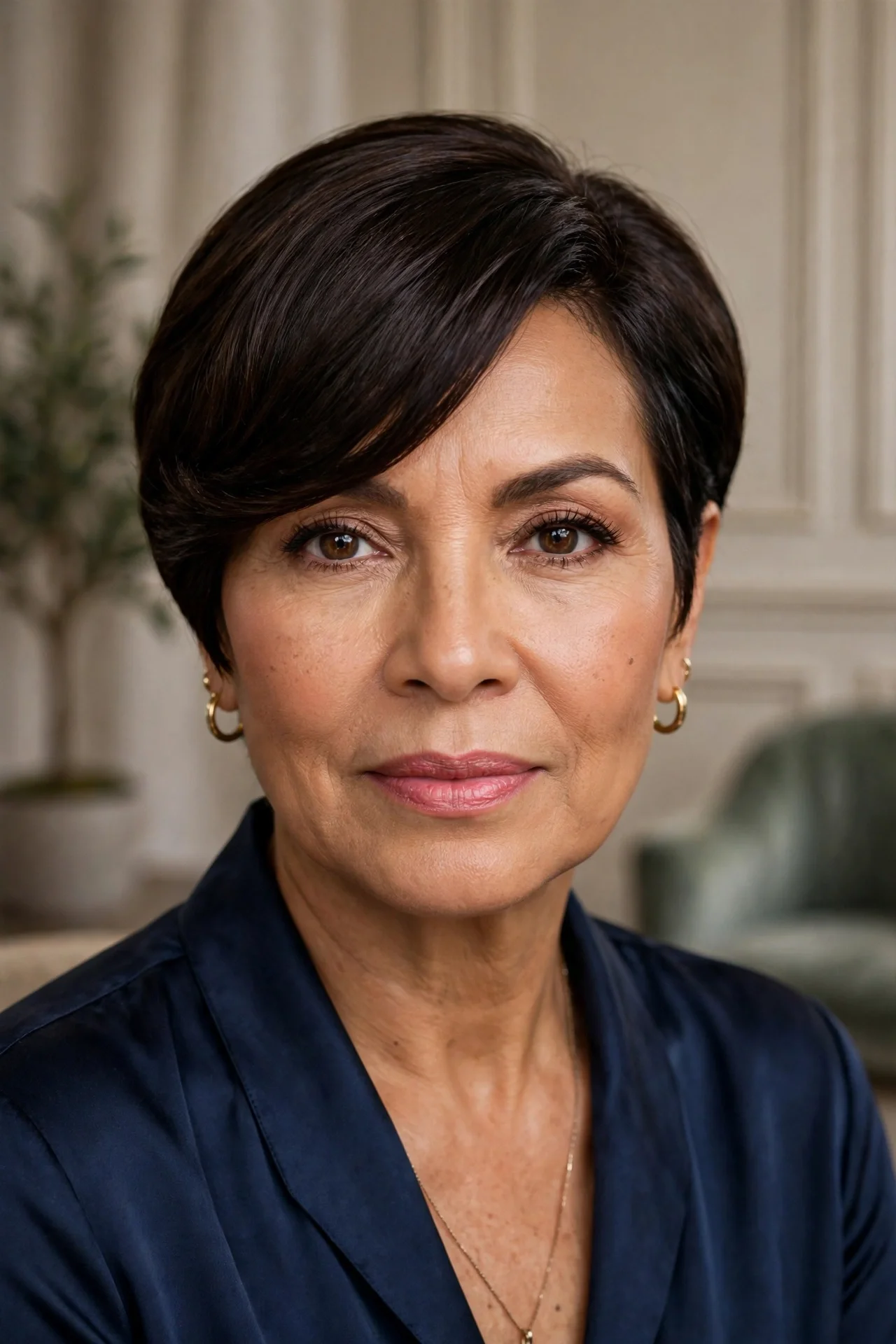
A deep side part changes everything about a short cut. Sweeping the front across the forehead softens lines, adds instant volume at the part, and gives dark hair a glossy, polished finish that reads very put-together.
Train the part by blow drying the front in the direction you want it to fall while it is still damp. One pass of a flat iron over the top layer adds shine. Choose this bixie for weddings, reunions, and any photo you plan to frame.
7. Choppy Bixie for a Thinning Crown
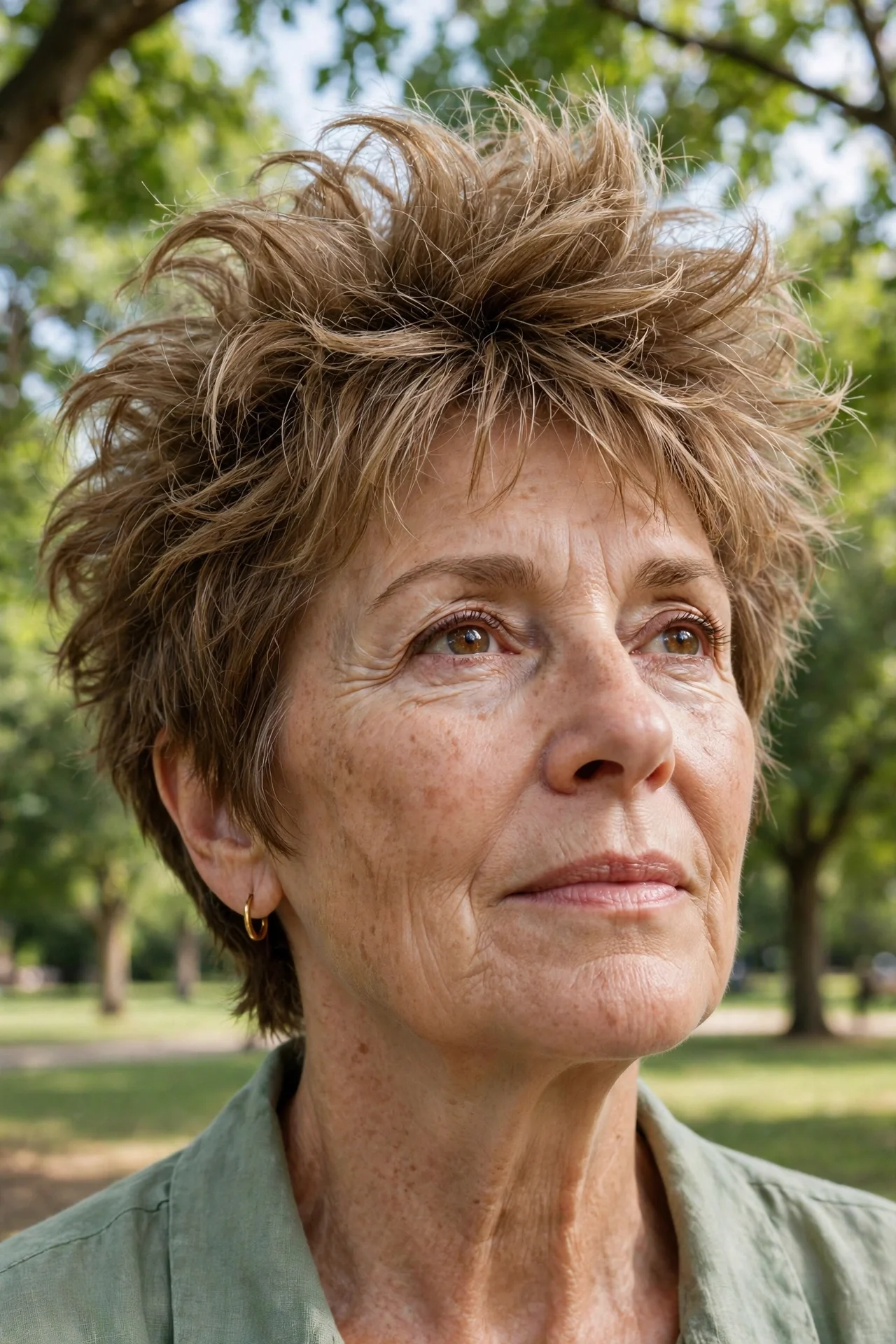
This is the cut the crown-thinning among us have been waiting for. Choppy, uneven layers across the top create the illusion of density exactly where hair is sparsest. The eye reads texture as fullness, and this cut is all texture.
One critical instruction for your stylist: layers yes, but never razor-thinned ends over a thinning crown, since that only removes the hair you have left. Ask for point cutting instead. Dry the crown with a round brush, lifting straight up from the roots.
8. Curly Silver Bixie
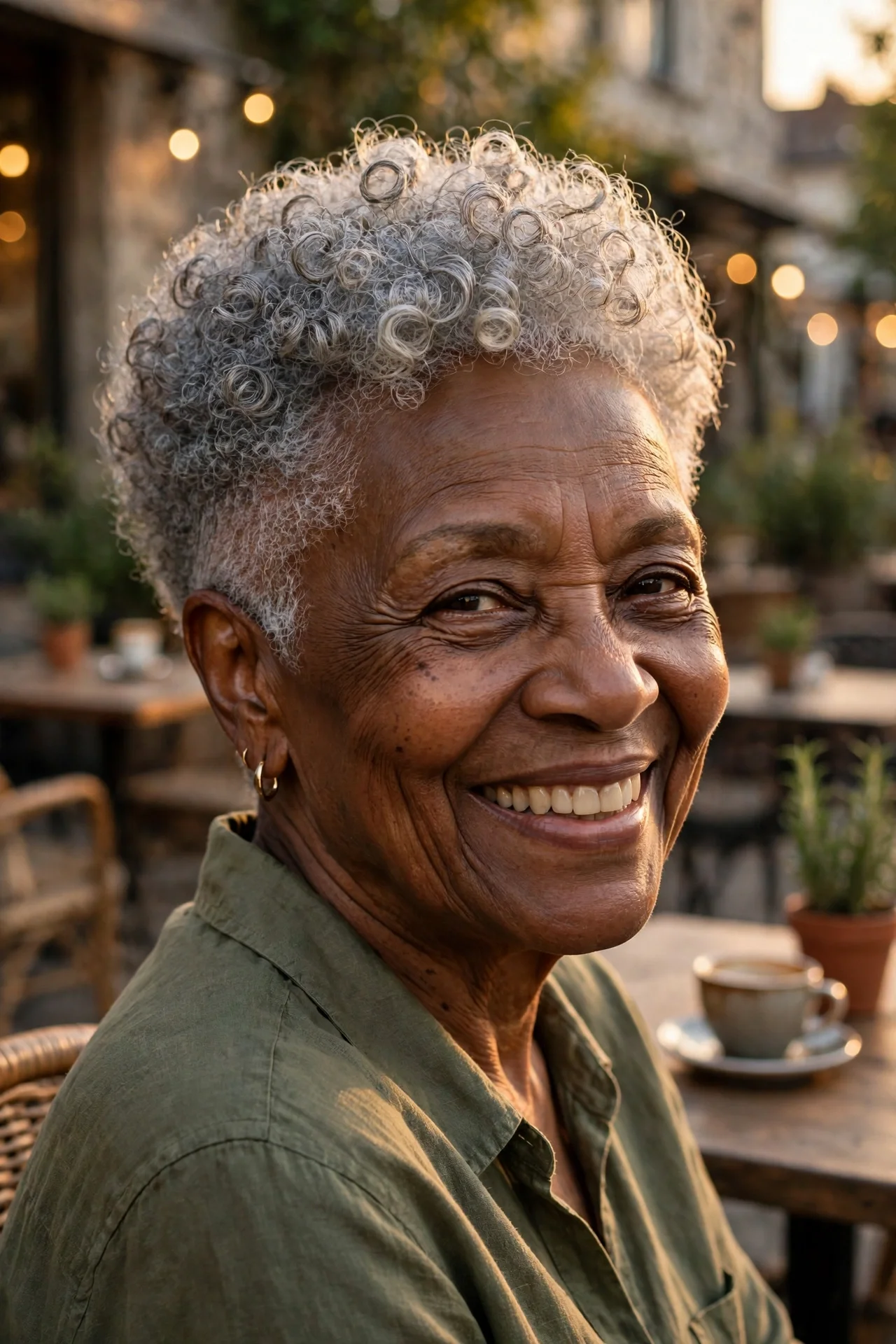
Silver curls deserve a shape that honors them. This tapered bixie keeps the sides close and lets the top curls do all the talking, which means gorgeous definition without the triangle shape that ruins so many curly cuts.
Insist on a curl-by-curl dry cut, so find a stylist who specializes in cutting curls dry. At home, refresh second-day curls with a spray bottle of water and leave-in conditioner. Silver curls run dry, so a weekly deep-conditioning mask earns its keep.
9. Long Bixie, Collarbone-Skimming
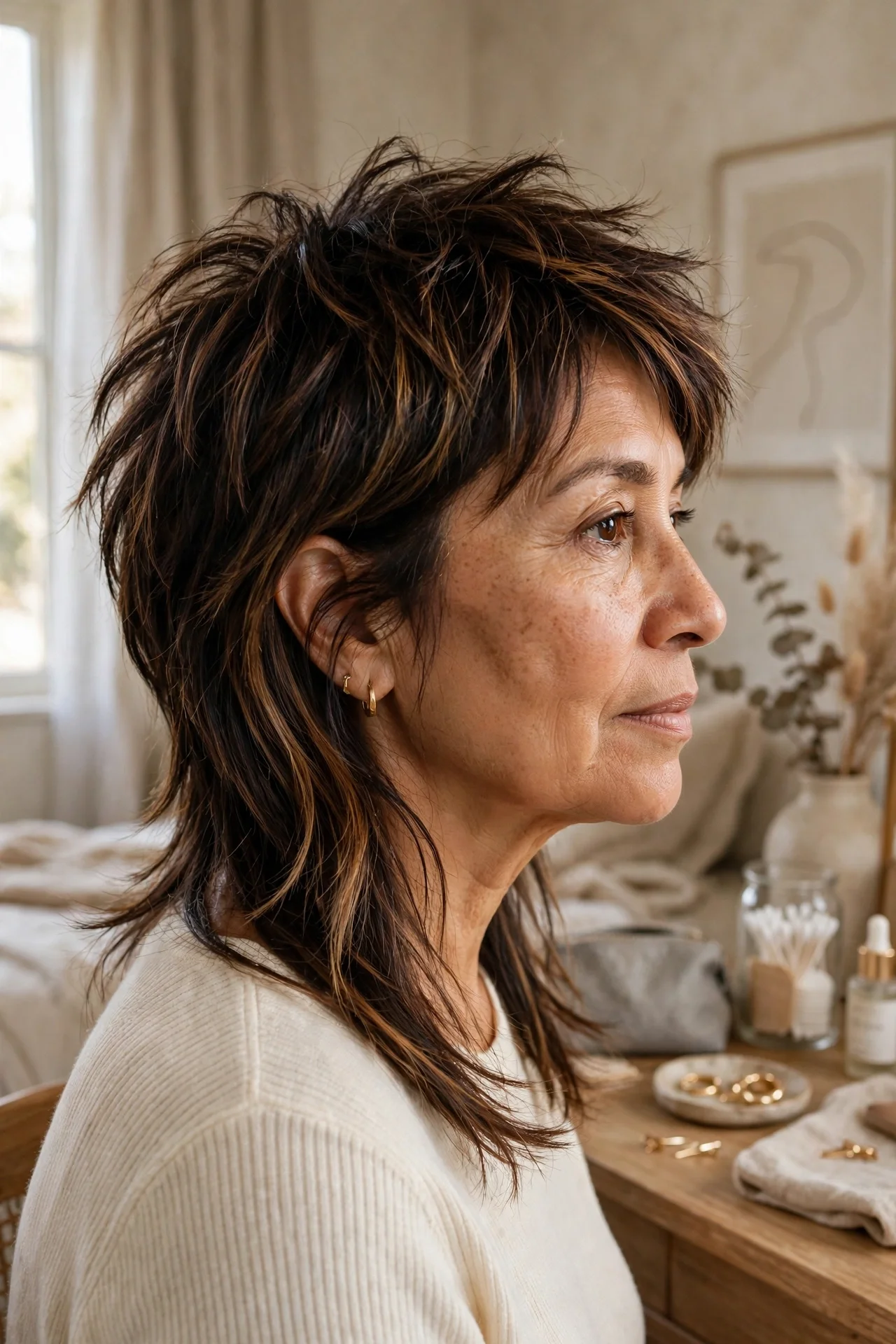
Not ready to go short-short? The long bixie keeps several inches of length while borrowing the pixie’s shattered layers on top. You get movement and lightness with the security of hair you can still tuck, pin, and pull back on a bad day.
It is also the smartest first step if you are growing out a pixie or cutting down from a bob. Ask for the longest pieces to graze the collarbone and the shortest layers to hit the cheekbones. No length in this gallery is more versatile.
10. Soft Bangs Bixie With Glasses

An eyebrow-grazing fringe is the fastest way to refresh a bixie, and it pairs beautifully with cat-eye frames. The bangs draw attention upward to the eyes while the glasses add architecture to the whole face.
Keep the fringe piecey rather than solid so it never fights with your frames. When the bangs start sitting on your lenses between appointments, trim them yourself: a millimeter at a time, straight across, while the hair is dry.
11. Sleek Silver Side-Part Bixie
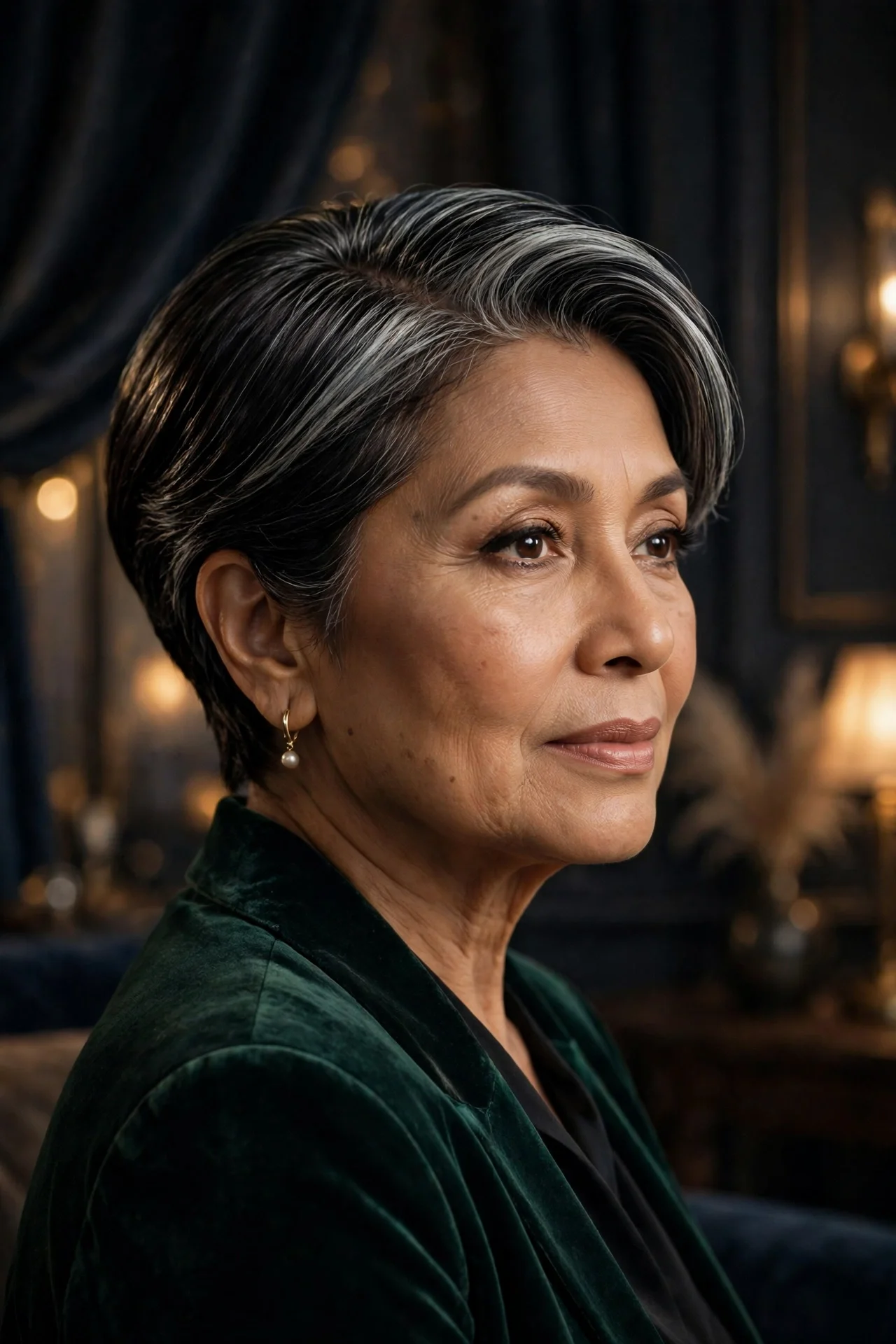
For evenings out or the office, nothing beats a sleek bixie. The deep side part and smooth finish look deliberate and elegant, and silver-streaked dark hair gleams under this kind of polish.
Smooth with a paddle brush and heat protectant, then press the ends under with a flat iron. Finish with a single drop of shine serum on the ends. This style holds its shape for days, which makes it perfect for travel.
12. Warm Honey-Blonde Bixie
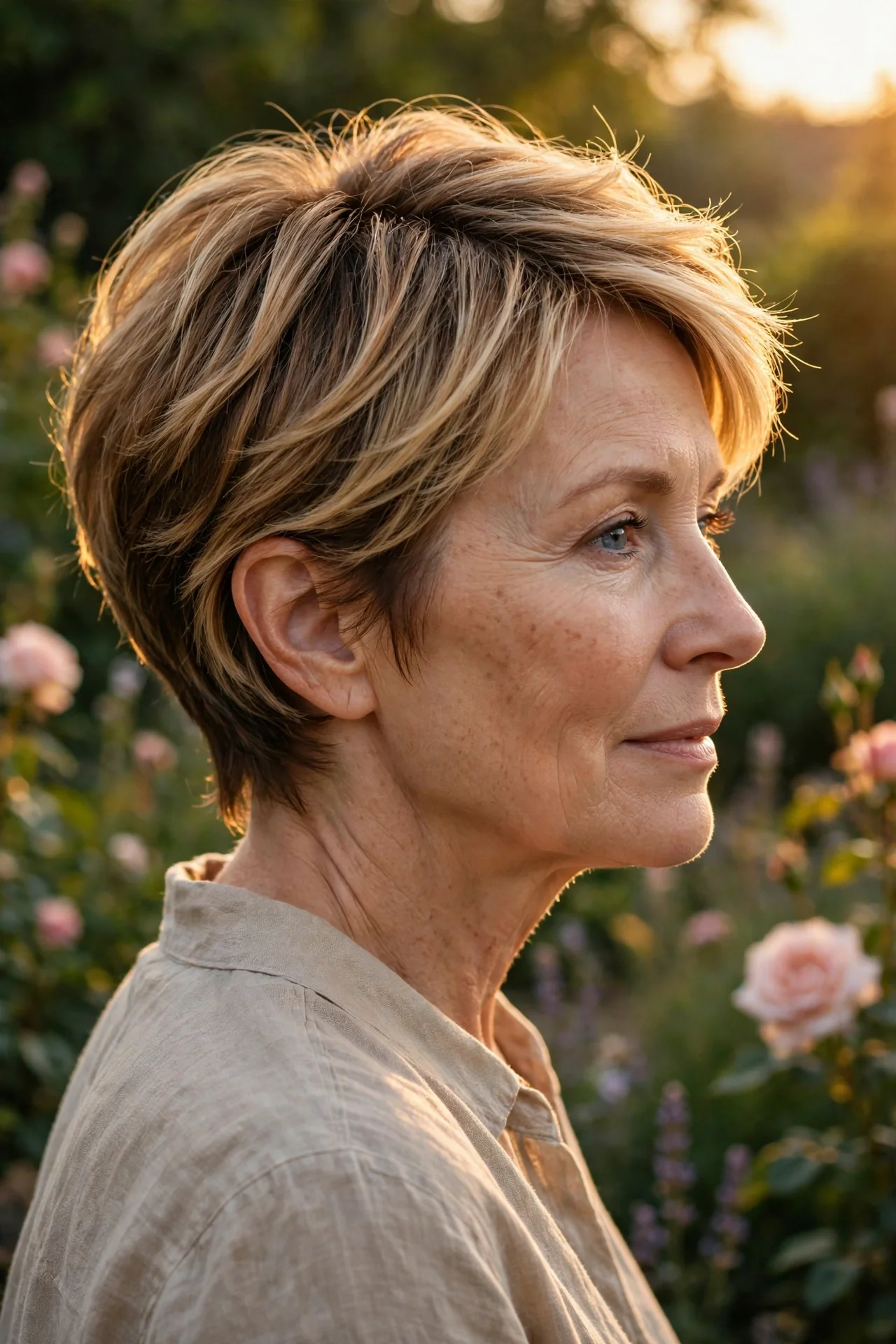
Not everyone is ready for silver, and that is completely fine. A warm honey blonde keeps the complexion glowing, and the bixie’s soft layers catch the light as you move, which makes the color look dimensional from every angle.
Warm blondes need a purple shampoo in the rotation to stay golden instead of brassy; once a week is usually enough. Ask your colorist for dimension rather than one flat shade. Darker roots with lighter ends make fine hair look thicker instantly.
13. Copper-Auburn Bixie

Copper is having a moment, and it is stunning against mature skin. The warmth brings out green and hazel eyes and adds a glow that no cream can fake. The bixie’s texture keeps the whole look modern rather than dated.
Red tones fade faster than any other color, so wash in cool water and use a color-depositing conditioner every other week. Keep the cut’s edges soft: sharp lines plus bold color can read severe, while soft layers keep everything friendly.
14. Dark Chocolate Bixie
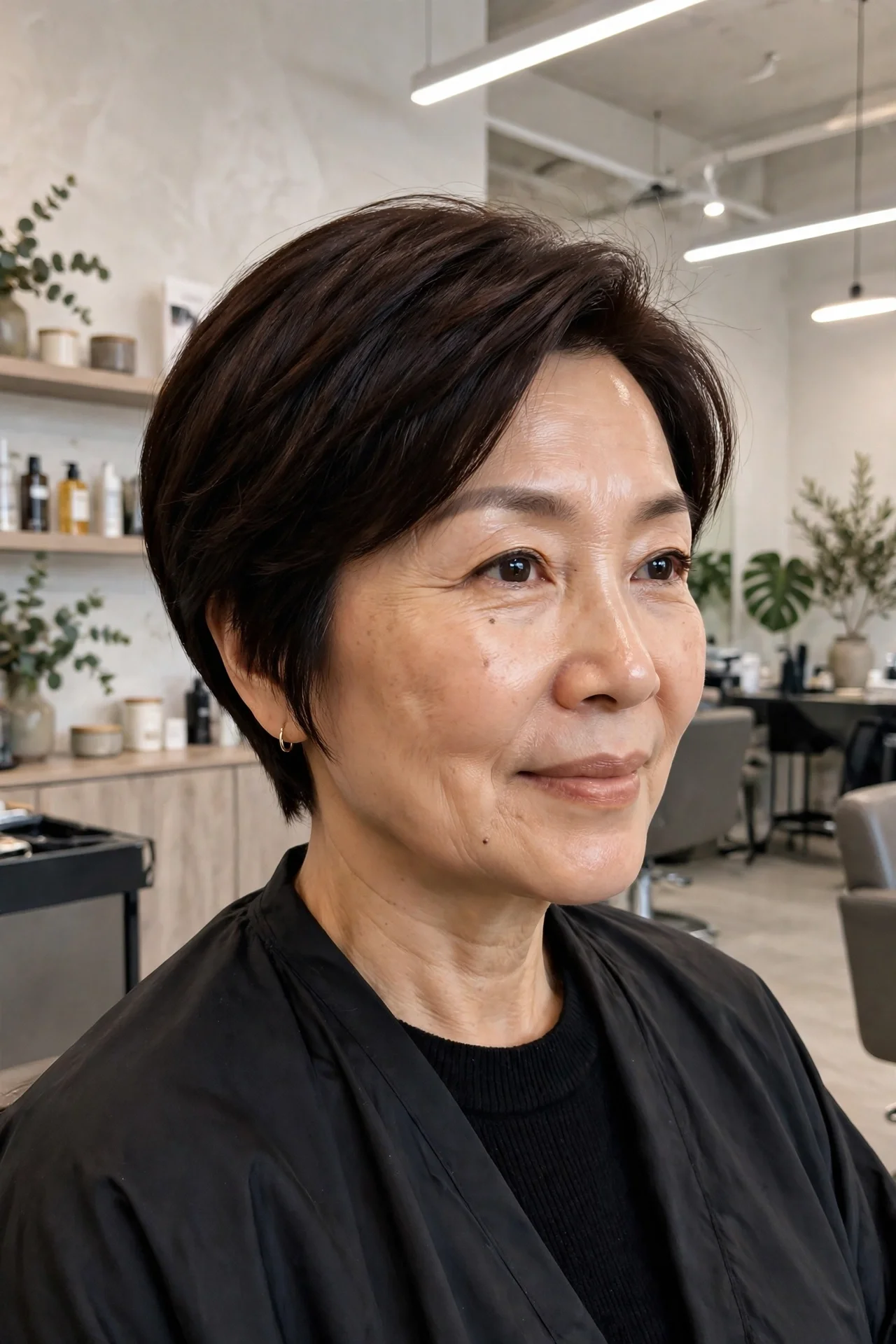
There is something timeless about a rich, dark bixie. The shine of healthy dark hair shows off the cut’s layers in a way lighter colors cannot match, and the feathered ends keep the silhouette from looking heavy.
Dark hair shows every split end, so this cut lives or dies by the six-week trim. A gloss treatment every other appointment keeps the color deep and reflective. Style with a round brush for a smooth, swingy finish.
15. Feathered Bixie With Crown Volume
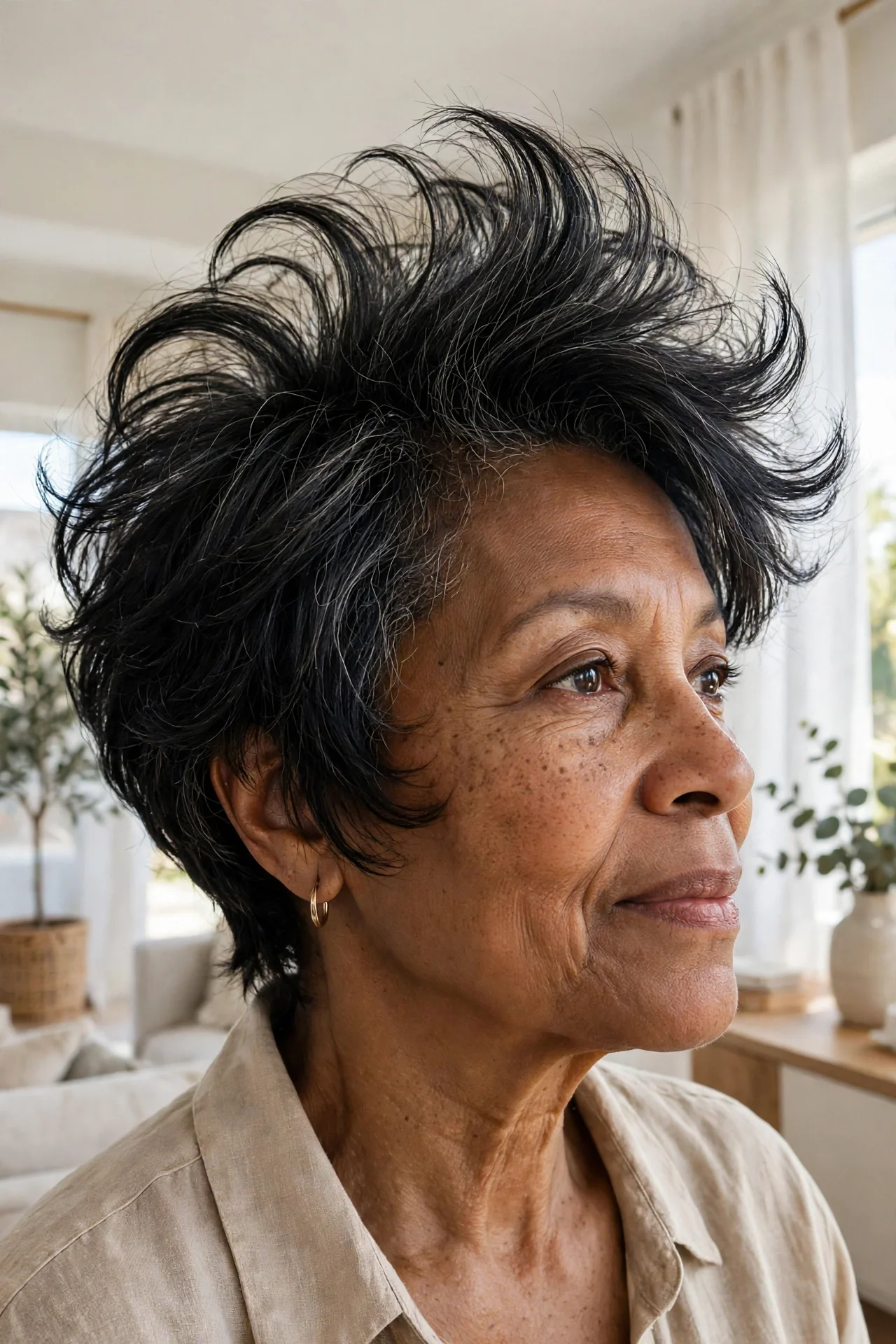
Flat on top is the complaint I hear most from women over 50, and feathered layers are the honest answer. Short, airy layers at the crown create lift that lasts all day, with no teasing required and no helmet of hairspray.
Ask for feathering, not chunking: the pieces should be fine and wispy, not heavy wedges. Blow dry the crown upward with a small round brush, then lock it with a cool shot from the dryer. Volume that survives a full workday is absolutely possible.
16. Tousled Ash-Blonde Bixie

Meet the weekend bixie: tousled, touchable, and completely unbothered. The ash blonde tone is cooler and more modern than golden blonde, and it blends gracefully with incoming gray if you are mid-transition.
Texture spray is the entire styling routine here. Mist it through dry hair, scrunch, and walk out the door. The beauty of a tousled cut is that bedhead is the goal, so it looks better the less you fuss with it.
17. Textured Crop Bixie With Glasses
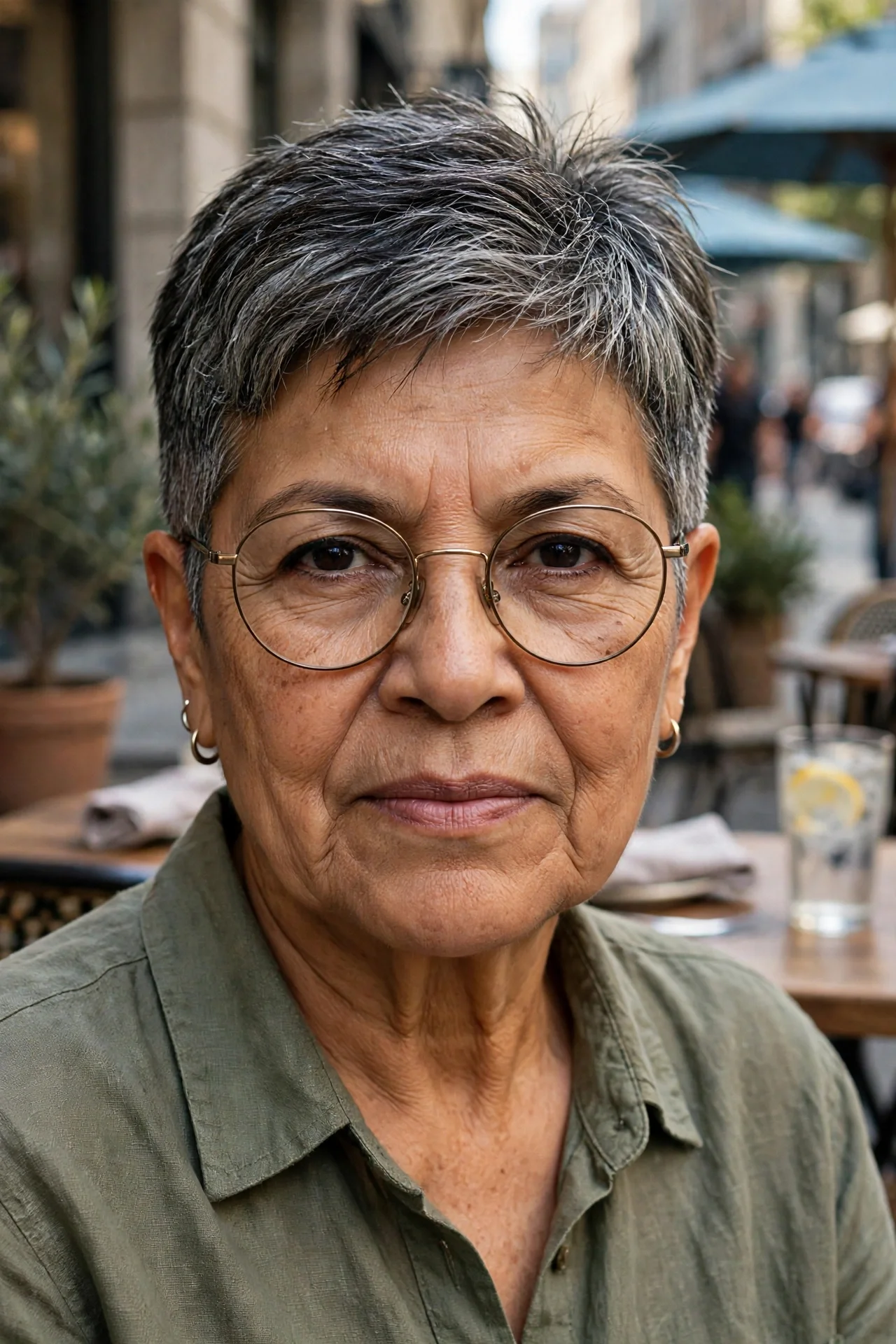
Shorter, bolder, and completely chic. This pixie-leaning bixie keeps the top long enough for real texture while the sides stay close, and round frames give the whole look an artistic, confident edge.
The trick with short sides and glasses is balance: keep enough length on top to style forward or sweep to the side. A little pomade warmed between your fingertips defines the pieces. This cut says you know exactly who you are.
18. Wash-and-Go White Bixie

At a certain point, simplicity becomes luxury. This short white bixie takes four minutes to style and looks crisp doing it. White and silver hair has a natural luminosity that no dye in a box can replicate.
Keep it bright with a purple shampoo twice a week, since white hair picks up yellowing from everything, even your pillowcase. The cut itself is nearly maintenance-free between trims. Lowest effort, highest reward: that is this style in four words.
19. Inverted Bixie With Stacked Nape
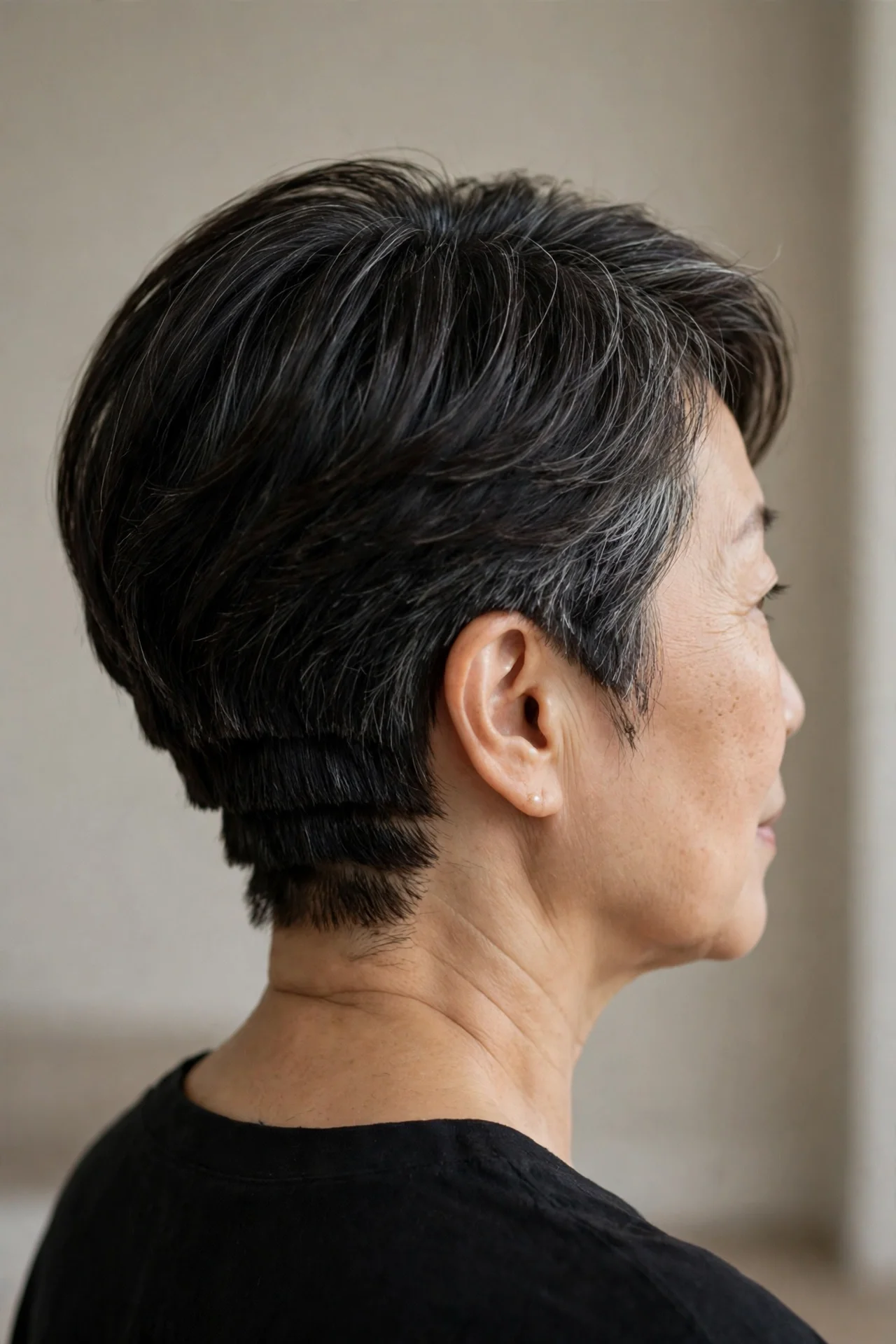
The stacked nape is a classic for a reason. Shorter layers at the back of the neck create automatic fullness exactly where mature hair tends to go limp. From the front it reads as a soft bixie; from behind, it has beautiful architecture.
This cut is especially kind to straight hair that resists volume. Ask for the nape to be stacked, not shaved, so it grows out gracefully instead of awkwardly. A round brush and five minutes give you a shape that holds for days.
20. Silver-Blend Highlighted Bixie
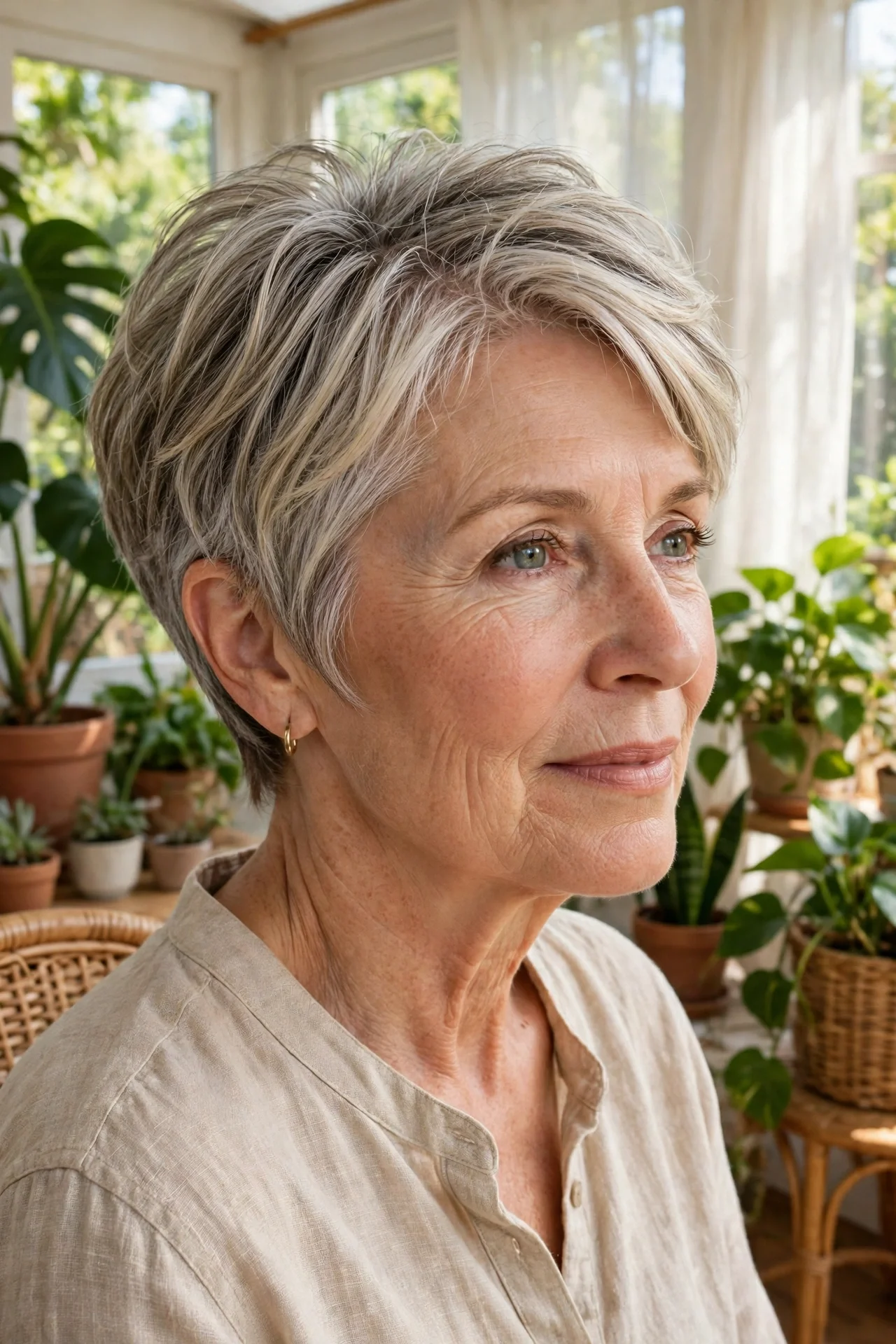
This is the gray-transition hero cut. Fine highlights woven through the top blur the line between your old color and your incoming silver, so the grow-out looks like an expensive color job instead of obvious roots.
Ask your colorist for a silver blend or gray blending service rather than full coverage. Each six-week trim removes more of the old color while the highlights keep everything seamless. By month six, you may not need the dye at all.
The Gray Transition Plan: Growing Out Silver With a Bixie
A bixie haircut over 50 is genuinely the easiest shape for a gray transition, and the reason is the trim cycle. Every six weeks your stylist removes the oldest, most colored ends, so the demarcation line between dye and silver keeps getting softer without you doing anything dramatic.
Here is how the months typically play out. Month one: ask your colorist to switch from full coverage to lowlights or a blending service, and move your part to the side so regrowth is less visible. Month two: your first bixie trim takes off the most damaged dyed ends; a root concealer powder hides the line on important days.
Month three is when it gets easier. The demarcation has softened, and face-framing highlights can camouflage whatever line remains. Month four brings the second trim, and by now the top of your head is mostly your natural color. Month five is decision time: a slightly shorter reshape can remove the last of the old color in one go if you are impatient.
By month six, most women are predominantly silver and wondering why they waited so long. Through the awkward middle, keep purple shampoo and a shine serum on hand, since new gray can look wiry until it settles. Silk scarves and headbands are not cheating; they are strategy.
What to Tell Your Stylist: A Thinning-Pattern Script
The right words at the consultation matter more than the right photo. Before your appointment, browse a roundup like the best haircuts for women over 50 to collect reference images, then use the script below that matches your hair’s reality.
If your crown is thinning, say: “I need internal layers for lift, but please do not razor-thin the ends. I want texture without losing density.” If your temples are thinning, say: “Keep the sides a touch longer so I can tuck them behind my ears; avoid short pieces that expose the temples.”
If your hair is fine all over, say: “Point-cut the ends for movement, keep the perimeter strong, and cut it so I have a deep side part option.” If you have a cowlick or a double crown, say: “Please work with my growth pattern instead of against it, and keep the crown pieces a little longer so they lie flat.”
If you wear glasses, say: “I need slim temples so my frames sit cleanly, and a fringe that skims above my glasses.” If your face is round, add: “An eyebrow-grazing bang with one side tucked behind the ear will elongate my face.” Wear your hair the way you normally wear it to the appointment, bring your glasses, and show photos of cuts you hate as well as cuts you love.
Bixie Maintenance and Cost: The Honest Math
So what does a bixie haircut over 50 actually cost to keep looking sharp? Let’s do the math nobody else bothers with. A bixie needs a trim every six weeks to hold its shape, and a women’s short cut runs roughly 45 to 75 dollars depending on your area. That is eight to nine salon visits a year, or about 360 to 675 dollars annually.
Compare that honestly. A pixie needs reshaping every four to six weeks, which lands between 560 and 1,300 dollars a year at typical prices. A bob can stretch to eight or ten weeks between trims, roughly 330 to 550 dollars a year. The bixie sits in the middle: more upkeep than a bob, far less demanding than a pixie.
Products are the small line item. A texturizing spray, a smoothing cream, and purple shampoo if you are silver will run about 60 to 100 dollars a year total. Daily styling takes five to ten minutes once you learn the cut. Budget around 500 dollars a year all in, and you will rarely be surprised.
Frequently Asked Questions
Will a bixie work if my crown is thinning?
Yes, but choose the textured version, not a sleek one. Choppy layers across the crown create the illusion of density where hair is sparsest. Never let a stylist cut ultra-short directly over a thinning crown, and ask for point cutting rather than razor thinning, which removes the hair you are trying to keep.
How do I grow out gray with a bixie without a harsh line?
Let the six-week trim cycle do the heavy lifting: each visit removes old color and softens the demarcation. Ask your colorist for a blending service instead of full coverage, switch to a side part, and use root concealer powder on the line during months two and three. Face-framing highlights hide whatever line remains.
What should I ask for at the salon if I wear glasses?
Bring your glasses to the appointment. Ask for slim, close-cut temples so the arms of your frames sit cleanly, and a fringe that skims above your frames rather than competing with them. Avoid heavy, solid bangs that will sit directly on your lenses.
How much does a bixie cost to maintain each year?
Expect a trim every six weeks at 45 to 75 dollars, which works out to roughly 400 to 650 dollars a year for the salon, plus about 80 dollars in products. It costs more than a bob to maintain and noticeably less than a pixie, which needs reshaping almost twice as often.
What if my bixie gets cut too short?
Do not panic and do not ask for it to be cut shorter to "even out." Hair grows about half an inch a month, so in eight to ten weeks your stylist can reshape it properly. Meanwhile, texture spray, a deep side part, and headbands fake fullness and length convincingly. Tell your stylist exactly what went wrong before the next cut.
How do I handle cowlicks or a double crown with a bixie?
Work with the growth direction, never against it. Keep the crown pieces slightly longer so their weight holds them down, and blow dry in the direction the hair naturally wants to go. Never pair a strong cowlick with a short, blunt fringe; that combination will fight you every single morning.
The Bottom Line
A bixie haircut over 50 is not about chasing youth. It is about a cut that works with the hair you actually have now: the texture, the silver, the thinning spots, the glasses, all of it. Pick the version that matches your hair’s reality, bring photos and your real glasses to the salon, and give the cut two full trim cycles before you judge it.
The women who love their bixies most are the ones who stopped fighting their hair and started working with it. Twenty ideas are above; your next great haircut is one appointment away.
Sana Malik is a hair and beauty writer with a deep love for the bob in all its forms from sharp French bobs to soft, lived-in lobs. After years of experimenting with her own short hair and helping friends figure out what actually suits their face shape, she started writing to cut through the confusing advice out there. At BobHairTrends, she breaks down each cut into simple, honest guides: how to ask for it, how to style it at home, and who it really flatters. When she isn’t researching the latest trends, she’s usually testing a new styling product or convincing someone it’s finally time for the chop.