Skip to content
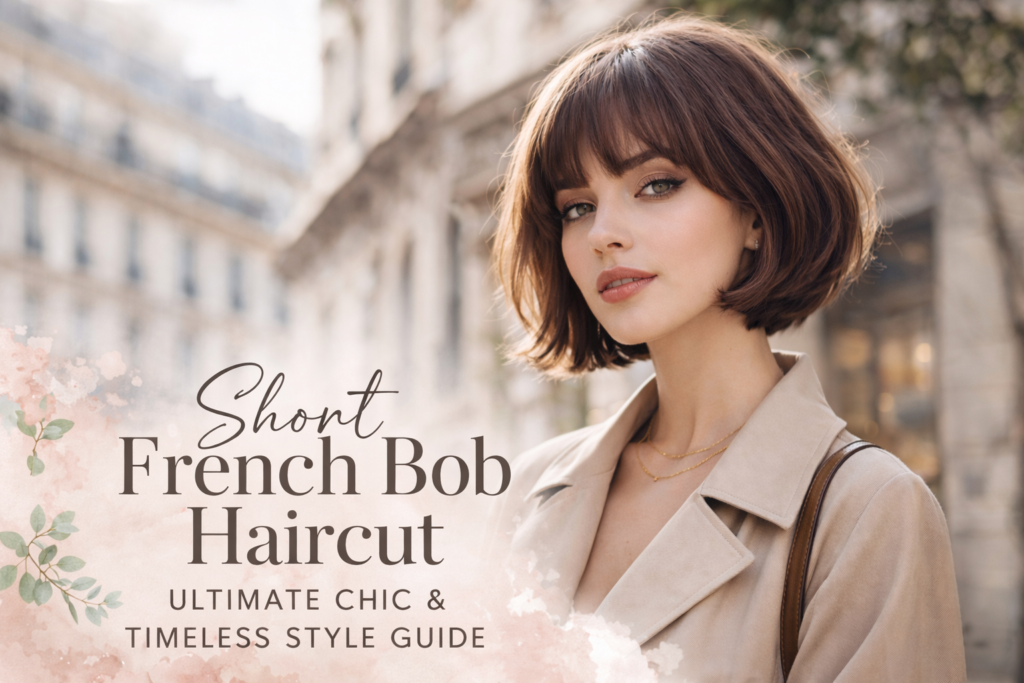
Discover the short French bob haircut, a chic and timeless style. Explore layered, fringe, choppy, and over-50 variations with expert styling tips.
If you’ve ever scrolled through Instagram or Pinterest and admired that perfectly “undone” yet sophisticated haircut that screams Paris, you’ve likely encountered the French Bob. It’s more than just a haircut; it’s an entire aesthetic.
But what exactly makes it different from your standard bob, and why is it currently the most requested look in salons worldwide?
In this guide, we’ll dive deep into the world of the messy French bob, exploring its history, how to style it, and why it remains the gold standard for low maintenance haircuts 2026.
Table of Contents
What Exactly is a French Bob?
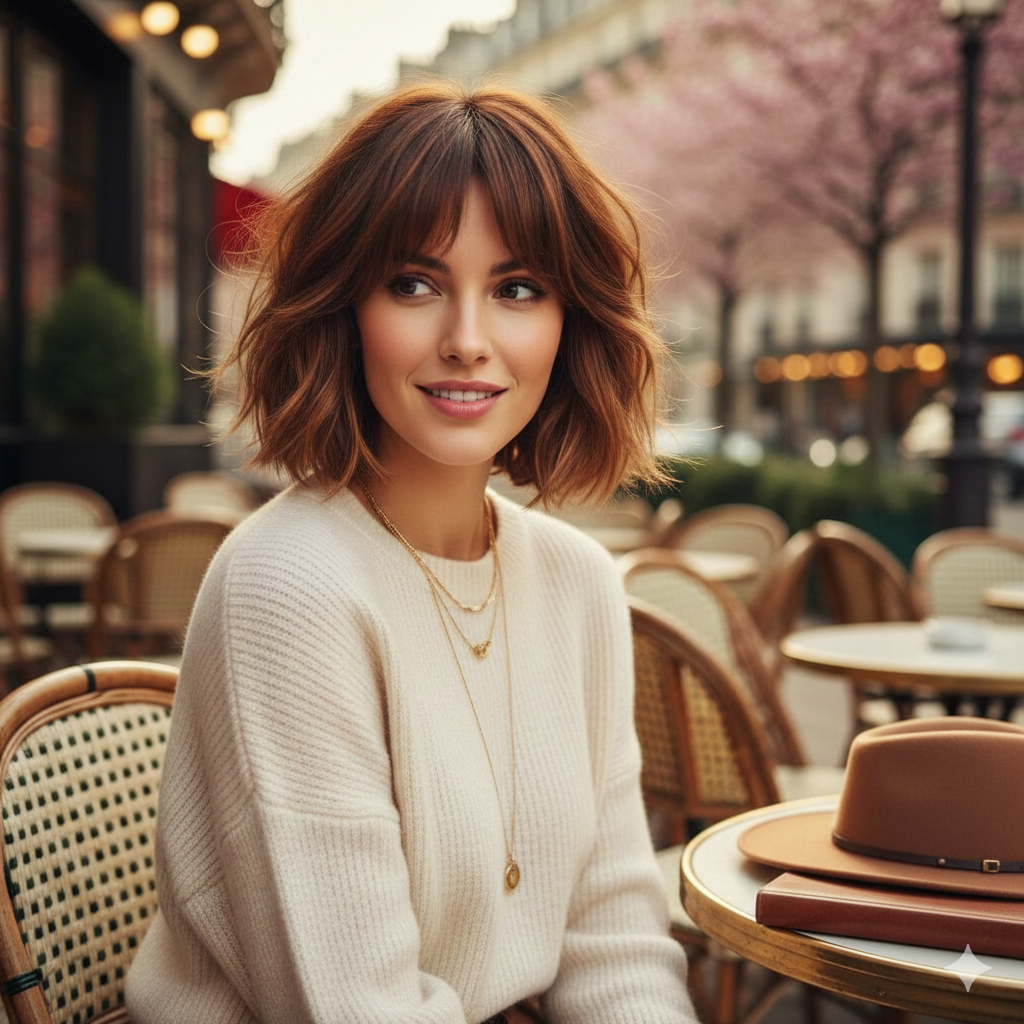
At its core, a French bob is a shorter, more textured version of the classic bob. While a traditional bob usually hits the shoulders or mid-neck, the French version is cut significantly shorter—typically right at the jawline or even hitting the cheekbones.
The magic of this cut lies in the “blunt yet lived-in” finish. Unlike the sleek, polished “Power Bob” seen on corporate runways, the French version embraces natural movement. It’s meant to look like you just spent a breezy afternoon in a Parisian café. The ends are often “point-cut” (a technique where the stylist cuts into the hair vertically) to ensure the bottom doesn’t look too heavy or “blocky.”
Read more: Long Bob for Thin Hair Proven Smart Cut
Why the Messy French Bob is the Ultimate Style Statement?
The messy French bob rejects perfection. In the past, we were obsessed with glass hair and perfectly flat-ironed strands. However, the 2026 trend cycle is all about authenticity. The messy texture allows your natural hair pattern—whether wavy, curly, or straight—to take center stage.
It’s the ultimate “cool girl” look because it suggests that you have more important things to do than stand in front of a mirror for two hours. It’s about chic rebellion.
The Iconic Duo: French Bob with Bangs
While you can certainly wear this cut without fringe, the most classic, timeless version is the French bob with bangs. In 2026, we are seeing a shift away from micro-bangs toward more “eye-skimming” or “curtain-style” fringes.
Choosing the Right Bangs for Your Bob:
- Wispy Fringes: Perfect for those who want a soft, romantic look. These are easy to tuck away if you’re having an “off” day.
- Blunt Bangs: These create a sharp, high-fashion contrast against the messy texture of the bob.
- Curtain Bangs: A great “entry-level” bang that frames the cheekbones and blends seamlessly into the side layers.
Bangs are essential for this look because they shorten the appearance of the forehead and draw immediate attention to the eyes, creating that mysterious “je ne sais quoi” vibe.
Finding the Perfect Match: Short Parisian haircut for Different Face Shapes
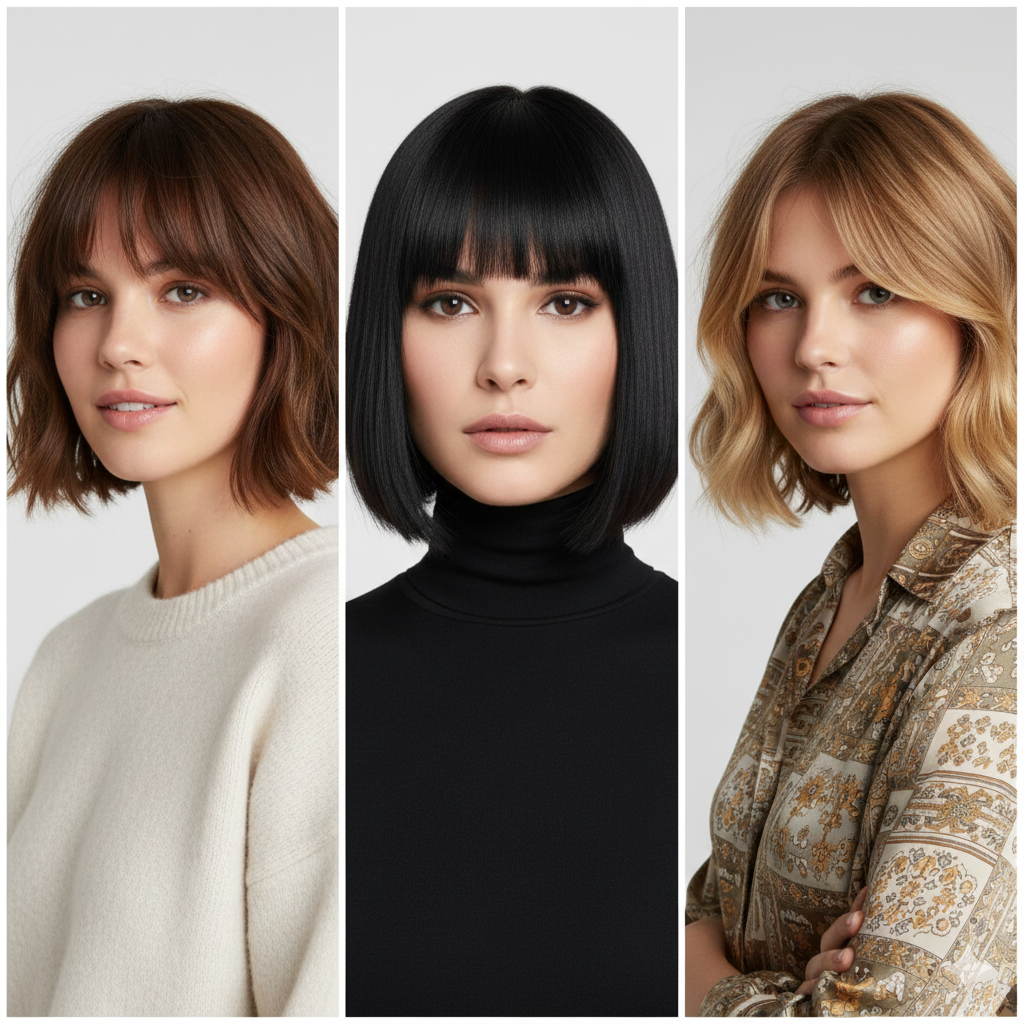
One of the biggest myths in the hair industry is that short hair is only for people with “perfect” oval faces. That couldn’t be further from the truth. The French Bob is surprisingly architectural; it can be adjusted to highlight your best features.
French Bob for Round Face
If you have a rounder face shape, the key is the “Vertical Illusion.” Ask your stylist to cut the bob slightly longer—about an inch below the chin. This helps to elongate the neck and face.
- Pro Tip: Avoid a super thick, blunt fringe. Instead, go for a side-parted messy texture to break up the roundness and add sharp angles to your silhouette.
For Heart and Square Face Shapes
- Heart: Keep the layers soft around the chin to add fullness where the face is narrowest.
- Square: Use heavy texture and “shattered” ends to soften a strong jawline.
Low Maintenance Haircuts 2026: The Practicality Factor
Why is the French Bob dominating 2026? Because we are all busier than ever. Whether you are a student, a business owner, or a tech professional, time is your most valuable asset.
The “Grow-Out” Grace Period
Unlike a pixie cut that looks messy the moment it grows half an inch, or long hair that develops split ends quickly, the Short Parisian haircut aged like fine wine. As it grows, it simply transitions into a “French Lob” (Long Bob). You can easily go 3 to 4 months between salon visits, making it one of the most cost-effective low maintenance haircuts 2026.
Texture Over Tools
This cut is designed to be air-dried. It relies on the hair’s natural weight and the stylist’s cutting technique rather than heat styling. This means healthier hair in the long run.
How to Style a French Bob: A Step-by-Step Tutorial?
If you’re wondering how to style a French bob to get that salon-quality finish at home, follow this simple routine:
Step 1: Prep on Damp Hair
After washing, don’t reach for the blow dryer immediately. Blot your hair with a microfiber towel (never rub, as this causes frizz). Apply a lightweight sea salt spray or a volumizing mousse to the mid-lengths and ends.
Step 2: The “Scrunch” Technique
Use your hands to “scrunch” your hair upwards towards the scalp. This encourages your natural wave pattern to form. If you have very straight hair, you can put your hair into two loose braids while it dries to create a soft bend.
Step 3: Minimal Heat (Optional)
If you must use heat, use a diffuser attachment on your blow dryer on a low-heat setting. Do not brush the hair while drying; simply let the air circulate around the curls.
Step 4: Finishing Touches
Once dry, apply a tiny drop of hair oil or “dry wax” to the ends to give them that piecey, editorial look. Shake your hair out, flip it from side to side, and you’re done. Remember: The less you touch it, the better it looks.
Pros and Cons of the French Bob
| Feature | The Good | The Bad |
| Styling Time | Usually under 5 minutes. | Can take time to “train” your hair to sit right. |
| Health | Less heat damage; healthier ends. | Requires a brave “big chop” initially. |
| Versatility | Works with hats, headbands, and clips. | Too short for a traditional ponytail. |
| Modernity | 100% on-trend for 2026. | Needs a skilled stylist who understands texture. |
The Maintenance Calendar
To keep your French Bob looking intentional rather than neglected, follow this simple schedule:
- Every 8-12 Weeks: A “dusting” trim to maintain the jawline length.
- Every 4 Weeks: A DIY or salon bang trim (if you have bangs).
- Weekly: A deep conditioning mask to keep the textured ends from looking dry.
Conclusion: Ready for the Chop?
The French Bob is more than just a trend; it’s a celebration of natural beauty and effortless style. It frees you from the cycle of heavy styling and allows your personality to shine through. Whether you’re opting for a messy French bob for its cool factor or a French bob with bangs for its vintage charm, you’re making a choice that values both style and time.
So, are you ready to embrace the Parisian chic lifestyle? Consult with a stylist who specializes in “razor cutting” or “dry cutting” to get the best results.
FAQs:
What is the difference between a classic bob and a French bob?
The main difference lies in the length and the texture. A classic bob usually hits the mid-neck or shoulders and is often styled sleekly. In contrast, a messy French bob is cut shorter (around the jawline or cheekbones) and features blunt, textured ends designed to look lived-in and effortless.
Can I get a French bob if I have curly hair?
Absolutely! In fact, curly hair works beautifully with this style. The natural volume of curls enhances the “Parisian” feel. Your stylist will likely use a “dry cutting” technique to ensure the shape looks balanced and doesn’t shrink too much once dry.
Does a French bob look good on a round face?
Yes, it does. To make a French bob for round face shapes flattering, keep the length slightly below the chin rather than right at it. This creates a vertical line that elongates the face. Pairing it with curtain bangs or a side part also adds angles that balance out the roundness.
How often do I need to trim a French bob?
If you want to maintain the specific jawline length, a trim every 6 to 8 weeks is ideal. However, one of the reasons it’s considered one of the best low maintenance haircuts 2026 is that it grows out into a beautiful “long bob” (Lob), meaning you can easily stretch your salon visits to 12 weeks.
Do I have to have bangs with a French bob?
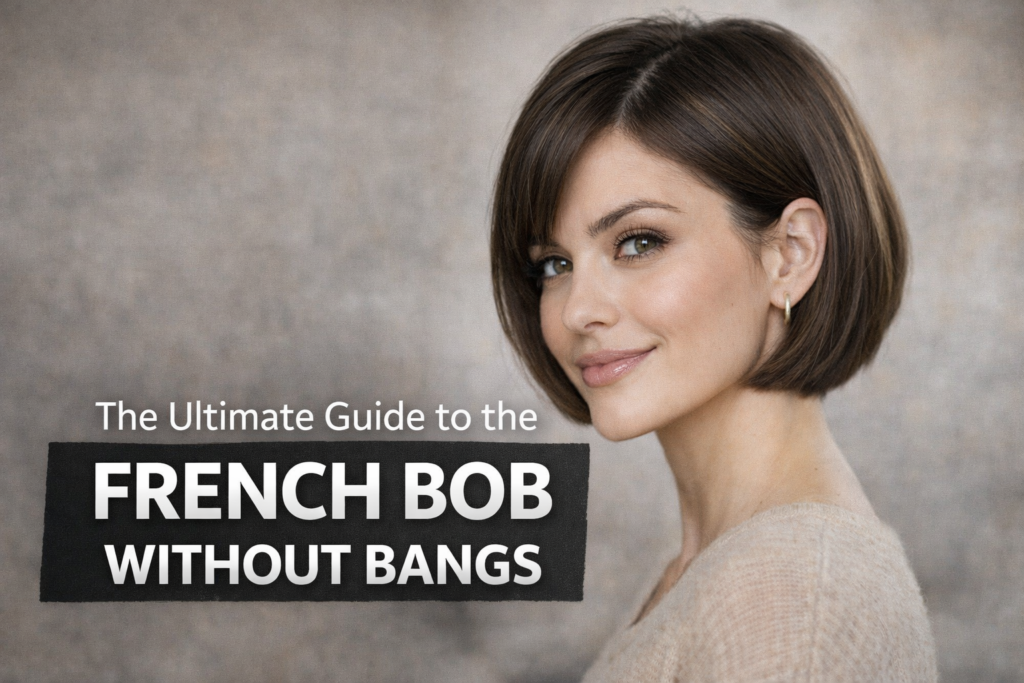
While the classic French look traditionally includes bangs, it is not mandatory. You can opt for a “no-bangs” version with a middle or side part. This variation is often called a “Le Petit Bob” and offers a more modern, open-faced look.