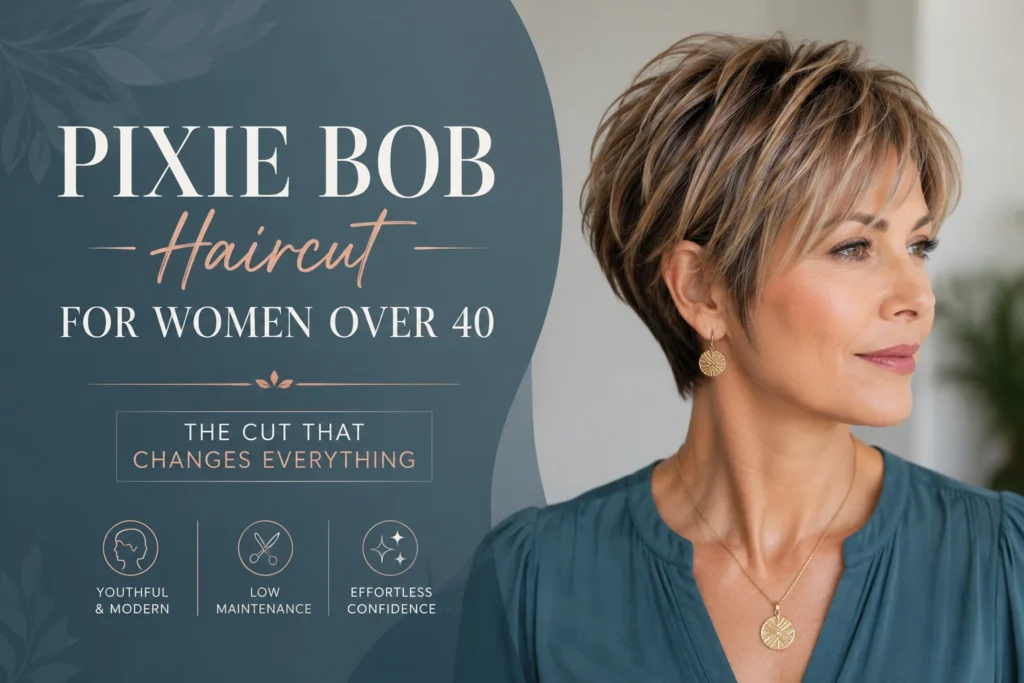


A pixie bob haircut for thick hair is a different job from a pixie bob on fine hair, and the cut has to respect that. Thick hair has wonderful body, but cut all one length at this length it can turn into a heavy triangle that sits flat at the roots and puffs out at the ends. The right pixie bob removes weight from the inside while keeping the outline full, so the hair swings instead of sulking.
This guide covers 15 versions built for thick hair, from layered and choppy cuts to stacked and undercut shapes, with notes on what to ask for and what to avoid. If your hair has ever defeated a bob before, start here. For the full story of how this cut fits into the wider pixie bob family, our pixie bob haircut guide is the best place to begin.
- Thick hair needs weight removed from the inside, never from the outline, or the bob loses its shape.
- Long internal layers, point cutting and texturizing are the tools that stop a thick bob turning into a triangle.
- A blunt perimeter with hidden layers inside keeps the hemline full while the inside stays light.
- Thick pixie bobs dry faster than long thick hair, but they still need a smoothing cream to control the surface.
- Trims every 8 to 10 weeks keep the shape, and the cut grows out into a lob rather than an awkward stage.
15 Pixie Bob Haircut for Thick Hair Ideas That Keep the Volume
Every cut below is chosen for thick hair on purpose, whether the goal is removing bulk, adding movement or keeping the volume you love. Read the texture notes first if you are unsure, because matching the layering to your density matters far more than copying a photo.
1. Classic Layered Pixie Bob for Thick Hair
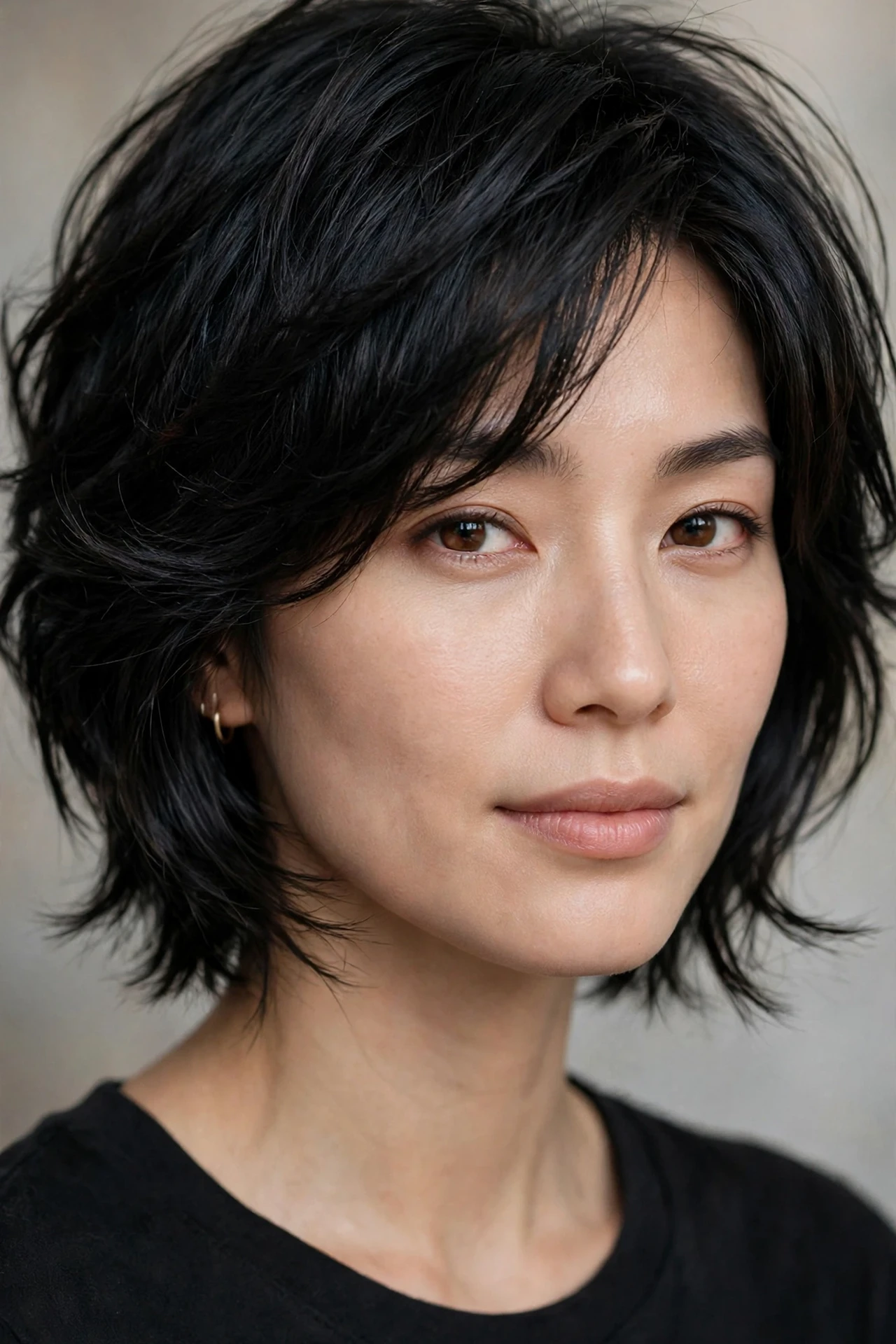
This is the starting point for almost everyone with thick hair. Long, soft layers through the mid-lengths remove weight without thinning the outline, and a pixie bob haircut for thick hair cut this way swings freely instead of sitting flat. Ask for layers that start at the chin, not higher, so the shape stays calm rather than shaggy. It is the safest first step if a previous bob ever felt too heavy. If you want the longer version of this shape first, our long bob haircut guide shows how the same layering works at collarbone length.
2. Textured Pixie Bob That Removes Bulk
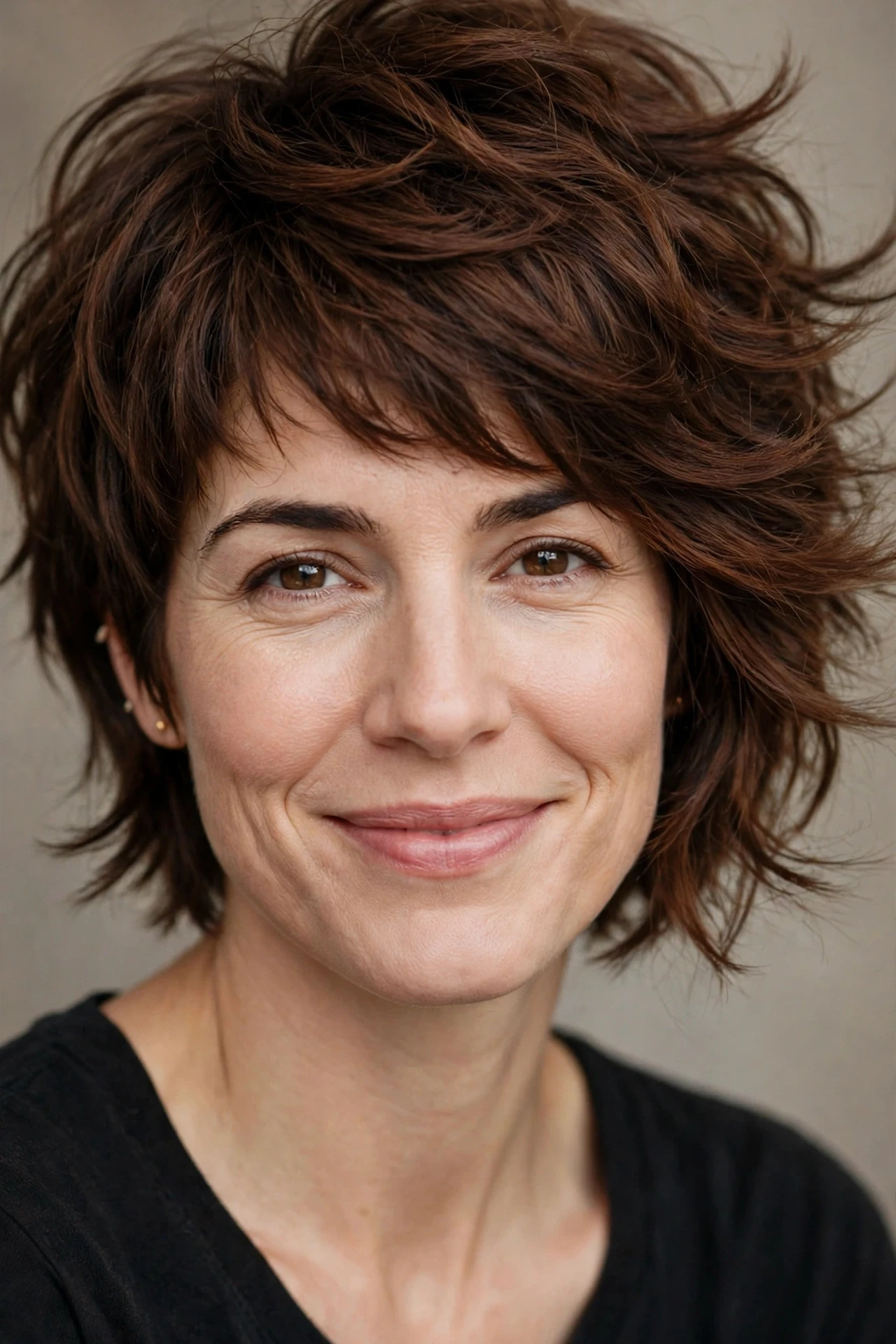
Texture is the kindest tool thick hair has. A texturizing finish through the interior takes out bulk you never see, while the surface stays smooth and the outline stays full. The result moves when you do, dries faster than a blunt cut, and never looks like a solid block. Tell your stylist you want texture inside, not on the surface, and the difference shows immediately.
3. Choppy Pixie Bob for Thick Hair

Choppy layers break up the density of thick hair in the most flattering way. The piecey ends stop the shape looking heavy, and they give the cut a modern, playful edge that suits a pixie bob perfectly. Style with a small amount of pomade on the ends only, and let the layers do the talking. For more choppy cutting ideas in the same spirit, our choppy layered bobs for thick hair collection has plenty of inspiration.
4. Pixie Bob with Thinned Ends

If a blunt line feels too severe on your thick hair, thinned ends are the compromise. The perimeter stays one length, but the last inch is feathered so the finish feels light rather than graphic. It is a kind, forgiving version of the classic, and it suits nearly everyone with dense hair. Ask for point cutting on the ends rather than a razor all the way through, so the outline keeps its strength.
5. Long Pixie Bob for Thick Hair
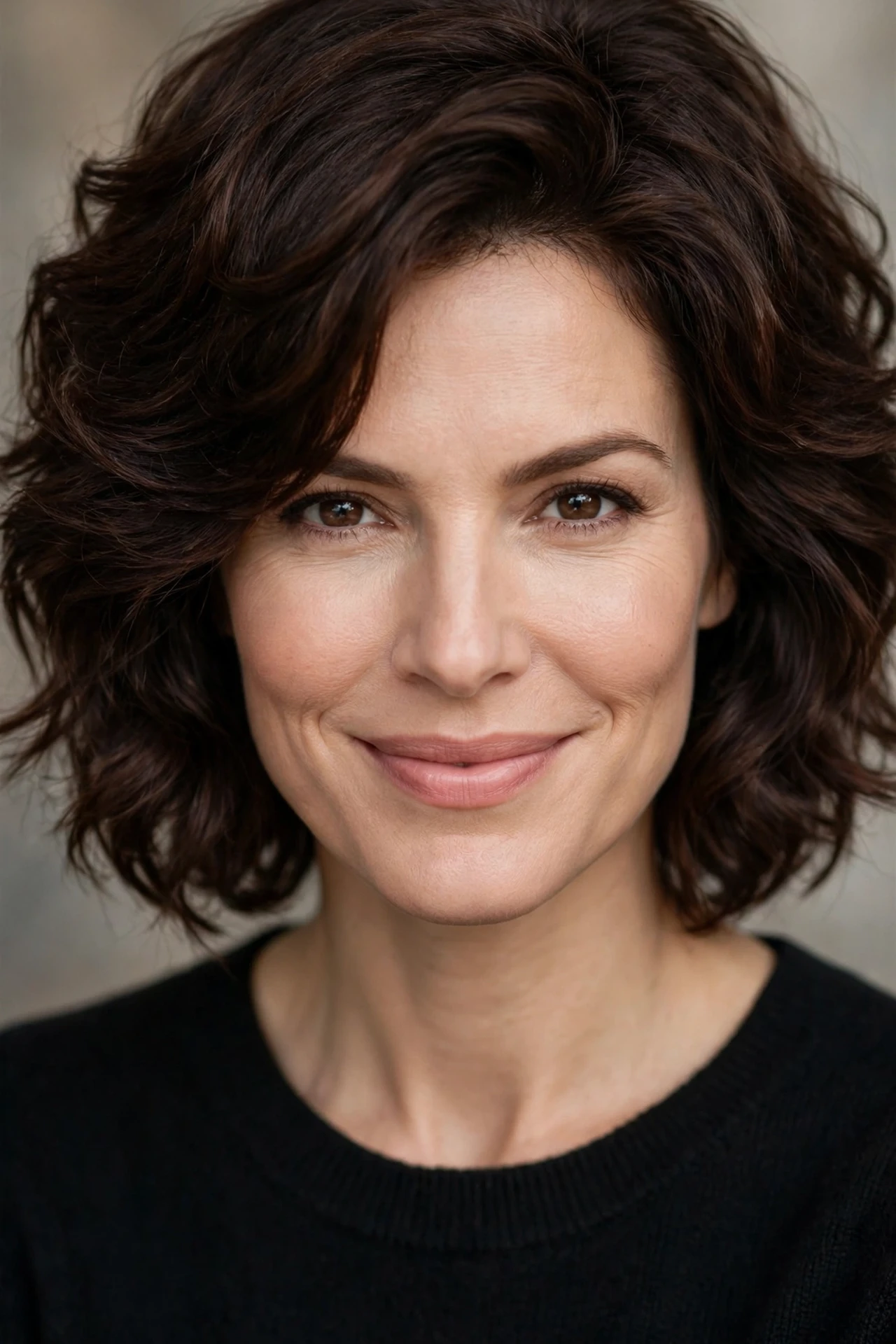
A longer pixie bob gives thick hair somewhere to go. The extra length lets the weight distribute instead of stacking up at the jaw, and the shape still reads as a pixie bob rather than a lob. It is also the easiest version to grow out, since it simply becomes a longer bob over a few months. Keep the front pieces long enough to tuck, and the whole cut feels soft from the front. For the pure pixie version of this idea, our pixie haircuts for thick hair guide covers the shorter end of the same cut.
6. Pixie Bob with Side-Swept Bangs for Thick Hair
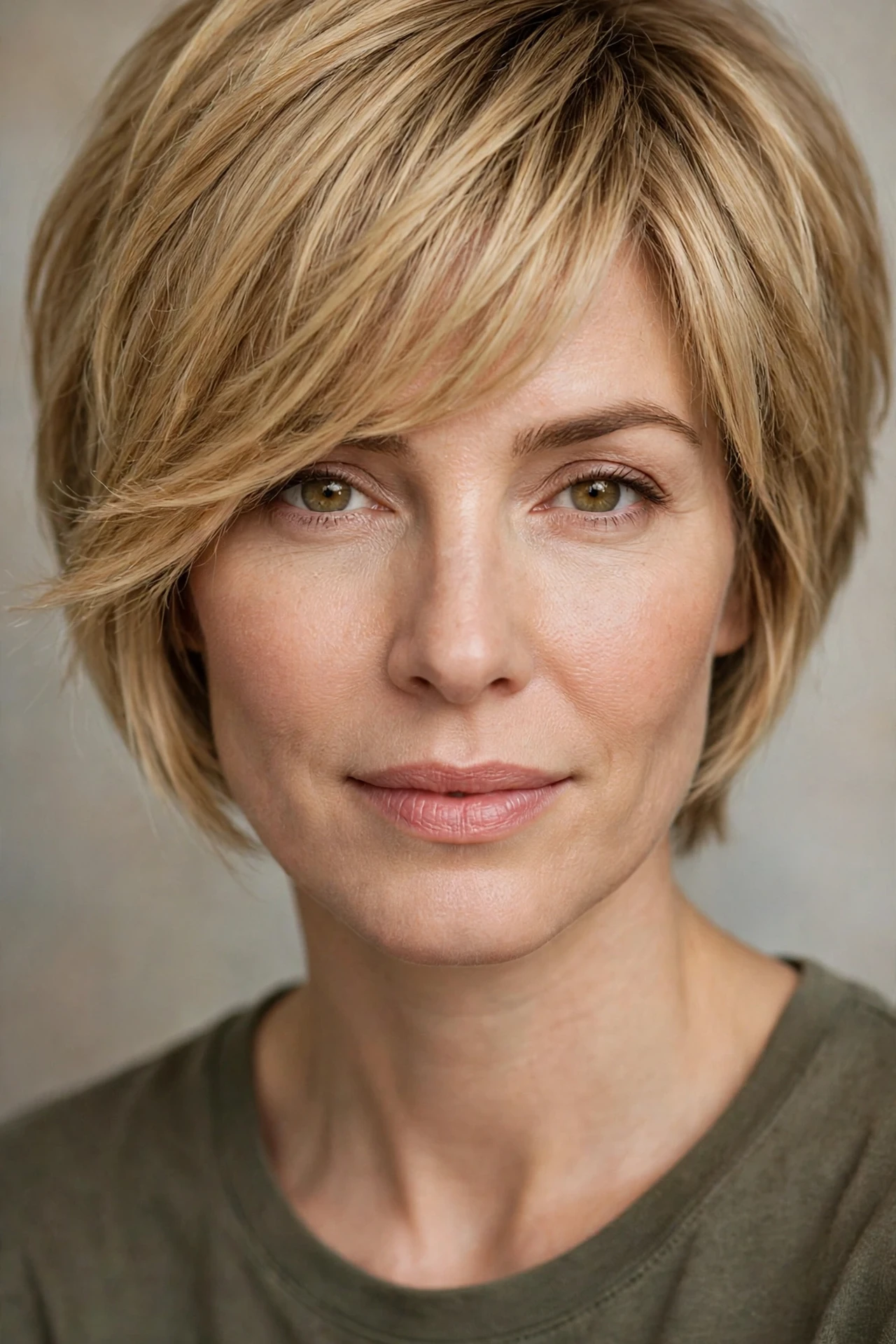
A long side-swept fringe is the lowest commitment bang of all, and it works beautifully on thick hair because the fringe itself has body. It adds softness across the forehead, works with a deep side part, and can be tucked behind the ear on days you want it out of the way. It is also the easiest bang to grow out, since it simply becomes a face-framing layer.
7. Curly Pixie Bob for Thick Hair

Thick curly hair makes a gorgeous pixie bob when it is cut to work with the curl, not against it. Layers should be cut dry or with the natural curl pattern in mind, so the shape holds once the curls spring up. The result has more volume and movement than a straight bob, and it needs less daily styling. Our curly bob hairstyles guide has more curl-first cutting advice that applies here too.
8. Wavy Pixie Bob for Thick Hair

Natural wave is a gift for thick hair, because the wave breaks up the density on its own. A wavy pixie bob has movement built in, and the blunt shape keeps the wave from turning into a triangle. Dry it with a diffuser on low heat or simply air dry, and resist the urge to brush it out once dry. That last step is what keeps the waves defined instead of fluffy.
9. Stacked Pixie Bob for Thick Hair
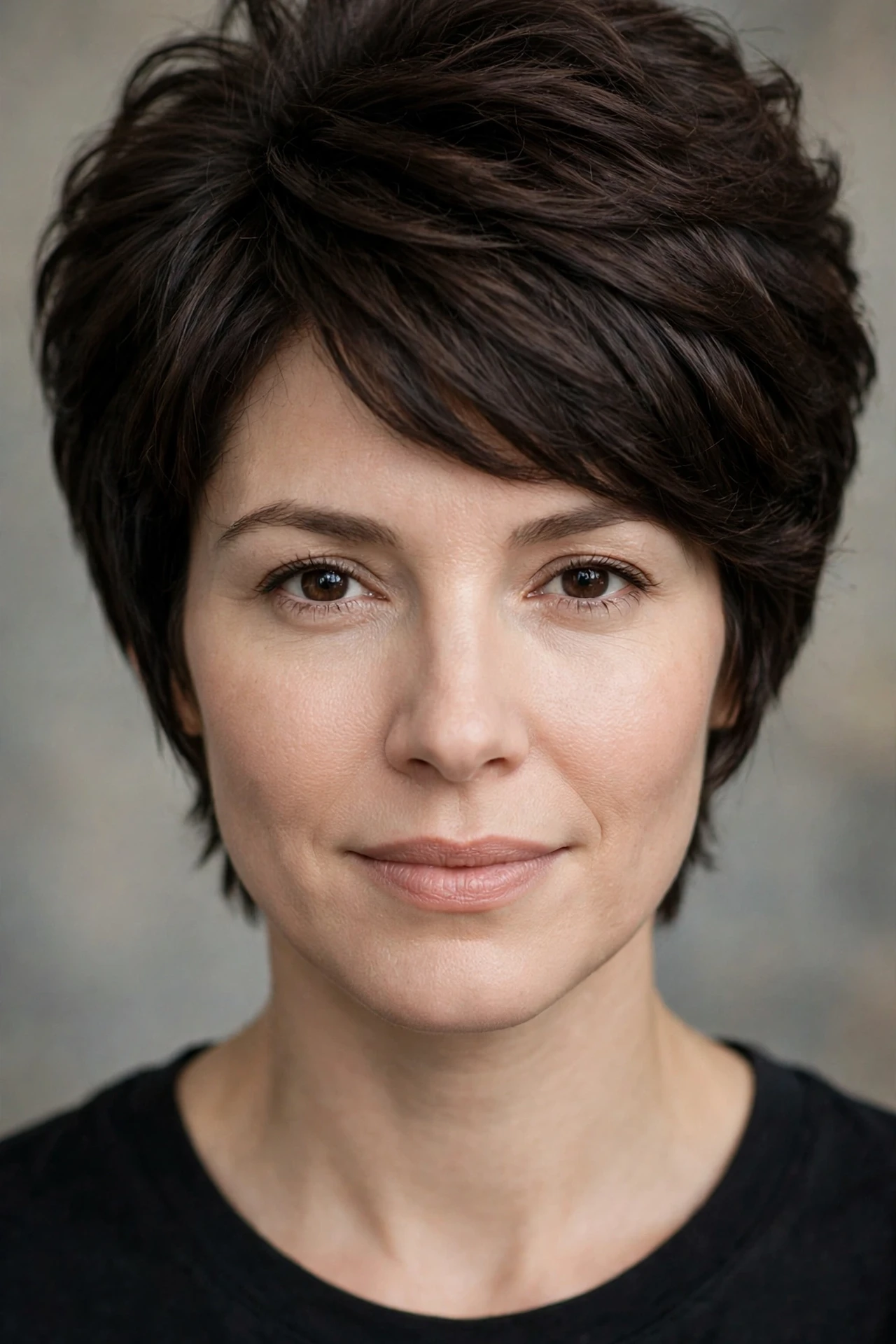
A stacked back gives thick hair lift where it usually lies flat. Graduated layers at the nape build volume at the crown, while the longer front pieces keep the face-framing softness. It is a great choice if your hair lies flat at the roots, since the graduation builds lift that lasts all day. Keep the front long enough to tuck or sweep, so the cut still feels soft from the front.
10. Pixie Bob with an Undercut for Thick Hair
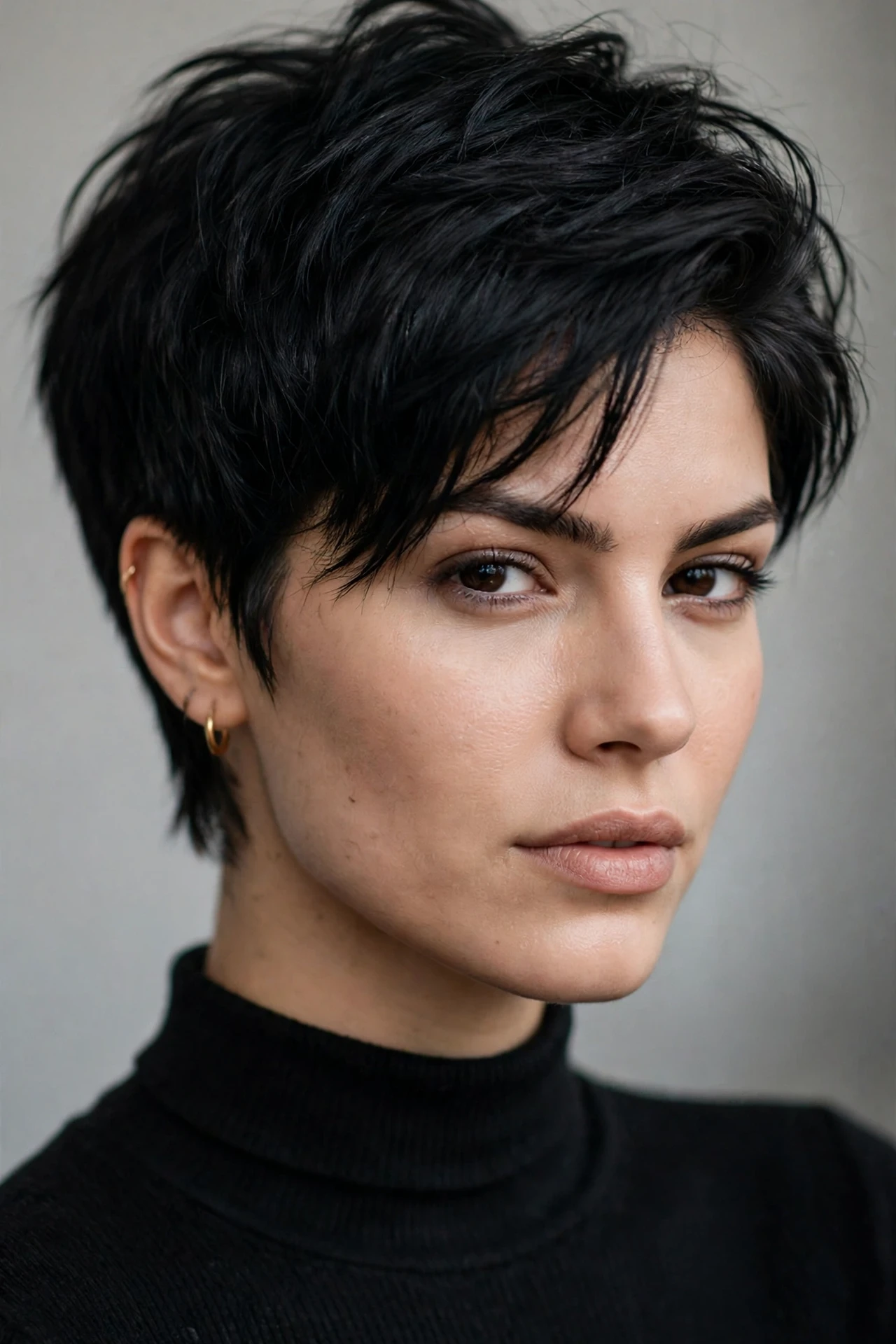
A hidden undercut is thick hair’s secret weapon. Shaving a small section at the nape removes a surprising amount of bulk where nobody ever sees it, while the top stays long and full. It also makes the hair dry noticeably faster. If a full undercut feels too bold, ask for a hidden one first, because it hides completely under the top layer on most days.
11. Pixie Bob for Thick Hair and Round Faces

For a round face with thick hair, length in the front does two jobs at once. It creates a lengthening line down the sides of the face, and it gives the density somewhere to sit without widening the shape. A side part helps too, by breaking up the symmetry. Keep the top full rather than flat, and the whole cut slims the face while keeping the volume you love.
12. Pixie Bob for Thick Coarse Hair

Coarse hair has wonderful body, but it can look blunt and stiff if the ends are left too thick. Ask your stylist to soften the last inch with point cutting or slide cutting, and a pixie bob on coarse hair will move, swing and sit naturally instead of forming a solid block. A smoothing cream on damp hair tames the surface without flattening the volume.
13. Pixie Bob with Internal Layers
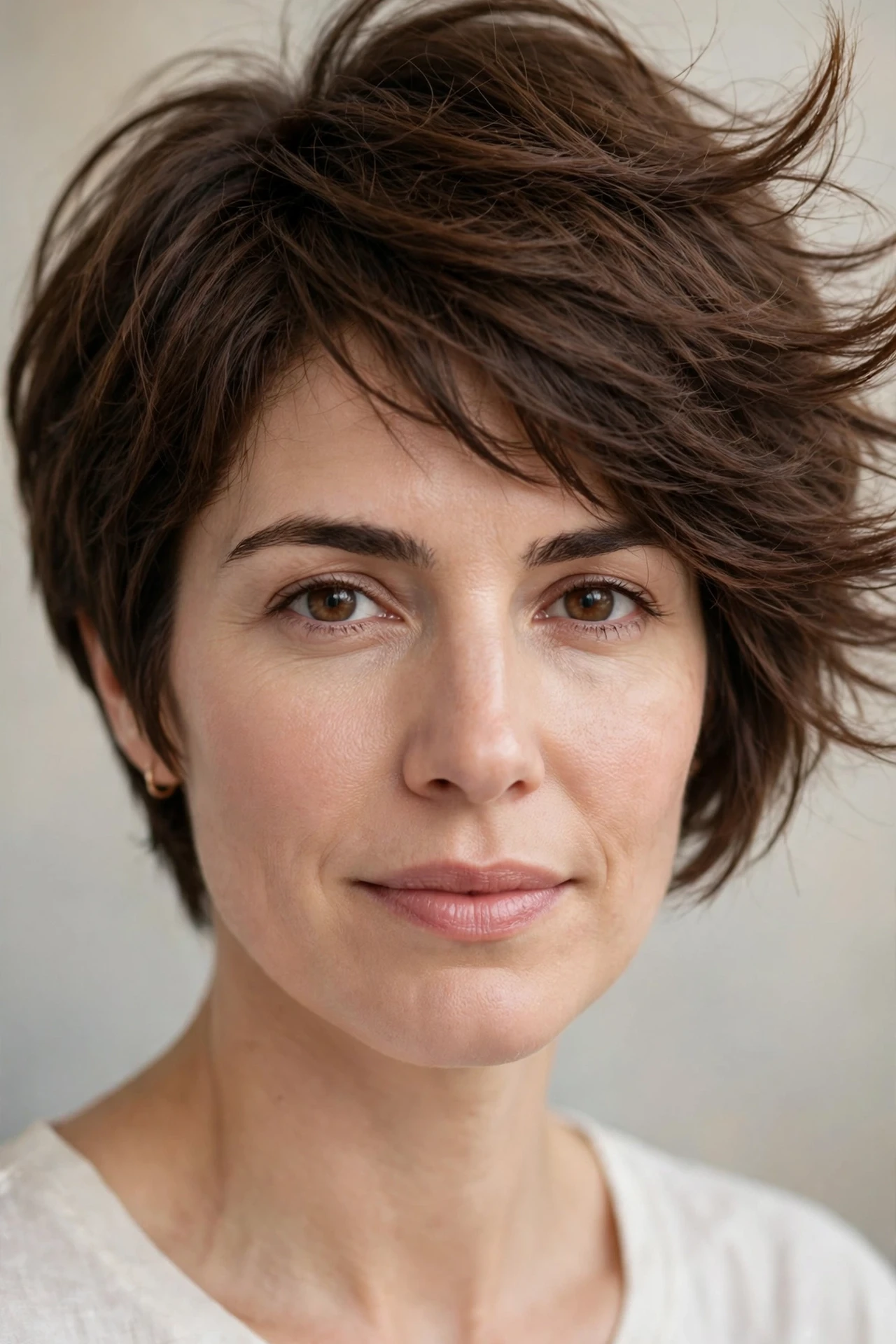
Internal layers are the invisible heroes of a thick pixie bob. They sit underneath the surface, removing weight and adding movement, while the top layer stays smooth and the outline stays full. Nobody can see them, but everybody can see the difference. This is the technique to ask for by name if your last bob felt heavy by lunchtime.
14. Low Maintenance Pixie Bob for Thick Hair
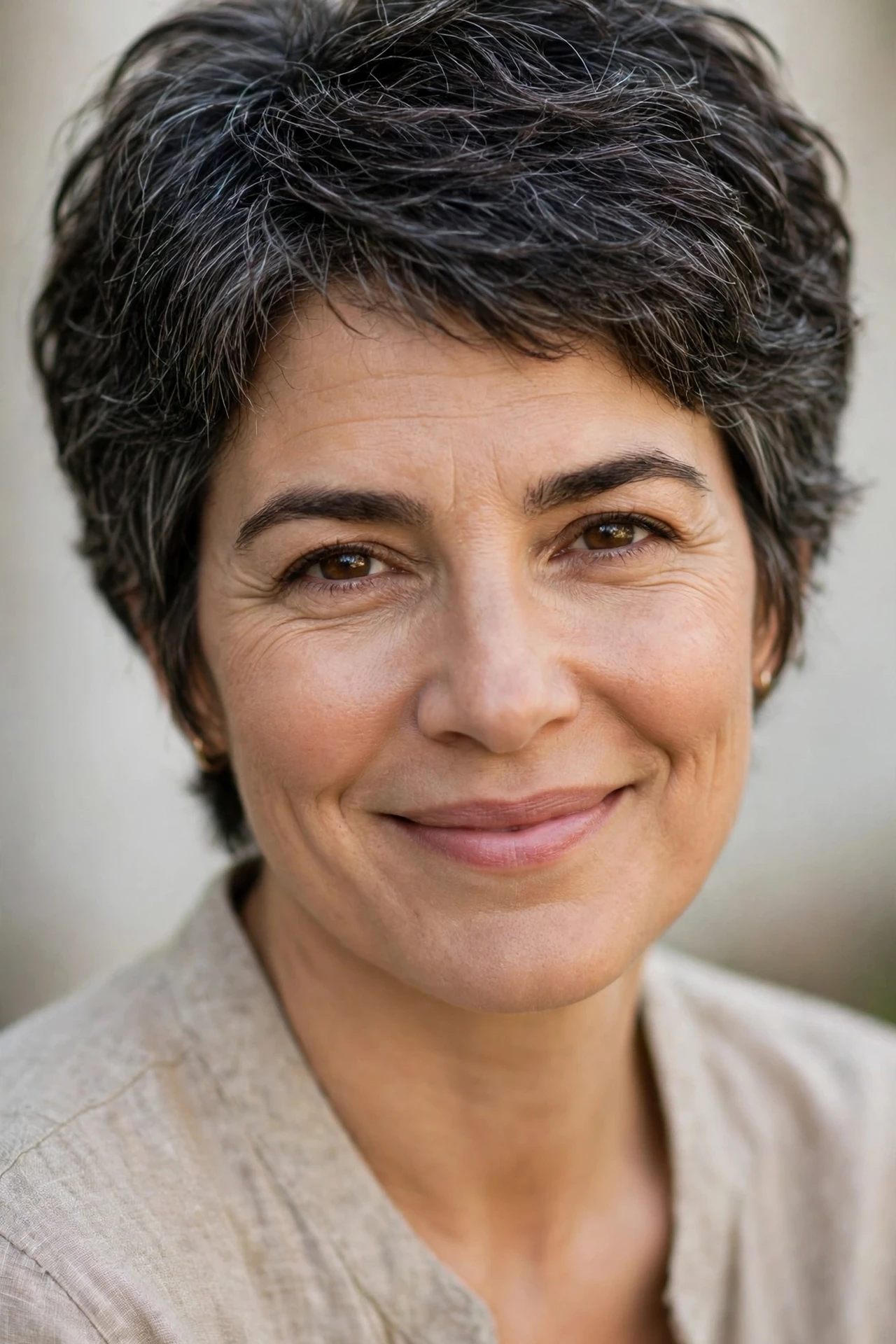
Thick hair and low maintenance go together better than most people think, once the cut is right. A well-layered pixie bob air dries into its own shape, so the morning routine is wash, scrunch in a little leave-in cream, and go. The shape underneath does the work, which is why the cut matters more than the styling. For more wash-and-go ideas, our layered bob hairstyles over 50 collection has plenty of grow-out friendly shapes.
15. Pixie Bob for Thick Hair Over 50

A pixie bob is one of the most flattering cuts after 50, and thick hair keeps its density and shine beautifully at this age. Soft layers, gentle volume at the crown and a chin-length shape lift the face without looking severe. For more mature bob ideas in the same spirit, our bob haircuts for women over 60 with fine hair guide covers the next decade too, and our main bob trends guide shows where this cut sits among all the bob lengths.
What to Ask Your Stylist for a Thick Hair Pixie Bob
A great pixie bob for thick hair starts in the consultation, not at home. Tell your stylist how your hair dries naturally, whether it puffs up in humidity, and how much weight you want removed. Stylists often note that thick hair needs internal work rather than surface thinning, and Latest Hairstyles regularly covers how layering should be matched to density rather than forced.
- Length: “I want a pixie bob that ends at my chin or jaw, and I want to know how it will look as it grows out.”
- Bulk: “Can you remove weight from the inside without thinning the outline?”
- Texture: “Please cut for how my hair dries naturally, because I mostly air dry and rarely use heat.”
- Frizz: “My hair puffs in humidity. What will keep the surface smooth?”
- Maintenance: “How many weeks can I go between trims before this shape feels heavy again?”
Thick Hair Pixie Bob Care: Frizz, Grow-Out and Maintenance
Daily care for a thick pixie bob is refreshingly simple. Wash with a smoothing shampoo, use a light conditioner mainly on the mid-lengths and ends, and avoid heavy creams at the roots, which flatten the volume that makes a bob look alive. Let the hair dry at least halfway naturally before any heat, and finish with a drop of shine serum on the ends only.
For humidity, keep a small anti-frizz balm in your bag rather than re-styling from scratch. For grow-out, a quick perimeter tidy every couple of months keeps the shape, even if you skip the full cut. And if your bob starts feeling heavy again, that is usually a sign the internal layers need refreshing, not that you need a new style.
Does a pixie bob suit thick hair?
Yes, when it is layered properly. Thick hair needs long internal layers to remove bulk so the bob swings instead of forming a triangle. A blunt perimeter with hidden layers inside keeps the outline full while the inside stays light and easy to dry.
How do I stop my thick pixie bob looking puffy?
Puffiness usually comes from bulk at the wrong level, not from the hair itself. Ask for internal layers and thinned ends, use a smoothing cream on damp hair, and let it dry at least halfway naturally before any heat. A hidden undercut at the nape also removes a surprising amount of puff from the bottom.
Should thick hair be thinned with a razor or scissors?
Scissors and point cutting are safer for most thick hair, because they remove weight without creating frizz. A razor can work in skilled hands, but it can also leave the ends wispy and frizzy on coarse hair. Tell your stylist if your hair frizzes easily, and they will choose the gentler method.
What is the best pixie bob length for thick hair?
Jaw length suits most people, because it gives the weight somewhere to sit while still reading as a pixie bob. If your hair is very dense, a slightly longer version grows out better and feels lighter. Avoid a very short, blunt cut on extremely thick hair unless the inside is heavily layered.
How often should I trim a thick pixie bob?
Every 8 to 10 weeks is right for most thick pixie bobs. The shape holds longer than a fine-hair bob because the density supports it, but the layers lose their lightness as they grow. Bangs alone may need a quick tidy every 4 to 6 weeks.
Can I get a pixie bob if my thick hair is curly?
Absolutely. Thick curly hair makes a beautiful pixie bob when the layers are cut with the natural pattern in mind, ideally on dry or naturally dried hair. The result has more volume and movement than a straight bob, and it needs less daily styling than a sleek version.
Final Thoughts
The best pixie bob haircut for thick hair is the one that removes the weight you do not want while keeping the volume you do. Pick the version above that fits your texture, take the salon script with you, and give the cut two weeks to settle before judging it. For the bigger picture of how this cut fits into the wider pixie bob family, our pixie bob haircut guide is the perfect next read, and our main bob trends guide shows where it sits among all the bob lengths.

Sana Malik is a hair and beauty writer with a deep love for the bob in all its forms from sharp French bobs to soft, lived-in lobs. After years of experimenting with her own short hair and helping friends figure out what actually suits their face shape, she started writing to cut through the confusing advice out there. At BobHairTrends, she breaks down each cut into simple, honest guides: how to ask for it, how to style it at home, and who it really flatters. When she isn’t researching the latest trends, she’s usually testing a new styling product or convincing someone it’s finally time for the chop.