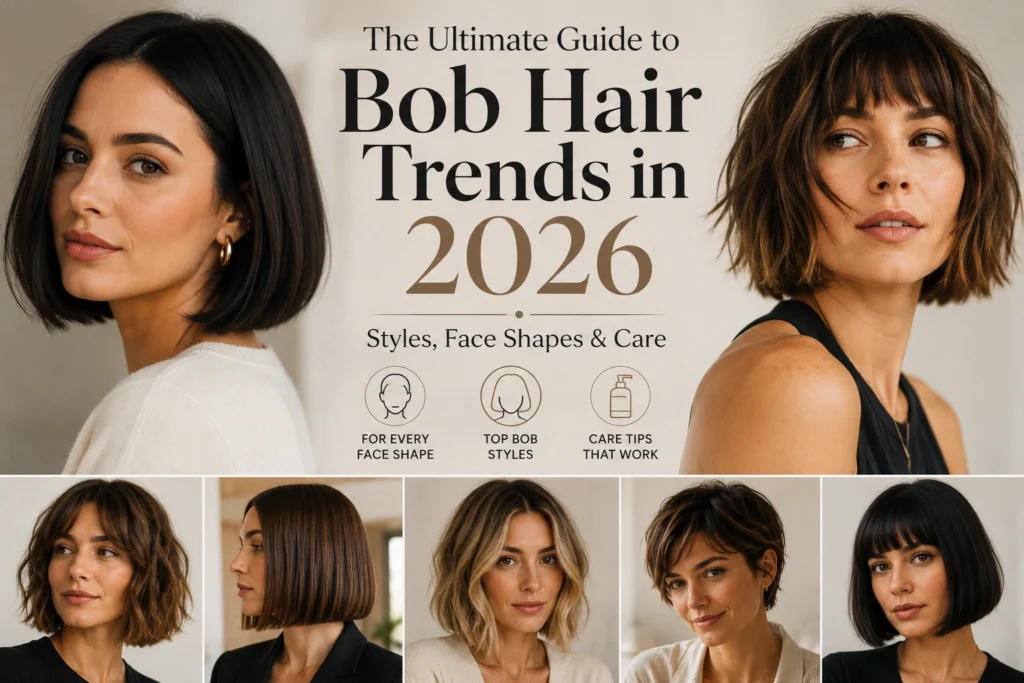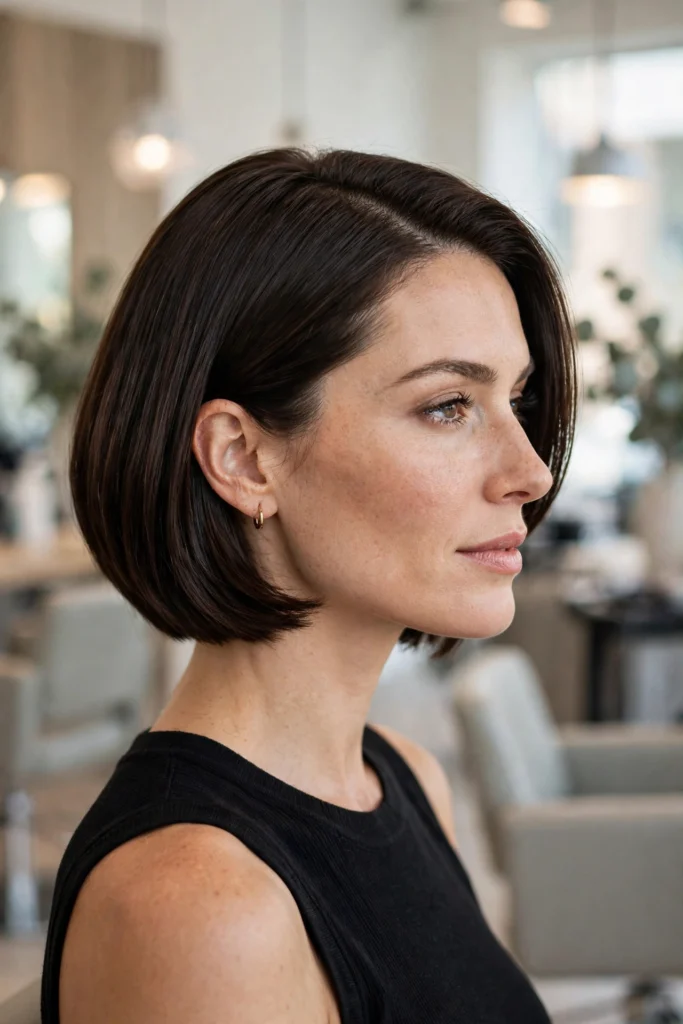

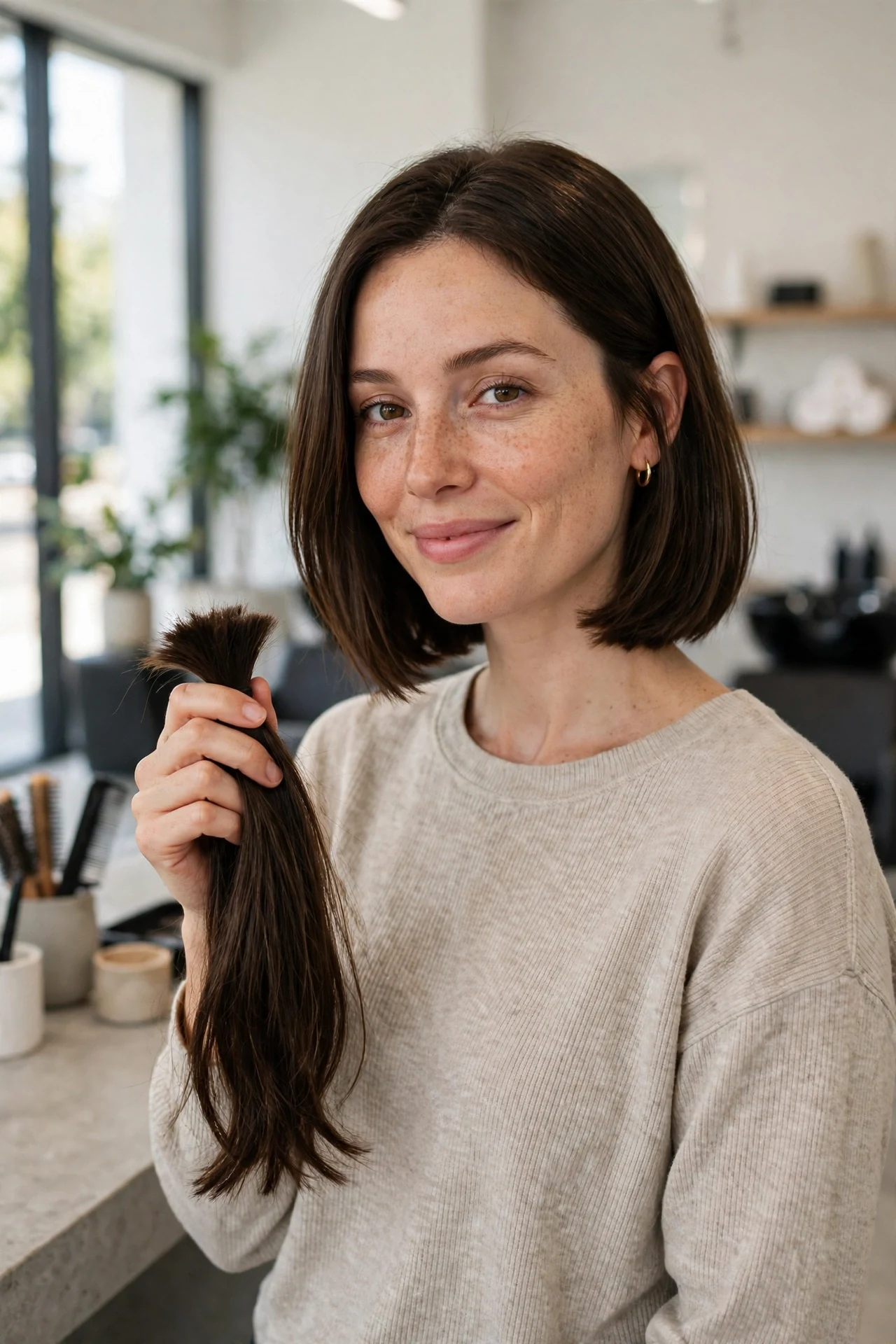
A long to bob haircut is one of the bravest and most rewarding changes you can make to your hair. One appointment takes you from hair you have hidden behind for years to a cut that shows your face, your neckline, and a whole new energy.
If you are standing at that crossroads right now, this guide is your companion. We cover the decision itself, the exact words for your stylist, the safest first lengths, the awkward stages nobody warns you about, and how to style a new bob until it feels like yours. Going from long hair to bob length is not just a cut, it is a transition, and transitions go better with a plan.
- A collarbone length bob is the safest first landing spot after long hair, because it still ties back.
- Name your length, your outline, and your layers at the consultation, and bring photos of cuts on your own hair type.
- The awkward flip stage is normal around week four, and it is fixed with a bend, a tuck, or a trim, not a panic cut.
- Book a six week check in before you leave the salon, so the shape never gets away from you.
- If you change your mind, a bob grows back into a lob gracefully, especially with face framing layers.
The Honest Chop Checklist

Before you book anything, ask yourself three honest questions. Do you want shorter hair, or do you just want a change? Are you ready for a new morning routine? And will you still love this cut on a bad hair day, not just a salon day?
Try the ponytail test at home first. Pull your hair up, then pin it at bob length and live with the reflection for an evening. If you keep smiling at it, you are ready. If you keep unpinning it, wait a month and test again before you book a long to bob haircut.
What to Tell Your Stylist, Word for Word
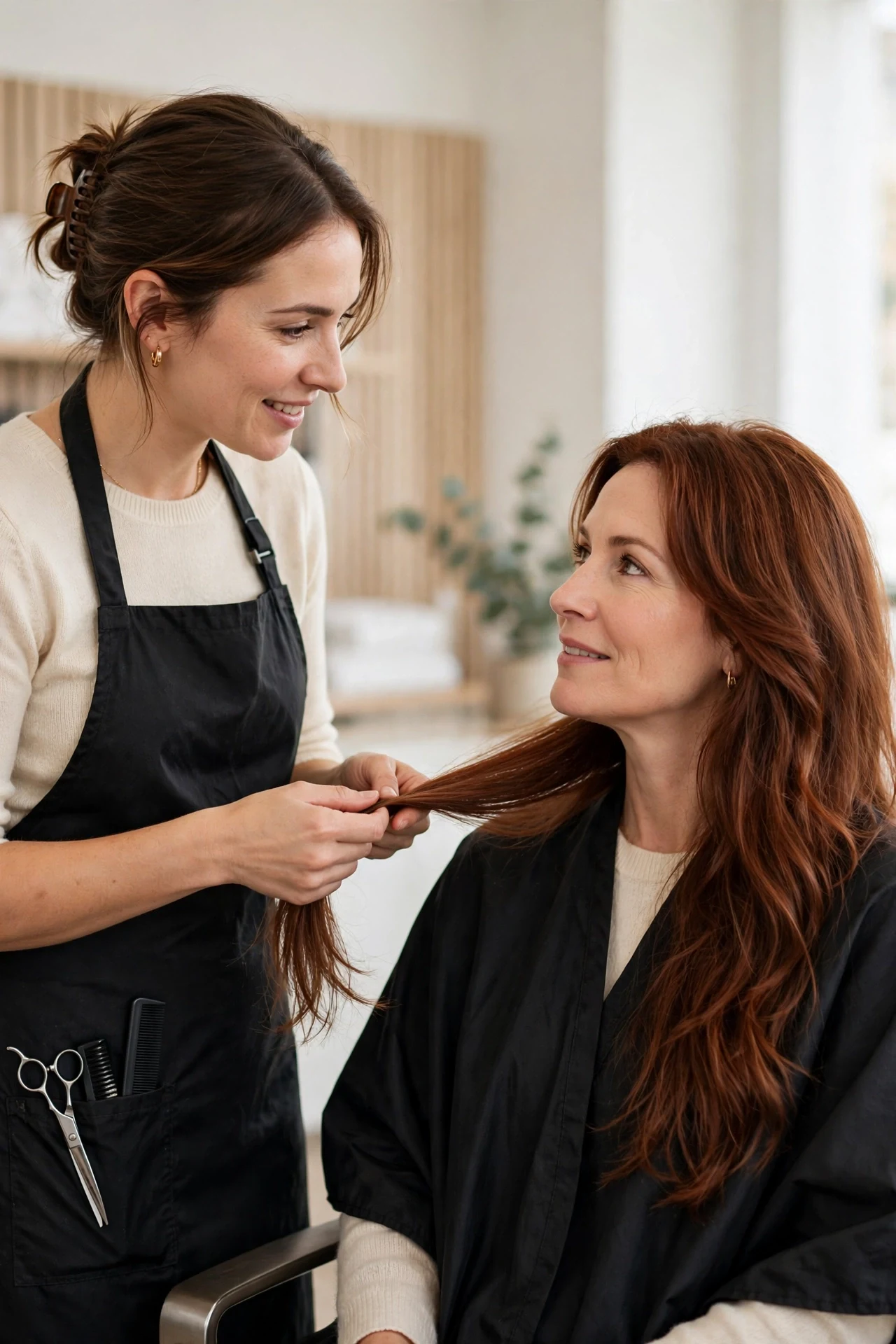
A long to bob haircut consultation goes better when you name the length in body landmarks, not inches alone. Say where you want it to end when your hair is dry and sitting naturally, because wet hair hangs longer and can mislead you both.
Bring two photos you love and one you do not. Point to the outline, the layers, and the part in each one, and say what you want kept and what you want avoided. Stylists love specifics, and specifics are what turn a vague idea into the cut you pictured.
The Safe First Landing: Your Long to Bob Haircut Starting Point

For most first timers, the collarbone is the sweet spot. It reads as a real bob, it swings when you walk, and it still gathers into a low ponytail on gym days. That safety net matters more than you think when you are going from long hair to bob length for the first time.
Our long bob haircut guide shows how this length behaves on different textures, and it is worth a look before your appointment. Start here, live with it for six weeks, and then decide if you want to go shorter.
The Chin Length Leap

Chin length is bolder, and it suits people who already know they love short hair. It opens up the jaw and cheekbones, it dries fast, and it looks intentional even with zero styling.
Only take this leap first if you have worn shorter styles before and liked them. If long hair has been your identity for years, land at the collarbone first. You can always take another inch off, but you cannot glue it back on.
A Blunt First Bob for Fine Hair

Fine hair loves a blunt edge. One clean line at the ends makes the hemline look twice as thick, while heavy layers can turn fine hair wispy in a single cut. Ask your stylist to keep the perimeter solid and hide any layers inside.
For the full layer placement logic, our long layered bob for fine hair guide explains which invisible layers add movement without thinning the ends. Bring it up at your consultation if your stylist reaches for the thinning shears.
A Layered First Bob That Still Feels Long

Layers are the bridge for people who fear losing their length. Long layers through the mid lengths keep the outline full while the top moves freely, so the cut feels lighter without looking short.
Ask for layers that start at the cheekbone or below, not at the crown. Short crown layers can puff up on thick hair and fall flat on fine hair. For more ideas on shorter shapes that keep softness, see our short bob haircuts for fine hair guide.
A Curly First Bob, Cut Dry

Curly hair shrinks, sometimes by several inches, so a wet cut is a gamble. A dry cut, curl by curl, lets your stylist see exactly where each curl will land. That is the single most important rule for going from long hair to bob length with curls.
Land longer than you think you want, then refine it once it is dry and styled your usual way. Our curly bob hairstyles guide has shapes that keep volume balanced, so you avoid the dreaded triangle outline.
The Awkward Flip Stage, and How to Fix It

Around week four, many new bobs start flipping out at the neck. Your hair is hitting your shoulders, the ends have lost their salon bend, and suddenly the cut looks less polished. This stage is normal, and it is not a sign you made a mistake.
Fix it in two minutes. Bend the ends under with a round brush, tuck one side behind your ear, or add a soft wave through the mid lengths. If the flip keeps winning, book a tidy up trim a week early rather than fighting it every morning.
Growing Out the Bangs You Cut With It

Many people cut bangs with their first bob, then regret them by week three. The grow out is easier than it feels. Sweep them into curtain bangs, pin them to one side, or blend them into face framing layers at your next trim.
A center part with soft, cheekbone length pieces hides the in between stage beautifully. If bangs are still calling you, our long bob with long bangs guide shows fringe lengths that grow out gracefully.
Styling Your New Long to Bob Haircut at Home
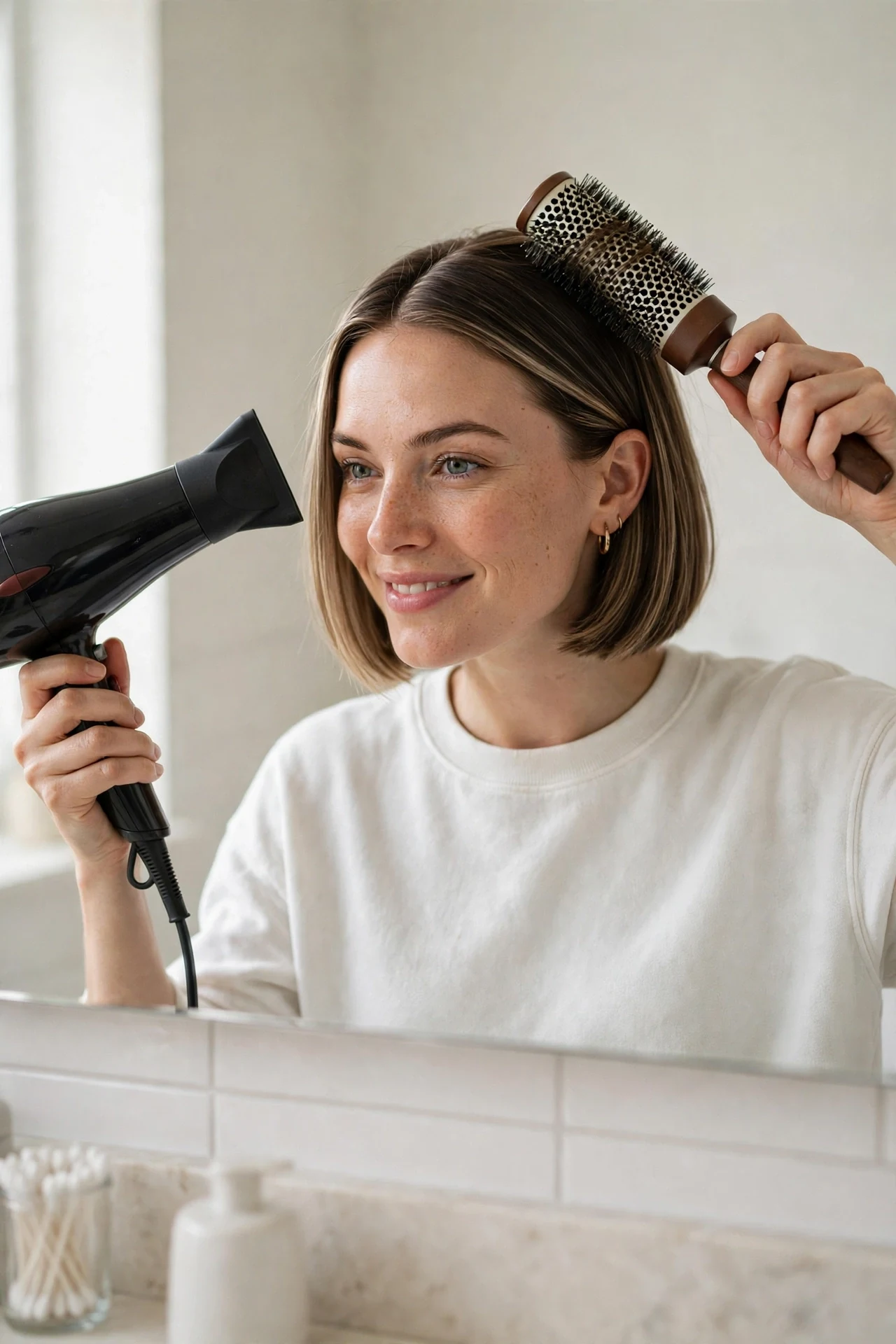
Week one styling is simpler than long hair styling, but it is different. You need less product, a smaller brush, and a lighter hand. A pea sized amount of smoothing cream and a medium round brush will do most of the work.
Dry the roots first for lift, then smooth the mid lengths and bend the ends under. Finish with a cool shot from the dryer to set the shape. Once this routine clicks, a new bob takes less time than long hair ever did.
A Sleek Glass Finish for Week One

Nothing makes a fresh bob look more expensive than a glass finish. Work a smoothing serum through damp hair, blow dry in sections with a paddle brush, and pass a flat iron over the ends only, not the roots.
Keep the roots soft so the cut keeps its volume. If you love polished French shapes, our French bob haircut guide is full of sleek, jaw skimming inspiration for your next appointment.
Soft Waves That Hide an Uneven Day

On days when your bob will not sit straight, waves are your best friend. Wrap one inch sections around a curling iron away from your face, let them cool completely, then brush through gently for a soft, lived in wave.
Waves forgive a multitude of sins: a grown out layer, a cowlick, a flippy end. They also add width where a new bob can look flat, which is why they are the go to style for week three and beyond.
The Tuck Behind the Ear Trick

The tuck is the smallest styling move with the biggest payoff. Tucking one side behind your ear opens up your face, shows off earrings, and instantly makes a bob look deliberate rather than accidental.
For a softer version, tuck only the front piece and leave the rest loose over it. For evenings, tuck both sides and add a sleek finish. It is the trick every bob wearer learns in week one and uses forever.
The Low Ponytail and Half Up Styles You Keep

One fear stops many people from cutting: losing ponytails. A collarbone bob still makes a low ponytail, a half up twist, and a loose low bun with pins. You keep the practical styles, just in a shorter, neater form.
Leave two face framing pieces out and the style looks soft, not scraped back. Use small, snag free elastics and a few pins at the nape, where shorter layers are most likely to slip out.
A Color Refresh After the Chop

A fresh cut is the perfect moment for a color refresh, because short hair shows color differently. Dimension that got lost in long lengths suddenly pops, and a root shadow or a few face framing highlights can transform the whole cut.
Wait a week after the cut if you are unsure, so you judge the color on the real shape. For shade ideas that flatter shorter lengths, our hair color for bob hairstyles guide is a great place to start.
The Six Week Trim Rule

Bobs lose their shape faster than long hair, so trims are not optional. Six to eight weeks keeps the outline crisp, the layers balanced, and the grow out stage from arriving early.
Book the next trim before you leave the salon, while the shape is fresh in your stylist’s mind. Good upkeep also means good products, and our best hair products for women over 50 guide covers gentle formulas that keep a bob healthy between visits.
When You Miss Your Long Hair

Almost everyone misses their long hair at least once, usually in the first two weeks. It hits in odd moments: reaching to pull it over one shoulder, or seeing an old photo. Missing it does not mean the cut was wrong.
Give yourself a rule: no big decisions for thirty days. Try three different styles, wear it out, wear it tucked, and take new photos. Going from long hair to bob length changes how you see yourself, and your eyes need time to catch up with the mirror.
The Grow Out Safety Net

Here is the reassurance every first timer needs: if you change your mind after a long to bob haircut, the way back is kind. A bob grows into a lob in a few months, and face framing layers make every stage look intentional.
During grow out, keep the back trimmed lightly so the shape stays even, and let the front pieces lead the length. You are never stuck. You are simply on the road from long hair to bob length and back again, with a great cut at every stop.
The Second Cut: Going Shorter With Confidence

The second cut is where the real fun starts. Once you have lived with a bob, you know how it dries, how it grows, and what you actually want more or less of. That knowledge makes the next appointment easy.
Many people go shorter the second time, sometimes into a French bob or a bixie shape. Our bixie haircut guide shows that shorter, textured next step if you find yourself craving even more edge.
The Before and After Photo Test

Photos tell the truth your mirror hides. Take a front, side, and back photo on cut day, then again at week three. Compare them side by side, and you will see the shape settling, the volume balancing, and your confidence catching up.
Share the photos with your stylist at your trim, not just the ones you love. The ones you dislike teach them even more. For the bigger picture of where your new bob fits, our main bob trends guide maps every bob family in one place.
How long does it take to get used to a bob after long hair?
Most people feel fully at home in two to four weeks. The first week feels strange because your styling routine changes, but by the second trim the bob usually feels like it was always yours.
Should I cut my long hair to a bob in one appointment?
Yes, if you have a clear first length in mind. A collarbone bob in one appointment is cleaner than several small cuts, and it gives you a true bob shape to judge, rather than a long layer cut in disguise.
What should I tell my stylist for my first bob?
Name the dry length in body landmarks, the outline you want, and the layers you want or do not want. Bring photos on your hair type, and ask your stylist to cut curls dry and to show you the back before you leave.
Will a bob suit my face shape?
There is a bob for every face shape, because length, part, and layer placement change the whole effect. Longer bobs flatter round faces, chin length bobs suit long faces, and soft layers soften square jawlines.
How often should I trim a new bob?
Every six to eight weeks keeps the shape crisp. Waiting twelve weeks or more lets the outline go soft and the flip stage arrive early, which is when most bob regret sets in.
Can I grow a bob back out to long hair easily?
Yes. A bob grows into a lob within a few months, and light trims on the back keep the shape even during grow out. Face framing layers make every in between stage look intentional rather than awkward.
Final Thoughts
The long to bob haircut is not a leap of faith when you plan it well. Pick a safe first length, say exactly what you want, give yourself thirty days to fall in love, and book that six week trim. Do those four things and the chop becomes the best hair decision you make this year.
For more inspiration on lengths, shapes, and styling ideas, the team at Byrdie regularly covers bob trends and salon advice. Save this guide, take it to your appointment, and enjoy the first swing of that new bob.

Sana Malik is a hair and beauty writer with a deep love for the bob in all its forms from sharp French bobs to soft, lived-in lobs. After years of experimenting with her own short hair and helping friends figure out what actually suits their face shape, she started writing to cut through the confusing advice out there. At BobHairTrends, she breaks down each cut into simple, honest guides: how to ask for it, how to style it at home, and who it really flatters. When she isn’t researching the latest trends, she’s usually testing a new styling product or convincing someone it’s finally time for the chop.