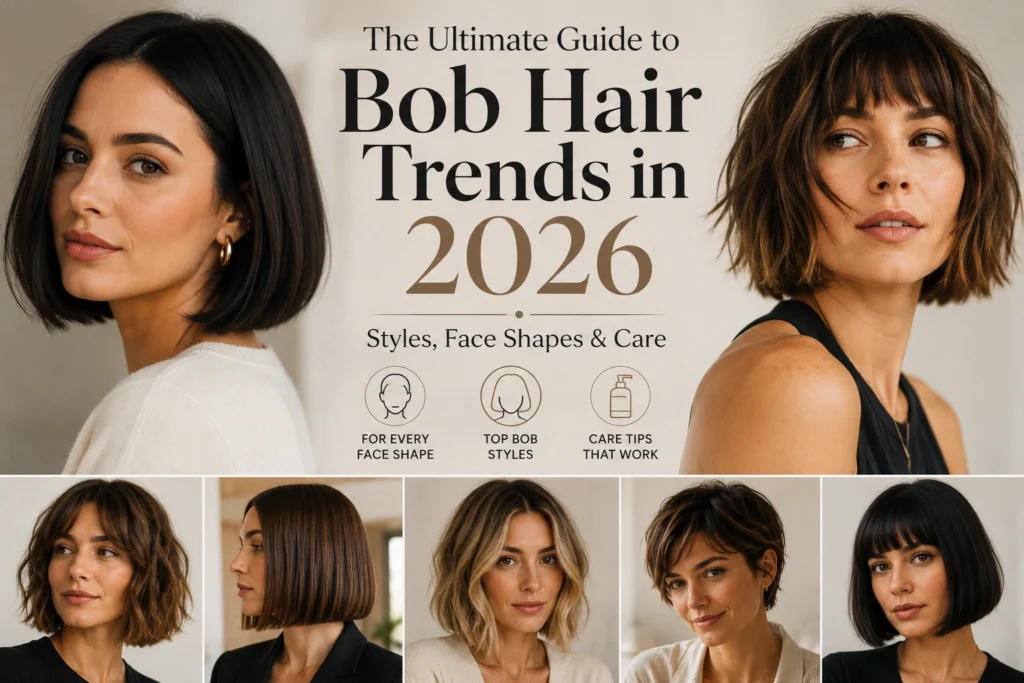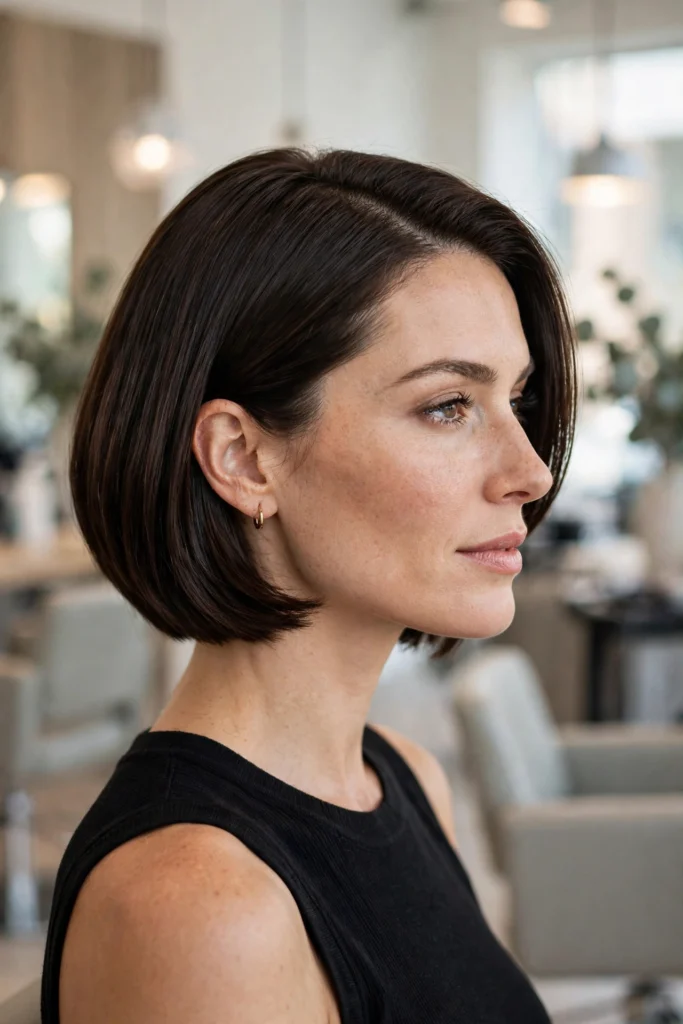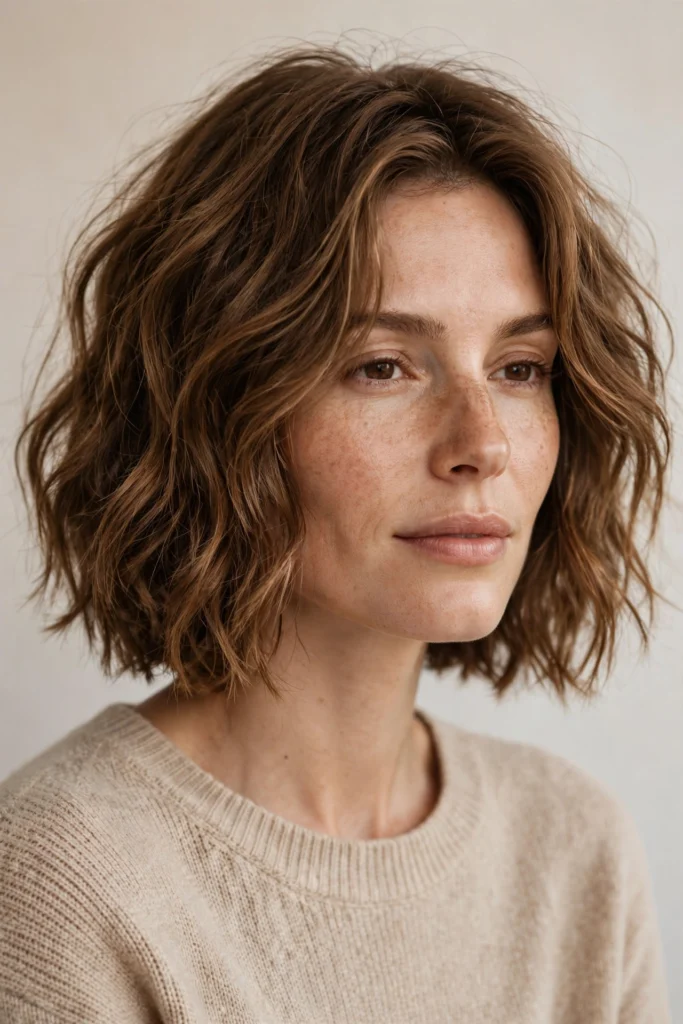

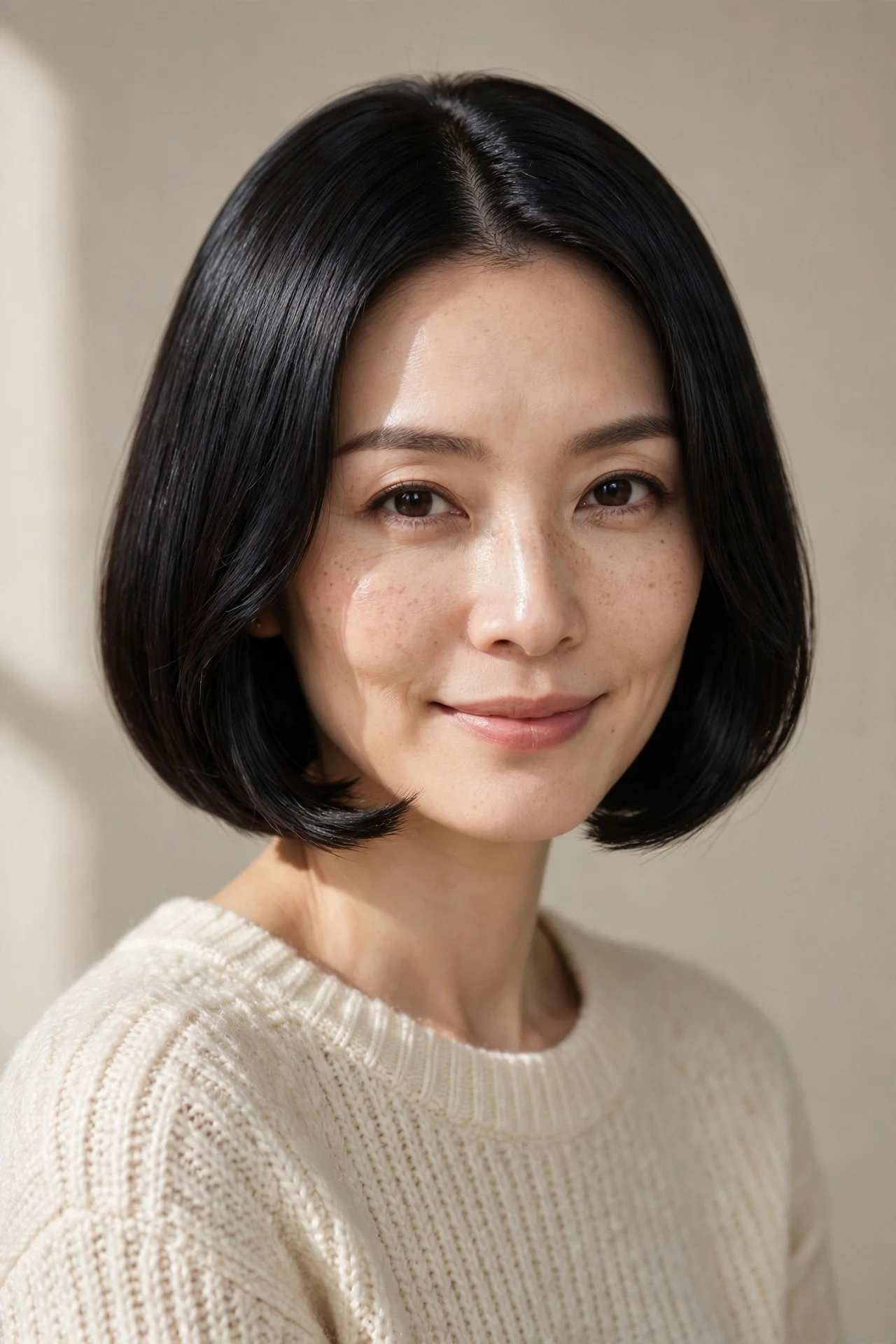
A japanese bob haircut is one of those rare cuts that looks polished on a rushed Monday and elegant at a dinner on Saturday. It is built on precision, a clean outline, healthy shine, and ends that fall exactly where they should.
Most Japanese bobs sit between the jaw and the collarbone, which makes them easy to grow out and simple to style at home. Think of this guide as your timeless style reference, not a trend report. You will find the classic shapes, the softer modern versions, and the small details that make each one work. If you love the crisp Parisian version too, our French bob haircut guide shows how the two styles differ in length and finish.
- A Japanese bob is defined by a precise outline, a healthy shine, and ends that sit neatly at the jaw, chin, or collarbone.
- Glass hair, blunt cuts, and wispy bangs are the three signature finishes to choose between first.
- Face shape matters more than age when you pick your length, part, and fringe.
- Most versions need a trim every 6 to 8 weeks to keep that clean edge.
- These 20 styles cover every hair type, face shape, and maintenance level, with a salon script at the end.
20 Gorgeous Japanese Bob Haircut Ideas to Try
Classic Chin Length Japanese Bob Haircut
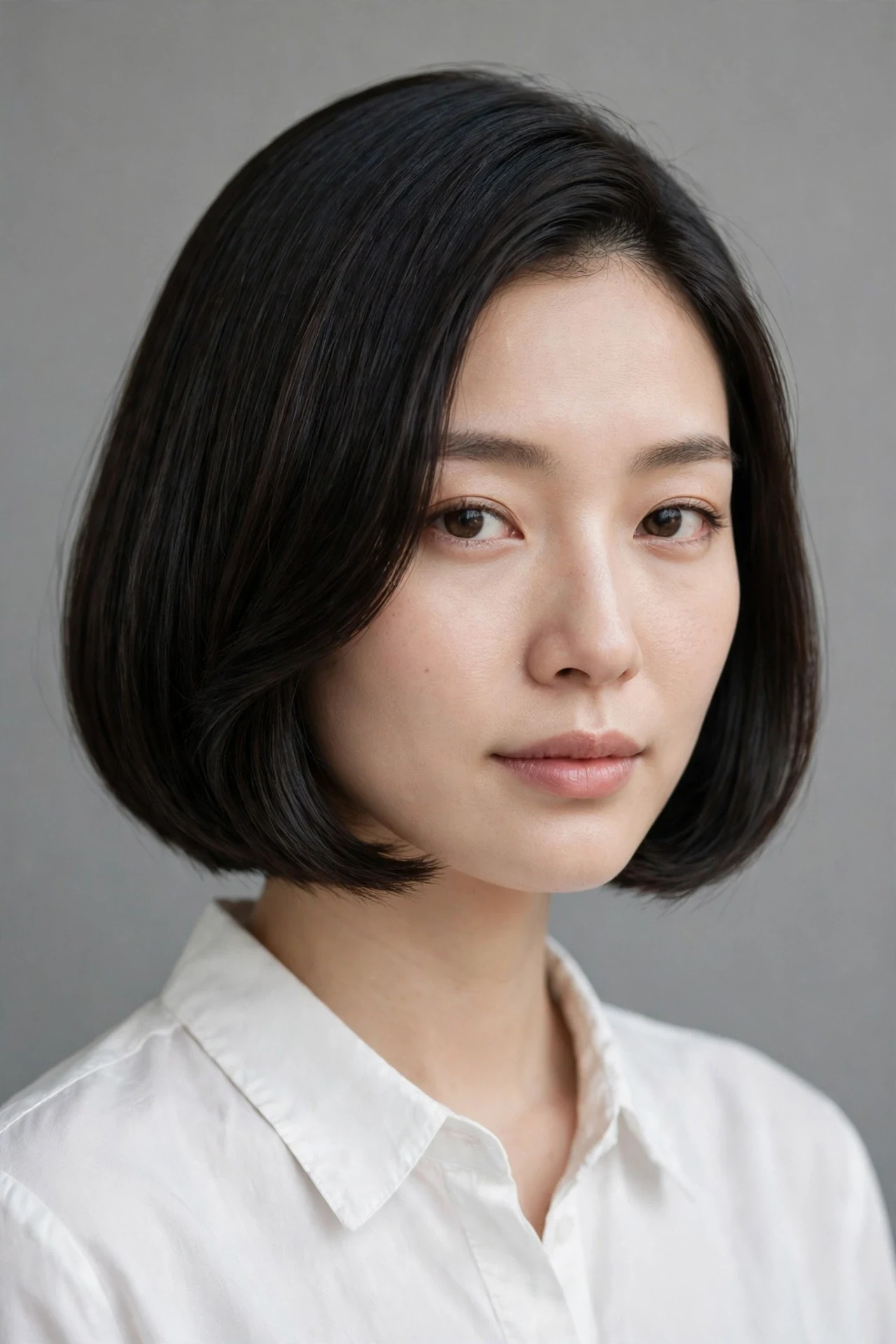
This is the original, the one most people picture first. Hair ends right at the chin in one clean line, with no layers breaking the outline. It frames the jaw beautifully and looks sharp with a center or side part.
Ask your stylist to cut it dry at the end if your hair has any wave, so the length lands exactly at the chin once it settles. A round brush and a light smoothing cream are all you need for that tucked in finish.
Glass Hair Japanese Bob Haircut
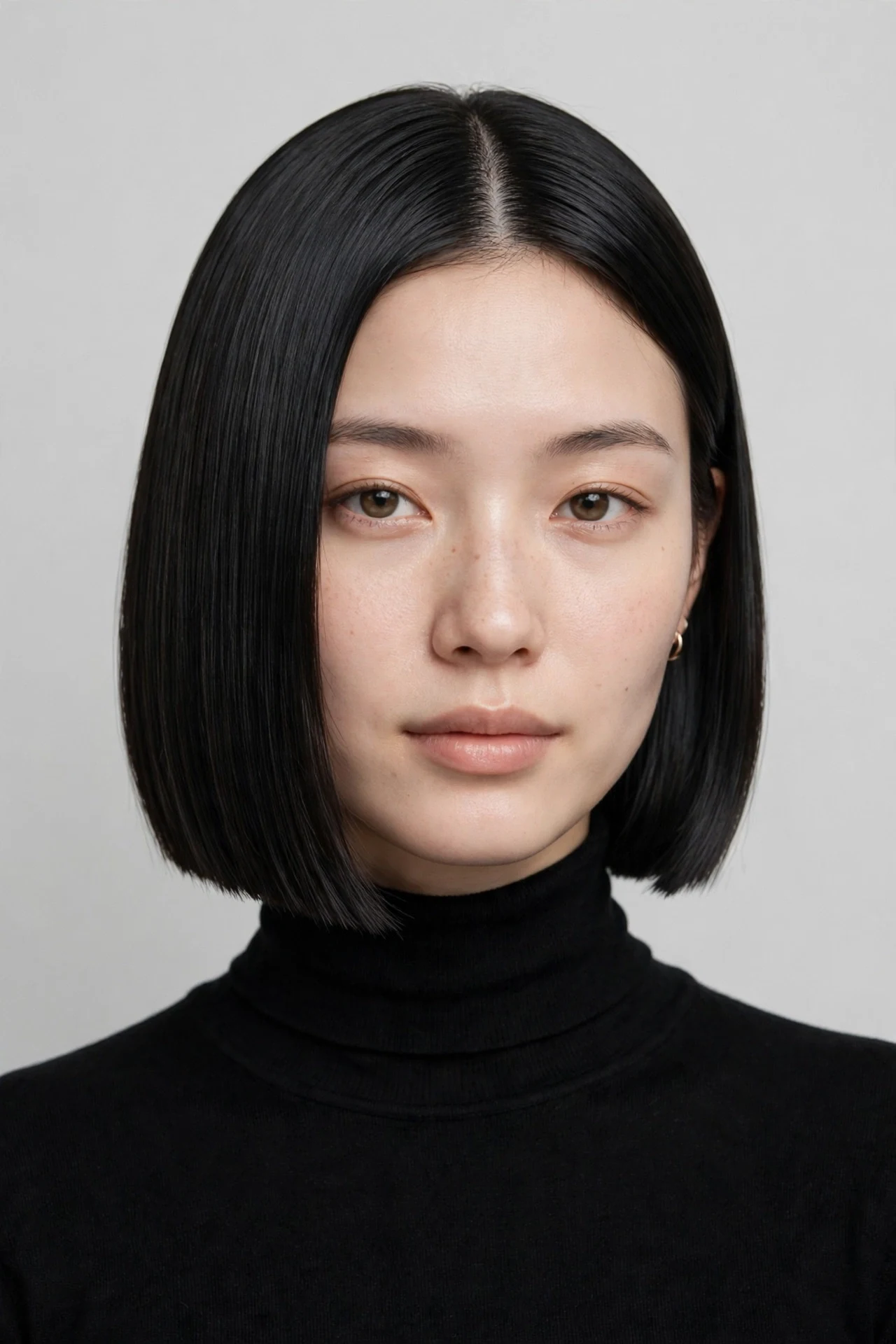
Glass hair is less about the cut and more about the finish. The bob itself is blunt and pin straight, but the surface is so smooth it catches the light like polished glass.
Healthy hair is the real secret here. Regular trims, a smoothing serum, and a flat iron passed slowly over small sections will get you there. If you are thinking about color too, our hair color for bob hairstyles guide shows shades that make shine even more obvious.
Blunt Collarbone Bob
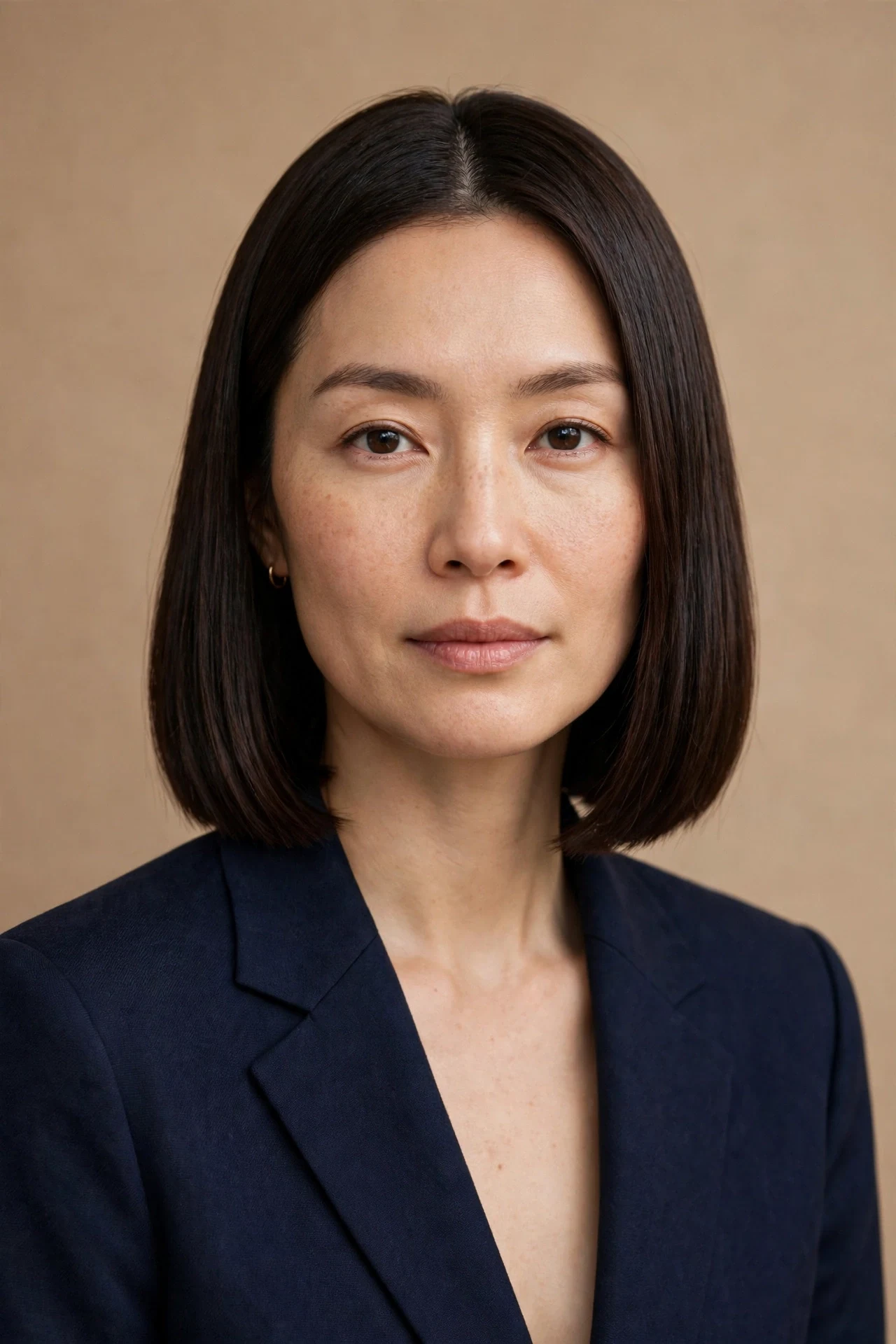
Love the Japanese precision but want more length? This version keeps the same blunt outline and simply moves it down to the collarbone. You still get that expensive, intentional look, plus the option of a low ponytail.
It is also a kind bridge if you are growing out a shorter bob. For a full length comparison, our long bob haircut guide maps chin, collarbone, and shoulder lengths side by side.
Wispy See Through Bangs Bob

See through bangs are feather light and slightly sheer, so a little forehead still shows through. They soften a blunt bob without hiding your face, and they grow out far more gracefully than a heavy fringe.
Keep them wispy on purpose. If your stylist cuts them too thick, they turn into a standard full fringe and you lose that airy Japanese feel. A quick trim every three weeks keeps them sitting right.
Soft Layered Bob
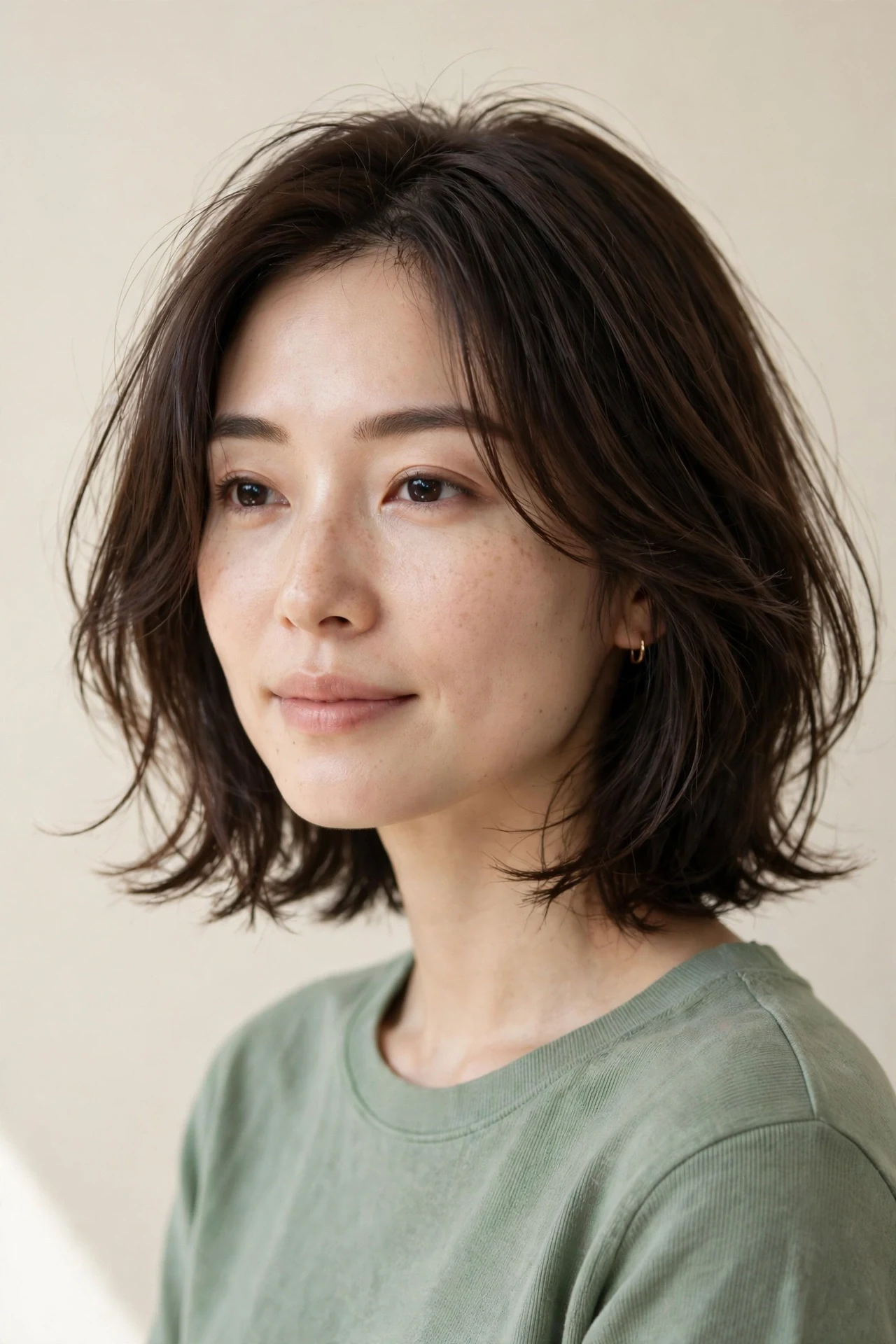
Not every Japanese bob has to be one length. Soft, invisible layers tucked inside the shape add movement while the outline stays clean from the outside. It is the best pick if a fully blunt cut feels too severe on you.
Layers also help fine hair move without going wispy at the ends. Our long layered bob for fine hair guide explains the same layer logic at a longer length.
Curtain Bangs Bob
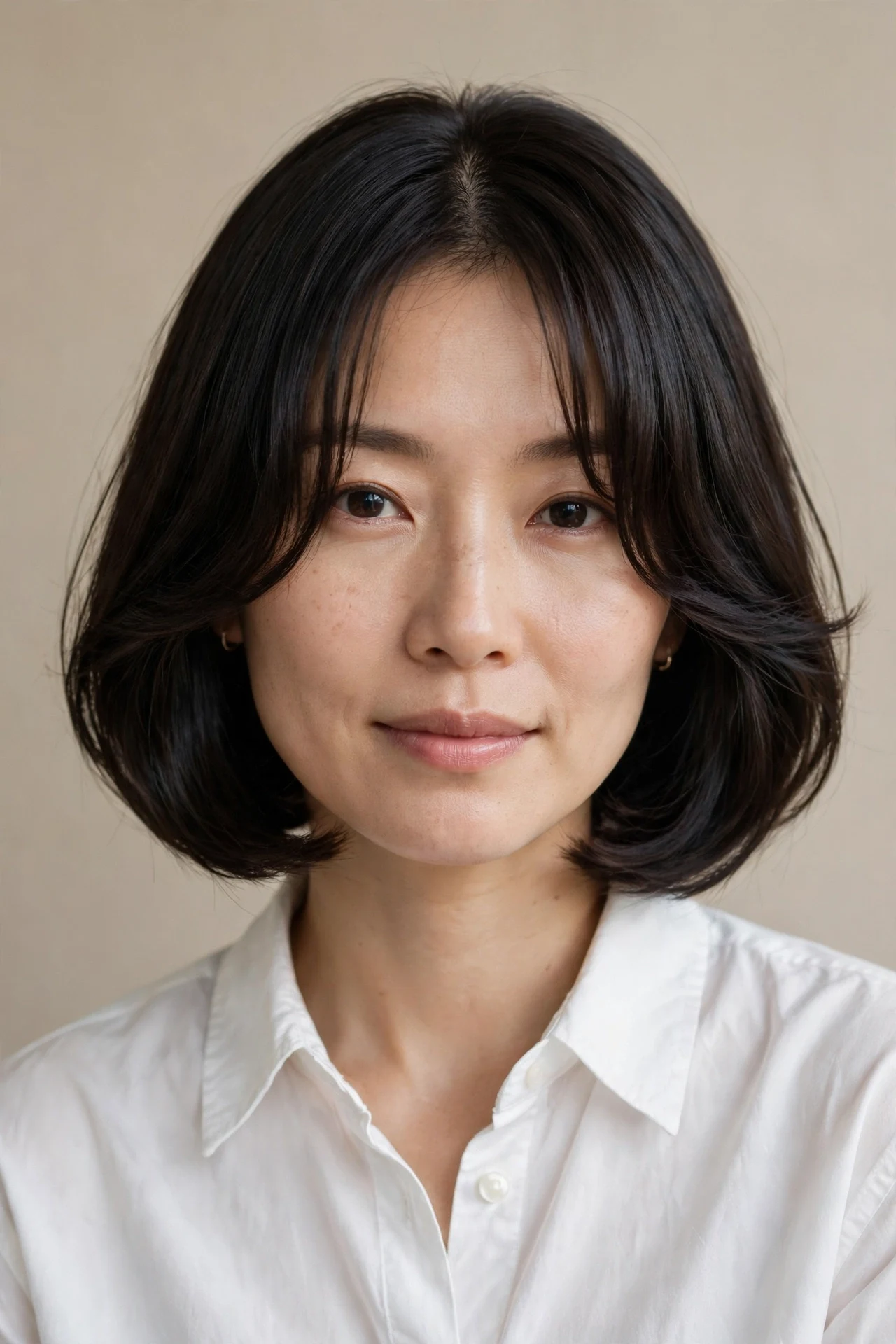
Curtain bangs part in the middle and sweep softly toward each cheekbone, blending straight into the bob. They add a gentle frame around the eyes and they suit almost every face shape in this guide.
This pairing works beautifully if you want bangs but you are nervous about commitment. Grow them out and they simply become face framing layers. For more fringe ideas at a longer length, see our long bob with long bangs guide.
Textured Bob
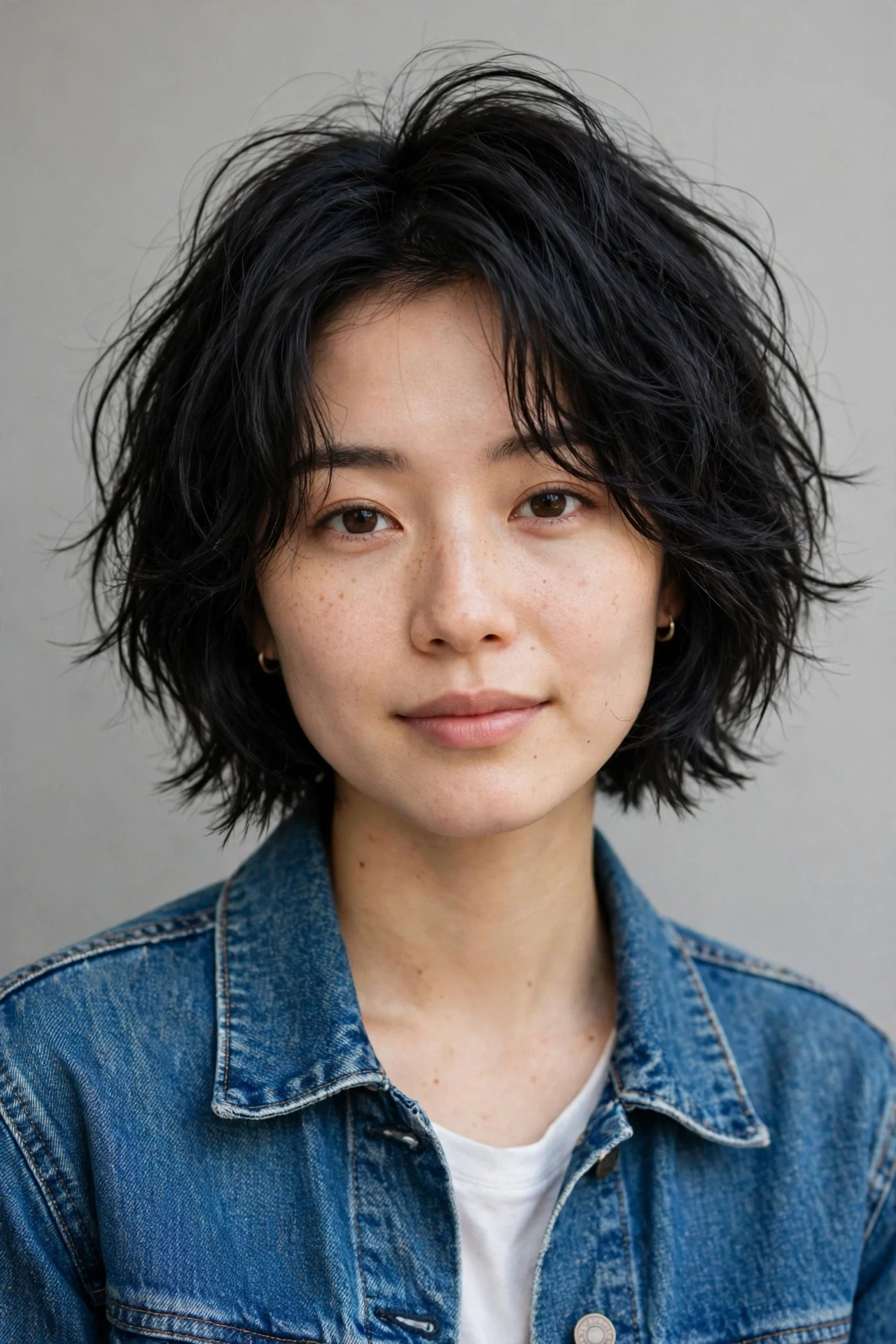
A textured Japanese bob keeps the classic shape but breaks up the ends into soft, piecey bits. The result feels relaxed and modern, like the cut you get after a good hair day rather than a stiff salon finish.
A pea sized amount of texture cream scrunched into the ends is enough. Too much product and the pieces clump together, which hides the whole point of the texture.
Bob for Round Faces

Round faces suit a japanese bob haircut best when the length sits just below the chin. That extra inch creates a longer vertical line, and a center part keeps the eye moving down rather than out to the sides.
Skip heavy volume at the cheeks and skip a chin length blunt cut with a lot of width. Sleek, straight, and slightly longer is the combination that slims and flatters here.
Bob for Long Faces

Long faces need the opposite trick: a little width and a little softness. A chin length bob with gentle side volume and a side part breaks up the length of the face and adds balance instantly.
A soft fringe helps even more. It shortens the forehead visually, so the whole face reads more proportional. Keep the ends curved inward rather than pin straight for the softest effect.
Bob for Square Faces
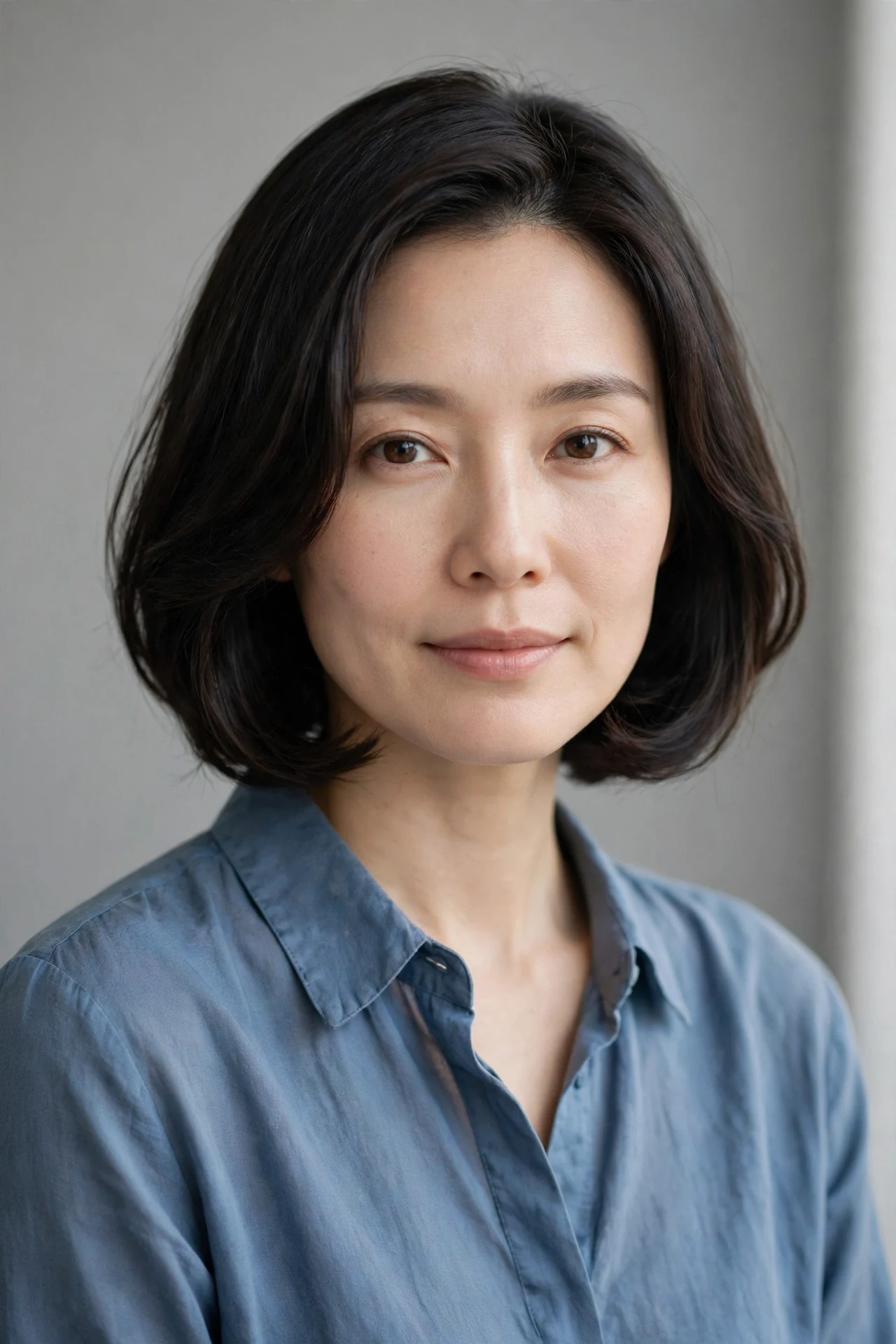
Square faces look wonderful in a Japanese bob when the ends curve inward instead of ending in a hard straight line. That curve softens the jawline while the bob itself stays neat and polished.
Ask for soft face framing layers that start around the cheekbone. They draw attention upward to the eyes and keep the jaw from being the loudest line in the cut.
Bob for Fine Hair

Fine hair and a Japanese bob are a perfect match, because the blunt hemline is the oldest trick for making hair look thicker. One solid line at the ends reads as density, even when the hair itself is fine.
The rule is simple: keep the perimeter thick and keep layers invisible and internal. Our short bob haircuts for fine hair guide uses the same principle on shorter cuts.
Bob for Thick Hair
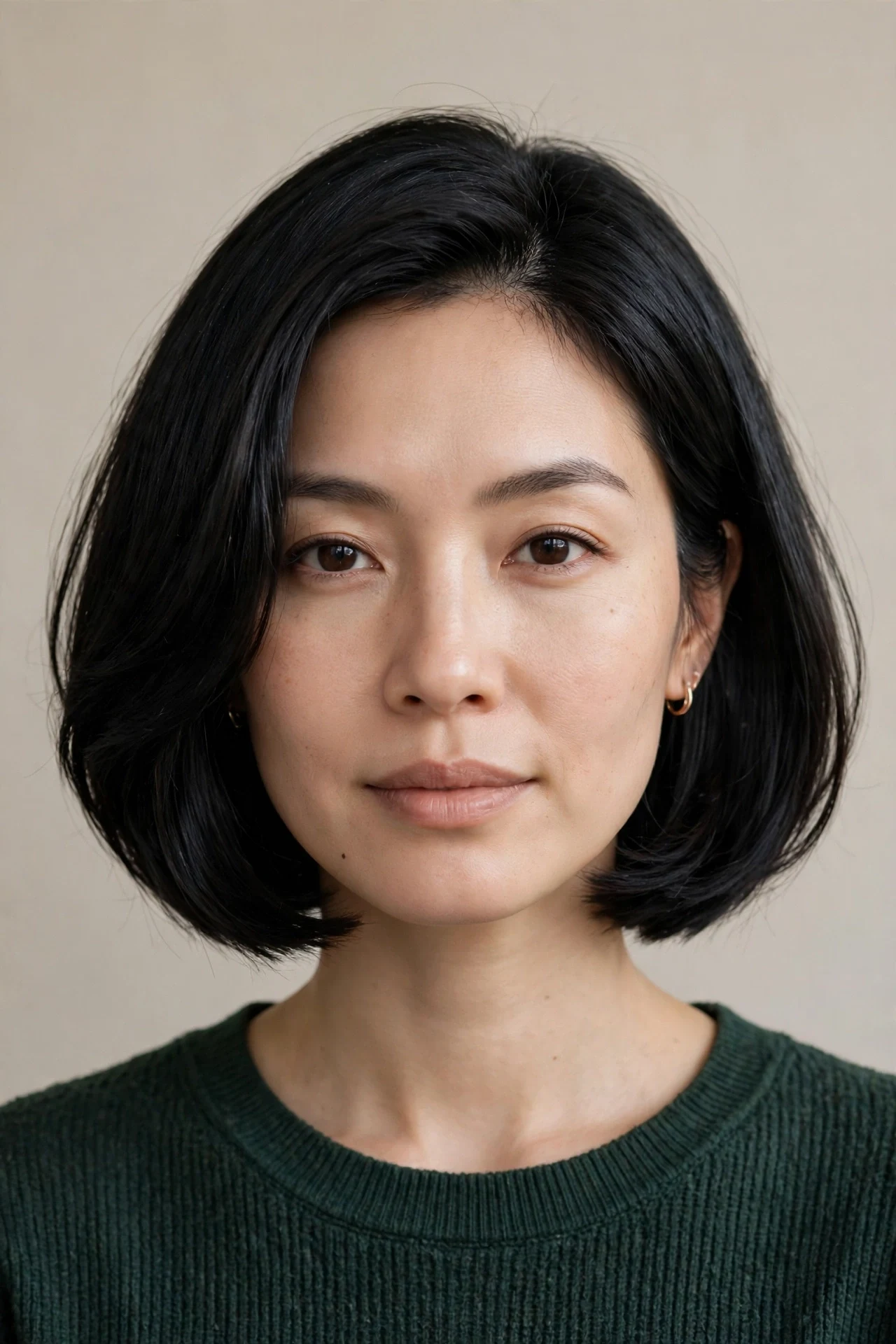
Thick hair holds a Japanese bob shape beautifully, but it needs weight taken out from inside. Internal layers remove bulk without touching the clean outline, so the bob stays sleek instead of turning into a triangle.
Tell your stylist you want the weight removed, not the length thinned. Thinning the ends directly is what causes that wispy, frizzy edge thick haired clients complain about.
Wavy Bob
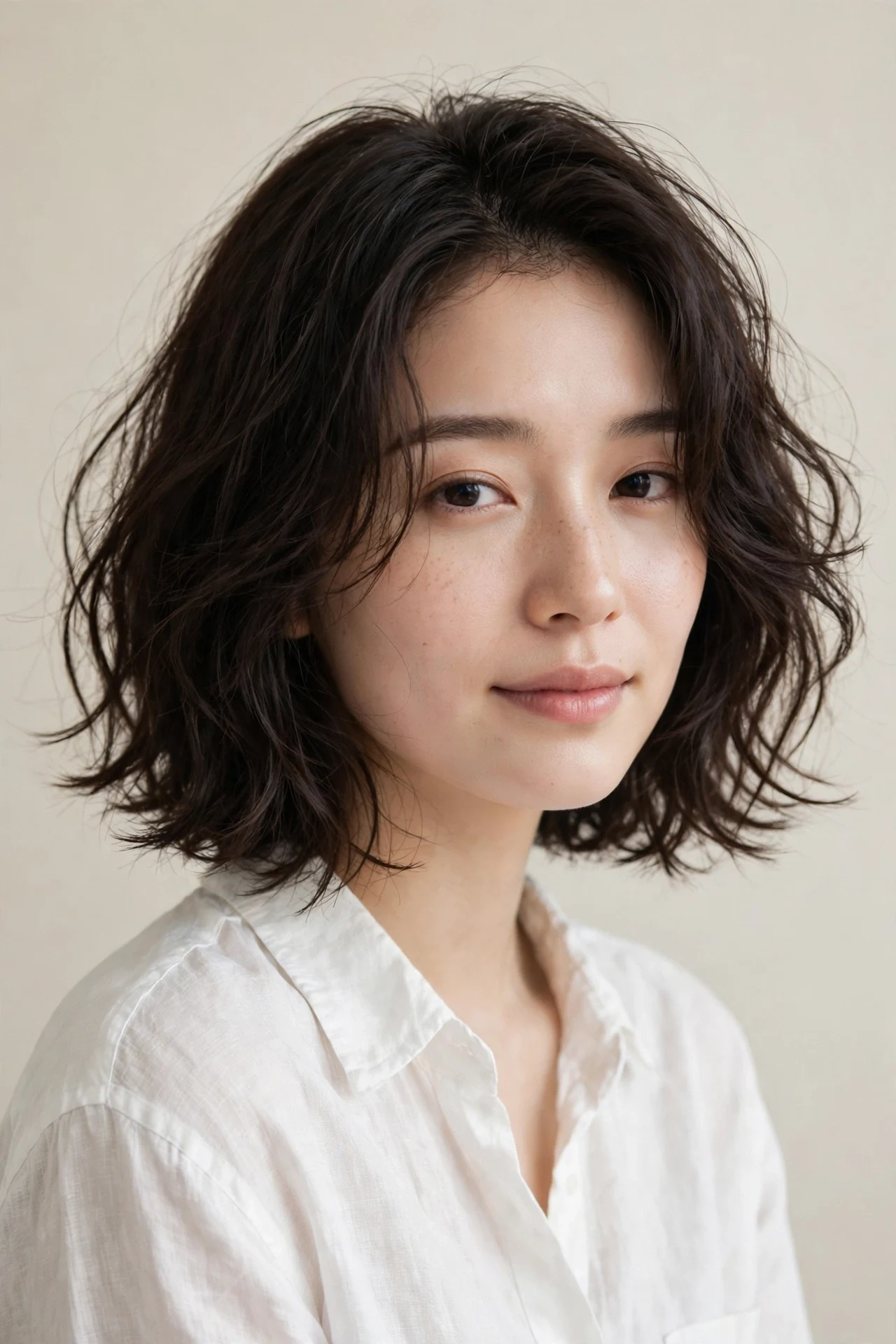
A wavy Japanese bob is proof that this cut is not only for pin straight hair. Let your natural wave do the work and keep the outline clean, and you get a soft, airy version that still reads unmistakably Japanese in shape.
Air dry with a light wave cream and scrunch gently. If you fight the wave with a flat iron every day, you will lose the texture that makes this version special.
Curly Bob
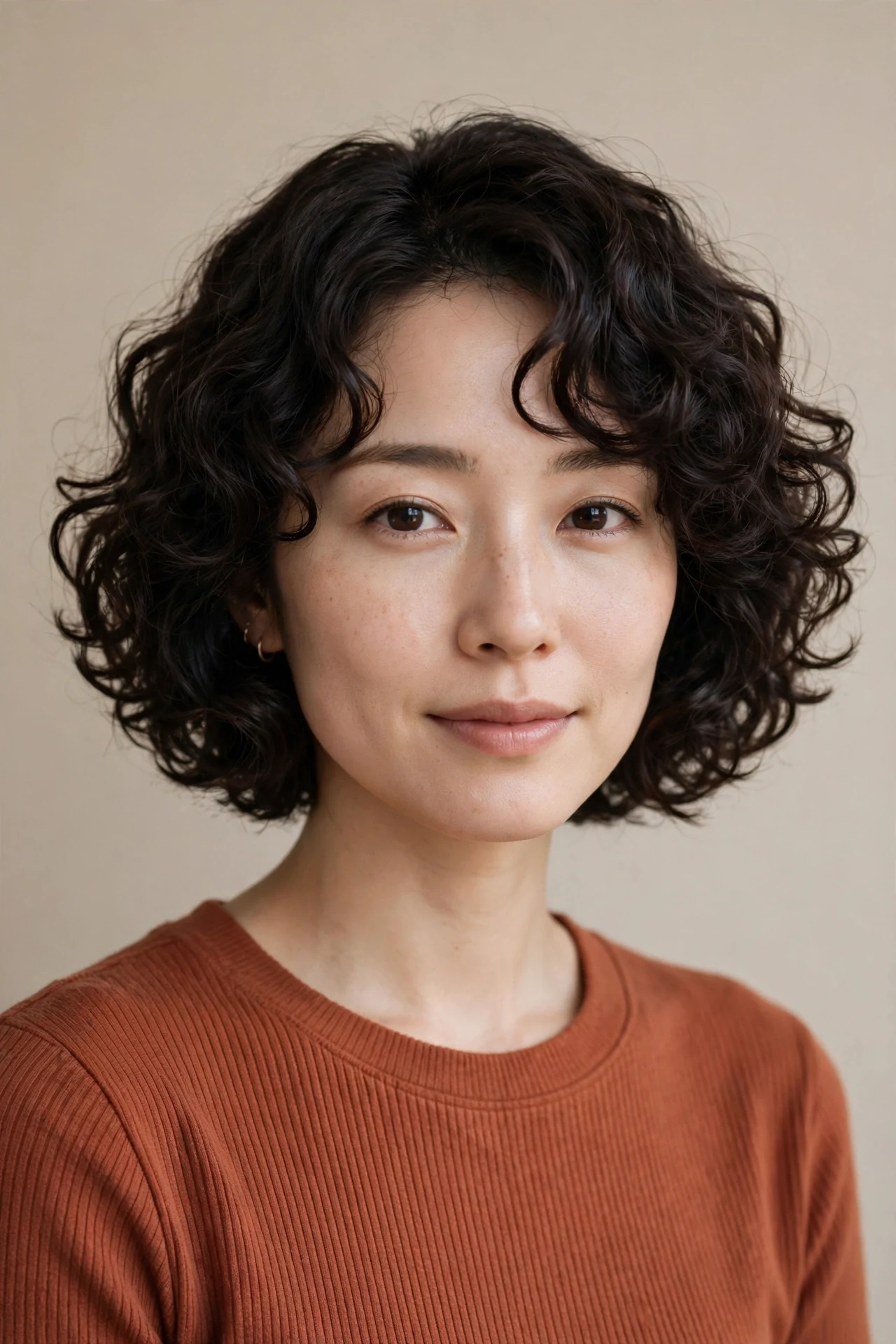
Curly hair can absolutely wear a Japanese bob, but the cut has to be done dry, curl by curl. Wet cutting ignores shrinkage, and the bob lands far shorter than planned once the curls spring up.
Keep the shape rounded and the length at the jaw or just below, so curls have room to bounce without piling up at the sides. For more curl focused inspiration, our curly bob hairstyles guide goes deeper.
Side Part Bob
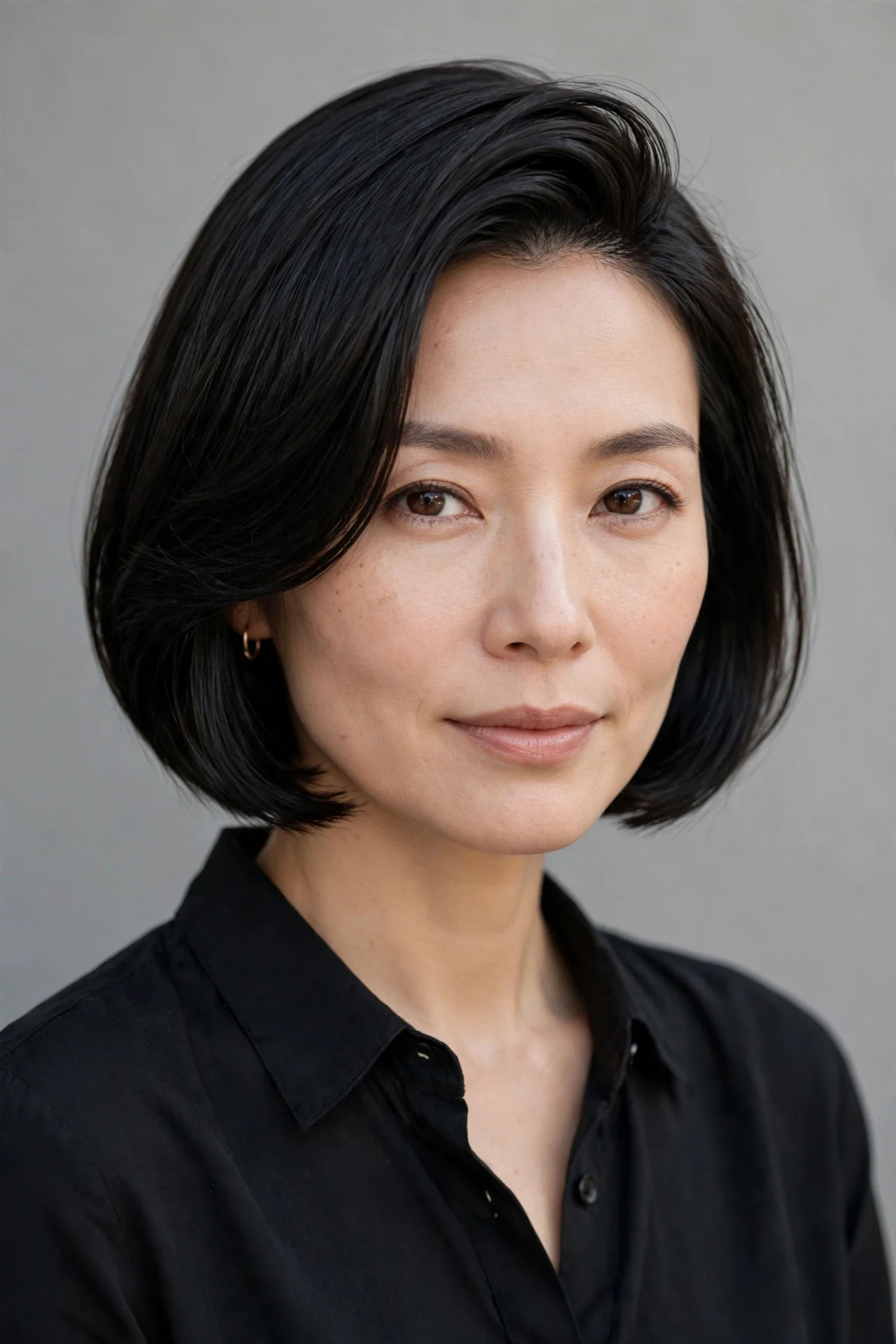
Changing nothing but the part can change the whole cut. A deep side part adds instant root volume and a little drama to a classic Japanese bob, which makes it a great evening version of your everyday cut.
It also flatters wider foreheads and adds asymmetry without any scissors. Flip the part over when the volume falls flat and you get a fresh lift in ten seconds.
Center Part Bob
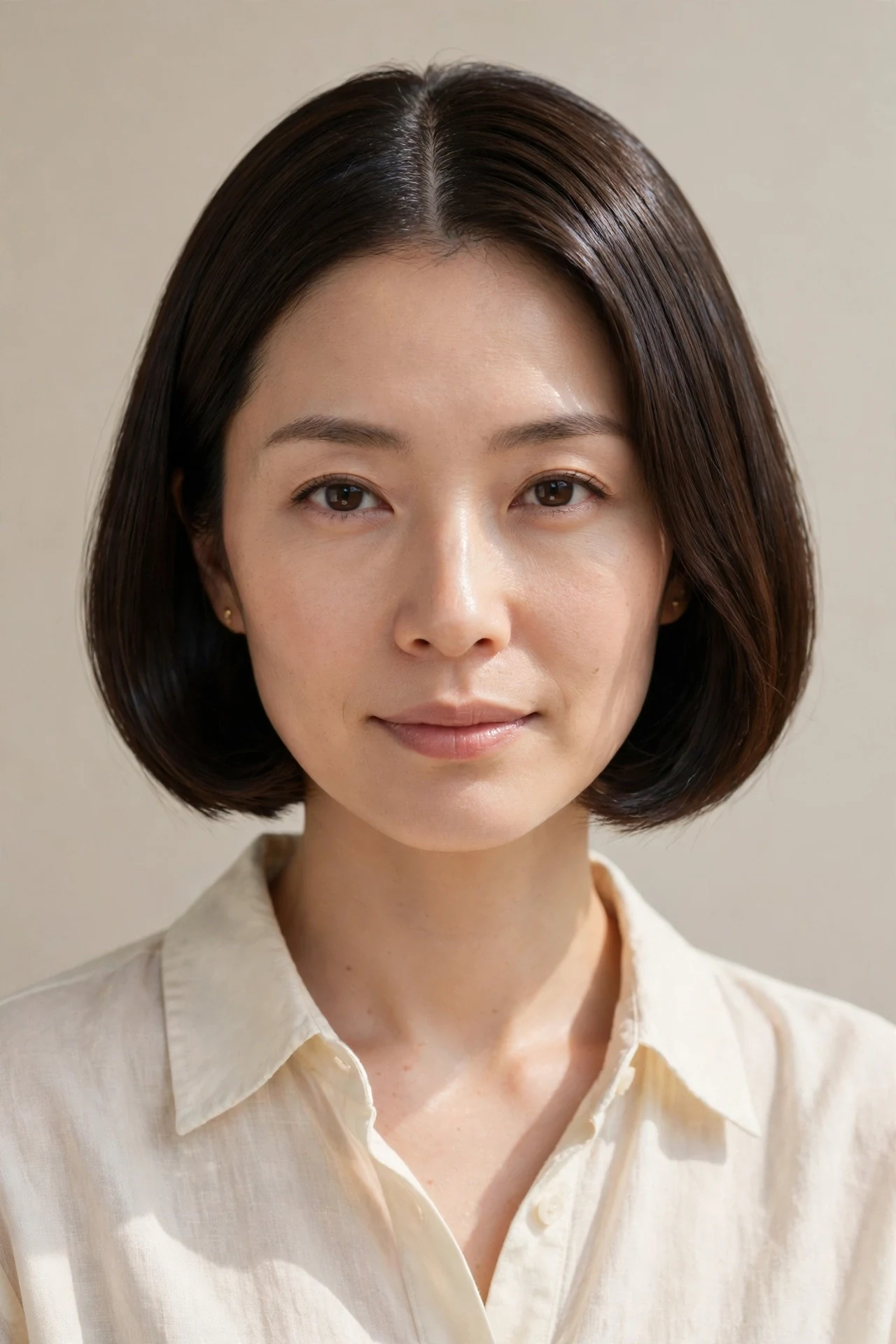
The center part is the most classic Japanese bob styling of all. Perfectly symmetrical, sleek on both sides, and quietly confident, it lets the precision of the cut speak for itself.
This part suits oval and longer faces best, and it shows off shine better than any other part. If your hairline is uneven, a slightly off center part gives you the same look with a softer feel.
Bob with Flipped Ends

Flip the ends outward and a serious bob turns playful in minutes. Use a round brush and flick the ends away from the face, or bend them out with a flat iron, then set with a light hold spray.
This finish suits a night out or a day when you want your bob to feel less formal. Keep the roots smooth so the flip looks intentional rather than accidental.
Low Maintenance Bob
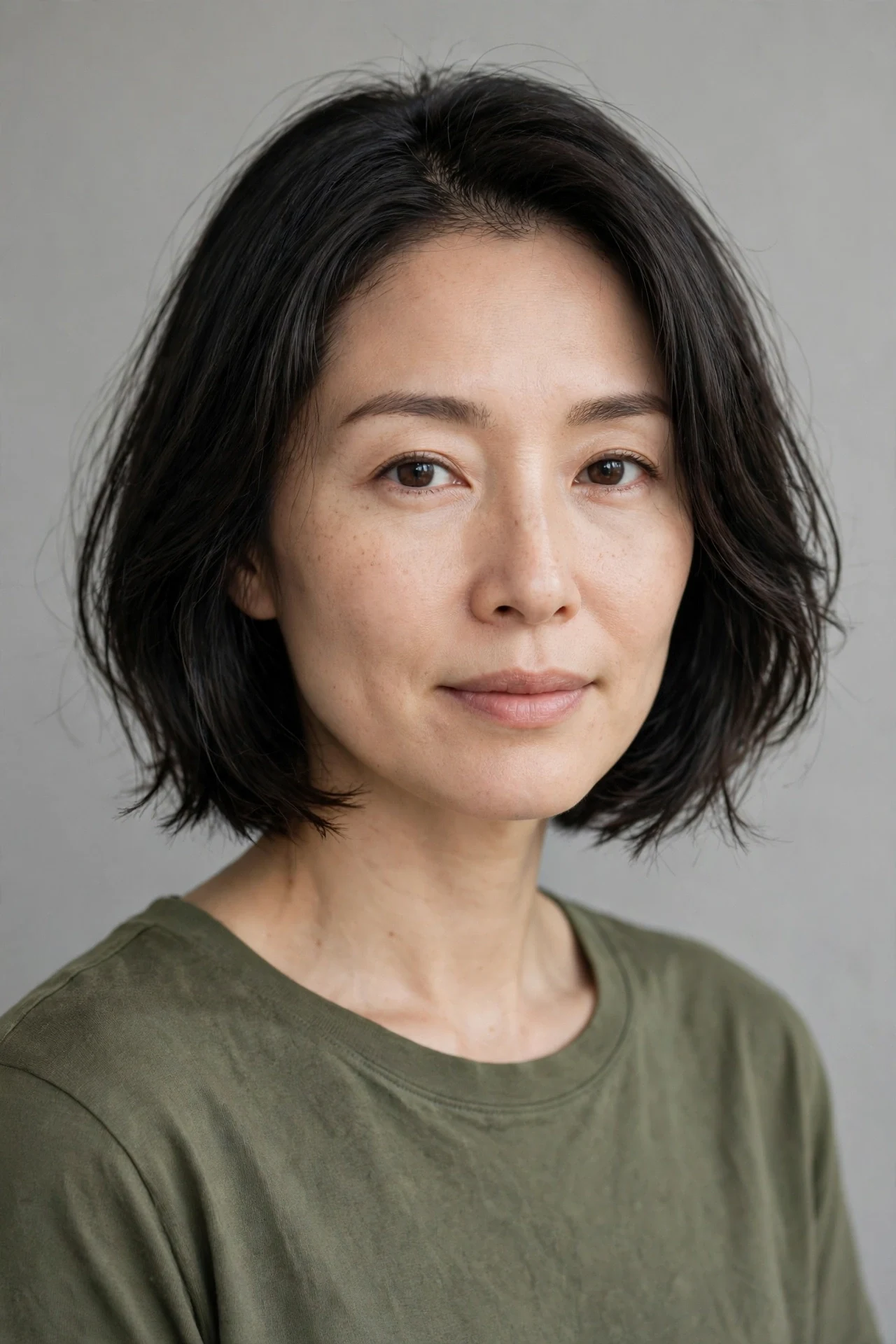
Yes, a japanese bob haircut can be low maintenance. The trick is a slightly longer length, around the chin to just below it, and a cut that falls into place as it air dries. No round brush marathon required.
Wash, add a smoothing cream, and let it dry naturally. If you want more easy routine ideas, our low maintenance fine hair French bob guide shares the same wash and go logic.
Bob for Women Over 50
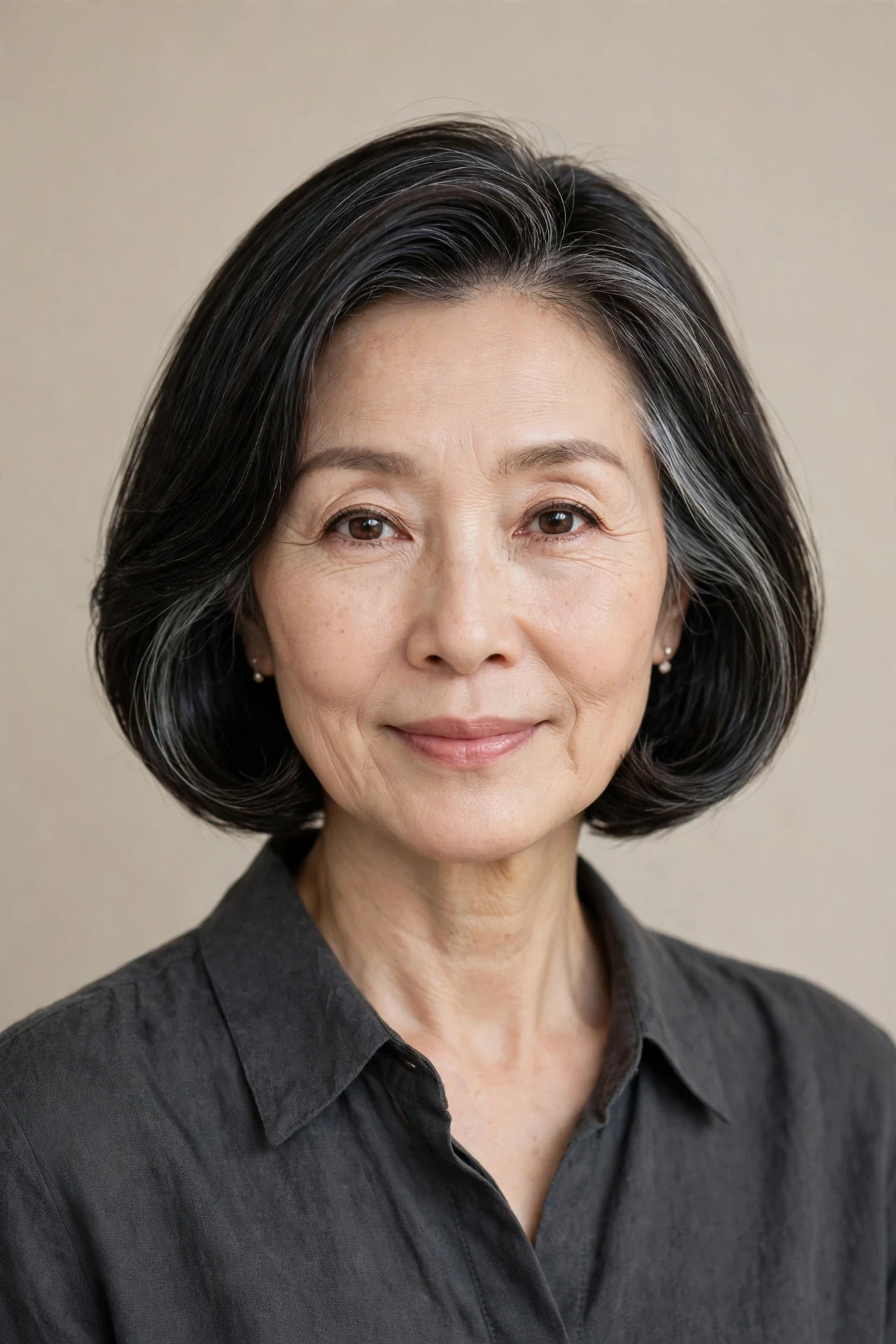
After 50, a japanese bob haircut is one of the most flattering cuts you can choose. It lifts the face, frames the cheekbones, and looks polished without looking like you tried too hard.
Keep the length at the chin or just below, keep the ends tucked inward, and keep the shine. For product help at this age, our best hair products for women over 50 guide is a useful next read.
Bob with Face Framing Layers
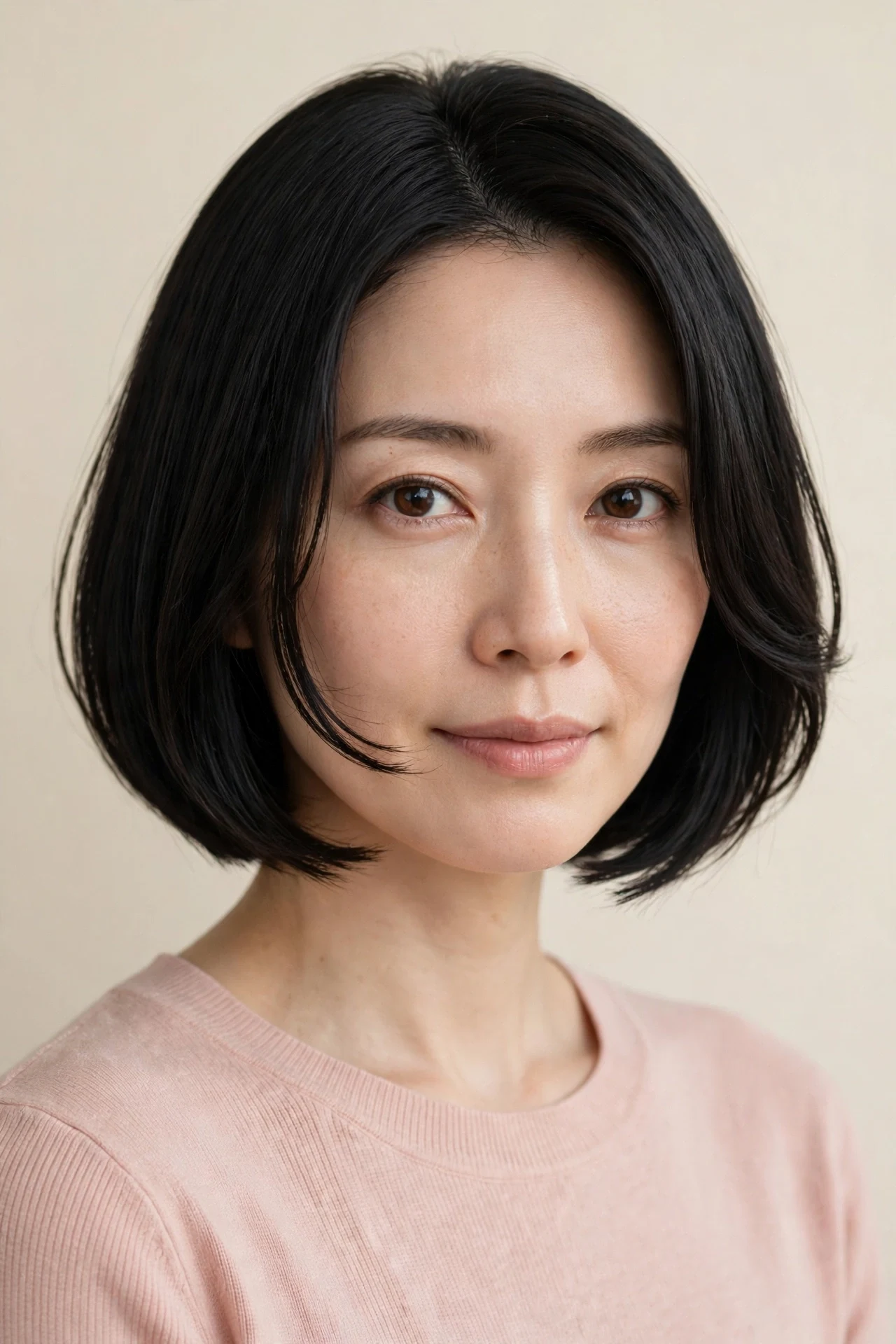
Two slightly shorter pieces in front are all it takes to transform a plain bob. They curve around the cheekbones, soften the whole cut, and draw attention to your eyes, while the back keeps its thick Japanese line.
This is the version to ask for if you love the classic shape but want something a little softer around the face. It also grows out beautifully, since the front pieces simply blend longer over time. The same framing idea shapes our Italian bob guide, where the layers are bouncier and looser.
What to Ask Your Stylist for a Japanese Bob Haircut
A good consultation names the length, the outline, and the finish instead of just showing a photo. Walk in with this script and you will walk out with the bob you actually pictured. For a second opinion from the beauty press, Byrdie regularly covers precision bobs and glass hair finishes from working stylists.
- Length: "I want a Japanese bob that ends at [the jaw / the chin / just below the chin / the collarbone]."
- Perimeter: "Keep the outline blunt and clean, and do not thin out the ends."
- Layers: "Add [no layers / soft invisible layers / internal layers for weight removal only]."
- Bangs: "I want [no bangs / wispy see through bangs / curtain bangs] blended into the front."
- Part: "I usually part my hair [in the middle / on the side], please cut it to fall that way."
- Finish: "I want a [glass smooth / soft natural / lightly textured] finish for everyday styling."
- Maintenance: "How often should I come back to keep this exact edge?"
6 Japanese Bob Mistakes to Avoid
Most Japanese bob regrets come from small choices made before the scissors even start. Avoid these six and your bob will behave:
- Cutting curls wet. Wet cutting ignores shrinkage, and the bob lands far shorter than planned once dry.
- Thinning the ends to remove bulk. It creates wispy, frizzy edges. Ask for internal layers instead.
- Skipping trims past 8 weeks. The clean edge is the whole point, and it softens into a shapeless bob without regular trims.
- Choosing a chin length blunt cut on a round face. It adds width. Go just below the chin instead.
- Overloading shine products. Too much serum flattens fine hair and makes the bob look greasy rather than glossy.
- Forgetting the back view. A Japanese bob lives or dies by its back outline, so ask your stylist to show you the back before you leave.
What is a japanese bob haircut?
A japanese bob haircut is a precision bob that ends between the jaw and the collarbone, with a clean blunt outline, healthy shine, and ends that fall neatly inward or straight. Classic versions are chin length, while longer versions reach the collarbone.
Is a japanese bob haircut good for fine hair?
Yes, especially with a blunt perimeter and invisible internal layers. The solid hemline makes fine hair look denser, and the chin length keeps enough weight to avoid wispy ends.
How do I style a japanese bob haircut at home?
Blow dry smooth with a paddle brush for a sleek look, use a round brush to tuck the ends inward, or air dry with a smoothing cream for a low maintenance finish. A flat iron over small sections gives the glass hair version its mirror shine.
What should I ask my stylist for?
Name your exact length, ask for a blunt clean outline, say whether you want no layers or invisible layers, and state your fringe and part. Bringing the script in this guide helps your stylist match the shape you pictured.
How often does a japanese bob haircut need a trim?
Every 6 to 8 weeks is ideal. The precision edge grows out faster than a layered cut, so regular trims keep the outline sharp and the ends healthy.
Does a japanese bob haircut suit every face shape?
Almost every face shape can wear one, but the length and part should change. Round faces suit below chin length, long faces suit chin length with side volume, and square faces suit curved inward ends that soften the jaw.
Final Thoughts
The japanese bob haircut earns its place as a timeless classic because it asks so little and gives so much back. Pick your length from the face shape sections, pick your finish from glass, blunt, or textured, take the stylist script to your appointment, and save your favorite of the 20 styles above. For the bigger picture of where this cut sits among all bob styles, our main bob trends guide is the next read.

Sana Malik is a hair and beauty writer with a deep love for the bob in all its forms from sharp French bobs to soft, lived-in lobs. After years of experimenting with her own short hair and helping friends figure out what actually suits their face shape, she started writing to cut through the confusing advice out there. At BobHairTrends, she breaks down each cut into simple, honest guides: how to ask for it, how to style it at home, and who it really flatters. When she isn’t researching the latest trends, she’s usually testing a new styling product or convincing someone it’s finally time for the chop.