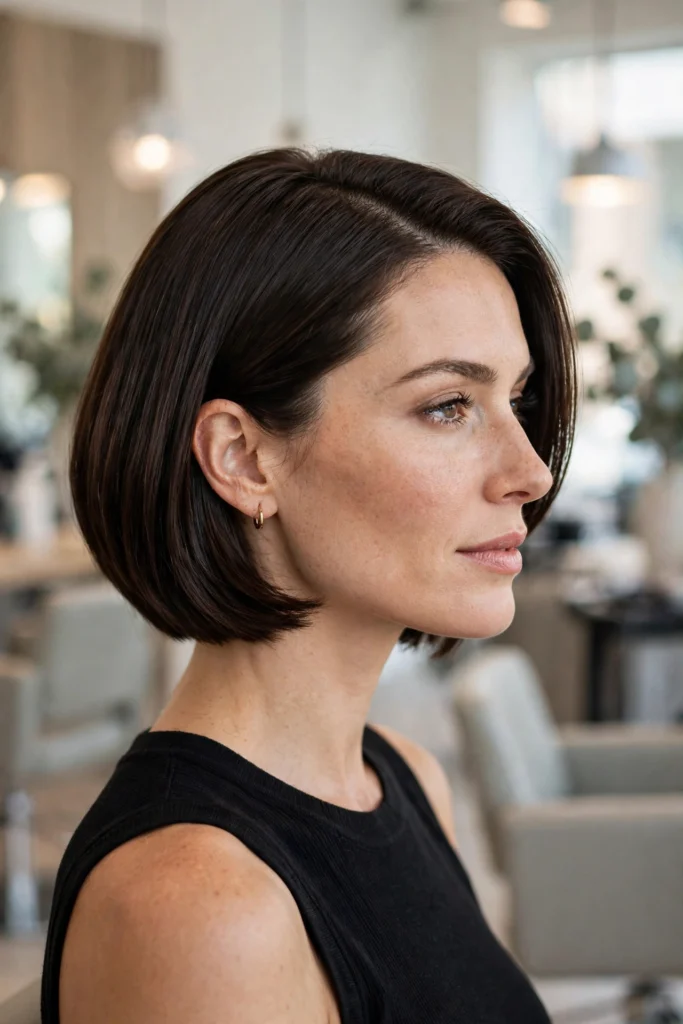


If you are growing out a bob haircut right now, first things first: you are not stuck in an awkward phase, you are in a transition, and transitions have a plan. Hair grows about half an inch a month, which means a chin length bob can reach a lob in roughly six to nine months, and every stage along the way can look good on purpose.
This guide walks you through all of it, stage by stage. You will learn when to trim and when to leave it alone, how to style the flip, the mullet middle, and the too-short front pieces, and exactly when to declare yourself a lob and stop growing. No drastic chops, no months of hiding under hats, just a steady, flattering path forward.
- Hair grows about half an inch a month, so a chin length bob reaches a lob in roughly six to nine months.
- Dusting trims every ten to twelve weeks remove splits without losing your hard earned length.
- Waves, bends, tucks, clips, and braids can make every awkward stage look intentional.
- Face-framing layers and curtain bangs are the two best fixes for a front that lags behind the back.
- The lob milestone, when front pieces brush the collarbone, is the natural moment to decide whether to keep growing or stay put.
20 Best Grow-Out Stages, Styles, and Fixes
The Fresh Bob Baseline

Start by loving the cut you already have. A chin length bob with a clean hemline is the best possible launchpad, because every later stage grows from that shape. If your starting cut is a French bob, our guide to what a French bob really is helps you name the length and texture you are growing from.
The Awkward Flip Stage

Somewhere around week six, the ends hit your neck and flip outward on their own. It feels messy, but it is actually proof of progress. Your hair has simply outgrown the shape that used to hold it flat, and that flip is the first sign of real length.
Bend the Ends Under

A round brush is your best friend at this stage. Blow dry the ends under in small sections, then let them cool before you touch them. The bend lasts longer that way, and it turns the flip you hated into a soft, intentional curve.
The Mullet-Look Middle

The back always seems to sprint ahead while the front lags behind, which can look a little mullet-like for a few weeks. Resist the urge to chop the back off. If the shape really bothers you, a soft bixie haircut can bridge the gap while the front catches up.
Face-Framing Layers to the Rescue

Two gentle layers around your face change everything. They break up the heavy, one-length grow-out shape and give the front something to do while it gains length. Ask for layers that start at the cheekbone, not higher, so you keep your thickness. Our long layered bob for fine hair guide shows how layer placement protects finer textures.
Curtain Bangs Through the Grow Out

Curtain bangs are the grow-out cheat code. They blend the shortest front pieces into the rest of the cut, so nothing looks stuck at an odd length. Part them in the middle, bend them away from your face, and they frame everything beautifully. More fringe ideas live in our long bob with long bangs guide.
The Half-Up Escape

On days when nothing sits right, pull just the front sections up and clip them. The back stays loose, so you still get the length you have earned, but the face is clear and the style looks deliberate. A small claw clip is gentler than a tight elastic and will not dent the hair.
Textured Waves Hide Uneven Length

Texture is forgiveness in hairstyle form. Loose waves blur a hemline that is not perfectly even yet, which is exactly what a grow-out needs. Scrunch in a little salt spray, let it air dry, and the uneven bits simply disappear into the movement.
The Sleek Tuck Behind the Ears

For work days and dressier moments, tuck one side behind your ear and smooth the other side flat. It looks polished in about thirty seconds, and it shows off earrings beautifully. A drop of smoothing serum on the ends keeps the tuck from puffing back up.
Braids and Twists for Bad Length Days

Two tiny front braids, twisted back and pinned, rescue the days when the front is too short to tuck and too long to ignore. They also keep hair out of your face at the gym or on windy days, without forcing the whole cut into a ponytail it is not ready for.
The Dusting Trim Schedule

Here is the counterintuitive truth: growing out a bob haircut goes faster when you trim it. A dusting, just a quarter inch off the very ends every ten to twelve weeks, removes splits before they travel up and snap off length. You keep the growth and lose only the damage.
Growing Out Bangs Too

If your bob came with bangs, they need their own plan. Sweep them to one side while they reach cheekbone length, then blend them into face-framing layers. Pinning them back with a pretty clip is a perfectly good stage too, not a failure of styling.
Growing Out a Bob Haircut: The Lob Milestone

This is the moment it all pays off. When the front pieces finally brush your collarbone, you are no longer growing out a bob, you own a lob. Everything gets easier from here: ponytails work, waves hold, and the awkward stage is officially behind you. Our long bob haircut guide is the perfect next read at this milestone.
The Blunt Lob Landing

If you loved the sharpness of your original bob, land on a blunt lob. Ask your stylist to even up the hemline at collarbone length and keep layers out of it. The result looks expensive and intentional, like you chose this length all along. The long bob haircut guide covers blunt versus layered finishes in detail.
The Layered Lob Transition

Prefer movement over sharp lines? A layered lob keeps the length you grew but adds swing. Long layers through the mid lengths stop the cut from feeling heavy, and they make air drying look good, which matters when you are tired of styling.
Fine Hair Grow Out

Fine hair needs a different grow-out rule: protect the hemline at all costs. Skip heavy layering, keep the ends blunt, and let the thickness build as length adds weight. A little root mousse and a round brush do more for fullness than any layer ever will. For more fine-hair strategy, see our short bob haircuts for fine hair and low maintenance fine hair French bob guides.
Curly Hair Grow Out

Curls play by their own rules, because shrinkage hides growth for months and then reveals it all at once. Get dry cuts, curl by curl, so the shape is judged at its real length. Resist straightening to check progress, since heat hides the true shape. Our curly bob hairstyles guide and long bob hairstyles for black hair guide both cover curl-first cutting.
Thick Hair Grow Out

Thick hair grows out with volume to spare, sometimes too much. Internal layers, weight removed from inside the cut without touching the outline, keep the shape from turning into a triangle. Tell your stylist you want debulking, not thinning at the ends, and the grow-out stays smooth.
Gloss and Color During the Transition

A clear gloss or a root shadow refresh can make months of growing feel brand new without cutting anything. Gloss adds shine and seals the ends, while a soft root blend hides regrowth lines. It is the lowest risk way to feel excited about your hair again mid-journey. Our hair color for bob hairstyles guide has color ideas for every stage.
The Decision Point: Keep Growing or Stay a Lob

Once you reach a lob, pause and ask yourself what you actually want. Many people discover the lob was the destination all along, and they happily stay there with regular trims. If you still want longer hair, you now have a healthy, even base to grow from. Either answer is a win, because you grew it on purpose. For the bigger picture of where your cut fits, our main bob trends guide maps every bob family in one place.
Your Grow-Out Trim Schedule
Book these appointments in advance so a busy month never turns into six months of split ends. A dusting is not a haircut, and a good stylist will show you the tiny amount coming off before they start.
| Stage | When | What to ask for |
|---|---|---|
| Fresh bob to neck length | Weeks 0 to 8 | No trim yet, just styling help for the flip |
| Neck to shoulder | Weeks 8 to 16 | First dusting, a quarter inch, plus face-framing layers if needed |
| Shoulder to collarbone | Months 4 to 6 | Dusting plus evening up the back and front |
| Lob and beyond | Every 10 to 12 weeks | Shape maintenance, or keep dusting if still growing |
What to Ask Your Stylist While Growing Out Your Bob
Walk in with this script and you will leave with length intact. Say it plainly: you are growing your hair out, and the trim is for health, not for shape change. For more expert styling inspiration, browse the hair guides at Byrdie.
- Goal: "I am growing my bob out to a lob, please do not remove length today."
- Trim: "Just dust the ends, a quarter inch at most, to remove splits."
- Layers: "Add face-framing layers starting at the cheekbone only, nothing shorter."
- Back: "Please even up the back without cutting it back to bob length."
- Texture: "Cut my hair dry if it is curly, so shrinkage is accounted for."
- Next visit: "When should I come back for the next dusting?"
How long does it take to grow a bob into a lob?
Hair grows about half an inch per month, so a chin length bob usually reaches collarbone lob length in six to nine months, depending on your starting length and how much you trim along the way.
How often should I trim while my bob grows out?
Every ten to twelve weeks is the sweet spot. Ask for a dusting of just a quarter inch, which removes split ends before they travel up the hair shaft and snap off length you worked hard to grow.
What is the awkward stage, and how do I style through it?
The awkward stage is when ends hit the neck and flip outward, usually around week six. Bend ends under with a round brush, add waves for texture, tuck one side behind your ear, or use a claw clip for the front sections.
Should I get layers while my bob grows out?
Light face-framing layers help, especially if the front lags behind the back. Keep layers long, starting at the cheekbone, and avoid heavy layering on fine hair, where it can thin out the hemline.
When should I stop growing and keep a lob?
When the front pieces brush your collarbone and the cut ties back comfortably, you have reached lob territory. Many people stay here happily, since a lob offers bob polish with long hair versatility.
Can I grow out a bob if my hair is curly?
Yes, with dry cuts judged curl by curl so shrinkage is accounted for. Expect growth to reveal itself in stages rather than steadily, and avoid straightening just to check length, since heat hides the true shape.
Final Thoughts
Growing out a bob haircut is mostly a patience project with a styling toolkit attached. Trim just enough to stay healthy, lean on waves and layers through the middle stages, and celebrate the lob milestone when it arrives. Whether you stay at a lob or keep growing past it, you will get there with your hair in better shape than when you started, and that is a grow-out done right.

Sana Malik is a hair and beauty writer with a deep love for the bob in all its forms from sharp French bobs to soft, lived-in lobs. After years of experimenting with her own short hair and helping friends figure out what actually suits their face shape, she started writing to cut through the confusing advice out there. At BobHairTrends, she breaks down each cut into simple, honest guides: how to ask for it, how to style it at home, and who it really flatters. When she isn’t researching the latest trends, she’s usually testing a new styling product or convincing someone it’s finally time for the chop.