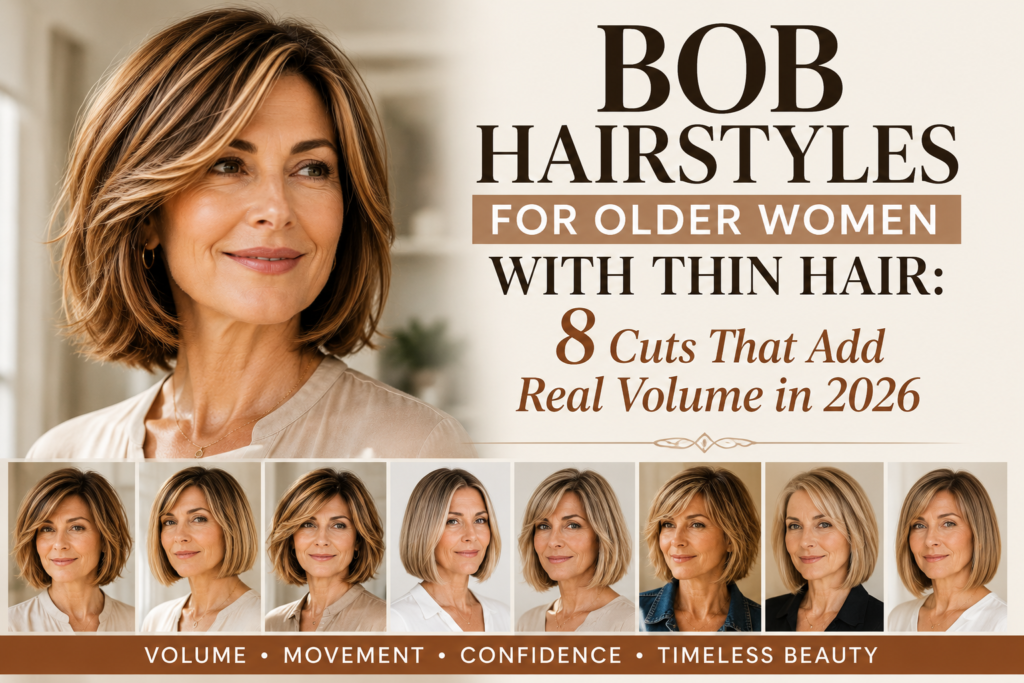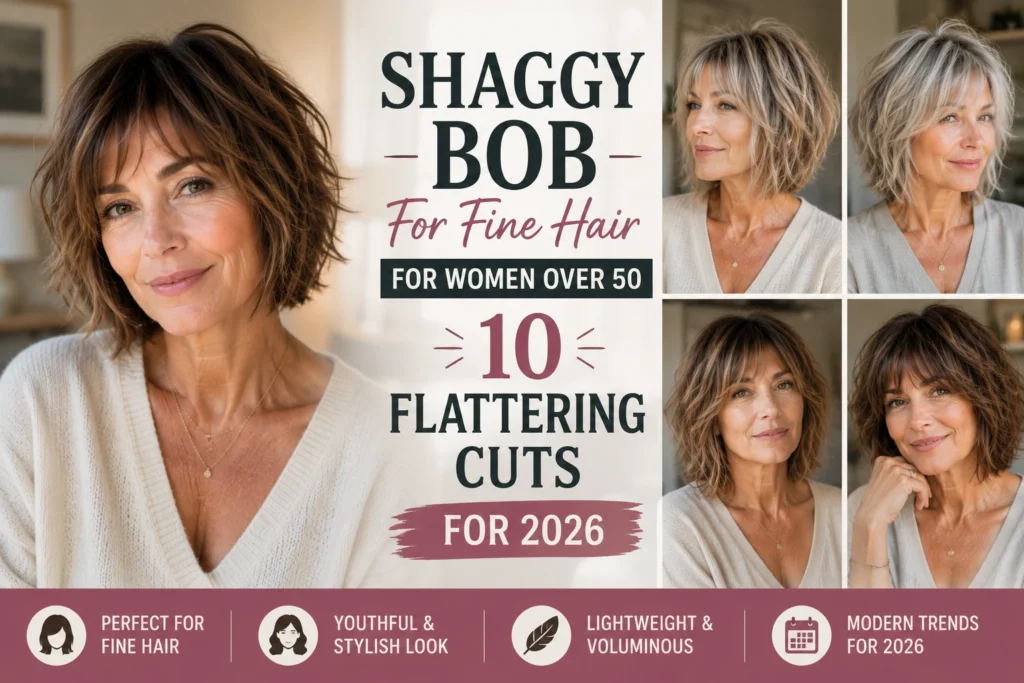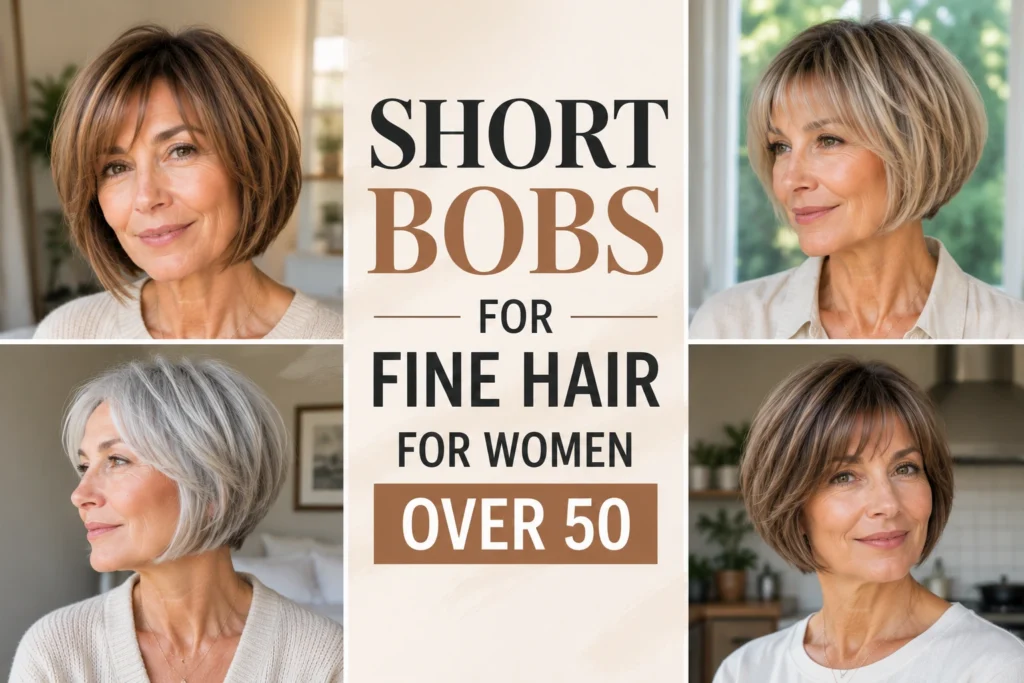

Here’s the thing about 2026: stylists finally stopped pretending everyone has thick hair.
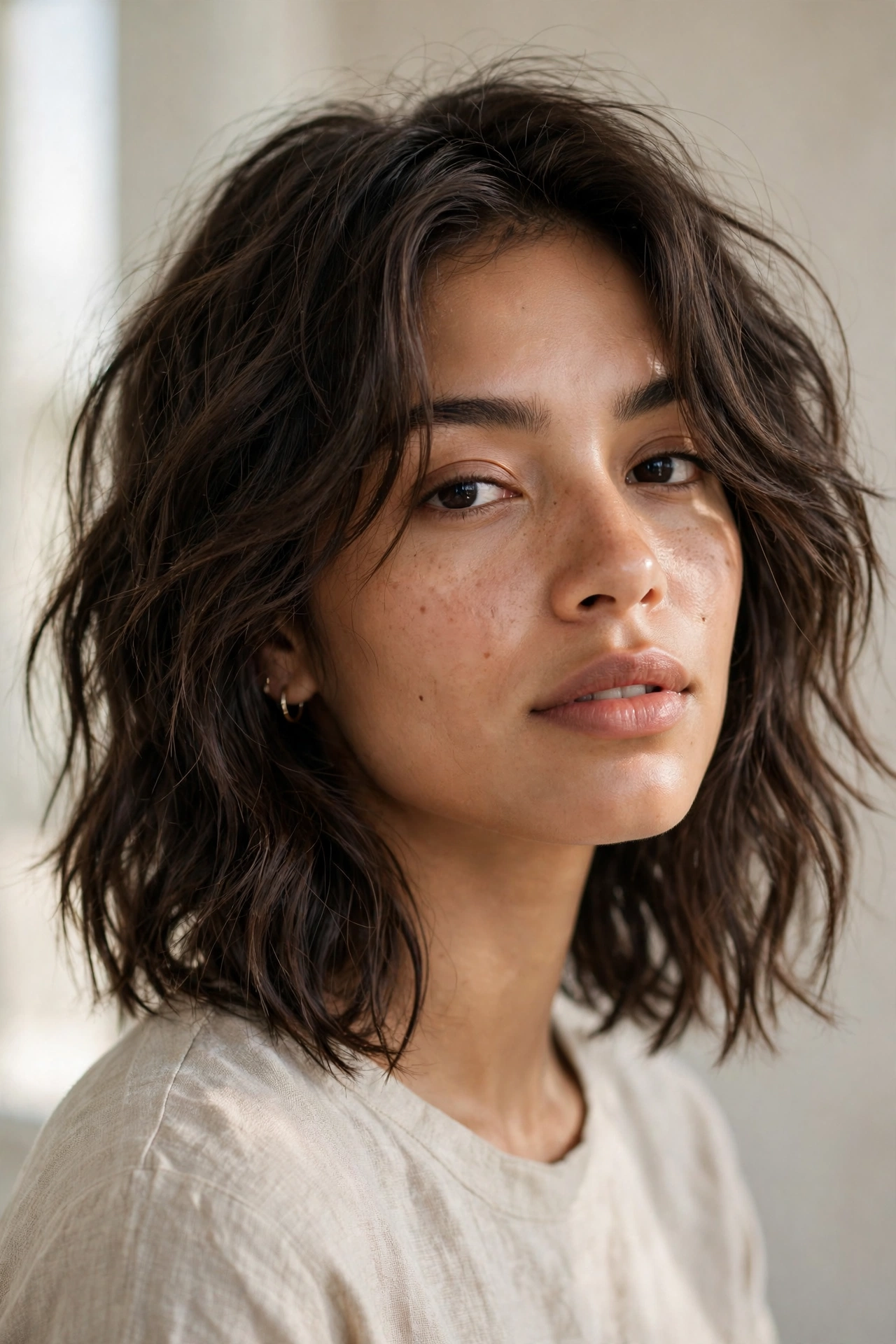
For years, the “it” bob was glassy, one-length, and brutally honest about density — gorgeous if you had it, punishing if you didn’t. This year the pendulum swung hard the other way. The cut all over your feed right now is the long choppy bob for fine hair — a collarbone-grazing bob carved with shattered, piece-y layers that manufacture the fullness fine hair doesn’t naturally have.
I’ve spent months watching this trend evolve in salons and on real heads (not just editorial shoots). Below are the 20 versions worth knowing, grouped into four wearable clusters — with honest notes on who each one suits and what the upkeep really looks like. Screenshot your favorites before your appointment.
Cluster One: The Lived-In Lob
If 2026 has a signature silhouette, this is it. Grown-out texture, soft bends, ends that look better slightly imperfect — like your hair just happens to look this good.
Fine hair eats this up. Choppiness creates separation between pieces, and separation is what the eye reads as density. Every cut in this cluster is built on that one idea.
1. The Beachy Lived-In Lob
You’ve seen this one. It’s the hair in half the “effortless” photos you saved this year — and unlike most Pinterest hair, it’s actually achievable on fine strands.
The magic is in the layering: choppy pieces through the mid-lengths and ends, with invisible internal layers taking weight out without thinning the outline. Tell your stylist “point-cut ends, keep the perimeter solid.” That’s the whole sentence that matters.
Styling is almost insultingly easy. Salt spray on damp hair, scrunch, done.
Trend meter: 10/10 — the most requested lob of the year, and it earned it.
2. The Air-Dried Undone Lob
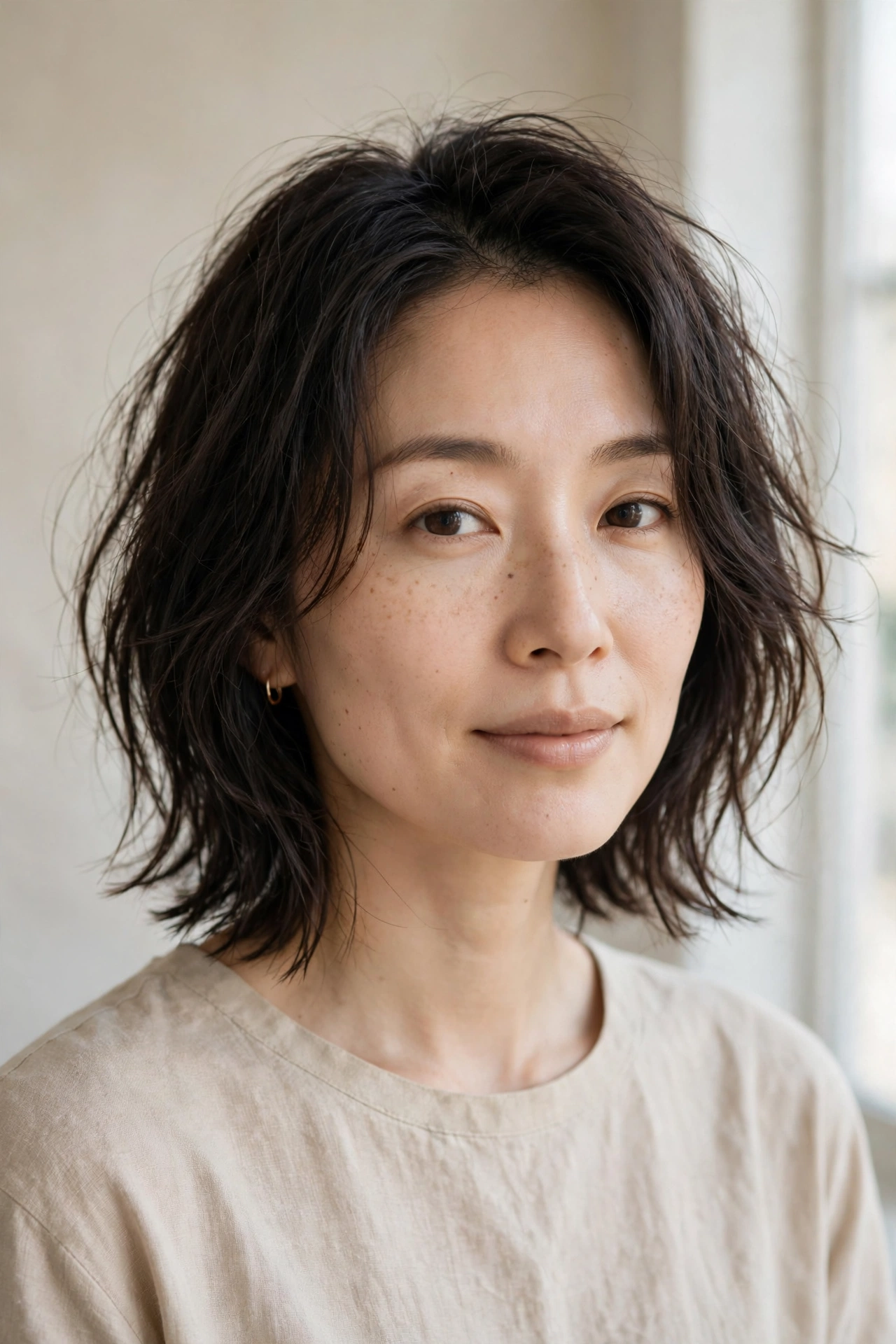
This one’s for the woman who owns one hot tool and resents it. The cut does everything: shattered ends and long choppy layers mean fine hair falls into soft, separated pieces with zero heat.
Wash it, scrunch in a little mousse, and either diffuse for five minutes or just… leave. The layers are long enough that frizz stays minimal and ends keep their weight. Second-day hair somehow looks better than first-day hair, which feels like cheating.
Wear it if your mornings are chaos and your blow-dryer is decorative.
3. The Center-Part Lived-In Chop
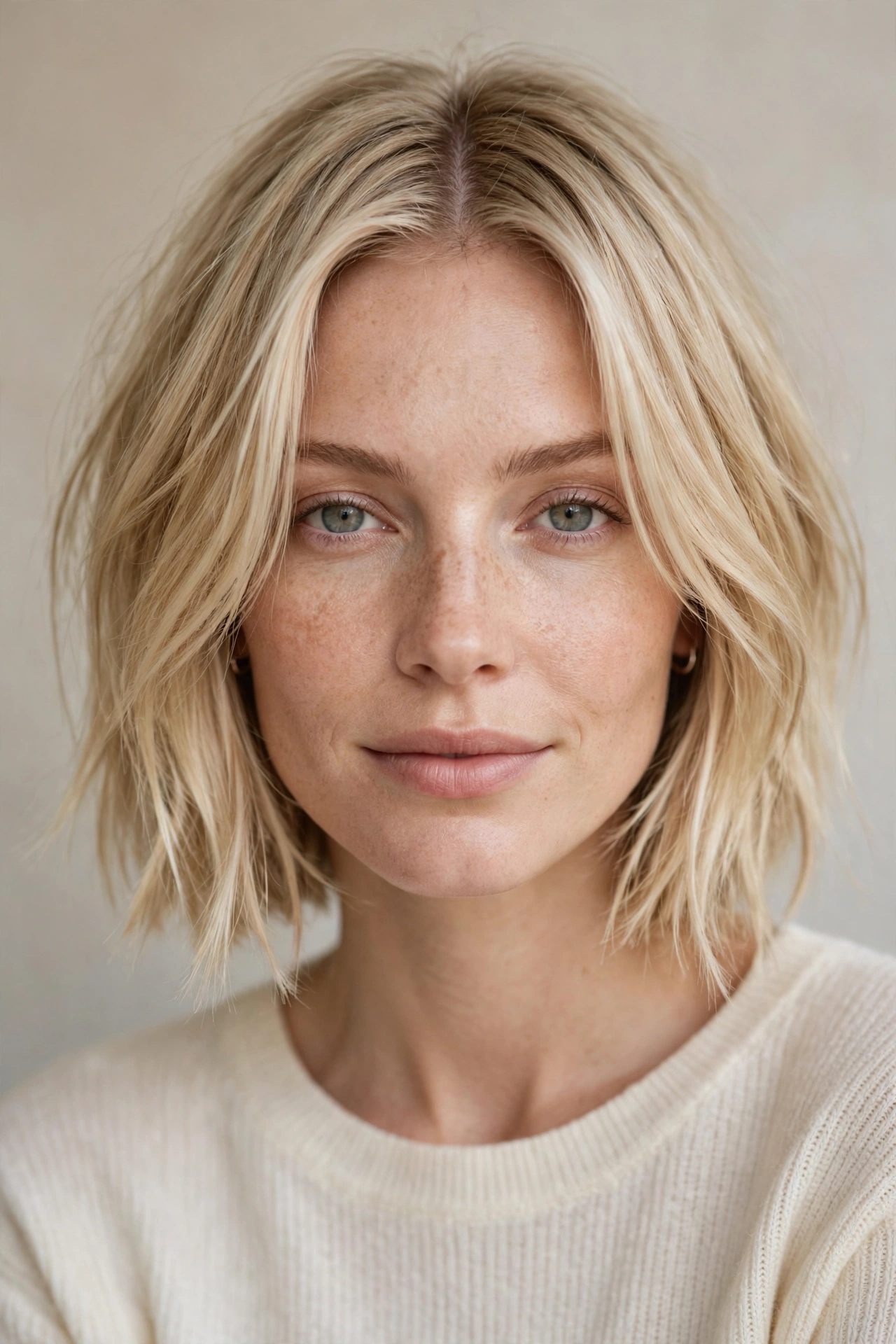
Remember when everyone declared the center part dead? It’s back — softer this time, and weirdly perfect for fine hair.
A clean center part with choppy, face-skimming layers gives structure without stiffness. And here’s the trick nobody mentions: the part line itself creates lift at the crown, so thin hair looks fuller the second you flip it into place. It also happens to look fantastic with glasses and strong brows — the symmetry frames them.
Best on straight to slightly wavy textures. Very curly hair will fight the part, so know your texture.
4. The Copper Lived-In Chop-Lob
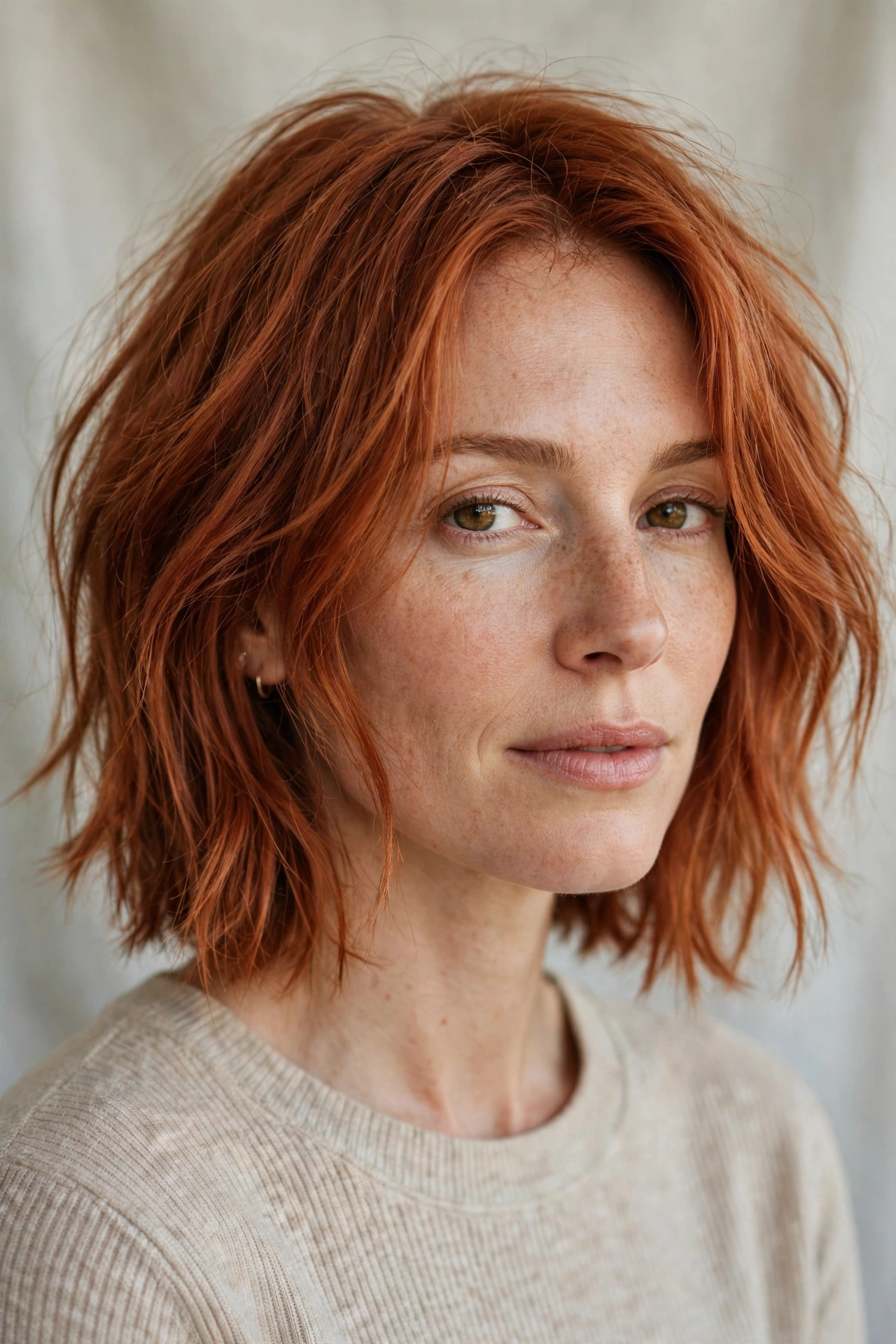
Sometimes the trend isn’t the cut — it’s the color on the cut. Copper is 2026’s color story, and on a choppy lob it’s genuinely transformative for fine hair.
Here’s why: warm copper tones refract light differently off every choppy piece, which creates dimension no single-process color can fake. Fine hair’s biggest enemy is flatness, and dimension is the antidote. Keep the copper slightly lived-in at the roots and grow-out stays chic for months.
One honest warning: copper fades fast. Commit to a color-depositing conditioner or don’t commit at all.
Salon script: “lived-in copper, shadowed root, choppy lob to the collarbone.”
5. The Root-Smudged Lived-In Lob
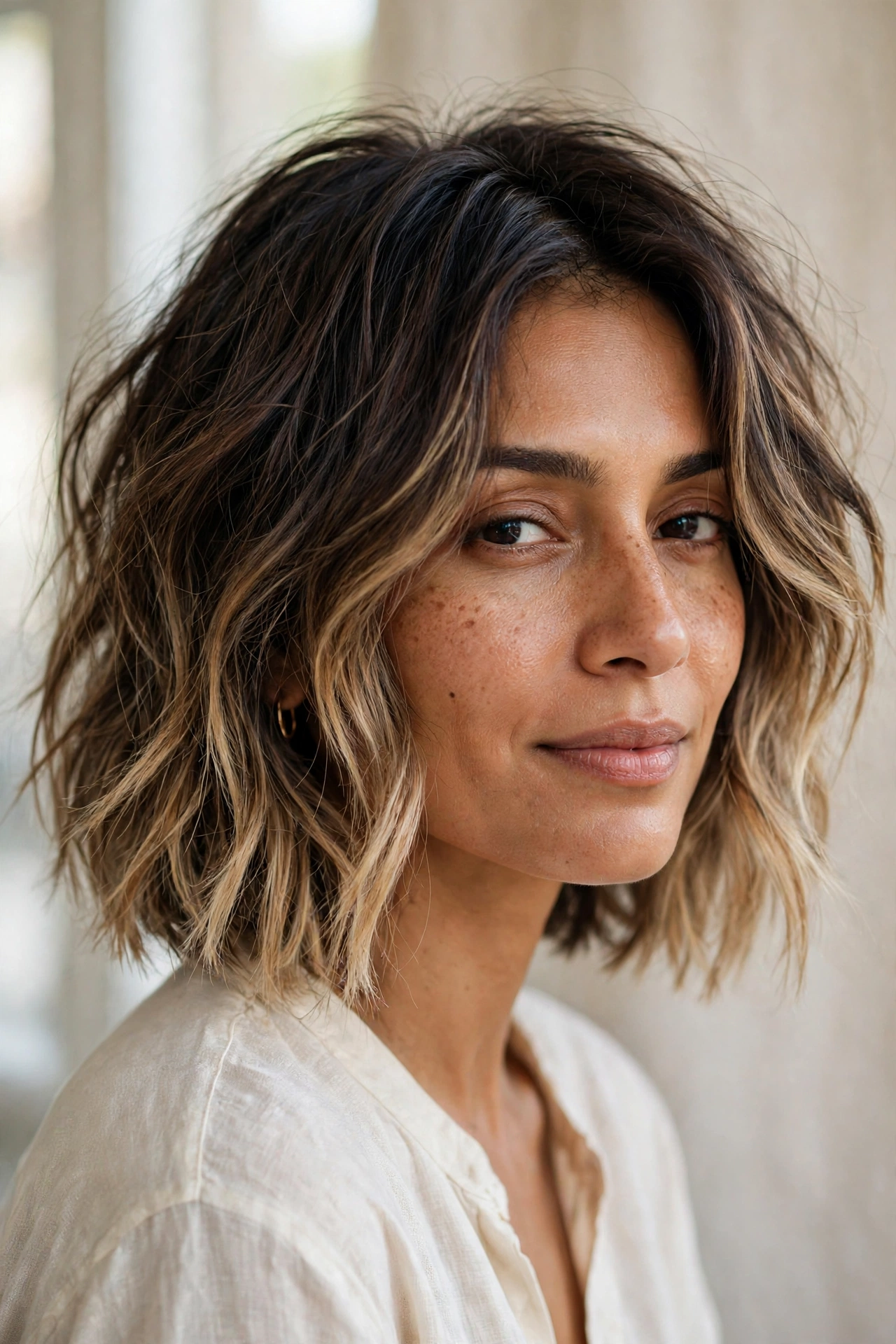
This is the colorist trick that went mainstream, and fine-haired women should be thrilled about it.
A root smudge — a soft, shadowed melt at the scalp — erases harsh regrowth lines and fakes depth exactly where fine hair looks thinnest: right at the part. Pair it with choppy lob ends and the whole head reads thicker from root to tip. It’s an optical illusion, but nobody’s checking your math.
The practical win: regrowth blends for 8–10 weeks. If you stretch washes, this cut stretches with you.
Cluster Two: The Airy Shag-Lob
Now we get a little wilder. The shag-lob is where the lob meets the shag — feathered, piece-y, deliberately undone. It’s 2026’s answer for fine hair that falls flat by noon.
The rule that makes it work: weight comes out of the interior, never the perimeter. Ends stay full, the inside moves. Get that backwards and fine hair goes wispy — so this cluster is worth discussing carefully with your stylist.
6. The Curtain-Bang Shag-Lob
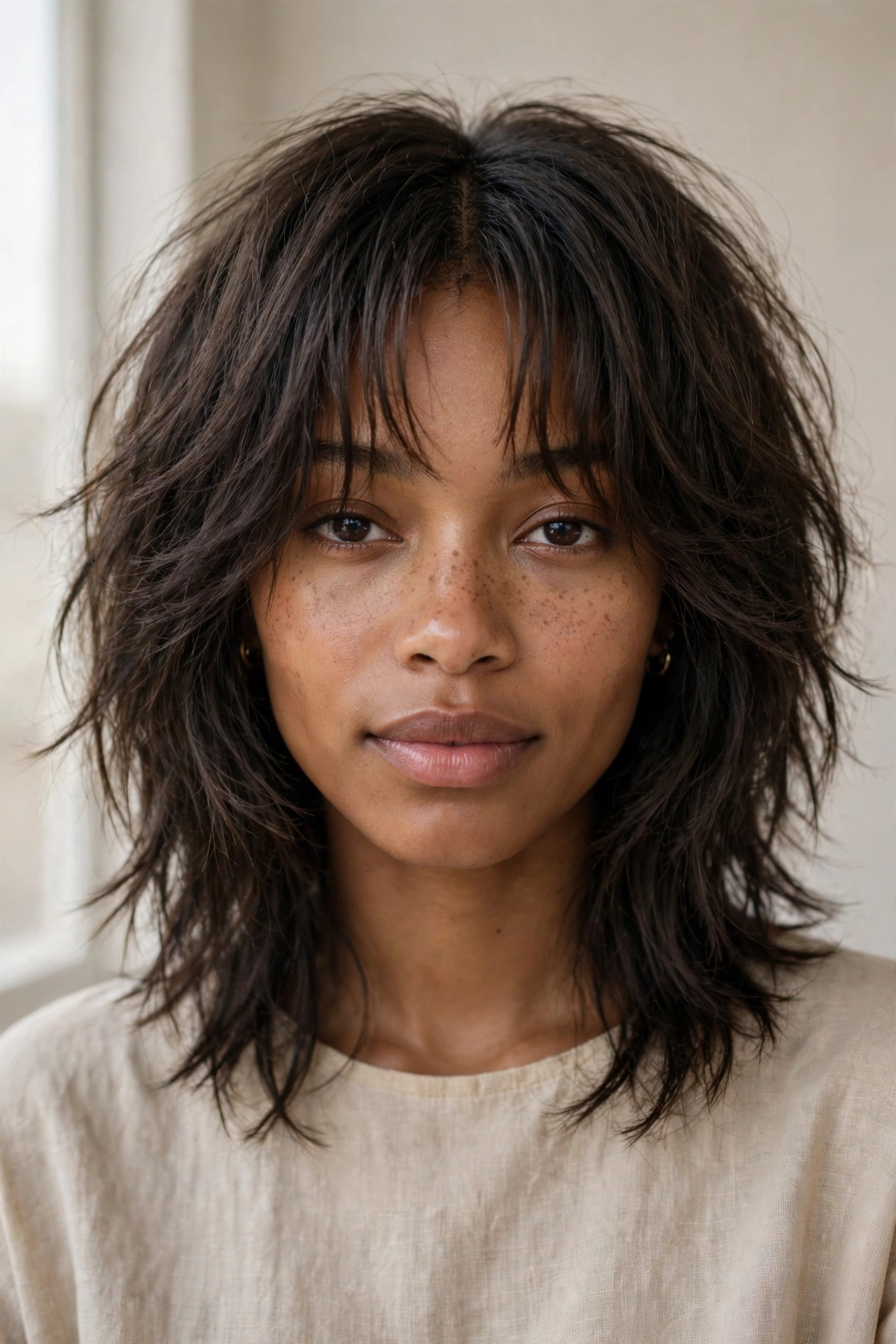
The crossover hit of the year, and honestly? It deserves the hype.
Curtain bangs melting into a choppy, collarbone-length shag do two jobs at once: the fringe pulls the eye up and forward (instant crown fullness), while the shaggy layers keep everything airy. For fine hair, keep the bangs long — cheekbone-grazing, never baby-short. Short bangs on fine hair can go stringy fast.
The trade-off is real: bangs need a trim every 4–6 weeks. Budget for it or pick a different section.
7. The Soft Wolf-Cut Shag-Lob
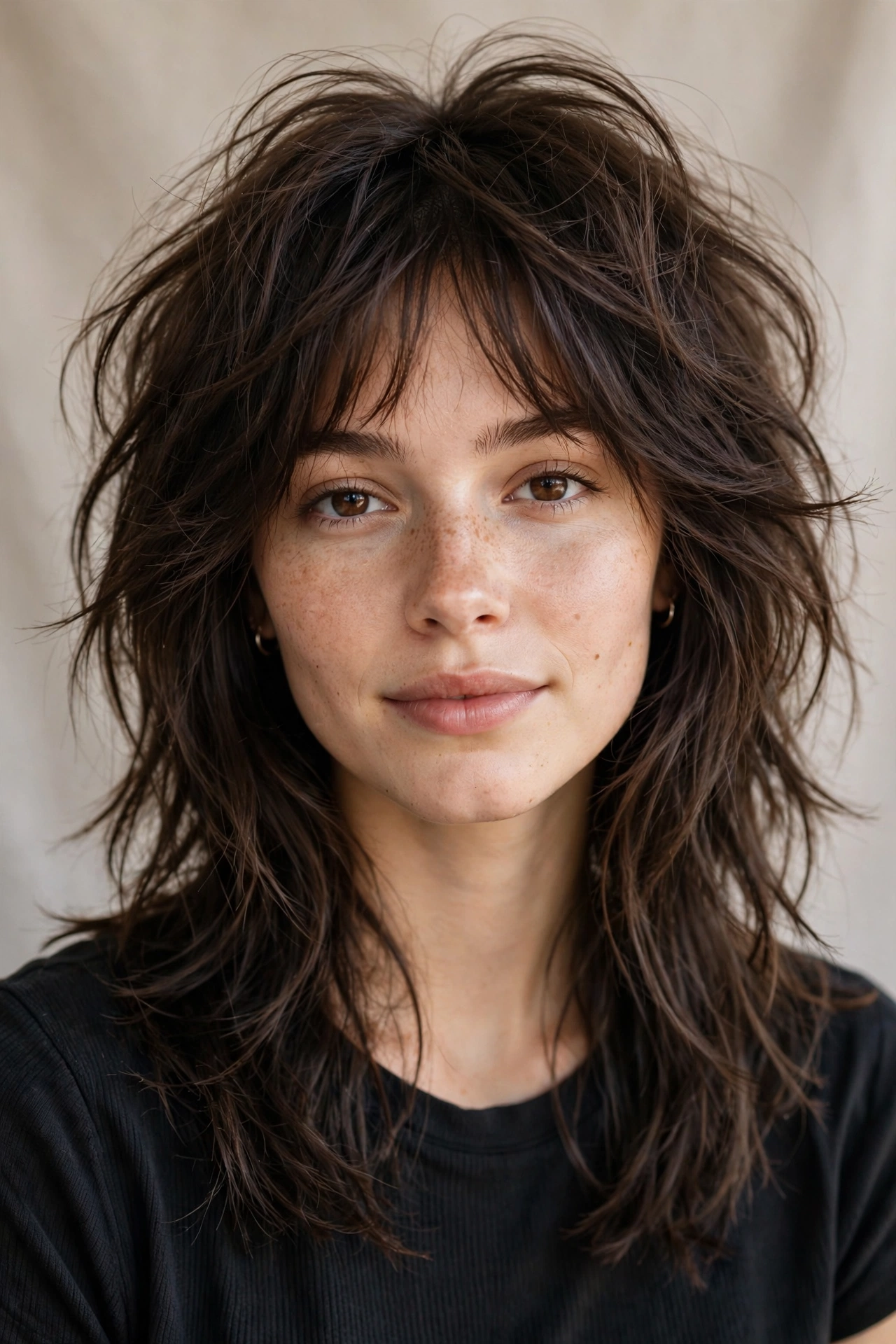
The wolf cut grew up, got a job, and learned manners. This 2026 version keeps the choppy crown layers that made the original fun — that’s where the lift lives — but preserves length through the ends so fine hair never looks thin.
Think rock-and-roll texture without the mullet commitment. It works best on wavy fine hair, where the natural bend does half the styling for you. Straight hair can absolutely wear it, but you’ll need texturizing spray to hold the shape — be honest with yourself about whether you’ll actually use it.
The verdict: edgy but increasingly mainstream. Your cool aunt already has it.
8. The Razored-End Shag-Lob
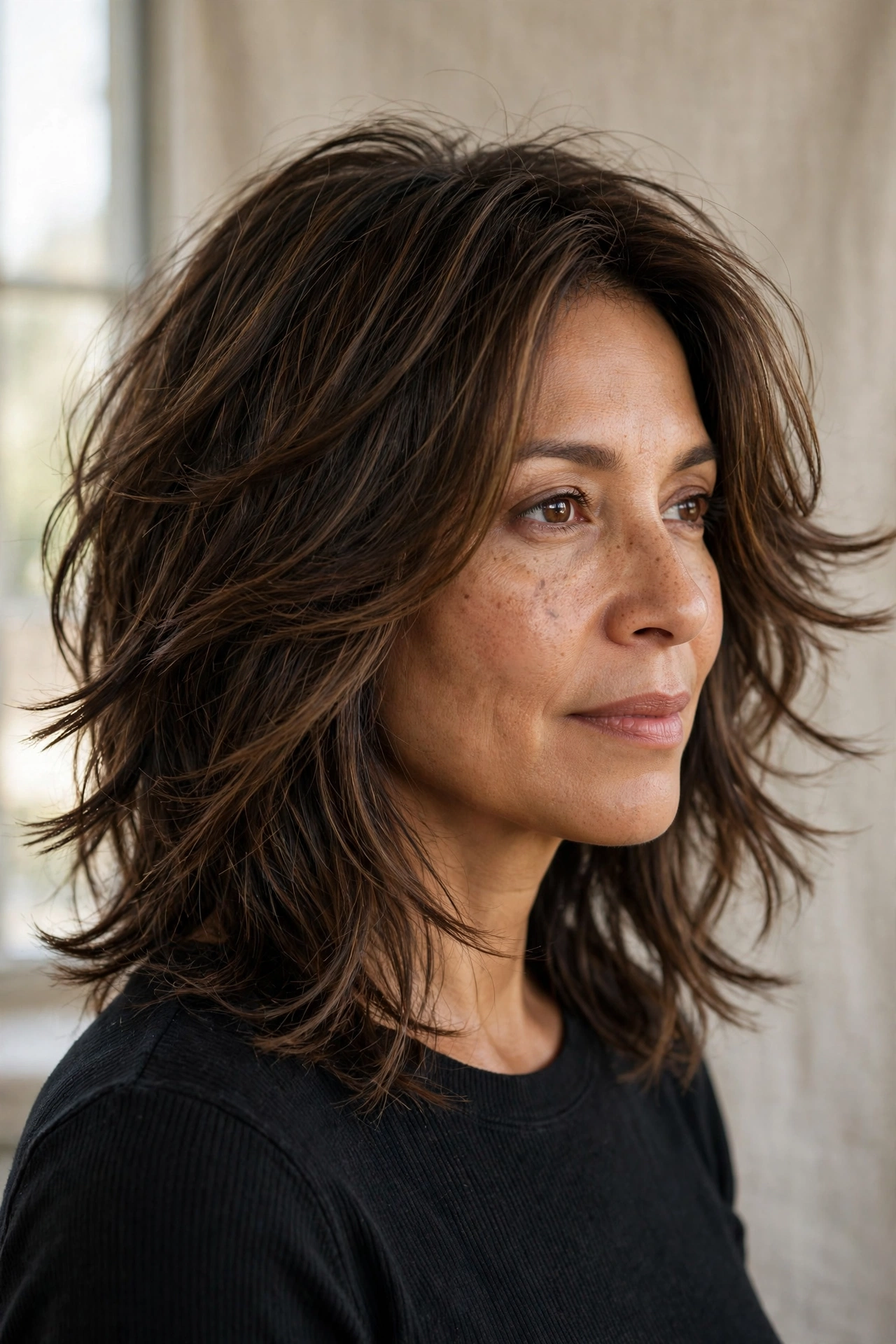
Razor cutting is having a renaissance, and fine hair benefits more than any other texture. Feathered, razored ends remove bulk while keeping the outline full — the result moves like water but holds its shape.
One non-negotiable: ask for razor work on the interior only, never the perimeter. A razor on the outline of fine hair is how you get see-through ends, and that’s a grow-out project nobody wants.
Also worth knowing — razored ends can frizz in humidity. If you live somewhere swampy, keep a smoothing cream in the rotation.
Heads up: this is a stylist-skill cut. Find someone who razors well; not everyone does.
9. The Wispy Feathered Shag-Lob

Feathering is the fine-hair cheat code, and this is its prettiest application.
Ultra-light, wispy layers create movement without removing visible density — the ends flutter, the crown lifts, and the whole cut looks like it weighs nothing while appearing full. It reads soft and romantic rather than edgy, which makes it the shag-lob for people who don’t think of themselves as shag-lob people.
Grow-out is extremely forgiving, and it plays well with both straight and wavy textures. Quietly one of the most flattering options in this entire guide.
10. The Face-Framing Shag-Lob
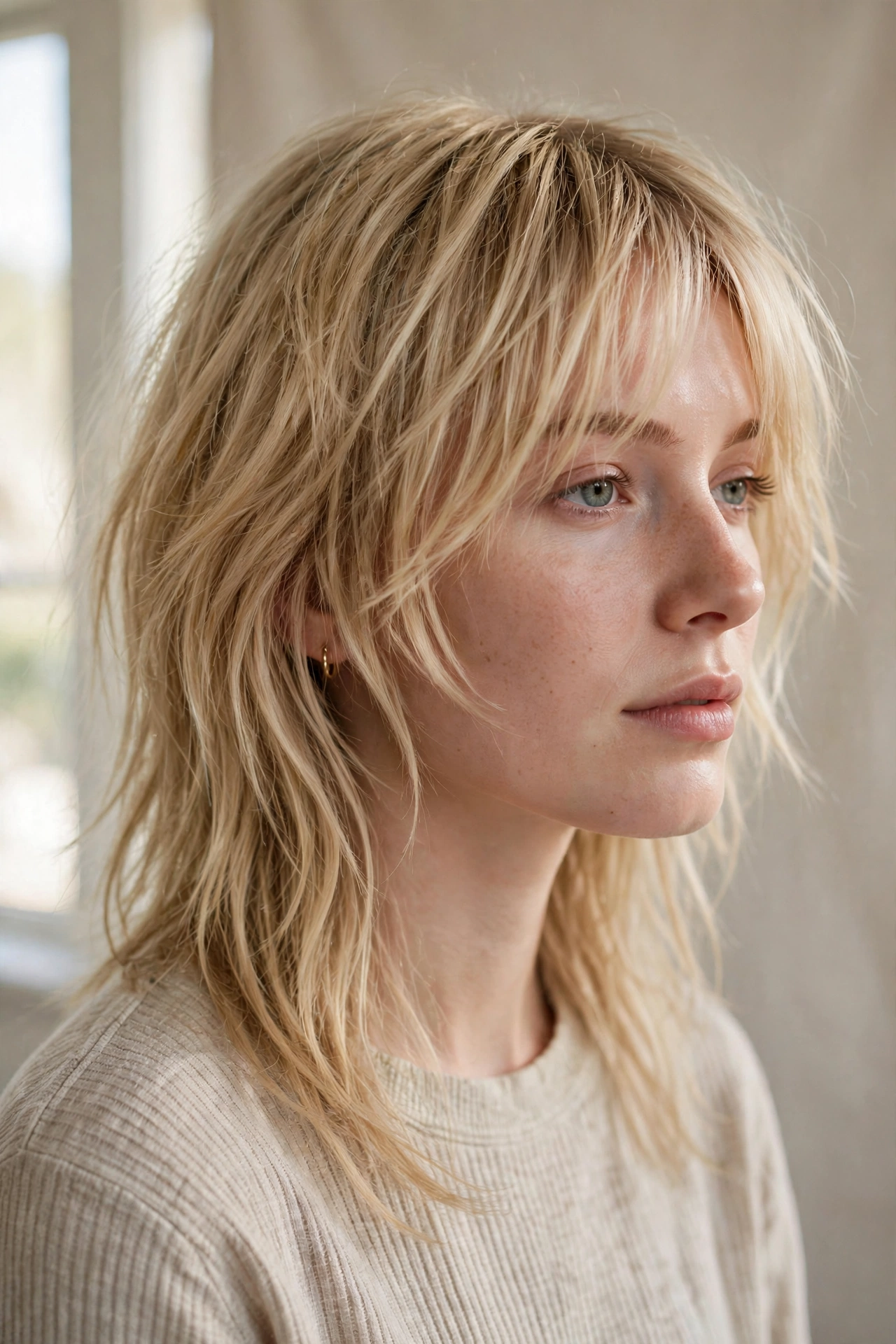
Here’s a principle worth tattooing on your salon brain: where the eye goes, fullness follows.
Shorter choppy pieces starting at the cheekbones pull all the focus forward, so the front of your hair looks dense — while the longer back preserves the lob silhouette. It photographs beautifully from every angle, which is why your feed is full of it. The framing is completely customizable, so it works across face shapes; your stylist just adjusts where the shortest piece hits.
Why it works: the front does the talking, the back does the supporting.
Cluster Three: The Curtain-Fringe Lob
Fringe is the fastest way to fake fullness — nothing else changes the frame of your face this dramatically. And 2026’s curtain variations were practically designed for finer textures: long, blended, never heavy.
Each of these pairs a grown-in fringe with choppy lob length. The fringe handles the top, the layers handle the rest.
11. The Classic Curtain-Fringe Lob
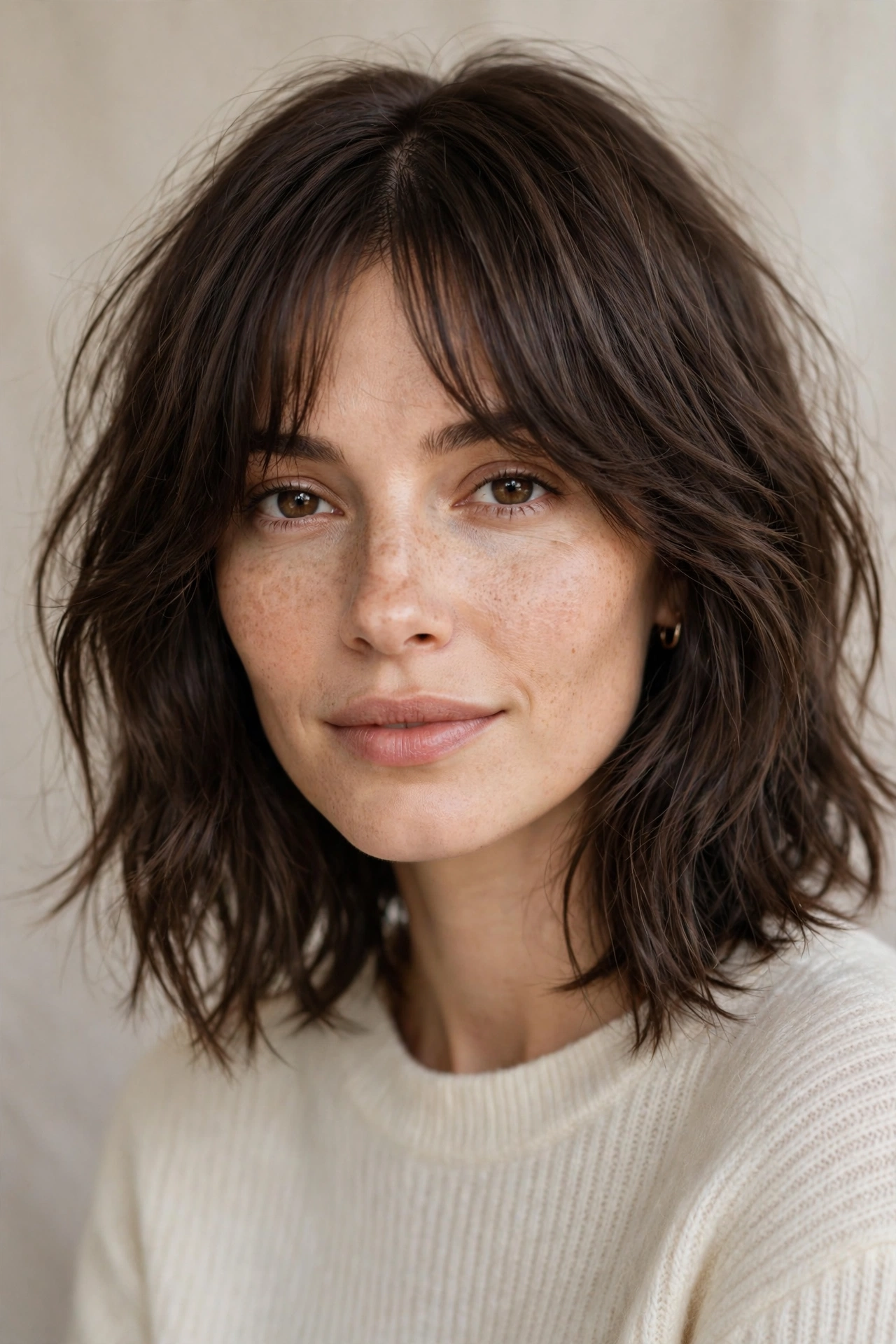
The blueprint everything else riffs on. A center-parted curtain fringe that opens at the cheekbones, flowing into choppy collarbone layers.
On fine hair, the fringe earns its keep by adding coverage across the forehead — that’s where sparseness shows most, and most people don’t realize it until they see the before-and-after. The lob length keeps the whole thing effortless. And when you’re over the fringe? It grows out gracefully into face-framing layers instead of an awkward phase.
If you’re fringe-curious but commitment-shy, start here.
12. The Bardot Curtain Chop
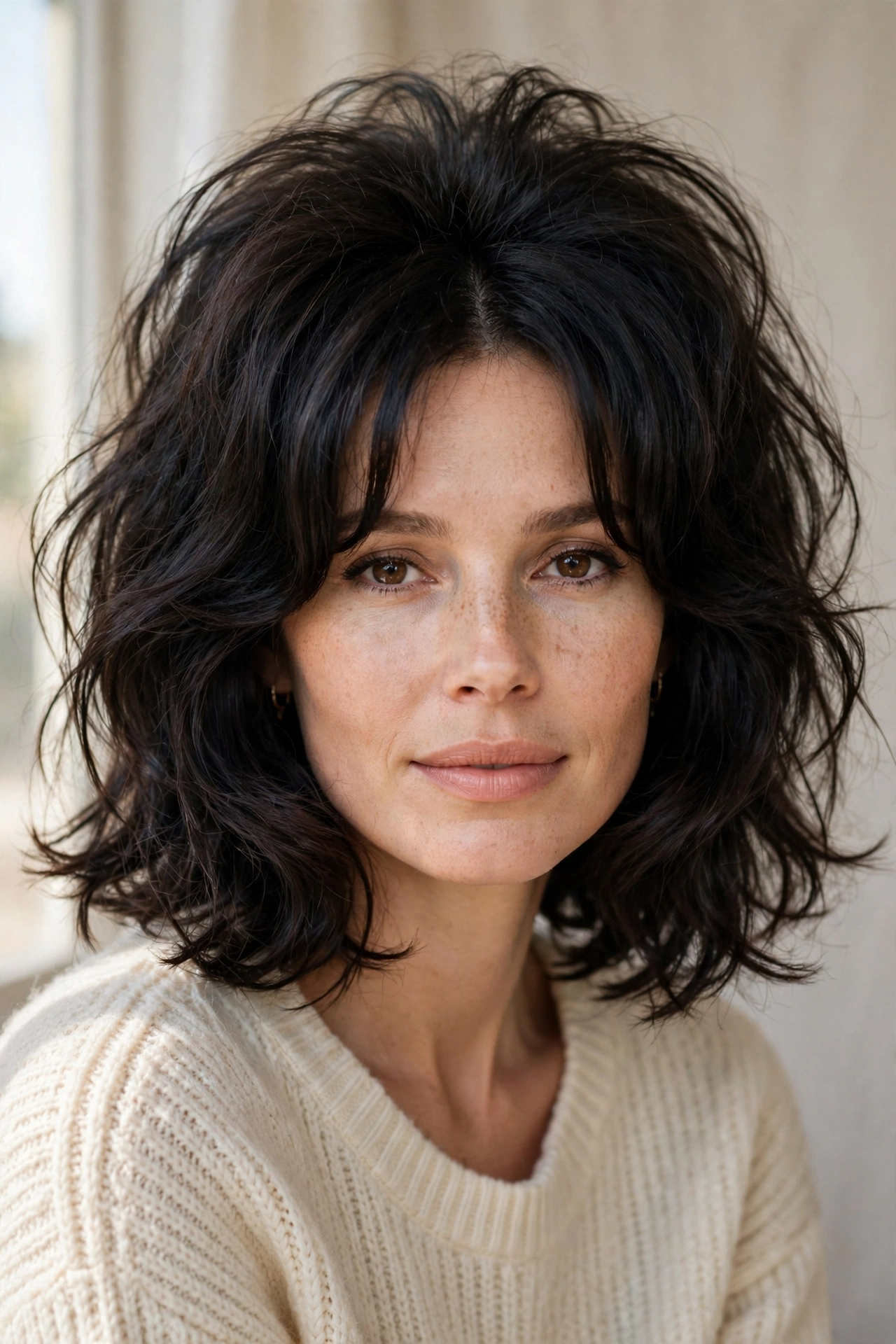
Sixties volume, modern texture. A fuller, Bardot-inspired curtain fringe with choppy, piece-y lob ends gives fine hair that bombshell density — the fringe does the heavy lifting up top while shattered ends keep it current instead of costume.
Let’s be real about the styling, though. The fuller fringe wants a round brush most mornings; air-drying will give you a flatter, less dramatic version. If your routine is strictly wash-and-go, the classic curtain (above) will make you happier.
But if you’ll put in five minutes? The payoff is enormous.
13. The Grown-Out Curtain Fringe Lob
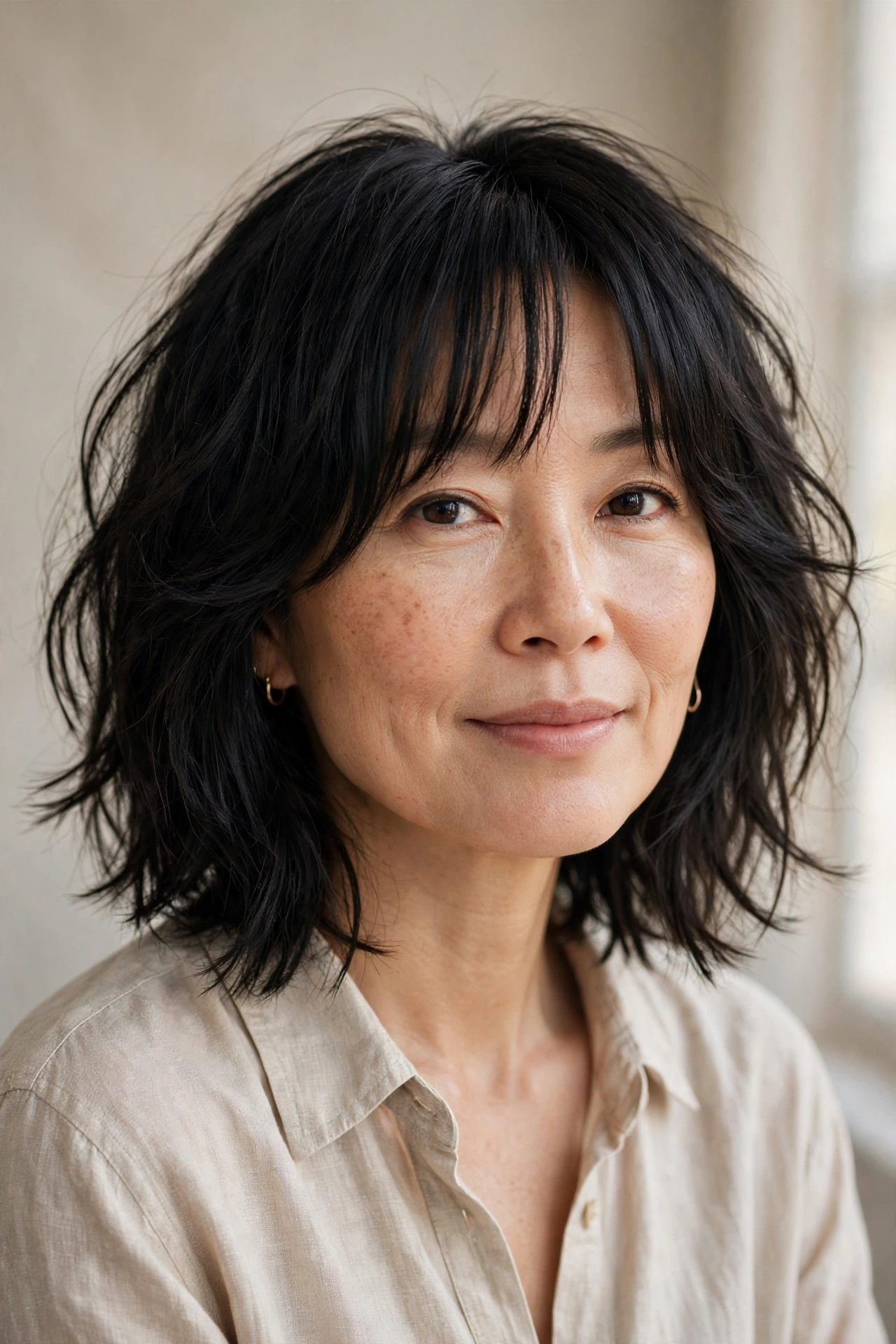
Proof that grow-out can be a style, not a phase you’re suffering through.
This look starts with a curtain fringe and deliberately lets it melt into long, choppy layers — no awkward in-between, because the blend IS the style. For fine hair, the grown-out length means fringe pieces merge seamlessly into the rest, adding softness around the face instead of a harsh line.
It’s the insider’s choice for a reason: trims every 8–10 weeks, minimal daily effort, maximum “I woke up like this” energy.
14. The Side-Swept Curtain Lob
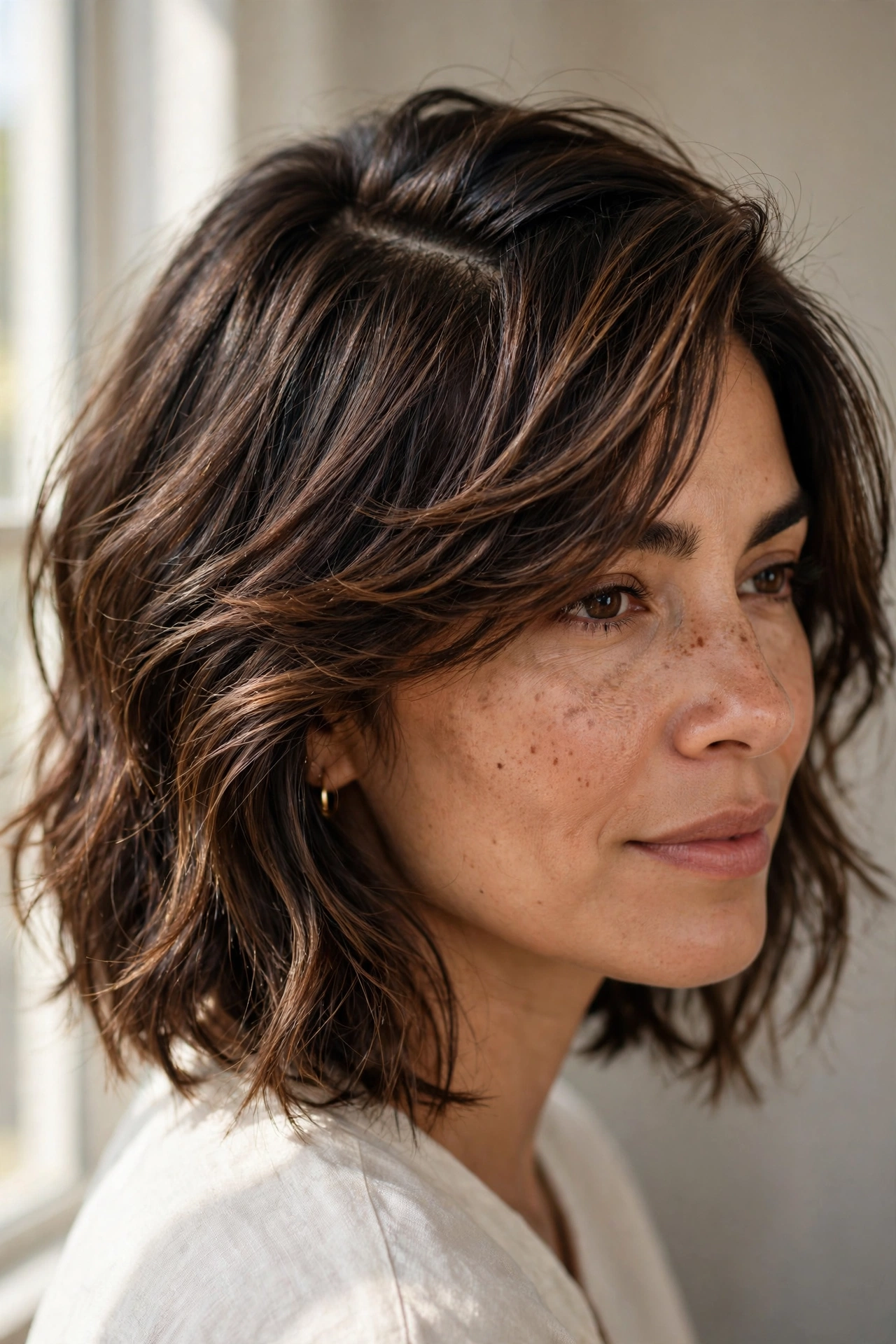
Never underestimate what a deep side part can do. Sweeping the curtain fringe diagonally across the forehead creates instant volume along that diagonal — it’s the oldest fine-hair trick in the book, refreshed with choppy lob texture.
The asymmetry makes hair look thicker from every angle, because the eye follows the sweep instead of clocking the scalp. It’s also a quiet hero for cowlicks and anyone who has never once made a center part behave.
Wear it if: your part has a mind of its own and you’ve stopped fighting it.
15. The Micro-Curtain Chop

The boldest fringe in this cluster — shorter, piece-y curtain bangs that graze the brow, never blunt, over a choppy lob.
On fine hair, the piece-y texture is everything. A solid micro-fringe can read heavy and helmet-like on finer strands; broken-up pieces let the forehead breathe while still framing the eyes beautifully. It’s fashion-forward and genuinely striking.
The honest cost: frequent trims and a few minutes of daily styling to make it sit right. This one is a lifestyle choice as much as a haircut.
Cluster Four: The Polished Chop
Not every choppy bob is undone — and not everyone wants to look it. This cluster is for fine hair that wants edge with polish: sharper lines, cleaner finishes, architectural shapes.
The thesis here: choppiness and sophistication aren’t opposites. Texture carved into a precise shape might be the chicest thing on this list.
16. The Blunt-Edge Chop-Lob
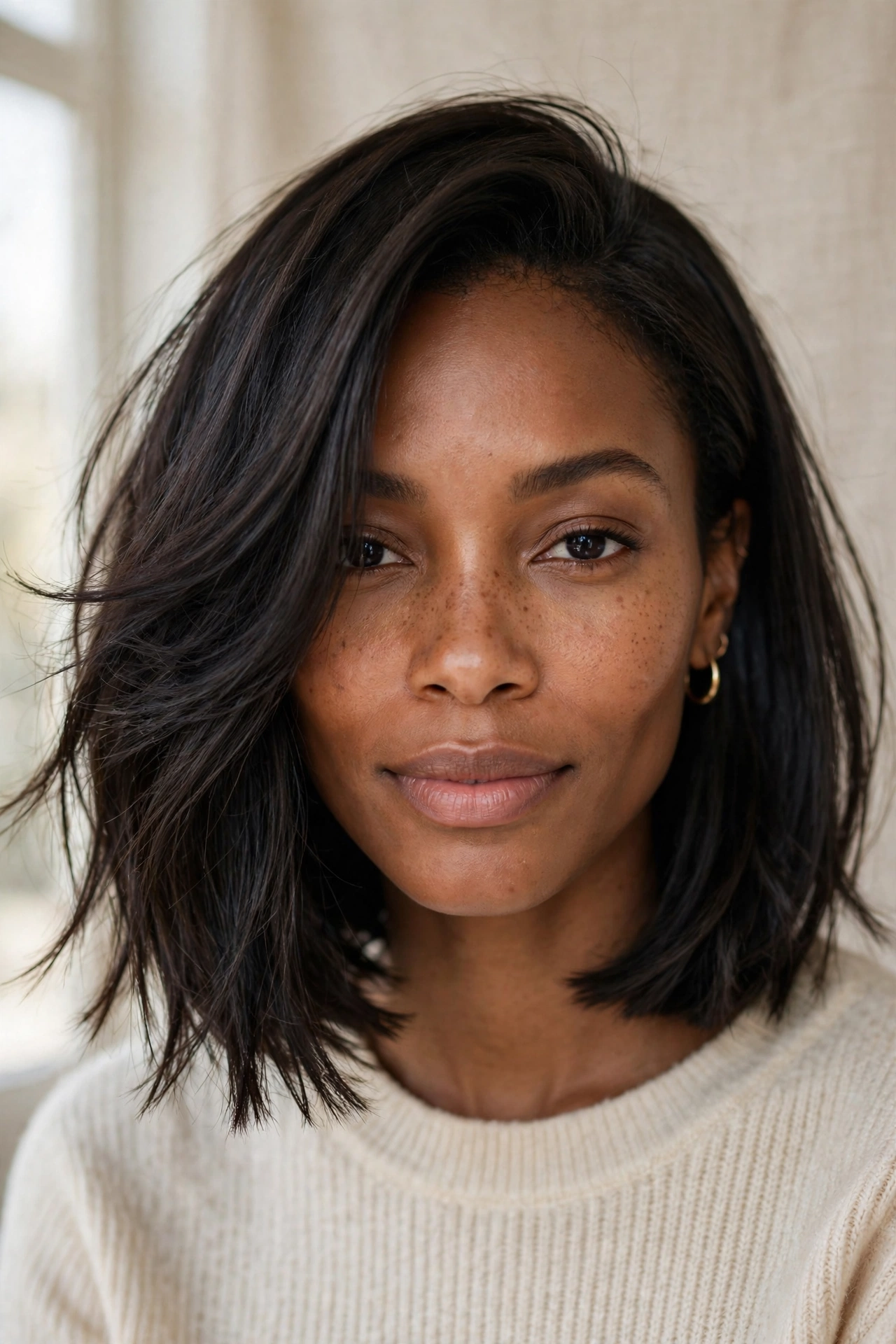
The power move. A strong, blunt perimeter with choppy texture carved only through the interior — never the outline.
Fine hair gets the best of both worlds: a thick-looking edge with movement inside. Honestly? It’s the densest-looking cut in this entire guide. The clean line at the bottom reads as “a lot of hair,” and the hidden texture keeps it from sitting flat and severe.
Straight fine hair wears this best. Waves can work, but you’ll need to smooth them to show off the line — otherwise the bluntness gets lost.
Stylist’s tip: ask for the interior texture to start at cheekbone level, not higher, or the crown can collapse.
17. The Inverted Chop-Lob
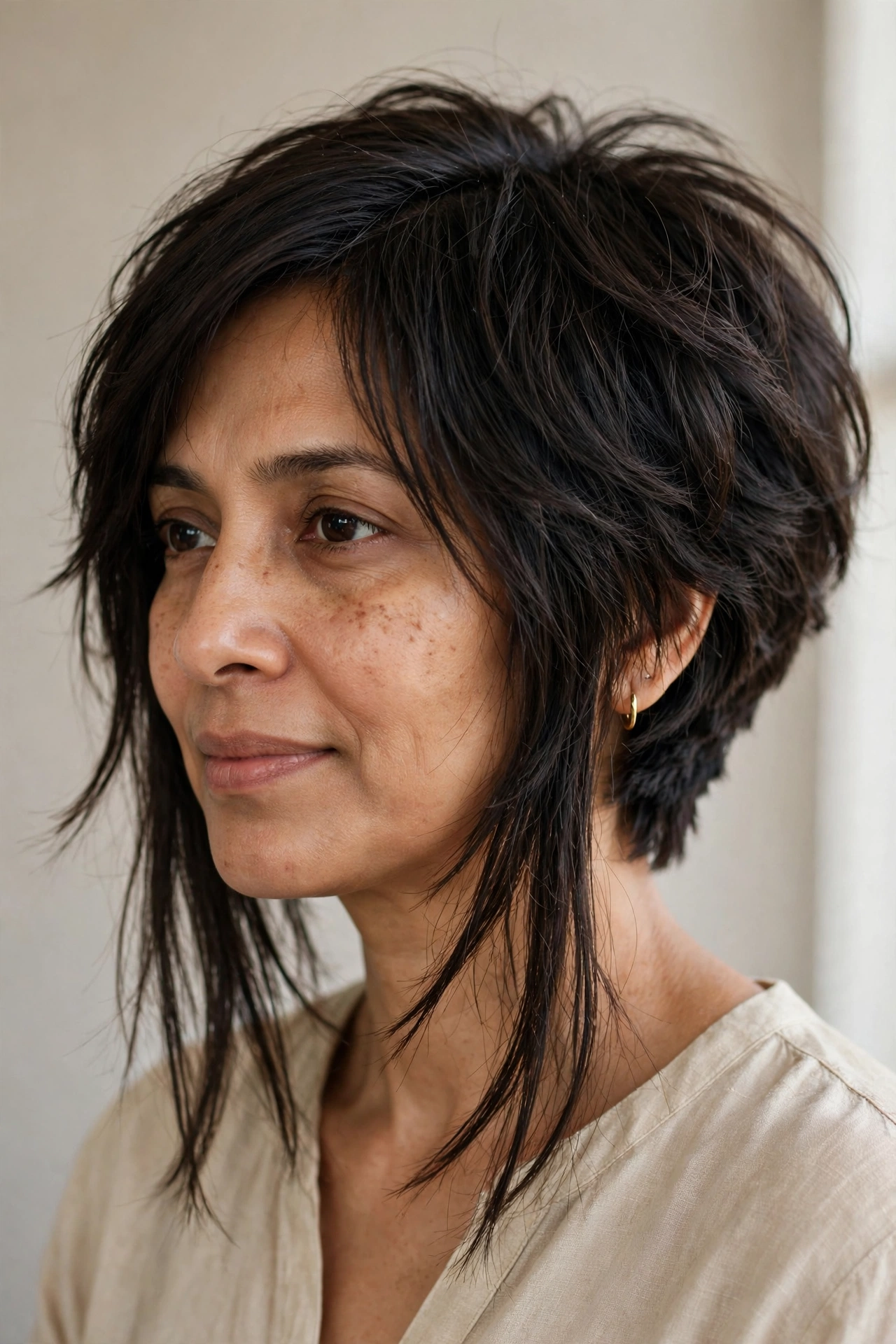
Shorter in back, longer in front — the inverted silhouette stacks volume at the nape, exactly where fine hair lies flattest. Choppy ends keep the front pieces from looking severe or dated.
It’s architectural and elongating, and quietly one of the most slimming cuts for rounder faces — the forward angle draws the eye down and in. The price of that geometry is maintenance: the angle needs a trim every 6 weeks to stay intentional rather than overgrown.
Worth it? If you love structure, absolutely.
18. The Collarbone Chop
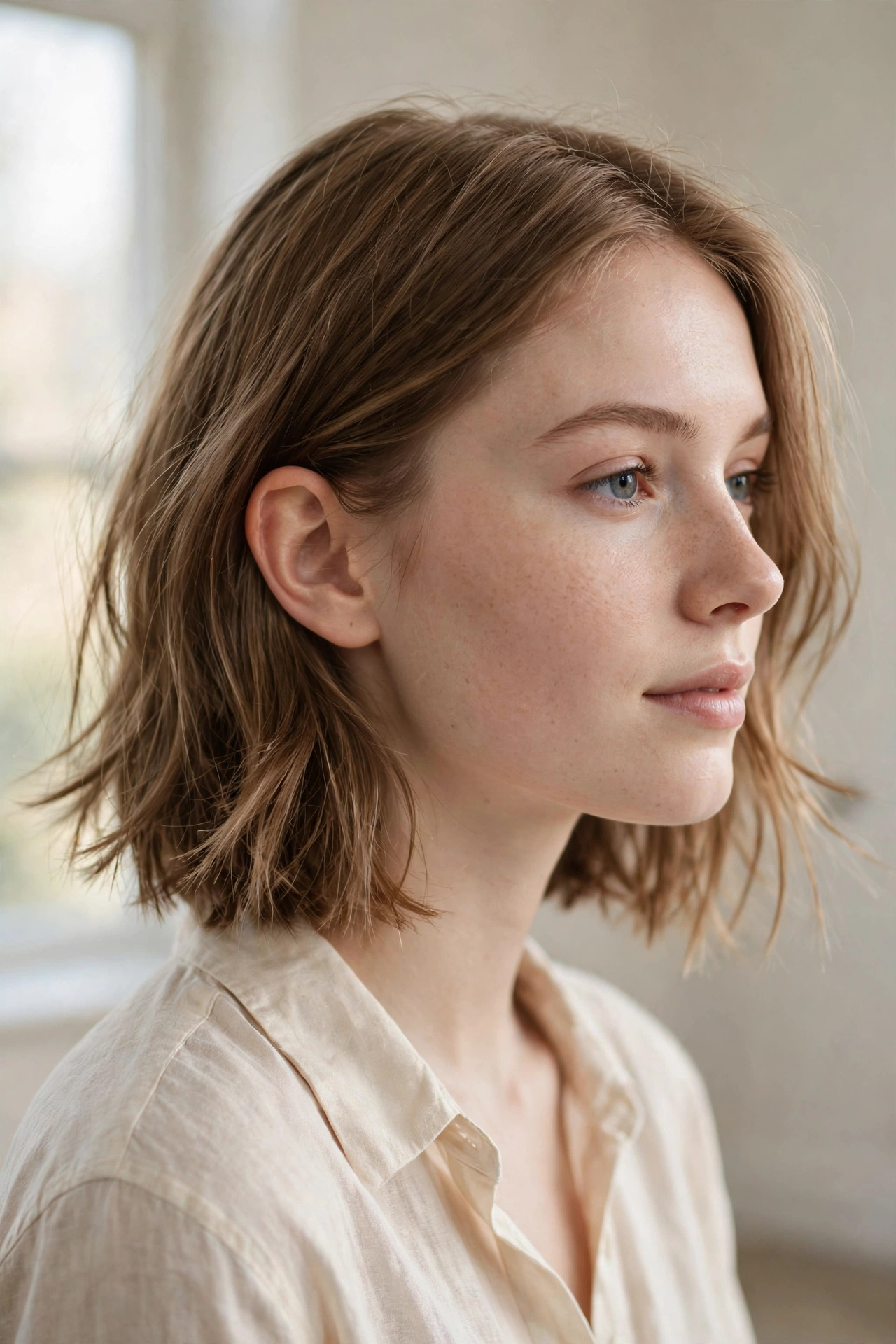
Precision-cut to graze the collarbone, with choppy ends that flick and move. This length is the sweet spot for fine hair — long enough to feel versatile (ponytail still possible, barely), short enough that ends never go stringy.
There’s a reason stylists call this the “can’t go wrong” cut. It’s universally flattering, grows out into a lob without drama, and suits every lifestyle from corporate to creative. If you’re overwhelmed by 20 options, just get this one.
Tuck one side behind the ear for instant asymmetry. It takes three seconds and looks deliberate.
19. The French-Inspired Chop-Lob
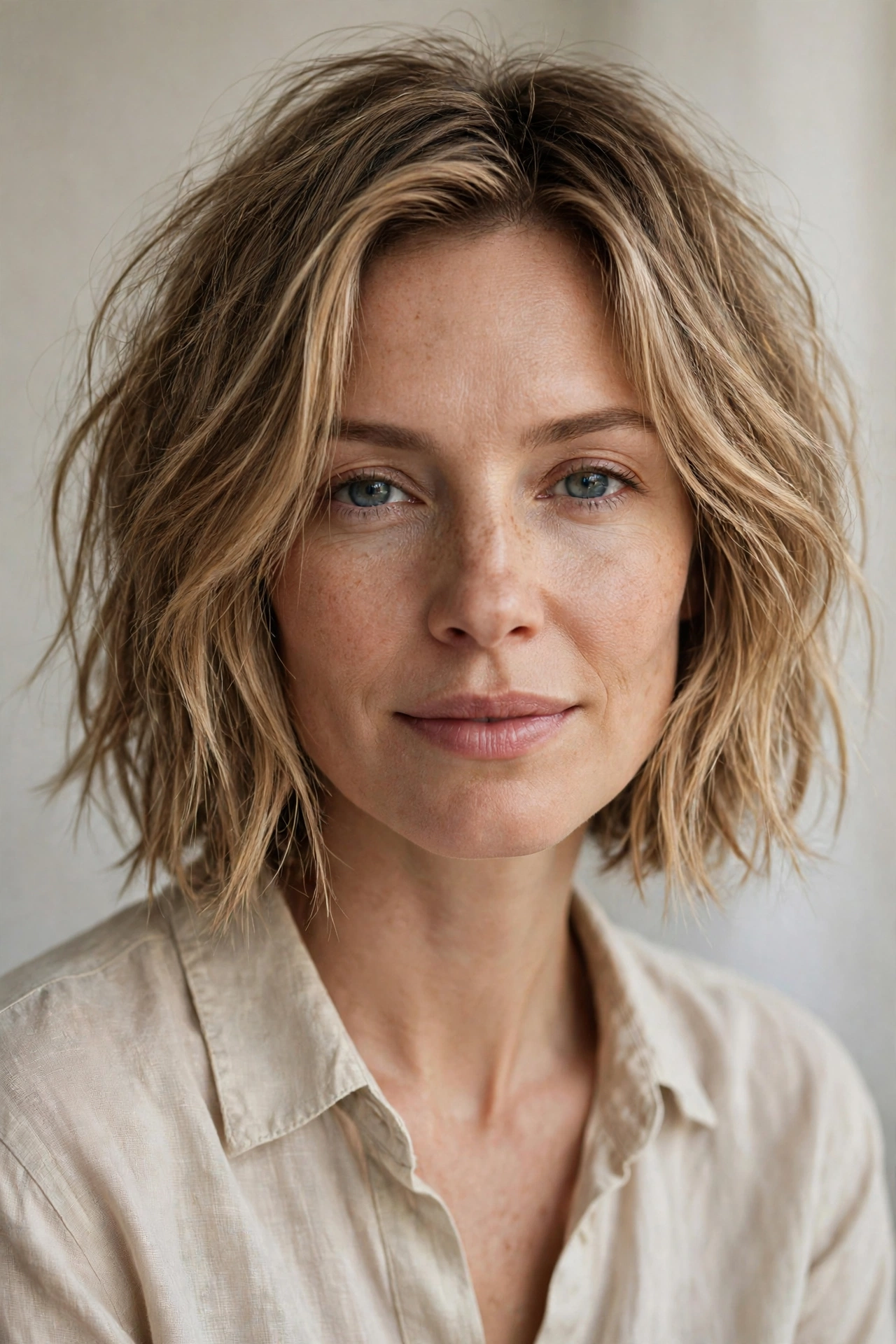
Parisian nonchalance, engineered. A jaw-to-collarbone chop with piece-y, imperfect ends and that signature French “done but undone” finish.
On fine hair, the slightly shorter overall length is doing quiet work — less length means ends look thicker, and the choppiness adds that Gallic texture no round brush can fake. Ask for dry-cutting if your stylist offers it; cutting the texture into dry hair shows the true fall of every piece.
Effortlessly cool, forever relevant — and the lowest-maintenance “polished” option here.
20. The Asymmetrical Chop-Lob
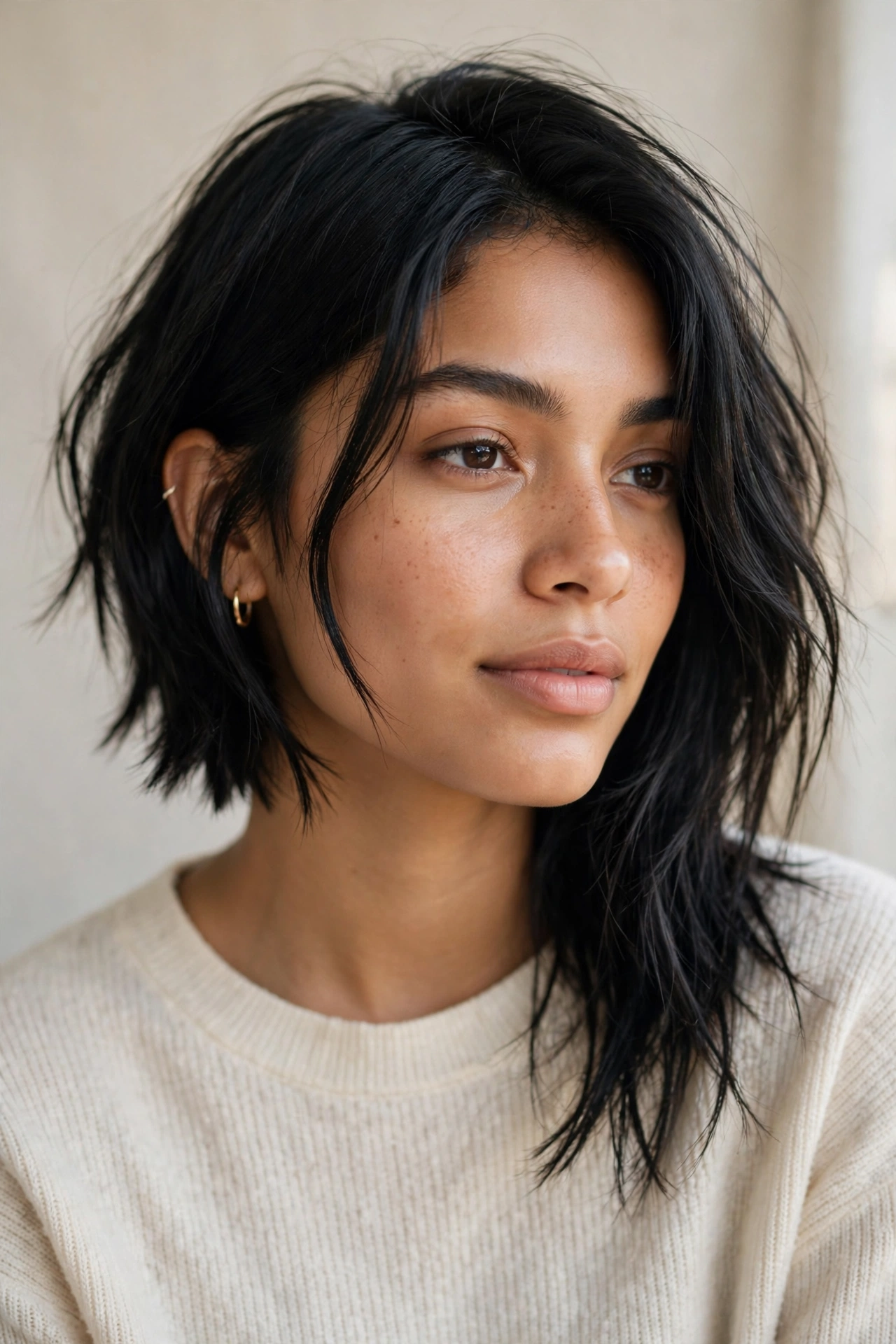
One side longer than the other. That’s the whole trick, and it’s more powerful than it sounds.
The asymmetry creates instant visual interest — the longer side draws the eye down, elongating the neck, while the shorter side shows off the choppy texture. Hair reads denser on the fuller side because all the attention lands there. Choppy texture throughout keeps it modern, not 2008.
It’s a statement, so own it: the angle needs upkeep to look intentional rather than lopsided-grow-out. But as a final entry in this guide, it’s the exclamation point.
FAQs:
Is a long choppy bob good for fine hair?
Honestly, it’s one of the best cuts you can get. The choppy layers create separation and movement, which your eye reads as fullness while the length keeps ends from going wispy. It’s that rare cut that works with fine hair instead of against it.
How do I style it for maximum volume?
Flip your head upside down and blow-dry the roots first that’s 80% of the battle. Then work a texturizing spray through the mid-lengths and ends. One thing to skip: heavy oils near the roots. They flatten exactly the texture the cut just built for you.
What’s the difference between a long choppy bob and a lob?
They overlap a lot. “Lob” is about length — usually collarbone-grazing. “Long choppy bob” is about technique — shattered, piece-y layers. In 2026 most lobs are cut choppy anyway, so don’t stress the terminology at the salon; bring photos instead.
How often does it need trimming?
Every 6–8 weeks. Fine hair shows split ends faster than thick hair, and choppy layers lose their shape as they grow — regular trims keep the texture looking intentional instead of ragged.
Does it work on fine curly hair?
Yes, with one condition: dry cutting. Choppy layers remove weight so curls spring up instead of dragging down, but the layers need to stay long enough to avoid the dreaded triangle. Ask your stylist to cut curl by curl.
Which products actually make it look thicker?
Three things: volumizing mousse at the roots on damp hair, texturizing spray through the ends, and dry shampoo on day two. That’s the whole kit. Skip heavy serums on fine hair — they undo the cut’s work.
The Bottom Line
The long choppy bob earned its 2026 crown by solving fine hair’s oldest problem: how to look full without faking it. Whether you lean lived-in, shaggy, fringed, or polished, there’s a version here with your name on it.
Save your favorites to Pinterest. Screenshot the one that made your heart skip. Then show your stylist — along with an honest note about your texture, density, and how much effort you’ll actually put in each morning. The best trend cut is always the one cut for your hair, not the model’s.
Related reading: explore our choppy bob haircuts for fine hair collection, the complete long bob haircut guide, more shoulder-length bobs for fine hair, and the ultimate guide to bob hair trends for 2026.
Sana Malik is a hair and beauty writer with a deep love for the bob in all its forms from sharp French bobs to soft, lived-in lobs. After years of experimenting with her own short hair and helping friends figure out what actually suits their face shape, she started writing to cut through the confusing advice out there. At BobHairTrends, she breaks down each cut into simple, honest guides: how to ask for it, how to style it at home, and who it really flatters. When she isn’t researching the latest trends, she’s usually testing a new styling product or convincing someone it’s finally time for the chop.